
Last updated: September 24, 2026
Quick answer: start much closer to the escape point than most people expect. Search your home and property first, then physically inspect nearby yards, porches, decks, sheds, garages, crawl spaces, shrubs and parked vehicles. In a large missing-cat study, the median distance at which indoor-only cats were found alive was just 39 meters (about 128 feet), and 75% were found within 137 meters. Cats with outdoor access tended to travel farther, so search radius should match your cat's normal lifestyle rather than using one universal distance.
Do these three things now: 1) physically search the immediate area, 2) ask neighbors to open and check garages, sheds, decks and crawl spaces—not merely “keep an eye out,” and 3) file lost-pet reports while you keep searching. A frightened indoor cat may stay silent even when you call.
The First 30 Minutes: Search the House Before Expanding the Map
Before assuming your cat is outdoors, search the home methodically. Missing-cat research found that some cats were ultimately discovered inside their own house. Cats can fit into spaces that owners have already “checked” visually.
Close exterior doors and windows while you search. Then inspect:
- inside closets, cabinets and open drawers;
- behind or underneath appliances;
- under beds, recliners and sofas;
- inside box springs or torn furniture linings;
- behind stored boxes;
- laundry rooms, basements, attics and utility spaces;
- inside garages, vehicles and storage areas;
- any room that was recently opened for contractors, deliveries or moving.
Shake a familiar treat bag or open food if that usually brings your cat running, but do not interpret silence as proof the cat is not there. A frightened or trapped cat may remain quiet.
If you know the escape point
Mark it on your phone map immediately. Record the exact time or best estimate, weather, direction the cat moved, and whether anything frightening happened—dog chase, construction noise, carrier escape, visitors, moving truck, fire alarm. That point becomes the center of your first physical search.
How Far Should You Search for a Lost Cat?
The strongest available distance data comes from a 2018 retrospective study of 1,210 missing cats. Among cats found alive with usable distance information, the overall median distance from the point of escape was 50 meters; three quarters were found within 500 meters.
Outdoor experience changed the pattern dramatically:
| Cat's normal lifestyle | Median distance found alive | 75th percentile | Practical meaning |
|---|---|---|---|
| Indoor-only | 39 m / 128 ft | 137 m / 450 ft | Search your property and nearest neighboring properties extremely thoroughly before expanding far away. |
| Indoor-outdoor, unsupervised access | 300 m / 984 ft | 1,609 m / 1 mile | Search nearby hiding places first, but expand along the cat's familiar territory and travel routes. |
| All found-alive cats combined | 50 m / 164 ft | 500 m / 0.31 mi | Most searches should begin close and expand systematically. |
These are study distributions, not promises. Individual cats can travel much farther. The useful lesson is that indoor-only cats often remain surprisingly close, while cats accustomed to roaming may require a larger search radius.
Lost Indoor-Only Cat: Assume “Hidden Nearby” Before “Gone Far Away”
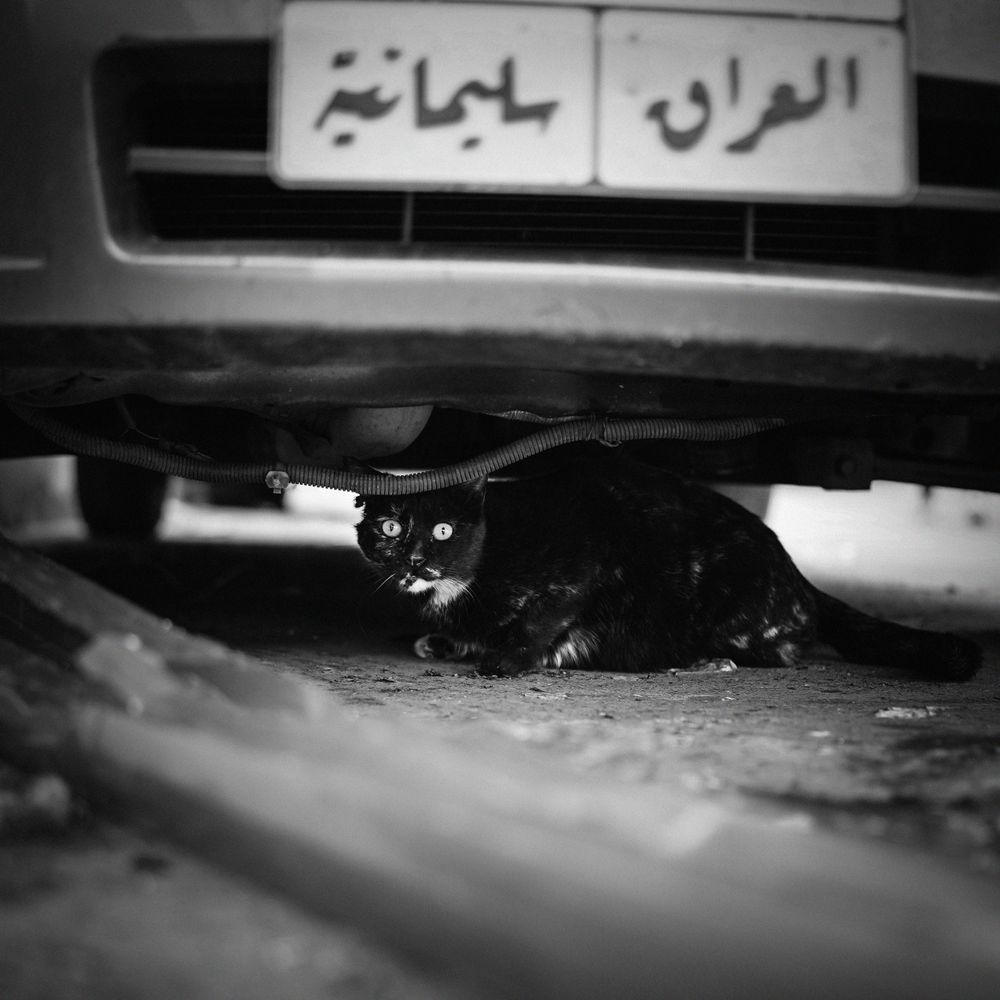
An indoor-only cat suddenly outside is in unfamiliar territory. Humane World notes that these cats often hide very close to the escape point and may not answer when called. That silence is not evidence that your cat did not hear you or “does not want to come home.” Fear changes behavior.
Your first search ring
Start at the escape point and move house by house. Look physically under and inside:
- cars and wheel wells;
- decks, porches and stairs;
- dense bushes and hedges;
- sheds and detached garages;
- crawl spaces and basement window wells;
- tarps, stacked lumber and stored patio furniture;
- dumpsters and quiet service alleys;
- storm drains or culverts only where it is safe/legal to inspect;
- open construction spaces;
- neighboring garages that may have been closed after the cat slipped inside.
Use a flashlight even during daylight. Eyeshine and small movements can reveal a cat buried deep inside dark cover.
Do not send a large noisy search party crashing through the immediate hiding area. More people can help search separate properties, but a frightened cat may stay tighter to cover when surrounded by unfamiliar voices and movement.
If Your Cat Normally Goes Outdoors, Search the Territory Differently
An indoor-outdoor cat has an established external territory and familiar travel routes. The missing-cat study found this group farther from the escape point than indoor-only cats.
Start with the cat's normal route:
- favorite yards and porches;
- houses where neighbors feed cats;
- usual fences and alleyways;
- favorite hunting/resting areas;
- garages, sheds or basements the cat may enter;
- construction sites or recently closed buildings;
- places where the cat has previously been seen.
Ask what changed on the day the cat disappeared. A normally reliable outdoor cat may be trapped in a garage, chased out of territory, injured and hiding, accidentally transported in a vehicle, or displaced by severe weather or construction.
Expand the map gradually instead of abandoning the close search. Even roaming cats can be trapped or injured near home.
How to Conduct a Physical Search That Is More Than Walking Down the Street Calling
In the 2018 study, physical searching showed evidence of improving the chance of live recovery, and most found cats were relatively close to the loss point. A good physical search means looking into hiding places, not simply scanning from the sidewalk.
Use a grid
- Mark your home/escape point.
- Search your entire property.
- Search the immediately adjacent properties with permission.
- Expand one block/ring at a time.
- Mark each property or hiding place as searched.
- Recheck high-probability locations at a quieter time.
Call, then listen
Use your normal voice rather than continuous shouting. Call briefly, then remain still and listen. The study reported that some owners located cats because the cat vocalized back even when it did not approach.
Recheck enclosed spaces
A neighbor saying “I checked my garage” may mean they stood at the door for five seconds. Politely ask for permission to inspect behind stored items, beneath workbenches and inside sheds/crawl spaces. Curious cats were more likely than other personality groups in the study to be found inside someone else's house or building.
Why Quiet Evening and Night Searches Can Help

Humane World notes that frightened lost cats may remain hidden during the day and become more active when the neighborhood quiets. This makes dusk, late evening or early morning useful times to revisit likely hiding locations.
Bring:
- a flashlight or headlamp;
- a familiar food/treat sound;
- a recent photo;
- a carrier;
- a phone with the search map/log;
- another adult if the area is unsafe to search alone.
Do not trespass, crawl under unstable structures, enter traffic lanes or put yourself at risk. Ask property owners for access.
What to Ask Neighbors to Do
“Please keep an eye out” is too vague. Give neighbors a specific job.
Better request: “My indoor cat escaped last night and may be hiding silently. Could you please physically open and check your garage, shed, under your deck/porch and behind stored items? Please don't chase if you see her—call/text me and send a photo if possible.”
Also alert people who routinely move through the neighborhood:
- mail and delivery workers;
- dog walkers;
- landscapers;
- building managers;
- maintenance staff;
- community-cat feeders;
- neighbors with doorbell/security cameras.
Ask camera owners to review footage starting shortly before the estimated escape time. A single direction-of-travel clue can change your physical search area.
Lost-Cat Flyer Template: Make It Readable in Three Seconds
The purpose of a street poster is not to tell your cat's life story. It is to make someone remember one animal and one action.
LOST CAT
[COLOR / COAT / SIZE]
Last seen: [STREET / CROSS STREET]
Date/time: [DATE + APPROX. TIME]
INDOOR-ONLY / MAY BE HIDING — PLEASE CHECK GARAGES & SHEDS
DO NOT CHASE — PHOTO/TEXT SIGHTING TO [PHONE]
[ONE LARGE, CLEAR PHOTO]
Useful flyer details
- one clear face/full-body photo;
- coat color/pattern and distinguishing mark;
- indoor-only if true;
- exact neighborhood/cross streets;
- a phone number or dedicated contact method;
- “do not chase” if the cat is likely fearful.
Do not publish unnecessary personal information. Check local rules before attaching posters to poles or public property.
Use Shelters, Microchip Records, Social Media and Lost-Pet Databases at the Same Time
Online reporting should run alongside physical searching, not replace it.
1. Microchip company
If your cat is chipped, contact the registry/company associated with the chip, confirm your phone/email/address, and flag the cat as lost if the registry supports that status. AVMA emphasizes that a microchip is identification—not GPS—and only helps if the registration information connects a finder to the correct owner.
If your contact information may be stale, Patify's microchip-after-moving checklist explains how to verify the chip record rather than assuming the database updated automatically.
2. Shelters and animal control
File a lost report with shelters/animal control organizations serving your area. Check their online found-animal pages where available, and continue checking rather than assuming one report is permanent or that every facility shares one database.
3. Veterinarians and emergency clinics
Send a concise lost-cat notice to nearby clinics. A good Samaritan may bring an injured cat directly to a veterinary hospital rather than a shelter.
4. Neighborhood platforms
Post to local lost/found pet groups, neighborhood apps and community pages. Include the same photo, location and phone number used on physical posters so people recognize one consistent alert.
5. Petco Love Lost
Petco Love Lost currently provides a free U.S. lost/found database with photo-matching technology and shelter integrations. Upload a clear recent image and review possible matches rather than relying solely on keyword descriptions.
When to Use a Camera, Feeding Station and Humane Trap

If physical searching suggests the cat is nearby but you cannot catch them, Humane World recommends placing food and water in a safe suspected area and using a motion-activated camera to confirm who is visiting.
Once your cat is repeatedly appearing at a known location/time, a humane live trap can be useful. Ask animal control, a shelter, rescue or experienced lost-cat/TNR group whether they loan traps and can show you correct setup.
Trap safety
- monitor the trap closely;
- protect trapped animals from heat, cold and weather;
- never leave a trap forgotten overnight;
- be prepared to release non-target wildlife safely;
- verify local rules and property permission;
- covering the trap after capture can reduce visual stress while you transport the cat.
Do not begin trapping randomly across a large neighborhood. A camera-confirmed location makes the strategy more targeted.
Should You Put the Cat's Litter Box Outside?
You will see this advice repeated online as though it were proven science. It is not a substitute for a physical search.
The Missing Animal Response Network specifically argues against relying on dirty litter as a scent lure. Its core objection is practical: putting litter outside can make owners feel they have “done something” while the higher-value work—searching neighboring hiding places, using cameras and using targeted humane traps—does not happen.
There is not strong published evidence showing that an outdoor litter box reliably guides lost cats home over long distances. Therefore:
- do not wait beside a litter box instead of searching;
- prioritize the escape point and nearby hiding places;
- use sightings/camera data to choose where to place food or a trap;
- consider local wildlife/community-cat conditions before leaving strong food/scent attractants outside.
If you choose to place a familiar item near home, treat it only as a secondary tactic—not the recovery plan.
Lost-Pet Scams: Protect Yourself While You Search
ASPCA and Humane World both warn that lost-pet owners can be targeted by scammers.
If someone claims to have your cat:
- ask for a current photo or video;
- ask them to describe a distinguishing feature you did not publish;
- do not send “verification codes” received by text;
- be suspicious of demands for money before proof of the animal;
- arrange safe handoff rather than meeting alone in an isolated place;
- if veterinary payment is claimed, call the clinic directly using a publicly listed number.
You may want to leave one identifying detail off the flyer—such as an unusual marking—to help verify genuine finders.
Lost-Cat Search Log: Stop Repeating the Same Places
A search log prevents duplicated effort and makes sightings more useful.
| Date/time | Location | Action / sighting | Result | Next step |
|---|---|---|---|---|
| ____ | Home / escape point | Full indoor + yard search | ____ | ____ |
| ____ | Neighbor #1 | Garage / shed / porch checked | ____ | ____ |
| ____ | Neighbor #2 | Camera footage reviewed | ____ | ____ |
| ____ | Street / block | Evening flashlight search | ____ | ____ |
| ____ | Shelter / animal control | Lost report / intake check | ____ | ____ |
| ____ | Online | Petco Love Lost / local groups | ____ | ____ |
| ____ | Camera station | Footage checked | ____ | ____ |
For every sighting, record
- exact time;
- exact location/pin;
- direction of travel;
- whether the cat ran, hid or approached;
- photo/video if available;
- whether the observer chased or called the cat;
- nearby hiding places.
A new credible sighting should move the center of your next search/camera plan. An unverified “I saw a gray cat three miles away” should not automatically pull the entire search away from strong local evidence.
What if Your Cat Is Still Missing After Several Days?
Do not assume the search has failed because the cat did not return on the first night. Humane World explicitly advises persistence; frightened cats may remain hidden and some are recovered after extended searches.
Keep the close search alive while expanding
Recheck garages, sheds and under structures. Doors open and close; landscaping changes; a cat may move from one hiding site to another.
Refresh posters and online posts
Move posters to high-visibility intersections where legal. Update posts with verified sightings rather than creating many conflicting versions.
Repeat shelter/found-pet checks
Animals enter systems on different days. Continue checking local sources relevant to your area.
Use sightings to narrow, not just widen
If a camera or reliable neighbor repeatedly sees the cat in one area, concentrate quiet observation and trapping there rather than continuing endless random drives.
Do not give up purely because the calendar changed
The 2018 study found roughly one third of cats recovered within seven days and additional cats recovered later. While recovery probability changed over time in that dataset, the practical message is persistence plus strategy—not a countdown after which searching becomes pointless.
Frequently Asked Questions
How far will a lost indoor cat usually go?
In the 2018 missing-cat study, indoor-only cats found alive had a median recovery distance of 39 meters (128 feet), and 75% were found within 137 meters (about 450 feet). Individual cats can travel farther, so use this to prioritize close searching—not to create a hard boundary.
Why won't my lost cat answer me?
Fearful cats can hide silently, particularly indoor-only cats suddenly outside. Silence does not prove your cat is far away or cannot hear you.
What time of day is best to search for a lost cat?
Search whenever you can safely inspect hiding places, then revisit likely areas during quieter evening, nighttime or early-morning periods when a frightened cat may be more willing to move.
Should I walk around calling my cat's name?
Calling can help, but combine it with physical searching. Call briefly, pause and listen. Do not rely on walking streets and shouting while skipping decks, garages, sheds and crawl spaces.
Should I put my cat's litter box outside?
Do not rely on it. Evidence supporting the popular “they can smell it from far away” claim is weak, and lost-cat recovery specialists emphasize physical searching, cameras and targeted trapping instead.
Will a microchip tell me where my cat is?
No. Standard pet microchips are identification devices, not GPS trackers. Their value is that a shelter, clinic or finder can scan the chip and contact the registered owner—if the registration information is current.
Should I chase my cat if I finally see them?
A frightened cat may bolt if approached quickly. Stay calm, reduce pressure, use familiar food/voice, and consider a camera-confirmed feeding/trapping plan if the cat repeatedly avoids capture.
When should I use a humane trap?
It is especially useful after you know where the cat is returning, ideally confirmed through sightings or a motion camera. Get guidance from a shelter/rescue/TNR group and monitor the trap closely.
Bottom Line: Search Close, Search Physically, Then Expand With Evidence
If your cat is missing, prioritize actions in this order:
- search the home and property completely;
- physically search immediate neighboring hiding places;
- ask neighbors to open and inspect enclosed spaces;
- file shelter/animal-control and microchip alerts;
- post one consistent lost-cat alert online and on street flyers;
- search again during quiet hours;
- use cameras to convert guesses into confirmed locations;
- use a monitored humane trap when the cat's location becomes predictable;
- expand the radius according to outdoor experience and real sightings.
For an indoor-only cat, the highest-value place to begin is often not the far side of town. It is the dark space beneath the neighbor's deck, inside the garage next door, under a parked car, or behind the shrub you already walked past twice.