
Cat welfare · Indoor cats · Outdoor cats · H5N1 · Controlled outdoor access
Indoor vs. Outdoor Cats: Safety, Welfare, H5N1 & Safer Options
Verified: September 5, 2026
Quick answer: there is no honest one-line rule that every cat must live exactly the same way. Free roaming adds risks that owners cannot fully control—traffic, fights, infectious disease, wildlife exposure, toxins and getting lost. Indoor-only living removes many of those hazards, but safety alone is not enough: a cat whose environmental needs are poorly met can develop distress and behavior or health problems. For many owned cats, a well-enriched indoor home plus controlled outdoor access—such as a catio, cat-safe fence or positively trained harness and leash—is the most practical middle ground.
The decision framework: stop asking “inside or outside—which side wins?” Ask four questions instead: What does this individual cat need? What risks exist where I live? Which risks can I control? Can I add outdoor stimulation without free roaming?
H5N1 update: bird flu is now one more reason to prevent cats from interacting with wild birds, poultry, dairy cattle and contaminated environments. But indoor cats are not at zero risk: CDC has also linked feline infections to raw pet food and unpasteurized milk. H5N1 changes the risk calculation; it does not turn a complex welfare decision into a slogan.
First, retire the “12–18 years vs. 2–5 years” lifespan meme
The most repeated indoor/outdoor statistic online is also one of the least useful for an individual owner. It often mixes owned pets, outdoor-only pets, feral cats and community cats—populations with very different access to food, veterinary care, shelter, sterilization and protection from traffic.
A 2022 UC Davis necropsy study examined 3,108 client-owned cats. In the full dataset, outdoor-only cats had a lower median age at death than indoor-only and indoor/outdoor cats. But among cats that had reached at least one year of age, median age at death was 9.98 years for indoor-only, 10.09 years for indoor/outdoor and 9.80 years for outdoor-only cats, and those differences were not statistically significant in that study.
What the study does—and does not—tell us: it does not prove free roaming is equally safe. It shows why a universal “outdoor cats only live 2–5 years” claim is too crude. Housing is entangled with age, sterilization, infectious-disease exposure, geography, veterinary care and many other factors.
What current feline-veterinary guidance actually says
The Feline Veterinary Medical Association (FelineVMA, formerly AAFP) does not frame the issue as “indoor good, outdoor bad.” Its 2024 Indoor/Outdoor Lifestyle Position Statement says indoor-only, indoor/outdoor and outdoor-only lifestyles each have risks and benefits, and the cat's individual welfare needs matter.
| Lifestyle | Main advantage | Main challenge | Best use |
|---|---|---|---|
| Indoor-only | Removes many uncontrolled outdoor hazards | Owner must actively meet behavioral, physical and environmental needs | Often excellent when the home is genuinely cat-centered |
| Controlled outdoor access | Outdoor sensory enrichment with much lower roaming risk | Requires secure design or patient training | Strong middle-ground option for many owned cats |
| Free-roaming indoor/outdoor | High autonomy and environmental variety | Traffic, fights, disease, toxins, wildlife and disappearance are hard to control | Requires location- and cat-specific risk assessment |
| Outdoor-only | May better fit some cats whose welfare cannot be met in confinement | Highest dependence on external conditions and management | May be appropriate for select previously outdoor-only/unsocialized cats with structured care |
A useful nuance most debate articles miss: FelineVMA specifically says there are some previously outdoor-only cats whose welfare needs may not be met by forced confinement. That does not justify unrestricted roaming for every pet cat; it means welfare decisions must be individualized.
H5N1: what outdoor access changes—and what it doesn't
CDC advises owners to prevent pets from interacting with wild birds, backyard poultry, dairy cows and other animals that could be infected with avian influenza. Cats that go outside and encounter sick or dead birds or contaminated environments can become infected. H5N1 detections in wild birds have occurred across the United States.
But “indoor = no H5N1 risk” is also wrong. CDC notes that some U.S. cat infections have been linked to commercially produced raw pet food and unpasteurized milk, and rare indoor-only infections may occur through contaminated animals, people, clothing or surfaces.
Free-roaming exposure
Harder to prevent hunting, scavenging, contact with sick/dead birds, contaminated water or livestock environments.
Indoor food exposure
Raw pet food, raw meat and unpasteurized milk can bring the hazard inside. Food choice is therefore a separate risk-control decision.
Controlled outdoor access
A secure enclosure or supervised outing can reduce uncontrolled contact, but owners should still keep cats away from wild birds, bird feces and visibly contaminated areas.
Human exposure
CDC reported serologic evidence in 2026 consistent with possible H5N1 transmission from an infected domestic cat to an exposed veterinary professional. General-public risk remains low, but unprotected close contact with a sick infected cat deserves precautions.
For the food side of this problem, see Raw Cat Food & H5N1: FDA Warnings, Recalls and What Cat Owners Should Do.
So is outdoor life “too dangerous”?
Risk is real, but it is not identical everywhere. A cat beside a high-speed road, a farm cat hunting around poultry and dairy cattle, and a cat using a fenced suburban yard do not have the same exposure profile.
| Risk | Indoor-only | Free roaming | How to reduce it |
|---|---|---|---|
| Traffic / trauma | Very low outside transport/escape events | Location-dependent, potentially major | Controlled outdoor access; avoid free roaming near traffic |
| Fights / FeLV / FIV exposure | Lower when household cats are known and stable | More opportunity for contact with unknown cats | Individualized testing/vaccination plan; sterilization; controlled access |
| H5N1 wildlife exposure | Lower, not zero | More opportunity for bird/wildlife contact | Prevent wildlife contact; avoid raw animal products; monitor official guidance |
| Parasites | Usually lower, not zero | Exposure often higher | Veterinary risk-based parasite prevention |
| Poison/toxin exposure | Household hazards remain | Neighbor yards/garages and unknown substances add uncertainty | Controlled environment and supervision |
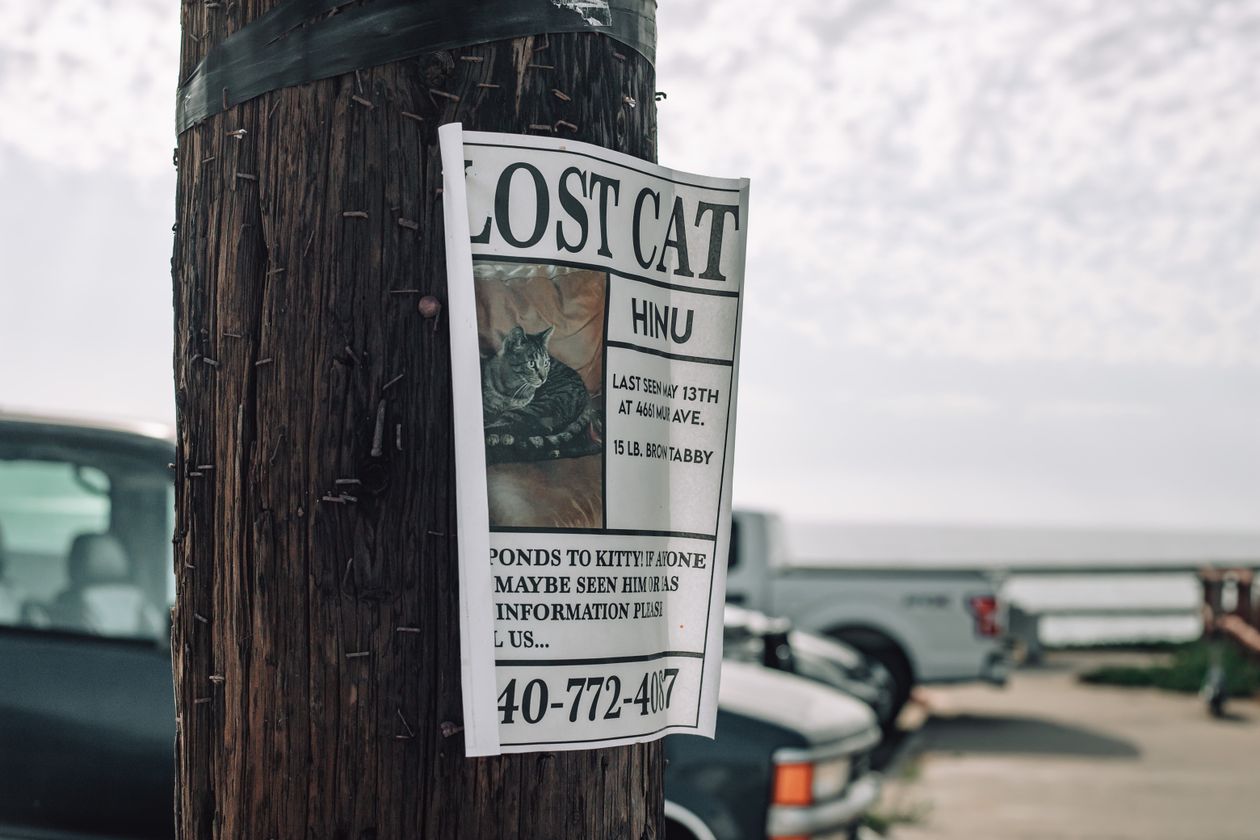
| Getting lost / trapped | Primarily escape events | Higher opportunity | Microchip + current registry details + visible ID when appropriate |
Feline vaccination guidance also emphasizes individual risk assessment rather than a simplistic indoor/outdoor label. Tell your veterinarian about free roaming, catio use, leash walks, boarding, contact with unknown cats and travel so the preventive plan reflects the cat's actual exposures.
The indoor side of the equation: safety is not enough
FelineVMA's 2025 indoor-cat position statement is equally clear on the other half of the debate: many indoor cats do not have their essential environmental needs met. Inadequate environments can contribute to distress, behavioral problems and stress-related disease.
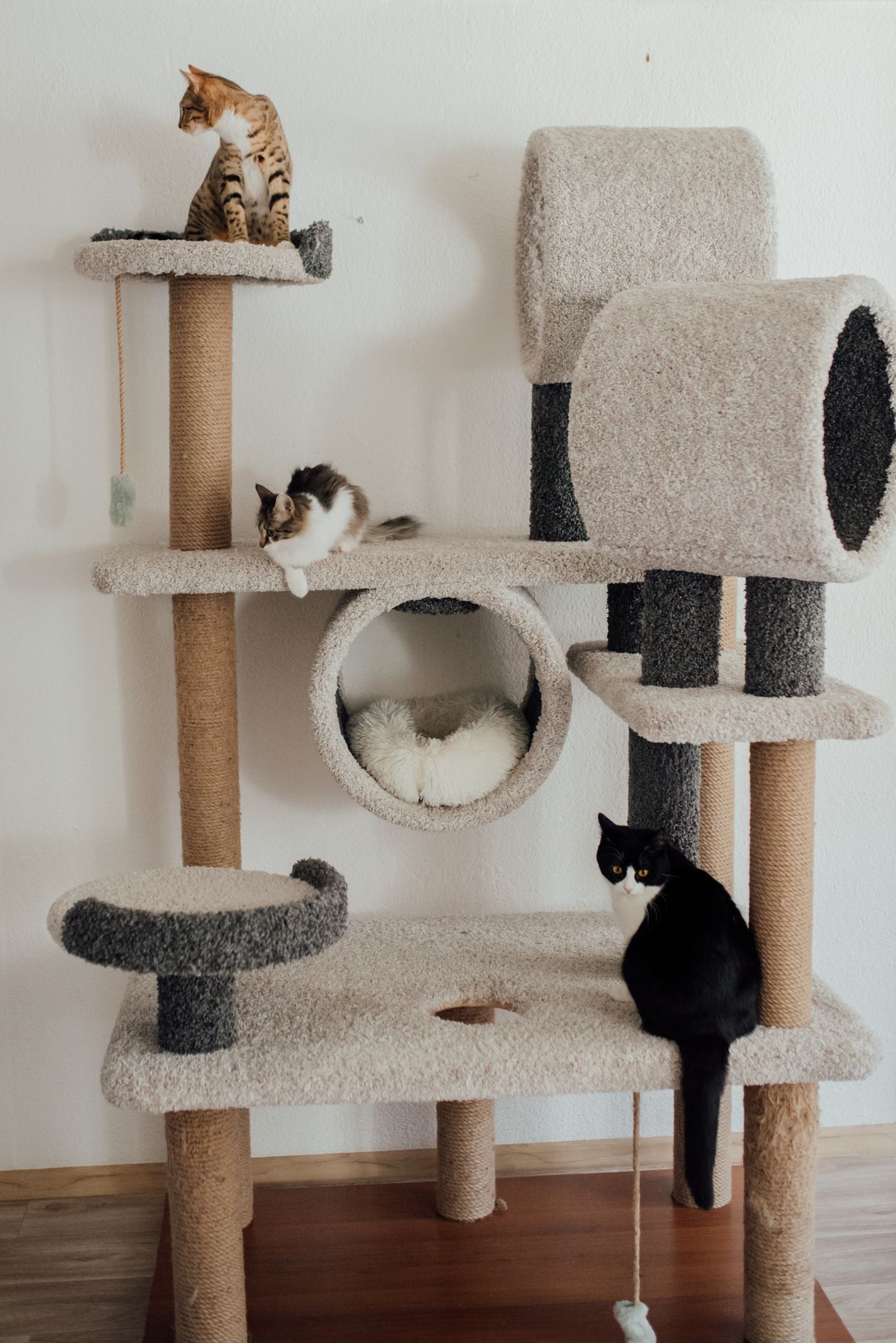
The most useful framework is the Five Pillars of a Healthy Feline Environment:
1. A safe place
Every cat needs reliable hiding and resting areas where it can withdraw without being pursued or handled.
2. Multiple, separated resources
Food, water, litter boxes, scratching areas, play and resting sites should be distributed so one person or cat cannot easily block them.
3. Play and predatory behavior
Give the cat opportunities to stalk, chase, pounce, catch, search and work for food using safe toys and foraging activities.
4. Positive, predictable human interaction
Let the individual cat control how much social contact it wants. Interaction is enrichment when the cat experiences it as positive.
5. Respect for scent and sensory needs
Cats rely heavily on scent. Avoid unnecessary strong fragrances and constant disruption of familiar scent marks.
Information gain: indoor cats do not need a “replacement outdoors.” They need a species-appropriate environment. Outdoor access is one possible enrichment tool, not the only way to meet feline needs.
Is house-soiling, scratching or aggression proof that an indoor cat is bored?
No. These behaviors are commonly oversimplified in lifestyle articles.
- Scratching furniture is normal feline behavior used for marking, stretching and claw maintenance. The better question is whether the cat has acceptable scratching surfaces in the locations and orientations it prefers.
- Urination or defecation outside the litter box can involve box setup, social tension or marking—but also urinary disease, pain and other medical problems. Sudden house-soiling should not be diagnosed as boredom at home.
- Aggression or irritability can reflect fear, conflict, frustration, overstimulation or pain.
- Reduced activity can be environmental, but a sudden change can also be medical.
Medical-first rule: enrichment is valuable, but a new behavior change is not proof that the cat “needs to go outside.” Rule out pain or disease when the change is sudden, persistent or accompanied by other symptoms.
Controlled outdoor access: the third option
FelineVMA specifically recommends controlled outdoor access as a way to add stimulation while minimizing outdoor risk. Three common approaches are:
Catio / enclosed patio
A secure enclosure can provide fresh air, smells, sun and observation without allowing free roaming. Design it so wild birds cannot enter and so the cat cannot escape.
Cat-safe fence or secured yard
A properly designed barrier can reduce roaming, although no generic product is escape-proof for every cat. Inspect the perimeter and supervise early use.
Harness and leash
Some cats learn to enjoy controlled exploration. Introduce the harness indoors with positive reinforcement and let the cat set the pace; do not drag a frightened cat outside.
Screened porch / secure balcony
A safely enclosed existing space can be a simple option. Window screens and balcony barriers must be strong enough to prevent falls and escape.
H5N1 nuance: a catio lowers uncontrolled wildlife contact but does not create a sterile bubble. Do not place food/water where wild birds can contaminate it, and prevent direct contact with birds or visibly contaminated material.
Free roaming and wildlife: the U.S. ecological cost is real
A landmark U.S. systematic analysis estimated that free-ranging domestic cats kill 1.3–4.0 billion birds and 6.3–22.3 billion mammals annually in the contiguous United States. The study also found that un-owned cats account for the majority of the estimated mortality.
That distinction matters. It would be misleading to assign the entire national estimate to owned outdoor pets. But owned free-roaming cats still hunt, and preventing unsupervised hunting protects wildlife while also reducing a cat's contact with potentially infected or injured prey.
Should I convert my outdoor cat to indoor-only?
Sometimes yes, but the old “four-week protocol” approach is too rigid. Cats differ dramatically in history, socialization, health and reliance on outdoor territory. FelineVMA explicitly recognizes that forced confinement can create welfare concerns for some previously outdoor-only cats.
A safer transition strategy is individualized:
- Improve the indoor environment before removing access. Add hiding places, vertical territory, appropriate scratching, play and foraging opportunities first.
- Change routines predictably rather than abruptly when possible. If a medical, wildfire, weather, predator or H5N1 exposure issue makes immediate confinement necessary, maximize indoor resources from day one.
- Replace roaming with controlled options if the cat enjoys them. Catio, secured yard or harness work for some cats—not all.
- Watch the whole cat. Appetite, litter-box use, sleep, play, social behavior, grooming and persistent vocalization matter more than a calendar.
- Get veterinary/behavior help when welfare is deteriorating. Do not assume distress proves free roaming is the only solution, but do not dismiss prolonged distress either.
No fixed “2–4 weeks” promise: some cats adjust quickly, some need months, and some outdoor-only cats may require a different long-term housing strategy.
Does every indoor cat need a second cat?
No. Social compatibility matters more than head count. A bonded pair may provide excellent companionship; an incompatible housemate can create chronic intercat tension.
Watch for subtle signs such as staring, blocking hallways or litter boxes, chasing, avoidance, guarding resources, one cat waiting for the other to leave before eating, or persistent hiding. A second cat should be chosen because the individual cats are likely to benefit—not because “indoor cats always need a friend.”
A practical decision checklist for U.S. cat owners
- Is there fast traffic, heavy wildlife activity, coyotes or other major hazards where I live?
- Does my cat hunt or approach birds, rodents, poultry or livestock?
- Is there current H5N1 activity relevant to wildlife, poultry or dairy cattle in my region?
- Is my cat microchipped, and are the registry contact details current?
- Has my veterinarian reviewed vaccination, FeLV/FIV testing and parasite prevention based on actual lifestyle?
- Does the indoor environment meet the five pillars rather than simply keeping the door closed?
- Can I add a catio, secured yard, screened porch or positively trained harness instead of free roaming?
- If my cat has lived outdoors for years, what transition plan protects both safety and welfare?
- Do any new behavior changes require a medical check before I blame “boredom”?
- Am I also controlling indoor H5N1 routes by avoiding raw pet food and unpasteurized milk?
Frequently asked questions
Are indoor cats always happier than outdoor cats?
No. Happiness and welfare cannot be inferred from location alone. Indoor safety must be paired with an environment that meets the individual cat's physical, behavioral and social needs.
Do indoor cats really live 12–18 years while outdoor cats live only 2–5?
Do not use those figures as a universal rule. The populations behind online estimates often differ dramatically. In a 3,108-cat client-owned necropsy study, outdoor-only cats had lower age at death in the full dataset, but housing differences were not statistically significant among cats that had survived to at least one year.
Does H5N1 mean I should never let my cat outside?
CDC recommends preventing contact with potentially infected birds, poultry, cattle and contaminated environments. For many owned cats, controlled access offers a safer compromise. Your local risk and the individual cat still matter.
Can an indoor-only cat get H5N1?
Yes, rarely. Raw pet food and unpasteurized milk are documented pathways, and CDC notes possible exposure through contaminated animals, people, clothing or surfaces.
Is there a cat vaccine for H5N1?
This guide does not rely on a consumer H5N1 vaccine as a protection strategy. Follow current veterinary/public-health guidance; prevention currently focuses on reducing exposure.
Is a catio safe from bird flu?
It can greatly reduce uncontrolled wildlife contact if designed well, but it is not automatically zero-risk. Prevent birds from entering or contaminating food/water and remove access to sick/dead wildlife.
Is leash walking good for every cat?
No. Some cats enjoy it; others become fearful or freeze. Train gradually indoors with positive reinforcement and stop if the cat is distressed.
Is keeping a cat indoors cruel?
Not inherently. FelineVMA says indoor-only cats need significant effort to meet their environmental needs. A species-appropriate enriched home can support good welfare; forced confinement without those needs being met can create problems.
My outdoor cat screams at the door when kept inside. Does that prove it needs free roaming?
No, but it does mean the transition deserves attention. Improve resources, create predictable routines and consider controlled outdoor access. Persistent distress warrants veterinary or qualified behavior support.
What matters most if my cat still free-roams?
Microchip and current registration, appropriate preventive veterinary care, sterilization, keeping the cat away from wildlife/livestock as much as possible, avoiding raw animal products, and reassessing whether controlled access could replace roaming.
Sources & editorial standard
This September 2026 revision removes false precision and advocacy-style framing. It does not use the unsupported “12–18 vs. 2–5 years” meme as a decision rule, does not claim H5N1 kills a fixed percentage of every infected-cat population, does not claim all indoor cats have zero disease risk, does not diagnose house-soiling or aggression as boredom, does not promise that catios eliminate H5N1, and does not force every formerly outdoor cat into the same four-week transition schedule.
- FelineVMA — 2024 Indoor/Outdoor Lifestyle Position Statement
- FelineVMA — Meeting the Physical and Emotional Needs of Indoor Cats
- AAHA/AAFP — Feline Vaccination Guidelines
- CDC — Bird Flu in Pets and Other Animals
- CDC MMWR, May 7, 2026 — H5N1 Serologic Evidence in a Veterinary Professional Exposed to a Cat
- USDA APHIS — Current HPAI Detections in Wild Birds
- USDA APHIS — Current HPAI Detections in Mammals
- PLOS One — Longevity and Mortality in 3,108 Client-Owned Cats
- Nature Communications — Impact of Free-ranging Domestic Cats on U.S. Wildlife
Educational information only. Lifestyle decisions should account for your cat's medical history, temperament, prior outdoor experience and local environment. H5N1 guidance changes as surveillance changes; use CDC, USDA APHIS and your veterinarian for current local advice.
Track lifestyle changes with Patify

Measure the cat—not the debate
Track outdoor-access days, play, appetite, litter-box use, weight, new stressors and veterinary notes. If you change your cat's lifestyle, trends over several weeks are more useful than one dramatic day at the door.
View Patify on Google PlayBottom line
The strongest evidence does not support a culture-war answer. Free roaming adds real, difficult-to-control hazards; indoor living removes many of them but creates a responsibility to meet the cat's environmental needs. H5N1 strengthens the case for preventing wildlife contact without making indoor cats invulnerable. For many U.S. pet cats, a rich indoor environment plus controlled outdoor access is the most balanced way to protect safety, behavior and welfare at the same time.