

Last updated: September 24, 2026
Quick answer: good cat enrichment is not a pile of toys. It is an indoor environment that gives your cat regular opportunities to hide, climb, scratch, hunt, forage, observe, explore and interact on their own terms. The most useful plan is to improve several parts of the home at once: a safe retreat, vertical space, separated resources, scratching choices, predatory play, food-foraging opportunities and predictable human interaction.
Start with the environment, not shopping. A cardboard box in the right quiet corner, a stable chair beside a window, two well-placed scratchers and five focused minutes of interactive play can add more value than buying ten random toys that all stay on the floor.
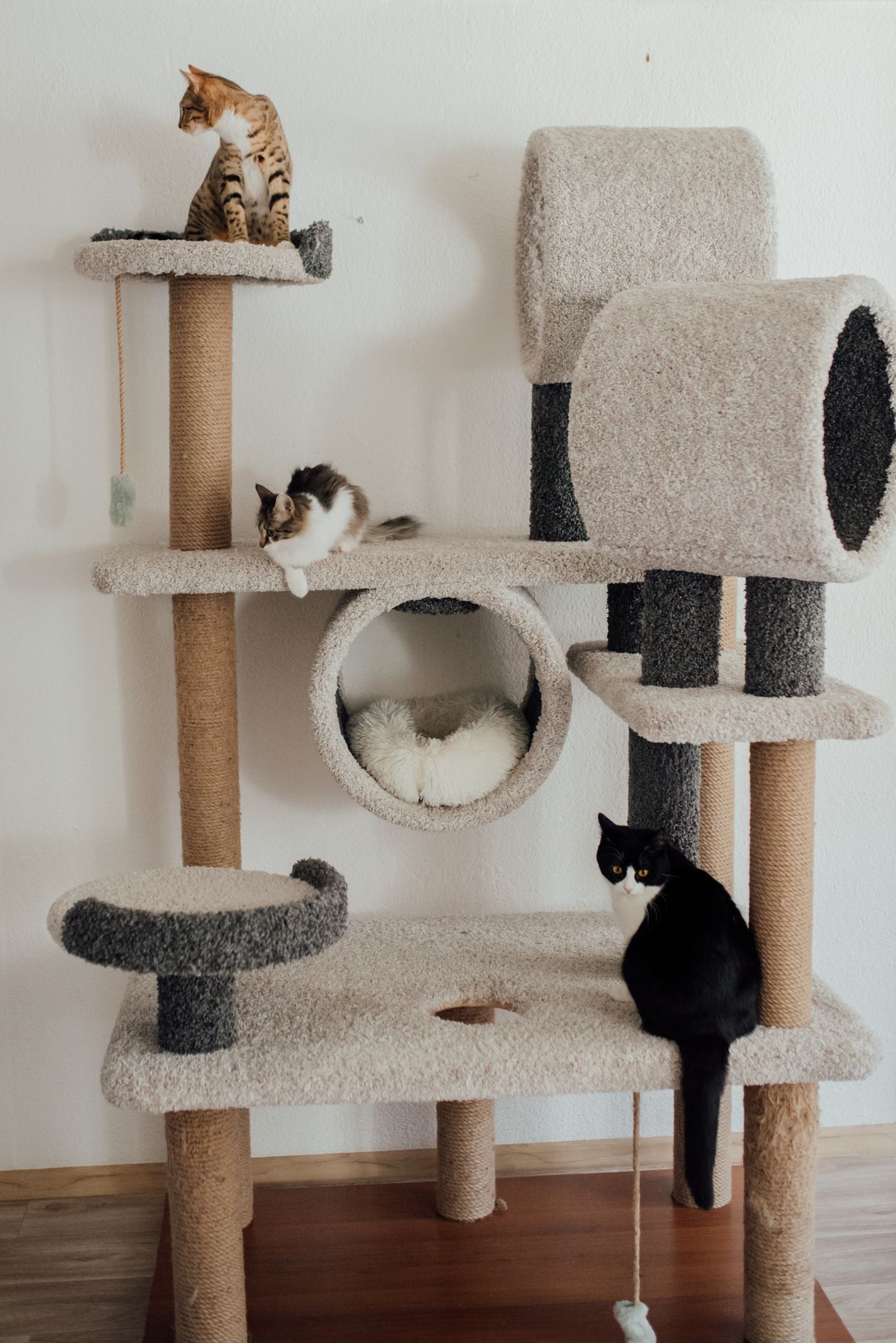
The 7-Zone Indoor Cat Enrichment Framework
FelineVMA's 2025 indoor-cat position statement centers on five pillars of a healthy feline environment: a safe place; multiple and separated key resources; opportunities for play and predatory behavior; positive, predictable human interaction; and an environment that respects the cat's senses, especially smell. AAHA's current enrichment guidance uses the same basic welfare logic.
For practical home planning, those principles can be turned into seven zones:
| Zone | Need | Examples |
|---|---|---|
| 1. Retreat | Safety and control | Box, covered bed, quiet shelf, carrier left open |
| 2. Vertical | Climbing, surveying, distance | Cat tree, shelf route, secure window perch |
| 3. Scratch | Stretching, claw maintenance, scent marking | Vertical sisal post, horizontal cardboard pad |
| 4. Hunt/play | Stalk, chase, pounce, capture | Interactive wand play, rolling prey-like toys |
| 5. Forage | Work for food | Puzzle feeder, scattered portion, hidden kibble |
| 6. Sensory | Watch, smell, explore novelty | Window view, safe new objects, rotated scents |
| 7. Social | Predictable positive interaction | Brief play, training, grooming if enjoyed |
You do not need to “max out” every zone. The goal is to notice which needs your current home barely provides and improve those first.
Zone 1: Give the Cat a Safe Place That Is Actually Optional
A safe place works because the cat can choose it. AAHA and FelineVMA both emphasize hiding/resting options as foundational environmental resources.
Useful low-cost options include:
- a cardboard box with a side entrance;
- a covered bed in a quiet corner;
- an open carrier with familiar bedding;
- a shelf or furniture top the cat can reach safely;
- a space behind a chair or under a table that is not routinely disturbed.
Do not drag a hiding cat out simply because the safe place is “for enrichment.” A refuge loses value if people repeatedly invade it.
Place safety near choice, not isolation
Some cats want a quiet retreat that still allows them to monitor the room. Others prefer a more enclosed space. Give at least two options before deciding what your cat “likes.”
Zone 2: Build Vertical Territory Before Buying More Floor Toys
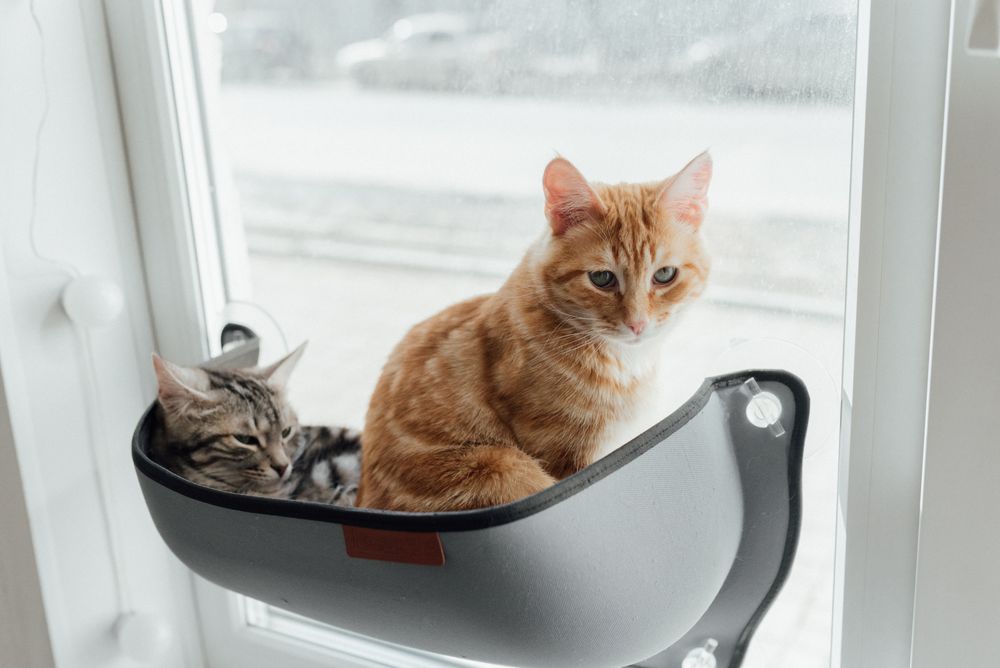
AAHA describes vertical space as important indoor enrichment because cats use elevated positions to survey the environment and to create distance from people or other pets. The Ohio State Indoor Pet Initiative similarly includes perches and resting areas in its basic indoor-cat needs checklist.
Three ways to add height
- Cat tree: choose a stable base and platforms large enough for the cat to rest comfortably.
- Furniture route: clear a safe dresser, bookcase top or sturdy shelf the cat already wants to use.
- Wall route: securely mounted shelves can create a climbing path where drilling and wall structure allow it.
Vertical enrichment is especially valuable in apartments because it expands usable territory without increasing square footage.
Safety: shelves and cat furniture must be stable enough for jumping force. Keep elevated routes away from hot surfaces, fragile objects, open unscreened windows and other fall/escape hazards.
Zone 3: Scratching Is Enrichment, Not Misbehavior
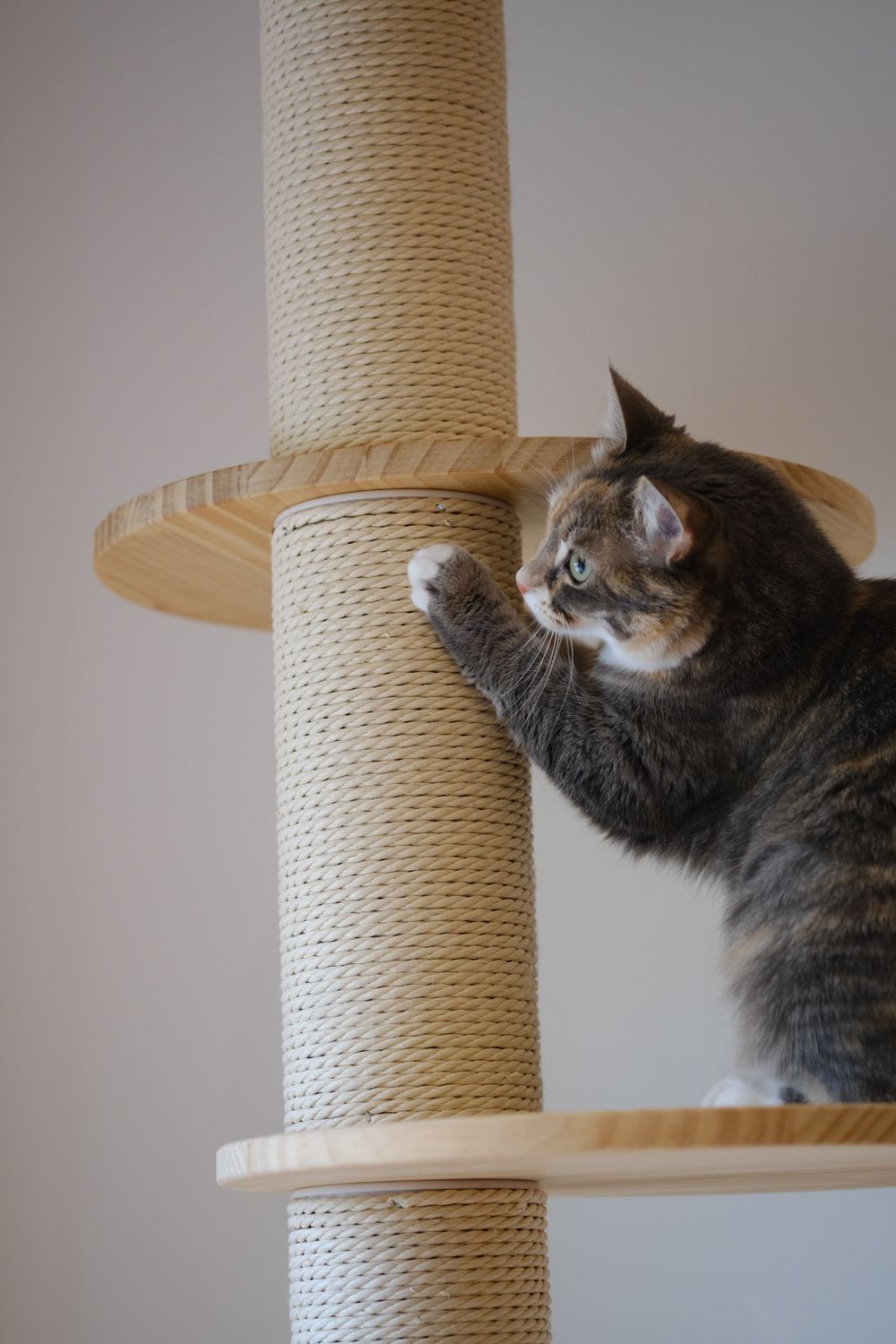
Scratching serves physical and communication functions. Ohio State notes that cats use scratching to stretch, shed claw sheaths and leave scent marks. AAHA recommends providing multiple scratching options rather than treating scratching as something to suppress.
Match the scratcher to what your cat already tells you
- Cat scratches sofa arms or door frames → try a tall vertical scratcher.
- Cat scratches rugs → try a horizontal cardboard or sisal pad.
- Cat ignores a wobbly post → replace it with a more stable one.
- Cat scratches after waking → place a scratcher near a favorite sleeping area.
- Cat scratches at room entrances → add a post near that traffic route.
A single scratcher hidden in a back room may technically exist but still fail the cat's environmental need.
Zone 4: Use Interactive Play to Complete a Hunting Sequence
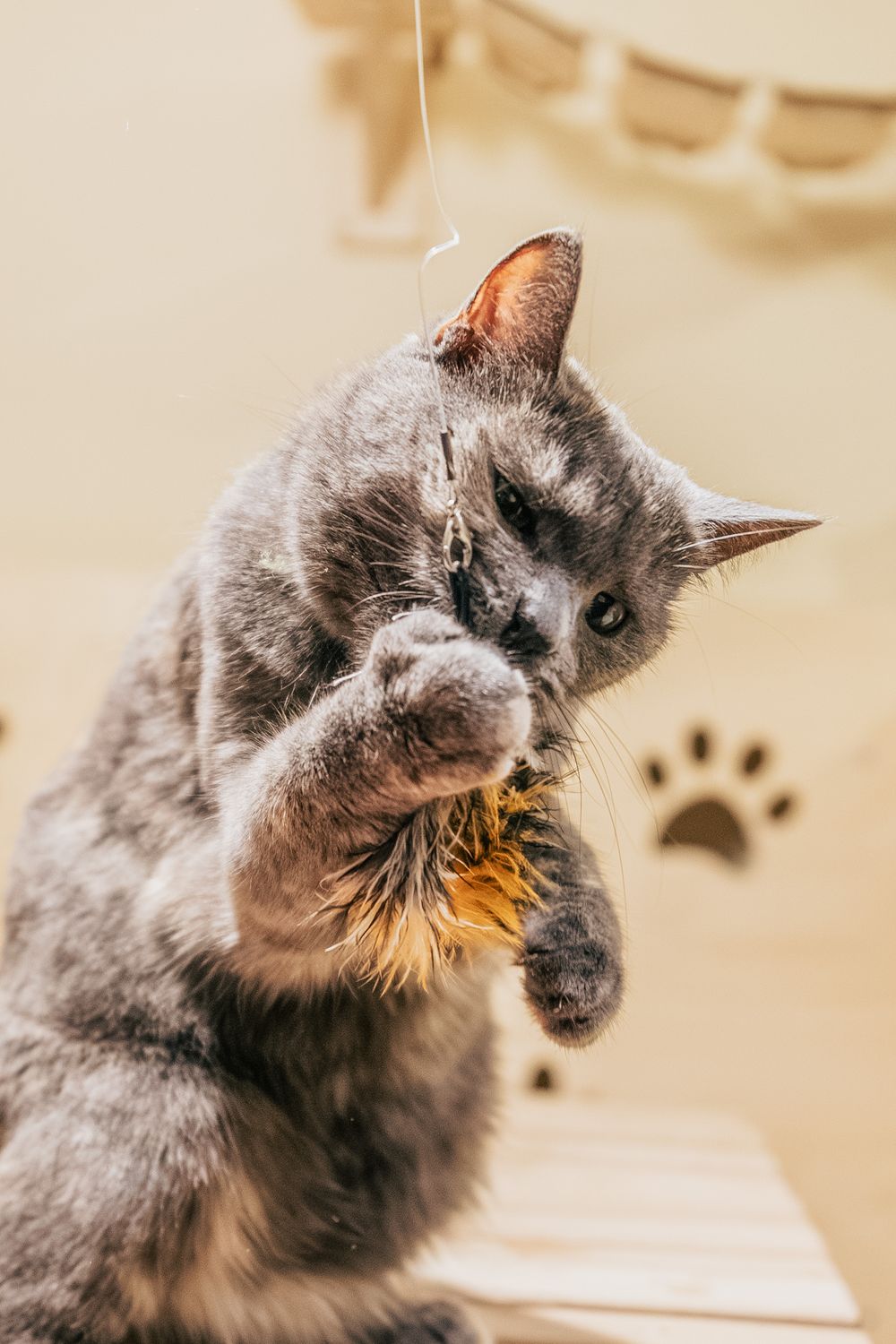
FelineVMA and AAHA both recommend regular opportunities for predatory play. Instead of waving a toy continuously in the cat's face, imitate prey:
- move the toy away from the cat rather than toward the face;
- let it disappear behind furniture;
- pause so the cat can stalk;
- use short bursts of movement;
- let the cat catch the toy periodically.
Several short sessions can work better than one long session for cats that naturally prefer brief activity bursts. Stop if the cat becomes physically tired, distressed or disengaged.
For low-cost toy builds, keep this page focused on the environment and use Patify's DIY cat toys guide for eight paper/cardboard projects with supervision and ingestion-safety notes.
Zone 5: Turn Part of the Food Budget Into Foraging
AAHA's feline life-stage guidance notes that predatory feeding behaviors can be simulated by hiding small amounts of food or using food puzzles when they suit the individual cat. This can add cognitive work without adding extra calories if you use part of the normal daily ration.
Easy progression
- Put a few pieces of kibble beside the regular bowl.
- Move them a short distance away.
- Hide small portions in several easy locations.
- Introduce a simple puzzle feeder with food visible/easy to retrieve.
- Increase difficulty only when the cat is succeeding.
Do not turn feeding into a puzzle your cat cannot solve. Kittens, seniors, cats with mobility problems and cats on medically important feeding schedules may need easier access.
If your cat eats non-food puzzle materials such as cardboard, fabric or plastic, use a safer manufactured feeder rather than escalating DIY complexity.
Zone 6: Window Views, Novel Objects and Scent—Without Overstimulating the Cat
AAHA recommends window views as a simple source of visual enrichment. A secure perch can provide long periods of low-effort observation.
Useful sensory changes include:
- safe window access through intact screens/glass;
- rotating a cardboard box or paper bag into the room;
- moving a perch to a different safe view;
- introducing a new cat-safe object gradually;
- keeping familiar bedding scents rather than over-cleaning every resting surface with strong fragrance.
FelineVMA's five-pillar model specifically includes respect for the cat's sense of smell. Avoid assuming that heavily scented cleaners, perfumes or constant novelty are enriching just because they are noticeable to humans.
What if watching outdoor cats or wildlife causes agitation?
Visual stimulation is only enrichment when the cat can recover comfortably. If a window repeatedly triggers tail lashing, prolonged fixation, redirected aggression or attempts to attack another household cat, reduce access to that trigger and change the setup.
For households deciding how much outdoor access to allow, Patify's indoor vs. outdoor cat guide covers the safety side separately; this article stays focused on indoor welfare.
Zone 7: Make Human Interaction Predictable, Brief and Cat-Led
More interaction is not automatically better interaction. Ohio State notes that many cats prefer shorter, more frequent social contact and often want to initiate it. FelineVMA similarly emphasizes positive, consistent and predictable human-cat interaction.
Useful social enrichment can include:
- brief play sessions;
- reward-based training such as target or carrier training;
- gentle brushing if the cat enjoys it;
- quiet sitting near the cat without touching;
- food-based training using part of the daily ration;
- letting the cat approach and end contact.
Do not use punishment as “stimulation.” Shouting, spray bottles and forced handling add stress rather than enrichment.
A 7-Day Indoor Cat Enrichment Plan
This plan changes one or two variables per day. The goal is not constant novelty; it is a balanced week that touches several feline needs.
| Day | Main enrichment | 5–15 minute action |
|---|---|---|
| Monday | Vertical territory | Clear or add one stable elevated resting/perching location. |
| Tuesday | Predatory play | Run a short interactive session with stalk → chase → capture opportunities. |
| Wednesday | Foraging | Serve part of a normal meal in an easy puzzle or several hidden portions. |
| Thursday | Scratching | Move/add a scratcher where the cat already scratches or rests. |
| Friday | Sensory novelty | Add a safe box, new viewing position or low-pressure novel object. |
| Saturday | Choice/social | Let the cat choose between play, training, brushing or quiet proximity. |
| Sunday | Audit + favorite | Repeat the week's favorite activity and remove ignored/damaged items. |
Track behavior, not purchases
After one week, ask:
- Which perch is actually used?
- Which scratcher orientation gets chosen?
- Which play movement triggers stalking?
- Does the cat solve the food puzzle or walk away?
- Which enrichment produces calm engagement rather than agitation?
The cat's choices tell you where to invest next.
Indoor Cat Enrichment for a Small Apartment
Limited floor area does not automatically mean limited enrichment. Think vertically and multifunctionally.
| Constraint | Low-space solution |
|---|---|
| No room for multiple large cat trees | One stable tree + cleared furniture top + secure window perch |
| Few hiding areas | Boxes under side tables, covered bed, open carrier |
| Furniture scratching | Tall post directly beside target furniture + horizontal pad nearby |
| No long running hallway | Short vertical/diagonal wand play rather than only straight-line chase |
| Food boredom | Use multiple tiny foraging locations across the apartment |
| Nighttime activity | Structured evening play + feeding routine rather than adding random toys at 3 AM |
If your cat routinely wakes you at night, enrichment can be part of the solution but the timing matters. Patify's cat waking at night routine guide covers the sleep-wake behavior problem separately.
Multi-Cat Homes: Duplicate Access, Not Just Objects
AAHA and FelineVMA emphasize that key resources should be distributed rather than clustered. Three bowls lined up side-by-side can still function as one social bottleneck if a confident cat controls the location.
In multi-cat homes:
- spread food, water, litter, scratchers and resting places across different locations;
- provide more than one elevated route or perch;
- run individual play sessions if one cat monopolizes the toy;
- do not make a timid cat pass a housemate to reach a litter box;
- watch for staring, blocking and one-way chasing, not only obvious fights.
If the relationship itself is the problem, use Patify's cat introduction and reintroduction plan rather than treating more toys as a complete fix.
Senior and Mobility-Limited Cats Still Need Enrichment—Make It Reachable
AAHA's feline life-stage guidance notes that mature and senior cats may need easier access to resources as mobility changes. Enrichment should adapt rather than disappear.
For an older cat:
- use lower platforms or step-up routes instead of one large jump;
- place a window bed at an easy height;
- offer horizontal or lower-resistance scratchers if vertical stretching is uncomfortable;
- use food puzzles that do not require forceful batting or prolonged standing;
- move play slowly along the floor;
- keep familiar safe places stable instead of constantly rearranging the room.
A sudden drop in play, climbing, grooming or interaction can reflect pain or illness rather than simple boredom. New behavior changes in senior cats deserve veterinary attention.
Signs Your Current Indoor Setup May Be Too Thin
No single behavior proves “boredom,” and medical problems must not be mislabeled as enrichment deficits. But insufficient outlets can contribute to household behavior problems.
Look for patterns such as:
- persistent furniture scratching despite no appropriate scratcher nearby;
- constant ambushing of people or another cat without enough appropriate play outlets;
- repeated door scratching associated with frustration;
- very little exploration or use of vertical space because none is available;
- food gulping with no foraging opportunities;
- nighttime demands that are reinforced by inconsistent routines;
- toy interest disappearing because everything stays out all the time.
AAHA notes that enrichment can help reduce stress and boredom-related unwanted behavior, but do not use enrichment as a reason to ignore sudden urinary changes, overgrooming, pain, appetite changes or other possible medical signs.
If door scratching is the main complaint, see Patify's door-scratching guide to separate learned attention, frustration and distress.
Common Cat Enrichment Mistakes
- Buying only toys. Hiding, scratching, vertical space and resource distribution matter too.
- Leaving every toy out permanently. Rotation can restore novelty.
- Making puzzles too difficult. Frustration is not enrichment.
- Using hands as prey. Use appropriate toys rather than teaching the cat to attack fingers and feet.
- Never letting the cat catch the toy. Build capture into interactive play.
- Putting all resources in one room. This can create bottlenecks in multi-cat homes.
- Ignoring scratcher preference. Orientation, stability, material and location all matter.
- Changing everything at once. Cats often benefit from predictable routines plus controlled novelty.
- Forcing interaction. Social contact should remain positive and escapable.
- Assuming enrichment fixes medical disease. Sudden behavior change still warrants veterinary assessment.
Frequently Asked Questions
What are the best enrichment ideas for indoor cats?
Start with a safe hiding place, vertical perches, appropriate scratchers, interactive hunting-style play, food puzzles/foraging, window or sensory stimulation, and predictable positive human interaction.
How much enrichment does a cat need every day?
There is no universal minute target. Provide access to environmental resources all day, then add one or more short interactive play/training sessions based on age, health and interest. Several brief sessions often suit cats better than one long session.
Can I enrich my cat without buying anything?
Yes. Boxes, handle-free paper bags, cleared shelves, furniture routes, hidden portions of normal food and intentional interactive time can all add enrichment when used safely.
Is a window enough enrichment for an indoor cat?
No. A window view can add visual stimulation, but cats also need opportunities to hide, climb, scratch, play/hunt, forage and interact.
Should I get a second cat because my cat is bored?
Not automatically. Cats vary in social preference, and adding another cat can create tension rather than enrichment. Improve the current environment first and consider a second cat only as a separate compatibility decision.
Are puzzle feeders good for cats?
They can be useful for cats that enjoy food-based problem solving. Start easy and use part of the normal daily ration. Do not make food access unnecessarily difficult for cats with medical or mobility needs.
Why does my cat ignore expensive enrichment toys?
The object may not match the cat's preferred play style, may be too difficult, may have lost novelty, or may be placed in an uninteresting location. Watch what your cat already chooses to chase, scratch, climb, hide in and observe.
Do indoor cats need outdoor time to be happy?
Not necessarily. Indoor welfare depends on whether species-typical needs are met. Controlled outdoor access such as a secure catio can add stimulation for some cats, but it is not the only way to provide a rich environment.
Bottom Line: Enrichment Is an Environment, Not an Item
If you want one practical checklist, make sure your cat can:
- hide somewhere undisturbed;
- get above floor level;
- scratch in a preferred orientation;
- stalk, chase and capture during play;
- work for some food if they enjoy it;
- watch and explore safe sensory changes;
- interact with people predictably and on their terms.
Then watch what the cat actually uses. The best enrichment plan is not the one with the most products—it is the one that repeatedly produces relaxed exploration, healthy play, choice and normal species-typical behavior.