
Last verified: September 29, 2026
DIY Catio Plans: Build the Enclosure Around the Site, Not the Photo
Quick answer: a safe DIY catio needs more than four mesh walls. Choose the access route and location first, then plan the roof, walls, base, human door, cat access connection and every junction between them. For most homes, the three practical formats are a compact window catio, a larger wall-attached walk-in catio, or a stand-alone enclosure connected by a secure tunnel.
The strongest DIY approach is to use a complete plan for the structural details, then customize enrichment around your cat. BC SPCA publishes separate free plans for window, enclosed-porch and stand-alone catios, while Cat Friendly Homes, Best Friends and Cats Protection all support secure outdoor enclosures as one way to provide controlled outdoor access. This guide helps you choose and audit a design without pretending that one set of lumber dimensions works for every house.
Patify’s 6-boundary rule: before a cat enters, inspect roof → walls → floor/base → door → house/tunnel connection → service/maintenance access. A catio is only as secure as its weakest junction.
Choose the Catio Type Before Choosing the Lumber
| Type | Best fit | Main advantage | Main design challenge |
|---|---|---|---|
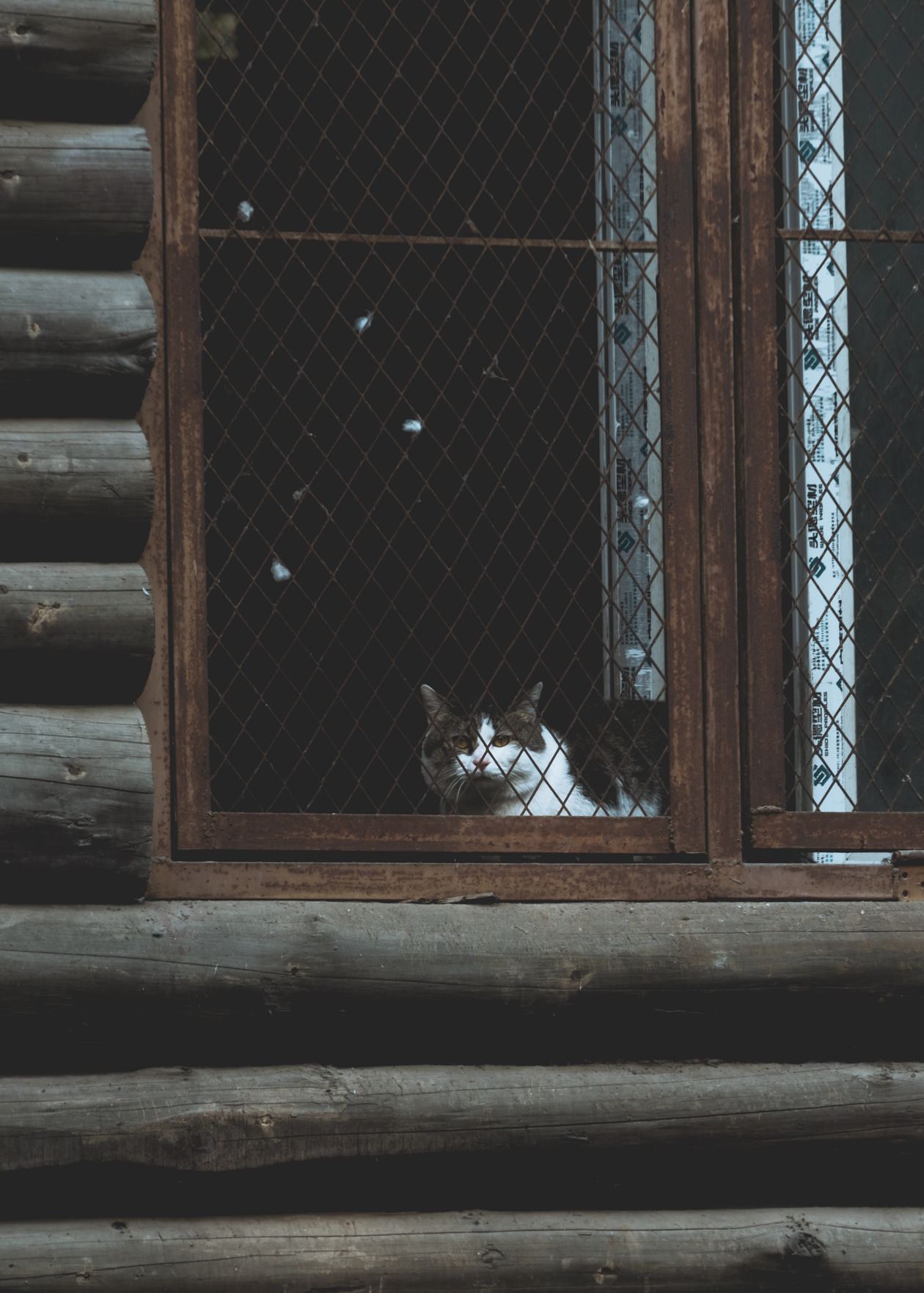
| Window catio | Apartment/compact house with a suitable window and permission to attach | Small footprint; direct indoor access | Supporting the load and sealing the window junction |
| Wall-attached walk-in | Patio, deck or yard beside the house | Enough height for shelves and human cleaning access | Wall attachment, roof drainage and ground boundary |
| Stand-alone + tunnel | Yard where the best enclosure location is away from the house | Flexible placement and larger footprint | Secure tunnel, base anchoring and more junctions to inspect |
BC SPCA’s catio resources use exactly this kind of site-first thinking. Its stand-alone example is an 8-foot-tall enclosure with a tunnel option, while its other plans are designed for windows or existing porches/decks. Those dimensions belong to those specific plans; they are not universal catio standards.
Which one is easiest for a beginner?
The easiest project is the one that minimizes structural unknowns at your property. A small ground-supported enclosure may be easier than a cantilevered window box if you are unsure how to anchor into the wall. Conversely, converting an already sound screened porch may require less framing than building a new freestanding structure.
Do not choose solely by Pinterest appearance. A photo does not show fastener spacing, framing support, roof load, waterproofing, buried gaps or how the cat gets back indoors.
Site Check: Do This Before Buying Materials
1. Confirm permission and restrictions
If you rent, live in a condo/HOA property or plan to alter an exterior wall, balcony, deck or window, check the relevant owner, building and local requirements before drilling or attaching anything. Building and permit rules vary by jurisdiction, so a U.S.-wide article cannot tell you that your project is automatically exempt.
2. Map sun and shade
Cats Protection recommends a catio with both sun and shade and access back inside so the cat can escape weather. Visit the site in morning, midday and late afternoon. A north-facing window box and an exposed west-facing patio can have very different heat loads.
3. Identify drainage
Where will roof runoff go? Where does rain pool now? Do not create a low spot that keeps the catio floor wet or directs water toward the house foundation.
4. Check the ground boundary
Best Friends recommends a firm base or at least secure hardware-cloth-type ground protection so animals cannot dig in or out. Cats Protection likewise warns that the floor must not allow cats to dig out or other animals to dig in.
5. Plan human access
Best Friends points out that a human-height catio is much easier to clean and maintain. Even a small window unit needs a safe way to retrieve a frightened or sick cat and inspect the structure.
6. Decide how the cat gets home
The best layout gives the cat direct, controllable access from indoors through a window, cat door or secure tunnel. Cats Protection emphasizes choice: cats should be able to retreat back indoors instead of being carried into a freestanding pen and trapped there.
The 6-Boundary Catio Safety Checklist
Most DIY failures happen at transitions rather than in the middle of a wall. Use this audit after framing and again after weather has had time to move materials.
| Boundary | What to inspect | Common failure |
|---|---|---|
| 1. Roof / top | Continuous containment, drainage, wind security, shade | Open strip at roof edge; panel lifts in wind |
| 2. Walls | Mesh strength, attachment, covered cut edges, panel joints | Staples pull out; mesh flexes away from frame |
| 3. Floor / base | Dig-under gaps, rot, drainage, slab/deck joints | Cat noses under loose mesh; predator digs inward |
| 4. Human door | Latch, hinge gap, threshold, door swing | Latch can be bumped open; cat slips through while you enter |
| 5. House / tunnel connection | Window/cat-door seal, tunnel joints, wall gaps | Small escape gap where materials meet |
| 6. Service access | Safe cleaning and emergency retrieval | No way to reach cat or repair upper panel |
Inspection trick: test the corners, edges and junctions more aggressively than the center panels. The center of a mesh sheet is rarely where a DIY enclosure first fails.
DIY Catio Materials: What Matters and What Is Plan-Specific
Frame
BC SPCA’s free stand-alone plan specifies cedar because of its outdoor durability. This Old House also uses cedar in its window-catio project. Other materials can work, but do not substitute a lighter or weaker frame material into a plan without recalculating how it is supported and braced.
Mesh
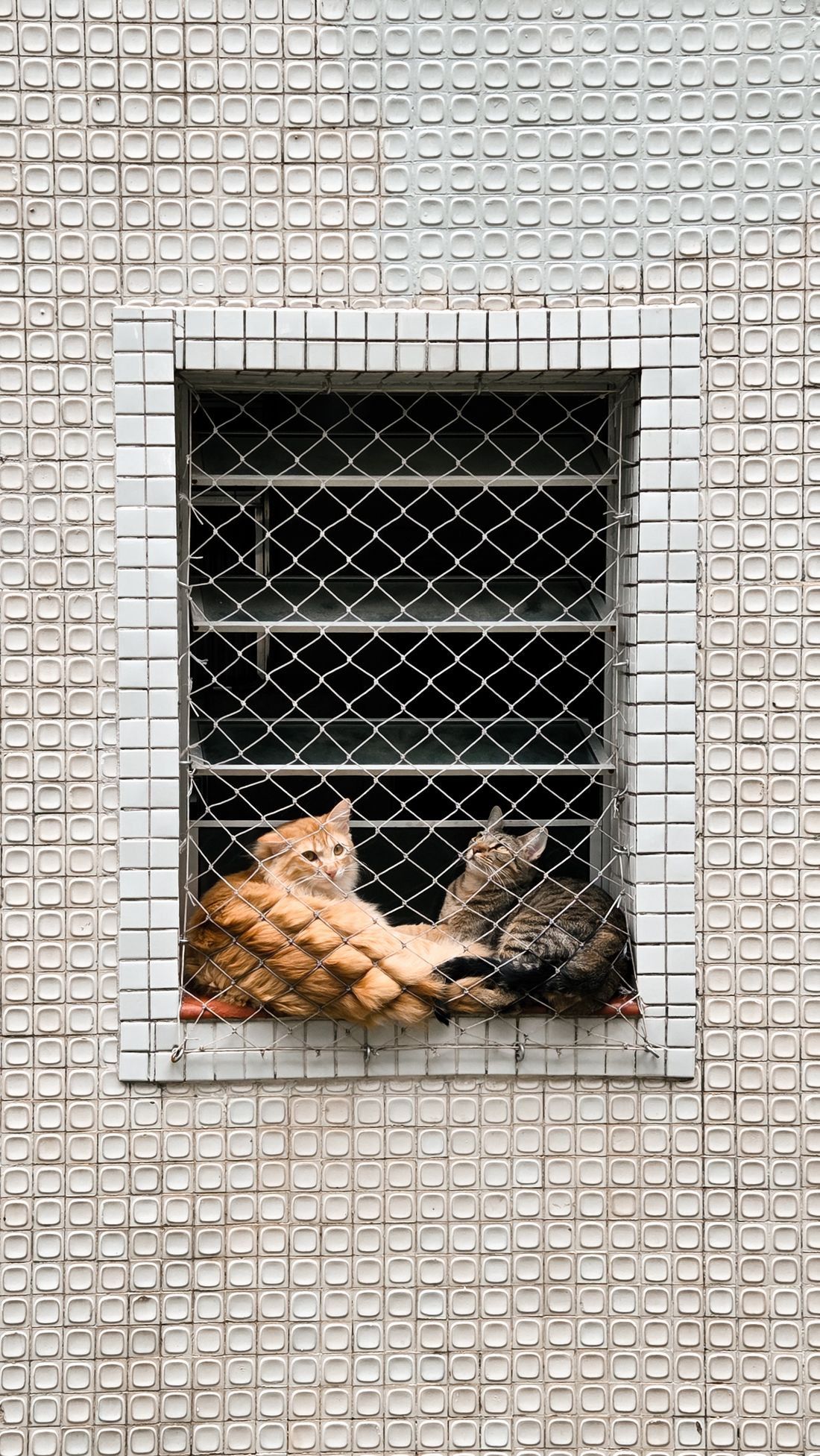
BC SPCA specifies stainless or galvanized 1 × 1-inch wire mesh for its stand-alone plan to resist weather damage. Cats Protection’s broader requirement is that the wire/metal mesh be sturdy enough that the cat cannot claw or chew out and other animals cannot claw or chew in.
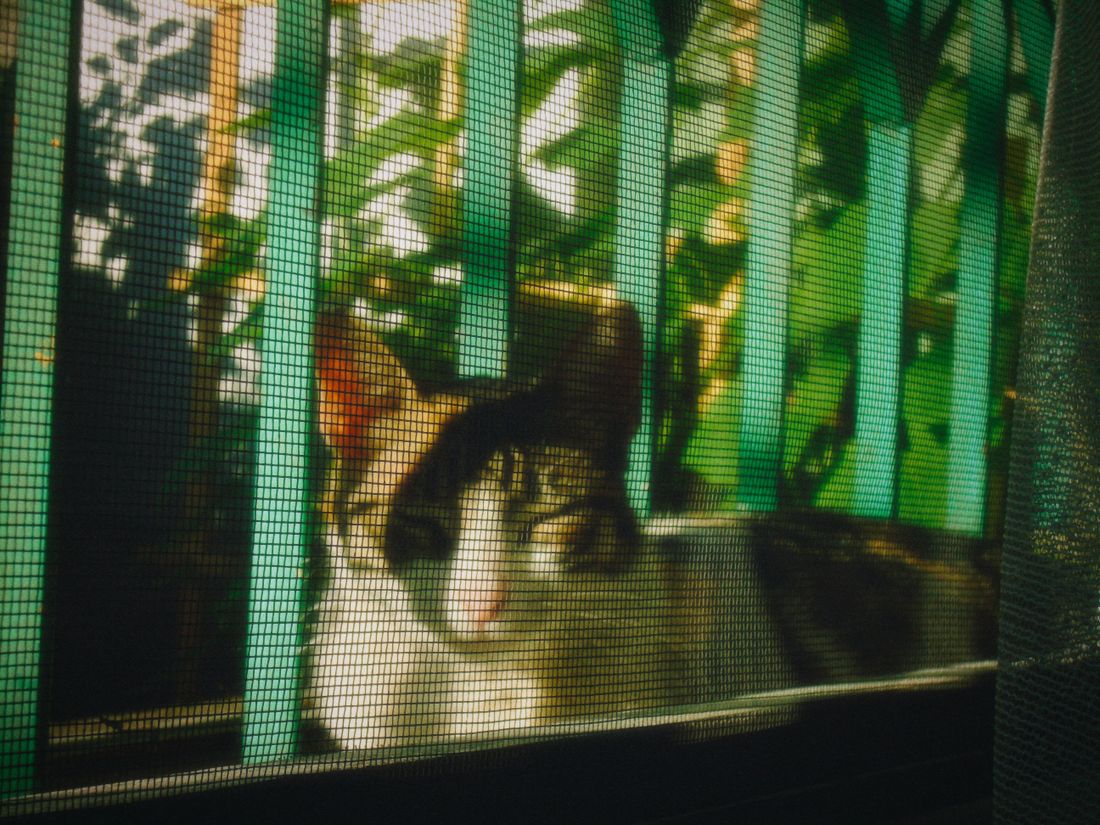
Do not treat ordinary insect window screen as a structural catio wall. It is designed to stop insects, not contain an animal or resist outside pressure.
Fasteners
Use exterior-rated fasteners and the exact fastening method specified by the plan. BC SPCA’s stand-alone plan uses deck screws and long staples for the wire mesh. Cover or fold sharp wire cut edges so paws and noses cannot reach them.
Roof
You can use a secure mesh top, a solid weather roof or a combination depending on the plan and climate. Cats Protection notes that a solid roof can provide rain shelter; Best Friends stresses that the catio must have a top even if it is not a conventional solid roof.
Wood finish
BC SPCA advises pet-safe wood preservatives for exposed plywood and specifically suggests water-based, low-VOC products free of heavy metals while avoiding creosote. Follow product cure times before allowing cat access.
Floor
Suitable surfaces can include a sound deck, pavers, grass or another stable, drainable base. Cats Protection notes that cats may avoid muddy or uncomfortable ground. Whatever surface you choose, the perimeter must not create a dig-under or squeeze-through route.
Plan 1: Compact Window Catio
Best for: one or two cats who primarily want sun, air and an observation perch, with limited exterior floor space.
Design concept
A framed box projects outside a suitable window, with mesh walls/top and a solid or weather-protected floor. The window opening becomes the access portal.
Critical questions before building
- What carries the weight: wall brackets, ground posts, deck structure or another engineered support?
- How does the unit attach without creating water intrusion around the window?
- Can the window still close securely when catio access is disabled?
- Can you reach the enclosure for cleaning and repairs?
- Does the design leave an emergency egress or required window function unobstructed?
Build flow
- Measure the actual exterior window opening and trim—not just the glass.
- Choose a complete window-catio plan matched to the support method.
- Build the frame square on a flat surface.
- Install mesh panels with covered cut edges.
- Install the floor and roof according to the plan.
- Install the support system.
- Lift/attach the enclosure only with adequate help and safe access equipment.
- Seal the window junction without blocking drainage paths.
- Add one stable perch and a non-slip resting surface.
- Perform the six-boundary test before opening access.
This Old House rates its attached window-catio project as moderate difficulty and specifically identifies lifting/installation as one of the harder parts. If your project depends on attachment details you cannot verify, use a qualified builder rather than improvising.
Plan 2: Wall-Attached Walk-In Catio
Best for: patios, decks or yards where you want multiple vertical levels, easier cleaning and enough room to sit with your cat.
Suggested layout zones
| Zone | Purpose | Example |
|---|---|---|
| Indoor connection | Safe in/out choice | Cat door or secure window portal |
| Low zone | Litter / easy-access rest | Sheltered litter box, senior step |
| Mid zone | Travel route | Wide shelves, ramps, bridge |
| High zone | Observation and refuge | Perch with shade and clear view |
| Human aisle | Cleaning and maintenance | Walkable path to all corners |
Door design matters
Use a reliable latch the cat cannot manipulate and inspect the hinge-side gap. If your cat is a door-rusher, consider a small vestibule or two-door entry rather than one door opening directly from the yard into cat space.
Deck attachment
Do not assume an existing railing or decorative privacy screen is structurally suitable for enclosure loads. If the catio attaches to a deck, wall or roofline, the plan must match that structure and local requirements.
Plan 3: Stand-Alone Catio With a Secure Tunnel
Best for: yards where the most comfortable or shaded location is away from the house.
BC SPCA publishes a free stand-alone catio plan with a tunnel-access option. Its example is approximately 8 feet wide, 8 feet tall and 3 feet deep, with a tunnel extending from the house; importantly, BC SPCA states the measurements are examples and should be modified for the site.
Why a tunnel is better than carrying the cat outside
A tunnel preserves choice. The cat can move from indoor territory to the enclosure and retreat without being picked up and placed into a pen. Cats Protection specifically favors direct house access and cautions that separate pens/runs can leave a cat feeling trapped when they do not control entry and exit.
Tunnel checklist
- fully enclosed top, sides and bottom;
- no sharp wire edge at transitions;
- wide/tall enough for comfortable movement;
- supported so it cannot sag or separate;
- removable or accessible for cleaning;
- every connection mechanically secured, not merely wedged in place;
- shade if the tunnel receives intense sun.
A Safe General Build Sequence
This is an assembly workflow, not a structural blueprint. Lumber sizes, fastener spacing, anchors and load-bearing details must come from your chosen plan and site.
- Measure and mark the site. Include doors, window trim, drainage, roof overhang and utilities.
- Confirm plan + permissions. Resolve structural and property questions before cutting.
- Prepare the base. Level, drain and secure the perimeter.
- Build wall frames square. Check diagonal measurements before final fastening.
- Assemble and brace the frame. A tall rectangle needs resistance to racking, not just vertical posts.
- Install mesh. Tension it evenly; cover sharp cut edges.
- Close the roof boundary. Add weather cover/shade as designed.
- Install the human door and latch.
- Complete the indoor/tunnel connection.
- Add shelves only after the enclosure shell is secure.
- Clean the site. Remove wire clippings, screws, splinters and construction debris.
- Run the six-boundary inspection.
- Test without the cat. Push mesh, tug latches, open/close access repeatedly and inspect from inside/outside.
Catio Shelves and Enrichment: Build for Behavior, Not Decoration
BC SPCA’s enrichment guide recommends perches at varying heights because cats value elevated observation points. Cat Friendly Homes likewise treats vertical space, scratching, exploration and safe outdoor stimulation as important environmental opportunities.
Useful features
- wide resting shelves rather than only narrow “catwalks”;
- at least one sheltered hide;
- stable scratching post/log;
- different elevations with more than one route if space allows;
- sun perch plus shade perch;
- outdoor-safe bed or washable mat;
- secure water station for longer sessions;
- covered litter box if the cat spends substantial time outside.
For senior or mobility-limited cats
Use lower shelves, shorter vertical steps and ramps with traction. Cat Friendly Homes specifically includes secure outdoor enclosures as an option for cats whose mobility or pain makes previous outdoor routines harder.
For a broader enrichment plan beyond the catio, Patify’s indoor cat enrichment guide covers hiding, vertical territory, scratching, predatory play, foraging and sensory stimulation as a seven-zone system.
Weatherproofing: Shade Is a Safety Feature
Heat
Provide shade throughout the period the catio is used. A transparent roof can block rain while still allowing intense solar heat, so “covered” does not automatically mean cool. Always preserve access back indoors and fresh water.
Rain
A partial solid roof can create a dry zone, but direct runoff away from the house and away from areas where the cat must walk. Outdoor bedding and litter areas should stay dry.
Wind
Inspect roof panels, mesh edges and tall frames after high winds. A structure that feels rigid on a calm build day can rack or loosen over time.
Cold
Best Friends advises against leaving cats in a stand-alone outdoor structure in very cold conditions and recommends indoor/heated access. A catio is not automatically a four-season shelter.
Plants
Do not assume “garden plant” means cat-safe. Identify every plant the cat can chew before adding pots or letting vegetation grow through mesh. If identification is uncertain, keep it out of the enclosure.
DIY Catio for Multiple Cats: Add Routes, Not Just Square Feet
Two cats can have plenty of nominal floor area and still conflict if one controls the only doorway, high shelf or tunnel.
Multi-cat design upgrades
- multiple resting heights;
- two or more routes between major levels where possible;
- no dead-end perch that another cat can block;
- more than one shaded resting location;
- resource placement that avoids narrow bottlenecks;
- enough width for cats to pass without body contact;
- indoor escape routes that are not controlled by one cat.
A catio can enrich a good relationship, but it does not fix intercat tension by itself. If one cat blocks or chases another, use Patify’s cat introduction/reintroduction plan rather than treating extra outdoor space as the only solution.
First Use: Test the Catio Without Forcing the Cat Into It
Cats Protection recommends allowing the cat to enter and explore a new catio voluntarily rather than picking them up and placing them inside.
Before opening access
- microchip/contact details current;
- preventive healthcare appropriate for your cat’s lifestyle discussed with your veterinarian;
- all construction tools and wire fragments removed;
- door and access point tested repeatedly;
- shade and indoor retreat available;
- no toxic/unknown plant within reach;
- no dangling cord or loop likely to entangle a cat.
First session
- Choose calm, dry weather.
- Open the catio access while the indoor retreat remains available.
- Let the cat investigate the doorway.
- Reward voluntary exploration if food rewards suit the cat.
- Do not close the cat outside to “make them get used to it.”
- Supervise and observe where the cat hesitates, climbs or tests mesh.
- End by letting the cat return indoors freely.
Cat Friendly Homes also recommends reward-based training for teaching cats to move through a cat door or into a secure outdoor enclosure.
Monthly Catio Maintenance Audit
A catio that was secure on build day is not permanently secure. Wood moves, staples loosen, mesh corrodes, plants grow and animals dig.
| Check | Look for |
|---|---|
| Mesh | Rust, broken welds, pulled fasteners, sharp edges |
| Frame | Rot, splitting, loose joints, racking |
| Roof | Leaks, loose panels, debris buildup, wind damage |
| Base | Digging, erosion, standing water, new gaps |
| Door | Latch wear, hinge sag, larger threshold gap |
| Tunnel/window | Separation, seal failure, loose connection |
| Shelves | Loose screws, flex, slippery/wet surfaces |
| Plants | New growth through mesh, unknown volunteers, fertilizer/pesticide exposure |
Repeat a fuller inspection after storms, construction nearby or any incident where an outside animal contacts the enclosure.
How Much Does a DIY Catio Cost?
There is no stable national price because the largest cost drivers are dimensions, lumber species, mesh, roofing, access hardware, foundation/base work and whether you already own tools.
This Old House lists roughly $500 for its specific cedar window-catio project in its 2026 update, but that number belongs to that particular design and material list. It should not be turned into “the average U.S. catio price.”
Budget in this order
- structural frame/support;
- secure corrosion-resistant mesh;
- roof/top and weather protection;
- door/latch and cat access hardware;
- base/drainage;
- exterior-rated fasteners/finish;
- shelves and enrichment;
- professional help if attachment or load details exceed your skill.
Cut decorative features before you cut containment quality.
12 Common DIY Catio Mistakes
- Copying a finished photo instead of using a real plan.
- Using insect screen as the primary enclosure wall.
- Building walls but leaving the top escapable.
- Ignoring the floor/dig-under boundary.
- Leaving sharp mesh cut edges exposed.
- Creating only one high perch for multiple cats.
- No human access for cleaning or emergencies.
- Putting a cat in a stand-alone pen with no voluntary retreat indoors.
- Using unknown treated/painted scrap materials.
- Assuming a clear roof automatically provides shade.
- Skipping landlord/HOA/local building checks before attachment work.
- Never re-inspecting after weather and seasonal movement.
Frequently Asked Questions About DIY Catios
What is the easiest DIY catio?
A compact design with few structural unknowns is usually easiest. For some homes that is a ground-supported enclosure; for others it is a small window box. Choose a complete plan that matches the site rather than assuming the smallest catio is automatically easiest.
What mesh should I use for a catio?
Use sturdy corrosion-resistant wire/metal mesh specified by a proven plan. BC SPCA’s stand-alone plan uses stainless or galvanized 1 × 1-inch wire mesh. Do not treat ordinary insect screen as structural containment.
Does a catio need a roof?
It needs a secure top boundary. Best Friends notes that this may be a roof or another securely attached top material. A solid roof can additionally provide rain/shade protection.
Does a catio need a floor?
It needs a secure ground boundary. That may be an existing deck/slab or another planned base, but cats should not be able to dig out and outside animals should not be able to dig in.
Can I build a catio on a balcony?
Potentially, but balcony work requires special attention to building permission, fall hazards, attachment restrictions, wind and load. Do not simply place a ground-level catio plan on an elevated balcony.
Can I use chicken wire?
Use the mesh specified by your chosen plan and a material strong enough to resist clawing/chewing from both sides. BC SPCA specifies galvanized or stainless wire mesh in its published plan rather than lightweight insect screening.
Should the catio connect directly to the house?
Direct access is often preferable because the cat can choose when to enter and retreat. Cats Protection specifically recommends free access back indoors.
Can a catio be freestanding?
Yes. BC SPCA publishes a stand-alone plan with a secure tunnel option. Connecting the structure back to the home preserves voluntary access better than routinely carrying the cat into a detached pen.
How tall should a catio be?
There is no universal minimum for every design. Best Friends favors human-height structures for easier cleaning and because cats value vertical space, but a compact window box serves a different purpose. Follow the dimensions of a complete plan matched to your site.
What should I put inside a catio?
Prioritize stable shelves/perches, shade, a hide, scratching surface and comfortable resting area. Add water and a sheltered litter box when the cat spends longer periods there.
Can a senior cat use a catio?
Yes if access is easy and the layout fits mobility needs. Use lower steps, ramps with traction, broad shelves, shade and a straightforward route back indoors.
Should I lock my cat in the catio so they get used to it?
No. Cats Protection recommends letting cats explore voluntarily. Keep indoor retreat available and build positive, low-pressure exposure.
Do I need a permit for a catio?
Possibly. Requirements vary with city/county, property type, attachment method and project size. Check local building rules plus landlord, condo or HOA restrictions before exterior structural work.
How often should I inspect a catio?
Do a quick check whenever you use it and a deeper periodic inspection of mesh, frame, roof, base, latches and connections. Reinspect after severe weather or contact with wildlife.
Sources Checked for This Guide
- BC SPCA — How to Build a Catio: site choice, types, direct access, vertical space and free plan library.
- BC SPCA — DIY Stand-Alone Catio Plan: example dimensions, cedar frame, galvanized/stainless wire mesh, plywood roof, fasteners and tunnel construction.
- BC SPCA — DIY Catio Extras: shelves, perches and enrichment.
- Cat Friendly Homes / FelineVMA — Safe Outdoor Access Options: secure enclosure examples and controlled outdoor access.
- Cat Friendly Homes / FelineVMA — Indoor vs Outdoor Cats: safe outdoor environments and environmental needs.
- Cat Friendly Homes — Cat Training Techniques: reward-based entry/exit training for secure outdoor enclosures.
- Best Friends Animal Society — Outdoor Catio Ideas: top, base, human access, weather and enrichment considerations.
- Cats Protection — Are Catios Good for Cats?: mesh, floor, roof, free indoor access, shade, perches and voluntary introduction.
- Humane World for Animals — Catios: controlled outdoor access and enrichment context.
- This Old House — How to Build a Catio: current window-catio build sequence, materials, skill and project-cost example.
- Pexels — mesh window cat cover image
- Pexels — cats behind protective mesh support image
- Pexels — screened outdoor-view support image
- Pexels License
Editorial note: this guide provides planning and safety logic, not site-specific structural engineering; load-bearing attachment, balcony work, exterior alterations and permit requirements must be checked for the actual property. Sources were reviewed September 29, 2026.