
Last updated: September 24, 2026
Quick answer: responsible cat rehoming has four jobs: confirm that rehoming is really necessary, describe the cat honestly, screen for a compatible home, and document the transfer. If you can safely keep the cat while searching, direct home-to-home placement may avoid a shelter stay. Do not hide medical or behavior history, do not hand the cat to the first stranger who messages, and do not treat one unanswered application question as proof that someone is a bad adopter. Your job is to find a workable match.
Start with the reason. Housing, cost, temporary illness, a new baby, behavior problems and conflict with another pet do not all require the same solution. Some problems can be fixed with local support; others make rehoming the safer long-term choice. Humane World and Best Friends both recommend checking retention resources before surrender when the barrier may be temporary.
First Decide Whether the Problem Is Temporary or Permanent
Rehoming is sometimes the responsible choice. But before you build an adoption listing, identify the barrier accurately because some common surrender reasons can be solved without moving the cat.
| Main problem | Try before rehoming, if safe and realistic | When rehoming may still make sense |
|---|---|---|
| Veterinary cost | Ask clinics about lower-cost options, payment resources, local nonprofit aid or pet-support programs | Required care is beyond what you can sustainably provide and no workable support exists |
| Food/basic supply cost | Pet food pantries, local humane groups, community-support programs | Housing/care instability is broader and ongoing |
| Housing | Pet-friendly housing search, landlord discussion, local housing support | No safe legal housing option can include the cat |
| Cat-cat conflict | Resource separation, slow reintroduction, veterinary/behavior assessment | Chronic fear/injury continues despite a realistic behavior plan |
| New behavior problem | Veterinary exam first if sudden; then appropriate behavior plan | Risk remains unacceptable or the household cannot safely manage treatment |
| Temporary caregiver crisis | Family/friends, emergency foster, temporary boarding/support | No temporary care is available and duration is uncertain |
| Severe allergy/health issue | Medical advice for the affected person; environmental management where appropriate | Medical needs and safe cat care cannot coexist in the home |
Humane World specifically recommends contacting local rescues, pet-support organizations or 211 when help with pet-friendly housing, food, veterinary care or behavior might keep a pet safely in the home. Best Friends also points owners toward local pet pantries, emergency foster and low-cost veterinary services.
If the main issue is conflict between household cats, Patify's step-by-step cat introduction and reintroduction guide can help you decide whether the relationship still has a realistic management path before rehoming becomes necessary.
If Rehoming Is Urgent, Separate “Today’s Safety” From “Permanent Placement”
Sometimes you do not have weeks. Domestic violence, eviction, hospitalization, unsafe aggression, natural disaster or another crisis can create a genuine deadline.
If the cat is safe with you today but time is short:
- call local shelters and rescues immediately and ask about appointment-based surrender, managed intake, emergency foster and courtesy listing options;
- ask trusted family/friends whether they can provide temporary care while you screen adopters;
- contact local veterinary clinics, humane organizations and community-support networks for emergency pet resources;
- prepare medical records and a truthful profile the same day rather than waiting until the final deadline.
If a human or animal is in immediate danger, prioritize physical safety first. A self-rehoming website is not an emergency service.
Do not abandon the cat outside, at a vacant property or in front of a closed shelter. If you cannot continue care, call local animal services/shelters and ask for the lawful intake or emergency process in your jurisdiction.
Confirm You Have the Legal Right to Rehome the Cat
This step is especially important for found cats, shared-ownership disputes and animals originally adopted from a rescue.
If this is your own cat
Review the adoption/purchase agreement you received. Some shelters and rescues require the animal to be returned to them rather than privately transferred. If that clause exists, contact the organization before advertising the cat.
If you found the cat
Do not assume that feeding a stray for several days gives you the right to adopt the cat out. Stray-hold and finder-reporting rules vary by city, county and state. Best Friends advises notifying local animal services, checking identification, scanning for a microchip and making reasonable efforts to find the owner before privately rehoming a found animal.
If you are unsure about ownership, contact local animal control or the municipal shelter before listing.
Prepare the Cat Before You Publish the Listing
Good placement starts with accurate information. Best Friends recommends preparing the pet's health information and records before adoption, and Humane World recommends veterinary care where feasible before placement.
Build a one-folder cat record
- age/date of birth estimate;
- sex and spay/neuter status;
- microchip number and registry, if known;
- vaccination records;
- recent veterinary notes and chronic diagnoses;
- medications and doses;
- food brand/type and schedule;
- litter type and litter-box habits;
- indoor/outdoor history;
- known experience with cats, dogs and children;
- handling/grooming tolerance;
- known bite/scratch incidents or aggression concerns;
- favorite toys, routines and hiding/resting preferences.
A new veterinary exam can be useful when health status is unclear, but do not advertise a cat as “perfectly healthy” merely because no problem has been diagnosed.
Copy-and-Edit Cat Adoption Profile Template
The best profile is warm and specific. You are not writing an advertisement designed to close a sale; you are helping the right household recognize a match.
Name: [CAT'S NAME]
Age: [AGE]
Sex / spay-neuter status: [DETAILS]
Location: [CITY / STATE OR GENERAL AREA]
Personality: [2–4 concrete traits: e.g. quiet, playful in evenings, cautious with strangers, lap cat after warming up]
Favorite things: [TOYS / WINDOW PERCH / BRUSHING / TREATS / PLAY STYLE]
Current routine: [INDOOR-ONLY? MEALS? LITTER? SLEEP?]
Home fit: [KNOWN EXPERIENCE WITH CATS / DOGS / CHILDREN; DO NOT GUESS]
Medical: [KNOWN CONDITIONS, MEDICATIONS, VACCINE/SPAY STATUS]
Behavior notes: [HONESTLY DISCLOSE KNOWN ISSUES AND TRIGGERS]
Why rehoming: [SHORT, FACTUAL EXPLANATION]
Ideal home: [WHAT THIS CAT ACTUALLY NEEDS]
Included records/supplies: [VET RECORDS, FOOD, CARRIER, BED, ETC.]
Better profile language
Instead of “doesn't like kids”, write what you actually know: “hid and hissed when two visiting children chased her; has not lived with children full-time.” Instead of “aggressive”, describe the context: “has swatted during nail trims and needs slow handling.”
Adopt-a-Pet's current Rehome terms require owners using the service to be truthful and to disclose known medical and behavior issues. Even outside that platform, transparency protects the cat and adopter from a bad match.
Where to List a Cat for Rehoming in the U.S.
Use several channels, but keep one consistent profile and contact process.
| Route | Best use | Watch for |
|---|---|---|
| Rehome by Adopt a Pet | Structured direct rehoming with applications, meet-and-greet guidance and transfer tools | Current service terms/fees and eligibility; you still make the match decision |
| Home To Home | Direct owner-to-adopter rehoming where participating/local support is available | Availability and local participation can vary |
| Local shelter/rescue courtesy listing | Reach local adopters while the cat may remain in your home | Not every organization offers courtesy posts |
| Friends, family, coworkers, veterinarian network | Warm referrals where you may know more about the household | Still screen the actual adopter; personal connection is not a guarantee |
| Local social/community groups | Extra local reach | More scam/no-show risk; keep personal information private |
| Shelter/rescue intake | Urgent cases, unsafe situations, owners unable to screen/hold the pet | Call first; capacity and intake rules vary |
Best Friends explicitly supports owner-to-owner rehoming tools such as Rehome by Adopt a Pet and Home To Home as options that may allow a pet to move directly to a new home without entering shelter housing.
12 Adopter Screening Questions That Focus on Fit
Screen conversationally. Best Friends recommends open-ended questions rather than treating every applicant like a suspect.
- “Tell me about the pets you've lived with before.”
Experience is context—not an automatic pass/fail. A first-time cat owner may simply need more education. - “What does a normal weekday look like in your home?”
Helps match a social/high-energy cat or a shy cat to the household rhythm. - “Who lives in the home?”
Adults, children and frequent visitors matter to the match. - “What pets live there now?”
Ask species, age, temperament and whether introductions can be gradual. - “Where will the cat live?”
Indoor setup, outdoor plans, garage/basement use and escape risk matter. - “If you rent, what does your lease or landlord allow?”
Avoid placing a cat into a known housing conflict. Ask for confirmation when the situation is unclear. - “What are you looking for in a cat?”
A person wanting an instant lap cat may be wrong for a fearful cat who needs months. - “How would you introduce this cat to your current pets?”
Look for willingness to separate and introduce gradually—not “they'll work it out.” - “What is your plan for routine and emergency veterinary care?”
Do not demand wealth; assess whether they have thought through ongoing care. - “What would you do if the cat hid for the first week or scratched furniture?”
Shows expectations and problem-solving style. - “Under what circumstances would you rehome the cat?”
Creates a useful conversation about foreseeable future barriers. - “Would you agree to contact me/the rescue before passing the cat to someone else, if our written transfer includes that?”
Clarifies the fallback plan.
If the adopter already has pets and gives permission, a veterinary reference can add useful context. Avoid collecting unnecessary sensitive data such as Social Security numbers.
Real Red Flags vs. Answers That Just Need a Follow-Up Question
| Situation | How to interpret it |
|---|---|
| Applicant has never owned a cat | Not automatically a red flag. Ask whether they understand litter, vet care, scratching and adjustment. |
| Applicant rents | Not a red flag. Verify that the pet is permitted if housing rules could derail the placement. |
| Applicant has children | Not automatically a red flag. Match to this individual cat's known history and supervise introductions. |
| Applicant wants same-day handoff without questions | Pause. Slow the process and complete screening/meeting. |
| Applicant refuses to discuss where the cat will live | Concerning. |
| Applicant pressures you to hide information or change records | Concerning. |
| Applicant wants payment/deposit arrangements that feel unusual before meeting | Concerning. Avoid payment scams and false urgency. |
| Applicant says “I'll just let the cats fight it out” | Poor fit for a cat requiring slow introduction. |
| Applicant wants an outdoor-only/breeding situation that conflicts with your stated placement conditions | Mismatch. |
Do not use arbitrary rules as substitutes for judgment. Best Friends' adoption philosophy emphasizes understanding the household and setting adopters up for success rather than searching only for reasons to reject people.
If you live in Florida, there is also a public FDLE animal-cruelty offender database under Dexter's Law. Patify's Florida Dexter's Law guide explains what the database does and does not prove; it should be one screening input, not a complete risk assessment.
How to Run a Safer Meet-and-Greet
Adopt-a-Pet recommends meeting prospective adopters before finalizing and provides safety guidance for owner-to-owner rehoming. Best Friends likewise recommends observing how the person and pet interact.
For personal safety
- speak by phone/video before sharing a home address;
- have another adult present;
- use a safe public or neutral meeting option when practical;
- do not hand over the cat before screening is complete;
- do not accept strange “verification code” requests or high-pressure payment schemes.
For the cat's safety
Cats are not dogs, and a busy parking-lot meet-and-greet may tell you very little about a shy cat. If the meeting is at home, keep personal safety in mind and give the cat an escape/hiding option. Do not pull a frightened cat from under furniture to “perform” for an applicant.
Explain that a quiet or hiding cat during the meeting may behave differently after weeks in a stable new home.
If the New Home Has Cats, Dogs or Children
Never promise compatibility you have not observed.
- Known: “Has lived peacefully with one adult female cat for three years.”
- Unknown: “Has never lived with dogs.”
- Context-specific: “Hid from visiting children; no bite history.”
For cat-to-cat placement, explain that even two social cats need a gradual introduction. Link the adopter to Patify's cat introduction plan rather than suggesting an immediate face-to-face meeting.
The Cat Rehoming Handoff Checklist
Do not let the final transfer become an undocumented parking-lot exchange.
| Before the cat leaves | Complete? |
|---|---|
| Written transfer/adoption agreement signed by both parties | ☐ |
| Cat's identifying description and microchip number recorded | ☐ |
| Veterinary and vaccination records supplied | ☐ |
| Known medical and behavioral issues disclosed in writing | ☐ |
| Medication and feeding instructions supplied | ☐ |
| Microchip registry transfer/update process started | ☐ |
| Current food/litter sent for transition if practical | ☐ |
| Secure carrier used for transport | ☐ |
| What happens if placement fails is written down | ☐ |
| Each party keeps a copy/photo of the signed transfer | ☐ |
Best Friends recommends an adoption contract and passing along medical/vaccination records. Rehome by Adopt a Pet also provides a transfer-of-ownership template within its process. Contract requirements and legal effect can vary by jurisdiction, so do not represent a generic internet template as universal legal advice.
Transfer the Microchip Record—Do Not Just Hand Over the Number
AAHA's Universal Pet Microchip Lookup Tool can identify which participating registry or registries have information associated with a chip number, but AAHA itself does not update owner information.
At transfer:
- write down the chip number;
- identify the registry currently maintaining the record;
- follow that registry's ownership/contact-transfer process;
- confirm the adopter knows which registry to keep updated;
- do not assume changing veterinary records automatically changes the microchip registry.
If you cannot find the paperwork, a veterinary clinic or shelter can scan the cat for the chip number. AAHA's lookup can then help identify participating registries associated with that number.
When a Shelter or Rescue Is the Better Route
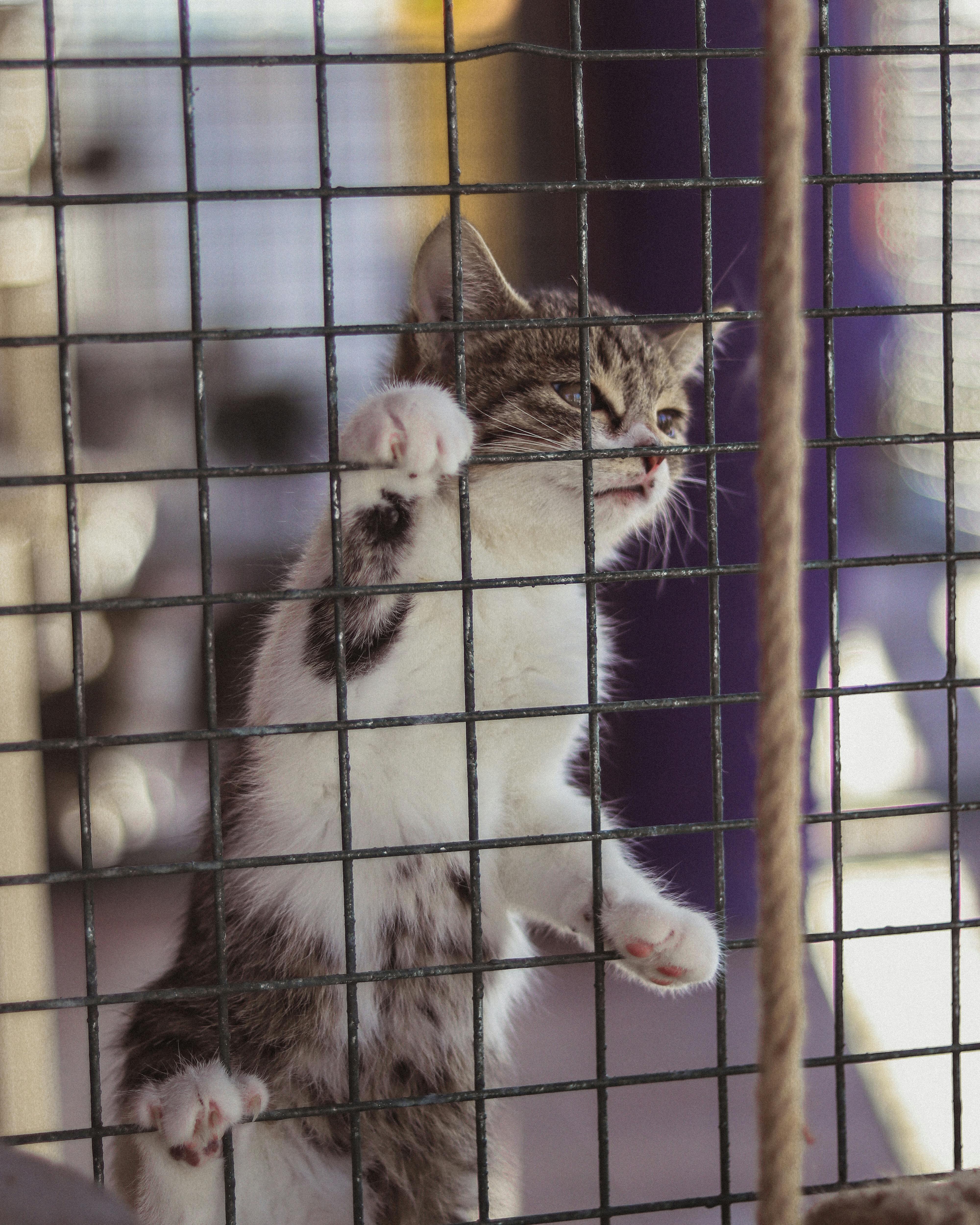
Self-rehoming is an option, not a moral requirement. Best Friends explicitly states that supported self-rehoming should complement rather than replace the shelter safety net.
A shelter/rescue route may be more appropriate when:
- you cannot safely keep the cat while searching;
- there is urgent human/animal safety risk;
- the cat needs medical care you cannot provide;
- you cannot safely communicate or meet with private adopters;
- there are serious behavior concerns requiring experienced placement;
- you have no lawful/secure temporary housing for the cat;
- the organization that originally adopted the cat to you requires return.
Call before arriving because municipal shelters, private humane societies and rescues have different jurisdictions, appointment requirements, waitlists and intake criteria.
Frequently Asked Questions
What is the safest way to rehome a cat?
When you can safely keep the cat during the search, use a structured direct-rehoming process: honest profile, applications, conversation/screening, meet-and-greet, written transfer, records and microchip update. If holding the cat is unsafe or impossible, contact local shelter/rescue intake programs.
Should I give my cat away for free?
A fee by itself does not prove someone is safe or unsafe. Use a structured application/screening process rather than treating price as your primary safety test. Platforms and shelters may handle adoption fees differently.
Should I hide a behavior problem so someone will adopt my cat?
No. Describe what actually happened, the context and known triggers. Hiding a bite history, house-soiling pattern, medical condition or severe fear creates risk for the cat and adopter and can cause the placement to fail.
Can I rehome a cat I found outside?
Not necessarily right away. Stray/found-animal laws differ by jurisdiction. Scan for a microchip, look for the owner and contact local animal services to learn your legal reporting/hold obligations before transferring ownership.
What questions should I ask someone adopting my cat?
Ask about household routine, current pets, housing permission, indoor/outdoor plan, veterinary-care plan, expectations, children/visitors, introduction plan and what they would do if the placement became difficult.
How long does rehoming a cat take?
There is no reliable universal timeline. A highly adaptable healthy cat may receive suitable interest quickly; older cats, bonded pairs, cats with medical needs or cats requiring very specific homes may take longer. Avoid false urgency that pushes you into a poor match.
What records should go with the cat?
Provide available veterinary/vaccine records, medication instructions, spay/neuter information, microchip details and a written summary of diet, litter habits and known behavior/medical issues.
What if the new home does not work out?
Decide this before handoff. Your written transfer can state whether the adopter should contact you, the original rescue or another named organization before transferring the cat elsewhere, subject to applicable law and the agreement you use.
Bottom Line: Rehome for Fit, Not Speed
A responsible rehoming process is:
- identify whether support could safely solve the original problem;
- confirm you have authority to transfer the cat;
- prepare truthful medical and behavior information;
- publish a specific adoption profile;
- screen for compatibility rather than arbitrary perfection;
- meet safely;
- document the transfer and pass along records;
- update the microchip registry;
- have a fallback plan if the placement fails.
The goal is not to place the cat with the first person who says “I love cats.” It is to give the next household enough honest information to know what living with this cat will actually require.