
Last updated: September 24, 2026
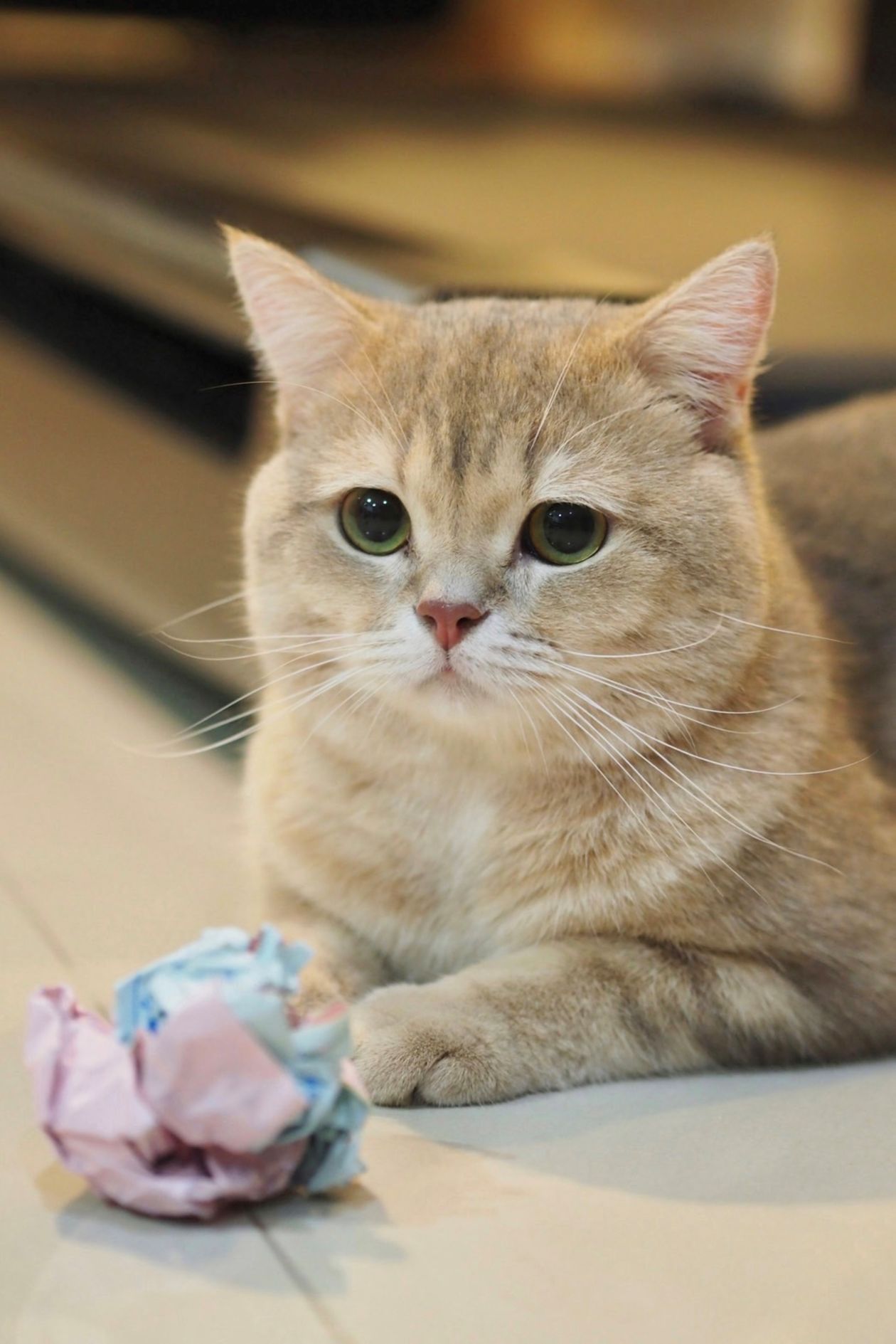
Quick answer: a cat trill is usually a short, soft, rolling vocalization made with the mouth closed. Research reviews place trills in friendly greeting contexts, especially during approaches to familiar cats or people. But “trilling = happy” is too simplistic: the safest interpretation comes from the sound + body language + situation + what your cat does next.
Fast ID: if the sound is a brief “mrrp / brrrp / prrt” with the mouth closed and your cat is approaching you, tail up, rubbing, or inviting movement, trill is a good label. If the cat is staring at a bird and making short high-pitched calls, chirp/chirrup is more likely. If the jaw rapidly clicks or chatters, that is chatter, not a trill.
What Does a Cat Trill Sound Like?
Scientific descriptions are more useful than trying to spell the sound perfectly. A 2020 review of feline vocal communication classifies the trill as a soft-voiced, closed-mouth vocalization associated with greeting. Another vocalization in the same general family, the murmur, is described as a short soft trill/purr used during friendly approach and play.
Owners often write a trill as:
- “mrrp”
- “brrrp”
- “prrt”
- “mrrrow?” when a trill blends into a meow
The spelling is only an approximation. Cats vary in pitch, duration and voice quality, and even researchers note that feline vocal categories can overlap enough to make human labeling imperfect.
Closed mouth is an important clue
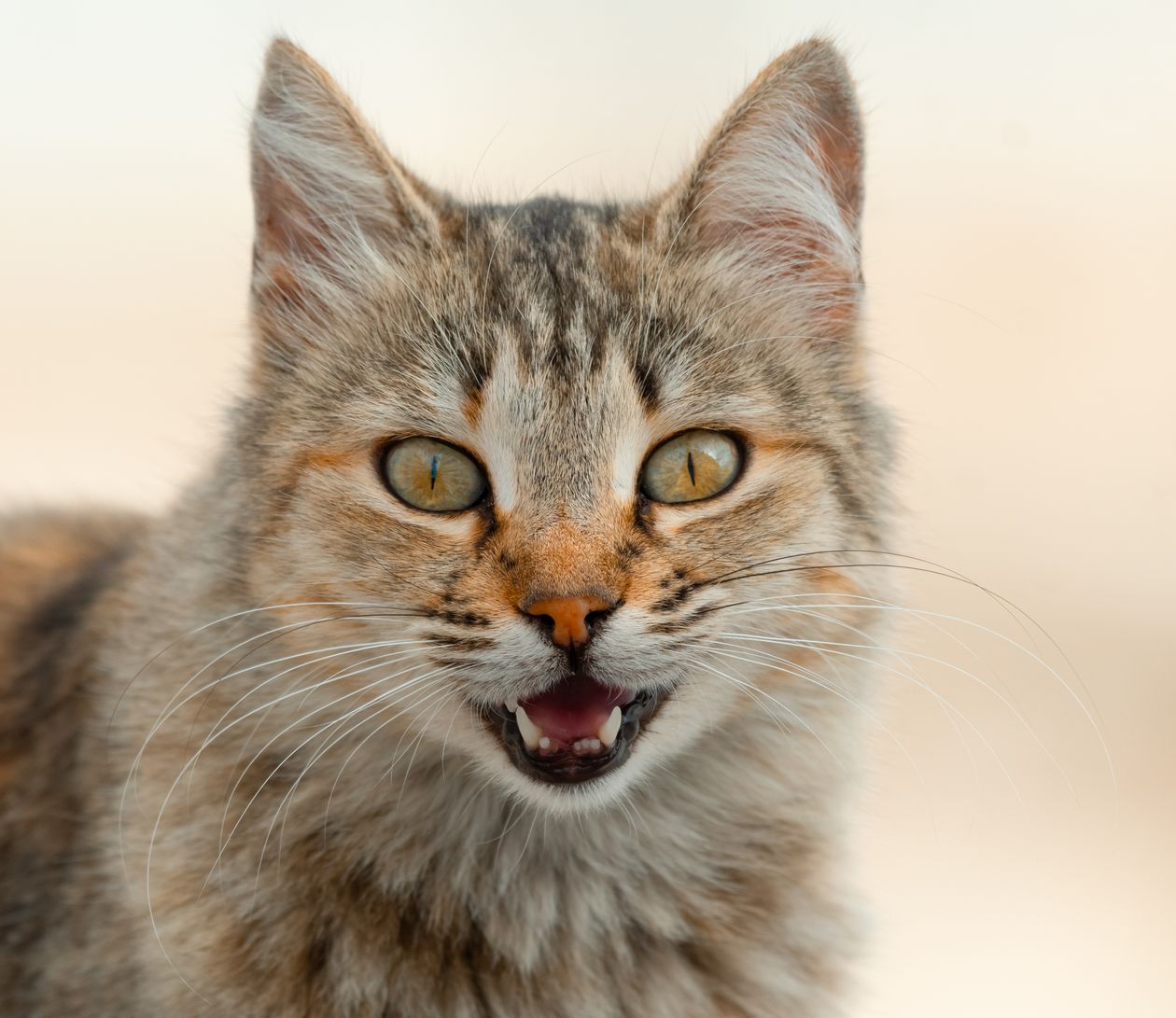
Classical feline communication work groups purrs and trills among sounds produced with the mouth closed, while typical meows involve the mouth opening and then closing. Growls, yowls, snarls, hisses and shrieks are more often associated with an open mouth and agonistic contexts.
Hear a Real Cat Trill: Research Audio/Video Examples
A 2023 Zenodo research archive accompanying an ethogram of domestic-cat behavior includes real video/audio examples labeled by vocalization type. The archive contains separate files for cat trill, chirp, chatter, meow, purr, hiss, growl and yowl.
| Sound | Research file | What to listen/look for |
|---|---|---|
| Trill | 11_cat_trill.mp4 — Zenodo record | Short, voiced greeting-type call; compare mouth position and context. |
| Chirp | 2_cat_chirp.mp4 — Zenodo record | Short high-pitched call that can occur singly or in sequences. |
| Chatter | 1_cat_chatter.mp4 — Zenodo record | Rapid jaw movement / clicking-smacking quality, often prey-related. |
| Meow | 8_cat_meow.mp4 — Zenodo record | More open-mouth, variable call commonly used in cat-human communication. |
| Purr | 9_cat_purr.mp4 — Zenodo record | Continuous rhythmic sound rather than a single short trill. |
Why Patify links rather than rehosts these clips: the Zenodo record clearly provides the research files for viewing/download, but the license field shown on the record is not explicit. Linking you to the source preserves the real research examples without implying a reuse license that is not clearly stated on the archive page.
For comparison, Wikimedia Commons also hosts openly licensed cat meow and purr recordings, but the research archive above is more useful here because it labels trill, chirp and chatter separately.
Why Do Cats Trill?
The best-supported answer is social greeting / friendly approach. The 2020 feline-vocalization review lists trills as greeting calls, and a separate study of cat sounds reported trills in friendly approaches to familiar people and in contexts associated with recognition/bonding.
A 2026 study of cat emotional communication also notes that trills may occur during friendly approaches toward both other cats and humans, while cautioning that the full function of the sound in cat-cat communication remains incompletely understood.
Common contexts
| Context | Likely interpretation | What to check |
|---|---|---|
| You enter the room and cat walks toward you trilling | Friendly greeting is likely | Tail up, rubbing, relaxed ears/body |
| Cat trills, turns, then walks toward food/water/door | Greeting plus request or “follow me” sequence | Where the cat leads and what happens there |
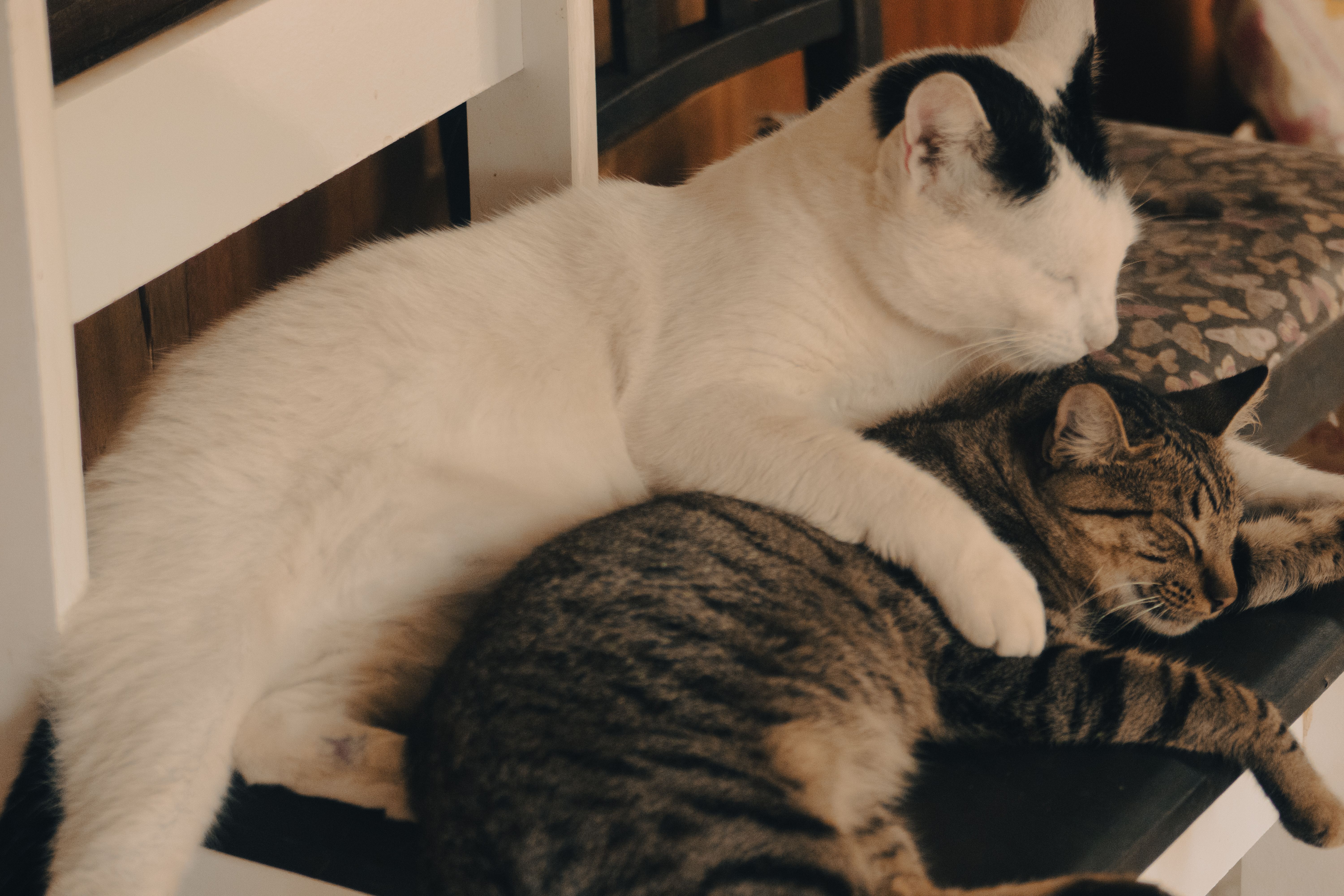
| Cat trills during calm play | Positive social arousal / friendly interaction | Loose body, re-engagement, no defensive signals |
| Cat trills when you speak to them | Learned social response or attention exchange | Repeatable pattern with familiar people |
| Cat makes a trill-like call while watching prey | May actually be chirp/chirrup | Window/prey context, higher short calls |
| New repetitive vocalization with illness signs | Do not assume “happy trill” | Age, appetite, weight, pain, urination, nighttime changes |
Do not force one universal translation such as “hello,” “follow me,” or “I love you.” Trilling is better understood as a friendly/social vocal type whose exact purpose depends on context.
Cat Trilling vs. Chirping, Chattering, Meowing and Purring
| Sound | Typical acoustic/physical clue | Common context |
|---|---|---|
| Trill | Short, soft, rolling/voiced; usually closed mouth | Greeting, friendly approach, social interaction |
| Chirp / chirrup | Very short, higher-pitched “bird-like” call; may repeat | Mother-kitten contact, attention, often prey/window context |
| Chatter | Rapid jaw clashes/clicking; often mostly voiceless | Prey visible but unreachable |
| Meow | Highly variable voiced call, mouth opens/closes | Especially cat-human requests, greetings, attention |
| Purr | Low, continuous rhythmic sound during breathing | Often affiliative/contented; can also occur with stress, illness or pain |
| Hiss | Voiceless forced exhalation, open mouth/teeth visible | Defensive warning, fear/threat |
| Yowl | Long, loud, harsh/drawn-out call | Threat/reproductive contexts; also medical/behavioral concerns depending on cat |
The 2020 vocal-communication review stresses that feline vocalizations are flexible and sometimes difficult to classify by ear. A 2025 acoustic-classification study likewise found that some perceived call types line up consistently with acoustic clusters while others overlap. In other words, a sound label is useful—but not perfect.
Trill vs purr
A trill is brief. A purr is continuous and rhythmic. The sounds can blend perceptually because both can be produced with the mouth closed and often appear in friendly contexts.
Trill vs meow
A trill is generally shorter and more rolled/murmured. A meow is acoustically diverse and strongly used in human-directed communication. Some cats produce blended trill-meows, so the boundary can be fuzzy.
Use Body Language to Interpret the Trill
The same sound is more informative when paired with the cat's posture.
Friendly context
- tail upright or gently curved;
- approaches voluntarily;
- ears neutral/forward;
- soft facial muscles;
- rubs head/flank on you;
- continues normal behavior after the sound.
Do not label it “happy” from sound alone
- body suddenly tense;
- ears flattened/back;
- tail lashing;
- hiding or crouching;
- new repetitive vocalization;
- other pain/illness signs.
Research on cat-human interaction describes tail-up approach, rubbing and other multimodal signals as part of friendly social behavior. The voice should be interpreted as one channel in that larger package.
If you want a broader indoor environment that gives your cat more opportunities for play, observation and choice, Patify's indoor cat enrichment guide uses a seven-zone environmental plan rather than treating vocalization as a boredom diagnosis.
Why Does My Cat Trill and Then Walk Away?
This common pattern is why many owners interpret a trill as “follow me.” That may be correct for your individual cat if the sequence is reliable.
Watch what happens next:
- walks to the food bowl → likely learned request;
- walks to a closed door → access request;
- walks to a toy → social/play invitation;
- walks to a resting area and looks back → may be soliciting company;
- simply continues walking → the trill may have been only a greeting.
Cats are good at learning which vocal/behavior sequences produce human responses. That does not mean every trill has a fixed dictionary definition.
Cat Trilling at Birds? It May Be a Chirp or Chatter Instead

The research literature separates chirp and chatter from trill. Chirps are short, high-pitched calls that may occur singly or in repeated sequences. Chatter involves rhythmic jaw movement and is commonly observed when prey is visible but out of reach.
PetMD's 2026 veterinarian-written sound guide makes the same practical distinction: chirping is commonly heard when cats see birds or squirrels they cannot reach, while trilling is more strongly associated with friendly social greeting.
If window-watching is one of your cat's favorite activities, keep it as enrichment only if the cat can disengage and return to normal behavior. Persistent agitation or redirected aggression means the setup needs adjustment.
Trills, Chirps and Mother–Kitten Communication
Feline vocal communication develops early. The scientific review describes chirps/contact calls within mother–kitten interactions, and friendly closed-mouth vocalizations can later appear in adult social contexts.
This helps explain why owners often describe trills/chirps as sounds that seem to say “come here” or “follow.” However, human translations are interpretations; the robust scientific point is that feline calls are strongly shaped by social context.
Why One Cat's Trill Sounds Different From Another's
Cat vocalizations vary between individuals and within the same cat. Pitch, duration and voice quality can change with age, sex, arousal, context and anatomy.
The 2020 review emphasizes substantial variability across feline vocalizations, while newer acoustic studies continue to show that cat calls contain both category-level and individual/contextual variation.
That means:
- a low “brrp” and high “prrt” can both be trill-like;
- one cat may trill constantly while another rarely does;
- some cats blend trill into a meow;
- your own cat's baseline is more useful than comparing them with a viral video.
When Trilling or Other New Vocalization Deserves a Vet Check
Trilling itself is usually described in friendly contexts. The reason for a veterinary section is not that trills are dangerous; it is that owners can mislabel new or excessive vocalization as harmless communication.
AAHA recommends medical evaluation for senior cats with new/unusual behavior. Increased or nighttime vocalization may be associated with sensory decline, cognitive dysfunction, pain, hyperthyroidism or hypertension. PetMD's 2026 veterinary guide likewise advises evaluation when a cat's normal frequency, pitch, intensity or pattern of vocalization changes suddenly.
Call your veterinarian if new vocalization occurs with:
- weight loss despite increased appetite;
- new thirst or urination changes;
- restlessness or repeated nighttime crying;
- disorientation or staring;
- reduced jumping or signs of pain;
- hiding or major personality change;
- breathing difficulty or open-mouth panting;
- straining in the litter box;
- loss of appetite or lethargy.
For a cat whose main problem is waking the household and vocalizing overnight, Patify's night-waking routine guide covers reinforcement and routine—but medical causes still need to be considered when the pattern is new, intense or occurs in a senior cat.
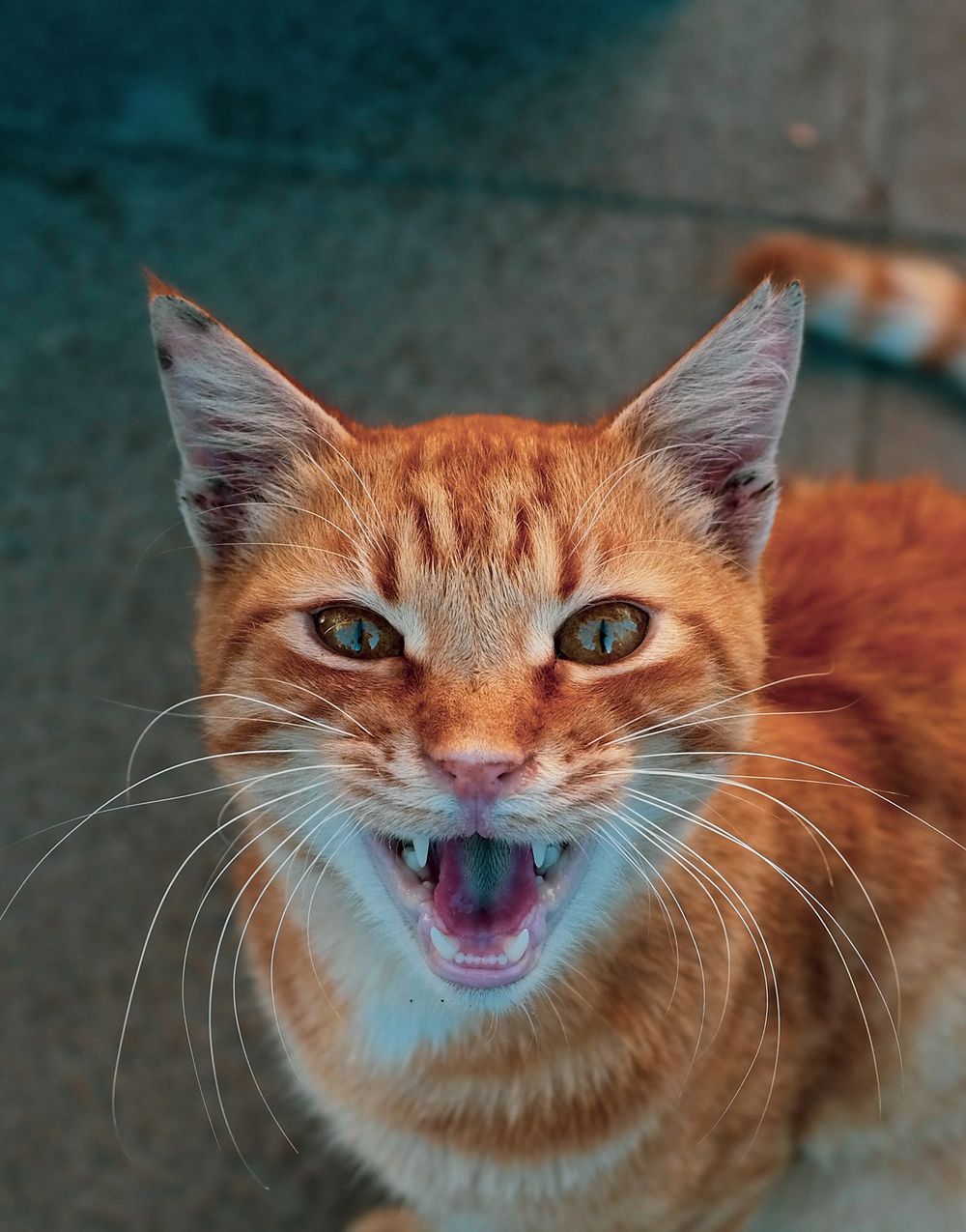
How to Record a Useful Cat Sound Sample
If you want to identify a sound—or show a new vocalization to your veterinarian—record the whole event, not just the audio.
Capture these five things
- 5–10 seconds before the sound so the trigger is visible.
- The cat's face/mouth if you can film without approaching or stressing them.
- Body language: tail, ears, posture, movement.
- What the cat is looking at: you, another cat, food, door, bird, empty room.
- What happens afterward: approach, retreat, eat, play, hide, repeat vocalization.
Keep a simple note with time of day and frequency if the sound is new. A veterinarian can learn more from “started two weeks ago, happens 20 times nightly while pacing” than from “my cat makes a weird noise.”
Frequently Asked Questions
What does cat trilling mean?
Trilling is most strongly associated with friendly greeting and social approach. The exact purpose depends on context, so use body language and what the cat does next rather than assigning one fixed translation.
Is cat trilling a good thing?
Usually it occurs in friendly contexts, but no vocalization should be interpreted in isolation. A relaxed approach with an upright tail supports a positive interpretation; a sudden new vocal pattern with illness signs deserves evaluation.
Why does my cat trill at me when I come home?
A greeting is a likely explanation. Research reviews specifically describe trill as a greeting call and report it during friendly approaches to familiar people.
What is the difference between trilling and chirping?
A trill is typically a soft closed-mouth greeting-type sound. A chirp is shorter and higher-pitched, can occur in repeated chirrups, and is often heard in prey/window or contact-call contexts.
What is the difference between chirping and chattering?
Chirping is a voiced short call. Chattering is largely produced through rapid rhythmic jaw movement and clicking/smacking, often when prey is visible but unreachable.
Why does my cat trill and then run to the food bowl?
Your cat may have learned a social request sequence: greet you, gain attention, then lead you to a desired resource. The food-bowl destination provides the strongest clue.
Do cats trill at other cats?
Yes. Research describes trills during friendly approaches to conspecifics as well as humans, although the full function of trilling in cat-cat communication is not completely resolved.
Do senior cats trill more?
There is no simple age rule for normal trilling. What matters clinically is a change from the cat's baseline. New or excessive vocalization in senior cats can be associated with pain, sensory decline, hyperthyroidism, hypertension or cognitive dysfunction and should be discussed with a veterinarian.
Bottom Line: A Trill Is Usually a Friendly Social Sound—But Context Wins
Use this quick distinction:
- Short closed-mouth “mrrp/brrp” during approach → trill is likely.
- Short high sound while staring at birds/prey → chirp/chirrup may fit better.
- Rapid jaw clicking at prey → chatter.
- Variable open-mouth call directed at you → meow.
- Continuous rhythmic vibration/sound → purr.
Then look beyond the label. A relaxed body, friendly approach and normal routine make a social interpretation stronger. A sudden change in frequency, intensity or context—especially with other health or behavior changes—is more important than the exact word humans use for the sound.