

🦠🐱 Illinois Cat Indoor H5N1 Safety Protocols 2026 – Chicago Vet-Approved Guidelines
H5N1 avian influenza has moved from a poultry industry concern to a domestic cat health issue. Since 2024, confirmed H5N1 infections in domestic cats have been documented across multiple U.S. states, including Illinois. Chicago-area veterinary clinics began issuing updated indoor cat protocols in late 2024, and the Illinois Department of Agriculture issued guidance on feline H5N1 risk reduction in 2025. This guide consolidates what Illinois — and specifically Chicago metro — cat owners need to know: how cats get exposed, which protocols actually reduce risk, what symptoms require emergency care, and how telehealth fits into the H5N1 risk assessment picture.
📊 Illinois Cat H5N1 2026 – At a Glance
Illinois H5N1 status: H5N1 confirmed in Illinois poultry operations and wild bird populations 2024–2025; domestic cat infections documented in IL in 2025 (Illinois Department of Agriculture confirmed).
Primary cat exposure routes: Hunting/consuming infected wild birds; exposure to raw or undercooked poultry; unpasteurized dairy (raw milk); contact with infected farm cats or wildlife
Chicago-specific risk: Chicago's urban and suburban environment includes significant migratory bird traffic (Lake Michigan flyway); outdoor cats and cats with bird access have elevated exposure risk
Chicago vet protocol: Indoor-only recommendation for cats in areas with confirmed H5N1 wild bird cases; no raw poultry or unpasteurized dairy; report neurological symptoms + recent bird contact immediately
Telehealth role: Initial H5N1 symptom triage appropriate via WhiskerDocs or Vetster; confirmed or suspected H5N1 requires in-person assessment and state reporting
🦅 How Illinois Cats Get Exposed to H5N1 — The Chicago Flyway Factor
Chicago sits on one of North America's most significant bird migration corridors — the Mississippi Flyway's eastern edge, combined with the Lake Michigan shoreline that serves as a staging area for millions of migratory waterfowl each spring and fall. This creates an H5N1 exposure environment that differs from inland Illinois: Chicago-area cats have higher wild bird contact opportunity than cats in downstate Illinois, simply because of the volume and diversity of migratory bird traffic.
H5N1 transmission to cats occurs through three primary documented routes: direct consumption of infected birds (hunting), contact with infected bird carcasses or feces, and consumption of contaminated raw or undercooked poultry products or unpasteurized dairy. Indoor Chicago cats with window access to bird feeders are at minimal risk — the concern is cats who go outdoors and hunt, or cats fed raw poultry-based diets sourced from farms with H5N1 exposure history.
🛡️ Illinois / Chicago Vet-Approved H5N1 Indoor Protocols (2026)
| Protocol | Risk Reduction | Chicago-Specific Notes |
|---|---|---|
| Keep cats strictly indoors during active migration seasons (Mar–May, Sep–Nov) | High — eliminates direct bird contact | Lake Michigan flyway creates peak wild bird density in Chicago suburbs during these windows; highest-priority protocol |
| No raw poultry in cat diet from non-tested sources | High — eliminates dietary exposure route | Switch to commercial (heat-treated) food or verify supplier's H5N1 flock testing with IL Dept. of Agriculture records |
| No unpasteurized dairy (raw milk, raw cheese) in cat diet | High — confirmed H5N1 dairy transmission in cattle documented 2024–2025 | Do not share unpasteurized dairy products with cats regardless of source |
| Remove outdoor bird feeders during confirmed H5N1 wild bird outbreak in your county | Moderate — reduces bird congregation near home | Check Illinois DNR H5N1 wild bird case map; Chicago metro and Cook County have had confirmed wild bird cases 2024–2025 |
| Gloves when handling outdoor dead birds found near home | Protects owner — also prevents contaminating indoor environment | Do not allow cats to contact any found dead bird; report clusters of dead birds to IL DNR |
| Monitor cats with outdoor access for respiratory symptoms for 10 days post-exposure | Detection — not prevention | Key symptom window; fever, lethargy, respiratory distress, neurological signs = immediate vet contact |
🚨 H5N1 Symptoms in Cats: What Requires Emergency Care in Chicago
H5N1 in cats can present in two patterns: respiratory (pneumonia-type presentation) and neurological (brain inflammation presentation). The neurological form has been the more commonly documented in confirmed U.S. domestic cat H5N1 cases. Both require immediate in-person veterinary attention — this is one category where telehealth triage is appropriate for initial contact but in-person evaluation and state reporting are mandatory for confirmed or strongly suspected cases.
✓ Symptoms: call vet immediately (possible H5N1)
- Fever + lethargy within 5–10 days of known bird exposure
- Rapid or labored breathing, open-mouth breathing
- Sudden neurological signs: seizure, head tilt, circling
- Severe conjunctivitis (eye discharge) with systemic illness
- Sudden loss of coordination or ataxia
- Rapid deterioration in any recently outdoor cat
✗ Do NOT wait for these symptoms to resolve on their own
- Any seizure in a cat with recent outdoor or bird access
- Respiratory distress — any level, any duration
- Neurological symptoms in a previously healthy cat
- Death of a cat without known cause after outdoor exposure
- Multiple cats in same household showing symptoms simultaneously
📱 How Telehealth Fits Into Chicago H5N1 Cat Protocols
Telehealth plays a specific and limited role in the H5N1 context. It is appropriate for initial triage — helping Chicago cat owners assess whether a sick cat's symptoms are consistent with H5N1 exposure risk and whether immediate emergency care is needed. WhiskerDocs and Vetster can help an owner at 11 PM determine whether a lethargic, slightly sneezing cat with no recent outdoor access warrants an emergency clinic visit or can be safely monitored until morning. What telehealth cannot do: definitively rule out H5N1, perform the diagnostic testing required for confirmation, or file the mandatory state report.
| H5N1 Scenario | Telehealth Role | Platform |
|---|---|---|
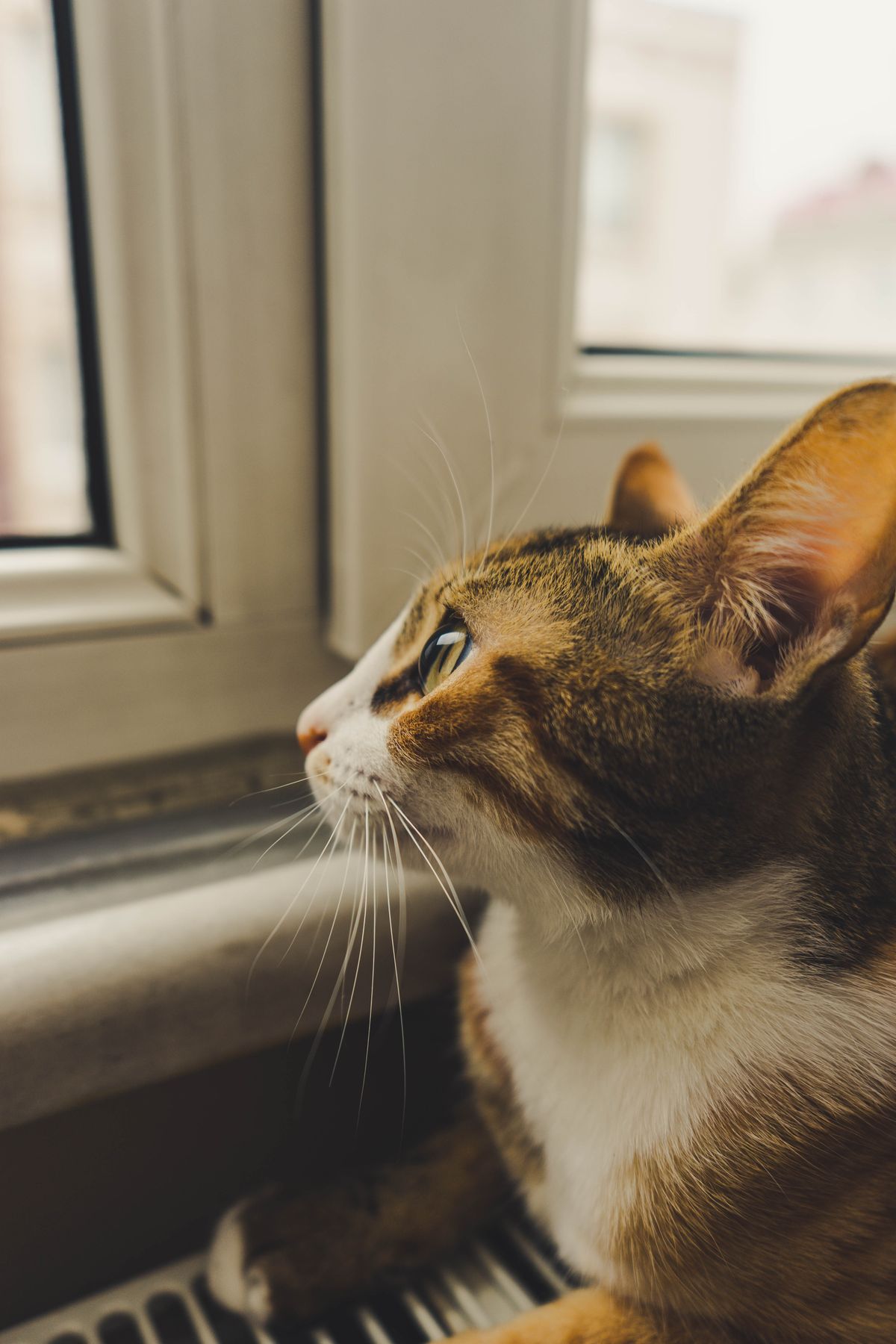
| Cat showed brief interest in bird through window — no outdoor access | Reassurance; monitor protocol guidance | WhiskerDocs or Chewy Connect |
| Indoor cat, mild respiratory symptom, no bird exposure | Triage: likely not H5N1; other URI likely | Vetster (IL-licensed vet), WhiskerDocs |
| Outdoor cat, hunts birds, now lethargic + mild fever | Initial contact OK; in-person same day required | Call vet directly; WhiskerDocs to triage urgency |
| Any neurological symptoms + recent bird exposure | Do not wait for telehealth — emergency clinic now | Go directly to Chicago emergency vet |
| Cat on raw poultry diet, supplier has H5N1 concerns | Diet guidance and monitoring protocol | Vetster (IL-licensed vet) for dietary transition guidance |
🏠 Chicago Indoor Cat H5N1 Protocol: The Full Checklist
- Transition outdoor/indoor-outdoor cats to indoor-only — especially during spring and fall migration windows (March–May, September–November) when Lake Michigan flyway bird density peaks in the Chicago metro.
- Audit your cat's diet: If feeding raw poultry, verify your supplier's flock H5N1 testing status with the Illinois Department of Agriculture. If uncertain, switch to commercial heat-processed food for the duration of elevated risk periods.
- Remove or reposition bird feeders during active H5N1 wild bird cases in Cook, DuPage, Lake, or Will counties. Check Illinois DNR H5N1 wildlife case map quarterly.
- Do not allow cats to contact dead wild birds. If you find a dead bird, use gloves and a bag for disposal; do not allow your cat near it.
- Monitor for 10 days after any known or suspected exposure to birds. Keep a daily symptom log — Patify's symptom tracker is built for exactly this.
- Know your Chicago emergency vet before you need it: BluePearl Pet Hospital (Chicago), VCA Chicago North, and CARE Chicagoland Animal Emergency serve the metro 24/7.
❓ Frequently Asked Questions
❓ Can my fully indoor Chicago apartment cat get H5N1?
The risk for a strictly indoor cat with no access to wild birds, no raw poultry diet, and no unpasteurized dairy is extremely low. Indoor apartment cats in Chicago face essentially no meaningful H5N1 exposure risk if these conditions are met. The cases documented in domestic cats have involved outdoor hunting cats or cats fed raw diets from H5N1-affected sources. Your indoor cat watching birds from a closed window has negligible risk.
❓ Should I stop feeding my Chicago cat a raw poultry diet because of H5N1?
Not necessarily — but you should verify your supplier's poultry sourcing. Raw diets using poultry from H5N1-tested, unaffected flocks pose minimal H5N1 risk. The documented raw-diet-linked cases involved poultry from farms with active H5N1 outbreaks. Check your raw food supplier's sourcing and ask for documentation of H5N1 flock testing. The Illinois Department of Agriculture's affected flock list is public. If you cannot confirm clean sourcing, switching to heat-processed food during elevated risk periods is the safest approach.
❓ Is H5N1 in cats contagious to people in the same household?
H5N1 transmission from cats to humans is not well-documented as of 2026, but the CDC and Illinois Department of Public Health recommend precautionary measures if your cat is suspected or confirmed H5N1 positive: wear gloves when handling the cat, wash hands thoroughly, avoid allowing the cat to lick your face, and follow your vet's isolation guidance. Do not self-treat a suspected H5N1 cat — contact your vet and follow their instructions for safe handling.
❓ Can a telehealth vet diagnose H5N1 in my Illinois cat?
No. H5N1 diagnosis requires physical examination and laboratory testing (PCR testing from nasal/ocular swabs or tissue samples), which can only be performed in person. Telehealth is appropriate for initial triage — assessing whether your cat's symptoms are consistent with H5N1 exposure risk and whether emergency care is urgently needed. If H5N1 is suspected based on symptoms and exposure history, your telehealth vet will direct you to an in-person clinic immediately.
📱 Log Your Illinois Cat's H5N1 Exposure and Symptoms with Patify

Daily Symptom Log · Exposure Tracker · Emergency Contact List
Track your Chicago cat's daily health, any outdoor exposure events, bird contact incidents, and respiratory symptoms in Patify. The 10-day monitoring window after potential H5N1 exposure is exactly what this tool is built for.
Download Patify FreeAlso on the web → patifyapp.com/straypets