

Ontario Cat Microchip Rules 2026: Toronto, Ottawa, GTA & Municipal Licence Guide
Ontario does not have one province-wide rule requiring every owned cat to be microchipped. Instead, identification and licensing rules vary by municipality—and in several major cities the legal requirement is a municipal cat licence or registration, not a microchip. That distinction matters because many online guides incorrectly turn licence penalties into “microchip fines.” This guide checks Toronto, Ottawa, Hamilton, Mississauga, Brampton, London, Vaughan and Markham against current municipal sources, then explains microchip standards, registries, low-cost 2026 services and what to do after moving or adopting a chipped cat.
The most important correction
Toronto: cats must be licensed and wear a City tag. Toronto does not currently impose a blanket microchip requirement on every owned cat.
Ottawa: cats in covered residential areas must be registered annually and wear the City tag; the by-law asks for a microchip number only “if applicable.”
Hamilton: the City's 2026 fee schedule calls cat registration voluntary; microchipping is offered as a separate service.
Mississauga, Brampton, London, Vaughan and Markham: each has its own licence/registration framework. A microchip may reduce fees, substitute for a tag in limited circumstances, or become mandatory after impoundment—but that is not the same as a blanket municipal requirement for every cat.
Is cat microchipping mandatory across Ontario?
No general province-wide microchip mandate for every companion cat was identified in the Ontario laws reviewed for this September 2026 update. Ontario's rabies-immunization rules, for example, require vaccination records to include any microchip number or other permanent identification where applicable; they do not create a universal microchip requirement.
Municipal governments can impose local identification, licensing and animal-control rules, so the correct question is usually: what does my city require?
Ontario city-by-city rules in 2026
| Municipality | What is legally required? | Is a microchip mandatory for every owned cat? | Verified 2026 detail |
|---|---|---|---|
| Toronto | Annual cat licence and City tag | No blanket requirement found | Spayed/neutered cat licence $15; unaltered cat $50. Unlicensed dogs/cats may receive a $240 ticket; maximum fine can reach $5,000. |
| Ottawa | Annual cat registration/tag in covered residential areas | No; microchip number is declared only if applicable | 2026 registration: $22 for cats under 6 months or sterilized cats 6+ months; $42 for unsterilized cats 6+ months. |
| Hamilton | Cat registration is voluntary under the City's 2026 fee schedule | No general requirement identified | Voluntary cat registration $20; City microchip implant $24.80. |
| Mississauga | Pet licence required; current City guidance directs owners to buy/renew a licence and display the tag | Not a separate blanket microchip mandate | City's 2026 Animal Services fee schedule lists microchip implantation at $69.79 + HST. |
| Brampton | Current City licence required for cats over 12 weeks within 7 days of possession; City tag generally must be worn | No blanket requirement for ordinary owned cats | Microchip rules apply in specific situations, including some feral-colony requirements and unidentified impounded animals. |
| London | Annual cat registration required, subject to by-law exemptions | Optional for ordinary owned cats | A microchipped cat can be exempt from wearing the physical tag; the City lists a $30 microchip service and lower registration fees for some microchipped cats. |
| Vaughan | Annual City licence/tag required | Not generally; special rule after impoundment | Animals impounded at the shelter must be microchipped within 14 days after being claimed. 2026 City clinic microchip + registration: $25 + tax. |
| Markham | Annual pet licence required | No; licence is required even when the cat already has a microchip | 2026 cat licence $23.50; late renewal $11.50. |
Municipal by-laws and fee schedules can change. Use the linked official source in the Sources section before relying on a fee or enforcement rule.
Toronto: the $240 figure is a licence ticket, not a microchip fine
Toronto Municipal Code Chapter 349 requires every cat owner to register the cat, pay the licence fee, renew the licence and keep the City-issued licence tag securely attached. The current by-law language does not make microchipping a condition of ordinary cat ownership.
Toronto's 2026 pet-licensing page says failure to license a dog or cat every year may result in a $240 ticket or a maximum fine of $5,000. That is the source of the $240 figure often repeated online. Calling it a “$240 microchip fine” is incorrect.
The distinction is especially clear because Toronto City Council was still examining the feasibility of integrating its pet-licensing system with microchipping in 2026. The City also operates a Chip Truck that offers a $10 microchip and/or rabies vaccine to cats and dogs with a current Toronto pet licence.
Ottawa: registration is mandatory; microchipping is optional
Ottawa's Animal Care and Control By-law requires annual cat registration in residentially zoned areas and requires the City identification tag on the collar or harness. During registration, the owner declares whether the cat has a microchip and provides the number if applicable.
Ottawa's fee schedule reinforces the distinction: sterilized cats are charged the same $22 registration fee whether they are microchipped or not. Unsterilized cats six months or older are $42. The City's spay/neuter clinic currently lists a $43 microchip as an optional service during surgery.
Hamilton: the current City fee schedule says “Voluntary Cat Registration”
Hamilton is one of the clearest examples of why province-wide “microchip enforcement” tables fail. The City's 2026 approved user-fee schedule explicitly lists Voluntary Cat Registration — $20 and a separate Microchip implant — $24.80. Hamilton's lost-pet guidance encourages owners to register cats and get pets microchipped, but that is not the same as a universal microchip offence carrying a $150 fine.
Hamilton's current shelter-claim page likewise says owners reclaiming a cat are encouraged to purchase a cat registration tag before release.
Mississauga, Brampton, London, Vaughan and Markham: the rules differ
Mississauga
The City requires dogs and cats to be licensed. Its current public licensing page tells owners to buy/renew the licence and keep identification visible. The by-law has historically recognized microchip-based licensing in some forms, but the safe 2026 compliance route is to follow current Animal Services licence instructions rather than assume any privately registered chip replaces the City requirement.
Brampton
The 2023 consolidated by-law requires cats and dogs over 12 weeks to obtain a current City licence within seven days of possession and generally wear the City tag. Microchips appear in specific rules, but there is no general “every pet cat must be microchipped” clause.
London
Domestic cats must be registered annually unless an exemption applies. The application records microchip status “if applicable.” A microchipped cat is exempt from the physical-tag requirement, and some registration fees are lower for sterilized + microchipped cats.
Vaughan
All cats and dogs need an annual City licence/tag. The City's by-law page says an animal that has been impounded must be implanted with microchip identification within 14 days after being claimed by the owner—a conditional rule, not a blanket rule for every cat.
Markham
Markham is explicit: cats and dogs need a City licence even if the pet has a microchip implant. A microchip does not replace the licence.
Verified low-cost microchip options in Ontario (2026)
| Provider / municipality | Current posted microchip price | Conditions / notes |
|---|---|---|
| Toronto Chip Truck | $10 | Current Toronto pet licence required; microchip and/or rabies vaccine service at scheduled events. |
| Hamilton Animal Services | $24.80 | 2026 approved municipal fee; HST may apply. |
| Vaughan Animal Services clinic | $25 + tax | 2026 appointment-based microchip and registration clinic; residency not required for the cited event. |
| London Animal Shelter Services | $30 | Appointment required; City of London pet licence required. |
| Ontario SPCA veterinary services | $36 | Posted 2026 service fee; appointment/clinic availability varies. |
| Ottawa Spay/Neuter Clinic | $43 | Optional service offered during eligible spay/neuter surgery. |
| Mississauga Animal Services | $69.79 + HST | 2026 municipal fee schedule. |
Which microchip should an Ontario cat have?
The Canadian Veterinary Medical Association supports permanent companion-animal identification with RFID products that comply with International Organization for Standardization standards. CVMA recommends products reviewed by the National Companion Animal Coalition and compliant with ISO 11784 and ISO 11785.
The familiar ISO companion-animal chip is typically a 15-digit 134.2 kHz FDX-B transponder. The 2026 NCAC recognized-product list includes multiple Canadian suppliers, including Pethealth/24PetWatch and other manufacturers. That is different from saying “Ontario legally requires 24PetWatch.” It does not.
- Ask the implanting clinic whether the chip is ISO 11784/11785 compliant and on the NCAC recognized-product list.
- Keep the 15-digit number with your veterinary records and emergency information.
- Have the chip scanned at routine veterinary visits; CVMA recommends annual scanning to confirm function and location.
- Keep a collar/tag or municipal licence tag as visible identification where safe and required.
Microchip registry: there is no single mandatory Ontario database
A chip stores an identification number; the owner's phone number and address live in a registry. If the registry information is stale, the chip can scan perfectly and still fail to reunite a lost cat quickly.
24PetWatch is a major Canadian microchip provider and appears on the NCAC recognized-product list, but Ontario municipalities do not universally require every owner to use 24PetWatch. Other Canadian and international registries also exist.
If you do not know which company holds your cat's record, ask the veterinary clinic or shelter that implanted the chip. The AAHA Universal Pet Microchip Lookup can also identify participating registries associated with a chip number—including several Canadian services—although AAHA notes that the tool was created primarily for chips distributed in the United States and it is not itself a registry.
If you move, change your phone number or take ownership of a previously chipped pet, update the registry promptly. Patify also has a separate microchip-after-moving checklist; note that the legal steps in that article are country-specific, so Ontario owners should follow the Canadian registry and municipal instructions in this guide.
What happens when a lost Ontario cat reaches a shelter?
Ontario's shelter best-practice guidance says shelters should check tags/tattoos and use a universal scanner to look for a microchip. If a shelter cannot scan in-house, it should promptly arrange scanning through a partner shelter, pound or veterinary facility.
That is the real practical value of a microchip: it gives shelters and clinics a permanent number that may lead to a current registry record. It does not replace municipal licensing where a licence is required, and it does not guarantee recovery if the contact information is outdated or the chip is missed during scanning.
H5N1: microchipping helps identification, but it is not a special H5N1 legal requirement
The previous version of this guide described microchipping as a required public-health notification tool for H5N1. Current Ontario and federal sources do not support that claim.
Ontario rules require veterinarians and laboratories to notify public-health or animal-health authorities about certain suspected or confirmed influenza findings and provide information that can include the animal's location and owner contact information. CFIA and Ontario guidance also warn owners to keep cats away from sick or dead wild birds and not feed raw poultry or wild/game-bird meat.
A registered microchip may help identify the owner of a lost cat, which can indirectly help communication. But there is no general Ontario rule stating that pet cats must be microchipped for H5N1 notification or that an unchipped cat creates a separate H5N1 microchip offence.
Ontario cat microchip and licence checklist
- Check your exact municipality's current cat licence/registration by-law.
- Do not assume a licence requirement means a microchip requirement—or the reverse.
- If your city requires a licence, renew it on time and follow tag-display rules.
- Choose an ISO 11784/11785-compliant, NCAC-recognized chip.
- After implantation, confirm the chip number by scanning it.
- Confirm which registry holds the chip and verify your name, phone number, email and address.
- After adopting a chipped cat, complete the registry's ownership-transfer process.
- After moving or changing phone numbers, update both the microchip registry and municipal pet-licence account where applicable.
- Ask your veterinarian to scan the microchip during routine annual care.
- Keep the chip number and current photos somewhere accessible outside your home as well as on your phone.
Frequently asked questions
Is microchipping mandatory for every cat in Ontario in 2026?
No province-wide blanket requirement for every owned companion cat was identified in the laws reviewed. Municipal licence and identification rules vary, so check your city.
Does Toronto fine owners $240 for an unmicrochipped cat?
No. Toronto's current $240 ticket relates to failure to license a dog or cat annually. Chapter 349 requires cat registration/licensing and a City tag; it does not create a general $240 microchip offence.
Does Ottawa require my cat to be microchipped?
Ottawa requires annual registration and a City tag in covered residential areas. The registration by-law asks owners to declare a microchip and number only if applicable, so microchipping is not the general requirement.
Is cat registration mandatory in Hamilton?
Hamilton's 2026 approved fee schedule explicitly describes the service as “Voluntary Cat Registration” and separately prices a microchip implant. That does not support a claim that every Hamilton cat must be microchipped.
Can a microchip replace a Markham pet licence?
No. Markham's current pet-licence page specifically says cats and dogs need a licence even if they have a microchip implant.
What database should I register my Ontario cat's microchip with?
Use the registry associated with the chip or the registry instructed by the implanting clinic/shelter. 24PetWatch is one major Canadian provider, not a universal Ontario legal requirement. If the registry is unknown, have the chip scanned and use the manufacturer/registry lookup process.
Should I register the same chip in two databases?
Not automatically. The critical step is having at least one valid, current registry record that shelters can trace. Multiple registrations can be useful in some systems but should be intentional and kept consistent; random duplicate records can make ownership/contact information harder to interpret.
Does my cat's microchip need to be checked again after implantation?
Yes. CVMA recommends scanning microchipped animals annually to confirm the device is functioning and to locate it if it has migrated from the original implantation site.
Bottom line
The biggest 2026 compliance mistake is treating Ontario as if it has one cat-microchip law. It does not. Toronto, Ottawa, Mississauga, Brampton, London, Vaughan and Markham primarily regulate cats through municipal licence or registration systems, while Hamilton currently lists cat registration as voluntary. Microchips are strongly useful permanent identification, but their legal role varies by municipality and circumstance.
For Ontario cat owners, the safest system is simple: comply with the local licence by-law, use an ISO-compliant registered microchip, keep the registry contact details current, and do not confuse a licence penalty with a microchip fine.
Toronto Municipal Code Chapter 349 — Cats, registration and licence tags
Toronto Animal Services — Chip Truck
City of Ottawa — Animal Care and Control By-law
City of Ottawa — 2026 Pet Registration Fees
City of Hamilton — 2026 Approved User Fees & Charges
City of Mississauga — Pet Licences
City of Mississauga — Animal Care and Control By-law
City of Brampton — Animal Services By-law 201-2023
City of London — Animal Control By-law PH-3
City of London — 2026 Pet Resources and Microchip Fee
City of Vaughan — Animal By-law
City of Markham — Pet Licence
Canadian Veterinary Medical Association — Microchip Identification Position Statement
NCAC — 2026 Recognized ISO RFID Products
AAHA — Universal Pet Microchip Registry Lookup
Ontario SPCA — 2026 Veterinary Service Fees
Ontario — Shelter Best Practices for Lost/Abandoned Animals
CFIA — H5N1 Risks for Pets
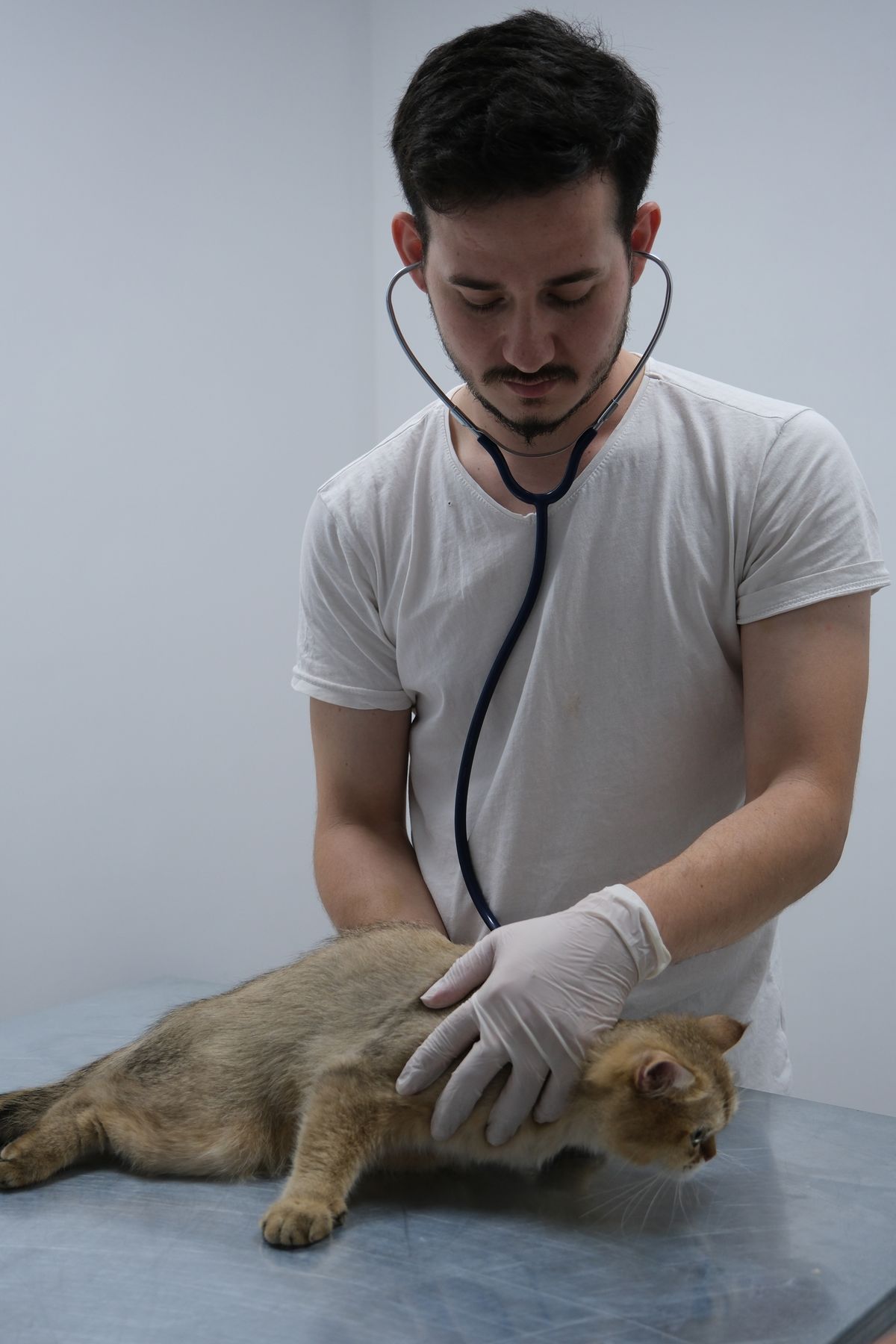
Pexels — Sueda Güzeldere, Veterinarian Examining Cat in Clinic (free to use)