
Last verified: October 3, 2026
Nano Fish: Small Body Does Not Automatically Mean a Tiny Tank
Quick answer: the best nano fish are species that stay small and fit the aquarium's footprint, social group, temperature, water chemistry and flow. A 0.8-inch fish may still need a school of 8–12 and enough horizontal room to behave naturally. For most beginners, 10 gallons is a far more useful starting point than 2–5 gallons, even when the fish itself is tiny.
Patify nano-fish rule: compare adult size → group size → footprint → temperature → flow → food size → tank-mate risk. Do not shop by adult length alone.
1. What Counts as a Nano Fish?
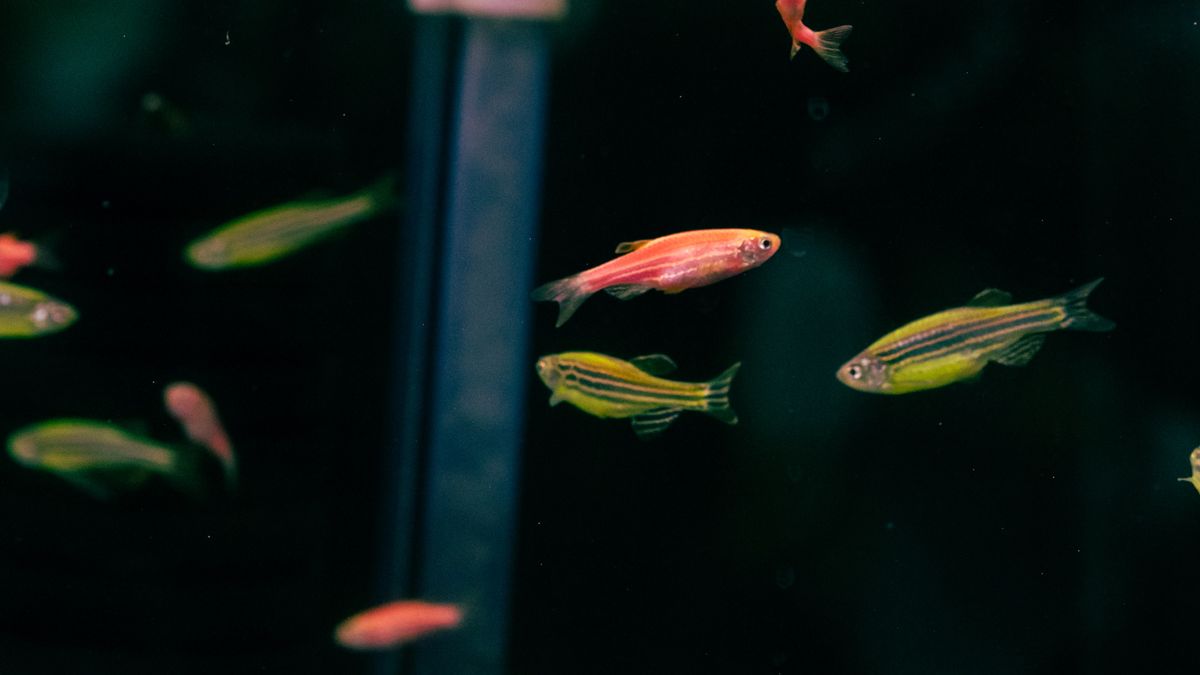
“Nano fish” is a hobby term, not a taxonomic category. It usually refers to freshwater species that stay roughly 1–2 inches long and can live well in relatively small aquariums. That definition becomes dangerous when it is shortened to “small fish = small tank.”
Three limits matter more than body length:
- social minimum: many nano species are shoaling/schooling fish and should not be kept as one or two individuals;
- footprint: active fish may need horizontal length even if their body is tiny;
- stability: small water volumes change temperature and chemistry faster.
Seriously Fish, for example, lists an 18×12-inch base (~11 US gal) for both the 0.8-inch chili rasbora and 0.8-inch ember tetra. The fish is tiny; the behavioral space requirement is not zero.
2. Seven Nano Fish Compared by Adult Size, Group and Tank
| Species | Adult size | Social need | Practical tank starting point | Temperature | Best fit |
|---|---|---|---|---|---|
| Chili rasbora Boraras brigittae | ~0.8 in | 8–12+ preferred | ~10–11 gal+; mature/planted | 68–82°F | Soft, calm, plant-rich nano community |
| Ember tetra Hyphessobrycon amandae | ~0.8 in | 6–10+ | ~10–11 gal+ | 68–82°F | Peaceful planted community |
| Celestial pearl danio Celestichthys margaritatus | ~0.8–1 in | 6 minimum; 10–15 more confident | 10 gal minimum; ~20 gal for larger group | 68–79°F | Dense planted aquascape |
| Green neon tetra Paracheirodon simulans | ~1 in | 6 minimum; 10+ preferred | 10 gal+ | Tropical | Soft/acidic planted or blackwater-style tank |
| Pygmy corydoras Corydoras pygmaeus | ~1 in | 8–12 recommended | 10 gal+ | 72–78°F | Gentle planted tank with open bottom areas |
| Clown killifish Epiplatys annulatus | ~1.4 in | Group; ~1 male per 2–3 females | 5 gal+; larger is easier | 67–80°F | Low-flow, floating-plant, tight-lid setup |
| Medaka ricefish Oryzias latipes | ~1.4 in | 6+ group | ~10–11 gal+ | ~60–75°F | Cool/unheated planted tank |
These are starting points, not permission to maximize fish count. The same 10-gallon aquarium can be appropriate for one species-only school and inappropriate for another fish of similar length.
3. Chili Rasbora: Tiny Fish, Real Schooling Requirement
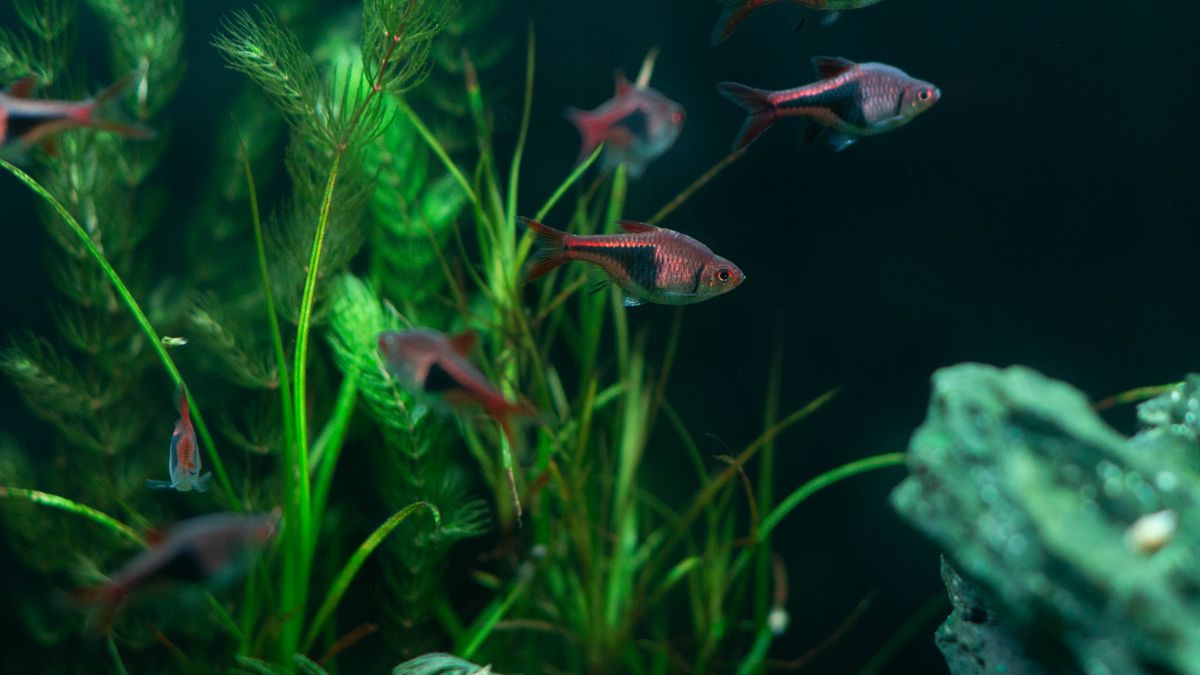
Boraras brigittae is one of the smallest common freshwater aquarium fish at roughly 0.8 inch standard length. Seriously Fish recommends an aquarium base around 18×12 inches (~11 gallons), while Aquarium Co-Op commonly keeps at least 8–12 together.
They come from very soft, acidic blackwater habitats in Borneo. Captive fish can adapt to broader conditions, but stability matters more than chasing extreme wild pH numbers. They should not be added to a biologically immature tank.
Best fit: mature planted aquariums with gentle flow, floating plants, tiny foods and no tank mate large enough to see them as prey.
4. Ember Tetra: One of the Easiest Tiny Schooling Fish to Read
Ember tetras also reach roughly 0.8 inch. Seriously Fish recommends an 18×12-inch base, and Aquarium Co-Op suggests a group of at least 6–10.
Their orange color intensifies in plant-rich tanks with darker substrate and some shade. They are less useful in a “showcase one tiny fish” aquarium because their behavior and visual impact both improve in a proper group.
Best fit: planted 10-gallon-and-up aquariums with peaceful fish and appropriately small foods.
5. Celestial Pearl Danio: Nano Size, Social Complexity
Celestial pearl danios (CPDs) are around 0.8–1 inch and tolerate roughly 68–79°F. Aquarium Co-Op recommends at least six but strongly prefers 10–15 because the fish can be shy; for that larger group it suggests a 20-gallon aquarium or larger.
Males display and chase one another, so dense plants and broken sight lines are more useful than an empty tank with the same gallon number.
Best fit: heavily planted aquascapes with open feeding lanes, multiple cover zones and a real group.
6. Green Neon Tetra: A True 1-Inch Midwater Fish
Paracheirodon simulans is smaller than the common neon and cardinal tetra. Aquarium Co-Op lists it at about 1 inch and recommends at least six, with 10 green neons in a 10-gallon aquarium or larger providing a more secure social group.
Because many specimens in trade are wild-caught, quarantine is especially valuable. Their small mouths also mean food particle size matters.
Best fit: dimmer planted/blackwater-inspired aquariums with peaceful tank mates and stable water.
7. Pygmy Corydoras: “Bottom Fish” That Also Swims Midwater
Pygmy corys reach roughly 1 inch and behave differently from larger cory species: they frequently perch on plants and wood and move through midwater. Aquarium Co-Op recommends 10 gallons or larger so a group of at least 8–12 can be kept.
They are social fish, not miniature cleaning tools. Feed sinking/micro foods deliberately; leftovers are not a complete diet.
Best fit: mature planted aquariums around 72–78°F with smooth substrate/open foraging areas.
8. Clown Killifish: Surface-Dweller With One Non-Negotiable—A Lid
Clown killifish grow to about 1.4 inches and can live in a 5-gallon or larger aquarium, but their real design needs are gentle flow, dense floating cover and a tightly sealed lid. They are accomplished jumpers.
Aquarium Co-Op suggests roughly one male for every two to three females because males may be territorial with one another.
Best fit: quiet, covered tanks with floating plants and tiny surface/slow-sinking foods.
9. Medaka Ricefish: Nano Fish for the Unheated End of the Hobby
Medaka (Oryzias latipes) reach around 1.4 inches. Seriously Fish lists a preferred temperature around 61–72°F and an 18×12-inch base (~11 gallons), while Aquarium Co-Op uses a broader practical range around 60–75°F and recommends schools of six or more.
They are particularly useful for keepers whose room stays cool, but “unheated” only works if the water actually remains within the fish’s safe seasonal range.
Best fit: planted cool-water aquariums or suitable outdoor tubs, with a lid because ricefish can jump.
10. Five Nano-Fish Mistakes That Matter More Than Gallons
- Buying two schooling fish instead of a real group. Tiny fish often become more confident—not less crowded—when kept in species-appropriate numbers.
- Mixing five nano species in one 10-gallon tank. Species diversity can destroy the group size each fish actually needs.
- Using “one inch per gallon.” It ignores activity, waste, social behavior and footprint.
- Adding delicate nano fish to a new cycle. Chili rasboras and other tiny fish can be sensitive to unstable chemistry.
- Assuming shrimp babies are safe. Almost any fish capable of swallowing shrimplets may eat them.
Before stocking, use Patify’s fishless cycling guide. For a plant-first habitat, the planted aquarium setup guide covers light, substrate and plant growth without using fish as a cycling tool.
Frequently Asked Questions About Nano Fish
What size fish counts as a nano fish?
There is no official cutoff. In the hobby it usually means small species around 1–2 inches that can be maintained in relatively compact aquariums.
Can nano fish live in a 5-gallon tank?
A few species can, but many tiny schooling fish are better in 10 gallons or more because group size and water stability matter.
What are good nano schooling fish?
Chili rasboras, ember tetras, green neon tetras and celestial pearl danios are common choices, but each has different water and group requirements.
What nano fish stays near the surface?
Clown killifish are a classic top-dwelling option, but they require a tight lid.
What nano fish works in a cooler aquarium?
Medaka ricefish are an excellent cool-water candidate; white cloud minnows are another option but need more horizontal swimming room than their size suggests.
Are pygmy corys algae eaters?
No. They are omnivorous/scavenging catfish that need intentional feeding; they are not a solution to algae.
Is a 10-gallon tank easier than a 5-gallon?
Usually yes. More water and footprint make temperature, chemistry and social-group planning more forgiving.
Sources Checked
- Aquarium Co-Op — Nano Fish
- Aquarium Co-Op — Chili Rasbora
- Aquarium Co-Op — Celestial Pearl Danio
- Aquarium Co-Op — Green Neon Tetra
- Aquarium Co-Op — Pygmy Corydoras
- Aquarium Co-Op — Clown Killifish
- Seriously Fish — Boraras brigittae
- Seriously Fish — Ember Tetra
- Seriously Fish — Celestial Pearl Danio
- Seriously Fish — Medaka
Sources reviewed October 3, 2026.