
Last verified: October 3, 2026
Cory Catfish Types: The Names Changed in 2024—Their Care Differences Still Matter
Quick answer: many fish still sold as “Corydoras” received new genus names after the 2024 phylogenomic revision of Corydoradinae. Panda, peppered, Sterbai and three-line corys moved to Hoplisoma; bronze cory moved to Osteogaster; pygmy cory moved to Gastrodermus. Stores may keep using the old names for years, so this guide lists current name + familiar old name together.
Patify cory rule: identify exact species → check current/old scientific name → adult size → temperature → group size → bottom footprint. “Cory catfish” is not one temperature or one tank-size profile.
1. Why Your “Corydoras” May Have a Different Scientific Name Now
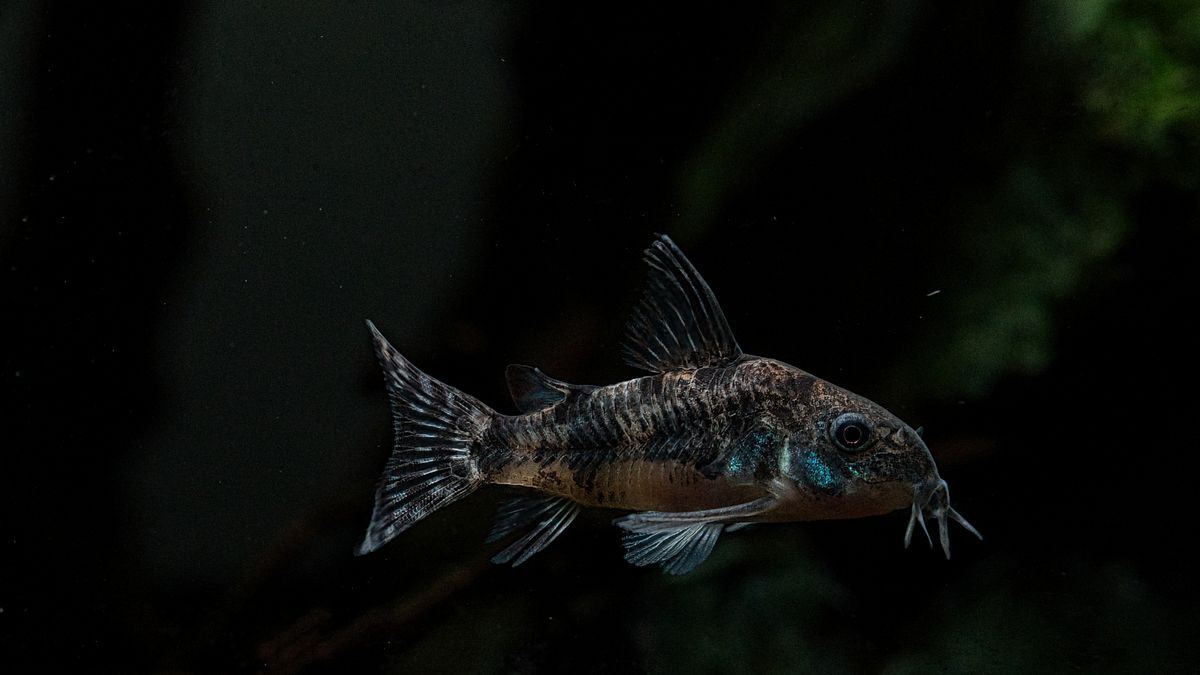
In 2024, Dias and colleagues published a phylogenomic/morphological revision of Corydoradinae in the Zoological Journal of the Linnean Society. The revision recognized seven genera: Corydoras, Aspidoras, Scleromystax, Gastrodermus, Osteogaster, Brochis and Hoplisoma. A 2025 correction adjusted some species endings for grammatical gender but did not change the classification itself.
This means hobby search terms lag taxonomy. A store may still label Hoplisoma panda as “Corydoras panda,” and that old name remains extremely useful for finding care information. Patify therefore shows both.
2. Seven Popular Cory Catfish Types Compared
| Common name | Current name | Old/familiar name | Adult size | Temperature | Best planning note |
|---|---|---|---|---|---|
| Bronze / albino cory | Osteogaster aenea | Corydoras aeneus | ~3 in | 70–81°F | Robust; ~20-gal class footprint for adult group |
| Panda cory | Hoplisoma panda | Corydoras panda | ~2 in | 72–77°F | Cooler than Sterbai; do not keep chronically hot |
| Peppered cory | Hoplisoma paleatum | Corydoras paleatus | ~2.8 in | 72–79°F | Cool/moderate community option |
| Sterbai cory | Hoplisoma sterbai | Corydoras sterbai | ~2.6 in | 75–82°F | Best-known warm-water cory option |
| Three-line / false Julii | Hoplisoma trilineatum | Corydoras trilineatus | ~2.2 in | 72–79°F | Often sold incorrectly as Julii |
| Julii cory | Hoplisoma julii | Corydoras julii | ~2 in class | Cool/moderate tropical | True Julii is less common in trade than labels suggest |
| Pygmy cory | Gastrodermus pygmaeus | Corydoras pygmaeus | ~1 in | 72–79°F | Dwarf species that also swims midwater; larger group preferred |
Aquarium Co-Op gives a useful broad rule: dwarf cory types can fit 10-gallon-class tanks, but 20 gallons or more is better for most normal-size species. Each species should be kept in a same-species social group.
3. Bronze Cory: The Classic Beginner Cory Has a New Genus
The familiar bronze cory—often including albino aquarium strains—was long known as Corydoras aeneus. The 2024 revision places it as Osteogaster aenea.
Seriously Fish lists about 3 inches, 70–81°F, pH 6.0–8.0 and a 31×12-inch base for long-term care. That makes it robust but also larger than many “cory = tiny bottom fish” assumptions.
Best fit: beginner community aquariums where you can keep at least six and provide a meaningful bottom footprint.
4. Panda Cory: Smaller and Cooler Than Many People Expect
Hoplisoma panda (formerly Corydoras panda) reaches around 2 inches. Seriously Fish lists 72–77°F and specifically warns against keeping it warmer than this for long periods.
That makes panda corys a poor automatic partner for every discus/ram-style hot tropical setup. Temperature compatibility matters more than the fact that both fish come from South America.
5. Peppered Cory: A Cool-to-Moderate Community Cory
Hoplisoma paleatum (formerly Corydoras paleatus) reaches about 2.8 inches and is commonly maintained around 72–79°F. It is a better fit for standard/cooler tropical communities than very hot aquariums.
Its mottled pattern varies between individuals and captive strains, including albino forms.
6. Sterbai Cory: The Warm-Water Specialist in the Popular Group
Hoplisoma sterbai (formerly Corydoras sterbai) reaches around 2.6 inches and Seriously Fish lists 75–82°F. Aquarium Co-Op specifically contrasts Sterbai with cooler peppered/Julii types and notes that Sterbai tolerates higher temperatures.
This is why Sterbai is a common cory choice in warmer cardinal-tetra, ram or discus-style communities.
7. Three-Line vs Julii Cory: The Store Label Is Often Wrong
The fish commonly sold as “Julii cory” is frequently the three-line cory, now Hoplisoma trilineatum (formerly Corydoras trilineatus). True Hoplisoma julii is a different species.
For practical identification, three-line corys tend to show more reticulated/maze-like head markings, while true Julii more often has discrete spots. Pattern varies, so source and collection identity are safer than one photograph.
Seriously Fish lists three-line corys around 2.2 inches, 72–79°F and pH 5.8–7.2.
8. Pygmy Cory: A Cory That Uses the Middle of the Tank
Gastrodermus pygmaeus (formerly Corydoras pygmaeus) reaches only about 1 inch. Aquarium Co-Op notes that pygmy corys frequently swim in midwater rather than staying permanently on the substrate.
Because they are so small, larger community fish can intimidate or outcompete them. They are best in a larger same-species group with peaceful nano companions.
Patify’s nano fish guide compares them with other small social species.
9. All Cory Types Share One Core Need: A Real Social Group
Aquarium Co-Op recommends six or more of the same species. In the wild, corydoradines can form very large aggregations. Mixing one panda + one bronze + one Sterbai does not recreate a proper social group just because all three are “corys.”
For substrate, smooth sand or rounded clean gravel works. Aquarium Co-Op points out that barbel damage is not simply “gravel cuts whiskers”; poor substrate hygiene/water quality can be a major contributor. Keep the bottom clean and food accessible.
10. Cory Catfish Are Not Algae Eaters or Leftover Machines
Aquarium Co-Op explicitly warns that corys need deliberate feeding. Offer sinking pellets/wafers plus appropriately sized frozen/live foods. In fast community tanks, confirm that food actually reaches the bottom and that each fish is maintaining body condition.
Do not add corys to fix algae or uneaten food. Patify’s algae-eater guide separates real algae-grazing species from bottom scavengers.
Frequently Asked Questions About Cory Catfish Types
Why are Corydoras names different now?
A 2024 phylogenomic revision split Corydoradinae into seven recognized genera, moving many familiar aquarium species into Hoplisoma, Osteogaster, Gastrodermus and Brochis.
What is Corydoras panda called now?
The current name is Hoplisoma panda, although “Corydoras panda” remains common in stores and older care guides.
What is Corydoras aeneus called now?
The bronze cory is now Osteogaster aenea under the 2024 classification.
Which cory is best for warm water?
Sterbai cory (Hoplisoma sterbai) is one of the best-known warmer-water options, commonly kept around 75–82°F.
Which cory stays smallest?
Pygmy cory (Gastrodermus pygmaeus) stays around 1 inch and is one of the smallest common aquarium cory types.
How many cory catfish should I keep?
At least six of the same species is a strong minimum; larger groups often behave more naturally when tank footprint allows.
Do cory catfish eat algae?
Not as a primary diet. They are foraging omnivores and need deliberate sinking foods and protein-rich items.
Sources Checked
- Zoological Journal of the Linnean Society — 2024 Corydoradinae Revision
- Zoological Journal — 2025 Nomenclature Correction
- FishBase — Callichthyidae / Updated Names
- Aquarium Co-Op — Cory Catfish Care
- Seriously Fish — Hoplisoma panda
- Seriously Fish — Hoplisoma sterbai
- Seriously Fish — Hoplisoma paleatum
- Seriously Fish — Three-Line Cory (legacy URL)
Sources reviewed October 3, 2026.