
7 Dog Commands (Cues) Every Owner Should Teach
People often search for “dog commands,” but trainers increasingly use the word cue: a signal that tells the dog which behavior is likely to earn a reward. The label matters less than the method. Useful training is clear, gradual and built around behaviors your dog can succeed at.
The seven skills in this guide: Sit, Down/Settle, Stay/Wait, Come/Recall, Leave It, Drop It/Trade and Loose-Leash Walking. A dog can begin learning several of them in the first week, but reliability around real-life distractions usually takes longer. There is no honest seven-day guarantee.
Training standard: AVSAB's current position is that reward-based methods should be used for dog training and behavior modification. This guide does not use leash corrections, prong collars, choke chains, shock/e-collars, intimidation or physical punishment.
Before you train: three principles that matter more than a timer
Keep sessions easy to win
Short sessions are useful, but “under 10 minutes” is not a biological rule. Stop while your dog is still engaged and successful.
Use rewards your dog values
Food, toys, access to sniffing, play or social contact can all reinforce behavior. The best reward depends on the dog and the situation.
Change one difficulty at a time
Duration, distance and distractions are separate challenges. Do not increase all three at once.
Training before a meal can increase food motivation for some dogs, but a dog does not need to be deliberately kept hungry to learn. Likewise, there is no magic “70% success threshold.” If performance suddenly drops, make the exercise easier and look at fatigue, stress, pain, distraction and reward value.
1. Sit: a simple starting cue
“Sit” is useful for greetings, waiting at doors and creating a predictable pause. It is not the foundation of every other behavior, and it should not be used to suppress fear or discomfort.
- With your dog standing, hold a small treat near the nose and move it slowly upward and slightly back.
- When the rear touches the floor, mark the moment with “yes” or a click and give the reward.
- Repeat until the movement is easy. Then add the word “sit” as the dog begins to understand the behavior.
- Gradually fade the food lure so your empty hand signal and verbal cue work without food visibly leading the dog.
- Practice in several easy locations before expecting the cue around exciting distractions.
If a dog suddenly avoids sitting, sits asymmetrically, or appears painful, do not treat it as disobedience. Hip, knee, spinal or other discomfort can affect the behavior and deserves veterinary assessment.
2. Down or settle: two related but different skills
Down
A “down” cue asks for a body position. Lure or shape the dog toward the floor, mark when elbows touch down, reward, and add the verbal cue once the movement is predictable.
Settle
“Settle” is broader: the goal is relaxed behavior on a mat, blanket or nearby space. Dogs Trust recommends rewarding increasingly relaxed behaviors and building the skill gradually around distractions. A dog can know “down” without yet knowing how to relax.
3. Stay or wait: build duration, then distance, then distractions
The exact word is your choice. Some households use “stay” for remaining in one position until released and “wait” for a brief pause before moving through a door or taking food. Consistency matters more than terminology.
- Ask for an easy position such as sit or down.
- Pause for one or two seconds, mark and reward while your dog is still in position.
- Add your cue and a clear hand signal.
- Increase duration in small increments. If your dog gets up repeatedly, shorten the time.
- Only after duration is easy should you add a little distance, then mild distractions.
- Use a release cue such as “free” or “okay” so the end of the exercise is clear.
RSPCA guidance follows the same gradual principle: increase time and distance slowly and set the dog up to succeed rather than waiting for failure.
4. Come / Recall: a safety skill that needs long-term proofing
Recall is one of the most useful safety skills, but a dog that comes indoors is not automatically ready to be off-leash around wildlife, traffic or other dogs.
- Start indoors or in a secure enclosed area.
- Say your dog's name, then the recall cue once, and move away with inviting body language.
- Reward generously when the dog reaches you.
- Increase distance and distraction gradually.
- Use a long line attached to a well-fitted harness when practicing outdoors before off-leash reliability is established.
- If your dog does not respond, do not repeatedly shout the cue. Reduce the difficulty and rebuild.
Dogs Trust recommends making return to you consistently worthwhile and rewarding the dog when they come back, even if it took longer than you wanted. You do not need a rule that recall can “never” be followed by a bath, nail trim or vet visit; the practical goal is simply to avoid making the recall cue predict unpleasant outcomes most of the time.
5. Leave It: do not pick that up
Leave it is for an item the dog has not taken yet. It is different from “drop it.” Mixing the two makes emergency use less clear.
- Place a low-value item in one closed hand and better food in the other.
- Let the dog investigate the closed hand without correcting them.
- The moment the dog backs away, looks away or disengages, mark and reward from the other hand.
- Repeat until disengagement is predictable, then add “leave it.”
- Progress to the item on the floor while safely preventing access, then gradually increase item value and real-world distraction.
“Leave it” is useful prevention, not a guarantee against poisoning. If your dog may already have swallowed medication, xylitol, chocolate, a battery, rodenticide or another dangerous substance, contact a veterinarian or animal poison service rather than relying on training.
6. Drop It / Trade: give back what is already in the mouth
Drop it means releasing an item the dog already has. Dogs Trust teaches this as a fair trade: releasing the object predicts something worthwhile, and the safe item may be returned during practice.
- Start with a safe, low-value toy your dog likes but does not guard intensely.
- Offer a higher-value reward nearby.
- When the dog releases the toy voluntarily, mark and reward.
- Add your cue — “drop,” “give” or another consistent word — just before the release becomes predictable.
- When safe, give the practice toy back so release does not always predict permanent loss.
If your dog freezes, growls, hard-stares, guards objects or has bitten over possessions, do not repeatedly grab items from the mouth or test the dog. Resource guarding deserves a tailored management and behavior plan from a qualified reward-based professional.
7. Loose-leash walking: more useful day to day than a competition heel
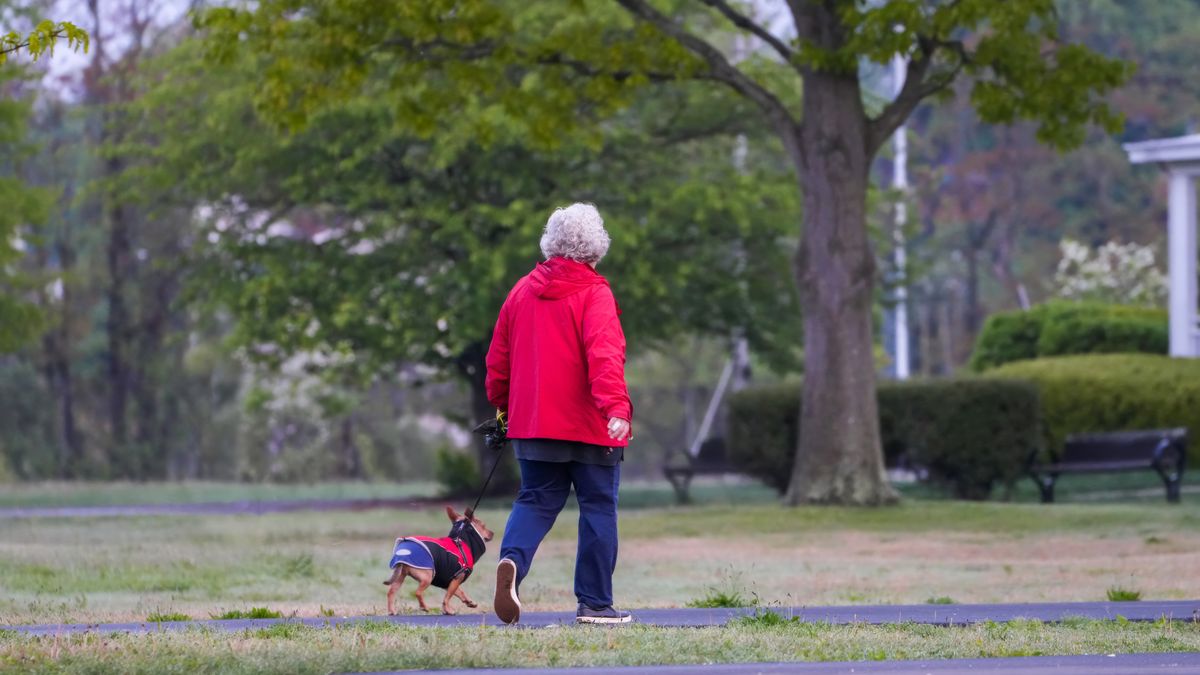
A formal “heel” asks for a precise position and is not necessary for an entire everyday walk. Most families need loose-leash walking: the dog can sniff and explore without keeping the leash tight.
- Begin somewhere quiet with a comfortable harness or suitable walking equipment.
- Reward your dog for being near you while the leash is slack.
- Take a few steps and reward again before the leash tightens.
- If the leash becomes tight, stop moving rather than jerking the leash.
- Resume when slack returns, or change direction gently and reward reconnection.
- Use sniffing and forward movement as rewards too, not only food.
Dogs Trust specifically recommends stopping when the lead tightens and avoiding leash jerks or telling the dog off.
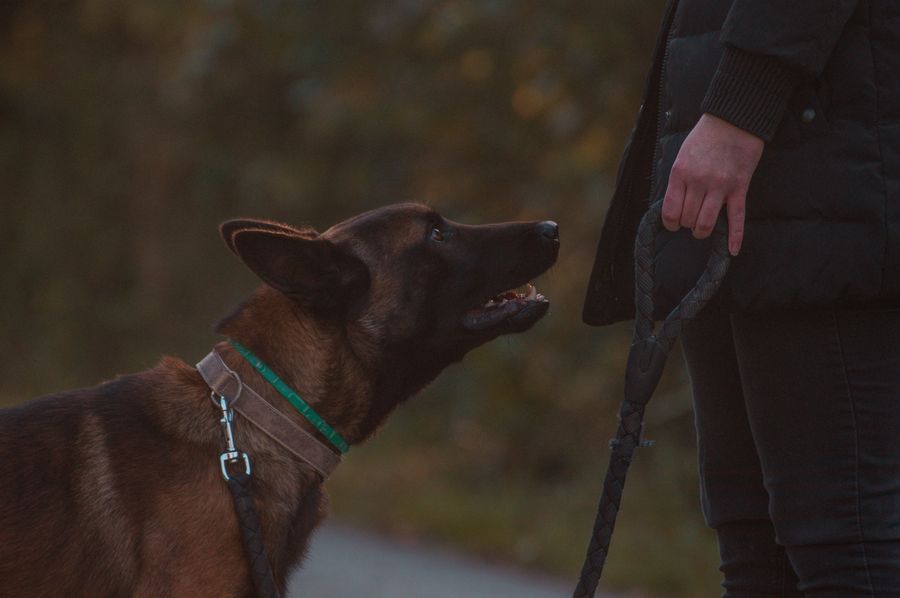
What happened to “No” and “Off”?
The old version treated “No/Off” as one of seven core skills. The problem is that “no” usually tells a dog that something is wrong without telling them what behavior will work instead. “Off” can be a useful specific cue — for example, four paws on the floor instead of jumping — but it is not interchangeable with “no.”
For recurring problems, teach the behavior you actually want: go to mat, come away, drop the item, leave the item, keep four paws on the floor, or walk beside you. Clear alternatives are easier to reinforce than a vague universal prohibition.
A realistic first-week starter plan
You can introduce several skills in one week. That is different from saying each will be “reliably learned” in seven days.
| Day | Focus | Goal |
|---|---|---|
| Day 1 | Reward marker + Sit | Build clear reward timing and an easy first cue. |
| Day 2 | Down / Settle | Separate body position from calm relaxation. |
| Day 3 | Recall indoors | Create a strong positive association with coming to you. |
| Day 4 | Stay / Wait | Begin with seconds of duration; no big distractions yet. |
| Day 5 | Leave It | Reward disengagement before the item is taken. |
| Day 6 | Drop / Trade | Practice voluntary release of safe low-value objects. |
| Day 7 | Loose-leash foundations | Reward slack leash and attention in a quiet area; review earlier cues. |
If your dog needs three days on one step and ten days on another, that is normal. Learning speed varies with age, reinforcement history, stress, health, environment and the complexity of the behavior.
Training mistakes that are worth fixing
- Repeating the cue: saying “come, come, come” teaches the dog that the first cue is optional. Make the situation easier instead.
- Increasing difficulty too fast: a cue learned in the kitchen has not automatically generalized to a busy park.
- Using food only as a visible lure: fade the lure and keep rewarding the behavior from your pocket, pouch or environment.
- Training through fear or pain: a dog that cannot respond may be overwhelmed, frightened or uncomfortable rather than “stubborn.”
- Removing every reward too early: learned behavior still benefits from reinforcement, especially around difficult distractions.
- Expecting formal heel for the whole walk: sniffing and exploration are normal needs; use precise heel only when you actually need it.
Food rewards: useful, not a bribe
A reward is delivered after the behavior and increases the chance the behavior will happen again. A lure is shown beforehand to help create the behavior. Early training may use both, but the lure should be faded while reinforcement continues.
Use small portions and count training food toward the dog's daily intake. Some dogs work better for toys, sniffing, play or access to something they want. If a dog suddenly refuses food in situations where they normally eat, stress or fear may be more important than “low motivation.”
When to get professional help
You do not need to wait three months without progress before asking for help. Early support is appropriate if:
- your dog growls, snaps, bites or guards food/objects,
- there is severe fear, panic or separation-related distress,
- training problems are creating a safety risk around traffic, children or other animals,
- behavior changes suddenly, especially with possible pain or illness,
- you feel stuck and sessions are becoming frustrating for either of you.
Look for a professional who explains their methods clearly, uses reward-based training and does not rely on shock/e-collars, prong collars, choke chains, leash corrections or intimidation. In the US, CCPDT maintains a directory of certified trainers and behavior consultants. In the UK, APDT members work under a published code of practice. Credentials are useful, but the actual methods used still matter.
Frequently asked questions
Can a dog learn all seven commands in one week?
A dog can begin learning several cues in a week, but reliable performance in different places and around distractions takes repeated practice. There is no evidence-based seven-day mastery deadline.
How long should a dog training session be?
Short, successful sessions are usually easier to learn from than long exhausting ones, but there is no universal 5- or 10-minute maximum. Stop when concentration or comfort drops.
What age can puppy training start?
Puppies are learning before they come home, so eight weeks is not a minimum learning age. Once home, you can immediately teach simple reward-based skills in age-appropriate, very short sessions.
Is “leave it” the same as “drop it”?
No. “Leave it” means do not take the item; “drop it” or “trade” means release something already in the mouth. Teaching them separately makes both cues clearer.
Should I stop rewarding recall once my dog knows it?
No. You can vary the reward rather than feeding every single recall forever, but maintaining reinforcement helps keep coming back worthwhile, especially around distractions.
Do I need to teach “heel”?
Not as a precise position for an entire walk. Loose-leash walking is more practical for most families. A formal heel can be taught for short situations where close positioning is useful.
Are prong collars or e-collars faster?
AVSAB's current humane-training position recommends reward-based methods and advises against aversive tools including prong, choke and electronic collars because of welfare and behavior risks.
My dog is not interested in treats. What else can I use?
Try a different food reward, toy, play, sniff break, access to the environment or social interaction. Also consider whether the environment is too stressful or distracting.
Can older dogs learn new cues?
Yes. There is no age cutoff for learning. Adjust the physical exercise to the dog's health and mobility, and investigate pain or sensory changes if performance changes unexpectedly.
When should I see a trainer or behavior professional?
As soon as you need help. Do not wait for aggression, fear or guarding to become severe. For sudden behavior change or suspected pain, start with your veterinarian.
Training sources and review standard
This article is designed to stay evergreen. The cue names and learning principles remain stable; the source list and visible review date are updated when major professional guidance changes.
- American Veterinary Society of Animal Behavior — Humane Dog Training Position Statement and trainer guidance
- Dogs Trust — Recall training
- Dogs Trust — Leave It and fair-trade / Drop training
- Dogs Trust — Loose-leash walking
- Dogs Trust — Settle training
- RSPCA — Teaching Sit
- RSPCA — Teaching Stay
- CCPDT — Certified trainer and behavior consultant directory
- APDT UK — Reward-based dog training and trainer directory
Track training with Patify

Keep cue progress, rewards and training notes in one place
Log which cue you practiced, where you trained, which rewards worked and which distractions were too difficult. A simple history makes progress easier to see without turning training into a rigid calendar.
Download Patify freeBottom line
Useful dog training is not a race to finish seven commands in seven days. Teach clear cues, reward the behavior you want, increase difficulty gradually and practice in the environments where the skill will actually be needed. Sit and down are easy starting points; recall, leave/drop and loose-leash walking become reliable through careful proofing over time.