Aquarium Driftwood: Choosing, Soaking and Placing Wood Safely
Quick answer: choose known aquarium wood, then prepare it patiently
Aquarium driftwood is wood deliberately placed in a fish tank as shelter, grazing surface, a plant anchor or a visual focal point. The safe workflow starts before soaking: establish that the piece is sold for aquatic use by a reputable seller, inspect its shape and surface, remove loose dirt with water and a dedicated brush, and then soak it in a suitable container until you understand how it behaves. Some pieces float, tint the water or develop temporary surface biofilm. None of those outcomes alone proves that the wood is unsafe.
There is no reliable universal “boil for exactly twenty minutes” instruction. Wood species, size, previous treatment, buoyancy and the animals in the aquarium vary. Fluval’s driftwood FAQ recommends pre-soaking, explains tannins and notes that some pieces continue floating for weeks. This article addresses aquarium-grade wood preparation and placement, not a general guide to harvesting branches from a riverbank or a way to alter pH overnight.
What driftwood can add to a freshwater aquarium
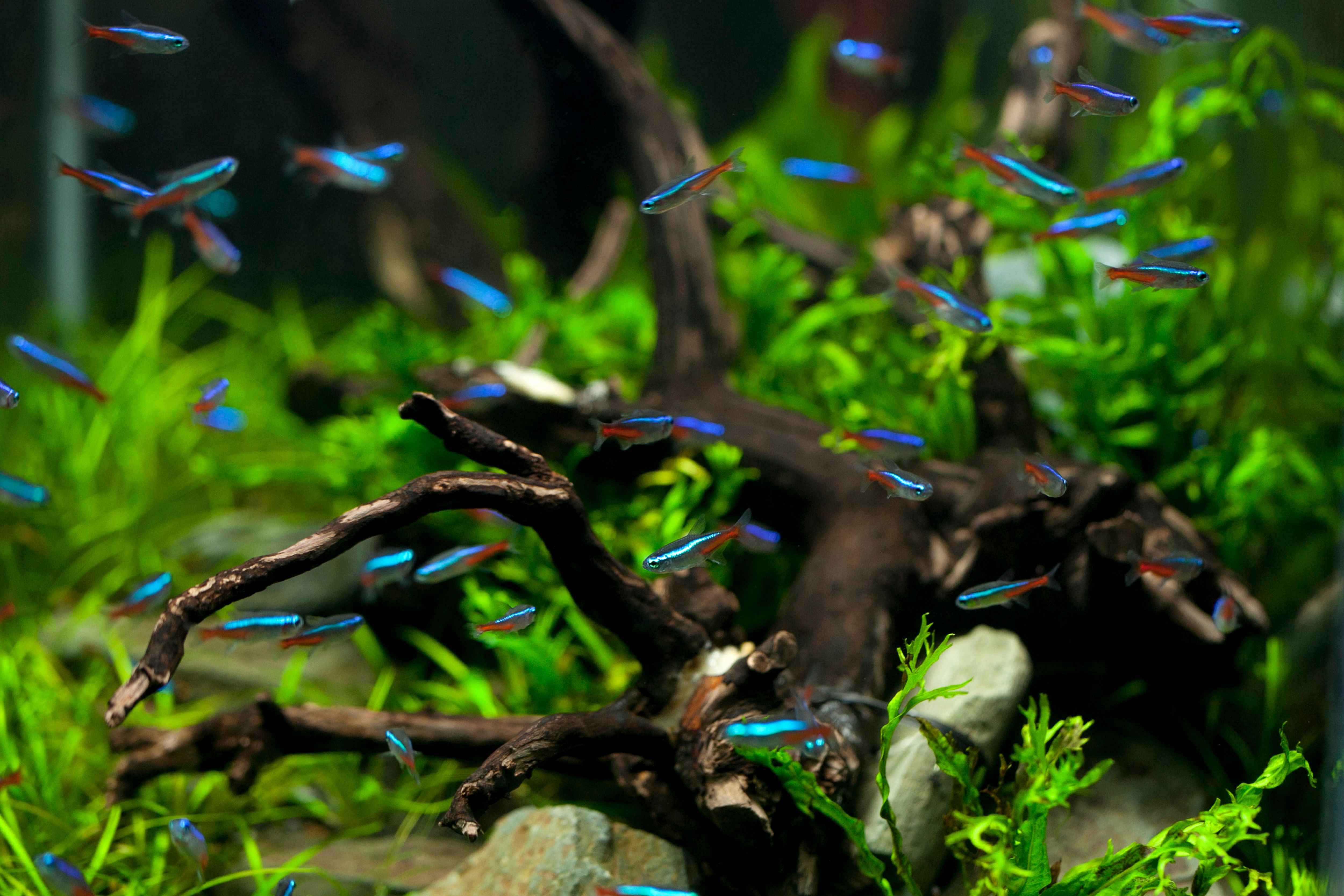
Wood can break up open space and provide places for nervous fish to move behind instead of remaining exposed. A broad branch may support Anubias or Java fern when those plants are attached without burying their rhizomes. Small invertebrates may graze on the microbial films that form on immersed surfaces. A natural-looking layout is not automatically a better habitat, though. Choose structures according to the swimming and feeding habits of the animals, with room for maintenance and predictable flow.
Driftwood can also introduce trade-offs. A piece that looks compact in a shop may occupy too much space once positioned at the intended angle. It might obstruct a filter intake, trap waste behind it, scratch a glass panel if moved carelessly or make an aquarium difficult to net safely. Make a scale sketch before buying: include the base footprint, highest branch, swimming corridor, plant positions and a path for the siphon. Planning the hardscape ahead of fish arrival is considerably easier than rebuilding it around frightened animals.
Aquarium-grade wood versus a found branch
Commercial aquarium wood is not a guarantee of perfection, but a specialist retailer can identify a product, describe intended use and respond if the piece behaves unexpectedly. A branch gathered from a park, beach or stream may carry unknown pesticides, pollutants, preservatives, adhesives or decaying material. Visual inspection and boiling do not reliably establish the chemical history of unknown wood. Protected lands and provincial or municipal rules can also restrict collecting natural materials.
If the origin is uncertain, decline it rather than trying to rescue the purchase with an improvised disinfectant. This is especially important in small shrimp systems and aquariums with sensitive animals, where there is little buffer against contamination. Sellers may label wood as “natural,” “reclaimed,” or “decorative” without saying it is safe for long-term submersion. Those terms do not substitute for a clear aquarium-use statement. Keep the manufacturer label or product-page snapshot until the piece has settled in your system.
Common retail labels: shape is not a safety certificate
You may encounter mopani, spider wood, Malaysian driftwood, cholla and other trade names. These names can indicate a look, density or commercial category; they do not guarantee every item sold under a label has identical tannin behaviour, buoyancy or preparation instructions. Cholla is structurally quite different from a solid branch; delicate root-like pieces create tiny crevices that can trap detritus. A very heavy block can be hard to move without damaging aquarium glass.
Ask what the item actually is, whether it was coated, dyed or treated, and whether it is specifically intended for aquarium submersion. Check for sharp snapped tips, friable rotten sections and holes that could entrap a fish. Some species need smooth open passages rather than narrow tunnels. Avoid reading a wood-style name as a universal pH guarantee. Measurements and husbandry should drive water-chemistry decisions; attractive hardscape should not be your only method of controlling the environment.
Decision table: five wood questions before checkout
A practical purchase decision combines product provenance with the animals’ physical needs. A retailer who can show the exact piece, confirm aquatic use and explain the return policy offers more useful information than a vague “natural river wood” listing. When buying online, request dimensions including height and base width; photo perspective can disguise enormous differences between pieces. Also ask whether it arrives wet or dry, which affects packaging and expectations about floating.
For a tank already inhabited, the ability to position and remove the piece safely matters as much as colour. It is difficult to justify a visually impressive branch if it blocks the entire back of a narrow aquarium or leaves a sharp point near a fish’s usual swimming lane. The table below is a working checklist; answers need to come from the seller and your own aquarium plan, not from an unverified species-name assumption.
| Check | Acceptable evidence | Reason to walk away |
|---|---|---|
| Intended aquatic use | Named aquarium-grade product from accountable seller | Only labelled craft/decor wood |
| Surface | Solid structure, manageable edges | Rotten soft patches, sharp traps |
| Size | Measured dimensions match aquascape | Photo-only dimensions or blocks service access |
| Treatment | Seller confirms no unsuitable coatings | Unknown paint, preservatives or glues |
| Placement | Stable structure after test fit | Needs loose balancing over glass or fish |
Before you start: tools and a clean workspace
Prepare a dedicated clean tub or bucket large enough to submerge the piece where practical, a soft or medium brush never used with soap, towels and dechlorinated water when soaking conditions require it. Protect your countertop from scratches. Inspect the wood dry and remove detachable debris by hand; then rinse and brush under clean water. Do not use furniture polish, detergent, household bleach or scented cleaners on a piece that will go into a stocked aquarium.
If a piece is too large for available containers, plan a safe method with the retailer rather than pretending a partial dunk performs the same job as full preparation. Some aquarists pour hot water over a suitable piece; others use a prolonged soak. Thermal treatment has limits, especially for thick wood, glued components and pieces that may split. Never place an oversized branch into a domestic pot or force it into boiling water where burns or sudden breakage could result.
Pre-soaking: what a bucket can reveal
Soaking allows air to escape and shows whether the piece sinks or releases colour. Fluval suggests a clean bucket soak of about a week with frequent water changes as a useful starting practice, while warning some pieces may require longer. Treat that as brand guidance rather than a deadline. Keep the container free of cleaners and away from children or pets that could tip it. Check whether the wood develops a sour smell, begins to disintegrate or sheds troublesome material.
Record observations instead of chasing crystal-clear soak water. Amber-coloured water may indicate tannins that continue to leach after installation; multiple changes do not necessarily strip them all. If the item remains buoyant, do not force it beneath a sharp rock that could slide against glass. You may need a safe stable anchor compatible with the product and the aquarium, or a different piece. The right stopping point for soaking is a considered installation decision, not an internet timer.
Should you boil driftwood? Benefits, limits and burn risks
Boiling is frequently suggested because hot water can speed the release of some tannins and remove some organisms from the accessible surface. Aqueon and Fluval both mention boiling as one way to reduce discolouration. But they do not establish a single safe temperature-and-duration recipe for every wood species, size and product treatment. A large heavy branch may not heat evenly and may not fit safely in a cooking vessel. Boiling also will not prove an unknown collected wood is free from chemical contamination.
If a manufacturer permits heating, follow its guidance and use heat-safe equipment with appropriate precautions. Never heat painted or resin-filled objects, and never boil a product whose supplier advises against it. You can choose patient soaking instead. Be particularly cautious about steam, scalding water and moving soaked slippery wood across tile floors. The improvement you want is predictable behaviour in the tank; a dramatic kitchen procedure is not an essential badge of serious fishkeeping.
| Stage | What to observe | Safe exit condition |
|---|---|---|
| Source | Aquarium-use statement and finish | Provenance is clear |
| Rinse | Loose debris and surface texture | No soap or unknown chemical exposure |
| Soak | Colour release, floating and integrity | Behaviour understood; stable handling |
| Test fit | Fish clearance and structure stability | No falling or trapped animals |
| Monitor | Water chemistry, film and fish behaviour | Parameters remain appropriate |
Tannins: brown water is not the same as dirty water
Natural plant compounds can tint water yellow or tea brown. Fluval and Aqueon explain that this is common with new wood and can be consistent with healthy systems. Some aquarists deliberately favour that appearance for animals from tannin-rich habitats; others prefer clearer display water. Either preference can be reasonable if the species’ actual water needs are met. A yellow tint by itself does not tell you whether the filter is cycled, whether ammonia is zero or whether the water is suitable.
Tannin behaviour is affected by the particular wood and the water’s chemistry. Extra carbon, partial water changes and pre-soaking may make the colour less noticeable, but removal is not always immediate or permanent. Avoid treating discolouration with unspecified chemicals. When a new piece is added, test pH and other relevant parameters rather than assigning a fixed “tannins lower pH by one point” effect. Aqueon notes that the impact of small amounts of wood in a strongly buffered tank can be limited.
Why driftwood is not a precise pH controller
The idea that any stick instantly creates Amazon-style acidic water is unreliable. The amount and composition of compounds released, tank volume, carbonate buffering and water-change schedule all matter. Aqueon’s pH guidance specifically cautions that one or two small pieces may have little effect in a larger well-buffered aquarium. A fish that needs particular hardness and pH conditions deserves a measured plan based on source water and regular testing, not a decorative purchase made on hope.
If you maintain fish from different habitats in one community tank, do not reshape their chemistry abruptly to imitate a photograph. Stable, appropriate water usually matters more than forcing an arbitrary target number. Check your local Canadian municipal water report, then test the actual water you condition for the aquarium. For detailed adjustment decisions use a dedicated parameter guide, and seek species-specific information rather than relying on a shop label that says “lowers pH naturally.”
White film on new wood: what to watch
A pale cloudy or jelly-like layer can appear after new driftwood is submerged. Fluval describes a common white biofilm that can be temporary and sometimes grazed by fish or shrimp. When the aquarium otherwise tests normally, a light surface film is often a reason to observe rather than panic. If it interferes with aesthetics, carefully remove loose material with a dedicated brush or siphon. Avoid sterilizing the whole tank just because a natural surface has developed a visible microbial layer.
That explanation is not permission to dismiss every white or fuzzy growth. Look at the broader pattern: is the wood solid, does it smell unusual, does debris spread, have ammonia or nitrite readings changed, and are fish breathing or behaving normally? If a piece is actively softening, sloughing apart or associated with deteriorating water, remove the suspected problem safely and investigate. Photographs online cannot diagnose an animal’s health or a contaminant. Err toward measurement and qualified aquatic-health advice when the signs do not fit ordinary new-wood biofilm.
Keeping wood underwater without dangerous balancing acts
Some wood becomes waterlogged quickly while other pieces continue floating. Fluval explicitly acknowledges this variation. If your supplier sells a designed aquarium anchor or secure mounting system, assess it for stability and compatibility. The aim is to keep the entire structure predictable when animals brush past it, the water level changes or a keeper works in the tank. Do not wedge pointed branches against glass or stack loose heavy stones directly above fish tunnels.
A test in an empty aquarium helps. Put a soft protective layer where appropriate, position the wood, fill gradually and look for rotation or uplift. If it shifts, stop and reconsider the fastening method. Avoid household glues, paints or hardware of unknown aquarium safety. Even a fully submerged piece may later be knocked or undermined when substrate is disturbed, so treat the completed layout as something you inspect during maintenance, not a permanently fixed sculpture.
Scaping for shelter rather than a crowded photograph
The strongest driftwood layout serves the inhabitants. Small shy fish can use a branching boundary between open water and cover. Bottom dwellers may need uninterrupted sand or gravel corridors and enough space to forage without scraping on sharp edges. Shrimp benefit from surfaces to explore but must be able to move away from larger fish. If a branch crosses an intake or creates a pocket that captures uneaten food, adjust it before fish settle into that territory.
Try viewing the aquarium at fish level, not only from the sofa. Is there a clear route behind the structure? Will a siphon reach where detritus lands? Can you remove a sick fish without dismantling everything? A thoughtfully spaced piece can make the tank look larger and function better than several expensive overlapping trunks. Planting guidance and substrate choices are covered in Patify’s planted aquarium setup guide; here the decision is specifically about the wood structure.
Attaching epiphyte plants without burying the growing point
Wood provides an attachment surface for plants such as Anubias and Java fern, which are commonly mounted rather than planted with their rhizomes buried. Place the plant where light and water movement suit it, then secure it using a method intended for aquatic plants. Avoid constricting the rhizome, snagging delicate leaves or leaving a thread loop that could entangle livestock. Recheck the attachment as the plant grows and as the wood begins to soften with age.
Plant selection should be driven by real lighting, temperature and water parameters. A picture showing moss densely covering one particular branch does not mean the same texture will develop in your conditions or that fish will leave a delicate planting alone. In a lower-light tank, slower-growing species may be easier to manage. Keep new wood accessible during the first weeks, when film or settling may require inspection, rather than tying so many plants onto it that lifting the structure becomes impossible.
The first two weeks after adding wood
Once the wood is installed, observe what actually changes. Take a reference photograph of its position, note water colour and record relevant test results before introduction. Check that the filter intake remains unobstructed and that a hiding gap has not become a dead end. During subsequent maintenance, notice whether fine sediment accumulates behind the base. If the water becomes amber, distinguish that tint from green algal cloudiness or milky new-tank instability.
Do not automatically repeat major water changes every time the colour returns. Keep up a maintenance schedule based on tests and livestock requirements. Monitor whether the wood floats at the tips, catches plant cuttings or shifts during siphoning. If fish are already housed, avoid suddenly dragging the whole layout through their swimming space. Slow adjustments and measured observation give you far more information than repeatedly treating the wood with a new additive.
When to remove, replace or leave driftwood alone
Remove a piece if it presents sharp or unstable hazards that cannot be corrected, proves chemically suspect, or begins to disintegrate in a way that compromises water quality. A routine patch of algae or harmless biofilm is not by itself an instruction to discard the wood. Inspect cracks and points while the piece remains wet; cutting or sanding may introduce fresh dust, so use only safe methods recommended for aquarium materials and rinse thoroughly afterward.
Wood inevitably changes with extended immersion, but the speed is not the same for every kind or every aquarium. There is no sound universal “replace after twelve months” schedule. What matters is whether the structure remains solid and suitable. If an established aquarium depends on wood as a major microbial or grazing surface, avoid replacing it simultaneously with all filter media and substrate. Patify’s decoration-cleaning guide explains how to spot-clean removable hardscape without a full reset.
Common wood problems and practical responses
Floating during installation calls for additional soaking or a safe purpose-made restraint, not a precarious rock pile. Amber water can be handled as a preference question once testing confirms conditions are suitable. White film merits observing the wood and fish before intervention. Black deposits may be algae or trapped detritus, so check light exposure and circulation. A bad odour, rapid softening or unexplained water-quality deterioration needs more attention than any cosmetic issue.
A recurring error is confusing “natural” with “safe.” Another is treating every stain as contamination and repeatedly stripping the aquarium back to bare glass. Instead, classify the observation, assess the source and measure the tank. If a symptom remains unexplained, temporarily remove the suspect object using a fish-safe procedure. A brief written log of changes can be shared with a qualified professional if fish become unwell.
| What you notice | First interpretation to test | Practical response |
|---|---|---|
| Amber tint | Natural tannins may be present | Check livestock and parameters; soak/water-change/carbon if desired |
| White soft film | Common new-wood microbial biofilm possible | Observe; brush/siphon if excessive |
| Floating end | Wood not fully waterlogged | Continue soaking; use aquarium-safe secure restraint |
| Rotting or foul smell | Potential degradation, not normal cosmetic film | Remove suspect wood and examine water quality |
| Detritus piles behind wood | Poor access/circulation | Adjust position and siphon selectively |
Where driftwood fits in a Canadian buying budget
Compare pieces on actual dimensions, seller reputation, shipping cost and whether the return rules cover natural variation. Shipping an unusually heavy or awkward branch across provinces can dominate the purchase total. A retailer may offer to show a wet photo or in-store piece; that is useful because shape and buoyancy are hard to judge from a generic listing. Confirm the display currency is CAD, then account for local taxes rather than copying a price from an American web page.
No current CAD price, inventory level or proprietary performance test is claimed in this article. A reasonable budget also includes a clean preparation tub if you do not have one, aquarium-safe plant attachments if needed, a dedicated brush and reliable water tests. A less expensive verified aquarium piece that fits the scape is preferable to an exotic-looking item of unknown origin. If you are furnishing a first aquarium, filtration, cycling and appropriate livestock space take priority over decorative spending.
Frequently asked questions about aquarium driftwood
Will driftwood turn my water brown forever? Some pieces stain strongly at first and fade; others continue releasing tannins longer. There is no universal endpoint. Can fish be added immediately after I put in wood? Wood does not complete the nitrogen cycle. Only introduce fish when the entire aquarium is ready. Is clear water evidence of safe wood? No; invisible chemical contaminants and poor water parameters cannot be ruled out by appearance.
Must I boil it? Not in every case; follow the product instructions and favour safe soaking if heating is unsuitable. Will shrimp eat the white film? Some aquarium animals graze on microbial films, but their presence is not a diagnostic test. Can I use driftwood from a local lake? With unknown history and possible environmental or legal restrictions, aquarium-grade material is the safer choice. What if my piece shifts? Remove or secure it before it creates a glass, animal or equipment hazard.
Sources and the decision to make next
Fluval’s FAQ is the main reference for tannins, buoyancy and temporary white biofilm. Aqueon’s planted-aquarium advice and its pH explanation help distinguish natural staining from water-chemistry guarantees. Aqueon’s cloudy-water guide addresses why aquarium-sold wood is a safer starting point. Sources were checked 15 October 2026; none is a laboratory test of the specific piece in your basket.
Your next step should be a concrete yes-or-no purchase decision. Can the seller confirm underwater use and origin? Does the piece fit physically, provide appropriate refuge and permit maintenance? Can it be soaked safely without improvised chemical treatment? If any important answer is no, look for another piece. When you do install it, treat tannins, buoyancy and surface film as things to observe and measure rather than reasons for unplanned whole-tank interventions.