How to Clean Aquarium Decorations Safely, by Material
The safe answer: remove dirt, not your aquarium’s stability
To clean removable aquarium decorations, start by deciding whether they need cleaning at all. Lift only the pieces that are coated with unwanted algae or sludge, brush them gently with clean dedicated equipment, rinse appropriately and put them back securely. Avoid soap, scented household products and any improvised chemical bath. The aim is to remove a local problem while preserving water quality and the beneficial biological surfaces in an established freshwater aquarium.
This guide is deliberately narrower than a full aquarium-cleaning routine. It focuses on ornaments, aquarium-safe stones, artificial plants, caves and removable hardscape. It does not prescribe routine filter sterilization, a complete gravel reset or a disease disinfection formula. Those tasks have different consequences. Patify’s full fish-tank maintenance guide deals with water changes and biological filtration; here the central decision is material-specific cleaning and safe replacement of individual objects.
First ask: is the coating actually a problem?
An aquarium is an ecosystem, not a sterile display box. Thin algae, biofilm and other microbial growth may support invertebrate grazing or simply coexist with healthy fish. A patch of brown coating on a mature stone does not automatically justify dismantling the layout. Ask what you are trying to achieve: restore a blocked cave opening, remove loose decaying debris, improve the view, or respond to a potentially contaminated item. Those goals require different interventions.
If shrimp or snails regularly browse a harmless surface, consider cleaning only the viewing side or one piece at a time. If algae rapidly returns, scrubbing more aggressively may not solve the cause. Review light duration, feeding, nutrients and circulation. Aquarium Co-Op’s algae-control guide addresses those underlying factors. If livestock show distress or water tests deteriorate, treat that as a water-quality problem first, not a cosmetic decoration-cleaning project.
Get the material right before choosing a brush
The safest cleaning method depends on what the object is made from and whether the manufacturer approves submerged aquarium use. Smooth aquarium-grade stone usually tolerates gentle brushing. Resin castles and coated ornaments can have delicate paint or seams. Soft plastic plants may have narrow joins that trap dirt and can become brittle. Natural wood can be porous and may harbour useful biofilm, making repeated hard scrubbing counterproductive. Unknown ceramics or garden ornaments should never be assumed aquarium-safe merely because they can get wet.
If the product was purchased for an aquarium, check the original packaging or manufacturer page before attempting any heat, chemical or abrasive treatment. Decor supplied by an established aquatic brand is still worth inspecting for chipped coatings, sharp protrusions and loose components. A toothbrush used only for fishkeeping is an efficient first tool; a metal scouring pad, solvent or scratchy household sponge creates new risks that rarely justify the cosmetic benefit.
Material-by-material decision table
Use this matrix when an item is removable and no infectious outbreak or chemical contamination has been diagnosed. It distinguishes simple rinsing from situations where replacement is smarter. Natural rock can also affect hardness or pH depending on composition; this article does not attempt to identify unknown minerals visually. If a stone was never vetted for aquarium use, cleaning cannot make its underlying chemistry predictable.
Choose the gentlest effective physical method, test it on a small inconspicuous area and stop if the finish deteriorates. A cave with a narrow internal cavity is often safer to rinse with a gentle directed stream than to force a stiff brush through it. For surfaces too fragile to clean reliably, replacement with a verified aquarium-safe product can be the more sensible decision. Do not generalize an online technique performed on bare glass to painted resin or acrylic components.
| Decoration | Gentle routine method | When to stop or replace |
|---|---|---|
| Smooth aquarium rock | Brush/rinse with clean dedicated tools | Unknown composition, unstable sharp edges |
| Resin cave / painted ornament | Soft brush; inspect coating and seams | Paint chips, peeling or exposed metal |
| Artificial plants | Gently swish and brush flexible parts | Brittle edges, shedding colour or wire |
| Aquarium-grade driftwood | Spot-brush or siphon excess surface sludge | Unusual rot, structural failure or suspect source |
| Bare glass accessory | Use maker-approved glass-safe tools | Do not transfer abrasive method to resin or acrylic |
A compact, dedicated cleaning kit
Keep one aquarium-only soft brush, a small clean bucket, towels, a gentle siphon and a container for collecting old tank water. Label the bucket and store it away from floor cleaners, laundry pods and gardening chemicals. If the item needs to be lifted, have a landing area prepared so dripping water does not run near electrical plugs. For large rockwork, a second person may be needed to move the structure safely without trapping fish or banging glass.
Preparation prevents rushed mistakes. Condition replacement water before maintenance; keep biological media wet and avoid unplugging equipment in an unsafe order. If you must lower the water level, disconnect heaters or other equipment according to their manufacturer instructions so they do not operate exposed to air. Photograph the original layout if there are multiple caves, territorial fish or complicated plant attachments. A photograph helps you replace shelter in approximately the same arrangement without prolonged disturbance.
Step-by-step: clean a removable ornament with plain water
Observe fish and test water if the aquarium is young or unstable. Decide on one or two accessible items, not the entire aquascape. Gently lift the ornament, checking for hiding animals inside and behind it. If practical, transfer it into a clean container of removed aquarium water during an ordinary partial change. Brush off soft algae or loose detritus using a dedicated soft toothbrush, paying attention to crevices without stripping fragile coating or forcing a tool through narrow holes.
Rinse the loosened debris away using appropriate clean water and inspect the item for chips, soft spots, sharp edges or trapped bubbles before return. Reposition it securely so fish can enter and exit hiding areas. Siphon any waste left behind its footprint, then complete your planned water change with properly conditioned temperature-matched water. Confirm the filter, heater and surface circulation have been restored. This is a targeted clean, not a requirement to bleach everything else because one ornament looked green.
| Phase | Action | Safety gate |
|---|---|---|
| Before lifting | Identify material; observe animals | Do not shake trapped fish |
| Outside aquarium | Brush and rinse selectively | Dedicated tools; no dish soap |
| Return | Inspect chips, edges and stability | No sharp edges or loose stack |
| Aftercare | Check equipment and livestock | Test water if extensive disturbance |
Do you need to take fish out?
For a routine small decoration clean, fish usually stay in their established aquarium. Removing and netting them can add stress, and a temporary bowl may lack stable temperature, water quality and oxygen exchange. Work slowly, avoiding sudden stone collapses or burying a resting fish under a shifted cave. If an animal refuses to leave an ornament, do not force it out by shaking or flushing aggressively. Stop and choose a safer time or method.
Occasionally, major repairs require temporarily relocating livestock to a suitable heated and aerated holding system with reliable biological support. That is a different project from washing algae off a plastic plant. If contamination or infectious disease is suspected, the correct movement and disinfection plan is circumstance-specific; contact an aquatic veterinarian or qualified local aquatic-health professional rather than following a generic social-media bleach recipe.
No soap: why ordinary kitchen cleaning does not belong here
Detergents, fragrance residues, degreasers and some household disinfectants are not designed for contact with aquarium animals. A bucket previously used for floor cleaner can leave a residue even if it looks rinsed. Aquarium Co-Op specifically advises avoiding soap when cleaning tank components. Use dedicated equipment and physical removal first. The fact that a substance is sold as “natural” or “eco-friendly” does not establish its safety for fish gills, shrimp or a biological filter.
Never combine cleaning products. In particular, chlorine-based products mixed with acids can generate hazardous gas, and an improperly rinsed chemical may remain in porous ornaments. We do not provide a universal bleach, acid or hydrogen-peroxide concentration and soaking time, because substrate, product coating, pathogen, ventilation and livestock risks differ. If an object needs true disinfection, establish the reason and use a verified material- and pathogen-appropriate protocol outside a stocked tank.
Vinegar, bleach and peroxide: separate claims from safe routines
You may see vinegar recommended for mineral scale on empty glass or equipment, bleach for disinfection and hydrogen peroxide for difficult algae. Their use in some specialised maintenance contexts does not make them interchangeable or routinely necessary for removable decorations. Household vinegar varies in concentration, decorations may be porous or coated, and residual chemicals can be difficult to verify. Never apply acid to a material without checking compatibility, and never add household cleaning fluid to an occupied aquarium.
Aquarium Co-Op discusses peroxide as a later-stage treatment for selected algae problems; that is a conditional method in its own setting, not evidence that any ornament can be dipped in an arbitrary solution. For everyday dirt, brushing and rinsing are more straightforward. When dealing with an outbreak, use a documented aquatic-veterinary or manufacturer-approved cleaning pathway, including neutralization or drying steps where applicable. If uncertain, discard the suspect low-value ornament instead of experimenting around living animals.
Artificial plants: keep the leaves and seams intact
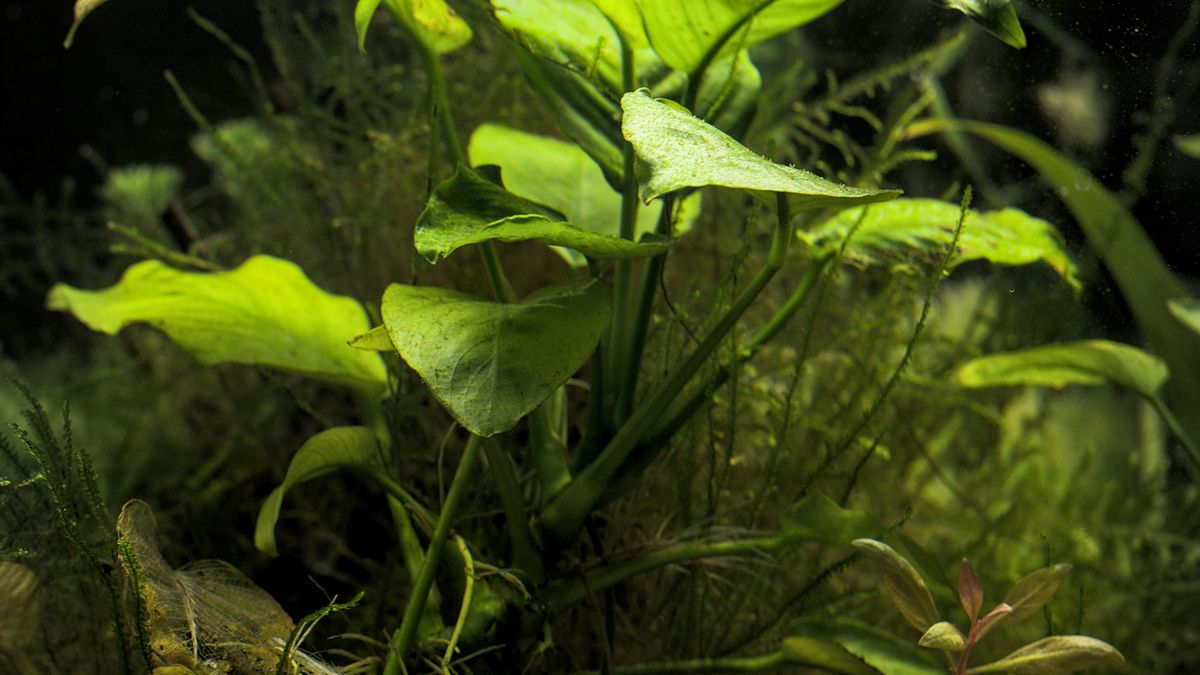
Soft plastic or silk-style aquarium plants collect algae at their leaf margins and in tiny junctions around stems. Some can be swished gently in removed aquarium water and brushed with a soft tool. Others have coatings, adhesives or colour that abrade if scrubbed hard. Check whether a piece has begun shedding flakes, split around its plastic base or developed sharp wire ends. An artificial plant that scratches fish or releases coloured particles should be replaced rather than endlessly washed.
Take care when removing plants rooted deeply in gravel. Pulling the entire base out quickly may release buried waste or disturb plants that share the area. First free it with gentle movement, then siphon visible debris from the exposed area. Return it so schooling fish keep familiar cover and the filter intake remains unobstructed. Repeatedly removing every plant for cosmetic polishing is usually unnecessary in a stable tank and can increase handling stress without improving water chemistry.
Rocks and caves: hidden dirt versus safe shelter
Rock formations and resin caves are especially useful to some territorial or shy fish, so their location matters. Before moving one, look for animals hiding inside. Lift with both hands if heavy, support the base and keep it away from glass edges. A simple soft brush can remove loose surface algae; a narrow stream of water may flush accumulated food from an accessible cavity. If water that emerges is very dirty, clean selectively, then monitor whether the location is trapping waste because of poor flow.
Never rebuild a stack of heavy loose rocks by balancing one narrow point on another. Rockwork should remain stable if fish dig nearby. Avoid sharp edges and holes that allow entry but not escape. If an unknown garden stone was added to the tank, the question is not merely how to clean it; the mineral and chemical identity may be unsuitable. Replace uncertain material with verified aquarium-grade rock rather than treating repeated scrubbing as evidence that it is safe.
Driftwood needs a different approach from painted decor
Natural wood can release tannins and produce a temporary pale film even when it comes from a reputable aquarium supplier. Fluval describes this as common with newly submerged driftwood. A few strands of harmless-looking surface material are not a reason to soak the entire aquascape in a disinfectant. When a thick unsightly layer collects, gently brush or siphon the affected area and observe water parameters and the wood’s structure. Do not confuse seasonal maintenance with initial wood preparation.
If the wood is actively crumbling, smells abnormal or traps waste in a place you cannot service, removal or repositioning may be appropriate. Otherwise, it can be left partially biofilm-covered when fish and invertebrates are using the surface. See Patify’s aquarium driftwood guide for provenance, soaking, tannins, floatation and safe installation. That article focuses on selecting and preparing wood; this one answers the narrower question of how to clean an item already in a functioning aquarium.
Algae that comes back: find the driver
If you scrub an ornament every weekend and the coating returns immediately, the recurring work is evidence that you have not solved the underlying conditions. Light exposure, feeding patterns, circulation and nutrient accumulation can all influence growth. Aquarium Co-Op suggests manual removal as one tool within a broader algae-management plan. It does not promise that one scrubbing session permanently removes algae from a living system. A little algae may be a tolerable trade-off when fish health and water tests are normal.
Compare the heavily coated ornament with another in a shaded location. Check photoperiod consistency, plant health and whether excess food collects at the base. Make only one or two deliberate changes at a time so you can see what matters. Avoid broad algaecide use near shrimp or other sensitive livestock unless a product is approved and appropriate for the actual tank. If there is a persistent outbreak, classify the growth before choosing a treatment rather than escalating indiscriminately.
Brown dust, green spots, black tufts and white slime
Brown dusty coatings may be easy to brush away, especially in developing aquariums. Hard green spots can cling tightly to glass or smooth objects; a metal scraper safe for glass may still damage painted ornament surfaces or acrylic. Dark tufted algae can be harder to remove and may respond to changes in the aquarium’s light, nutrient and flow balance. White soft material on recently submerged wood may be common biofilm rather than algae. One method is unlikely to be best for all four appearances.
Colour alone is not a reliable identification tool. If you are uncertain, photograph the growth and compare its texture, location and rate of change while also monitoring the fish. A sour smell, deterioration of a coating, unexplained cloudiness or rising ammonia calls for broader assessment. Skip the temptation to pour in a random algae killer because a social-media image looks similar. The safest pathway starts with identifying the likely cause and choosing the gentlest intervention consistent with it.
| Appearance | Possible first check | Best initial action |
|---|---|---|
| Soft brown dust | Surface algae or new-tank coating | Gently brush; review parameters |
| Green hard spots | Light/exposure and growth conditions | Spot-clean with material-safe tool |
| Dark fuzzy tufts | Persistent algae needing system review | Review light/nutrients; avoid harsh general treatment |
| White film on new wood | Often temporary biofilm | Observe livestock and wood condition |
| Loose paint or foul odour | Material failure or contamination | Remove suspect object; do not scrub and return |
Keep beneficial bacteria where they are working
Established filter foam, porous substrates and hardscape all carry microbial communities, but they do not make identical contributions. The main danger during an enthusiastic deep clean is combining too many disruptive steps: replacing mature filter foam, washing all rocks, uprooting plants and overhauling substrate in a single session. Even when each action is reasonable separately, together they can weaken biological stability and leave more waste than the remaining bacteria can handle.
If the tank is newly cycled, densely stocked or already showing ammonia or nitrite, stagger non-urgent decoration cleaning and prioritise water quality. A functioning sponge filter is one important source of biofiltration; never sterilize it as though it were a household sponge. After unusually extensive maintenance, test parameters and check livestock carefully. Clear-looking water does not prove the nitrogen cycle was preserved.
When a decoration should be discarded
Cleaning has limits. A resin ornament with peeling paint, visible metal, cracks that can trap fish or a coating that softens under water may no longer be suitable. Artificial plants that shed material or grow sharp edges should be removed. Porous objects that are visibly disintegrating, previously exposed to unknown household chemicals or impossible to rinse reliably are poor candidates for experimental treatment. Choose replacement products sold for aquarium use, with appropriate physical size and material.
Consider the animal’s need for shelter before taking an object away permanently. A fish accustomed to a cave may feel exposed when its familiar structure disappears. Where safe, install an appropriate substitute before removing the old one, but avoid adding untreated or unverified materials in haste. Never assume that a fresh ornament is biologically cycled. A physical replacement and a mature filter are separate things. If an injury or unexplained illness has occurred, inspect how the object was used as well as its material condition.
How often to clean aquarium decorations
There is no meaningful universal calendar for taking ornaments out. A clean-looking tank with stable testing may need only selective algae removal during water changes. Another aquarium may accumulate substantial trapped food behind a bulky structure and require more frequent local siphoning. Make that distinction using observation, not a fixed “every seven days bleach all ornaments” routine. Aquarium maintenance frequency is connected to bioload, feeding and circulation, not just the visible colour of decorations.
A useful inspection habit is to glance behind and under accessible hardscape during regular water changes. Notice whether a cave entrance is open, whether the filter intake remains free, whether fish are using shelters normally and whether a piece has shifted. Clean when there is a functional reason: debris accumulation, obstruction, unsafe surface damage or cosmetic algae you genuinely want to remove. Leaving harmless biofilm on one rock does not mean you have neglected the tank.
After cleaning: the five-minute safety check
Restore each object to a stable position that does not trap fish or touch electrical equipment. Make sure any heater is properly submerged and restored according to its directions, and that pumps and filters are functioning. Count or observe the animals normally visible, especially bottom dwellers that may shelter beneath a cave. Confirm that there are no loose pieces of plastic or trapped cleaning debris. If a lid or tube had to be moved, check it is secure before leaving the aquarium unattended.
Watch for rapid breathing, abnormal swimming, cloudy water or sudden changes in behaviour. If those occur, check water temperature and ammonia/nitrite rather than assuming the tank simply needs more ornament washing. A brief photo taken before and after cleaning can document position and visible algae changes for your private records. Do not present it as a controlled experiment or infer that a cleaning method was medically safe based only on appearance after an hour.
Canadian household constraints and a responsible shopping list
For a small apartment or shared household, the main risk can be accidental cross-contamination: an aquarium brush set down beside bathroom cleaner or a bucket borrowed for floor washing. Dedicated inexpensive tools are easier to manage than a cabinet of chemicals. Keep the supplies labelled and out of reach of children. During winter, cold replacement water from a tap may differ markedly from aquarium temperature; condition and match water as appropriate before refilling, rather than rushing an entire cold bucket into a stocked tropical tank.
This article does not claim a current Canadian price for brushes, conditioners or replacement ornaments. Compare in CAD, verify the aquarium-safe product declaration and consider shipping and province-specific tax before purchasing. A soft dedicated brush, a clean labelled bucket and water tests are more immediately useful than an expensive chemical kit for routine algae on decor. Spend first on protecting animals and maintaining the filter; cosmetic polishing is secondary.
Common mistakes and questions answered
Can I use dish soap and rinse well? Do not use it for aquarium decorations; residues are an avoidable risk. Should I boil every rock? No: certain materials can crack or be incompatible with heat, and the action is unnecessary for normal algae. Can I leave algae on a decoration? Often yes when fish are healthy and the growth is not blocking equipment or harming plants. Should I remove fish to wash one ornament? Usually not, provided you can move it without trapping them.
Does white film always mean fungus? No; recently submerged wood often develops microbial biofilm. What if an ornament smells of cleaner? Do not put it back in the tank; seek a safe replacement or validated handling advice. Can I disinfect every decoration after illness? Only with a pathogen- and material-appropriate plan from qualified guidance. Does a spotless aquarium mean low ammonia? No. Invisible water chemistry requires testing.
Verified sources and an action plan
Aquarium Co-Op’s maintenance guide supports using a dedicated toothbrush for algae and avoiding soap. Its algae article explains why mechanical cleaning is only part of the solution. Fluval’s driftwood FAQ describes benign new-wood biofilm. Patify’s existing full tank-cleaning article was checked specifically to prevent duplicating the whole water-change procedure. Sources were reviewed on 15 October 2026; this is not aquatic veterinary clearance for disinfecting a disease outbreak.
For the next maintenance session, choose just one problem decoration. Identify its material and whether it is still intact. Work with a dedicated brush and clean water, keep livestock in safe positions, siphon dislodged waste and return the item securely. Finally check fish behaviour, filter function and water conditions. When clean-up is selective and measured, a display can look better without sacrificing the stable environment that matters far more than spotless plastic.