
Last updated:
Cat Keeps Going to the Litter Box but Nothing Comes Out: Urinary Blockage vs Constipation
Repeated straining with little or no urine needs emergency care
If your cat keeps trying to pee but produces nothing, only drops, or you cannot tell whether urine is passing, contact an emergency veterinarian and arrange immediate assessment. Do not wait until morning or try a constipation remedy first. Male cats are at particular risk, but any cat struggling to urinate needs urgent attention.
Vomiting, marked weakness, collapse or worsening distress makes the situation even more urgent. Do not wait for those signs to appear. Cornell's urinary guidance identifies obstruction as an emergency.
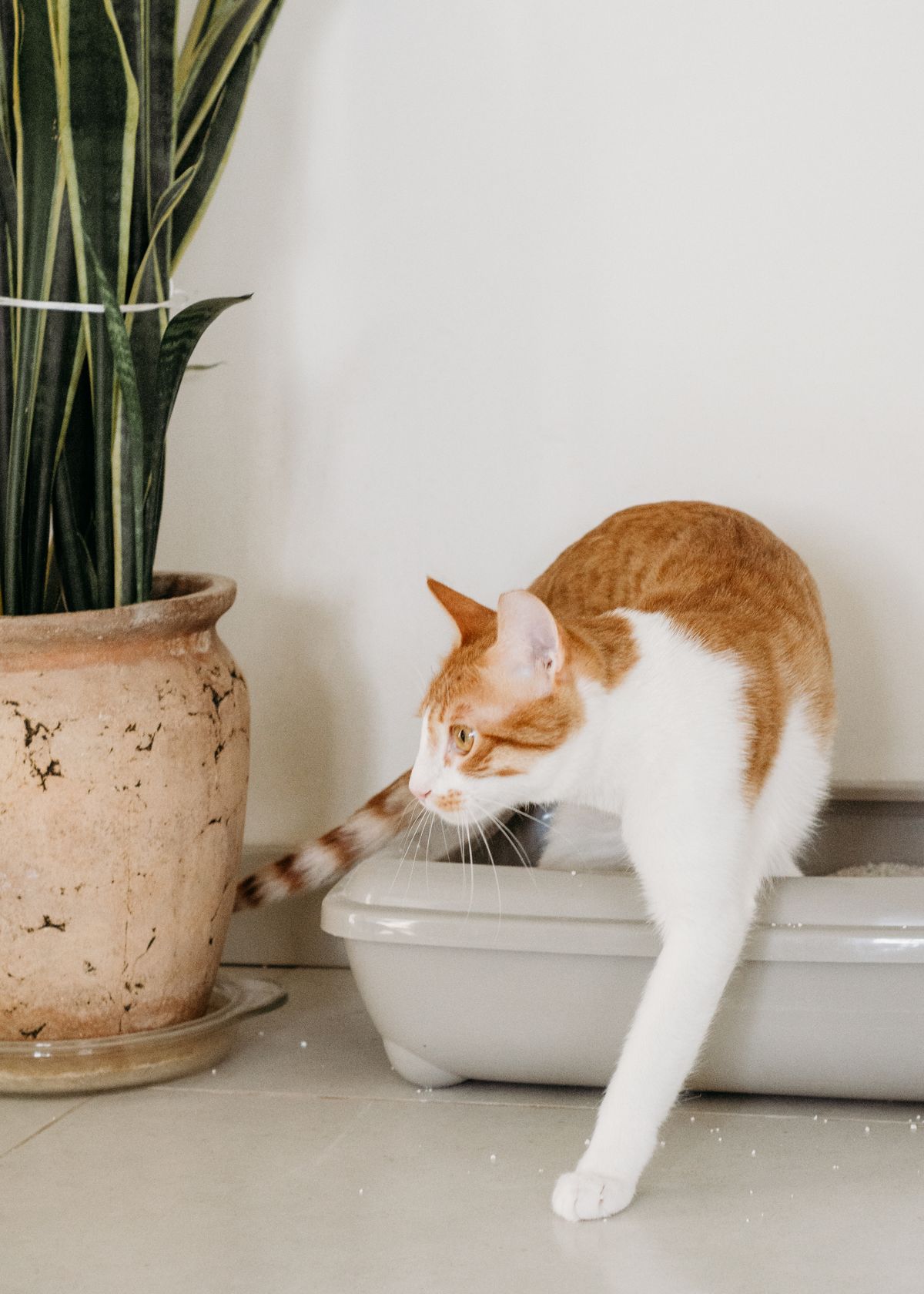
You hear digging, watch your cat squat, and then find an almost empty litter box. A few minutes later, it happens again. The useful question is not simply how often your cat visits: what is actually coming out? Urinary discomfort and constipation can look remarkably similar. This guide helps you describe the problem and get the right care without relying on a home diagnosis.
Urinary blockage vs constipation: clues, not a home test
Squatting, crying and repeated trips do not reliably distinguish the two. Use the observations below when you call the clinic. Do not keep your cat waiting while you try to complete the table.
| Observation | What it may suggest | Next step |
|---|---|---|
| Repeated attempts with no urine, only droplets, or uncertain output | Urinary obstruction must be ruled out; painful bladder disease can look similar. | Emergency veterinary assessment now. |
| You directly observe a normal urination, but stool is hard, dry or difficult to pass | Constipation becomes more plausible. Seeing urine does not explain the bowel problem. | Contact your vet today for repeated straining; seek emergency care if your cat is very unwell. |
| Pink urine, genital licking or urine outside the box | Possible urinary tract disease; these signs do not prove a bacterial infection. | Urgent veterinary advice; little or no urine means emergency assessment. |
| A little liquid stool after unsuccessful attempts | Liquid can sometimes pass around retained hard stool. | Report both the straining and liquid stool; do not assume the bowel has emptied. |
Comparison based on Cornell's urinary guidance and VCA's constipation guidance. An examination is needed to distinguish the causes.
Why a few drops are not reassuring
A tiny wet spot shows that some liquid appeared; it does not establish that the bladder is emptying adequately. A partial or developing obstruction can still be a concern. Keep the same emergency plan if your cat repeatedly strains and passes only drops. Likewise, urine seen earlier does not rule out a blockage that developed afterward. The iCatCare guidelines describe similar signs across different urinary disorders and the need for prompt assessment.
What to do now, without delaying the trip
- Call with the symptom first. Say: “My cat is repeatedly straining in the litter box and I cannot confirm a normal pee.” Give your cat's sex, when this started and whether there is vomiting or weakness. If the regular clinic is closed, contact its out-of-hours service or an emergency animal hospital.
- Bring what you already know. Note the last urination and bowel movement you actually witnessed, previous blockages or constipation, and current medicines. Say “unknown” when appropriate. A photo or short video already on your phone can help; do not wait to obtain one.
- Transport gently in a secure carrier. Line it with a towel. Handle your cat calmly and avoid pressure on the abdomen. Follow the receiving clinic's instructions about food, water and medication.
- Make practical constraints clear immediately. If transport or cost is a problem, tell the clinic while arranging care. Ask about initial assessment and available options rather than postponing the call to gather estimates.
The transport checklist is Patify's practical organization of the information to give a clinic. PDSA recommends immediate emergency contact for difficulty passing urine.
What not to try at home
- Do not squeeze or massage the bladder. Pressing the belly to force urine out can cause pain and injury. Bladder assessment belongs to the veterinary team.
- Do not give a human enema. Sodium-phosphate products, including some Fleet-type enemas, can cause life-threatening electrolyte disturbances in cats.
- Do not start laxatives, oils, leftover antibiotics or human painkillers on your own. A treatment chosen for the wrong problem can add risk and delay effective care.
- Do not try to “flush out” a blockage with water, wet food or supplements. Nutrition is part of some long-term plans, not a way to clear an acute obstruction at home.
See the iCatCare guidance on bladder expression and Merck's warning about phosphate enemas.
What could be causing the repeated litter box visits?
Urinary obstruction: urine cannot leave normally
The urethra carries urine out of the bladder. Inflammatory material, mucus, crystals or stones can obstruct it. Male cats have anatomy that makes obstruction much more likely than in females. Being neutered does not make a male cat immune, and neutering should not be assumed to have caused the problem.
As pressure builds, kidney function and the body's chemical balance can deteriorate. Potassium can rise enough to disrupt the heartbeat. There is no safe home countdown based on when you first noticed straining. The obstruction may have started before you saw it. The iCatCare guidelines explain these complications; ACVS explains the obstructive causes.
Cystitis, stones or infection without a complete blockage
Feline idiopathic cystitis, often shortened to FIC, is a common cause of painful urinary signs. It is diagnosed after other causes have been considered and excluded. Stress can contribute, but calling the problem “stress” does not make the pain harmless or remove the need for examination.
Bladder stones and bacterial infections are other possibilities. They need different treatment. Urinary symptoms alone cannot confirm a UTI, and a previous diagnosis does not guarantee that today's episode has the same cause. UC Davis describes FIC and its diagnosis.
Constipation: stool is retained or difficult to pass
Constipation commonly involves hard, dry stool and difficult or less frequent bowel movements. Dehydration, painful mobility problems, a narrowed pelvic canal, medicines and impaired colon function can contribute. A severely enlarged, poorly functioning colon is called megacolon.
A cat repeatedly straining deserves a call today, even if you have seen normal urine. Vomiting, significant pain, weakness or loss of appetite increases the concern. A general “no stool for 48–72 hours” guideline is not permission to wait with those signs, and never applies to a cat that may be unable to urinate. See VCA's constipation guidance and Cornell's explanation of causes.
How the vet distinguishes the problems and treats them
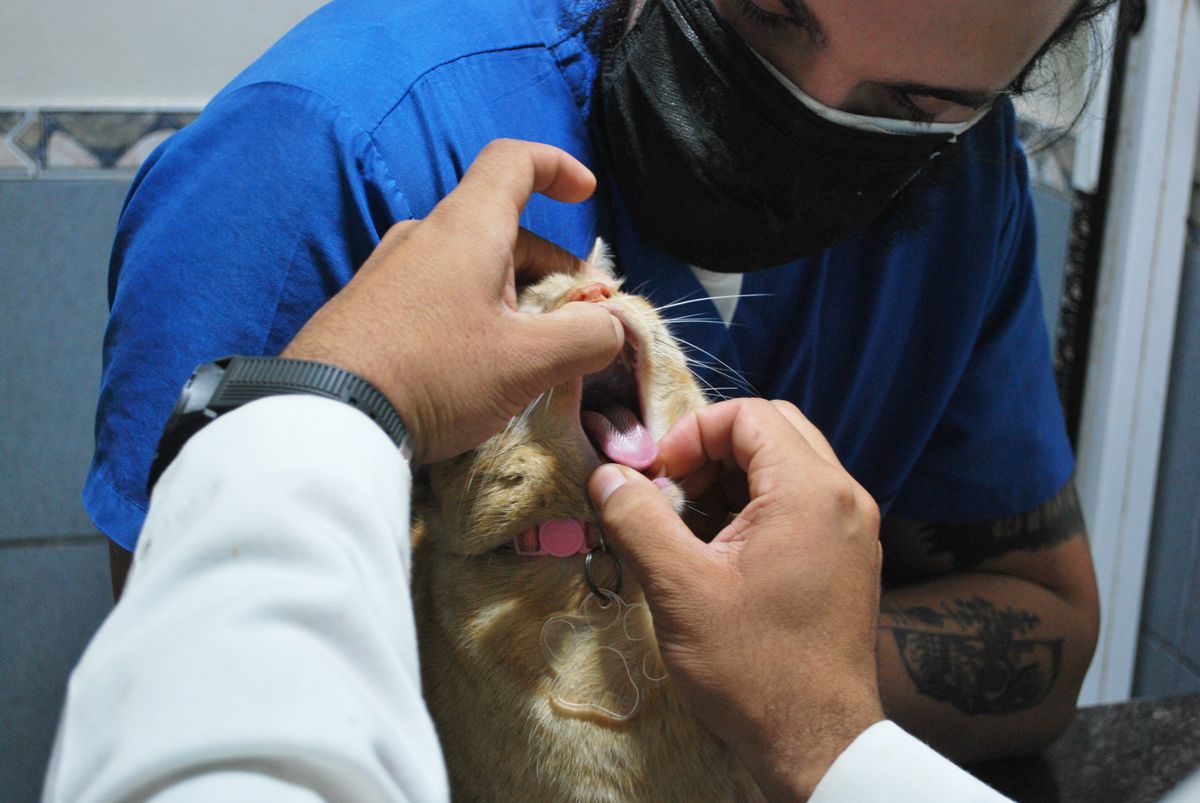
The examination comes before choosing a laxative or urinary medicine. The team assesses your cat's overall condition, bladder and colon. Urine testing, blood tests, X-rays or ultrasound may be needed depending on the findings. These answer different questions: whether urine is retained, whether stones or stool are present, and whether kidney function or electrolytes are affected.
If the urinary tract is blocked
Treatment usually includes pain relief, stabilization and a urinary catheter placed under sedation or anesthesia to restore drainage. Hospital care allows the team to monitor urine production and recovery. Some cats need surgery, particularly when stones or repeated obstruction require it. A procedure called perineal urethrostomy creates a wider urinary opening in selected male cats, but does not eliminate all underlying bladder disease. ACVS describes treatment and surgical indications.
If constipation is confirmed
The plan may involve restoring hydration, a prescribed stool-softening treatment, a suitable diet and addressing the cause. Impacted stool sometimes requires veterinary enemas or removal under anesthesia. There is no single fiber supplement or laxative dose suitable for every cat; severe or recurrent cases need an individualized plan. Cornell explains these treatment options.
Before leaving, ask: What was ruled out? What output should I see next? Which change means return immediately? When is the recheck? Ask for written instructions so everyone caring for your cat follows the same plan.
After treatment: what to watch and what can help
Record actual urine and stool output, appetite and any renewed straining. After a previous blockage, repeated attempts with little or no urine require immediate contact with the treating clinic or emergency hospital. Do not assume this is routine soreness. Follow the discharge instructions about medicines, diet, litter and rechecks. PDSA emphasizes monitoring because blockage can recur.
Make the litter box easy to use
Once the urgent medical problem has been addressed, provide clean, accessible boxes in quiet locations. A useful starting point is one box per cat plus one extra, spread across different locations. Low entry sides help cats with mobility difficulties. Scoop daily and avoid abrupt changes to a litter your cat accepts.
Also check whether another pet blocks access or ambushes your cat on the way out. Never punish accidents. These changes can improve access and comfort, but are not treatment for a blocked urethra. Cornell's litter box guidance explains the environmental considerations.
Match food and hydration advice to the diagnosis
Your vet may recommend more dietary moisture, changes to water stations or a specific therapeutic food. For cats with FIC, environmental changes and an individualized care plan can help manage recurrence. Avoid assuming that every product labeled “urinary” suits every urinary condition. Discuss changes with the treating vet. UC Davis outlines this combined approach.
For everyday feeding questions after the immediate problem is managed, see Patify's guide to cats, milk and cheese, or browse our cat health guides.
Frequently asked questions
Can a female cat have a urinary blockage?
Yes, although it is much less common than in male cats. Repeated straining with little or no urine needs emergency veterinary assessment in either sex.
My cat passed stool. Does that rule out a urinary blockage?
No. Passing stool does not show that urine is flowing through the urethra. If your cat keeps trying to urinate with little or no output, seek emergency assessment.
My cat is still eating. Can I wait until morning?
No, not if your cat is repeatedly straining with little or no urine. Eating does not establish that the urinary tract is clear. Contact an emergency vet now.
Should I give pumpkin or a laxative for the straining?
Not before the cause is assessed. A constipation remedy cannot treat a urinary obstruction. If constipation is confirmed, your vet can choose a treatment suited to your cat's hydration and bowel condition.
Sources and editorial information
Sources checked September 13, 2026. This guide explains warning signs and care decisions; it cannot diagnose an individual cat. It was prepared by a Patify writer using the veterinary references below.
- Cornell Feline Health Center: Feline Lower Urinary Tract Disease
- iCatCare consensus guidelines on lower urinary tract diseases in cats (2025)
- PDSA: Blocked Bladder in Cats
- American College of Veterinary Surgeons: Urinary Obstruction in Male Cats
- VCA Animal Hospitals: Constipation in Cats
- Cornell Feline Health Center: Constipation
- Merck Veterinary Manual: Constipation, Obstipation, and Megacolon in Small Animals
- UC Davis School of Veterinary Medicine: Feline Idiopathic Cystitis
- Cornell Feline Health Center: Feline Behavior Problems — House Soiling