
Cat health · Pica · Litter ingestion
Why Is My Cat Eating Litter? Pica, Anemia & What to Do Now
Quick answer: A kitten may taste a new litter once out of curiosity, but repeated litter eating is not normal. It can be part of pica and may be associated with anemia, gastrointestinal disease, anxiety or compulsive behavior, an imbalanced diet, diabetes, hyperthyroidism, neurologic disease, or parasites. The immediate risk depends on what litter was swallowed, how much, and whether vomiting, appetite loss, constipation, abdominal pain, weakness, coughing, or breathing changes develop.
Urgent veterinary care: repeated vomiting or retching, a painful or swollen abdomen, inability to keep food or water down, collapse, marked weakness, breathing difficulty, or a known large ingestion of clumping litter. Do not wait for a fixed 24- or 48-hour deadline if symptoms begin.
Important correction: There is no reliable evidence that bentonite universally expands to an exact “15×” volume inside a cat, that every scented litter is hepatotoxic, or that tofu/wood litter is always “safe to eat.” Litter type changes the risk profile, but amount and clinical signs matter more than internet risk scores.
Cat ate litter: the fastest triage
| Situation | Main concern | Best next step |
|---|---|---|
| One or two exploratory licks; no obvious amount swallowed; cat completely normal | Curiosity or brief taste exposure | Remove access, check the product label, and observe closely. |
| Repeatedly returning to eat litter | Pica or another medical/behavioral driver | Book a veterinary evaluation even if the cat currently looks well. |
| Meaningful amount of clumping litter swallowed | GI upset or obstruction/concretion risk | Call your veterinarian promptly with the exact product and estimated amount. |
| Vomiting, appetite loss, constipation/straining, abdominal pain or lethargy after ingestion | Possible GI obstruction or significant irritation | Urgent veterinary assessment. |
| Coughing, wheezing or breathing difficulty around dusty litter | Respiratory irritation or another airway problem | Move away from dust; breathing difficulty is an emergency. |
| Product contains a specific chemical, medication or essential oil and meaningful ingestion occurred | Specific toxicology question | Call a veterinarian or animal poison service with the package in hand. |
Why do cats eat litter? The evidence-based causes
1. Pica
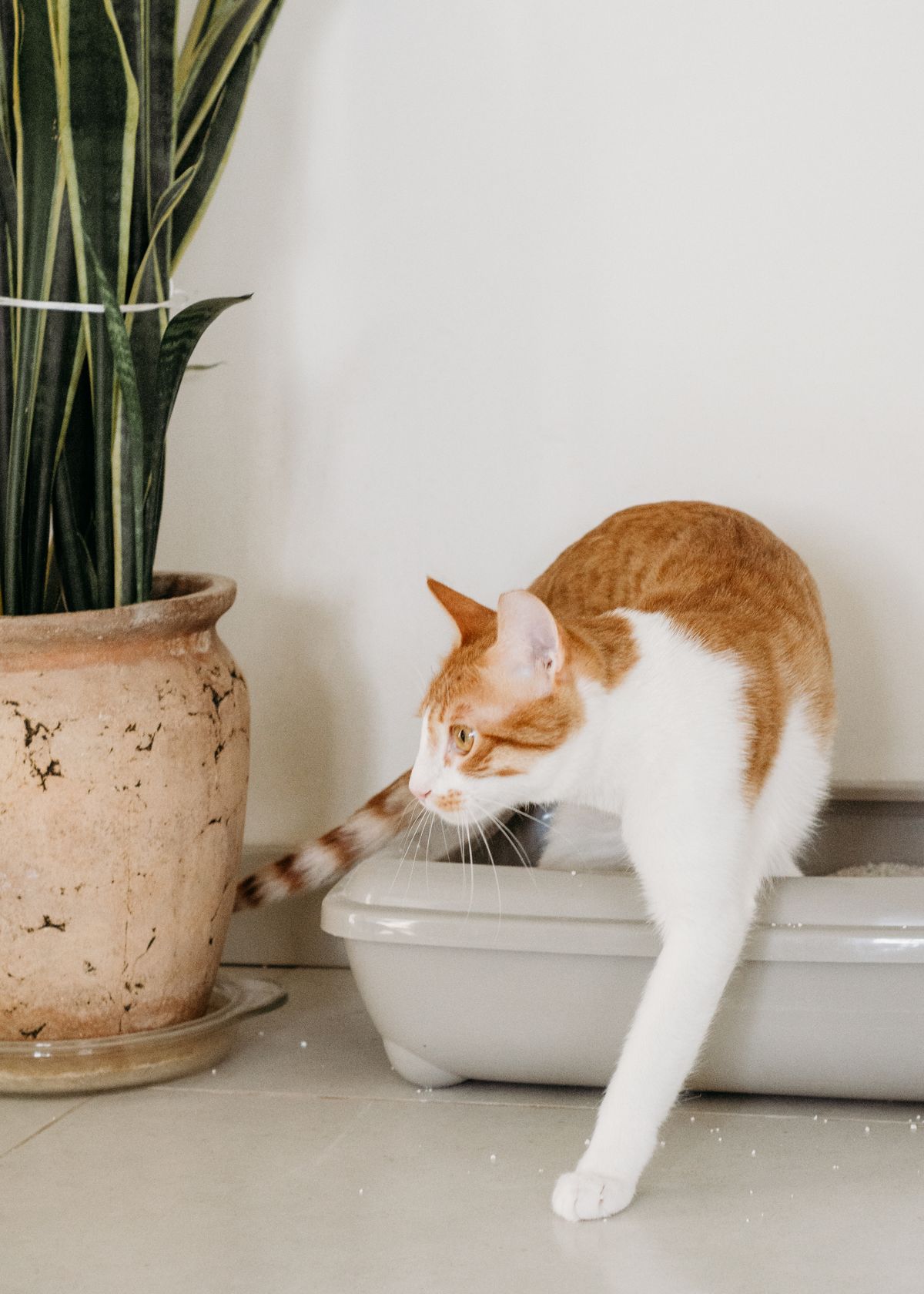
Pica means persistent ingestion of non-food material. VCA lists gastrointestinal disease, anemia, anxiety, compulsive disorders, malnutrition or dietary insufficiency, diabetes mellitus, hyperthyroidism and brain conditions among possible causes. Repeated litter eating therefore deserves investigation rather than being labeled a simple bad habit.
2. Anemia
Anemia is one of the better-recognized medical associations with pica. Pale gums, unusual weakness or lethargy make this more concerning. Anemia itself has many possible causes, so a cat with pale gums should not simply be given iron or mineral supplements at home.
3. Nutritional insufficiency or malnutrition
An imbalanced diet or inadequate nutrition can contribute to pica. That does not mean a cat is specifically detecting iron, zinc, calcium or sodium in clay litter and deliberately replacing the missing nutrient. A diet history and veterinary workup are more useful than guessing a supplement.
4. Endocrine or metabolic disease
Diabetes mellitus and hyperthyroidism are among medical conditions associated with pica. This is especially relevant when litter eating appears alongside increased appetite, weight loss, increased thirst/urination, restlessness, or other new systemic signs.
5. Gastrointestinal disease or parasites
VCA includes gastrointestinal disorders among pica causes, and veterinary sources also describe intestinal parasites as a possible contributor in some cats. Vomiting, diarrhea, weight loss, appetite changes, or recurring abdominal signs strengthen the case for medical investigation.
6. Curiosity, stress, boredom or compulsion
Kittens may investigate litter during play, and food-based plant litters can smell interesting. Stress, boredom and anxiety can also contribute to repeated non-food ingestion. Behavioral explanations should be considered after immediate ingestion risk is addressed and medical causes are not ignored.
Pica vs. “mineral deficiency”: what can you actually tell at home?
You cannot reliably diagnose the cause from the material your cat chooses to eat. The same litter-eating behavior can occur with anemia, GI disease, endocrine disease, stress or compulsion.
| Clue | What it may suggest | What it does not prove |
|---|---|---|
| Pale/white gums, weakness, reduced stamina | Anemia becomes more concerning | It does not identify why the cat is anemic. |
| Eating plastic, fabric, paper or other non-food objects too | Broader pica pattern | It does not prove the cause is behavioral. |
| Weight loss with increased appetite | Metabolic/endocrine disease should be considered | It does not diagnose hyperthyroidism or diabetes. |
| Vomiting, diarrhea or chronic GI signs | GI disease/parasites may contribute | It does not distinguish one GI disorder from another. |
| Only interested in a newly introduced plant-based litter | Novel smell/texture may be contributing | It does not make repeated ingestion harmless. |
Is clumping clay or bentonite litter dangerous if eaten?
Clumping litter deserves more caution than a simple taste exposure because it absorbs moisture and can form a dense mass. A 2026 veterinarian-reviewed PetMD guide notes that ingested clumping clay litter has been associated with vomiting, diarrhea and gastrointestinal obstruction and can form a concretion that sometimes requires surgery.
Do not use an invented volume multiplier as a triage rule. The practical questions are how much was swallowed, the product formulation, the size/age of the cat, and whether GI signs develop.
What about crystal/silica litter?
Crystal litter is commonly made from silica gel. This should not be casually equated with every form of hazardous crystalline silica. ASPCA Poison Control notes that swallowed silica gel most often causes gastrointestinal upset; sufficiently large ingestions can create an obstruction risk.
Dust exposure can also irritate the respiratory tract in susceptible cats. Persistent coughing, wheezing or breathing difficulty is a reason for veterinary assessment regardless of litter type.
Are corn, wheat, wood, paper or tofu litters safer if a cat eats litter?
Some plant- or paper-based litters may be less chemically concerning than certain alternatives, but “natural” does not mean edible or obstruction-proof. Any litter swallowed in enough quantity can cause GI upset or potentially contribute to blockage.
- Paper/wood: veterinarian-reviewed guidance describes these as generally low-toxicity choices, but large ingestion can still cause stomach upset or obstruction.
- Corn/wheat and other food-derived litters: aroma can make them more attractive to some cats. Moisture-damaged organic products can also develop mold.
- Tofu/soy: do not treat it as a veterinary-approved food substitute. If a cat deliberately eats it, address the behavior and underlying cause rather than assuming it is safe.
Best litter for a litter-eating cat: there is no universal winner. A veterinarian may suggest a less dusty, unscented, non-clumping or different-texture product based on the cat's age, medical status and eating pattern.
Are scented litters toxic?
A fragrance claim by itself does not prove that a litter contains a toxic dose of concentrated essential oil. Avoid making decisions from words such as “lavender,” “fresh scent,” or “natural” alone. Check the ingredient information when available.
If the litter truly contains or was contaminated with a known toxic chemical or concentrated essential oil and your cat swallowed a meaningful amount, treat that as a specific poison exposure and call your veterinarian or animal poison service with the package.
What to do now if your cat ate litter
- Stop further eating without blocking toileting. Supervise the box and discuss a temporary litter alternative with your veterinarian if the cat keeps ingesting it. Do not simply deprive the cat of a usable toilet.
- Keep the package. Photograph the ingredient/material description, brand and product type.
- Estimate the amount. A couple of grains is a different exposure from repeated mouthfuls.
- Watch the cat, not a stopwatch. Appetite, vomiting, stool/straining, abdominal discomfort, activity and respiratory signs matter. There is no universal “24 or 48 hours = all clear” rule.
- Do not induce vomiting or give home antidotes. Pet Poison Helpline specifically advises against inducing vomiting without professional guidance.
- Do not start iron, calcium, zinc or other supplements unless a veterinarian has identified a deficiency and prescribed a dose.
When should you go to the vet?
🚨 Emergency now
- repeated vomiting/retching
- painful or swollen abdomen
- collapse or severe weakness
- breathing difficulty
- severe neurologic changes
⚠️ Call promptly
- meaningful clumping-litter ingestion
- new appetite loss
- constipation or straining
- persistent coughing/wheezing
- known chemical contamination
📅 Schedule a workup
- repeated litter eating
- pale gums
- weight loss
- increased thirst/urination
- other pica behaviors
What might the veterinarian check?
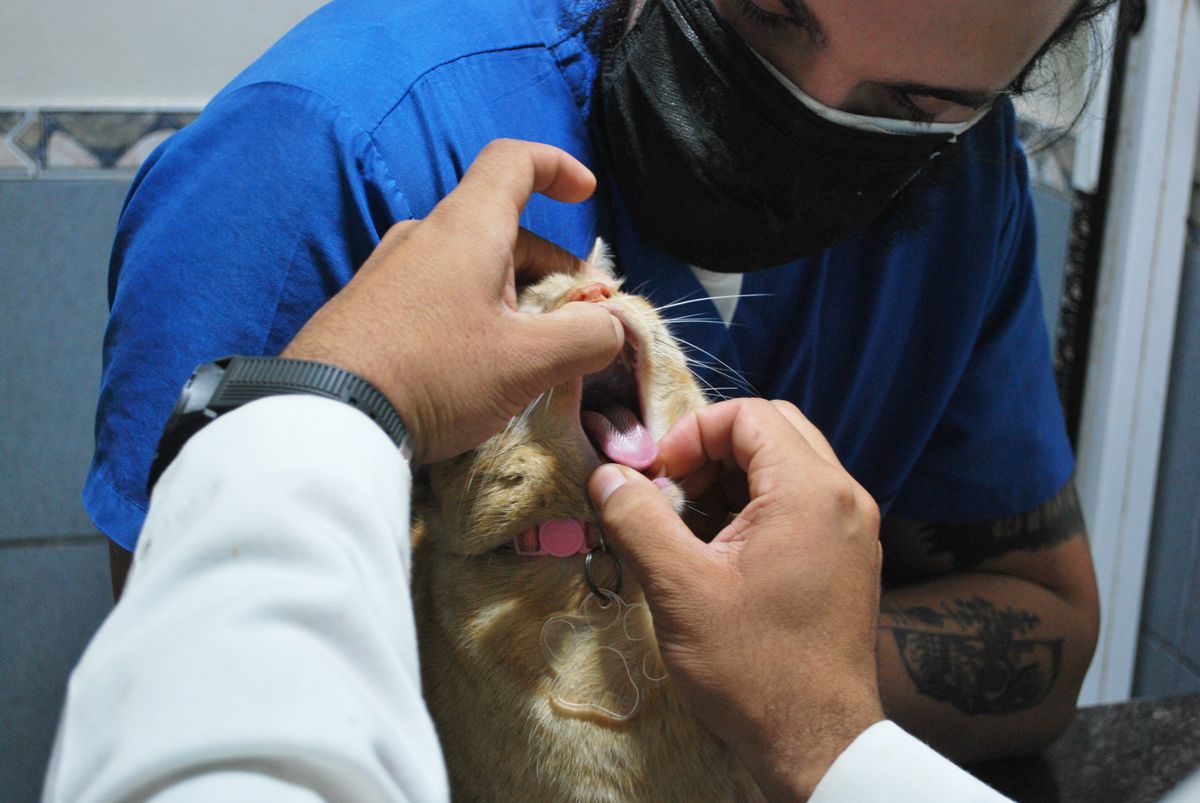
Depending on the history and exam, evaluation may include a complete blood count for anemia, chemistry testing, urinalysis, thyroid testing when appropriate, fecal/parasite testing, diet review, and abdominal imaging if obstruction is a concern. VCA notes that pica diagnosis starts with a detailed behavioral and dietary history plus physical examination; obstruction may require radiographs or other imaging.
How to reduce litter eating after the immediate risk is handled
- Use a complete, life-stage-appropriate diet and review it with your veterinarian.
- Scoop regularly so loose litter and contaminated material do not accumulate.
- Store spare litter where the cat cannot access the bag.
- Provide daily play, food puzzles, climbing and safe foraging opportunities.
- Reduce predictable household stressors where possible.
- If the behavior is repetitive or compulsive, ask about veterinary behavioral support.
- If switching litter, make the transition in a way that still leaves the cat with an acceptable toilet option.
Frequently asked questions
Why is my cat eating cat litter?
Repeated litter eating can be pica. Medical associations include anemia, GI disease, dietary insufficiency, diabetes, hyperthyroidism and neurologic disease; anxiety or compulsive behavior may also contribute. A one-time kitten taste can be curiosity, but persistent eating deserves a veterinary workup.
Is clumping litter dangerous if my cat eats it?
A tiny accidental taste and a meaningful ingestion are not equivalent. Clumping clay litter can cause GI upset and has been associated with obstruction when enough material is consumed. Call your veterinarian if a noticeable amount was swallowed or symptoms begin.
Does eating litter mean my cat is anemic?
No. Anemia is one possible cause or association, not the only explanation. Pale gums, weakness and lethargy make anemia more concerning and warrant veterinary assessment.
Should I give my cat iron or minerals?
No, not based on litter eating alone. Supplements can be harmful when unnecessary or incorrectly dosed. Bloodwork and a diet history should guide treatment.
Is crystal litter poisonous to cats?
Silica-gel litter is not automatically a systemic poison. Swallowed material can cause GI upset, and a large amount can create obstruction risk. Dust can also be irritating to the respiratory tract.
What litter should I use for a cat that keeps eating litter?
There is no universally safest edible litter. Ask your veterinarian about an unscented, low-dust and possibly non-clumping alternative that your cat will still reliably use while the underlying pica cause is investigated.
Related Patify cat-health guides
U.S. poison help
If the litter was contaminated with a specific potentially poisonous substance, U.S. owners can contact ASPCA Animal Poison Control Center at (888) 426-4435 or Pet Poison Helpline at (855) 764-7661. Fees may apply. If the cat is collapsing, struggling to breathe, or severely ill, go directly to an emergency veterinary hospital.
Sources & editorial standard
This guide was revised around current veterinary pica, foreign-body and toxicology guidance. It avoids unverified expansion ratios, blanket “safe litter” rankings and unsupported claims that a cat can identify a specific mineral deficiency by choosing clay litter.
- VCA Animal Hospitals: Pica in Cats
- Merck Veterinary Manual: Gastrointestinal Obstruction in Small Animals
- PetMD, veterinarian-reviewed: Why Is My Cat Eating Litter?
- ASPCA Animal Poison Control: Silica Gel
- ASPCA Animal Poison Control Center
- Pet Poison Helpline
Educational information only; it does not replace examination, diagnosis or treatment by a veterinarian.
Track litter eating with Patify

Give your vet a usable pattern
Record the litter brand/type, estimated amount, time of ingestion, vomiting, appetite, stool changes, gum color and whether your cat is also eating other non-food items.
View Patify on Google PlayBottom line
Cat litter eating is a behavior to investigate, not a mineral-deficiency diagnosis. A brief taste can be curiosity, while repeated eating can be pica associated with medical or behavioral problems. If a significant amount of clumping litter was swallowed or vomiting, appetite loss, abdominal pain, constipation, weakness or respiratory signs develop, contact a veterinarian promptly.