
Last verified: October 3, 2026
Freshwater Aquarium Crabs: Which Species Are Actually Fully Aquatic?
Quick answer: the phrase “freshwater crab” is dangerously broad. Thai micro crabs and Panther crabs are true freshwater aquatic species. Vampire crabs need freshwater but spend much of their lives on humid land. Red claw and fiddler crabs are commonly sold beside freshwater livestock yet need brackish water plus land access. Freshwater pom-pom crab husbandry remains inconsistent across trade sources, so species verification matters.
Patify crab rule: identify the scientific species before buying → classify it as fully aquatic freshwater / semi-terrestrial freshwater / brackish semi-terrestrial → build the habitat around that classification.
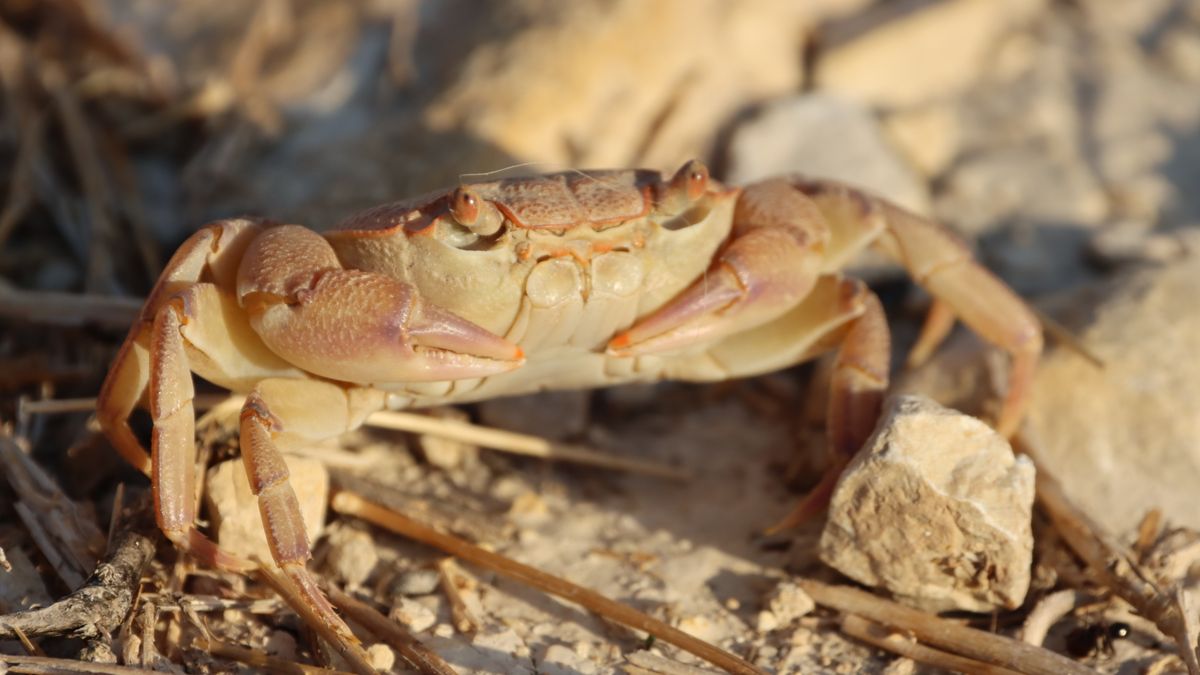
1. Three Different Animals Hide Behind the “Freshwater Crab” Label
| Habitat class | What it means | Examples |
|---|---|---|
| Fully aquatic freshwater | Lives submerged; no mandatory land zone | Thai micro crab, Panther crab; Matano crab is predominantly aquatic |
| Semi-terrestrial freshwater | Uses freshwater but requires substantial humid land | Vampire crab |
| Brackish semi-terrestrial | Needs marine-salt brackish water plus land/air access | Red claw crab, fiddler crab |
Petco’s broad “freshwater crab” care sheet groups animals with very different ecologies under one retail category. That is exactly why the scientific name is essential before purchase.
2. Seven Aquarium Crab Types Compared
| Trade name | Water | Land needed? | Adult scale / tank clue | Community risk |
|---|---|---|---|---|
| Thai micro crab Limnopilos naiyanetri | True freshwater | No | ~1 cm carapace; mature planted nano tank | Peaceful but delicate/easy to outcompete |
| Panther crab Parathelphusa pantherina | True freshwater | No mandatory land | Large robust crab; ~60 L+ starting point in current care sources | Predatory/territorial; species setup safer |
| Matano crab Syntripsa matannensis | True freshwater | Mostly aquatic; emergent rest optional | ~4 in; ~22 gal+ in modern care guides | Can hunt snails, shrimp and slow fish |
| Freshwater pom-pom Ptychognathus trade animal | Trade sources conflict | Often sold as fully aquatic | Small | Species identity and long-term salinity evidence uncertain |
| Vampire crab Geosesarma spp. | Freshwater pool | Yes—majority land | Paludarium, not aquarium | Territorial; small aquatic livestock may be prey |
| Red claw crab Perisesarma/Parasesarma bidens | Brackish | Yes | 10–15+ gal paludarium depending stock | Territorial/opportunistic predator |
| Fiddler crab various fiddler genera | Brackish | Yes | Sand/mud land + shallow water | Not a conventional community-aquarium animal |
3. Thai Micro Crab: The Clearest Fully Aquatic Nano Crab
Limnopilos naiyanetri is endemic to Thailand’s Tha Chin river system and is one of the smallest freshwater crabs in the hobby. Multiple current sources describe it as fully aquatic, around 1 cm across the carapace and suited to mature planted tanks with moss, roots and gentle flow.
Its challenge is fragility, not aggression. It is tiny, shy and easy to outcompete for food. Strong filter intakes and large predatory fish are obvious hazards.
Best fit: established shrimp-style nano aquariums where the keeper enjoys subtle invertebrates and can target-feed tiny foods.
4. Panther Crab: True Freshwater, but Not a Peaceful “Cleanup Crew”
Panther crabs (Parathelphusa pantherina) are true freshwater crabs from Lake Matano, Sulawesi. Current care sources explicitly distinguish them from brackish mangrove crabs.
That does not make them plug-and-play community animals. They are powerful opportunistic crustaceans that can capture fish/invertebrates, especially at night or during vulnerable moments.
Best fit: a spacious, rock-rich, escape-proof species-focused aquarium with stable warm mineralized freshwater.
5. Matano Crab: Larger, Mostly Aquatic Sulawesi Specialist
Syntripsa matannensis is another Sulawesi freshwater crab. Current husbandry references list adults around 4 inches and roughly 22 gallons as a starting point, with warm water around 75–86°F and alkaline conditions.
It is mostly aquatic and does not require the big land zone of vampire/red-claw crabs, although secure rocks/wood reaching toward the surface can provide optional emergent rest. It is territorial and may hunt snails, shrimp or slow fish.
6. Freshwater Pom-Pom Crab: A Trade Name With Unresolved Husbandry Questions
Many shops sell a tiny “freshwater pom-pom crab” as Ptychognathus barbatus and describe it as fully aquatic. Other recent reviews point out that scientific records for Ptychognathus include brackish/estuarine habitats and that long-term species-verified freshwater data are limited.
Patify recommendation: do not buy this crab from a seller who cannot provide a scientific identification, collection/breeding origin and documented long-term freshwater husbandry. The uncertainty itself is important care information.
7. Vampire Crab: Freshwater Does Not Mean Aquatic
Vampire crabs (Geosesarma spp.) use freshwater but are semi-terrestrial. Petco and specialist care guides describe them spending prolonged periods on land.
A current Geosesarma dennerle care source targets humid air around 75–90%, land air roughly 24–26°C and a freshwater pool around 22–26°C. The enclosure therefore needs moist unflooded land, leaf litter/hides and easy textured exits from the water.
Best fit: a secure tropical paludarium. Patify’s paludarium setup guide explains land/water zoning, but the crab’s species-specific needs always override generic design.
8. Red Claw Crab: Commonly Mislabeled as Freshwater
Red claw crabs (Perisesarma/Parasesarma bidens) are mangrove/estuary animals. Multiple current care sources agree on the two critical points: brackish water and real land access.
Modern husbandry commonly uses low-end brackish conditions around specific gravity 1.003–1.010, made with marine salt mix—not table salt or generic freshwater “aquarium salt.” A dry/very shallow land zone is not optional because these crabs are semi-terrestrial.
Do not place one in an ordinary fully filled community freshwater aquarium.
9. Fiddler Crabs: Mudflat Animals, Not Freshwater Bottom Dwellers
Fiddler crabs are also semi-terrestrial estuarine animals. Current aquarium guides consistently call for brackish water plus a substantial sand/mud land section where the crabs can walk and burrow.
The giant claw of males is a signaling structure, not evidence that they should live underwater like crayfish. A standard fish tank filled to the rim removes the habitat they use most.
10. Molting, Copper and Escape Safety
- All crabs molt. A newly molted crab is soft and vulnerable; provide hiding places and do not pull it out because it looks inactive.
- Leave molts temporarily. Crabs may reconsume parts for minerals.
- Secure the lid. Many crab species climb cables, filter tubes and décor.
- Watch copper medications. Crustaceans can be highly sensitive to treatments intended for fish.
- Never mix incompatible habitat classes. A freshwater Thai micro crab and brackish red claw crab cannot share one “crab tank.”
Any aquatic section must still be biologically cycled. Use Patify’s fishless cycling guide before livestock is added.
Frequently Asked Questions About Freshwater Aquarium Crabs
What crab can live fully underwater in freshwater?
Thai micro crabs are one of the clearest true fully aquatic freshwater options. Panther crabs are also true freshwater, while Matano crabs are predominantly aquatic.
Do vampire crabs need land?
Yes. They are semi-terrestrial and need a humid land-dominant paludarium with a freshwater pool.
Are red claw crabs freshwater crabs?
They are often sold that way, but long-term husbandry calls for brackish water and land access.
Do fiddler crabs need land?
Yes. They are mudflat/estuarine crabs and require both brackish water and terrestrial sand or mud.
Can freshwater crabs live with fish?
It depends on the species. Thai micro crabs are peaceful but vulnerable; Panther/Matano/red-claw crabs may capture fish or invertebrates. Species-only setups are often safer.
Is the freshwater pom-pom crab truly freshwater?
Trade sources disagree and species identification is inconsistent. Buy only when the seller can document the exact animal and long-term freshwater husbandry.
Why is my crab trying to escape?
Some species naturally explore above water, while others escape from unsuitable water chemistry, crowding or lack of land. First verify the species and habitat class.
Sources Checked
- Petco — Freshwater Crab Care Sheet
- Petco — Vampire Crab Care Sheet
- Vet Verified — Panther Crabs
- Gensou Aquascaping — Thai Micro Crab
- Gensou Aquascaping — Red Claw Crab
- Herpeton Academy — Vampire Crab
Sources reviewed October 3, 2026.