Dog Ate a Dishwasher Pod: Why the Foamy Vomit Is the Real Danger

Source-checked against current veterinary toxicology and poison-control guidance. Dishwasher detergent is not treated as identical to hand dish soap or every laundry product.
🚨 If your dog swallowed or punctured a dishwasher pod, call your veterinarian or an animal poison service now. Do not deliberately make your dog vomit. Re-exposing the mouth and esophagus to concentrated detergent can worsen irritation, and vomiting creates another opportunity for foamy detergent to enter the lungs.
A dishwasher pod is easy for a dog to grab: small, smooth, often scented, and just large enough to carry around. The problem starts when saliva dissolves the film or a tooth punctures it.
Then several hazards can happen at once. Concentrated detergent may contact the mouth and esophagus. The dog may drool, gag, retch, or vomit. Foam can travel toward the airway. If the dog swallows a firm tablet or intact pod, the package itself can also become a choking or gastrointestinal foreign-body concern.
That is why the most useful question is not simply “Is dishwasher detergent poisonous?” It is “Where did the detergent go—mouth, stomach, lungs, eyes, or all of the above?”
What matters after a dishwasher-pod exposure
- Why dishwasher pods can be worse than a lick of soap
- Why foamy vomiting changes the emergency
- What to do in the next 10 minutes
- Why you should not induce vomiting
- Symptoms: mouth, GI tract, lungs, and eyes
- Dishwasher pod vs. laundry pod
- What if it was a hard dishwasher tablet?
- What the emergency vet may do
- What to watch after the first vomiting episode
- Frequently asked questions
Why one pod can be more concerning than a small detergent lick
VCA notes that pods deliver a concentrated amount of detergent in a small package. A dog is also more likely to get a pod-sized dose in the mouth at once than to voluntarily drink a large amount of unpleasant liquid detergent.
Dishwasher detergents can be alkaline. Concentrated contact may cause drooling, gagging, oral pain, esophageal irritation, and in more severe corrosive exposures, ulcerative injury.
Vomited or forcefully released detergent can be inhaled into the respiratory tract. Aspiration pneumonia is the complication that turns a “soap ingestion” into a potentially serious lung problem.
Small dogs may choke on a pod or swallow a firm tablet whole. Solid material can create a foreign-body concern separate from detergent toxicity.
Why the foamy vomit is the part owners underestimate
Veterinary sources warn that detergent can be aspirated into the lungs either when concentrated liquid is expelled toward the back of the throat or when a dog vomits foamy material and inhales it. Once detergent reaches the respiratory tract, coughing, wheezing, abnormal breathing, and aspiration pneumonia can follow.
The emergency is not only what the pod does in the stomach. It is what can happen when concentrated detergent comes back up.
This is why a dog that vomits once and then starts coughing deserves more concern than a dog with one brief episode of uncomplicated stomach upset.
What to do in the next 10 minutes
Take away the remaining product and photograph the front, back, and ingredient panel. Keep the exact product type available for the veterinarian or poison service.
VCA recommends flushing small oral exposures with water. Do not force large volumes down the throat, especially if your dog is coughing, gagging, struggling to breathe, or repeatedly vomiting.
If the pod burst onto the coat, rinse with clear water until the slick or soapy residue is gone, then prevent licking until the area is clean.
If pod liquid sprayed into an eye, begin copious water or saline irrigation. Concentrated detergent can injure the cornea, so persistent squinting or pain deserves prompt veterinary evaluation.
Tell the professional whether the dog swallowed the contents, swallowed a whole pod/tablet, punctured it, vomited, coughed, or was sprayed in the eyes.
Should I make my dog vomit after eating a dishwasher pod?
No—not unless a veterinarian or poison professional gives case-specific instructions.
MSD Veterinary Manual states that vomiting should be prevented when possible after detergent ingestion. The reason is mechanical as much as toxicological: vomiting puts detergent in contact with the esophagus again and raises the chance of aspiration into the lungs.
⚠️ Do not use salt, mustard, dish soap, or another home emetic. Generic “make the dog throw it up” advice is a poor fit for a foaming or corrosive cleaner.
Symptoms after a dishwasher pod
| System | Signs | Why it matters |
|---|---|---|
| Mouth / throat | Drooling, pawing at the mouth, gagging, retching, reluctance to swallow | Mucosal irritation or corrosive injury. |
| GI tract | Vomiting, diarrhea, poor appetite, abdominal discomfort | Common detergent effects; repeated losses can dehydrate. |
| Lungs | Coughing, wheezing, noisy breathing, increased effort, respiratory distress | Raises concern for aspiration or airway exposure. |
| Eyes | Squinting, tearing, redness, rubbing | Detergent can irritate or damage the cornea. |
| Mechanical | Choking, repeated retching, later vomiting or inability to eat | Whole solid product can create choking or obstruction. |
🫁 Vomiting + coughing is the combination to take seriously. Detergent aspiration can create a lung injury even though the original exposure happened in the mouth or stomach.
Dishwasher pod vs. laundry pod: not the same chemistry
MSD notes that many ordinary anionic and nonionic detergents are mild GI irritants, while electric-dishwasher detergents can be strongly alkaline and corrosive. Laundry pods have stronger published evidence around concentrated surfactants and aspiration, but automatic dishwasher products can add alkalinity and formulation-specific hazards.
| Dishwasher pod/tablet | Laundry pod | |
|---|---|---|
| Key concern | Alkaline irritation/corrosion, GI upset, aspiration if vomited, eye exposure | Concentrated surfactants, vomiting, aspiration, airway/mucosal irritation |
| Form | Gel/liquid pod or compact tablet | Usually concentrated liquid/gel in dissolvable film |
| Foreign-body concern | More relevant with firm tablets or whole swallowed products | Possible, but membrane often dissolves rapidly |
What if my dog ate a hard dishwasher tablet?
A hard tablet changes the mechanical part of the problem. VCA notes that compact brick-like detergent products are more likely than soft gel pods to create choking or GI-obstruction concerns. In a small dog, tell the veterinarian specifically that the product was solid and swallowed whole.
What if the pod burst in the mouth but was not swallowed?
That may reduce the amount reaching the stomach, but it does not erase oral, eye, skin, or respiratory exposure. Rinse visible residue away. Any coughing, breathing change, persistent gagging, repeated vomiting, eye pain, or marked oral pain moves the case beyond simple home observation.
What the emergency vet may do
1. Determine the exposure route
Swallowed, punctured, sprayed into the eye, inhaled during vomiting, or swallowed whole are different problems.
2. Control vomiting rather than trigger more
MSD describes antiemetic therapy as part of management for caustic detergent exposure because repeated vomiting can worsen esophageal contact and aspiration risk.
3. Protect hydration and the GI tract
Persistent vomiting or diarrhea may require IV fluids and supportive medication. Severe oral or esophageal injury may need additional evaluation.
4. Treat respiratory complications
A dog with suspected aspiration may need oxygen, nebulization, imaging, and respiratory monitoring based on clinical severity.
5. Examine the eye if detergent was sprayed
Persistent squinting or pain after irrigation warrants examination for corneal injury.
✅ There is no single antidote. Treatment targets the complication: mucosal injury, vomiting, dehydration, aspiration, eye damage, choking, or obstruction.
What to watch after the first few hours
Drooling, gagging, vomiting, diarrhea, oral discomfort, eye irritation, and coughing may appear early.
Watch especially for cough, noisy breathing, increased respiratory effort, weakness, or worsening lethargy.
Persistent vomiting can cause dehydration. Esophageal irritation may make swallowing or eating painful. Respiratory signs that persist or worsen warrant reassessment.
Repeated vomiting, poor appetite, abdominal pain, or inability to keep food down can raise a separate foreign-body concern.
The kitchen mistake that keeps causing these exposures
Dishwasher pods are often stored under the sink, in an open tub near the appliance, or temporarily on the counter during loading. Keep them in the original closed container inside a latched or elevated cabinet, and do not leave a single pod within reach while the dishwasher is open.
Related Patify emergency guides
Frequently asked questions
Is one dishwasher pod toxic to a dog?
Why is my dog vomiting foam after eating a dishwasher pod?
Should I make my dog throw up a dishwasher pod?
What should I do if detergent got in my dog's eye?
My dog bit the pod but spit it out. Is that still dangerous?
Is dishwasher detergent worse than regular dish soap?
How do I know if my dog aspirated detergent?
- MSD Veterinary Manual — Household Cleaner Toxicoses
- VCA Animal Hospitals — Laundry and Dishwasher Pods
- Pet Poison Helpline — Detergents
- ASPCA Poison Control — Poisonous Household Products
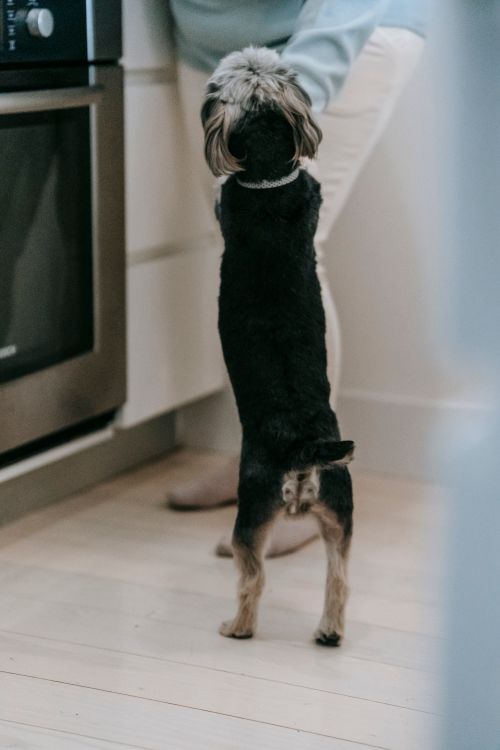
- Cover image: Sarah Chai / Pexels — “A curious dog stands on its hind legs near an oven in a modern kitchen,” source page marked Free to use; checked August 13, 2026.