Why Won’t My Dog Make Eye Contact? Guilt, Fear, Pain or Normal Behavior? (2026)

A dog who looks away from your face is not giving you a one-word diagnosis. Gaze aversion can be normal communication, a response to social pressure, fear or learned expectations, attention to something else, individual variation, resource-related conflict, or discomfort involving the eyes, ears, head or neck. The famous “guilty look” studies also do not show that dogs are confessing to a misdeed: those behaviors were strongly influenced by owner scolding and cues. The useful question is not simply “Why won’t my dog look me in the eyes?” but what happens before, during and after the dog looks away?
Quick answer
Relaxed dog, soft body, stays nearby: looking away can simply be normal social communication or a preference not to hold prolonged eye contact.
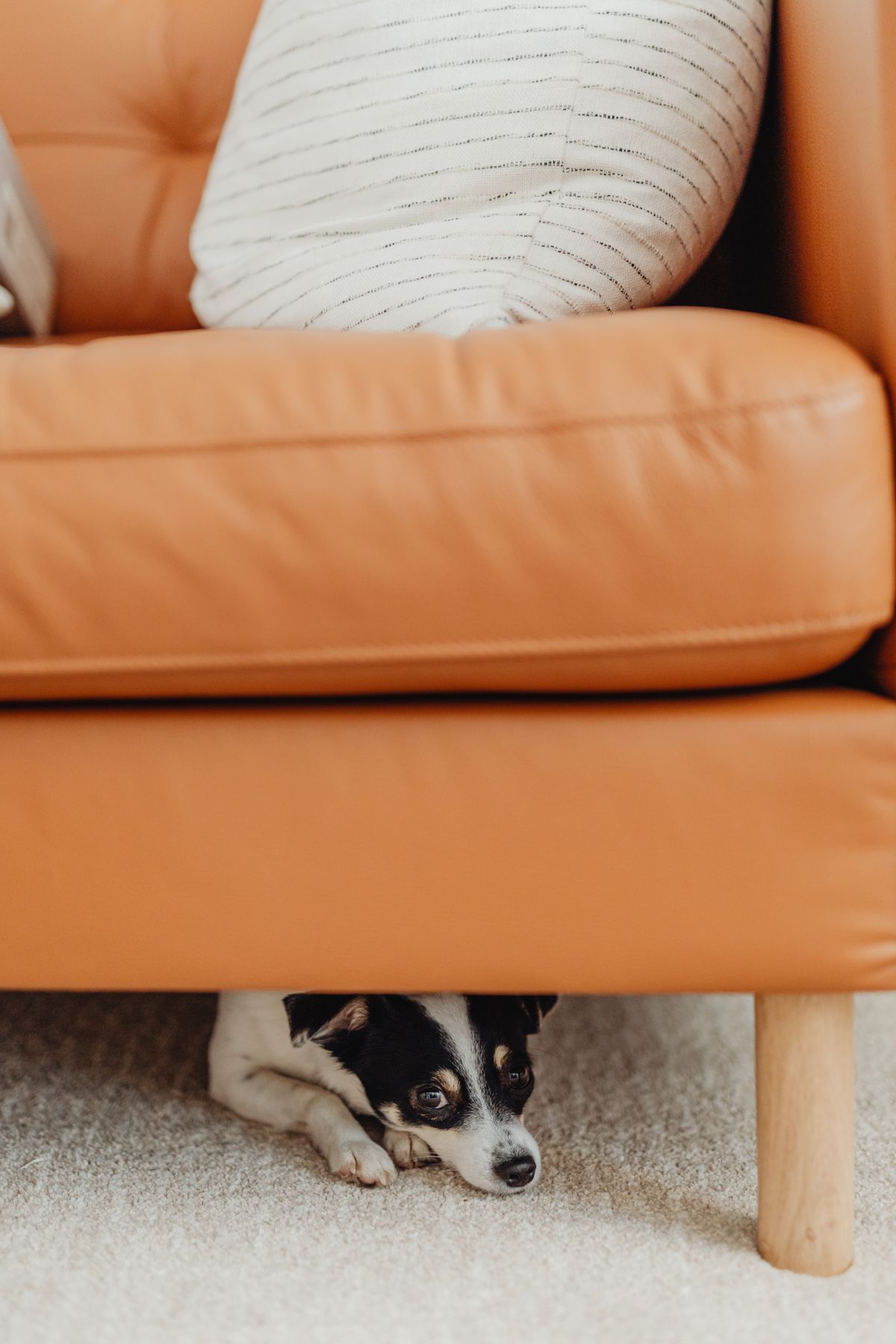
Dog turns away, lowers posture, freezes, lip-licks or tries to leave: the interaction may feel uncomfortable or intimidating; reduce pressure and give space.
Avoidance appears mostly after scolding or when your tone/body becomes tense: learned responses to owner cues are more plausible than “guilt.”
Hard stare + stiff body around food/toys: this is a different risk pattern; do not challenge the dog with staring or taking the item by force.
Sudden new gaze avoidance + squinting, eye redness/discharge, head shaking or touch sensitivity: prioritize a veterinary exam.
Important nuance: mutual gaze can also be positive. A well-known 2015 study found an oxytocin-linked feedback loop during familiar dog-owner interaction. That does not mean more staring always equals more love, or that a dog who looks away has a weak bond. Context changes the meaning of gaze.
What this revision removed: the unsupported “vet behaviorist explains” authority claim, “eye avoidance is almost always trust-based,” rigid one-gesture/one-meaning body-language translations, fixed subsecond or day-count training prescriptions, a universal sniff-walk/cortisol claim, and breed stereotypes presented as if they predict an individual dog's eye-contact style.
Last evidence review: September 1, 2026. Read body language as a pattern, not as a dictionary where one gesture always has one meaning.
Does My Dog Look Away Because They Feel Guilty?
Owners commonly describe lowered posture, gaze aversion, ears back or retreating after a household “misdeed” as guilt. Experimental studies by Alexandra Horowitz and later researchers did not find convincing evidence that the classic “guilty look” reliably tracks whether the dog actually committed the forbidden act.
In Horowitz's 2009 experiment, behaviors owners associated with guilt were more pronounced when owners scolded their dogs — including dogs that had obeyed. A 2015 study likewise found that owners could not determine from greeting behavior whether dogs had eaten forbidden food better than chance, and the dogs' own action did not reliably drive the “guilty” behavior.
That does not prove dogs are incapable of guilt as an emotion. It means the familiar “guilty look” is not a reliable behavioral lie detector. Owner posture, voice, facial expression, context and previous learning can shape what the dog does next.
Eye Contact in Dogs Is Context-Dependent
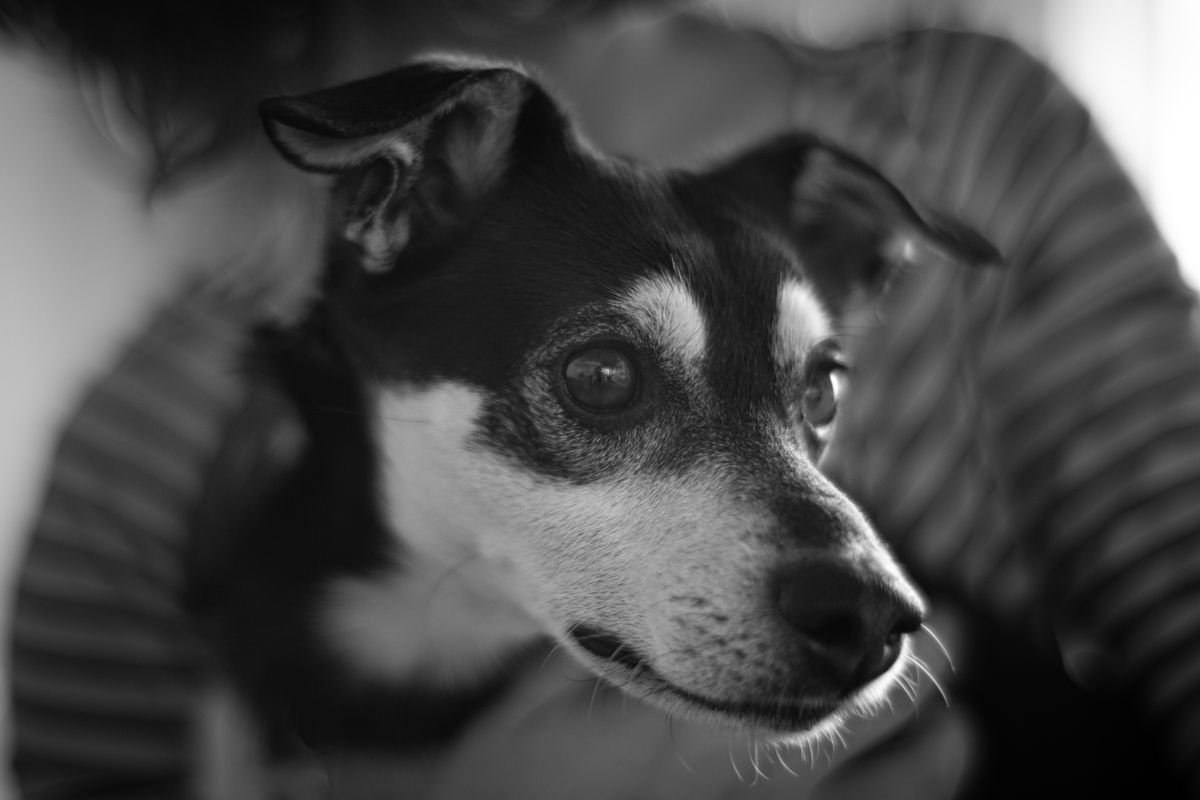
Dogs use human gaze as socially meaningful information. Studies show dogs attend to human faces and attentional state, and familiar dog-owner mutual gaze can participate in affiliative interaction. At the same time, a direct hard stare in a tense interaction can be distance-increasing or threatening, while looking away can accompany appeasement, fear or an attempt to de-escalate.
Soft mutual gaze
Loose body, familiar person, voluntary approach, relaxed face. This can be part of positive social interaction.
Brief glance, then look away
Normal visual sampling. Dogs do not need to stare continuously to be attentive or bonded.
Avoidance + tension
Turning away alongside freezing, lowering, lip licking or retreat suggests the interaction may feel pressuring.
Hard stare + stiff body
Especially around a valued item or when approached, this can be a warning pattern that deserves space.
A 2026 comparative gaze study adds another useful point: dogs distribute attention differently depending on the species and emotional expression shown. Eyes are information, but gaze behavior is shaped by what the dog is looking at and the emotional context.
7 Reasons Your Dog May Avoid Eye Contact
1. Normal social communication
Some dogs naturally use brief gaze rather than sustained eye contact. VCA describes avoidance of direct eye contact as one possible appeasement/de-escalation gesture in context. If the rest of the body is loose and the dog remains willingly nearby, there may be nothing to “fix.”
2. The interaction feels socially pressuring
Leaning over a dog, moving into their space, holding the head, using a hard stare or confronting them face-to-face can make some dogs uncomfortable. Dogs Trust advises backing off when dogs show anxiety/stress signals and allowing them space rather than continuing the interaction.
3. The dog has learned to anticipate scolding or pressure
If looking at a person often predicts a raised voice, correction or confrontation, gaze avoidance can become part of the dog's response to those cues. This is a learning-history explanation — not proof of trauma and not proof of guilt.
4. The dog is focused on something else
Eye contact is not the only measure of attention. A dog outdoors may be tracking scent, movement, another dog, traffic or environmental information. Dogs also differ in how much they use human-directed gaze when solving problems or seeking information.
5. Resource conflict changes the meaning of a stare
A dog may look away when a person approaches a valued item, or may instead freeze and stare hard. ASPCA notes that resource guarding can range from carrying an item away or growling to biting. Do not “test” guarding by staring down the dog or taking the resource by force.
6. Eye, ear, dental, head or neck discomfort
Pain can alter behavior in subtle ways. A dog with a painful corneal problem may squint, rub the eye or hold it closed; ear or neck discomfort can make head positioning/handling unpleasant. Merck emphasizes ruling out medical contributors when behavior changes.
7. Individual traits, age, experience and breed background
Research does show population and breed-group differences in human-directed gaze. For example, a 2016 study found differences among genetic breed groups, while a 2021 study found eye-contact latency was associated with head shape, breed function, age and playfulness. But these are group-level tendencies, not a personality diagnosis for an individual dog.
Socialization nuance: AVSAB identifies the first three months as the primary socialization period and recommends positive, non-overwhelming exposure to people and environments. Missing experiences can increase later fear/avoidance risk, but an adult rescue dog with unknown history should not automatically be labeled “undersocialized.” Adult learning remains possible.
Read the Whole Dog, Not One “Calming Signal”
Dogs Trust and VCA list gaze aversion, lip licking, yawning when not tired, lowered posture, ears back, freezing and moving away among behaviors that may occur with stress, fear or appeasement. The key word is may.
| Pattern | More reassuring | More concerning |
|---|---|---|
| Body posture | Loose, normal movement | Rigid, crouched, frozen or repeatedly retreating |
| Choice | Dog can approach and leave freely | Cornered, held, blocked or unable to create distance |
| Face | Soft eyes/face, normal blinking | Hard stare, marked facial tension, repeated whale eye in context |
| Recovery | Returns to normal quickly after pressure stops | Remains distressed or avoids the person/situation |
| Trend | Stable lifelong style | Sudden or progressively worsening change |
A yawn is not a diagnosis. A tail wag is not a diagnosis. Looking away is not a diagnosis. Combine the dog's body, environment, previous events and ability to choose distance.
When Avoiding Eye Contact May Be a Medical Problem
Eye-contact avoidance by itself is not an emergency. A new behavior change plus physical signs matters much more.
| Sign | Why it matters | Action |
|---|---|---|
| Squinting or holding an eye closed | Can indicate significant ocular pain, including corneal injury. | Prompt veterinary assessment. |
| Marked redness/swelling, cloudy eye, yellow/green/red discharge | Eye disease/injury may need urgent treatment. | Same-day/urgent veterinary advice. |
| Eye trauma or eyeball displaced from socket | True ocular emergency. | Emergency hospital. |
| Head shaking, ear scratching, pain near head/neck | Ear or musculoskeletal discomfort can change head orientation and handling tolerance. | Veterinary exam. |
| Sudden personality/behavior change | Pain and medical disease can alter social behavior. | Veterinary assessment rather than assuming a training problem. |
Merck notes that pain-related behavior can be subtle and that dogs may still greet, wag or otherwise look “normal” despite discomfort. Do not use one friendly behavior to rule pain out.
Resource Guarding and Hard Staring: A Different Risk Pattern
If your dog becomes still over a chew, freezes when someone approaches a bowl, gives a hard stare, growls or moves the item away, think about resource guarding rather than “eye contact training.” ASPCA describes guarding as a spectrum that can escalate to biting.
- Do not stare down the dog to “show who is boss.”
- Do not punish a growl; it is important warning information.
- Prevent children from approaching a dog who is eating, chewing or guarding a resting place.
- Use distance, management and qualified reward-based behavior support.
- Seek veterinary assessment when guarding appears suddenly or pain may be involved.
If there is a bite history or realistic bite risk, do not run DIY “trust tests.” Management and individualized professional help are safer than provoking the dog to see what happens.
Do Some Breeds Make Less Eye Contact?
There are measurable differences in human-directed gaze across dog populations and breed groups. One study found “Ancient” breed groups took longer to make eye contact and gazed for shorter periods in an unsolvable task than several other breed groups. Another found cooperative breed function, head shape, age and playfulness were associated with how quickly dogs made eye contact with an unfamiliar experimenter.
But there is no reliable household ranking such as “herding breeds stare, primitive breeds don't.” Studies use specific tasks, sample sizes and breed-group definitions. Your dog's individual history and current context matter more than a stereotype.
Normal variation matters: if your dog has always used brief gaze, communicates well in other ways and shows no fear/pain pattern, low eye contact may simply be part of their normal style.
How to Build Voluntary Eye Contact Without Forcing a Stare
Eye contact can be useful in training, but it is not a requirement for love or trust. AVSAB's current position supports reward-based methods for training and behavior modification.
1. Remove social pressure first
Stop leaning over the dog, holding the face or repeatedly asking for “look at me” when the dog is already retreating. Give enough space for the dog to remain relaxed.
2. Reward voluntary orientation
Reward the dog for turning toward you, checking in or approaching — eye contact can be very brief. There is no universal subsecond threshold.
3. If useful, teach an optional eye-contact cue
Once the dog is comfortable, you can mark and reward brief voluntary glances and later add a cue such as “look.” Keep sessions easy; the behavior should remain voluntary and relaxed.
4. Practice in easier environments before adding distraction
A dog may comfortably check in at home but need much lower criteria outdoors. Reward orientation toward you rather than insisting on prolonged staring when the environment is demanding.
5. Use safe rewards that fit the dog's diet
Food, toys or play may all work. Keep treats appropriate for the individual dog's health and daily calorie budget rather than relying on one “high-value” human food recipe.
6. If fear rises, make the task easier
Turning away, freezing, repeatedly refusing food or leaving the area indicates that your current setup may be too difficult. Reduce intensity rather than waiting the dog out.
Mutual gaze can emerge naturally in a positive relationship — but it does not need to be manufactured. Training should improve communication, not make the dog prove trust by staring.
If your dog's avoidance occurs specifically around leash/harness handling rather than ordinary social interaction, see our related guide: Dog Hides When You Pick Up the Leash: Fear, Pain or Handling Sensitivity?
Children Should Never Practice “Eye Contact Training” by Staring at a Dog
Dogs Trust recommends close adult supervision of dog-child interactions, intervening early when either is uncomfortable and allowing the dog to move away. Children should not follow a retreating dog, disturb a dog eating/chewing or crowd the dog's safe space.
- Let the dog approach rather than cornering or hugging them.
- Stop interaction when the dog moves away, freezes or looks uncomfortable.
- Keep children away from food bowls, chews and guarded items.
- Provide a child-free rest/safe area for the dog.
- If an adult cannot actively supervise, separate dog and child.
Frequently Asked Questions
My dog won't look me in the eyes. Does that mean they don't love me?
No. Dogs vary widely in gaze style, and affection/attachment cannot be measured by sustained eye contact alone. Proximity, relaxed interaction, play and voluntary check-ins are also socially meaningful.
Is my dog's “guilty look” really guilt?
Experimental work does not support using the classic guilty look as proof that a dog knows they committed a specific misdeed. Owner scolding and contextual cues can produce the same behaviors.
Can direct eye contact be threatening to a dog?
Yes, in some contexts — especially an unfamiliar person, a tense interaction, a cornered dog or resource conflict. Soft voluntary mutual gaze with a familiar owner can have a completely different meaning.
Should I teach “watch me”?
You can if it is useful and your dog is comfortable. Build it from rewarded voluntary glances. Do not use the cue to pressure a fearful dog into holding a stare.
My dog only avoids eye contact after I scold them. Is that guilt?
Not necessarily. The guilty-look research suggests dogs can respond to the owner's negative cues regardless of whether they committed the forbidden action.
My dog looks away but stays right beside me. Is that fear?
Not automatically. If the body is soft and the dog remains voluntarily close, brief gaze aversion can be normal communication. Look for clusters of tension/avoidance rather than one signal.
My dog suddenly stopped making eye contact. What should I check?
Look for squinting, redness, discharge, rubbing the face, head shaking, painful touch, vision changes or broader behavior changes. Sudden onset deserves more medical attention than a lifelong stable style.
Do rescue dogs avoid eye contact because they were abused?
You cannot infer abuse from gaze behavior alone. Rescue dogs may have many different histories, and unfamiliar environments can change behavior. Avoid inventing a trauma story without evidence.
Do certain breeds naturally make less eye contact?
Group-level studies have found gaze differences related to breed background and other traits, but they do not reliably predict an individual dog's household behavior.
Should I look away if an unfamiliar dog gives me a hard stare?
If the dog is stiff, tense or appears uncomfortable, avoid challenging eye contact and create distance calmly. A hard stare with tense posture is different from relaxed mutual gaze with your own familiar dog.
Track Context, Not Just Eye Contact
Who, where, what happened just before?
Record whether gaze avoidance appears during scolding, handling, meals, child interactions, outdoor distraction or together with physical signs. A timeline helps a veterinarian or behavior professional interpret the pattern far better than “he never looks at me.”
Explore PatifyBottom Line: Eye Contact Is Information, Not a Test of Love or Obedience
Dogs use gaze flexibly. Looking at you can be affiliative, communicative or learned; looking away can be neutral, appeasing, fearful or simply a shift of attention. A hard stare in a tense/resource context means something different again.
The most reliable approach is to read the whole body, respect the dog's ability to create distance, use reward-based training, and investigate sudden changes or physical signs medically. You do not need to force a stare to build trust.