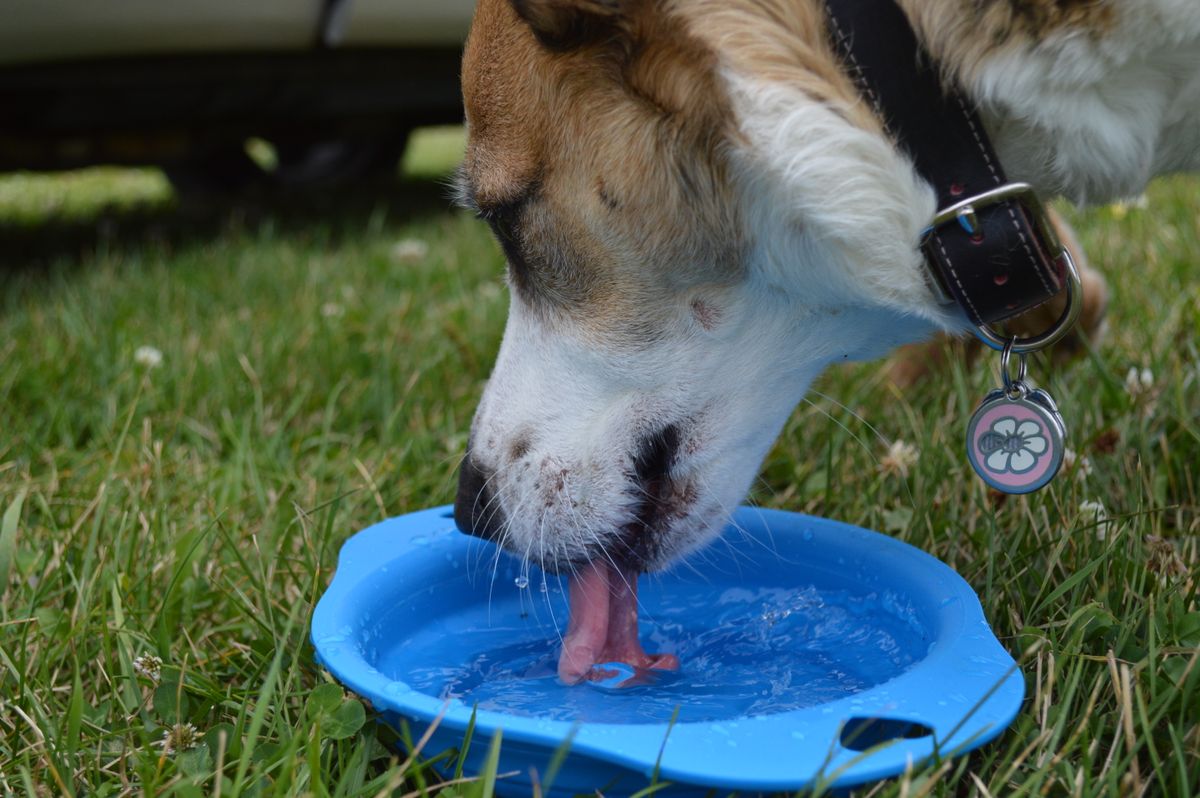

Dog Drank Christmas Tree Water: What’s Actually in the Stand?

Source-checked against veterinary poison-control guidance and real-Christmas-tree care recommendations. This article separates plain stand water from preservative-added and stagnant water.
🎄 Quick answer: If your dog took a few laps of plain Christmas tree water and is acting normally, severe poisoning is not the expected outcome. Remove access, find out exactly what—if anything—was added to the stand, and watch for vomiting or diarrhea. If bleach, fertilizer, medication, alcohol, antifreeze, or another nonstandard chemical may have been added, call a veterinarian or animal poison service for ingredient-specific advice rather than treating it as ordinary tree water.
The phrase “Christmas tree water” sounds like one exposure. It is actually several.
One home may have nothing but fresh tap water beneath a fir tree. Another may have commercial preservative mixed into the stand. A third may contain a homemade recipe involving fertilizer, sugar, aspirin, bleach, or something else entirely. And after days in a warm room, any open reservoir can become dirty with needles, sap, dust, saliva, and microbial growth.
Those are not equivalent situations.
What to check before you panic
- What is actually in Christmas tree water?
- Is plain tree water toxic to dogs?
- What if tree preservative was added?
- Why stagnant water matters
- What to do in the next 10 minutes
- When home monitoring is reasonable—and when it isn't
- What if your dog also ate pine/fir needles?
- The DIY additive problem
- The simplest pet-safe tree-water setup
- Frequently asked questions
What is actually in the Christmas tree stand?
The National Christmas Tree Association recommends plain tap water for real trees. A few laps are more likely to cause no problem or mild stomach upset than severe poisoning.
Pet Poison Helpline says these products commonly contain some combination of fertilizer, sugar, and potentially a fungicide. When diluted in the stand, they generally cause mild GI upset rather than severe toxicity.
ASPCA and VCA warn that tree-stand water can become a bacterial breeding ground. Nausea, vomiting, diarrhea, and stomach upset are the practical concerns.
If someone added bleach, aspirin, fertilizer, alcohol, a household chemical, or another substance, stop calling the exposure simply “tree water.” The actual ingredient now determines the toxicology risk.
Is plain Christmas tree water poisonous to dogs?
Not in the way antifreeze, xylitol, or rodenticide is. Pet Poison Helpline says Christmas trees themselves are generally not a major toxicological concern, and drinking stand water usually causes at most mild vomiting or diarrhea.
That does not make the reservoir a good dog bowl. Water sitting beneath a live tree can collect sap, fallen needles, debris, and bacteria, and repeated drinking increases the chance of stomach upset.
The useful question is not “Did my dog drink tree water?” It is “What was mixed into that water, how old was it, how much did the dog drink, and what is the dog doing now?”
What if Christmas tree preservative was added?
This is where many online articles overshoot the evidence and describe every preservative-treated stand as “poison water.” Pet Poison Helpline gives a more measured answer: typical freshness additives may contain fertilizer, sugar, and sometimes fungicide, but when diluted in the stand they are not usually highly toxic. Mild vomiting or diarrhea is the more typical outcome.
However, “tree preservative” is not one standardized chemical. If your dog drank a meaningful quantity, save the bottle or packet so the exact formulation can be checked.
✅ Product beats category. A veterinarian can assess a named commercial product much more accurately than “some Christmas-tree stuff was in the water.” Photograph the ingredient label before throwing anything away.
Why stagnant Christmas tree water can make a dog sick
ASPCA specifically warns that Christmas tree water can contain bacteria capable of causing nausea, diarrhea, and stomach upset. VCA similarly advises keeping pets away because stagnant water and added fertilizers can cause GI illness.
This matters because a dog may drink from the stand for several days before anyone notices. The exposure is then different from one quick sip immediately after filling the reservoir with fresh tap water.
Possible signs include:
- nausea or lip licking
- vomiting
- soft stool or diarrhea
- reduced appetite
- mild abdominal discomfort
Persistent vomiting, severe diarrhea, lethargy, dehydration, blood in vomit or stool, or a dog that cannot keep water down warrants veterinary advice rather than continued observation.
What to do in the next 10 minutes
Do not let your dog keep returning for more while you investigate the exposure.
Do not assume it was plain water. Check for a commercial preservative bottle, fertilizer, homemade recipe, cleaning chemical, medication, or other additive.
The product name and ingredient list are far more useful than describing the water as cloudy, greenish, sweet-smelling, or “probably safe.”
Do not force large volumes or try to “flush out” the exposure. If vomiting is ongoing, call your veterinarian for individualized guidance.
Mild GI upset may be all that occurs with ordinary stand water, but worsening symptoms or a concerning additive changes the plan.
A practical tree-water triage table
Dog is bright, comfortable, eating normally, and has no vomiting or diarrhea. Remove access and monitor.
You cannot confirm what was in the stand, the dog drank repeatedly, or a commercial preservative was used and the quantity is unclear.
Repeated vomiting, marked lethargy, neurologic signs, collapse, severe diarrhea, or known exposure to a genuinely hazardous household chemical needs prompt veterinary assessment.
| Exposure | Expected concern | Best next step |
|---|---|---|
| Fresh plain tap water | Usually low; GI upset possible | Remove access and monitor the dog. |
| Old/stagnant stand water | Bacterial contamination / GI upset | Monitor closely; call if symptoms persist or become significant. |
| Standard diluted tree preservative | Usually mild GI irritation according to Pet Poison Helpline | Identify product and call if a substantial amount was consumed or symptoms develop. |
| Unknown DIY mixture | Cannot be estimated from “tree water” alone | Identify ingredients and obtain poison/veterinary advice. |
| Known hazardous chemical added | Ingredient-specific poisoning risk | Treat as that chemical exposure, not ordinary Christmas tree water. |
What if my dog drank the water and ate Christmas tree needles?
Now you have two exposures.
Pet Poison Helpline notes that common Christmas trees—spruce, fir, and pine—can irritate the mouth and stomach when needles are eaten, causing drooling, vomiting, or diarrhea. Large needle ingestions can create a mechanical problem because the needles do not digest well and may contribute to obstruction or, rarely, GI perforation.
So a dog that drank tree water and then starts repeatedly vomiting should not automatically be diagnosed with “bad water.” Tell the veterinarian if needles, artificial tree material, ribbon, tinsel, ornament pieces, or other holiday debris may also be missing.
The DIY Christmas-tree-water problem
Many families inherit recipes for keeping a tree fresh: sugar, aspirin, bleach, fertilizer, soda, or commercial mixes. From a pet-safety perspective, every extra ingredient creates another variable.
From a tree-care perspective, it is also unnecessary. The National Christmas Tree Association says research supports plain tap water and advises against adding bleach, aspirin, fertilizer, or other concoctions because some can actually reduce moisture retention and increase needle loss.
🌲 Best prevention has no trade-off: plain tap water is both the Christmas Tree Association's recommended tree-care choice and the simplest way to reduce pet toxicology uncertainty.
What about pine oil or sap in the water?
A real tree can release sap and aromatic compounds into its surroundings, and veterinary holiday guidance recognizes that tree material can irritate the GI tract. But the concentration in ordinary stand water should not be confused with exposure to a bottle of concentrated pine essential oil or cleaner.
If your dog merely took a few laps from an otherwise plain stand, the more evidence-based expectation is mild or no GI signs—not severe essential-oil poisoning.
Should I make my dog vomit?
Not unless a veterinarian or poison professional specifically tells you to. There is usually no reason to induce vomiting after a few sips of ordinary stand water, and if a dangerous additive is involved, the safest decontamination approach depends on that specific chemical.
Do not use salt, mustard, hydrogen peroxide, or another home emetic without professional direction.
How to make a real Christmas tree safer for dogs
- Use plain tap water only. It is recommended by the National Christmas Tree Association and removes one major toxicology unknown.
- Choose a covered or guarded tree stand. A physical barrier is more reliable than trying to train a thirsty dog away from a new water source.
- Top the stand up regularly. This helps tree freshness and reduces the temptation to maintain a separate additive-heavy reservoir.
- Clean up fallen needles daily. This reduces mouth/GI irritation and large-ingestion foreign-body risk.
- Do not let the stand become a communal pet bowl. Repeated drinking increases exposure to stagnant water and debris.
- Keep chemical bottles away from the tree. A spilled preservative or household chemical is a different exposure from diluted stand water.
When should you call the vet?
Contact your veterinarian or animal poison service if:
- you do not know what was added to the stand
- your dog drank a large or repeated amount
- a hazardous household chemical may have been added
- vomiting is repeated or severe
- diarrhea is persistent, bloody, or accompanied by weakness
- your dog becomes unusually lethargic or cannot keep fresh water down
- there are tremors, disorientation, seizures, collapse, or other neurologic signs
- tree needles, tinsel, ribbon, ornaments, or other foreign material may also have been swallowed
Related Patify holiday and winter safety guides
Frequently asked questions
Is Christmas tree water poisonous to dogs?
My dog drank Christmas tree water but seems fine. What should I do?
Are Christmas tree preservatives toxic to dogs?
Can stagnant Christmas tree water make a dog sick?
Should I add bleach or aspirin to Christmas tree water if I have a dog?
What if my dog also ate pine needles?
Should I make my dog vomit after drinking tree water?
- Pet Poison Helpline — Christmas Trees and Holiday Plants
- ASPCA — Holiday Pet Safety and Christmas Tree Water
- VCA Animal Hospitals — Holiday Toxins for Pets
- National Christmas Tree Association — Christmas Tree Care FAQ
- Cover image: Elina Fairytale / Pexels — dog lying beside a decorated Christmas tree; source page marked “Free to use,” checked August 13, 2026.