
Dog Won’t Drink Water but Is Still Eating: When to Worry
Last updated:
If your dog won’t drink water but is still eating, first check whether they are drinking less from the bowl or taking in less water overall. Wetter meals can explain fewer visits to the water bowl. A sudden refusal, discomfort while drinking or other symptoms needs attention even when appetite seems normal.
Start with three observations: what your dog has actually eaten and drunk, whether they can drink comfortably, and what else has changed. An unfinished water bowl alone cannot answer all three.
When to call your vet
Seek emergency care now for difficulty breathing, blue or gray gums, collapse or inability to stand. Keep your dog calm and call ahead if possible. Cornell: respiratory emergency signs.
Contact an emergency vet immediately if your dog appears unable to swallow. Repeated gagging, heavy drooling or fluid returning after attempts to drink needs prompt assessment; do not keep testing with more water. Merck: swallowing and esophageal disorders.
Call your vet the same day if water refusal continues, intake is clearly below your dog’s usual level without an explanation, or eating and drinking both decline. Seek advice sooner with vomiting, diarrhea, pain, unusual tiredness, dry or sticky gums, or a marked change in urination. If water repeatedly comes back up, call now rather than trying more home remedies.
Use a lower threshold for puppies, frail dogs and dogs with an existing medical condition. There is no single number of hours that makes waiting safe for every dog.
Does eating mean your dog is getting enough water?
No. Appetite and hydration are different things. Eating a usual meal is useful information, but it does not measure fluid balance. Also check what “still eating” means: a full meal, a few treats and several hand-fed bites are different amounts.
Food type matters. Canned food contains substantially more moisture than dry kibble, and dogs eating it generally drink less separately. A recent diet change can therefore alter the bowl level without the same reduction in total water intake. Merck: dietary moisture and water needs.
That explanation fits best when the timing matches the food change and your dog is otherwise behaving normally. It should not be used to dismiss continuing refusal, discomfort or new symptoms.
| What you notice | What it means for your next step |
|---|---|
| Less bowl drinking after switching to wetter meals | Dietary moisture may explain the change. Keep water available and watch for changes in comfort, energy and toileting. |
| The usual dry food is eaten, but drinking has clearly dropped | There is no new dietary-water explanation. Check access and seek advice if the change continues. |
| Your dog approaches water but struggles or backs away | Describe the movement to your vet. Repeated swallowing difficulty is not a bowl-preference problem to solve at home. |
| Water disappears from a shared bowl | You cannot tell which animal drank it. Observe individual access without restricting anyone’s water. |
Why your dog may drink less while still eating
Meals, activity or weather have changed
Water requirements vary with diet, surroundings, activity and health. Compare your dog with their own routine: a quiet, cool day is different from a hot day with exercise. Even when a change seems explainable, keep fresh drinking water available. Merck: factors affecting water requirements.
The water is harder to access or the setup has changed
Look at the route to the bowl as well as the bowl itself. A closed door, slippery floor or another pet occupying the area may be the detail you missed. Ask whether someone moved the bowl, introduced a fountain or changed where your dog spends the day.
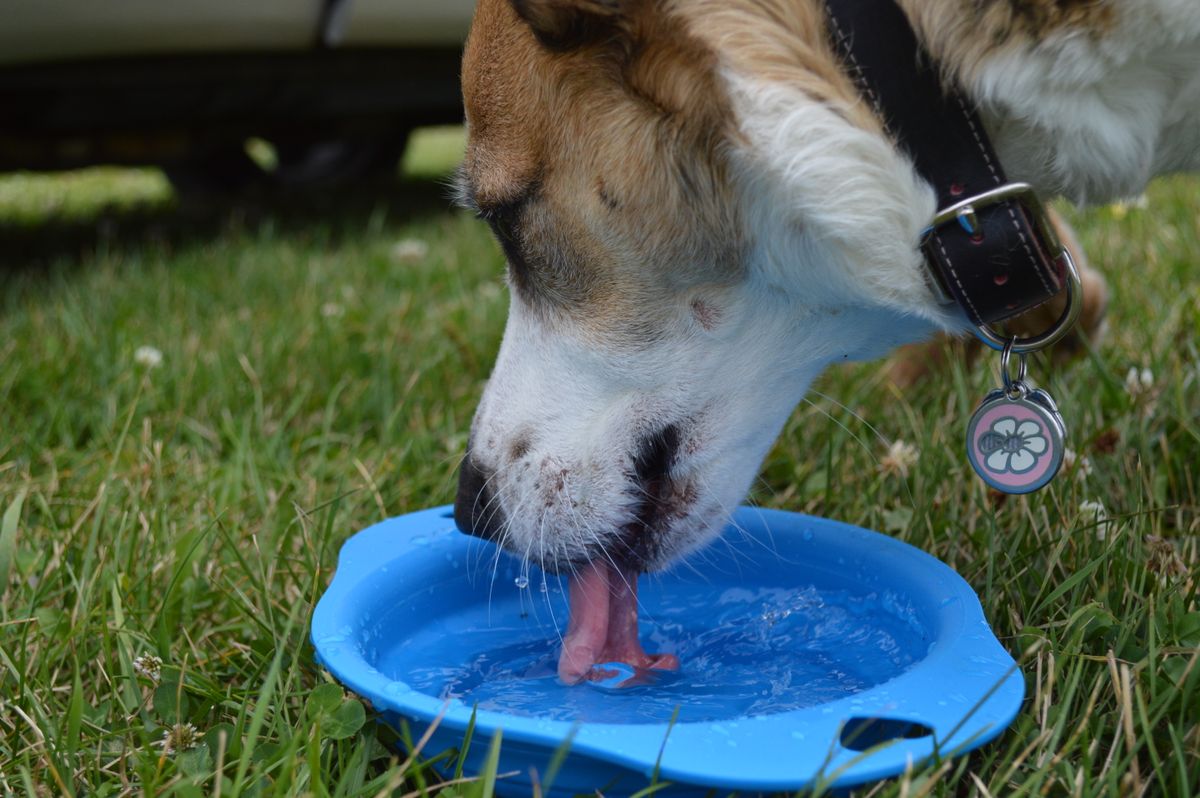
A simple comparison is to offer fresh water in a clean, stable dish within easy reach. VCA includes trying different bowl shapes, materials and water temperatures among ways to encourage intake. None is a guaranteed solution. VCA: supporting water intake.
If your dog drinks from the alternative, note exactly what changed. That is useful evidence about access or preference, but it does not explain every recurring problem.
Drinking or lowering the head is uncomfortable
Mouth or throat inflammation and other painful conditions can interfere with intake. Back pain can also make reaching a floor-level food or water dish difficult. Eating something tempting does not rule out discomfort. VCA: pain and difficulty accessing food or water.
Report drooling, unusual chewing, food dropping, mouth sensitivity or reluctance to lower the head. Do not force the mouth open or repeatedly provoke a painful movement. Patify’s guide to dental warning signs and home care explains when a dental examination is needed.
Nausea, vomiting or swallowing trouble is part of the picture
A dog may still accept some food while showing signs of nausea. Watch for lip licking, drooling, repeated swallowing or abdominal heaving. Describe those signs rather than assuming that the bowl is the cause. VCA: nausea and vomiting in dogs.
Food or liquid returning with little effort may be regurgitation, which deserves a different investigation from ordinary bowl avoidance. If repeated gulping is also present, see Patify’s guide to swallowing and gulping episodes.
An existing illness or treatment changes the urgency
Tell the clinic about recent procedures, medicines and any prescribed diet or fluid plan. Do not stop medication because you suspect a side effect; ask the prescriber how to proceed.
Kidney disorders and diabetes commonly appear in the investigation of increased thirst and urination. Avoid treating low drinking as a diagnosis of either condition. A dog losing substantial water in urine can need particular attention if intake then falls. VCA: thirst, urine losses and underlying disease.
How much water should a dog have each day?
As broad context, Merck gives approximately 44–66 mL per kilogram of body weight in a comfortable-temperature environment. For a 10 kg dog, that is roughly 440–660 mL. This concerns overall water needs, including moisture in food, and is not a rigid bowl-drinking target. Merck: general water requirements.
Do not force your dog to finish a calculated amount or withhold water once they reach it. Illness, fluid losses and individual needs make a simple weight rule insufficient. Ask your vet for a tailored plan if you are monitoring an unwell dog.
For a dog who seems to be drinking less, the most useful starting comparison is often their own recent pattern on the same food and routine. A change from “usually finishes this bowl” to “barely touches it” is worth reporting even if you do not have a precise daily total.
What you can check without turning it into a home diagnosis
Keep a simple intake record
Start recording when you notice the change. You do not need to finish a full day’s log before calling about concerning signs.
- Water offered: measure what goes into the bowl, including refills.
- Water remaining: record it at a stated time, noting spills or water you discarded.
- Other sources: note other bowls, a fountain, drinks during walks and water added to meals.
- Food eaten: record the food type and amount actually consumed, rather than only what was served.
- Other observations: note energy, comfort, vomiting, stool and changes in urination.
In a multi-pet home, “the bowl is half empty” is a household observation, not an individual intake measurement. Arrange comfortable separate access if practical, or tell the clinic that the amount is uncertain. Never limit water to make the log easier.
Notice warning signs, but understand the limits
Dry or tacky gums, eyes that appear sunken and reduced skin elasticity can accompany dehydration. However, AAHA describes substantial variation between physical signs and the degree of dehydration; a mild deficit may not be apparent on examination. AAHA: interpreting hydration findings.
A reassuring skin-fold check does not clear your dog of dehydration. Likewise, a dry mouth alone does not measure its severity. Avoid repeatedly pinching the skin or handling a painful mouth; report the whole pattern and let your vet assess it.
Passing urine is another observation, not an all-clear. Tell the clinic if the amount or frequency has changed, particularly if drinking has fallen while urine output still seems high.
Safe ways to encourage drinking
These steps are for a dog who is alert and swallowing normally. They should not delay care when refusal persists or any urgent sign is present.
- Refresh the water and clean the bowl. Rinse it thoroughly and keep it somewhere easy to reach.
- Offer another comfortable option. Try a stable dish nearby or a different water temperature. Keep the original safe water source available too.
- Consider water with the usual food. If compatible with your dog’s feeding plan, add a little water to a small portion and see whether they accept it. A suitable canned version may also help; avoid abruptly replacing a prescribed diet.
- Let your dog choose to drink. Give them room and note what they accept. Repeatedly pushing the bowl toward their face will not establish why they are avoiding it.
Adding moisture and adjusting the drinking setup are options in VCA’s feeding guidance. If adding water makes your dog reject meals too, stop experimenting and ask for advice.
Prepare moistened portions fresh and follow food-storage instructions. Promptly refrigerate or discard unused wet food, and wash utensils after use. FDA: handling pet food safely.
What to avoid
Do not pour water into the mouth, force swallowing or use a syringe unless your vet has specifically instructed you. Swallowing disorders can allow liquid to enter the lungs. If drinking triggers coughing, gagging or regurgitation, stop the trial and call the clinic. Merck: swallowing difficulty and aspiration.
Do not make a human sports drink, electrolyte mixture or flavored broth your default treatment. Ask your vet before adding products or starting a home rehydration plan. When dehydration needs treatment, the fluid type, amount and delivery method depend on the individual dog. AAHA: individualized fluid replacement.
What your vet may assess
Bring your intake notes, food label, medicine list and the time the change began. Mention recent heat exposure, exercise, travel and procedures. A brief video of an ordinary attempt to drink can help if recording does not delay care or provoke distress.
The examination may assess hydration, circulation, mouth comfort, swallowing and signs of another illness. Blood or urine tests may be appropriate depending on the findings. AAHA emphasizes combining history, examination and relevant diagnostic information when evaluating fluid balance. AAHA: clinical assessment.
Some dogs can receive the fluids they need by mouth; others need veterinary fluid therapy. The decision depends on the deficit and whether oral intake is safe and sufficient. AAHA: choosing a fluid route.
Before leaving, ask what intake to record, how to offer food and water, and which changes should trigger another call. The goal is adequate hydration and comfortable drinking, not simply an emptier bowl.
Frequently asked questions
Why is my dog eating normally but not drinking water?
A change to wetter food can reduce drinking from the bowl. The bowl, its location or difficulty reaching it may also matter. Eating does not establish normal hydration. A sudden, unexplained or continuing refusal to drink deserves veterinary advice, especially with pain, vomiting, weakness or changes in urination.
Does wet dog food count toward water intake?
Yes. Moisture in food contributes to total water intake, so a dog eating canned food may visit the water bowl less often. Continue to provide fresh water. Wet food does not automatically cover every dog’s needs or rule out dehydration, particularly during illness or hot weather.
How long should I wait if my dog will not drink?
There is no universally safe waiting period. Call your vet the same day if refusal continues or intake is clearly below normal without an explanation. Call sooner for a puppy, a frail dog or one with an existing illness. Breathing difficulty, collapse or inability to swallow needs immediate assessment.
Can I syringe water into my dog’s mouth?
Do not force or syringe water into a dog’s mouth without veterinary instruction. Swallowing problems can allow fluid to enter the lungs. Offer water voluntarily only if your dog is alert and swallowing normally; seek advice if drinking causes coughing, gagging or fluid to come back up.
My dog still pees. Does that mean they are hydrated?
Passing urine does not prove that fluid intake is adequate. Note changes in frequency, apparent volume and effort, and tell your vet if your dog is drinking less while still producing large amounts of urine. A hydration assessment considers more than one observation.