Best Dog Food for Weight Gain: A Safer Way to Choose, Measure, and Monitor

Reviewed for source accuracy: October 16, 2026 · United States · Patify Editorial Research Team
A dog who looks thinner than usual doesn't necessarily need the richest food on the shelf. The right next step depends on what changed: appetite, portions, activity, stool, muscle, or a medical condition that has not yet been diagnosed. A calorie-dense diet can help some otherwise healthy dogs meet legitimate energy demands. It cannot fix a gastrointestinal disorder that prevents nutrient absorption, and it may be inappropriate for a dog with a condition requiring a carefully managed therapeutic diet.
The useful question is not simply Which dog food puts weight on fastest? It is Why is this dog underweight, how much energy is actually being eaten, and what evidence would tell us the plan is working? This guide gives you a practical comparison of U.S. labels, a sample calorie-density calculation, a vet-visit information checklist, and a 14-day observation log. Product calorie figures below are published manufacturer statements, not Patify laboratory measurements or feeding trials. The examples are not prescriptions.
Quick answer: If weight loss is unexpected, ongoing, or accompanied by illness, arrange veterinary assessment before attempting to fatten your dog up. Once a clinician rules out or manages an underlying cause, choose a complete and balanced food for the dog's life stage, compare kcal/kg, assess whether your dog can comfortably eat the required amount, and track both body weight and muscle condition. A high-calorie sporting formula is one possible tool, not a universally “best” solution.
First decide whether your dog needs to gain weight
Before changing food, write down what makes you believe your dog is too thin. Did the scale show a downward trend, or does the dog simply have a narrow waist? Is the ribcage visible because the dog has a naturally lean build, or has a previously healthy dog lost fat around the ribs and spine? Has a veterinarian previously documented an ideal weight? These questions prevent a cosmetic preference from turning into unnecessary overfeeding.
The body condition score (BCS) estimates body-fat stores through looking and feeling. On the widely used nine-point system, the middle of the scale—commonly around 4–5/9—is the target for many healthy dogs, with differences among breeds and individuals. You should usually be able to feel ribs beneath a light fat covering and see some waist when looking from above. Use the validated visual chart rather than guessing from a photo. The WSAVA nutrition toolkit provides body condition and muscle condition resources.
Muscle condition score (MCS) asks a different question: how much muscle is present over the skull, shoulders, spine and pelvis? An older dog may have reasonable fat cover but depleted muscle. Adding calories alone will not correct every reason for muscle loss. A dog can appear unchanged on the scale while losing muscle and gaining fat, so neither the photograph nor weight alone tells the whole story. The Merck Veterinary Manual specifically distinguishes these two assessments.
A healthy-looking waist versus genuine underconditioning
The appearance of a Greyhound or another lean breed cannot be judged with the same casual eye used for a heavy-coated dog. Hair can hide the outline of the ribs; posture and camera angle can exaggerate it. An owner who has only recently adopted a dog may not know the animal's baseline. Request a clinic BCS/MCS assessment and a goal expressed as a condition range, not an arbitrary dream number on a scale. If a dog once weighed 50 pounds and now weighs 44, that history matters more than a vague statement that the dog “looks skinny.”
Investigate unexplained weight loss before buying new food
Unexplained weight loss is a health question, even when the dog still finishes every meal. Possible explanations include a portion that does not match energy output, a more demanding work schedule, dental pain, vomiting, persistent diarrhea, intestinal parasites, pancreatic disorders, endocrine or kidney disease, and other conditions. This is a list of possibilities, not a diagnosis. The correct test and treatment depend on the history and examination.
Book a veterinary appointment promptly for ongoing or unexplained weight loss. Seek urgent veterinary care when weight change comes with repeated vomiting, marked weakness, collapse, difficulty breathing, inability to keep water down, or another severe change. A dog with major undernutrition, prolonged poor intake, or serious illness should not be placed on an aggressive do-it-yourself high-calorie program; a clinician may need to supervise refeeding and treat the cause first.
A particularly important pattern is a dog that becomes thinner despite eating normally or more than usual. The appetite does not rule out disease. Digestive or pancreatic problems, diabetes, parasites and other disorders may interfere with the way the body uses food. Dogs with weight loss and prolonged loose stool deserve an assessment of gastrointestinal and nutritional status, not merely a larger food scoop. Merck's malabsorption review describes the role of maldigestion and intestinal disease in some patients.
Take a short, useful history to the appointment
A clear record makes the discussion more productive: date and weight for the last several measurements; current food's exact brand and formula; grams or measured amount offered and actually eaten; treats, chews and table scraps; appetite changes; stool frequency and appearance; vomiting or regurgitation; activity; thirst and urination; drugs and supplements; and any recent diet switch. Photographs of the package's nutrition statement and calorie panel help when the packaging is unavailable. If there are multiple dogs, explain how you know which one ate what.
Your veterinarian may ask about stool testing, bloodwork, urine testing, dental examination or other investigations based on findings. These tests are not a universal shopping list that every thin dog requires. Ask which results would change the diet recommendation. For a newly adopted dog with no reliable history, the first objective may be establishing a safe baseline rather than trying to restore a presumed previous weight.
| What you notice | Why it changes the decision | Appropriate next step |
|---|---|---|
| Weight falling while appetite stays strong | Food energy may not be reaching or remaining in the body | Veterinary evaluation; bring intake and stool records |
| Poor appetite, nausea, vomiting or oral discomfort | A richer kibble might not solve the barrier to eating | Address symptoms and ability to eat with the vet |
| Highly active dog, normal stool, stable health | Daily calorie use may exceed portions | Review activity and measured energy intake with the vet |
| Senior dog losing topline muscle | Muscle loss is not identical to body-fat loss | Assess BCS and MCS, mobility and medical factors |
| Puppy that is failing to grow normally | Developmental nutrition is more complex than adult weight gain | Pediatric veterinary guidance and correct growth diet |
What the best weight-gain dog food must actually provide
The best food is the food that meets this dog's complete nutritional requirements at an appropriate, tolerable daily portion. For an otherwise healthy adult with increased energy expenditure, calorie density may be a useful feature. For a dog recovering from a disease, the appropriate food may instead prioritize digestibility, an individual nutrient restriction, or a therapeutic formula chosen by the veterinarian. Never assume the most concentrated product is safest during recovery.
Begin with the AAFCO nutritional adequacy statement. Look for a complete-and-balanced claim for adult maintenance, growth, reproduction, or another appropriate stage. A food described only as an intermittent or supplemental product is not a suitable stand-alone feeding plan without professional direction. “High protein,” “premium,” “bulking,” and “weight gain” on the front of a bag do not replace that adequacy statement. Read the AAFCO label guide for the difference between marketing descriptions and the mandatory information.
Next ask whether the food is practical. Can the dog comfortably consume enough grams, considering appetite and meal size? Is the product suitable for a large-breed puppy or a nursing dog, if relevant? Does it trigger soft stool after a transition? Can you purchase the exact formula consistently? Can the manufacturer explain who formulates the diet and what quality checks are performed? Reliability is more useful than a dramatic “gains weight fast” testimonial.
Nutrition quality is more than protein percentage
Protein supports the body, but the guaranteed-analysis percentage alone cannot establish whether a dog will gain healthy muscle. A food can be high in protein and relatively low in calories, or energy-dense because it contains more fat. Likewise, a rich food may be less appropriate when a dog needs a fat-restricted clinical diet. The Tufts discussion of dietary fat explains why fat often influences calorie concentration; it does not make dietary fat a universal treatment for weight loss.
For broader ingredient claims, see our grain-free dog food label guide, which explains why a front-of-bag category cannot establish nutritional suitability. For protein calculations, the planned Dog Food Protein hub is a related resource once its live URL can be verified. This article stays focused on decisions for an underweight dog: adequacy, daily energy consumed, tolerability, measured progress, and the medical context that makes any recommendation appropriate or inappropriate.
Compare calorie density: kcal/kg versus kcal/cup
A bag might announce 480 calories per cup while another lists 400. That is a useful piece of information, but the cups may not contain the same number of grams. Kibble shapes and bulk density differ. When you want to know how concentrated a food is by weight, compare kilocalories per kilogram (kcal/kg) or equivalently kcal per gram. When you want to portion a particular food with a cup, its own kcal/cup figure helps, but a kitchen scale can be more reproducible.
Two distinct questions emerge. First, how many calories fit into a given weight of food? Second, how much physical food would your individual dog need to meet the daily calorie target established with the veterinary team? Neither question proves digestibility, manufacturer quality or medical suitability. They simply prevent a misleading shortcut from “more calories per scoop” to “best nutrition.”
Three U.S. food labels, with their limits
These are manufacturer-listed examples, not winners in an independently tested Patify ranking. The products have different intended users. The Hill's large-breed diet is included as a mainstream maintenance reference, not as a weight-gain treatment. Values can change if manufacturers reformulate; verify the actual bag you buy.
| Manufacturer / exact formula | Manufacturer kcal/kg | Manufacturer kcal/cup | Important context |
|---|---|---|---|
| Purina Pro Plan Sport Performance 30/20 Chicken & Rice | 4,390 | 484 | Performance-focused; verify stage and suitability for your dog |
| VICTOR Hi-Pro Plus | 3,815 | 406 | High-energy, all-life-stages label; contains multiple animal protein sources |
| Hill's Science Diet Adult Large Breed Chicken & Barley | 3,675 | 365 | Adult large-breed maintenance, not suitable for large-breed puppies or reproduction |
The Purina, VICTOR, and Hill's pages are the sources of those stated energy values. They are manufacturers' own estimates or declarations, not independent measures by Patify. Their cup sizes and life-stage claims differ. None of the three is automatically appropriate for an ill or underweight dog.
A worked example using a veterinarian-established target
Assume, purely to demonstrate the calculation, that a veterinarian has already established a daily intake target of 900 kcal for a particular dog. This figure is hypothetical; it is not a recommended intake for a particular breed, size or age. Divide 900 by the stated kcal per gram. Purina's 4,390 kcal/kg equals 4.390 kcal/g, giving approximately 205 g/day. VICTOR's 3,815 kcal/kg is 3.815 kcal/g, giving about 236 g/day. Hill's 3,675 kcal/kg is 3.675 kcal/g, giving approximately 245 g/day.
The apparent gap is about 40 grams between the first and third hypothetical portions, despite all three being commercially prepared dry foods. This does not mean feeding the first product will make a dog gain a certain number of pounds. Weight change depends on actual caloric needs, absorption, exercise, illness and consistency, and the veterinarian may set a different target after assessment. If a label changes or your veterinarian prescribes a therapeutic diet, use the new numbers instead.
| Calculation | Formula | Hypothetical result |
|---|---|---|
| Convert energy density | kcal/kg ÷ 1,000 | 4,390 → 4.390 kcal/g |
| Daily grams | Vet-established kcal/day ÷ kcal/g | 900 ÷ 4.390 ≈ 205 g |
| Daily food cost, if the bag price is known | (Daily g ÷ bag g) × bag USD price | Enter your actual price; no invented market price |
| Compare a second formula | Repeat with second formula's kcal/kg | Keep life-stage and clinical suitability separate |
Should you use a performance food, puppy formula, or veterinary diet?
These foods are built for different nutritional purposes, not interchangeable ways of adding calories. Performance formulas are commonly designed for dogs with demanding activity schedules, where a high daily energy requirement may make a concentrated diet convenient. Puppies need growth nutrition, but that does not make ordinary puppy food a generic prescription for an underweight adult. Therapeutic recovery diets may support certain medical patients but must be used as directed by the veterinary team.
A dense sporting food may be reasonable to discuss when a clinically healthy working dog struggles to meet its needs while maintaining condition. Yet a low-activity companion may not require it. A dog with suspected pancreatitis, fat intolerance, abnormal stool, persistent vomiting, or another clinical issue could need a very different nutritional strategy. Richness is a product attribute, not a health outcome. The same dog may need different energy intake during heavy work and a rest season.
Do not select puppy food as a shortcut for adult weight gain
A puppy formula is formulated for growth, and some products contain different mineral and nutrient balances from adult maintenance foods. For an adult dog who needs to regain condition, the relevant question is why current intake is inadequate and what complete-and-balanced formula fits the case. Especially for large-breed growing puppies, a casual “just add more calories” approach risks missing proper growth-rate and skeletal-development planning. Have your veterinary team evaluate the animal's growth, age, condition and label stage.
Recovery foods are not casual calorie boosters
If a dog has recently been hospitalized, has had prolonged very low intake, or is severely undernourished, normal consumer weight-gain advice is not enough. Refeeding may need active clinical monitoring, and certain illnesses require specific nutrient or fluid management. Do not force-feed, syringe-feed, give concentrated supplements, or escalate meals without professional direction. The correct plan may use frequent small meals, a therapeutic food, diagnostic treatment, or hospital-assisted feeding, depending on the condition.
The feeding process matters as much as the food
Before concluding that the current diet cannot support weight gain, confirm how much the dog actually receives. Scooping “about two cups” can vary from one meal to the next. If one family member feeds breakfast and another offers evening treats, the calculation becomes murky. Use the label's gram guidance or weigh a portion on a digital kitchen scale. Record food offered and leftover separately; the difference is closer to actual intake.
Check whether another pet steals food, whether the thin dog walks away from a noisy feeding area, and whether a new bowl or location coincided with the change. A multi-dog household benefits from supervised separate meals. Offer a quiet environment and consistent feeding times, but do not make a sudden appetite decline a training experiment. Persistent reluctance to eat needs medical attention, especially when accompanied by weight loss or other symptoms.
Increase intake only according to a defined plan
An easy mistake is adding arbitrary spoonfuls of oil, butter, fatty leftovers or multiple calorie supplements. These additions can displace balanced nutrition, disrupt stool, or be unsafe in the context of some disorders. They also make it impossible to know which change helped. Once your veterinary team confirms a goal and a safe rate of adjustment, change one variable at a time: the chosen complete diet, prescribed meal amount, or approved feeding frequency. Record the date and the reason for each change.
Another mistake is relying on an automated online energy calculator as a medical prescription. Tools that divide a confirmed calorie goal by a food's kcal/kg value perform simple arithmetic; they cannot determine what goal an individual dog should receive. That decision belongs with a veterinarian familiar with the dog's condition, life stage and health history. Mathematical precision is not the same as clinical accuracy.
A 14-day weight, appetite, and stool monitoring plan
A monitoring record should answer whether the plan is usable before it tries to explain the biology. The attached worksheet provides 14 daily entries for weight (when measured), food offered in grams, estimated food eaten, appetite, stool observations, activity and notes. It is meant to give the veterinarian a consistent history, not to replace an exam or offer a target rate of gain.
For many households, weighing a stable dog under similar conditions at regular intervals is more informative than watching tiny day-to-day fluctuations. A small dog can be weighed on an accurate household or veterinary scale where appropriate; larger dogs may need clinic access. Try to use the same scale, similar time of day, and consistent conditions. A sudden apparent change can reflect hydration, a full stomach, timing or measurement technique. Consult your veterinarian about frequency when weight change is concerning.
| Item to record | Practical method | How it helps at follow-up |
|---|---|---|
| Body weight | Same scale and consistent conditions when possible | Shows direction of change rather than relying on memory |
| Actual food eaten | Weigh offered grams and any uneaten portion | Separates poor intake from a low-calorie formulation |
| Appetite | Normal / reduced / increased / refused | Helps interpret whether loss is occurring despite hunger |
| Stool and vomiting | Brief factual note, frequency and duration | Flags digestive changes to discuss with a clinician |
| Activity and workload | Walks, work days, rest days and major changes | Helps explain energy-demand changes |
| BCS and MCS | Vet assessment at appropriate follow-ups | Tracks fat cover and muscle rather than scale alone |
How to interpret the log without overreacting
If the dog eats all the prescribed food and remains thin, do not automatically keep raising calories. Review the measured amount and ask the clinician whether further investigation or a revised energy estimate is needed. If weight increases but activity, appetite or stool worsens, the program is not automatically a success. If the dog appears more comfortable but weight is unchanged, it may be too early to judge, or the weight may not be the correct sole outcome. Clinical follow-up should address both progress and safety.
Keep photographs only as supporting evidence. Take them from similar distances and angles if useful, but remember that lighting, coat and stance change appearance. The objective is a clearer discussion with the veterinary team, not a before-and-after transformation picture. The attached CSV-export log makes it easier to share the sequence of observations at an appointment.
Which option makes sense for different kinds of dogs?
A search for the “best dog food for weight gain” hides several very different situations. Each deserves its own starting question. In every example below, the food decision follows a clinical and nutritional assessment; it does not replace one. We avoid ranking a brand as the winner because we have not conducted feeding trials, laboratory tests, palatability trials, or head-to-head nutrient audits.
The energetic adult who cannot maintain condition during work season
Imagine an adult dog who begins a physically demanding training season, remains enthusiastic about meals, produces normal stools, and gradually loses weight. After the veterinarian rules out relevant illness and confirms the dog is underconditioned, the team might consider a formula with more energy per gram or an adjusted amount of the current balanced food. Compare kcal/kg, not just the “30/20” statement. Calculate the amount needed from a veterinarian-established target and verify the dog can comfortably eat it. The food plan may need to change again during a quieter season. This is where a performance formula can be a sensible candidate rather than a blanket answer.
A working dog's workload is not the same every week. A weekend hiking trip may raise energy needs briefly, while several consecutive days of hunting or intense training can change them more substantially. Heat, cold, terrain, recovery, age and body condition also influence practical decisions. Avoid treating one hard outing as proof that the dog permanently needs richer food. The more variable the workload, the more useful the feeding history becomes. For the detailed performance discussion, our planned high-performance dog food article is a natural follow-up once its URL has been checked live.
The older dog losing strength across the back and hips
An older dog may be losing muscle rather than simply failing to store fat. Owners sometimes notice a sharper spine, smaller thigh muscles, reluctance to jump or changes in gait. A high-calorie formula may increase total body weight without fixing weakness, dental pain, mobility problems or illness. The veterinary assessment should include body and muscle condition, oral health, functional ability, appetite and disease history. Ask whether specific exercise or rehabilitation advice is appropriate. Do not infer a protein requirement from the breed name or age alone.
If the clinician recommends a change in diet, evaluate whether the formula supports the dog's health conditions and eating ability, not only the energy number. Older dogs with chronic kidney disease, pancreatitis, heart disease or other diagnoses require individualized decisions; those conditions cannot be safely collapsed into one “senior weight-gain food” recommendation. A practical outcome might be maintaining muscle, improving meal consistency or resolving a medical barrier rather than reaching the highest number on the scale.
The rescue dog with an incomplete history
A newly adopted dog may arrive without reliable past weight data, with a different feeding schedule, intestinal parasites, dental problems or an unfamiliar environment. It is tempting to offer a very rich food immediately, especially when ribs are visible. Instead, arrange a veterinarian's baseline evaluation, clarify previous records if possible, and establish how much the dog is currently eating. Carefully document stool and energy changes during the transition. A shelter feeding record, when available, is more useful than a guess about how much the dog “should” have weighed before adoption.
Do not assume every rescue dog needs a special high-calorie commercial diet. Some need an appropriate regular complete food in accurately measured portions. Others need diagnostic care, a prescribed therapeutic approach, or structured refeeding. Severe emaciation or long periods without adequate food require clinical supervision rather than a rapid increase in calories at home. A marketing promise of “fast bulk” is not a safe recovery protocol.
The puppy who appears too small compared with littermates
Growth is not an adult weight-gain project. Puppies have stage-specific nutritional and developmental needs, and size differences among littermates do not by themselves establish that a puppy is underfed. The veterinarian can use weight trends, expected mature size, breed context and body condition to decide whether growth is appropriate. A puppy expected to become a large dog needs particular attention to a formula's growth and large-breed suitability statement. Never decide solely from an adult dog food's calorie density or an influencer's recommendation.
If a puppy has persistent loose stool, vomiting, low energy, poor growth or a distended abdomen, testing and treatment may be more important than changing brands. Avoid building a homemade high-calorie mix around eggs, oils or dairy. These foods may change the balance of a growing dog's overall diet and are not a substitute for complete and balanced puppy nutrition. Ask the veterinarian which feeding and growth records would be useful at the next appointment.
Make the daily budget comparison without misleading price claims
Higher calorie concentration does not necessarily mean lower feeding cost. A formula may deliver more calories per gram yet cost more per bag. Conversely, a cheaper bag can be consumed more quickly if its energy density is lower for the same prescribed daily calories. This is why our food selection worksheet separates nutrition eligibility, energy per gram, amount eaten, and cost. Price is evaluated only after the food has passed the health and life-stage checks.
Take your actual U.S. retailer's bag price and the bag's net weight. Convert pounds to grams using approximately 453.592 grams per pound. Then compute dollars per 1,000 kcal as price ÷ ((bag grams × kcal/g) / 1000). If a 20-pound bag hypothetically costs $50 and the label states 4.0 kcal/g, that bag contains approximately 36,287 kcal and works out to about $1.38 per 1,000 kcal. These are intentionally invented figures to demonstrate arithmetic; they are not a real 2026 price quote.
Once your veterinary team has established the dog's daily calorie target, monthly food expense is straightforward to estimate: multiply the cost per 1,000 kcal by the daily kcal target divided by 1,000, then by 30. For the hypothetical bag above, a hypothetical 900 kcal/day plan would cost approximately $37.20 over 30 days before sales tax, delivery or food waste. If you change to a new diet, compare the same time span and the same calorie target rather than bag prices alone. Don't take the result as a recommendation for daily intake.
A cost check that respects changing labels
Before publishing a comparison or using a screenshot months later, inspect the specific package size, formulation, ingredient panel and calorie statement. An online listing may show a larger discounted bag, a different variant or an outdated label. Product names can look alike. Even when two formulas share a brand and flavor, they can have different nutrition adequacy statements and caloric densities. A trustworthy comparison should include exact variant names and source dates, and should retire values when the underlying product is reformulated.
This comparison is editorial rather than a claimed independent purchase test. We do not label a formula the “best-value winner” without contemporaneous, comparable prices and relevant clinical eligibility. If those inputs are missing, showing a repeatable method is better than inventing a deal.
Common weight-gain shortcuts that can backfire
Adding oil to every meal. Fat is energy-dense, but concentrated fat is not a universally appropriate supplement. Sudden additions can cause gastrointestinal upset, and some dogs need restricted-fat management. Ask the veterinarian before deliberately increasing dietary fat. Keep the complete diet at the center of the plan instead of using an unmeasured “splash” of oil as a hidden calorie source.
Choosing the highest protein percentage. Crude protein on the guaranteed analysis does not describe overall calorie delivery or predict lean-mass gain. It does not reveal protein digestibility or amino acid availability by itself. A dog with certain medical issues may require dietary decisions that a front-of-bag protein number cannot capture. For comparing basic protein figures correctly, use dry matter and energy-based interpretation from the food label, while leaving treatment decisions to the veterinary team.
Feeding adult dogs puppy food automatically. Growth diets are formulated for different purposes. Some can be suitable for various life stages when the adequacy claim explicitly allows it, but that alone does not make them an appropriate weight-gain therapy for an adult. The bigger question is whether the dog needs more calories, a different food texture, a condition-specific diet, or diagnosis and treatment.
Assuming that a dog with a big appetite must be healthy. Dogs can lose condition because they fail to digest or absorb nutrients, because energy needs have changed, or because of disease. A strong appetite is useful history, not a clean bill of health. If the scale keeps falling despite apparently adequate measured intake, arrange medical review rather than repeatedly adding portions.
Using treats as most of the calorie boost. Treats, chews and add-ons can make the diet less balanced if they contribute a large share of daily energy. AAHA feeding guidance typically recommends keeping complete-and-balanced food as the main source of intake and extras limited, unless a veterinarian provides a deliberate therapeutic plan. An approved meal increase is not the same as adding an unsupervised pile of calorie-rich snacks.
Trusting a supplement's claim of rapid gains. Calorie gels, “mass gainers,” powders and appetite products deserve the same questions as other interventions: What is the complete composition? Who recommends it for this condition? Does it change the calorie count, medications or tolerance? Is it actually needed? Patify has not tested weight-gain supplements; we do not assign effectiveness rankings or presume these products are appropriate.
Questions to ask a veterinarian about an underweight dog
A short set of specific questions is more useful than arriving with a list of trendy brands. Start with: What is my dog's body condition score and muscle condition score? What previous weights matter? Does this weight change suggest a diagnostic evaluation? If there are concerns, ask which findings would indicate dental, gastrointestinal, metabolic or other problems. Discuss the timing of follow-up and signs that should prompt earlier reassessment.
Next ask for a written or clearly explained calorie target or portion recommendation if a diet change is appropriate. Ask whether the current complete-and-balanced food can be adjusted before buying a new formula. If the vet proposes a new food, confirm the life-stage statement, any nutrient restrictions, transition approach and what stool, appetite or behavior changes should prompt a call. Ask whether other household members need separate feeding instructions. For a working dog, bring the workload log; for a senior dog, bring mobility and muscle observations.
Finally, agree on how you will know whether the intervention is working. Is the goal gaining body fat to an appropriate condition, retaining muscle, stabilizing weight during heavy exercise, improving appetite, or recovering from a diagnosed disease? Which measurements count, and when should you follow up? A named goal protects against the common mistake of treating faster scale gain as a substitute for better health.
How to compare manufacturers' claims responsibly
Claims such as “fuel,” “performance,” “muscle,” and “weight gain” attract attention, but they can describe different intended outcomes. Rather than trusting the adjectives, ask a manufacturer who formulates the food and with what credentials; whether a complete nutrient profile and typical analysis are available; what quality-control procedures are used; who actually produces the food; and whether the company can explain its feeding studies or nutritional research. The WSAVA Global Nutrition Toolkit includes a food-selection guide outlining these questions.
A product with the highest kcal/kg is not necessarily nutritionally more complete. Neither is a lower-energy formula automatically inferior. Formulation, quality control, stage suitability, digestibility and clinical need remain central. The present comparison is limited to the named manufacturers' current public figures for three example foods. We did not verify all production batches, audit their plants, or observe dogs gaining weight on them. Readers should confirm a current bag and review the choice with their veterinarian.
Frequently asked questions
What is the best dog food for a skinny dog?
There is no responsible universal winner. A healthy, high-activity dog with inadequate energy intake may benefit from a calorie-dense complete diet after assessment. A dog losing weight because of a health problem may need testing, treatment and an individualized formula. Start with the cause, then compare calorie density and life-stage adequacy for the appropriate options. “Skinny” alone does not identify a nutritional diagnosis.
Is wet food better than dry food for helping a dog gain weight?
Not inherently. Wet foods usually contain more water, so a label's percentage nutrients and calories per volume can be misleading when compared with dry food. For a dog who struggles to chew or has poor appetite, a particular texture may be useful under veterinary guidance. Compare kcal per gram and actual intake rather than assuming wet or dry must be more effective. Some dogs need a texture choice more than an energy-density change.
How fast should my dog gain weight?
There is no single rate that safely fits a puppy, a working adult, a senior losing muscle and a dog recovering from illness. The veterinary team should establish a goal, a suitable feeding plan and an interval for reassessment. Avoid an internet percentage-of-body-weight target as a substitute for clinical advice, especially in severe undernutrition. A steady improvement in the right body condition is more meaningful than maximizing pounds gained.
Can I feed more of my dog's current food instead of switching brands?
Possibly, when the dog is otherwise healthy and the veterinarian confirms inadequate energy intake. Increasing the current complete diet may be simpler than a wholesale switch, but you still need a measured portion and a reasoned calorie plan. A food change may make sense if the necessary volume is impractical, digestion is poor or nutritional needs have changed. Don't assume a switch is always necessary or always beneficial.
My dog is eating a lot but losing weight. Should I add a weight-gain powder?
No product should replace evaluation of this pattern. Increased or unchanged appetite with weight loss can be associated with problems involving nutrient digestion or absorption, energy use or metabolic health. Take precise food and stool records to a veterinarian. A powder might add energy without addressing why the body is losing condition and may obscure the situation.
Should I count calories in treats and toppers?
Yes. Otherwise the measured meal plan is not the actual energy history. If treats are a meaningful part of intake, write down the type and amount and account for them with the veterinary team. Avoid substituting treats for a complete-and-balanced primary diet. An appetite or adherence problem may be better addressed with meal timing, food texture or medical care than an unbalanced collection of extras.
Sources, editorial method, and limitations
This article was prepared for readers in the United States using AAHA's 2021 nutrition and weight-management guidelines, AAFCO's consumer label guidance, WSAVA's nutrition assessment and food-selection resources, Merck Veterinary Manual's overview of body and muscle condition, Merck's 2026-updated review of malabsorption, and Tufts Petfoodology's explanation of dietary fat and calorie concentration. Public manufacturer pages from Purina, VICTOR and Hill's supplied the three explicit calorie examples. These sources address different questions: clinical assessment, label rules, nutrition measurement, or a manufacturer's specific recipe. They should not be treated as interchangeable endorsements.
The sources were checked for this editorial preparation on October 16, 2026. No Patify staff examined a dog, performed a feeding trial, independently measured calorie density, conducted a current nationwide price survey or obtained veterinary sign-off for this page. The 900-kcal serving illustration and 20-pound hypothetical cost scenario are arithmetic teaching examples, not medical prescriptions or actual retail offers. Product labels, prices and available formulas can change after the review date. Readers should recheck a package and speak with their veterinary team before applying any recommendation to a dog who is underweight or losing weight.
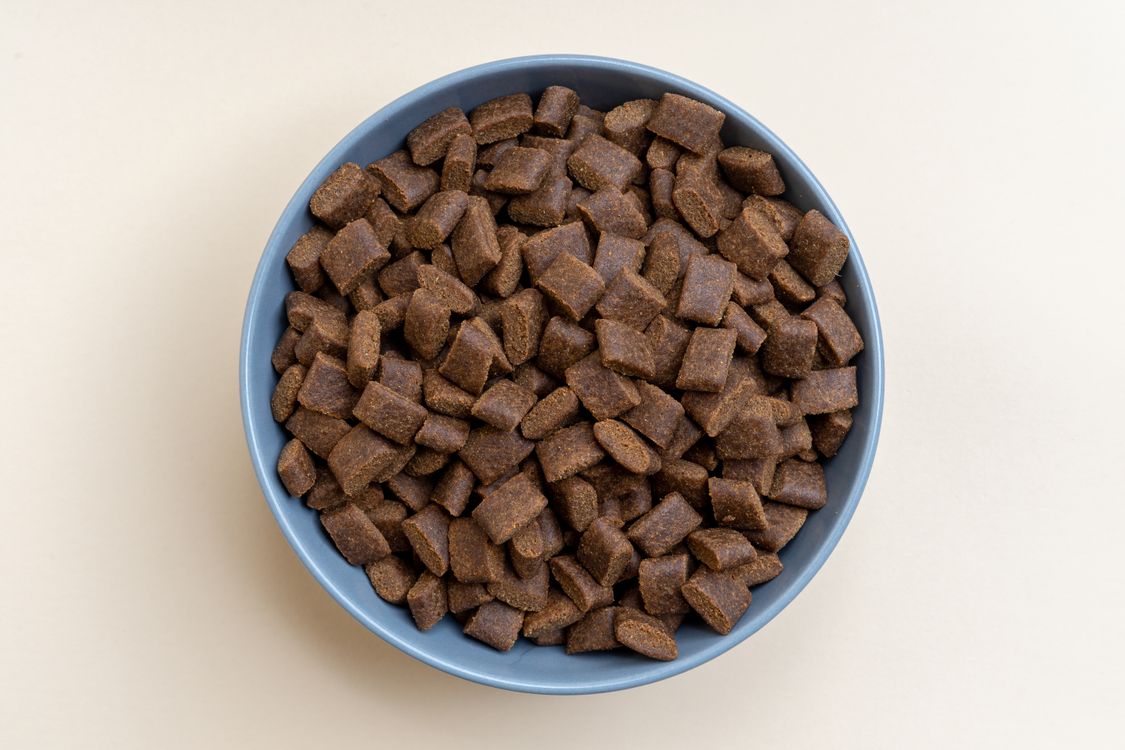
Photo: MART PRODUCTION / Pexels; photographic illustration of a dog eating, not an example patient or treatment outcome. See the Pexels license for permitted website use. Image loading should be verified in the publishing environment.
Bottom line: The best dog food for weight gain is not identified by a bold promise, the highest protein number, or the largest serving. Start by assessing why the dog is thin, then choose a complete diet that suits its health and life stage, calculate portions from veterinary guidance, and use consistent weight, appetite, stool and muscle observations to decide what happens next. A better feeding decision is one you can explain, measure and revisit safely.