Dog Food Toppers: Types, Calories, Labels and Safer Ways to Use Them
Editorial disclosure: This is an independently prepared, source-based consumer guide, not a feeding trial, clinical diagnosis, sponsored ranking, or Patify product test. Manufacturer numbers below are their published claims, not laboratory measurements performed by Patify. No veterinarian has reviewed or endorsed this article for Patify. Dogs with prescribed diets, unexplained appetite changes, repeated vomiting, diarrhea, or other health concerns need individualized veterinary advice.
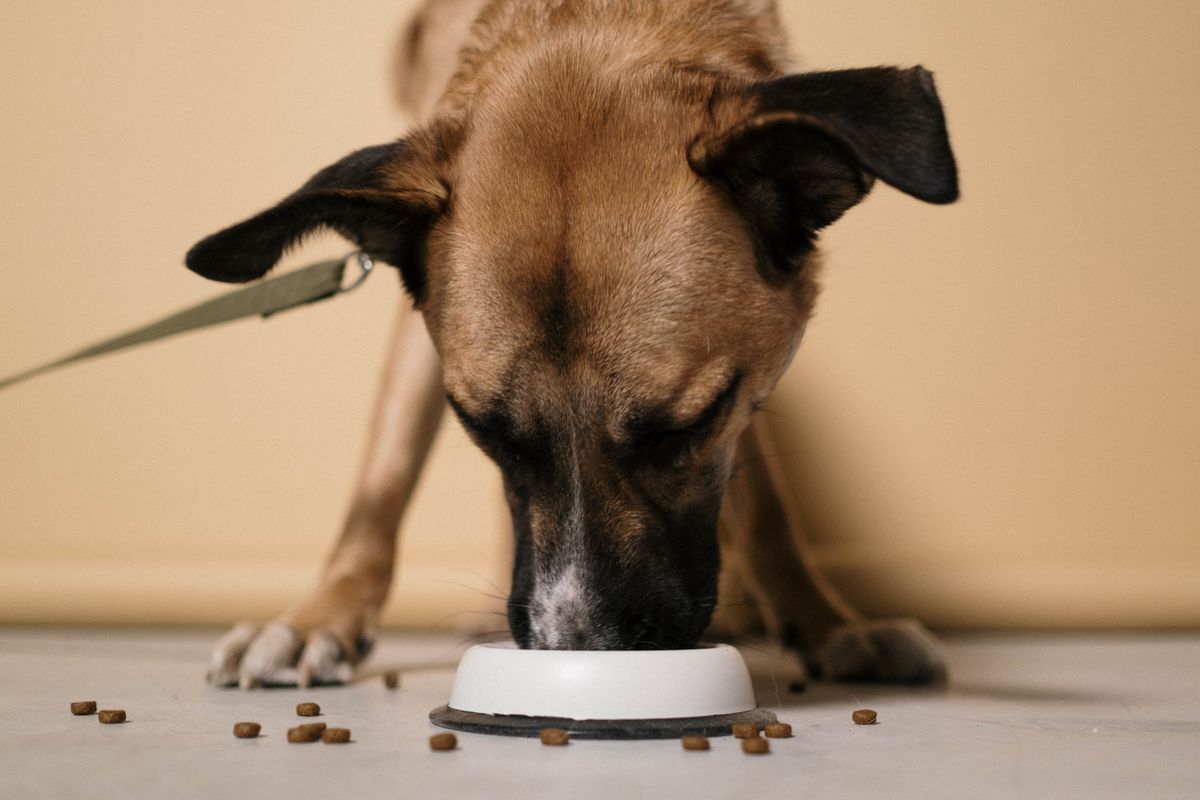
You open a bag of dog food your dog has eaten for months, set down the bowl, and get a skeptical look. A spoonful of something delicious suddenly seems like the easiest fix. That is how many owners discover dog food toppers: broths, stews, freeze-dried crumbles, powders, pâtés and little pouches designed to make an ordinary meal more appealing. They look interchangeable in an online search, but their nutritional roles can be remarkably different. One is little more than moisture and flavor; another delivers the calories of a snack; a third may be a complete food that can replace part of dinner rather than simply garnish it.
The central question is not whether a topper sounds wholesome. It is what nutritional job that exact product performs, how many calories it adds, and whether it makes sense for your dog. A topper cannot repair an inadequate main diet. Nor does a functional claim such as “immune,” “gut,” or “joint” establish that it treats a disease. You can still make mealtime enjoyable. The trick is to make the addition visible in the day's nutritional accounting instead of treating it as a free extra.
Quick answer: For a healthy dog already eating an appropriate complete-and-balanced food, a modest topper can add aroma, texture or variety. First check whether the topper itself is complete-and-balanced or labeled for intermittent/supplemental feeding; record its calories per serving; count all treats and chews together; and start with a small amount. Veterinary nutrition professionals commonly suggest keeping non-complete extras to no more than about 10% of daily calories as a general guide, not a prescription for dogs on therapeutic or tightly controlled diets. If refusal of food is new or persistent, investigate the reason rather than hiding it under a topping.

What counts as a dog food topper?
A topper is defined by how you use it, not by one legally uniform product category. A broth poured onto kibble, a pouch of shredded meat and vegetables, a powder shaken over food and a scoop of complete canned dog food can all sit on top of a bowl. That visual similarity is the source of much confusion. A company may call its item a “topper” while the nutritional adequacy statement says it is supplemental only. Another product may be sold as a dinner and explicitly allow use as a topper. The recipe's feeding role comes from the label, not the merchandising shelf where you found it.
Begin by separating flavor or enrichment additions from nutritionally complete food. The first category includes many dog-specific broths, dehydrated sprinkles, freeze-dried treats and supplemental stews. Their ingredients may be useful or enjoyable, but they typically do not supply essential nutrients in the proportions necessary to sustain the whole diet. The second category may include complete canned food or shelf-stable fresh-style food that you can incorporate into a mixed feeding plan. It requires a different calculation, because you are potentially substituting one complete ration for another rather than allocating calories from the treat allowance.
| What you are adding | Typical purpose | First label question | Main caution |
|---|---|---|---|
| Water or plain warm water | Moisture, aroma release, texture | Is it simply clean water? | Serve promptly; don't leave moistened kibble out indefinitely |
| Dog-formulated broth | Moisture and flavor | Calories per tablespoon; ingredients; storage | Check sodium, animal protein sources and refrigeration instructions |
| Wet stew or pour-over | Smell, texture and palatability | Complete food or supplemental only? | Calories in a full box can be substantial |
| Freeze-dried pieces or sprinkles | Crunch, concentrated flavor | Raw or cooked? Calories? | Raw-product pathogens and calorie density are different concerns |
| Complete wet dog food | Replace part of a balanced meal | AAFCO adequacy and life stage | Keep the combined plan appropriate to the dog |
| Supplements or probiotic powders | A specific product claim or veterinary direction | Is it a supplement rather than food? | Evidence, dose and suitability need separate evaluation |
Water deserves its place at the top of this comparison. Adding a little clean water is often a simpler and less expensive way to change a dry meal's feel. It adds essentially no food calories. It does not solve every feeding problem, and a dog that cannot chew, swallows abnormally, or has mouth pain still needs medical attention. But it is a reminder that a topper is an option rather than a nutrition requirement.
The most important line on a U.S. topper label
Turn the carton over and look for the nutritional adequacy statement. The Association of American Feed Control Officials (AAFCO) explains that “complete and balanced” refers to all required nutrients being present in suitable proportions for a stated life stage. Foods labeled for “intermittent or supplemental feeding only” are not intended to carry an entire everyday diet. AAFCO establishes model standards and procedures; it does not individually approve brands. A label that says “AAFCO approved” is not evidence that the association certified a product.
Some snack products can be exempt from displaying the usual adequacy statement, so the absence of one cannot be interpreted as a complete-food claim. Treat the item as an extra unless the manufacturer provides clear, substantiated complete-and-balanced information. The words “natural,” “human grade,” “premium,” “functional” and “real meat” do not replace a nutritional adequacy statement. “For all ages” in the merchandising copy does not necessarily have the same meaning as a verified complete-and-balanced all-life-stages claim. Read the full statement on the exact formula you are buying.
When a complete dog food is used as a topper
This is a useful exception to the familiar 10% discussion. A product formulated to meet AAFCO profiles for adult maintenance may be mixed with an existing complete adult diet as part of a broader feeding plan. That does not automatically make it right for a puppy, pregnant dog or medically restricted patient, and two different complete foods may differ in calorie density and nutrients. For a healthy adult, the practical task is calculating how much energy you remove from the main diet to make room for the additional complete food. For a medically complex dog, your veterinary team should approve the combination and proportion.
A wet food used as a topper also makes a good label-reading test. If its package says to replace a specified amount of dry food when adding a carton, note that this substitution depends on the manufacturer's own reference diet and serving assumptions. It is not guaranteed to be accurate for your unrelated brand of kibble. Compare actual kilocalories instead of treating a statement such as “replace two-thirds of a cup” as universally transferable.
When a supplemental product is used every day
The word “supplemental” does not prohibit daily use in every context, but it means you should not silently convert the item into a meaningful part of the nutritional foundation. Even a small daily garnish can crowd out calories from the balanced food, especially for a tiny dog. Dogs that routinely finish the topper and leave the main meal behind may be eating a growing proportion of nutritionally incomplete extras. Keep a record of what they actually consume, not merely what went into the bowl, and ask for nutritional guidance if the base diet is being displaced.
How many topper calories can a dog have?
The most practical starting point is the dog's established daily calorie allowance, ideally reviewed with a veterinarian based on age, body condition, activity, medical history and trend in weight. Tufts University's Petfoodology service recommends that foods outside the main balanced diet contribute no more than approximately 10% of daily calories as a general rule. That includes training treats, dental chews, biscuits, table scraps and supplemental toppers together. The 10% is a ceiling for the combined extras, not a bonus to add above an appropriate daily intake. Certain medical diets may require stricter limits or no additions at all.
Here is the basic calculation. If a veterinarian has established a daily target of 700 kcal, 10% is 70 kcal. Suppose the dog has already consumed 25 kcal of training rewards and a 15 kcal chew. There would be approximately 30 kcal left inside that illustrative extra allowance. A topper with 86 kcal per box is not automatically a 30 kcal addition just because the box looks small. Measure the portion and use the package's energy declaration, rather than guessing from appearance.
| Fictional daily plan | Amount | What it tells you |
|---|---|---|
| Established daily target | 700 kcal | A hypothetical reference, not a recommended ration |
| Approximate general extras ceiling, 10% | 70 kcal | Includes all non-complete extras combined |
| Training rewards already used | 25 kcal | Count them before opening a topper |
| Dental chew already used | 15 kcal | Chews can contribute substantial calories |
| Remaining illustrative extras allowance | 30 kcal | Maximal remaining amount within this example |
| Example topper measured at 20 kcal | 20 kcal | Leaves about 10 kcal for other extras that day |
The main food's portion has to fit the total energy plan as well. You cannot feed the usual full 700 kcal of kibble and then use 70 kcal of extras as if the 10% were free. For this purely mathematical example, a 20 kcal topper with 40 kcal of earlier treats means 640 kcal of main food plus 60 kcal of extras, for a 700 kcal daily total. The final amount of main food should be based on actual nutritional needs and diet suitability, not on our example. If you are managing obesity, diabetes, pancreatitis, kidney disease or another condition, do not use a generic treat formula to override the veterinary plan.
How to calculate from a pouch, box or tablespoon
Different labels use different units. A broth may provide kcal/tablespoon, a stew may list kcal/box, and a freeze-dried addition may list kcal/ounce or kcal/kg. Convert to the portion you actually serve: topper calories = labeled calories per unit × units fed. If a full 5.5-ounce box contains 86 kcal, half the box represents about 43 kcal, provided the contents are evenly distributed. If the label says 2.25 kcal per tablespoon, two tablespoons provide 4.5 kcal. Avoid using a teaspoon and an ounce interchangeably, or assuming a scoop weighs the same across powders.
For a product listing kcal/kg only, weigh the portion in grams. Divide kcal/kg by 1,000 to obtain kcal/gram and multiply by the grams served. For example, a fictional topper at 3,500 kcal/kg yields 3.5 kcal/gram; 10 grams would contribute 35 kcal. The math is useful, but it says nothing about whether 10 grams is a suitable serving for a particular dog. Check manufacturer instructions and veterinary restrictions first, and remember that nutrient density and pathogen risk are separate from calorie density.
Miniature dogs versus larger dogs
A “just a spoonful” routine is not the same nutritional decision for a toy dog and a large dog. If one hypothetical dog has a medically determined 250 kcal/day allowance, a general 10% extras ceiling is 25 kcal. A second dog at 1,100 kcal/day would have an analogous 110 kcal ceiling. These are demonstrations of a percentage—not recommendations for either dog's caloric intake. A few squeezes of a high-calorie paste can make up a large share of a small dog's budget, even though the portion looks insignificant beside a Labrador's bowl.
Four real U.S. label examples: broth, pour-over, pouch and complete food
Rather than claiming that one product is “best” without feeding trials, it is more useful to compare how much energy a real product contributes and whether it is a complete diet. The figures below come from current U.S. manufacturer pages checked for this article; they are subject to formula and page updates. Use the label on the package in your hand if it differs from an online listing. Patify did not buy these products, test their palatability, measure their nutrients or assess manufacturing facilities.
| Actual U.S. product | Manufacturer-reported calories | Feeding role in this comparison | Critical reading point |
|---|---|---|---|
| Open Farm Homestead Turkey Bone Broth | 2.25 kcal per tablespoon | Broth-style addition | A small measured quantity gives relatively few calories; review ingredient and refrigeration directions |
| The Honest Kitchen Functional Pour Overs, Heart Health | 86 kcal per box | Supplemental topper | “Heart health” is marketing positioning, not veterinary treatment |
| Go! Booster Tranquility Minced Chicken with Gravy | 68 kcal per 79 g pouch | Intermittent/supplemental | Contains chicken and additional ingredients; not a complete ration |
| Open Farm Homestead Turkey Rustic Stew | 363 kcal per 354 g carton | Complete-and-balanced for adult maintenance | Can be a complete food or topper, but portions need caloric substitution |
The contrasts are more useful than a single ranking. Two tablespoons of Open Farm's cited broth are 4.5 kcal, while half of the cited Honest Kitchen box is 43 kcal. The Go! Booster package lists 68 kcal per pouch and identifies its formula for intermittent or supplemental feeding. The Open Farm Rustic Stew lists 363 kcal per carton and an adult-maintenance adequacy claim. Comparing those numbers without noting serving unit and diet role would mislead readers. A higher-calorie item is not necessarily inferior; it simply plays a different role in the meal plan.
What the functional claims do—and do not—establish
Some toppers promote digestion, joint support, stress support, immunity or heart health through selected ingredients. That language can be appealing, particularly if your dog has a diagnosed condition. But a producer's description is not independent proof that feeding the topper changes a specific clinical outcome. Ask what ingredient and amount are associated with the claim, whether there is evidence for that finished product at the labeled portion, and whether the company can provide relevant nutrient information for your dog's existing diet. Ingredients such as fish oil, herbs or added amino acids may deserve extra scrutiny when medication or a therapeutic diet is involved.
A dog with a heart murmur, kidney disease, pancreatitis, urinary stones, allergies or other diagnosed illness should not have its prescription plan altered because a consumer topper advertises a benefit to that organ system. Some companies do not publish full phosphorus, sodium or other mineral analyses for supplemental foods, because they are not intended as complete diets. If the nutrient matters clinically, unavailable data is a reason to pause and ask your veterinarian—not to infer that “no added salt” means negligible total sodium or that “natural” means medically appropriate.
Which topper type fits the actual problem?
Start with what you are trying to change. A dog happily eating balanced kibble but bored with the same presentation may not need anything more complicated than rotating an occasional food-safe flavor or adding warm water. A dog whose food intake has fallen after surgery, during an illness or because of pain needs an assessment, not just a better aroma. A dog on a carefully prescribed elimination trial needs a stable diagnostic diet, not a different protein sprinkle each week. The type of topper should follow the problem—not create a new one.
To add moisture and change aroma
Clean warm water softens kibble and can release more smell. A dog-specific broth offers flavor but may introduce animal proteins that matter in an elimination diet and minerals that matter in a therapeutic diet. Look for full ingredients and storage guidance; don't assume a grocery-store “low sodium” human broth is appropriate. Onion and garlic, which commonly season human soups and stocks, are unsafe for dogs. A tiny pet-specific splash should not be promoted as treatment for dehydration, urinary problems or refusal to drink.
To tempt a dog that is temporarily picky
A small, consistent amount of a safe topper may help some dogs accept an unfamiliar food, but it is not a diagnosis for appetite loss. Look first at basic factors: Is the food stale? Is the bowl clean? Was the recipe changed? Is feeding happening after many treats? Could noise, routine disruption or guarding behavior be affecting meals? If the problem persists, especially with weight loss, lethargy, vomiting, diarrhea or signs of pain, contact a veterinarian. Repeatedly upgrading the garnish can teach the dog to hold out for something increasingly exciting while the original cause remains unresolved.
To support a mixed wet-and-dry routine
When the wet component is complete and balanced for the dog's life stage, you can calculate a genuine mixed-meal ration rather than treating it as an indulgence. Check kilocalories in each food and subtract one from the other within the agreed daily target. If the wet product is supplemental only, it belongs in the extras allowance and should not displace a substantial share of the balanced ration. The package may give feeding suggestions, but calorie density differs among dry foods. Keep both exact product names and current labels in your log.
To change texture for a senior dog
An older dog may prefer soft food for many reasons. Some are mundane, such as difficulty managing large kibble pieces. Others are medical, including painful teeth, oral disease, nausea or altered smell. A topper can make food easier to approach, but it cannot resolve dental pain or unexplained weight loss. If chewing becomes slow, your dog drops food, paws at the mouth or suddenly prefers only very soft items, ask for an examination. Choose the feeding format only after clarifying whether the dog can safely chew and swallow.
Freeze-dried and raw toppers: a separate safety decision
Freeze-dried does not inherently mean cooked, sterile or pathogen-free. Some crumble-style toppers are made from raw animal ingredients. The U.S. Food and Drug Administration warns that raw pet foods have a greater risk of harmful bacteria such as Salmonella and Listeria than processed pet foods, creating concerns for pets and household members. Freeze-drying or freezing should not be assumed to eliminate all hazards. Read whether the product is raw or heat-treated, inspect handling instructions, and consider the people and animals in your household before buying.
Families with very young children, older adults, pregnant people or anyone with compromised immunity have particular reasons to limit handling of potentially contaminated food. Wash hands, separate preparation tools from human food, clean bowls and counters, and store products as directed. Those hygiene measures reduce opportunities for spread; they do not convert a raw product into one without infectious risk. If your household needs an uncomplicated low-risk way to make kibble smell more appealing, water or a properly stored cooked product may fit the goal better.
The same caution applies to commercially sold dehydrated meat pieces described as natural or minimally processed. Ask about validated pathogen controls rather than relying on design language. Products have different processing methods; their safety cannot be inferred from a broad category label. For official information, use the FDA's handling guidance instead of a social-media claim about raw feeding.
Safe homemade topper ideas—and what to leave out
For a healthy dog without dietary restrictions, plain, thoroughly cooked food may sometimes be used in a very small measured amount as an occasional extra. Think unseasoned cooked lean meat without bones, a little plain pumpkin without pie spices or a modest portion of an individually tolerated plain vegetable. These are not balanced homemade diets, and “safe food” does not mean safe in unlimited amounts or for every medical condition. A plain ingredient can still trigger a food reaction; a fatty addition can be a poor choice for a dog prone to gastrointestinal problems. Keep the full day's treats and toppers within the appropriate plan.
The much more important skill is recognizing what not to use. Human gravy may contain onion, garlic, excessive salt and fat. Some nut butters and sugar-free foods may contain xylitol, which the FDA warns is acutely dangerous to dogs. Grapes, raisins, chocolate, macadamia nuts and other toxic foods are not appropriate garnishes. Cooked bones can create injury risks; raw bones bring other concerns. If a dog has consumed suspected xylitol or another toxic ingredient, seek veterinary or animal poison-control help promptly instead of trying a home remedy.
| Kitchen idea | Reasonable consideration for an otherwise healthy dog | Main reason to stop or ask first |
|---|---|---|
| A little clean warm water | Zero-calorie texture change | Do not mask swallowing problems or leave soggy food standing |
| Plain, thoroughly cooked, unseasoned meat | Small measured extra; protein must be accounted for | Food allergy trial, fat restriction or ingredient intolerance |
| Plain pumpkin, not pie filling | Occasional measured flavor/texture addition | Fiber or GI restrictions; too much can upset digestion |
| Dog-specific low-calorie broth | Compare ingredient list and calories | Sodium, hidden proteins or clinical diet restrictions |
| Human gravy, seasoned stock or leftover sauce | Generally avoid as an improvised topper | Onion, garlic, salt, fat and uncertain ingredients |
| Sugar-free sweet spreads | Avoid unless veterinary-approved and ingredients confirmed | Possible xylitol exposure is an emergency risk |
Home-prepared extras should never be mistaken for a home-cooked balanced nutrition plan. Making a complete diet from pantry ingredients requires expertise in nutrient requirements and formulation. If you want to feed a substantial fraction of meals as cooked food, consult a veterinarian or board-certified veterinary nutritionist about a recipe suitable for your individual dog instead of scaling up a small topper idea.
Using toppers when your dog has allergies or a prescription diet
Owners often search for a “hypoallergenic topper” after a dog develops itching, recurrent ear problems or digestive upset. But a shopper's ingredient shortlist is not the same as a diagnostic elimination trial. Even a product advertised as limited ingredient or single protein may not have the cross-contact controls required by a veterinary trial. Flavorings, broths, treats, chews and pill pockets can all complicate the record. If your veterinarian prescribed a strict diagnostic diet, do not add an unapproved topper because it appears to match the broad protein category.
Similarly, renal, cardiac, urinary, gastrointestinal and other prescription diets have purposes more specific than calories and a front-panel food claim. A topper described as “joint support” or “heart health” has not thereby been shown to be appropriate alongside a therapeutic diet. Ask the treating practice to assess the exact product ingredients, sodium or phosphorus information, caloric contribution and the purpose of the trial or treatment. When those details are unavailable, the safest editorial advice is to avoid improvisation—not to recommend a fashionable alternative.
There is a useful everyday distinction between ingredient avoidance for a diagnosed reason and preference for a particular ingredient. If a healthy dog simply likes salmon flavor, choosing a salmon-based topper is a flavor choice. If a dog is in a veterinarian-supervised chicken elimination trial, even a salmon product may contain chicken-derived flavor or share production equipment. The same packaging language can mean different things depending on the medical context. For further reading, our grain-free dog food label guide explains why marketing categories should not substitute for nutritional adequacy or a diagnostic plan.
Introduce a topper without turning every meal into a negotiation
If a veterinarian has no concerns about changing the diet, begin with a small measured portion of one product. Put the same base meal down at consistent times, observe whether the dog eats its balanced food as well as the addition, and avoid piling several new products into the bowl at once. If soft stool, vomiting, gas, itching or aversion appears after a change, stop the experiment and ask for medical advice as appropriate. A gradual introduction can make cause-and-effect easier to recognize, but it does not guarantee that a product will suit every animal.
A practical first-week approach is not a universal gram schedule. Instead, keep a short note with the date, exact product and flavor, portion in a measured unit, any treats already used, meal consumption and stool/skin changes. Resist the urge to escalate from a tiny drizzle to a full pouch merely because your dog is enthusiastic. A dog may eat the topper first and still be left with much of the complete food. If that becomes the pattern, the primary problem has not been solved and the nutritional plan may be deteriorating.
A seven-day observational log
| Record each day | Why it helps | What would change the plan |
|---|---|---|
| Topper name, flavor and batch | Keeps exposure identifiable | Formula change or concern about a lot |
| Measured portion and label calories | Prevents disappearing extras | Topper exceeds remaining calorie budget |
| Other treats and chews | Completes the energy picture | Total extras approach the intended limit |
| Approximate main-food amount eaten | Reveals displaced complete food | Dog repeatedly eats garnish but leaves kibble |
| Appetite, stool, vomiting, itching | Supports a veterinary history | Persistent symptoms or any concerning deterioration |
| Body weight and condition trend | Shows longer-term direction | Unexpected weight change merits review |
Use the journal as an observation tool, not as a reason to wait seven days in the face of alarming symptoms. Marked lethargy, repeated vomiting, inability to keep water down, collapse, difficulty breathing or refusal of food in a vulnerable dog calls for prompt veterinary contact. Clinical urgency depends on the dog and accompanying signs, not on whether the last meal contained a new sauce.
Storage and serving: wet, dry, refrigerated and raw formats
The FDA advises promptly refrigerating or discarding unused canned or pouched pet food and maintaining refrigeration at 40°F or below. Cover leftovers, use clean utensils rather than dipping a contaminated bowl back into the container, and follow the manufacturer-specific after-opening window. For example, Open Farm currently says its cited turkey broth should be refrigerated and used within seven days after opening, while The Honest Kitchen indicates shorter windows on some pour-over formats. These are product-specific instructions, not a general guarantee that every similar-looking product keeps equally long.
Dry powders and freeze-dried products require their own storage approach. Retain original packaging when practical so ingredients, lot numbers, best-by dates and contact details remain available. Keep food in a cool, dry place and protect it from moisture and pests. Mixing dry kibble with liquid changes the storage conditions of the served portion: don't leave a wet bowl accessible all day and assume the original dry kibble shelf-life still applies. Discard spoiled food and wash feeding equipment, especially when food is handled near human meal preparation areas.
When warming a topper, aim for a comfortably safe serving temperature and stir thoroughly. Food that feels hot to a hand is too hot to serve immediately. Do not rely on microwaving for food safety or to make raw products safe. Keep ingredients, wrappers and bones out of reach; a curious dog may eat the unopened package or consume a concentrated quantity rather than the measured serving you intended.
Cost per useful serving: the overlooked comparison
A fancy-looking $4 topper pouch and a less glamorous broth should not be compared only by shelf price. First decide the goal. If you want moist kibble with a gentle aroma, a few tablespoons of broth may last several meals. If you want a thick stew texture, a pour-over may be more appropriate but can deliver many more calories. If you are replacing a portion of a complete meal, compare the cost of the substituted calories and nutritional suitability rather than pretending the wet food is an ornamental treat. Price comparisons that ignore calorie density and intended role are not meaningful.
Use a simple worksheet: price per serving = package price ÷ measured usable servings; monthly topper cost = price per serving × servings per day × days used. For example, in a deliberately fictional purchase scenario, a $3.60 package divided into six measured servings costs $0.60 per serving. Using it once daily for 30 days costs $18 before taxes, spoilage or promotions. This example is not a market price quote and it does not establish nutritional value. Your actual costs depend on local prices, serving size and how quickly an opened product must be used.
Count wasted food, too
A 12-pack subscription can cost more than smaller occasional purchases if the recipe spoils before you finish each opened unit, your dog rejects the flavor, or a medical plan changes. When comparing retailers, verify the same formula, package weight, order minimum, cold-shipping requirement and return terms. A low price per ounce can hide a high cost per serving if a concentrated powder is used at much smaller portions than a watery stew. Consider whether a simple kitchen change—fresh water, a clean bowl, a predictable mealtime—could achieve the same goal without recurring spending.
Three practical decisions from an everyday feeding routine
Scenario one: a healthy adult that eats kibble but seems bored. First verify that the base diet is complete for adult maintenance and that weight and appetite are stable. Try a little clean water or a measured dog-appropriate broth. If you use a supplemental commercial topper, include its actual calories in the day's shared allowance for treats and other extras. There is no proven need to switch to an expensive functional supplement because a dog appears to enjoy the variety.
Scenario two: a smaller dog that receives frequent training rewards. Rather than buying a full pouch with a large per-container calorie count, calculate how much of the daily extras allowance has already been used. A very small measured liquid portion might fit; a generous stew serving might not. If rewards are already important for training, consider using some of the main kibble allocation for rewards when suitable, so treats and toppings do not steadily displace nutrition. Any change to energy intake should be monitored against weight and body condition.
Scenario three: a dog on a veterinary elimination diet. Pause before adding anything, including broths advertised as chicken-free, freeze-dried fish sprinkles or human leftovers. Ask the treating veterinarian to approve the exact product if any addition is appropriate. An unrecorded protein exposure may interfere with interpreting an elimination-and-challenge trial, and “single-ingredient” packaging is not proof of appropriate cross-contact control. In this situation, the safest topper may be no topper at all.
A shopping checklist that works in a U.S. store
A good topper decision should survive a move from the manufacturer's advertising page to the physical carton. Take a photograph of the full ingredient list and nutritional information. Identify who makes the food, which life stage the complete-food claim covers if any, and how the product is intended to be fed. Find the actual calorie content for a measurable unit—not merely crude protein percentage or a serving photo. When product pages display different figures, treat the physical package and a current manufacturer confirmation as the controlling information and document the date.
Before paying, ask yourself six questions: (1) What problem am I solving? (2) Is this complete-and-balanced, or supplemental only? (3) How many calories are in my actual portion? (4) What treats, chews or other extras already share today's allowance? (5) Does this add an ingredient relevant to my dog's allergy or medical plan? (6) Can I store and serve it safely before it spoils? Those six answers will usually be more useful than a top-ten list built from attractive photos and marketing labels.
For a deeper look at alternative proteins rather than toppers, see our insect-protein dog food guide. A separate article about protein sources is not evidence that any particular protein powder or crumble should be used as a daily supplement. Once the other Patify U.S. nutrition pages are confirmed live, the site can connect this topper decision with its planned protein and budget comparison hubs without duplicating their core methods.
Frequently asked questions about dog food toppers
Are dog food toppers necessary?
No. Most healthy dogs eating an appropriate complete-and-balanced diet do not need an additional topper for nutritional adequacy. A modest extra may change aroma or texture, but the benefit should be judged against the calorie budget, ingredients and whether the dog continues to consume the main meal. If the real concern is illness or appetite loss, get veterinary guidance instead of purchasing a product solely because it promises appetite support.
Can I use wet dog food as a topper every day?
Potentially, if it is appropriate complete-and-balanced food and you account for the exchanged calories and life stage. A supplemental wet stew is different: its calories count as extras and it should not become a substantial replacement for complete food. Read the exact adequacy statement and the manufacturer's directions, and ask your veterinary team before mixing a medical diet with any other food.
Is bone broth a zero-calorie topper?
No. Broths vary, and some contain a small but measurable amount of energy. One cited U.S. turkey bone broth lists 2.25 kcal per tablespoon, whereas a thick pour-over can provide tens of calories in one portion. Look for calories per tablespoon or another usable measure. Avoid seasoned human broths with onion or garlic, and follow the product's refrigeration instructions after opening.
Can toppers make a picky dog worse?
They can reinforce selective bowl behavior if a dog learns to reject the balanced food and wait for a preferred addition. More importantly, “picky” sometimes describes a medical issue such as nausea, dental pain or altered appetite. Start by checking feeding habits and health rather than adding increasingly rich ingredients. Sudden or persistent change in eating behavior deserves professional assessment.
What is the difference between a raw topper and a cooked topper?
A raw topper contains ingredients not subjected to an adequate pathogen-reducing cook step, depending on the specific process; some freeze-dried products are raw. Cooking and validated manufacturing controls can change microbial risk, but neither appealing packaging nor freeze-drying alone demonstrates that a product is sterile. The FDA recommends caution with raw pet foods because of risks to animals and people handling them.
Can a topper replace my dog's regular food?
Only if it is itself an appropriate complete-and-balanced food and the entire feeding plan is suitable for the dog. Products labeled for intermittent or supplemental feeding do not provide a substitute for a complete daily ration. Even with two complete foods, compare calories and life-stage claims. Medical diets, growth and other special needs require professional coordination rather than an improvised half-and-half plan.
Sources, editorial method and limitations
This U.S. guide was updated October 16, 2026. Core label and safety references are AAFCO—Reading Labels, AAFCO—Selecting the Right Pet Food, Tufts—Top Five Nutrition Mistakes, FDA—Safe Handling of Pet Food, and FDA—Xylitol Warning. Manufacturer examples were checked against Open Farm Turkey Broth, Open Farm Turkey Rustic Stew, The Honest Kitchen Heart Health Pour Over and Go! Booster Chicken Topper. These are source examples, not recommendations or affiliate placements.
What Patify did not do: We did not taste, feed, purchase, clinically test, independently analyze, price-shop nationwide, or vet-approve these products. Manufacturer calorie counts and statements may change; calculate from your own product label and obtain veterinary guidance when a clinical condition is involved. No claim in this article establishes efficacy for treating heart disease, gastrointestinal illness, allergies or behavioral disorders. The calorie figures in explicitly marked fictional scenarios are teaching examples, not individualized rations. Your dog's long-term nutritional adequacy matters more than the attractiveness of an extra spoonful on tonight's dinner.