Dog Rain Jackets in Canada: Waterproofing, Fit, Coverage and Cost
A rain jacket for a dog is easy to buy badly. The coat looks protective in the photograph, arrives in the right nominal size and still leaves the chest soaking wet, rides sideways under the harness or makes the dog freeze in the hallway. Canadian weather makes those compromises especially obvious: a misty Vancouver commute, a muddy spring trail in Ontario and a cold, windy Atlantic walk create different demands. “Waterproof” is only one piece of the choice. Coverage, mobility, drying time, the dog's actual measurements and the way the leash attaches all matter.
This guide compares documented design features, not performances measured by Patify. Product details from Canadian or Canada-facing manufacturer pages were reviewed on 14 October 2026. We have not pressure-tested fabric, timed drying, worn the coats on dogs or performed wash-cycle trials. Instead, the aim is to help you narrow the field and check a coat on your own dog before removing the tags. For snowy pavement and road-salt protection, the separate dog winter boots guide tackles a different part of the same Canadian-walk problem.
Quick answer: buy for fit first, then weather
For frequent wet walks, start with a coat that lets your dog walk, turn, sniff, squat and lift its legs normally. Measure exactly as the manufacturer instructs, often chest girth and back length, and check how the jacket covers the neck, belly and hindquarters. If the dog wears a harness, establish whether there is a usable leash opening or whether the coat is meant to go underneath it. A waterproof fabric is much less helpful if the harness pulls the jacket out of position every few steps.
Then decide whether you need an unlined rain shell for milder temperatures, a warmer lined garment for chilly weather or a full-body suit for dogs whose legs and belly collect mud. A rain shell alone does not guarantee insulation against cold; likewise, a warm winter coat is not necessarily built for sustained heavy rain. Hurtta explicitly distinguishes full weatherproof rain gear from certain winter coats. When conditions are extreme, the right decision may be a shorter walk, warm indoor recovery and careful drying rather than adding more clothing.
Start with your dog's body, not the breed label
Two dogs of the same breed can have very different proportions. A deep-chested greyhound, a compact French bulldog and a long-backed dachshund illustrate why “medium” is not a universal shape. Measure the circumference at the widest part of the rib cage while the dog is standing. Note back length from the collar area to the base of the tail using the brand's exact landmarks. Depending on the jacket, neck size and leg openings may be equally important. Record values in centimetres and inches if you shop across Canadian and American websites.
Measurements should be taken with a flexible tape that touches the coat without squeezing it. If the dog has a thick winter coat or wears a layering garment, the final fit can change. Check movement after fastening: shoulder motion, sitting, tail position, belly coverage and the position of any straps. A coat that looks beautifully tailored while the dog stands perfectly still may be unsuitable after one ordinary turn. That is a fit problem, not an obedience problem.
Why the size chart is not transferable across brands
The Ruffwear Sun Shower sizing page bases sizing on chest girth around the widest rib cage, and the product's cut is described as relaxed with extended coverage. Hurtta's rainwear guidance places particular emphasis on back length when choosing a coat and directs purchasers to its style-specific sizing guide. Both approaches can be appropriate because the garments are cut differently. It would be wrong to combine the first company's chest intervals with the second company's back-length sizes and declare a universal conversion.
If a dog is between sizes, do not rely on one generic rule; even a brand's different styles can fit differently. Confirm the guidance on the actual product page and consider whether adjusters can remove excess material without restricting movement. Save screenshots of the sizing instructions if you order online. A retailer's “size M” label is only shorthand for a particular pattern, not a guarantee of the same fit as your previous jacket.
Compare three different styles, not just three brand names
| Style | What it solves | Possible trade-off | What to check |
|---|---|---|---|
| Light rain shell | Milder rain, easy packing, little insulation | Exposed legs and underside | Harness opening, side closure, mobility |
| Lined rain coat | Cool, wet, windy walks | May be too warm for active dogs | Lining, drying and temperature suitability |
| Full-body rain overall | Muddy legs and belly, extensive coverage | More complicated leg fit and dressing | Leg length, gait, bathroom access |
The table is a decision aid. It does not assign a brand “winner” in categories we did not test. In practice, a short-coated dog that dislikes wet weather may appreciate a different coverage level from a fluffy dog that overheats easily. The dog's willingness to walk comfortably matters. Select the least complicated garment that solves the actual problem, then verify its limits rather than paying extra for maximum fabric area by default.
Example one: Ruffwear Sun Shower
The Canadian Sun Shower product page describes a waterproof and windproof shell, an oversized storm collar, rear leash portal for use over many harnesses, optional leg loops, reflective trim and extended vest coverage. It discloses a 3,000-mm waterproof rating for its stated nylon shell and describes the fabric construction. Those are manufacturer specifications; they are not Patify measurements or proof of identical protection on every dog.
For the shopper, the useful questions are whether its chest-girth range matches the measured dog, whether the back opening works with the harness attachment point and whether the relaxed vest stays in place when the dog trots. If you usually walk in exposed wind, the leg loops may help, but they should not cut into the rear legs or cause hesitation. Check the care instructions: the manufacturer specifies gentle cold-water washing and hang drying, a reminder that weatherproof gear needs maintenance to remain useful.
Example two: Hurtta Mudventure and Monsoon options
Hurtta's Canadian rainwear catalogue separates a lighter Mudventure coat, a more protective overall and Monsoon raincoat options. The manufacturer describes the Mudventure designs as unlined shells and the Monsoon Coat II as incorporating additional lining and fit features. Hurtta's published Canadian starting prices at the time of review were from C$135 for the Mudventure Dog Coat, from C$145 for the Monsoon Coat II and from C$165 for the Mudventure Overall. These are dated brand-listed starting prices, not all-size checkout prices or independently collected retailer quotes.
This range is useful because it illustrates a real trade-off: greater coverage, more construction and extra insulation can raise cost without necessarily improving everyday usefulness for every dog. A dog whose entire lower body is sprayed with road grime may benefit from an overall; another whose back merely gets damp may find it restrictive. Compare the style-specific measurement diagrams, return conditions and today's actual stock, especially if a local shop offers only selected colours or sizes.
Waterproof, water-resistant and breathable are not synonyms
Waterproof fabric is designed to resist penetration under specified conditions. Water-resistant finishes may shed light drizzle while becoming less effective during prolonged exposure. “Breathable” refers to moisture-vapour movement and is not a promise that the dog's undercoat stays dry through hours of hard rain. Seams, closures, fabric deterioration and the fit around neck and belly all influence how wet the dog becomes. A declared water-column rating is a useful manufacturer specification but it is not a field trial on your pet.
Keep in mind that dogs shed heat differently from humans. A shell can reduce evaporative cooling or trap warmth even without thick padding. On a mild, humid day with active running, watch for panting, discomfort and attempts to remove the coat. On a chilly windy day, watch for shivering or reluctance to continue. In either case, your animal's behaviour matters more than a label saying the product is “all weather.”
A harness portal can determine whether the coat works
Look at where your leash normally attaches: on a back clip, a front chest clip or a collar. Many jacket portals are placed for back-clip harnesses, not every harness design. If the leash attachment sits under solid fabric, you cannot assume the slot will line up. Do not cut a new hole into a waterproof shell without accepting that you may damage its construction. Test the pairing indoors with the dog on a short lead before heading into traffic.
Some coats are designed to fit over a harness while others can be worn beneath one. If worn beneath, the harness must still adjust securely and should not press seams into the dog's skin. If worn over, the jacket needs enough room without sliding. When the harness positioning problem turns into a training issue, our dog training leash guide explains why equipment length and control tasks should be considered separately from wet-weather clothing.
Fit-test checklist for the hallway
Put the jacket on when your dog is calm; reward voluntary approach and allow inspection first. Fasten it without pulling a leg or tail into an uncomfortable position. Encourage a few normal steps, one turn, one sit and a short sniffing pause. Check whether the garment slides to one side, bunches behind the shoulder or presses the throat. If the dog can only move stiffly or crouches persistently, stop and reassess before walking outdoors.
Next, simulate the real harness-and-leash setup. Reach the buckle and opening with the coat fully secured; make sure no strap has migrated. Check whether the dog can urinate or defecate normally without wetting the garment. Finally, observe how easy it is to remove a wet coat without dragging dirty fabric over the face. A good jacket is one that fits the daily routine, not just the photographs from a sizing appointment.
When full-body overalls make sense
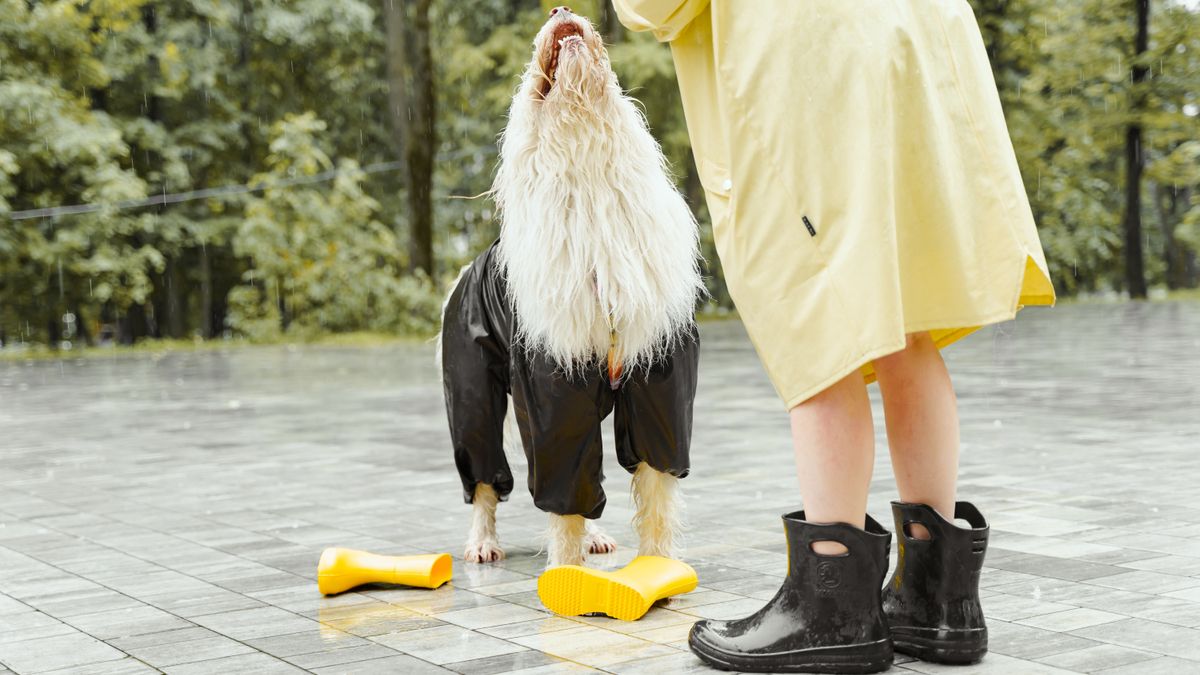
Rain overalls protect more of the legs, underside and body from muddy splash. That can reduce cleaning for small, low-slung dogs and for active outdoor dogs with long fur. Ruffwear's Sun Shower Coverall page describes a full-coverage waterproof suit with stretchy articulated sleeves and a leash portal. Hurtta similarly distinguishes its high-coverage Mudventure Overall from a simpler coat. These design choices are real, but actual movement comfort must still be tested on the individual animal.
A suit adds more measurements, openings, rubbing points and drying surfaces. In particular, check inner-leg seams and whether the fabric interferes with the dog's stride. Some dogs strongly resist individual leg sleeves; forceful dressing can make rainy walks more stressful, not less. For an elderly dog with reduced mobility or a dog recovering from injury, discuss functional limitations with a veterinarian before buying complex outerwear.
Winter rain is not the same as summer rain
Canadian autumn and spring can combine rain, wind and low temperatures; the same coast may see drizzle near freezing and a mild wet afternoon within a week. An unlined waterproof shell is primarily rain protection, not a dependable insulating layer. If your dog needs warmth, consider the manufacturer's layering system and whether the combination preserves mobility. Avoid assuming the warmest-looking garment also handles persistent rain: a manufacturer may explicitly say that a winter parka is not designed for heavy rain, as Hurtta states for the Expedition Parka II.
For winter sidewalks treated with ice melt, a jacket does nothing to prevent substances contacting the paws. That is why the winter boot fitting and salt guide belongs beside, not inside, a raincoat shopping page. When temperature or footing makes a full-length outing risky, choose a shorter walk and suitable indoor enrichment. The objective is canine comfort and safety, not completing a weather challenge.
British Columbia drizzle, Ontario slush and Atlantic wind
A Vancouver commuter might value an unlined jacket that packs small, dries easily and works with an everyday harness. An Ontario household that walks through slushy shoulders may put more weight on extended underside coverage and the ease of rinsing grit away. On exposed Atlantic coastal walks, secure straps and a collar that resists flapping may matter. These are scenario illustrations, not claims that each province has a single weather pattern or that any jacket has been independently tested there.
Map the usual walk instead: number of minutes outside, wind exposure, ground splash, whether the dog runs hard and how much indoor drying space exists. Write the details down before shopping. An answer grounded in your street and your dog's body is better than a list ranking the same premium coat first for every Canadian postal code. If the dog frequently turns toward home or is visibly cold or uncomfortable, change the plan rather than trying to justify the purchase.
The three measurements to record
| Measurement | How to take it | Common mistake |
|---|---|---|
| Chest girth | Flexible tape around the widest rib cage | Measuring the waist or pulling too tight |
| Back length | Follow the actual brand's collar-to-tail landmarks | Using a different brand's landmarks |
| Neck/leg clearance | Measure only where the specific design requires it | Assuming adjustability fixes every shape |
Save the measurements with the dog's date and approximate weight. Puppies can outgrow expensive rain gear surprisingly quickly, so consider near-term growth when planning the budget without buying a garment so large that it twists. If possible, trial-fit in a store with an appropriate pet policy or choose a retailer with clear return conditions. Do not remove packaging labels until you have checked fit and harness access indoors.
What should a rain jacket cost in Canada?
There is no stable, representative Canadian average price that could be derived from a handful of web listings. We can cite dated manufacturer examples, such as Hurtta's above, and compare them with a budget you set. A useful household metric is cost per season of actual use rather than cost per fanciful promised year. Imagine a C$90 coat used 60 times in one wet season: the illustrative cost is C$1.50 per outing, excluding cleaning and shipping. If it is worn six times, the same coat costs C$15 per outing. Those are arithmetic examples, not verified store prices.
Durability, repairability, availability in the dog's size and the company's care instructions matter more than a discount percentage. A cheaper jacket that rubs the skin or blocks the harness is not a bargain. A premium coat bought for a dog who refuses to wear any garment may be wasted unless you first work on gradual familiarization. Compare the realistic expected use before making a purchase.
Rain-jacket acclimation without turning dressing into a battle
Start indoors, when nobody needs to leave. Put the coat on the floor, reward the dog for approaching it, then briefly place it across the back without fastening. Progress to one loose strap or short wearing interval, always watching body language. The dog should be free to move away; forcing an anxious animal into leg sleeves often teaches it that the jacket predicts restraint. Use small, familiar rewards as part of the daily food allowance if appropriate.
Once the dog moves normally in the jacket, practice the real sequence: jacket, harness check, leash attachment, door opening and a short calm walk. Increase the time gradually rather than making the first outing a long wet trail. If the dog repeatedly freezes, resists handling or panics, stop and consider whether a different cut or no coat is more appropriate. Clothing is optional equipment, not a test of obedience.
What to do after a rainy walk
Remove the coat carefully and inspect skin around shoulders, underarms, neck and straps. Dry the dog, including the paws, and allow the coat to dry completely according to its care label before storing it. Don't leave a damp jacket trapped in a bag; odour and material deterioration are practical consequences. Examine seams, worn coatings, closures and reflective elements periodically. A jacket that served well last autumn may no longer fit or seal as expected.
If the dog develops recurrent skin irritation, persistent wet areas or a foul odour under a garment, address it rather than just purchasing stronger detergent. Your dog's skin may need veterinary evaluation. For overall grooming intervals, see how often to bathe your dog. Routine post-walk cleaning does not mean a complete shampoo bath after every wet outing.
Common mistakes before checkout
The first is choosing a coat based on breed and size letter without checking chest and back measurements. The second is assuming “waterproof” includes seams, zips and harness ports under every condition. The third is treating a lightly lined rain shell as an insulated winter coat. The fourth is choosing full-body coverage without watching the dog walk. The fifth is ignoring where the leash attaches, especially with front-clip harnesses. None of these issues is solved by a larger brand logo.
The sixth mistake is reading a published starting price as the checkout price for your dog's size and your delivery address. Currency, discounts, taxes, shipping and availability can change. The seventh is relying on customer stars as a fit guarantee: review populations and dog shapes are varied. Instead, ask a more specific question—does this cut have enough chest room without leaving a gap at the neck, and can the dog move naturally in it?—and let that answer direct the purchase.
A practical short list by need
| Your walk | Consider | Do not overlook |
|---|---|---|
| Short urban rain walk | Unlined shell, simple opening | Back-clip harness alignment |
| Muddy trail with long fur | More underside coverage or overall | Legs, toileting and cleaning time |
| Chilly windy rain | Windproof waterproof coat, appropriate layers | Overheating and genuine insulation needs |
| Young growing dog | Adjustable, affordable correctly fitting coat | Rapid size changes |
| Dog that dislikes garments | Simple shell or no garment initially | Gradual acclimation and welfare |
| Dog with mobility limitations | Easy closure, unrestrictive pattern | Vet input, friction and safe gait |
These selections describe a type of solution, not a clinical recommendation or an independent award. Use the manufacturer's actual technical and sizing information, then judge comfort on the dog. A perfectly sophisticated coat is a poor fit when the animal cannot relieve itself normally or the owner cannot reliably fasten it. The plainest model may be the best match for a household where ease of use keeps the dog more comfortable and the equipment consistently maintained.
Questions Canadian shoppers ask
Does my dog need a raincoat at all?
Not necessarily. Some dogs remain comfortable with ordinary wet-weather outings and thorough drying afterward; others dislike being wet or have practical coat-care needs that a jacket can reduce. Consider temperature, coat type, health, activity and how long the dog will be outside. Do not assume a raincoat can replace safe decisions during storms, extreme cold or dangerous footing. For short potty breaks in mild rain, a coat may add more fuss than value.
Is a 3,000-mm fabric rating automatically better than an unlabelled coat?
It is a declared technical characteristic for a specified fabric and can support informed comparison. However, a garment's entire performance depends on construction, seams, closures, wear and fit. Not every company reports the same testing information. We have not verified any fabric ratings in a laboratory, so we do not rank two products as objectively superior solely because one page prints a number. Ask what testing method is associated with the claim if it matters to your purchase.
Can I put the jacket over a harness?
Only when the coat is designed to work that way and the opening aligns with your harness. The Ruffwear Sun Shower explicitly includes a leash portal for many harnesses; that does not guarantee every attachment point will be accessible. Test the exact combination without the leash catching or creating pressure. If it cannot work securely, consider a different coat cut rather than forcing the leash through a random fabric gap.
Do reflective details make night walking safe?
Reflective trim can improve visibility under appropriate light, but it does not replace a secure leash, attention to traffic, suitable route selection or dedicated visibility equipment where needed. Check whether trim remains visible when the dog changes orientation. Dark, wet intersections and headlights produce complex visibility conditions, and a raincoat is not a substitute for active road safety practices.
Is the most expensive brand worth it?
That depends on fit, actual weather conditions, anticipated use and maintenance. The difference between a C$50 and C$150 purchase can be reasonable for one owner and unnecessary for another. Use dated manufacturer facts for water resistance, coverage and fit, and then consider how many outings the garment will realistically serve. We have not conducted comparative durability trials and do not present a false winner based on unsupported experience.
Final decision: a garment the dog will wear comfortably
Write down chest girth, back length, harness location and usual weather, then shortlist one or two designs whose manufacturer instructions fit those facts. Check the full price in CAD, the return policy and the washing directions. Test freedom of movement indoors and begin with a short outing. Revisit the fit as your puppy grows or seasonal layers change. That modest routine produces a more dependable purchase than buying by colour and finding out later that the harness cannot be used.
For winter walking, pair this guide with dog winter boots and, for safe handling, the training leash guide. Manufacturer details and illustrative CAD starting prices were checked on 14 October 2026. No coat was tested or endorsed by Patify, and nothing here guarantees that an individual dog stays dry or warm in extreme weather.
Sources and editorial method
Manufacturer descriptions, Canadian rescue and veterinary sources checked 14 October 2026. Prices are dated publisher figures or clearly marked arithmetic examples; availability and service costs may change. This content has not been independently product-tested or clinically reviewed by Patify.