Dog Training Leashes: Length, Handling and Safe Practice in Canada
A longer leash is not automatically a better training leash. Neither is a shorter one proof that a dog is under control. The useful question is what you want the dog to learn, where you will practise and how much room is safe in that environment. A leash for crossing a busy Toronto intersection has a different job from a long line used to rehearse recall on a quiet, permitted open area. Choosing equipment by task is more helpful than comparing length alone, particularly when retail descriptions treat everyday walks, obedience practice and outdoor exploration as though they were interchangeable.
Canadian owners need to add local rules to that decision. Ontario's general provincial park regulation normally requires domestic animals to be secured on a leash not exceeding two metres, subject to specified exceptions. Conservation-area rules in Ontario can also treat a dog attached to a line longer than two metres as being at large. That means an eight-metre training line may be sensible in an appropriate private or designated setting yet prohibited on the provincial park trail where you intended to use it. The following guide separates physical equipment, reward-based teaching and legal space. It provides a simple session plan, but does not claim that one lead teaches every dog to walk politely.
Quick comparison for your decision
Use this as an orientation table rather than a product ranking. The detailed sections explain the qualifications.
| Training task | Potential equipment | Setting / principal limit |
|---|---|---|
| Neighbourhood loose-leash walking | Comfortable fixed-length lead | Keep manageable near crossings and people |
| Recall foundation | Short line at first; long fixed line where permitted | Use secure and appropriate space, avoid sudden full-speed stops |
| Exploratory sniff walk | Comfortable fixed line, extra room only if lawful | Respect traffic, wildlife and other path users |
| Ontario provincial park walking | Typically no more than 2 m leash | Check applicable regulation, posted rules and exceptions |
First decide which behaviour you are training
Three common jobs require different setups. Loose-leash walking means moving together without continuous tension, often in ordinary streets. Recall practice teaches a dog to return when called, usually beginning at short distances and adding distractions carefully. Decompression or exploratory walks give a dog opportunities to sniff and move without demanding a formal heel. These goals overlap but should not be collapsed into one technique. A short, comfortable leash can be appropriate for pavement; a fixed-length long line can allow more exploration where rules and safety permit; a quiet, fenced area may be best for early recall work.
Start by writing the desired outcome in plain language. "Walk past a bus stop with the leash slack for thirty seconds" can be observed. "Be obedient" cannot. "Return after one recall cue when two metres away in a quiet yard" is a better early goal than "never run away". Equipment helps you manage distance and avoid accidents while the dog learns; it does not replace teaching, realistic expectations or attention to what the animal finds rewarding. VCA Canada's leash-walking guidance frames loose-leash work as a complex learned skill that needs planning and positive reinforcement.
The everyday walking leash
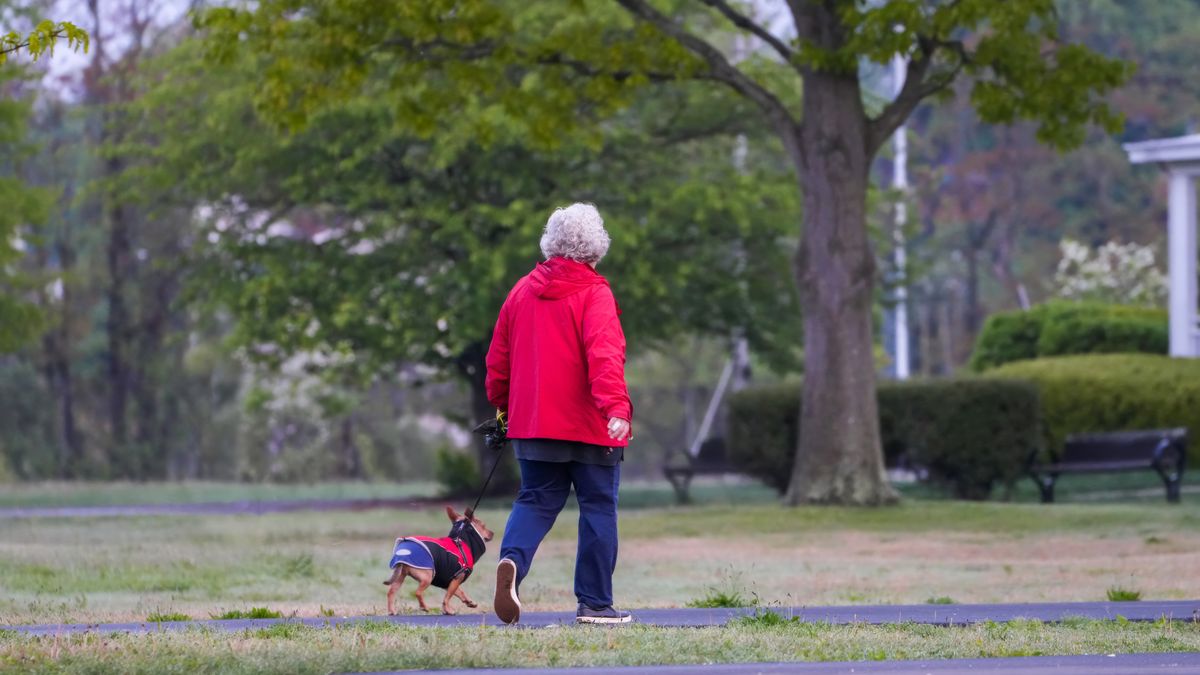
For routine neighbourhood walks, choose a fixed-length lead you can hold comfortably with a secure clip and predictable amount of slack. VCA's detailed walking guidance mentions roughly 1.8–3 metres as a useful general equipment range, though particular locations impose tighter rules. The best length within that range depends on sidewalks, crossings, your dog's size and your ability to manage approaching traffic or people. A busy urban route may require keeping the usable portion much shorter even when the entire lead is longer. Don't buy a long leash in the hope that its extra length will automatically stop pulling.
The leash should feel appropriate in the hand without relying on a thin cord that cuts into skin when suddenly tensioned. Check the stitching, hardware, attachment point and condition of the material. An easy-clean surface is helpful through Canadian winter slush, but gloves and wet handles change the grip. Practise calmly gathering slack before you encounter a distraction. Never wrap a running dog's line tightly around fingers or a wrist; the goal is an adjustable, controlled hold, not a makeshift restraint that could injure the handler when the dog accelerates.
Long lines: useful, but not everywhere
A long line is a fixed-length lead intended to provide a wider radius while the handler retains a connection. VCA Canada notes that long lines can give dogs safe exploration when appropriate and may support training before reliable off-leash behaviour. It is helpful to distinguish that kind of controlled practice from simply allowing a dog to build speed and hit the end of the line. A dog running freely on an eight- or ten-metre radius can develop substantial momentum; an abrupt stop is uncomfortable and potentially dangerous. Keep exercises calm and shorten the usable distance when the environment becomes busy.
Long lines belong in places where the dog cannot run into roads, bicycle lanes, steep drop-offs, water hazards or other animals. Avoid crowded shared trails and dog parks where the line could entangle feet or lead to conflict. Check local rules before arrival. A long line on private land with permission is one thing; the same equipment in an Ontario provincial park, where the general rule normally limits leashes to two metres, is another. Do not teach a reader to evade a posted restriction because they consider an open field "quiet enough".
Ontario park rules: the detail that changes the purchase
Ontario Regulation 347/07, section 6, states that animals in provincial parks generally must be secured on a leash no longer than two metres. The regulation includes specific exceptions, such as designated off-leash areas and certain lawful hunting contexts; these should not be interpreted as blanket permission for recreational long-line work. Separate Ontario conservation-area rules also regulate animals considered at large, including a leash over two metres. Check the current rules for the individual site, posted restrictions, swimming areas and wildlife protections before planning a training session.
If you want to develop a recall using a longer line, choose an appropriate permitted space rather than assuming every trail is a training ground. Local municipal bylaws can differ from provincial park rules, and private facilities can add their own conditions. The most reliable source is the organisation managing the exact property. Record where you intend to practise, who administers it and any leash length or off-leash restrictions. A marketing page saying "ideal for hiking" does not mean a lead is lawful on every Canadian hiking route.
Material choices: nylon, biothane-style coatings and rope
There is no universal fabric winner. Flat woven nylon can be lightweight and widely available, but wet or gritty material may be unpleasant to handle and some thin webbing can burn skin under friction. Coated webbing is often chosen for wiping down mud, snow and water, though stiffness and flexibility vary by product and temperature. Rope can feel substantial and may be easy to grip in thicker diameters, yet a heavy line can burden a very small dog. Inspect every design rather than treating a material category as a promise of strength.
For an active long line, consider how it moves across the ground, how easily it catches on branches and whether the clip rotates as the dog changes direction. Test the attachment and your own handling in a low-distraction setting before adding distance. Winter grit or salt can wear hardware; rinse and dry according to the manufacturer's instructions. If a product lists a strength rating, understand the testing conditions and don't confuse it with an approval for sudden, high-speed stops. The safest leash is one matched to the dog's size, behaviour and place of use.
Harness or collar: manage pressure intelligently
A well-fitted harness often helps distribute forces more comfortably than a neck collar for dogs who pull, especially those who cough or make noisy breathing sounds when pressure is applied to the neck. VCA warns that a collar is not appropriate for a dog that pulls hard enough to cough, breathe noisily or physically overpower the handler. No harness automatically teaches a loose leash: the training plan still needs to reward the dog for keeping a comfortable distance. Check fit, movement of the shoulders, rubbing and the security of clips before leaving home.
Collars still have ordinary identification uses and may be suitable for some dogs when fitted and used appropriately. Avoid jerking, yanking or using discomfort as the core training strategy. For dogs with neck, spine or respiratory health concerns, ask a veterinarian about equipment before introducing new pressure points. A front attachment may change leverage, but it does not eliminate the need for fit checks or gradual handling. If a dog panics in a harness, train cooperative acceptance rather than forcing the item on immediately before a stressful walk.
Why retractable leashes are not the same as long lines
A retractable leash changes its effective length with the mechanism. That can make a dog harder to manage near traffic, other dogs or a sudden distraction. VCA's leash guidance advises avoiding retractable models and cites the risk of friction burns. A fixed-length long line is not risk-free either, but its length and available slack can be deliberately managed during a planned session. Retractable cords should not be substituted for a structured recall exercise simply because both permit movement beyond a short urban walking radius.
If you own a retractable lead already, don't assume it is appropriate for every environment or every dog. Think about whether the brake works consistently, whether a thin cord could entangle people, and whether the dog might reach a road before you respond. Choose the more predictable arrangement for training, especially with a young dog whose attention and impulse control are still developing. The objective is to reduce the chance of sudden uncontrolled tension rather than to seek maximum distance from the handler.
Start loose-leash training where almost nothing happens
The first session should be intentionally boring. Choose a quiet room, hallway or fenced area where the dog can move without competition from traffic or squirrels. Attach comfortable equipment, bring small rewards and wait for a moment when the leash becomes slack. Mark that moment with a consistent word, such as "yes", and reward near your leg. Take one or two steps and repeat. VCA's positive-reinforcement approach builds from those tiny successful repetitions; it does not require walking an entire block perfectly on the first day.
Keep the lead relaxed and your body language inviting. If you constantly shorten the line so the dog cannot move, you are not observing whether the animal understands slack; you are merely restricting distance. End after several workable repetitions rather than waiting for frustration. Some dogs respond well to food, others to a moment of sniffing or moving forward. The reward has to matter to that dog. Short sessions distributed through the week tend to be easier to fit into normal routines than an exhausting hour of correction every weekend.
What to do when the leash tightens
Pulling often works because reaching an interesting smell, person or patch of grass is rewarding. If forward progress continues every time the lead becomes tight, the dog may learn that leaning into the pressure is the quickest route. Instead, calmly stop or create distance before the animal reaches an unsafe point. Wait for the smallest usable return of slack, mark it, reward and move again. If the dog is overwhelmed, reduce the difficulty by moving away from the trigger. This is consistent with VCA's explanation of antecedent, behaviour and consequence in loose-leash learning.
Avoid making an accidental tug-of-war from every mistake. A frightened or highly aroused dog may not be able to respond to a cue even when food is available. That is a sign to change the environment and support the animal, not apply a harsher correction. Progress looks like more frequent voluntary attention and a greater proportion of comfortable slack, not a tense dog staying physically near the handler. If the behaviour includes lunging, intense barking or risk of injury, seek help from a qualified, reward-based professional and veterinary team.
A useful first-week practice outline
On the first couple of days, practise putting on equipment calmly and rewarding brief slack indoors. Next, try a quiet driveway or low-traffic spot for several short passages, pausing when the leash tightens. Introduce a cheerful moving cue only after the dog is beginning to understand the basic pattern. Later in the week, practise a few steps near a mild distraction at a distance where the dog still notices you. This is a possible progression, not a guarantee that every dog will master street walking within seven days.
Keep a minimal record: setting, distractions, approximate number of comfortable short stretches, equipment used and whether the dog accepted rewards. A walk that goes poorly around a busy school gate may not indicate regression; it may show that the location was too difficult. Rather than increasing the punishment, return to an easier situation and practise with more space. The usefulness of a schedule lies in noticing patterns and adjusting difficulty, not in meeting an arbitrary deadline that ignores age, health or previous experience.
Teach recall with a safety line, not a surprise test
Recall begins with a simple, generously rewarded response at short distance. Say the dog's chosen cue once, create an inviting opportunity to return, and reward promptly when the animal reaches you. Begin indoors or in a securely fenced permitted space before adding distance. A fixed-length line can act as backup when you move to larger areas, but it should not become the means of yanking the dog back. Use a secure harness, control slack and avoid the situation where a dog sprints toward a hazard and is abruptly stopped at full speed.
Build difficulty one element at a time: more space, a mild scent, another person at a distance or a different permitted location. Do not practise by repeatedly calling the dog away from something impossibly exciting, then blaming the equipment. If the dog ignores a cue, the set-up was probably too difficult or the reinforcement history too thin. Move closer, reduce distractions and reward easier success. Reliable recall is a training and management process; a long line allows you to practise more safely but does not confer off-leash privileges where they are prohibited.
Dogs need sniffing time as well as formal practice
Walking neatly beside a person is a useful skill, but it need not describe every minute outdoors. Dogs often benefit from opportunities to investigate smells and choose a comfortable pace in safe places. VCA notes that mental and environmental engagement matters, and normal leash walks may not provide every form of exercise a dog needs. Distinguish "with me" time from an exploratory "go sniff" period using consistent cues and different amounts of permitted slack. That reduces frustration by making expectations clearer.
A sniff break should still respect pedestrians, private gardens, wildlife and local leash rules. Don't allow a dog to wander into another person's space merely because you are on an exploration walk. Keep monitoring the environment, especially near cyclists, skiers or children. Winter ice may also make sudden turns unsafe for the handler. A choice-based walk is not an unattended walk; it is one in which you deliberately create permitted opportunities for the dog while maintaining a safe connection.
Handling a long line without tangles
Before letting out several metres of line, rehearse gathering and releasing it in an empty space. Coil it loosely in larger loops or manage it in a way recommended for the material, never winding the working line tight around the hand. Keep the line clear of legs and avoid crossing paths with other dogs. If the terrain becomes crowded, shorten the usable section before passing other people. Some handlers prefer gloves for cold weather or coarse webbing, but gloves do not remove entanglement or sudden-force hazards.
Do not let a long line drag through unknown hazards, across active roads or around vulnerable wildlife. If it snags on a branch or bench, stop rather than pulling harder while the dog accelerates in the opposite direction. After use, check for fraying, nicks in coating, sand trapped in clips and damaged stitching. Equipment inspections are particularly worthwhile after wet winter walks or sessions on abrasive gravel. A line that worked well when new can become unreliable through ordinary wear.
Fit and safety checks before every walk
A quick pre-walk routine can prevent avoidable problems: confirm the clip closes fully; check stitching and webbing for cuts; make sure the harness cannot slip off backwards; verify the collar cannot slide over the head when a dog reverses direction; and check that the length is appropriate for the route. Carry rewards and waste bags, and consider lights or reflective material for dark Canadian winter evenings. Those preparations do not make an uncontrolled dog safe by themselves, but they reduce common failure points.
Match equipment to the individual animal's physical condition. A puppy needs manageable lightweight gear and brief learning opportunities; a larger, powerful dog requires secure handling and perhaps professional coaching. Dogs with pain may become less tolerant of equipment, while fearful dogs can attempt to escape when a trigger appears. If a leash change coincides with sudden distress, don't assume the dog is simply testing boundaries. Investigate fit, health and the surrounding context before continuing.
The difference between pulling and reactivity
A dog pulling toward an interesting smell is not the same as a dog barking, lunging or freezing in fear when another dog approaches. Reactive behaviour can be driven by fear, frustration or other factors and may need a structured behaviour modification plan. Changing from a nylon leash to a training rope does not address the underlying emotion. VCA advises seeking a veterinary referral or qualified behaviour professional for dogs showing significant lunging and barking. Choose safe distance and lower-stress routes while that assessment is underway.
Do not test reactions by taking the dog repeatedly closer to the trigger to "get used to it". When the dog is over threshold, the handler's ability to teach a new response is limited. Management can include wider turns, quieter times of day and avoiding confined paths. The aim is humane, safe progress, not a dramatic before-and-after transformation for social media. Real behaviour change usually reflects consistent learning opportunities, health support and environmental management over time.
Compare costs without mistaking expensive for effective
A premium training leash may have nicer hardware, better cleaning properties or a warranty, but it is not a substitute for a plan. Compare the actual Canadian retail cost, length, width, material, clip style and replacement terms. If two leads offer the same suitable length and safe attachment, a higher price does not prove better learning outcomes. Check whether the product is genuinely available in Canada and whether duties, shipping or tax change the final amount. Do not copy an American price and relabel it as CAD.
A useful ownership-cost example is straightforward: if a hypothetical $36 lead is replaced after eighteen months, that works out to $2 per month before other expenses; a $20 lead replaced after six months costs about $3.33 per month. Those are fictional numbers demonstrating the calculation, not verified products or laboratory durability results. More important than the arithmetic is checking wear and replacing unsafe hardware immediately. Training sessions can be effective with ordinary well-fitted gear when the handling and reinforcement are sound.
Common buying mistakes
One mistake is buying a long line because recall is poor, then using it beside traffic. Another is buying a very short lead to stop pulling and accidentally keeping it tense throughout the walk. Some buyers focus on a bright colour or "tactical" label while overlooking the clip, width and cleaning demands. Others purchase retractable cords for crowded sidewalks or use a collar that causes coughing under pressure. These are equipment and management mismatches, not failures of the dog's character.
A safer decision begins with the setting and an observable training goal. For a city walk, prioritise a manageable fixed length, a comfortable grip and a secure attachment. For permitted recall practice, use an appropriately handled fixed-length line and start at short range. For a dog with behaviour concerns, invest in qualified guidance before buying a collection of increasingly restrictive devices. The lead should support learning and welfare rather than promise instant control.
Frequently asked questions
What leash length is best for dog training? There is no one length: use a manageable fixed lead for urban walking and a carefully handled long line for recall or exploration where permitted. Can I use an eight-metre line in Ontario provincial parks? The general provincial park rule normally limits leashes to two metres, with specified exceptions. Check the exact site. Is a retractable lead suitable for recall? VCA generally advises against retractable leashes, and a fixed line offers more predictable handling. Will a front-clip harness stop pulling? It may help with management but does not replace training.
How quickly will my dog learn loose-leash walking? There is no honest universal timeline. Progress depends on previous learning, environment, reinforcement and health, and VCA describes the process as requiring sustained practice. What if my dog lunges or barks on walks? Increase distance, avoid high-risk setups and consult a qualified behaviour professional or veterinarian. Should I punish pulling? A humane plan teaches the dog which comfortable behaviour works and reduces exposure to situations where it cannot succeed. A safe training leash is a tool for that plan, not a punishment device.
Sources and editorial method
This guide is grounded in VCA Canada's loose-leash and exercise guidance, the companion VCA clinical behaviour article, and Ontario's official provincial-park and conservation-area regulations. It distinguishes everyday fixed leads from long lines, and local permission from equipment capability. Patify has not tested particular leash models for break strength, conducted field trials with dogs or obtained an individual trainer's endorsement. The seven-day outline is an illustrative practice structure, not an outcome guarantee. Check the current rule of the exact park, local bylaw or private property before using a long line.