
Dog Shaking Head but Ears Look Clean: Causes You Can’t See From the Outside
Last updated:
A dog can keep shaking their head even when the ears look clean because the visible ear flap does not reveal the whole ear canal. Possible causes include inflammation, allergies, a lodged grass seed, moisture or irritation from cleaning products. Infection is also possible without obvious debris at the opening; a home inspection cannot rule it out.
An occasional shake is different from repeated bouts, scratching or pain. If the shaking persists or keeps returning, arrange a veterinary examination. PDSA’s head-shaking guidance recommends prompt assessment when the behavior becomes more frequent than usual.
When head shaking needs urgent attention
Seek emergency veterinary care now if your dog cannot stand or walk normally, repeatedly falls or rolls, collapses, or has severe distress. New abnormal eye movements with loss of balance also need urgent assessment. Inner-ear disease is one possible explanation, but these signs cannot be diagnosed at home. VCA: inner-ear warning signs.
Call your vet the same day for sudden persistent shaking after a walk, marked ear pain, bleeding, a swollen ear flap, a new persistent head tilt, or facial drooping or difficulty blinking. Describe these signs when calling so the clinic can decide how quickly to see your dog. PDSA: grass seeds; Merck: middle- and inner-ear disease; ACVS: ear-flap swelling.
Keep an unsteady dog away from stairs and slippery surfaces while arranging care. Do not delay assessment to clean the ears.
“The ears look clean” is an observation, not a diagnosis
Lifting the flap reveals its inner surface and the canal entrance. The canal bends before reaching the eardrum, so a casual look leaves much of it unexamined. Cornell: the shape of a dog’s ear canal.
Also, otitis means inflammation, not automatically infection. An allergic or irritated canal may be uncomfortable without a bacterial or yeast infection. Conversely, a recently cleaned opening does not prove that deeper disease has resolved. Merck: infectious and noninfectious otitis externa.
Possible causes when the outside looks normal
Inflammation or an infection farther down the canal
Otitis externa affects the canal lining. Head shaking, scratching, tenderness, redness, odor and discharge can occur in different combinations; you do not need to see every sign. Both ears should be assessed even if one seems more bothersome. Treatment needs to address the underlying cause as well as any infection. Merck: outer-ear inflammation.
Allergies affecting the skin of the ears
Allergic inflammation can make the ears itchy, with bacterial or yeast overgrowth developing secondarily. Mention paw licking, face rubbing, skin itching elsewhere and any recurring seasonal pattern. These details help your vet investigate; they do not distinguish a food allergy from an environmental allergy by themselves. Cornell: allergies and itchy ears.
If episodes keep returning, ask about a plan for the underlying skin problem. Repeatedly changing foods or using leftover drops makes it harder to understand which part of the plan helped.
A grass seed or another foreign object
A grass seed can lodge deep enough to escape a casual look. Sudden shaking or scratching after time in long grass deserves prompt attention, particularly if one ear seems affected. A painful or deeply lodged seed may need removal under sedation. PDSA: grass seeds in the ear.
Do not insert tweezers or flush the canal to search for it. Tell your vet where the walk took place and when the shaking began. A clear-looking opening should not delay that call.
Moisture or irritation from ear care
A warm, persistently damp canal can favor microbial overgrowth. Water exposure is useful history, but shaking after a swim does not establish an infection. Cornell: swimming and ear problems.
Cleaning itself can also irritate an ear. Overcleaning and products containing alcohol or hydrogen peroxide may aggravate sensitive tissue. Healthy, clean ears do not all need the same cleaning schedule. VCA: when cleaning helps and when it can irritate.
Parasites, a localized injury or a growth
Ear mites and other parasites belong on the list of possibilities, but the appearance of wax alone cannot identify them. Dark debris can have several causes. Microscopic examination helps distinguish parasites from yeast or bacterial problems. Merck: ear samples and parasites.
An injury or a lump may also cause localized discomfort. A problem that repeatedly returns on the same side gives the vet a reason to look carefully for a structural cause. It does not mean that a tumor is the most likely explanation. Merck: persistent one-sided ear disease.
Disease behind the eardrum
Middle-ear inflammation can cause head shaking, head or neck pain, hearing changes or pain when opening the mouth. In some cases, the eardrum can appear intact and normal, so the findings must be considered alongside the symptoms. Merck: middle-ear diagnosis.
Inner-ear involvement can affect balance, producing a persistent head tilt, falling, nausea or abnormal eye movements. These signs make the situation more urgent; they are not proof of an ear infection. VCA: inner-ear signs.
One ear, both ears or a different movement?
You do not need to identify the diagnosis before calling. The pattern simply helps the clinic understand the problem.
| What you notice | What to tell the clinic |
|---|---|
| Sudden discomfort on one side | Which ear seems affected, the start time and any recent walk, swim, grooming or ear treatment. |
| Recurring bouts with other itching | Whether paws, face or other skin areas are itchy, and whether the pattern comes and goes. |
| Head held at an angle between shakes | Whether the position persists and whether walking, blinking or eye movements have changed. |
| Rhythmic bobbing or trembling | Describe or record the movement, including how your dog responds and behaves during it. |
| A new puffy ear flap | When the swelling appeared, whether it is growing and whether your dog is scratching or in pain. |
A head tremor is different from a quick shake aimed at relieving irritation. If the movement appears involuntary, contact your vet promptly rather than assuming it is an ear-cleaning problem. PDSA: head shaking versus head tremors.
What if it starts after a bath, grooming or ear drops?
A brief shake immediately after an instructed ear-cleaning session can help move cleaner and debris outward. Repeated shaking, new pain or deterioration is a reason to stop and ask the clinic for advice. Do not keep adding solution to make the shaking stop. Cornell: what happens during ear cleaning.
Give the clinic the exact product name and the time it was used. Mention ear-hair plucking, a recent bath and whether the behavior existed beforehand. Ask the groomer which products and procedures were used if you do not know.
If prescribed ear medication is followed by a new head tilt, hearing change or dizziness, contact the prescribing vet urgently before applying another dose. Some ear products can harm hearing or balance, especially when the eardrum is damaged. Merck: topical treatments and eardrum safety.
What you can safely do at home
- Look without forcing. If your dog willingly allows it, check the outer flap and entrance for swelling, blood or obvious skin damage. Stop if they pull away, cry or resist.
- Keep the ear dry. Postpone swimming and avoid getting bath water into the ear until you know what is causing the problem.
- Reduce self-injury. If scratching is causing wounds, ask the clinic about a properly fitted protective cone. Keep children away from a painful ear.
- Record the pattern. Note start time, affected side, sleep disruption, appetite and recent products or exposures. A short video showing the head and walking can help if it is safe to record.
For a brief, isolated shake followed by completely normal behavior, observation may be reasonable. If shaking persists, recurs or becomes more frequent, contact your vet promptly rather than waiting for discharge. Pain or the urgent signs above should shorten that response.
Avoid cotton swabs inside the canal, home mixtures and unprescribed drops. Do not use vinegar, peroxide, alcohol, oils or human ear medicine as a trial treatment. An ear that already hurts should be assessed before you attempt cleaning. VCA: cleaning precautions; Merck: irritating home remedies.
A soft, swollen ear flap may be an aural hematoma, a collection of blood associated with trauma or vigorous scratching and shaking. It needs veterinary attention, including treatment of the irritation that triggered it. Do not puncture, drain or tightly wrap it yourself. ACVS: aural hematoma.
What your vet may check
An appointment should investigate why the shaking is happening, not just whether the opening looks dirty. Depending on the findings, assessment may include:
- Both ears and the surrounding skin: comparing sides and looking for a wider pattern of itching or injury.
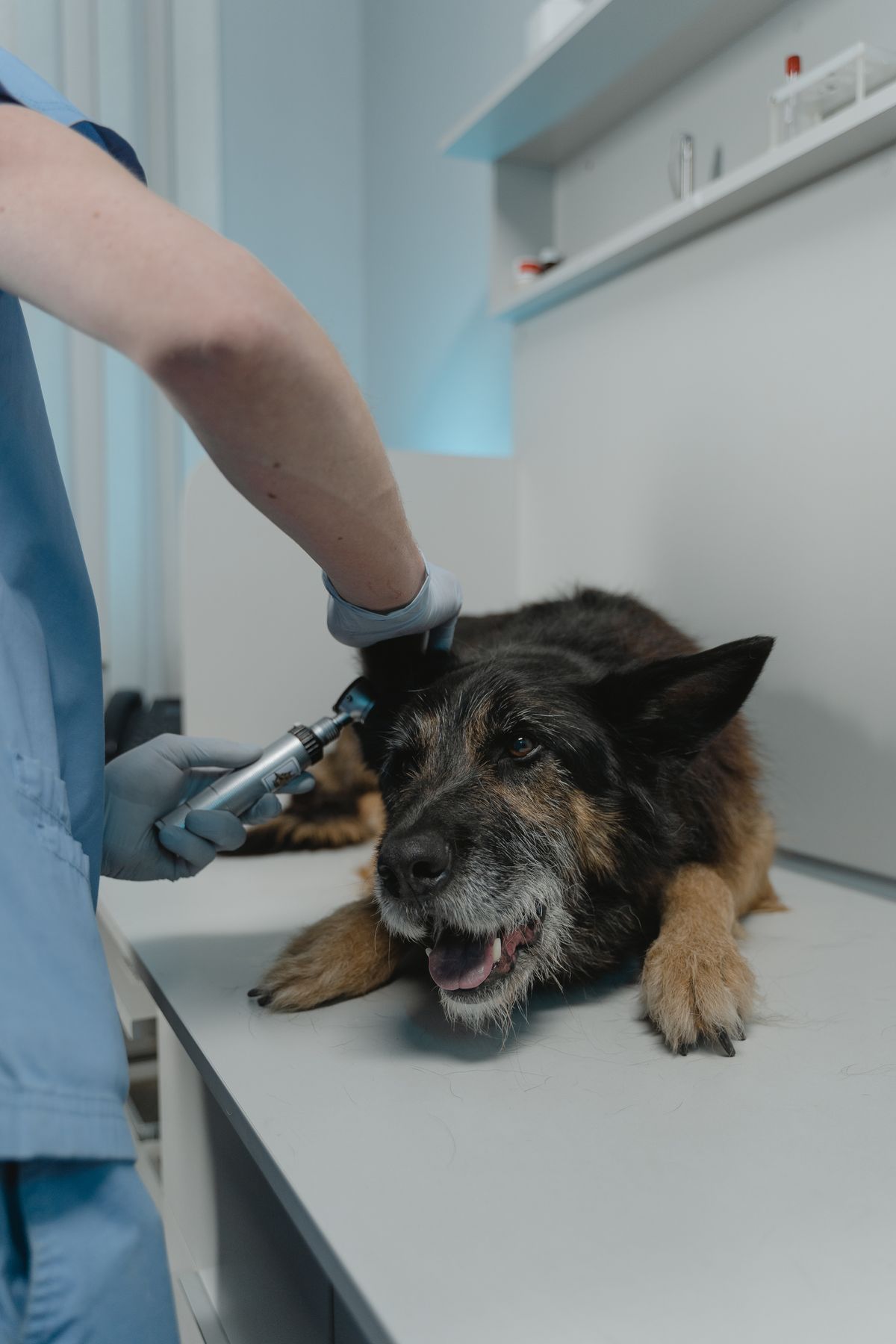
- An otoscope examination: checking the canal and, where possible, the eardrum; pain or swelling may require a staged examination or sedation.
- Cytology: examining an ear sample under a microscope for organisms and inflammation. Samples are ideally collected before cleaning.
- Additional investigation when indicated: culture, assessment of a growth, or imaging if deeper disease is suspected.
These steps reflect VCA’s ear examination guidance and Merck’s guidance on sampling before cleaning and deeper ear disease. Not every dog needs every test.
If the vet says there is no infection
That result is useful. It means the treatment discussion should consider what was actually found, rather than automatically adding an antibiotic. Ask: was there inflammation? Was a sample examined? Could the deeper canal and eardrum be seen? What changes should bring us back sooner?
If the ear findings do not explain ongoing discomfort, your vet may broaden the examination. Mention difficulty chewing, food dropping or pain when opening the mouth; those observations help direct the assessment and are not specific to dental disease. Patify’s guide to dog tartar and dental warning signs covers oral-health concerns to report.
Bring the video and explain whether the symptom has changed since the visit. New balance problems, a persistent tilt or facial changes warrant urgent contact rather than waiting for a routine follow-up.
After treatment: check that the problem has resolved
Follow the prescribed course and attend the recommended recheck. Less shaking alone does not establish that an infection has cleared. Recurrent episodes may need an underlying allergy or another contributing problem addressed. Merck: treatment and follow-up.
Ask for a written ear-care plan: which product, whether cleaning is needed, how often, and what to do after swimming. Avoid adding extra cleaning between appointments unless it is part of that plan.
Frequently asked questions
Can my dog have an ear problem without discharge or a bad smell?
Yes. A clean-looking ear opening does not show the entire canal, and irritation need not produce obvious discharge. Persistent head shaking warrants an examination even if you cannot see dirt or notice an odor. Report pain, scratching, a head tilt or any change in balance.
Why does my dog keep shaking one ear?
One-sided discomfort can occur with a lodged grass seed, localized inflammation, infection or a growth. Sudden onset after a walk is useful information for your vet, but it does not establish the cause. Arrange prompt assessment and do not probe or flush the canal yourself.
Should I clean my dog’s ears if they already look clean?
Not simply because your dog is shaking their head. Unnecessary cleaning can irritate the canal. If the behavior is new or persistent, ask your vet what to do before using a cleaner. Stop a cleaning attempt if it causes pain; do not keep repeating it to make the shaking stop.
My vet found no infection. Why is my dog still shaking their head?
An infection-free ear can still be inflamed or irritated. Contact your vet if the symptom continues and ask what the examination and samples ruled out, whether the deeper canal and eardrum were assessed, and when to recheck. A change to balance, eye movement or facial movement needs urgent reassessment.