
Last updated: September 24, 2026
Quick answer: a good puppy crate schedule is not “crate for X hours, then release.” It is a repeating cycle of potty → food/play/training → potty → short crate or pen rest → potty again as soon as the puppy wakes. Very young puppies may need bathroom opportunities every 1–2 hours while awake, after meals, after drinking, after play and immediately after naps. Overnight, some puppies can go longer because they are sleeping, but many still need one or more quiet potty trips for the first months.
Do not turn the “age in months + 1” rule into a target. AKC publishes it as a rough maximum holding guideline, but puppies often need to go much sooner when awake, active, eating or drinking. Your schedule should aim to prevent accidents, not test the longest your puppy can physically hold urine.
The Puppy Crate-Schedule Principle: Build a Cycle, Not a Countdown
AKC and VCA both emphasize routine, supervision and frequent elimination opportunities during housetraining. The crate works best as one part of that routine—not as the routine itself.
| Step | What happens | Why |
|---|---|---|
| 1. Potty | Take puppy directly to the designated toilet area | Start the cycle with an empty bladder/bowel |
| 2. Awake time | Meal, gentle play, training, socialization, handling | Puppy gets normal life outside the crate |
| 3. Potty again | Go out after eating, drinking, active play or training | Activity often triggers elimination |
| 4. Rest | Short crate or pen nap when puppy is calm/tired | Supports sleep and safe management |
| 5. Wake → potty | Go outside immediately after waking | One of the highest-probability potty moments |
This cycle may repeat many times per day. That is normal. AKC notes that young puppies may need to go outside a dozen times or more in a day, depending on age and routine.
If you are building the entire first-month routine rather than only crate timing, Patify's new puppy first 30 days guide covers settling in, supervision and broader household structure.
When Puppies Usually Need a Potty Break
Schedule toilet trips around events, not only the clock. VCA recommends frequent outings during the night when needed, after meals or large drinks, immediately after naps, very frequently during energetic play, and every 1–2 hours while awake in addition to those event-based trips.
Take your puppy out:
- immediately after waking;
- after eating;
- after a large drink;
- after energetic play;
- after training sessions;
- after chewing or excitement;
- before going into the crate;
- immediately after coming out of the crate;
- before bedtime;
- and any time you see circling, sniffing, wandering away, suddenly disengaging from play or heading toward a previous accident spot.
AKC's potty-training guidance similarly recommends trips first thing in the morning, last thing at night, after naps, crate time, meals, drinking and play.
Useful mental model: every change of activity resets your potty radar. Wake up → outside. Eat → outside. Big play → outside. Come out of crate → outside. Waiting for a fixed two-hour timer after all those events is how preventable accidents happen.
Age-Based Planning Guide: What Changes as Your Puppy Grows?
Age matters because bladder control, sleep pattern and routine tolerance develop over time. But age is only a starting point. Breed/size, water intake, activity, health, previous housetraining and individual development all change the schedule.
| Stage | Daytime planning | Night expectation | Crate focus |
|---|---|---|---|
| 8–10 weeks | Very frequent potty trips; event-based outings plus close supervision | Often needs overnight potty | Positive entry, short naps, door closed briefly |
| 10–12 weeks | Still frequent; do not assume long holding time because accidents improve | May still need overnight outing(s) | Build calm naps and very short absences |
| 3–4 months | Gradually longer intervals may become possible, but play/meals still trigger trips | Some begin sleeping longer; individual variation is large | Increase duration slowly; practice daytime alone skills |
| 4–6 months | More predictable schedule for many puppies | Many can sleep longer, but do not ignore a puppy with genuine toilet needs | Generalize crate use to normal household routine |
| 6+ months | Often more adult-like bladder control, though not identical across dogs | Many sleep through normal household night | Crate becomes a management/rest skill rather than constant housetraining tool |
What about “months of age + 1 hour”?
AKC has published a common rule of thumb that a puppy may be able to hold their bladder roughly their age in months plus one hour, while another AKC housetraining guide gives roughly age-in-months as a general estimate. These are rough capacity guidelines, not guaranteed crate durations. A puppy that just woke up, played hard and drank water may need to eliminate far sooner.
For planning, use the puppy's actual accident-free pattern and the event triggers above. If your puppy repeatedly cannot make the interval you set, shorten the interval rather than treating accidents as disobedience.
Sample Puppy Crate Schedule for 8–12 Weeks
This is a template, not a promise that an 8-week-old puppy can follow exact clock times. Move the schedule earlier or later to fit your household, and add potty breaks whenever the puppy's behavior says they need one.
| Time | Activity | Crate / potty logic |
|---|---|---|
| 6:30 AM | Wake → potty | Outside immediately |
| 6:40 AM | Breakfast + water | Supervised, not crated |
| 6:50–7:10 AM | Potty → gentle play/training | Meal can trigger elimination quickly |
| 7:20 AM | Potty again | Before nap |
| 7:30–9:00 AM | Crate/pen nap | Short rest block; puppy may wake sooner |
| On waking | Potty | Do not wait for scheduled time |
| 9:15–10:00 AM | Play, handling, brief training | Potty again after active period |
| 10:00–11:30 AM | Nap/rest | Crate if puppy is comfortable |
| 11:30 AM | Potty → lunch | Young puppies often have 3 meals/day |
| After lunch | Potty → short activity | Then potty again before next nap |
| Afternoon | Repeat wake–potty–activity–potty–nap cycles | Intervals depend on puppy |
| 5:00–6:00 PM | Dinner window | Potty soon after meal |
| Evening | Play/socialization + naps | Do not keep puppy awake to “make them tired” |
| Before bed | Final calm potty trip | Then settle in crate |
| Overnight | Quiet potty trip if needed | Back to bed; keep it boring |
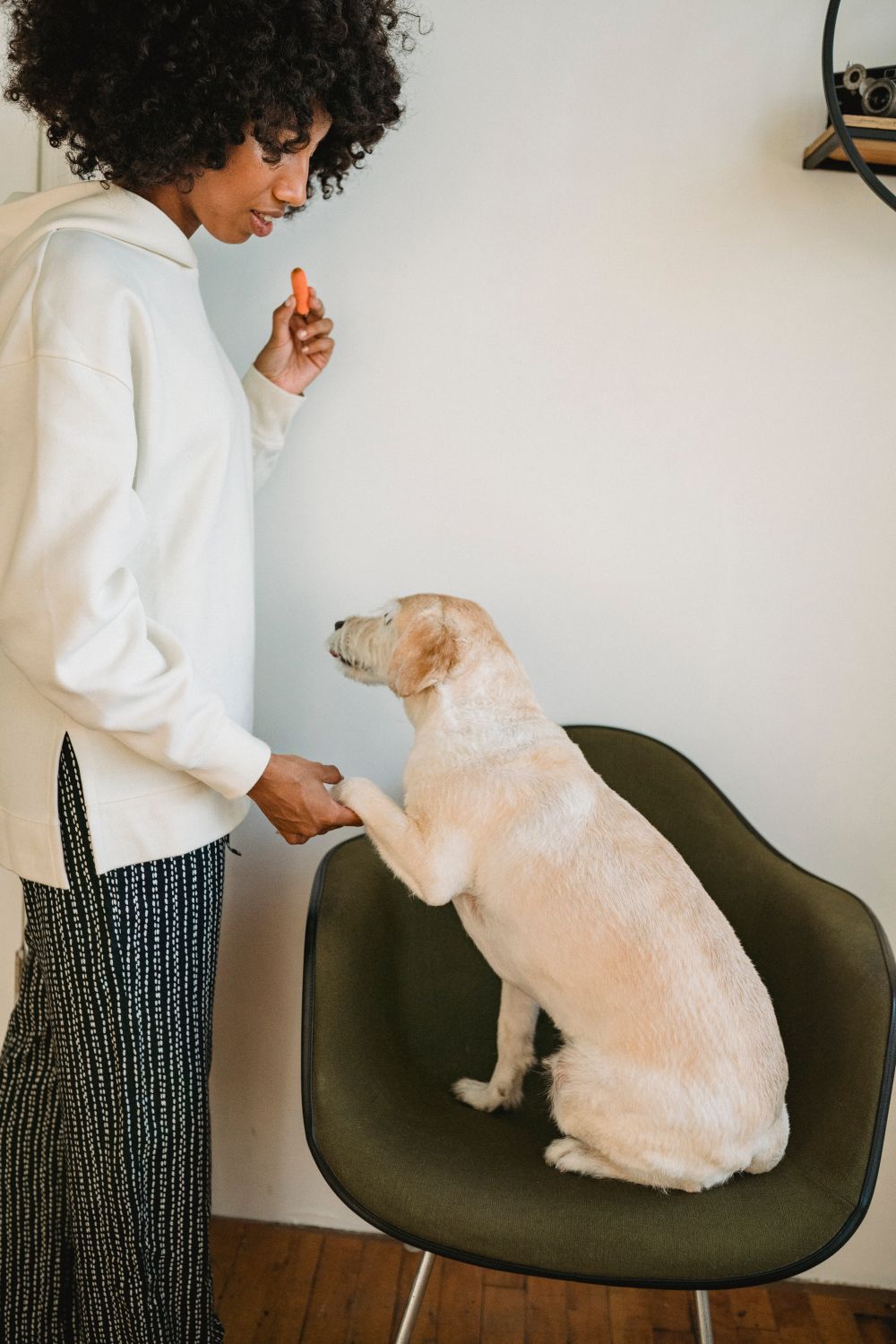
AKC's sample puppy routine follows the same pattern: potty immediately after waking, feed, potty after eating, short play/training periods, then naps; repeat the cycle throughout the day.
Sample Crate Schedule for a 3–6 Month Puppy
As bladder control and routine improve, many owners can stretch some daytime intervals. But you should still preserve the event-based potty rule.
| Block | Example routine |
|---|---|
| Morning | Wake → potty → breakfast → potty → play/training → potty → nap |
| Late morning | Wake → potty → supervised household time → short training → potty |
| Midday | Meal if still on three meals/day → potty → activity → nap |
| Afternoon | Potty → play/walk appropriate for age → training/enrichment → potty → rest |
| Evening | Dinner → potty → family time → short calm crate practice if needed |
| Bedtime | Final potty → crate near sleeping area if helpful → overnight outing only if needed |
Do not remove naps just because the puppy appears more energetic. Puppies can become overtired and more mouthy, frantic or difficult to settle. AKC notes that puppies need substantial sleep and recommends a routine that includes repeated naps during the day.
Nighttime Puppy Crate Schedule
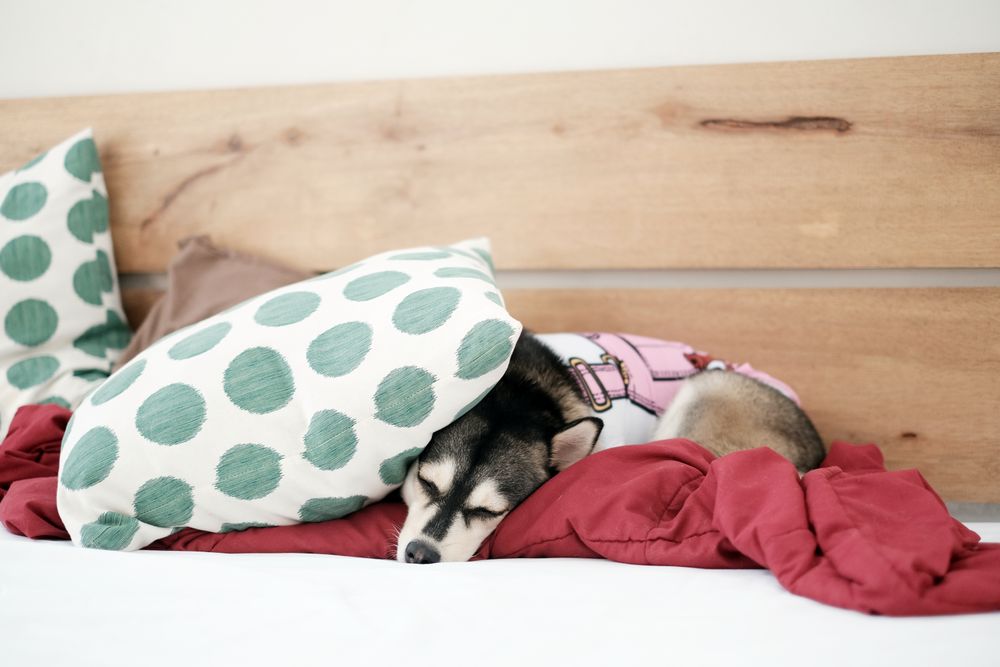
VCA notes that puppies may need overnight toilet trips until around five months of age, though individual development varies. AKC similarly advises keeping the crate in or near the bedroom at first so you can hear when a puppy wakes and needs to go out.
A simple night routine
- Keep the final hour relatively calm.
- Give the puppy a last potty opportunity immediately before bed.
- Settle the puppy in the crate close enough that you can monitor them.
- If your puppy predictably wakes to potty, consider setting an alarm slightly before that time.
- Carry or calmly escort the puppy directly outside.
- Keep lights, talking and play minimal.
- Reward elimination quietly.
- Return directly to the crate and sleep.
The goal is to teach that nighttime waking is for a bathroom trip, not a 2:00 AM play session.
Should you ignore nighttime whining?
Not automatically. A puppy may vocalize because they are lonely, frustrated, overtired or genuinely need to eliminate. Use timing and context. If they have been asleep for a meaningful stretch and wake suddenly, a quick boring potty trip is often safer than gambling on an accident.
Meals, Water and Crate Timing
Regular meals help make elimination more predictable. AKC's routine guidance says most young puppies commonly eat three meals per day, though your veterinarian or breeder may recommend a different feeding schedule for the individual puppy.
After meals
AKC recommends taking puppies out soon after eating—especially very young puppies. One potty-training timeline notes that the younger the puppy, the sooner they should go out after a meal, often within minutes.
Water
Fresh water should be available appropriately throughout the day. Do not create dehydration as a housetraining technique. Instead, learn your puppy's pattern and take them out after substantial drinking.
If a puppy is drinking far more than expected, urinating extremely frequently, straining, having repeated accidents despite a very frequent schedule or showing illness, contact your veterinarian rather than simply restricting water or increasing crate time.
Naps: The Part of the Crate Schedule Owners Often Miss
Puppy schedules frequently fail because owners plan potty and meals but not sleep. AKC notes puppies may nap for 30 minutes to two hours and need a routine that alternates activity with rest.
A common pattern is:
- puppy wakes;
- goes potty;
- has 30–60 minutes of age-appropriate interaction;
- goes potty again;
- takes a nap;
- goes potty immediately upon waking.
The exact awake window varies. Watch the puppy. Zooming, biting harder, inability to focus, frantic play and repeated “bad” behavior late in an activity period may reflect overtiredness rather than a puppy that needs more exercise.
For safe mental activity during awake periods, Patify's dog enrichment ideas guide includes low-space scent, food and training activities. Keep puppy versions easy and physically appropriate.
Using the Crate When You Leave the House
Crate training and being alone are related but separate skills. A puppy who naps happily in a crate while you work nearby is not automatically ready to be crated for hours after you leave.
VCA recommends gradually increasing crate duration and notes that very short periods alone are more realistic for young puppies. AKC's routine guidance says that if a puppy will be alone longer than they can control bladder or bowels, owners need another setup—such as a pen with an appropriate toilet area—or a caregiver who can provide a break.
Do not solve an eight-hour workday by choosing a larger crate. Very young puppies need potty breaks, movement, social contact and normal care. Arrange a family member, sitter, walker, neighbor or larger puppy-safe area when your absence exceeds the puppy's current capacity.
Build departures in tiny steps
Practice 5 seconds out of sight, then 20 seconds, then 1 minute, then a short trip outside the door—only while the puppy remains comfortable. If confinement causes escalating panic, do not keep extending the timer.
For the detailed mechanics of voluntary entry, door movement and gradual duration, see Patify's step-by-step crate training guide. The learning principles apply across ages; the schedule on this page is puppy-specific.
What to Do if Your Puppy Pees or Poops in the Crate
One accident is information, not a training failure.
- Take the puppy outside calmly.
- Clean the crate thoroughly with an appropriate pet-safe odor-removing cleaner.
- Wash or replace soiled bedding.
- Shorten the next interval.
- Review whether the puppy went out immediately before crating.
- Check whether the crate is excessively large for housetraining purposes.
- Look for patterns around meals, water, naps and play.
AKC advises handling accidents without punishment. Punishing a puppy after elimination does not teach the desired toilet location and can add anxiety.
When accidents deserve a veterinary check
Contact your veterinarian if accidents are very frequent despite an appropriate schedule, begin suddenly after progress, involve straining, blood, diarrhea, excessive thirst/urination, discomfort or other illness signs.
Normal Puppy Protest vs. Crate Distress
A puppy can briefly complain because they would rather be with you. But not every vocalization should be labeled “attention seeking.”
| Milder protest | More concerning distress |
|---|---|
| Brief whining that decreases | Persistent or escalating howling/barking |
| Can take food | Refuses high-value food they normally eat |
| Changes position and settles | Frantic escape attempts |
| Normal breathing | Heavy panting without heat/exercise |
| Occasional pawing | Repeated biting/clawing at crate, injury risk |
| Can relax after a short period | Excessive drooling/salivation and no recovery |
ASPCA warns that crates can increase anxiety in some dogs and lists heavy panting, excessive salivation, frantic escape attempts and persistent howling or barking as distress signs. If those appear, reduce difficulty and reassess the setup rather than assuming the puppy needs more exposure.
A 14-Day Puppy Crate Schedule Progress Tracker
This is a skills tracker, not a promise that every puppy should reach the final step in 14 days.
| Days | Training focus | Progress marker |
|---|---|---|
| 1–2 | Open crate, meals/treats near and inside | Puppy enters willingly |
| 3–4 | Short nap after potty and activity | Puppy can settle with you nearby |
| 5–6 | Door closed for short calm intervals | No escalating distress |
| 7–8 | You move around room | Puppy stays settled rather than tracking every step |
| 9–10 | Seconds out of sight | Puppy remains calm through brief absence |
| 11–12 | Very short departures | Camera shows recovery/settling |
| 13–14 | Review schedule and potty data | Fewer accidents, predictable naps, better settling |
If your puppy is not ready for a step, repeat the easier level. Age, temperament and previous experience matter more than keeping up with a chart.
Common Puppy Crate-Schedule Mistakes
- Using bladder capacity as the crate schedule. A maximum is not the ideal interval.
- Waiting for the clock after a trigger event. Wake, eat, drink and play should often trigger a potty trip now.
- Keeping the puppy awake so they sleep longer at night. Overtired puppies can become harder to settle.
- Using the crate only when leaving. Include calm naps while you are home.
- Letting every potty trip become playtime. Night outings should be quiet and functional.
- Punishing crate accidents. Adjust the schedule instead.
- Extending daytime crate time because nights improve. Sleeping physiology and awake bladder demands differ.
- Assuming crying always means manipulation. Check toilet needs and distress level.
- Expecting an 8–10 week puppy to fit an adult work schedule. Arrange help or a larger safe setup.
- Changing meals, naps and potty times every day. Predictability helps you see patterns and prevents accidents.
Short training during awake periods can make the whole routine smoother. Patify's basic commands guide provides simple reward-based skills to practice between potty breaks and naps.
Frequently Asked Questions
How long can an 8-week-old puppy stay in a crate?
There is no guaranteed safe number for every puppy. Very young puppies need frequent potty breaks and may need to go every 1–2 hours while awake, plus after waking, eating, drinking and play. Use a short schedule and your puppy's actual pattern rather than testing a maximum.
Should a puppy be crated after every play session?
Not automatically, but many puppies benefit from a rest period after potty, play and training. The important sequence is to offer another potty trip before the nap and immediately after waking.
Should I wake my puppy to pee at night?
If your puppy reliably needs an overnight trip, setting an alarm slightly before their usual wake-up can prevent accidents. As they mature and remain dry, you can gradually move the trip later and eventually remove it.
Can a puppy sleep in a crate all night?
Some puppies can as they mature, but many young puppies need one or more overnight potty breaks. Sleeping puppies may hold urine longer than awake puppies, but individual development varies.
How soon after eating should a puppy go outside?
AKC recommends taking young puppies out soon after meals, sometimes within minutes. The younger the puppy, the sooner the post-meal potty opportunity should generally be offered.
Do I remove water before bedtime?
Do not use dehydration as a housetraining strategy. Keep water appropriately available and learn your puppy's pattern. Ask your veterinarian about any special water-management need rather than imposing severe restriction.
What if my puppy cries every time the crate door closes?
Go back to open-door entry and very short door movement. If crying escalates into panting, drooling, frantic escape attempts or persistent panic, stop increasing duration and reassess with a qualified professional.
When can I stop using a crate schedule?
Gradually, when your puppy is reliably housetrained, can settle safely outside the crate, is no longer destructive when unsupervised for appropriate periods, and your household no longer needs the crate for routine management. Keep the crate skill itself positive because it can still be useful for travel or veterinary care.
Bottom Line: Schedule the Puppy, Not Just the Crate
The strongest puppy crate routine has five moving parts:
- frequent potty opportunities;
- short, age-appropriate awake periods;
- regular meals and predictable water access;
- repeated naps and overnight sleep;
- gradual crate and alone-time training.
If you remember only one sequence, use this:
Wake → potty → activity → potty → nap → wake → potty.
That cycle prevents more accidents than trying to calculate the maximum number of hours your puppy can endure in a crate.