
Last verified: October 1, 2026
Bikejoring for Beginners: Build the Dog, Cues and Equipment Before Speed
Quick answer: bikejoring is dog-powered cycling where a dog runs in front of a bicycle and pulls through a purpose-built pulling harness and shock-absorbing line. A safe beginner setup needs a healthy adult dog suited to sustained running, a pulling harness, bungee tugline, line guide/bike antenna, reliable mountain-style bicycle with two working brakes, and a helmet.
Do not start by attaching a dog and riding fast. The useful progression is health/fitness check → harness comfort → pulling cue on foot → directional/slow/stop cues → walk the bike → very short low-speed trail sessions → gradual conditioning.
Patify bikejoring rule: speed is the last variable you add. If your dog cannot comfortably pull straight, respond to pace/turn cues and ignore trail distractions at walking/jogging speed, the team is not ready to go faster.
What Is Bikejoring?
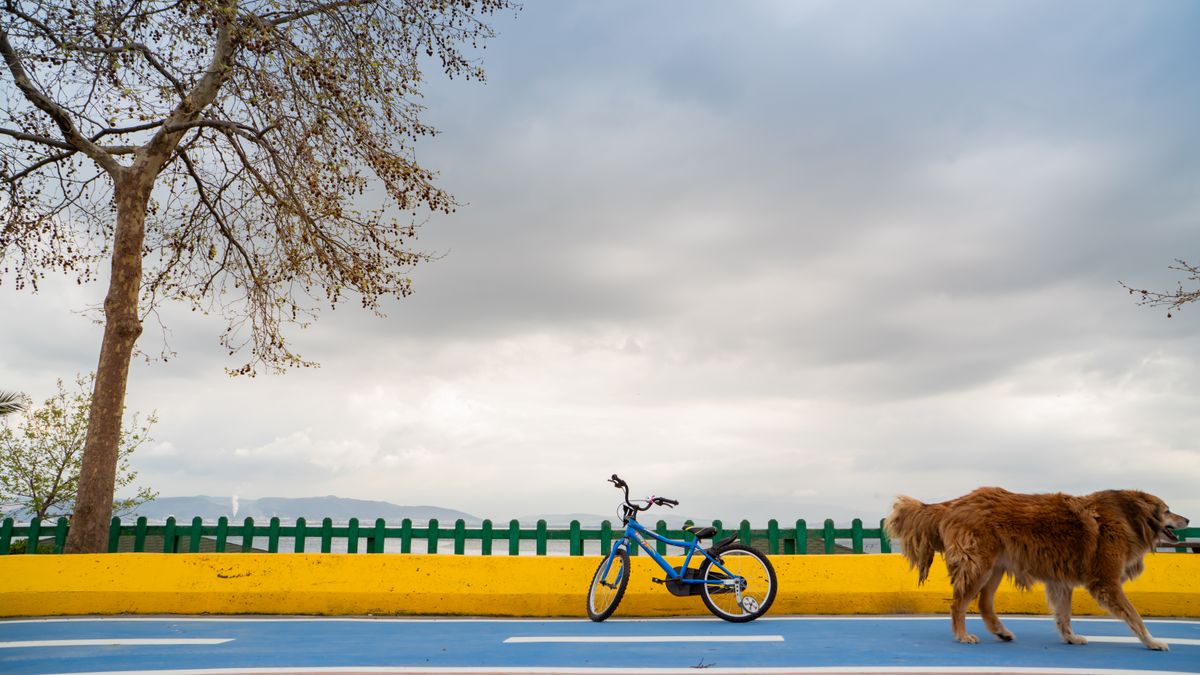
Bikejoring grew from sled-dog dryland training. The dog runs ahead and contributes pulling force while the human rides and pedals. AKC describes competitive teams as one rider with one or two dogs, typically on soft off-road trails.
This is different from a dog simply trotting beside a bicycle. Bikejoring intentionally allows forward pulling through specialized equipment.
Is Your Dog Ready for Bikejoring?
| Check | Ready direction | Pause / get advice |
|---|---|---|
| Age | Skeletally mature adult | Growing puppy/adolescent before strenuous running is appropriate |
| Mobility | Normal gait, comfortable running | Limping, stiffness, recurrent soreness |
| Breathing | Can exercise comfortably | Marked airway limitation or poor heat tolerance |
| Fitness | Already conditioned through walking/running | Sedentary dog starting with sprint pulling |
| Behavior | Can pass dogs/people and respond to cues | Severe reactivity, panic around bikes or unpredictable stopping |
| Motivation | Enjoys running/pulling forward | Must be dragged, pressured or repeatedly coaxed |
AKC recommends a veterinary health check before starting and says fast bikejoring is not appropriate for puppies, dogs with mobility problems or dogs poorly suited to the physical workload. VCA likewise recommends veterinary guidance before sustained running, especially because skeletal maturity varies by size.
Bikejoring Equipment Checklist
- purpose-built pulling harness that permits shoulder movement and distributes traction across the body;
- elastic/bungee tugline to reduce shock loading;
- bike antenna / line guide that helps keep the line away from the front wheel;
- reliable bicycle appropriate to the trail, with strong working brakes;
- certified cycling helmet for the rider;
- gloves, eye protection and other normal cycling protection;
- water for dog and rider;
- paw-check/first-aid basics appropriate to your route;
- ID and emergency contact plan.
AKC specifically warns against attaching a bikejoring line to the dog’s collar because pulling pressure would be concentrated on the throat.
Pulling Harness vs Ordinary Walking Harness
An everyday harness may be excellent for neighborhood leash walks and still be inappropriate for sustained pulling. Bikejoring harnesses are designed so traction is distributed along the dog’s body while the shoulders can extend freely.
Non-stop Dogwear recommends a pulling harness with a Y-shaped front and rear attachment point for bikejoring. Brand geometry varies, so fit should follow the manufacturer’s measurement instructions and be checked while the dog is actually pulling.
Patify’s general dog-harness fit guide explains girth, rubbing, movement and escape checks, but bikejoring still requires a sport-specific pulling design rather than simply reusing any back-clip walking harness.
Bungee Line and Bike Antenna: Why Both Matter
The bungee section absorbs abrupt changes in tension when the dog accelerates or the bicycle slows. The front line guide/antenna helps hold the line away from the spinning front wheel.
For competition, IFSS’s published bikejoring rules require a shock-absorbing tugline and specify an expanded length of 2–3 meters (6.6–9.8 ft) measured from the rear of the dog to the bike’s front axle. Recreational equipment does not have to copy a race setup blindly, but the rule shows why an ultra-short rigid leash is not the standard design.
The Bike Has to Be Ready Too
AKC recommends a solid bike with reliable brakes. IFSS competition rules require working brakes on both wheels and an approved helmet.
Before every session
- squeeze both brakes;
- check tire pressure and damage;
- verify front wheel/axle security;
- check that the antenna cannot interfere with braking/steering;
- inspect tugline and carabiner/connector for abrasion;
- confirm harness fit;
- wear a helmet.
Six Bikejoring Cues to Teach Before Speed
You can use traditional mushing words or ordinary English. Consistency matters more than vocabulary.
| Function | Common cue examples | Teach first without speed |
|---|---|---|
| Start / pull | Hike, go | Reward forward tension in harness |
| Right | Gee, right | Walking turns |
| Left | Haw, left | Walking turns |
| Straight / ignore distraction | On-by, straight | Pass a low-level distraction |
| Slow | Easy | Reduce pace while staying forward |
| Stop | Whoa, stop | Stationary halt before adding the bike |
AKC specifically emphasizes pace and directional control. A dog that only understands “run!” is not ready for a fast shared trail.
Six-Stage Beginner Bikejoring Progression
- Harness = good things. Let the dog willingly put on the pulling harness and move comfortably.
- Teach forward pull on foot. Use canicross-style walking/jogging or a helper ahead; reward steady forward tension.
- Teach directional, slow and stop cues on foot.
- Walk the bicycle. Dog ahead, rider on foot beside the bike; practice starts/stops and line position.
- Ride at walking/jogging speed on a wide empty trail. Keep sessions very short.
- Add distance before speed. Build conditioning gradually, then add modest pace only when cues stay reliable.
AKC notes that another experienced team or runner ahead can help dogs understand the forward-running job, but the dog should never be dragged or forced. IFSS race rules explicitly prohibit pulling/forcing a dog forward.
Choose the First Bikejoring Trail for Error Margin
For a beginner session, look for:
- wide soft dirt rather than narrow technical singletrack;
- minimal rocks, roots and sharp turns;
- little vehicle traffic;
- low pedestrian/dog density;
- good visibility around corners;
- legal dog/bike access;
- an easy turnaround point;
- cool conditions and shade where possible.
AKC describes competition courses as relatively flat, soft off-road trails free from problematic obstacles. That is also a sensible beginner bias.
Heat, Paws and Hydration Can End the Session Before Fitness Does
Bikejoring combines running, pulling and excitement, so heat load can rise quickly. VCA warns that dogs overheat more easily than humans and recommends avoiding hot conditions, protecting paws and building running conditioning gradually.
- prefer cool mornings/evenings;
- avoid hot pavement and exposed surfaces;
- bring water and offer sensible breaks;
- check paws after rough trail sections;
- watch breathing and coordination rather than chasing a planned mileage target.
Excessive/frantic panting, weakness, vomiting, diarrhea, confusion, poor coordination or collapse are not “lack of drive.” Stop and seek veterinary help for suspected heat illness.
Stop the Session When the Dog Says the Plan Is Wrong
Stop immediately for:
- new limp or repeated skipping gait;
- torn/bleeding paw pad;
- dog repeatedly trying to stop or turn back;
- abnormal breathing or heat-stress signs;
- harness chafing;
- loss of coordination;
- equipment failure;
- dog becoming too reactive or frightened to respond safely.
If a new limp persists after rest or the dog cannot bear weight normally, use Patify’s dog-limping triage guide and arrange veterinary assessment as appropriate.
IFSS Rules Are a Useful Reference—Even if You Never Race
The currently published IFSS bikejoring rules hosted by USFSS require a harness, shock-absorbing line, 2–3 m expanded tugline, two working bike brakes and a helmet. They also prohibit forcing a dog forward.
Race rules can change, so check the current organizer/federation document before entering an event. Recreational trail rules, land-manager leash rules and local cycling regulations can also differ.
14 Bikejoring Beginner Mistakes
- Starting with a puppy because it has lots of energy.
- Using a collar as the pulling attachment.
- Using an ordinary short rigid leash near the front wheel.
- Skipping the bike antenna/line-management problem.
- Buying by breed name instead of fitting the actual dog.
- Teaching turns for the first time at speed.
- Practicing “stop” only after the dog is sprinting.
- Starting on technical singletrack.
- Increasing speed and distance in the same session.
- Riding in heat because the dog still looks excited.
- Ignoring paw condition.
- Forcing a dog that stops pulling.
- Using bikejoring to “fix” leash reactivity.
- Assuming expensive gear can replace training and conditioning.
Patify Active-Dog Safety Cluster
- Before buying sport gear, check general fit/movement principles in How to Put on a Dog Harness; then use a bikejoring-specific pulling harness.
- If exercise triggers a new gait change, use Dog Limping but Not Crying? for rest-vs-vet red flags.
Frequently Asked Questions About Bikejoring
What is bikejoring?
A dog-powered cycling sport where one or more dogs run in front of a bicycle and pull through a harness and shock-absorbing line.
What equipment do I need?
A pulling harness, bungee tugline, line guide/bike antenna, safe bicycle with reliable brakes, helmet and normal trail/water safety gear.
Can I bikejor with a regular dog harness?
A normal walking harness may not distribute sustained pulling force appropriately. Use a harness designed for pulling sports and fit it to the dog.
Can I attach the line to a collar?
No. AKC specifically advises against attaching the bikejoring line to the collar because of throat pressure.
How long should a bikejoring line be?
IFSS competition rules use 2–3 meters when expanded, measured from the rear of the dog to the front axle; recreational gear should follow its manufacturer and safe wheel-clearance design.
Can puppies do bikejoring?
Fast pulling/running is not appropriate for growing puppies. Ask your veterinarian when strenuous repetitive running is appropriate for your individual dog.
What dogs can bikejor?
Healthy adult dogs that enjoy running/pulling, have suitable physical structure and can respond reliably to cues. It is not limited to Huskies.
What commands do bikejoring dogs need?
At minimum: start, left, right, straight/pass, slow and stop.
Should beginners start on pavement?
Soft, wide off-road trails generally offer better impact and safety margins than hot/hard pavement or technical singletrack.
How far should a first session be?
There is no universal mileage. Keep it very short and low-speed, then build conditioning gradually based on the dog’s recovery and veterinary guidance.
Can reactive dogs bikejor?
High-speed trail passing magnifies reactivity risk. Work on control and behavior at low speed first; severe reactivity is a reason to pause and seek qualified training help.
Is bikejoring safe in summer?
Heat and humidity can make intense running unsafe even when a dog is motivated. Favor cool conditions and stop for heat-stress signs.
Sources Checked for This Guide
- American Kennel Club — Bikejoring: Is This Sport Right for You and Your Dog?
- USFSS — IFSS Rules & Forms
- IFSS Race Rules hosted by USFSS: competition harness, tugline, brakes and helmet reference.
- VCA — Running With Your Dog: veterinary readiness, gradual conditioning, heat and paw safety.
- Non-stop Dogwear — Bikejoring Equipment Guide: commercial but sport-specific harness/line/antenna design context.
- Pexels — dog and bicycle image
- Pexels License
Editorial note: race-rule measurements are labeled as competition references rather than universal recreational law; the guide prioritizes adult-dog readiness, sport-specific pulling equipment, cue control and gradual conditioning before speed. Sources were reviewed October 1, 2026.