

Last verified: October 2, 2026
Green-Cheek Conure Colors: Mutation Names Without the Genetic Guessing
Quick answer: the core captive vocabulary includes normal/wild-type, cinnamon, yellow-sided, pineapple, turquoise and combinations such as turquoise cinnamon, turquoise yellow-sided and turquoise pineapple. Breeder communities also use names such as American dilute, mint, suncheek and mooncheek. But trade names are not all equivalent to molecularly mapped genetic tests.
Patify mutation rule: separate what the bird looks like → what breeders call the phenotype → the inheritance pattern supported by breeding records → what DNA science has actually identified. A photo can do the first two reasonably well; it often cannot prove the last two.
Start With Wild-Type Pyrrhura molinae
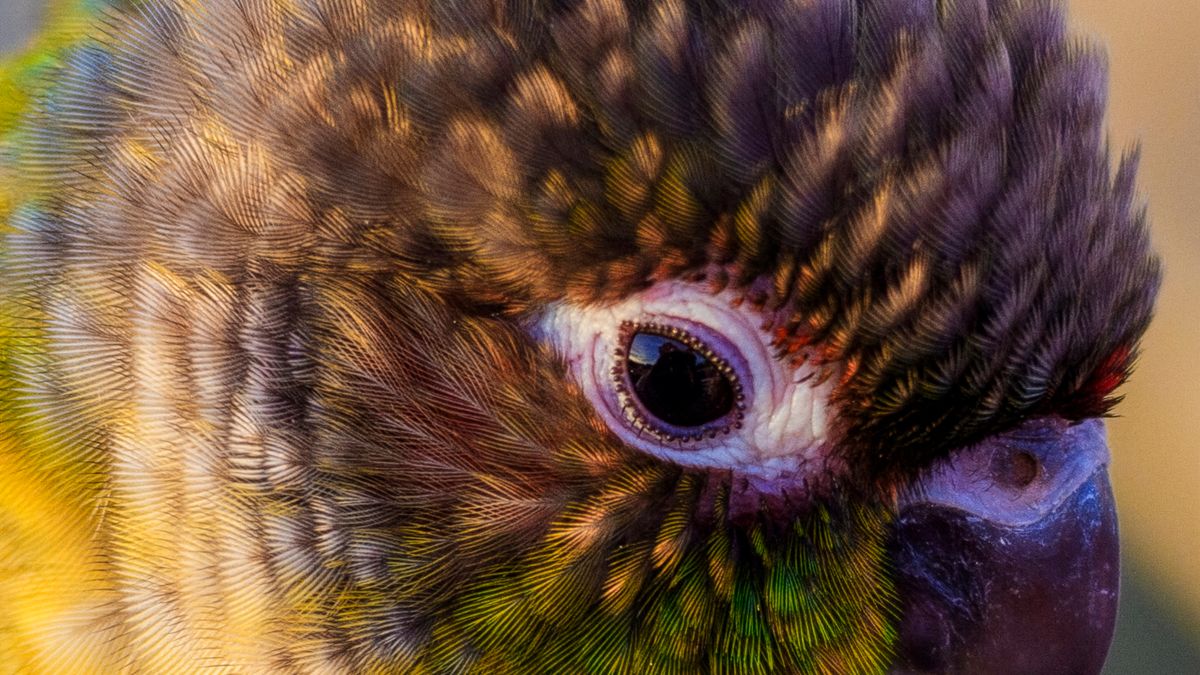
World Parrot Trust describes the nominate adult Green-Cheeked Conure as having a brown crown/nape with green tint, bright green cheeks, a pale barred breast, a brown-red abdominal patch, some blue around the hindneck and a brown-red tail. It also lists six recognized subspecies, whose natural plumage is not identical.
That matters because “normal” is not one perfectly uniform paint swatch. Subspecies, age, molt, lighting and captive selection can all shift appearance before a named mutation is even considered.
Nomenclature trap: World Parrot Trust also uses “Yellow-sided Conure (yellow morph)” in the natural-history context and lists P. m. hypoxantha among subspecies. Aviculture also uses “yellow-sided” for a captive color mutation/phenotype. Do not assume a breeder’s mutation label and a taxonomic subspecies/morph label are interchangeable.
Green-Cheek Conure Color Mutation Chart
| Name | What changes visually | Breeder-genetics shorthand | What a photo cannot prove |
|---|---|---|---|
| Normal / wild-type | Green back/cheeks, darker crown, barred breast, red-brown belly/tail | Reference phenotype | Hidden recessive/sex-linked carrier status |
| Cinnamon | Dark melanin areas become warmer/lighter brown; lighter head/beak/feet impression | Long treated as sex-linked in breeder records | Exact genotype from appearance alone |
| Yellow-sided | More yellow on sides/breast with stronger warm red/orange ventral color | Long treated as sex-linked in breeder records | Whether a visually normal bird carries it |
| Pineapple | Cinnamon-like lightening plus yellow-sided warm ventral color | Cinnamon + yellow-sided combination | Hidden additional mutations |
| Turquoise | Reduced warm psittacofulvin expression; cooler blue-green/teal overall look | Breeder records treat as recessive | Carrier status in normal-looking birds |
| Turquoise cinnamon | Cool turquoise base plus cinnamon lightening | Combination phenotype | Pedigree purity |
| Turquoise yellow-sided | Turquoise base plus yellow-sided distribution changes | Combination phenotype | Hidden cinnamon/dilute genes |
| Turquoise pineapple | Turquoise + cinnamon + yellow-sided visual stack | Three-trait combination | Carrier state beyond visible traits |
| American dilute | Strong overall melanin reduction with dark eyes/feet/beak retained more than cinnamon | Breeder sources treat as recessive | Whether similar pale bird is another mutation |
| Mint | Very pastel turquoise-dilute look | Turquoise + dilute | Hidden sex-linked traits |
| Suncheek | Very light warm yellow/red appearance | Dilute + cinnamon + yellow-sided | Pedigree/genotype from color only |
| Mooncheek | Very pale cool turquoise-based combination | Turquoise + dilute + cinnamon + yellow-sided | Exact genetic stack without records |
Rare mutation vocabulary is not perfectly standardized worldwide. For purchasing or breeding, ask the breeder to state the underlying traits and parentage rather than relying only on a marketing name.
Cinnamon: Lighter Melanin, Not “Faded Green”
Cinnamon is typically described by breeders as replacing the near-black/dark melanin impression with a warmer brown tone, producing a lighter head and softer overall contrast. Long-running Green-Cheek breeding records describe cinnamon as sex-linked.
A broader 2025 parrot-plumage genetics study found TYRP1 variants associated with a cinnamon phenotype in a different parrot species, the rose-ringed parakeet. That is biologically informative, but it does not justify claiming that every Green-Cheek cinnamon has the same mapped causal variant. Species-specific validation still matters.
Yellow-Sided: More Warm Color on the Breast and Flanks
Captive yellow-sided Green-Cheeks show increased yellow along the sides/underwing region and enhanced red/orange on the abdomen compared with normal green birds. Historic breeder records also treat this trait as sex-linked.
Because natural P. molinae subspecies already vary in yellow and red distribution, a single low-quality photo can confuse subspecies-like appearance, captive mutation and hybrid/unknown ancestry. If pedigree matters, phenotype is not enough.
Pineapple = Cinnamon + Yellow-Sided
“Pineapple” is a combination label rather than an independent single-trait color. Experienced Green-Cheek breeders describe it as the visual combination of cinnamon and yellow-sided: the cinnamon component lightens the dark markings while yellow-sided intensifies yellow/red ventral coloration.
This is an excellent example of why mutation lists balloon. A new visual name can represent multiple inherited traits stacked in one bird, not a new species or necessarily a newly discovered gene.
Turquoise and the Cool-Color Combinations
Breeder literature describes turquoise as a recessive mutation producing a cooler sea-green/blue-green phenotype through reduced warm pigment expression. In the wider parrot-genetics literature, “turquoise” phenotypes are known in several species, but the exact molecular basis is not automatically the same across all parrots.
When turquoise is combined with other established Green-Cheek mutations, the names usually remain compositional:
- turquoise cinnamon = turquoise + cinnamon;
- turquoise yellow-sided = turquoise + yellow-sided;
- turquoise pineapple = turquoise + cinnamon + yellow-sided.
That compositional naming is more informative than vague labels such as “blue pineapple” unless the breeder defines exactly what they mean.
American Dilute, Mint, Suncheek and Mooncheek
These names come primarily from aviculture rather than a single formal breed registry:
- American dilute: strong reduction of dark pigment while retaining dark eyes and darker beak/feet relative to cinnamon in many breeder descriptions.
- Mint: turquoise + dilute.
- Suncheek: dilute + yellow-sided + cinnamon.
- Mooncheek: turquoise + dilute + yellow-sided + cinnamon.
The practical buyer lesson is not to memorize every rare label. Ask for the explicit mutation stack, sex, parents, known splits and whether the terminology follows a particular breeder organization or line.
What Is Actually Proven Genetically?
Parrot color genetics is moving quickly, but the evidence is uneven.
| Evidence level | What it means for Green-Cheek colors |
|---|---|
| Natural-history phenotype | World Parrot Trust provides species/subspecies descriptions for wild Pyrrhura molinae. |
| Repeated breeder inheritance | Cinnamon/yellow-sided sex-linked and turquoise/dilute recessive patterns are supported mainly by long-running breeding records. |
| Combination logic | Pineapple, mint, suncheek and mooncheek names describe multiple visible mutation traits together. |
| Molecular evidence | A 2025 study identified a TYR variant for a non-sex-linked recessive lutino phenotype in Green-Cheeked Parakeets, showing that molecular work is expanding but still does not map every hobby color name. |
Birds use a ZW sex-chromosome system: males are ZZ and females are ZW. That is why “sex-linked” parrot color inheritance should be discussed in Z-linked terms, even though some older breeder charts use mammal-style X/Y shorthand.
Do not infer hidden “split” status from a photo. Recessive carriers and some sex-linked carrier states can look normal. Use pedigree, known parentage and validated testing where it actually exists.
How to Identify a Green-Cheek Color From a Photo
- Confirm species first. Do not confuse another Pyrrhura species or hybrid with a Green-Cheek mutation.
- Use a normal/wild-type reference. Compare crown, cheeks, breast barring, belly patch, wing color, tail, beak and feet.
- Ask whether dark melanin is reduced. Cinnamon/dilute families change the dark components differently.
- Map yellow/red distribution. Yellow-sided/pineapple families shift warm ventral color.
- Ask whether the entire bird has moved toward cooler turquoise/teal.
- Do not use saturation-heavy breeder photos. Lighting can make green look turquoise and red look deeper than it is.
- Stop at phenotype unless records exist. A bird can look “normal” while carrying recessive traits.
Related Patify Bird Guides
- First confirm that the bird is actually a Green-Cheeked Conure with Patify’s conure species comparison.
- For another example of mutation terminology vs genotype, see cockatiel colors and mutations.
Frequently Asked Questions About Green-Cheek Conure Colors
What is the normal Green-Cheek Conure color?
Wild-type birds are predominantly green with a darker brownish crown, green cheeks, barred breast, red-brown belly patch and reddish tail, with subspecies variation.
What is a pineapple Green-Cheek Conure?
Pineapple is the visual combination of cinnamon and yellow-sided traits, not a separate species.
What is a turquoise Green-Cheek Conure?
A captive mutation phenotype with reduced warm pigment expression, creating a cooler sea-green/blue-green appearance. Breeder records generally treat it as recessive.
Is yellow-sided the same as pineapple?
No. Pineapple combines yellow-sided with cinnamon.
What is a mint Green-Cheek?
Breeder terminology generally uses mint for the combination of turquoise and American dilute.
What is a suncheek?
A breeder combination name for dilute + cinnamon + yellow-sided.
What is a mooncheek?
A breeder combination name adding turquoise to the dilute + cinnamon + yellow-sided stack.
Can I tell what mutations my conure carries from a photo?
No. A photo can help identify visible phenotype but cannot reliably reveal hidden recessive or sex-linked carrier states.
Do different color mutations have different personalities?
There is no sound basis for choosing temperament by color name alone. Individual behavior, early experience, health and handling are much more useful.
Sources Checked
- World Parrot Trust — Green-cheeked Conure
- 2025 parrot plumage genetics study — TYR/TYRP1 mechanisms
- Genes — limitations of genetic testing in pet parrots
- Pyrrhuras.net — historical Green-Cheek breeding records for cinnamon/yellow-sided/turquoise
- Pyrrhuras.net — pineapple and turquoise combinations
- The Feather Tree — breeder mutation combinations and inheritance tables
Sources reviewed October 2, 2026. Breeder sources are used for avicultural mutation nomenclature and historical mating records, not presented as peer-reviewed molecular proof.