
Last updated: September 25, 2026
Material Lab: Choose Bedding by Moisture, Dust, Cleaning and Cost
Quick answer: there is no magic guinea pig bedding that is cheapest, cleanest and lowest-effort at the same time. In a real home, the choice is mostly about which chore you would rather keep up with. Recycled paper bedding is straightforward: scoop wet areas, replace what is dirty, and buy another bag when it runs out. A proper fleece + absorbent-layer system trades those bags for daily sweeping and laundry. Both have strong support in current veterinary guidance. Aspen sits in a genuine gray area: UC Davis emergency-care guidance permits it, while Merck and VCA take a more conservative position on wood shavings. Cedar, raw/aromatic pine, sawdust, dusty bedding and heavily scented/deodorized products are poor default choices.
Forget the prettiest package. Good bedding keeps the walking surface dry, keeps dust low, and can be cleaned often enough that urine never gets the chance to turn the cage into an ammonia problem.
Fleece vs Paper vs Aspen: The Practical Scoreboard
| Material | Dust | Moisture handling | Cleaning workload | Ongoing cost pattern | Source consensus |
|---|---|---|---|---|---|
| Recycled paper | Low when dust-extracted | Good absorbency; wet sections easy to see/remove | Daily spot clean + periodic full replacement | Recurring purchases | Strong |
| Fleece + absorbent layer | Very low surface dust | Works only when urine wicks through into absorbent layer | Frequent surface sweeping + machine washing | Higher upfront, lower disposable use | Strong |
| Aspen | Variable; must be low-dust | Absorbent when fresh | Daily wet-spot removal + replacement | Recurring purchases | Mixed |
| Kiln-dried pine | Variable | Can absorb urine | Disposable | Recurring purchases | Conflicting guidance |
| Cedar / raw aromatic pine | Can be dusty | Not worth the tradeoff | — | — | Avoid |
| Sawdust / very dusty substrate | High | Fine material contaminates air/eyes | — | — | Avoid |
Merck's current professional guinea-pig guidance specifically lists recycled paper products and fleece as appropriate bedding and says wood shavings/chips should be avoided because of respiratory irritation associated with aromatic oils. VCA similarly favors shredded/recycled paper and advises against wood shavings in guinea-pig cages. That matters because many search results present bedding as a simple product ranking; the veterinary sources do not actually agree enough to justify a one-size-fits-all “winner.”
Lab A — Recycled Paper Bedding
Paper is the easiest low-error option for many owners because several veterinary/welfare sources converge on it. VCA calls shredded newspaper or commercial recycled paper products the best bedding; Merck lists paper-based products as preferred; PDSA's substrate guidance says compressed/recycled paper products are softer, less dusty and absorb urine well compared with sawdust.
Where paper wins
- easy to identify and remove wet urine spots;
- soft surface for feet when used at adequate depth;
- low dust when you choose dust-extracted products;
- no laundry system;
- easy to replace after illness or parasite treatment;
- paper is safer than indigestible wood material if a small amount is chewed or swallowed.
Where paper loses
- it creates recurring trash and purchase cost;
- large C&C cages can consume significant volume;
- cheap/dusty paper can still be messy;
- wet bedding must be removed promptly instead of being covered with fresh material.
Current U.S. price examples — September 25, 2026
Carefresh Natural 60 L: $18.99 on Chewy.
Kaytee Clean & Cozy 85 L: $23.95.
Oxbow Pure Comfort 72 L: $17.99.
Those are retail snapshots, not product endorsements. Prices can move, package sizes change, and Patify has not independently tested the manufacturers' absorbency, dust or odor-control claims. The useful number for your own cage is not the sticker price alone; it is how much of the bag you actually use between full resets.
Lab B — Fleece Liner Systems
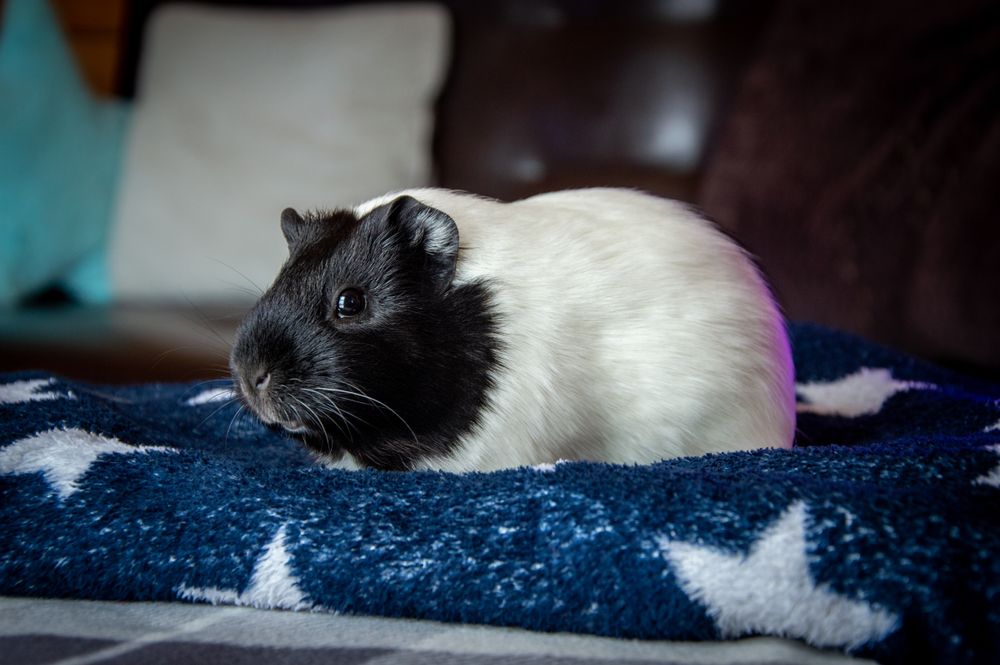
Fleece changes the economics and the cleaning method rather than eliminating cleaning. Merck's professional guinea-pig guidance accepts fleece as long as bedding materials do not have loose fibers or strings. PDSA notes that many indoor guinea-pig owners use vetbedding because urine is drawn away from the surface and dry fecal pellets can be shaken off before washing.
A real fleece system has layers
- Top: clean fleece or purpose-made fabric that allows moisture to wick through rather than pool.
- Middle: absorbent layer/pad.
- Bottom: cage tray or waterproof backing where appropriate.
A decorative fleece blanket laid directly over coroplast with no absorbent layer is not the same system. Fleece is the dry-feeling top layer; something underneath still has to hold the urine.
Practical reality: if you dislike laundry, fleece is not an “upgrade” you are supposed to graduate to. Paper may suit you better. If hauling and throwing away bulky bedding annoys you more than running pet-only laundry, fleece may be the easier routine. The safer choice is the routine you will actually maintain.
Daily workload
- sweep or vacuum hay and fecal pellets;
- replace small high-urine-area pads when wet;
- check that the sleeping area still feels dry;
- wash the full liner once it becomes soiled/wet enough that wicking or odor control is failing;
- keep a dry spare so the cage is not left bare during laundry.
Current U.S. fleece price examples — checked September 25, 2026
GuineaDad Premium liner, 2×4 C&C size: $84.99 on the product page when checked.
Kavee fleece liners: current U.S. collection examples start at about $76.00; extra-soft lines start around $86.40.
Using the $84.99 GuineaDad example, a simple two-liner rotation is $169.98 upfront before laundry, electricity, detergent or extra high-traffic pads. That does not make fleece “bad value”; it shows why claims that fleece is automatically cheaper in the first month are misleading. Fleece is a reusable cost model, not a zero-cost one.
Same Bedding, Opposite Owner Experiences — and That Is Useful Data
Owner reports are messy, but the disagreement itself is informative. In a September 2026 r/guineapigs discussion, some keepers said they moved from paper to fleece because they found it easier and cheaper over time. In another discussion, an owner with two males reported the opposite: fleece smelled faster and needed far more frequent washing than the paper setup they had used before.
Those anecdotes are not veterinary evidence, and they should not override health guidance. They do explain why a universal “fleece lasts X days” or “paper controls odor for Y days” claim is weak. Cage size, number of guinea pigs, favorite toilet corners, hay mess, room ventilation, liner construction and how aggressively you spot-clean all change the result.
A bedding review can tell you what a material is capable of. Your first week tells you whether the system works in your cage.
Lab C — Aspen: Why the Answer Is Not as Simple
Aspen often appears on “safe bedding” lists because it is a hardwood and lacks the same aromatic-oil profile as cedar. However, current professional guidance is not uniform.
Source allowing aspen
The University of California Davis California Veterinary Emergency Team's 2025 small-mammal care guide says solid floors may use recycled newspaper or aspen shavings and specifically says not to use cedar or pine wood chips.
More conservative sources
Merck's professional guinea-pig husbandry page says wood shavings or chips should be avoided because of respiratory irritation associated with aromatic oils, while VCA favors recycled paper and broadly advises against wood shavings.
What to do with that disagreement: low-dust aspen is a defensible option under guidance that explicitly permits it, but it does not have the same cross-source agreement as paper or fleece. If a guinea pig has respiratory disease, recurring eye irritation or painful/sensitive feet, discuss substrate choice with an exotics veterinarian rather than treating “aspen is safe” as a universal rule.
Current Chewy example: Kaytee Aspen 226.5 L — $36.99.
Again, this is a price reference only; Patify has not lab-tested the product's actual dust level or absorbency.
Pine, Cedar and Sawdust: Separate the Terms
Internet advice often collapses every wood product into one category, but the sources themselves disagree.
| Material | What current sources say | Patify use |
|---|---|---|
| Cedar | Merck, PetMD, VCA and UC Davis all warn against cedar | Avoid |
| Raw/aromatic pine | UC Davis says no pine wood chips; Merck consumer guidance says raw pine contains irritating oils | Avoid |
| Kiln-dried pine | Merck's consumer guinea-pig page allows kiln-dried pine, while VCA/PetMD guidance is more conservative about wood bedding | Not a first-line recommendation because guidance conflicts |
| Sawdust / dusty bedding | PDSA's dedicated substrate guidance and PetMD warn that dusty materials irritate airways | Avoid |
This is why the label “natural wood” is not enough information. Species, processing, dust and aromatic compounds matter.
Cleaning Workload Test: Which Routine Can You Actually Maintain?
Paper
Every day: remove wet/dirty patches, feces and spilled food.
Regular full reset: replace bedding and clean the solid cage base before odor/ammonia buildup.
Work style: short daily jobs + recurring bag replacement.
Fleece
Every day: sweep/vacuum feces and hay; change wet pads.
Regular full reset: machine wash/dry according to liner instructions.
Work style: more handling/laundry, less disposable bedding waste.
Aspen
Every day: remove wet/dirty areas.
Regular full reset: dispose and replace before urine/ammonia contamination builds.
Work style: similar disposable workflow to paper but with more source disagreement.
VCA recommends daily spot checks and at least weekly thorough cleaning for guinea-pig cages. PDSA similarly calls for daily removal of wet/dirty substrate and regular complete cleaning. The exact full-change interval should follow how quickly your cage becomes wet or soiled rather than an odor-masking fragrance.
Odor Is a Cleaning Signal, Not a Bedding Feature
VCA's rodent housing guidance notes that poor ventilation can allow ammonia from urine to accumulate and irritate the respiratory tract. A heavily fragranced or deodorizing bedding can hide the warning smell without solving the wet cage.
PDSA specifically advises choosing untreated, dust-free/dust-extracted substrate and says deodorizing chemicals are unsuitable for small pets.
If the cage smells strongly of urine, the response is more cleaning, better moisture control or more usable cage area—not perfume.
Foot Safety: Dry and Soft Beats “Fluffy” Marketing
Guinea pigs spend most of their lives on the cage floor. Bedding should therefore be:
- dry at the surface;
- free of sharp fragments;
- low-dust;
- free of long loose fibers/strings;
- placed over a solid floor, never bare wire.
PDSA notes that paper-based bedding and fleece blankets tend to be lower in dust and soft on guinea-pig feet. Merck also accepts fleece but cautions that materials should be free of loose fibers and strings.
If you are building the enclosure itself, Patify's DIY guinea pig cage blueprint explains the solid-floor C&C base, floor area and coroplast tray before the bedding layer is added.
30-Day Bedding Cost Worksheet — Without Fake “Average Monthly Cost”
Bedding consumption depends too heavily on cage size, guinea-pig count, urine habits and spot-cleaning discipline for a trustworthy site to pretend there is one universal monthly number. Use your own cage for the math instead:
| Input | Your number |
|---|---|
| Cage floor area | _____ sq ft |
| Guinea pigs | _____ |
| Paper/aspen bag volume | _____ L |
| Bag price | $_____ |
| Bags actually used in 30 days | _____ |
| Disposable bedding cost | $_____ |
| Fleece liners purchased | _____ |
| Fleece upfront cost | $_____ |
| Laundry loads per month | _____ |
| Your utility + detergent estimate/load | $_____ |
| Monthly fleece laundry cost | $_____ |
Run the worksheet for your actual cage for 30 days. You will end up with a number that belongs to your setup instead of somebody else's cage, climate and cleaning habits.
Switching Bedding: A 7-Day Observation Protocol
- Photograph the feet and skin before the change so you have a baseline.
- Change only the bedding system, not the cage, diet and water setup at the same time.
- Check surface dryness twice daily in sleeping and hay areas.
- Watch for increased sneezing or eye irritation.
- Note chewing/ingestion of liner fibers or wood material.
- Record odor and cleaning workload instead of relying on marketing claims.
- Reassess after a week: comfort, dryness, dust and whether you can realistically maintain the routine.
Persistent sneezing, nasal discharge, breathing difficulty, painful/red feet or skin lesions are not “normal adjustment to new bedding.” They deserve veterinary assessment.
Material Lab Result
Choose dust-extracted recycled paper and remove wet areas promptly.
Use fleece only as part of a real absorbent system and keep a dry spare for wash day.
Choose low-dust material and understand that current professional guidance is not unanimous.
Cedar, raw aromatic pine, sawdust/dusty bedding and heavily scented/deodorized products.