

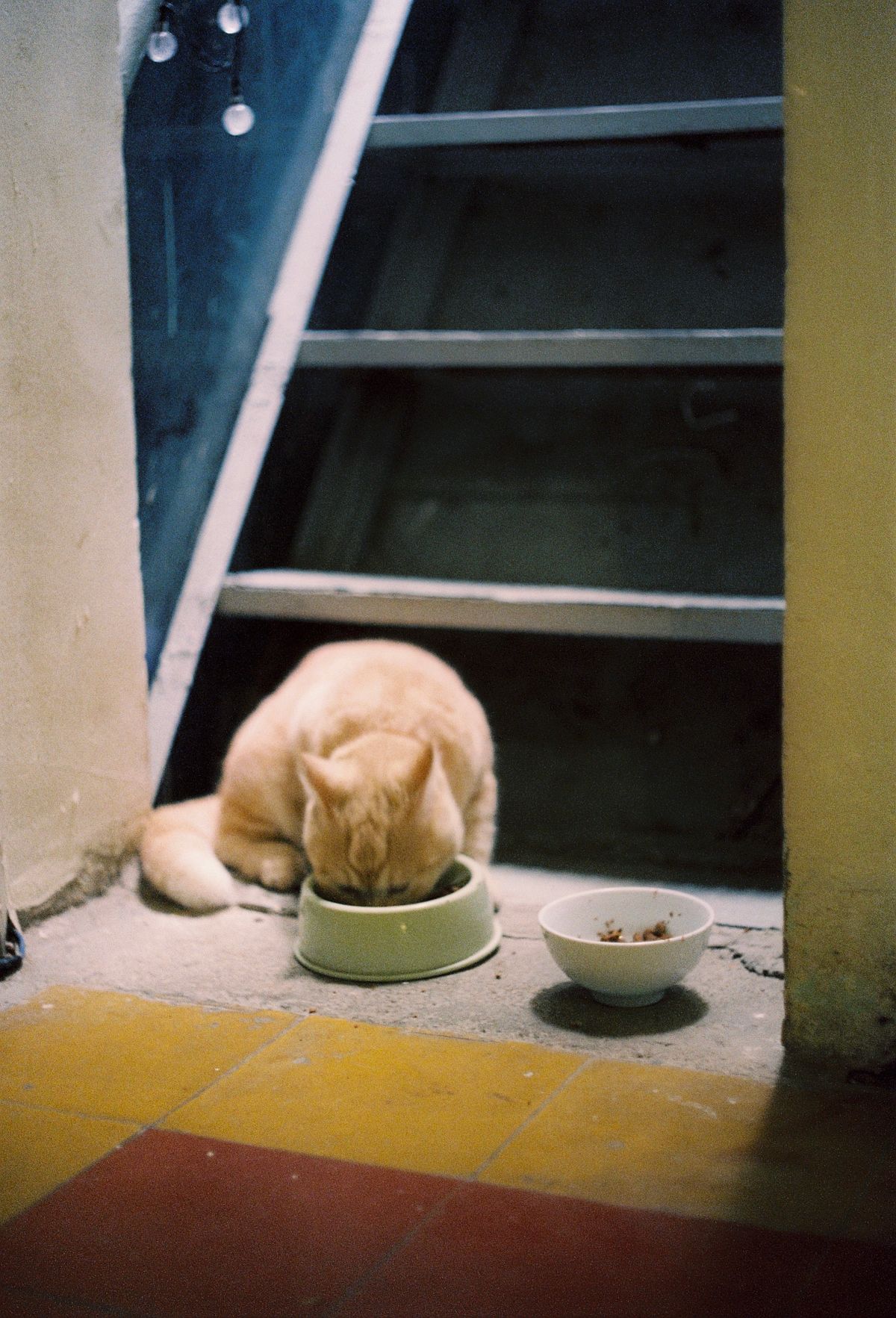
Cat nutrition · Wet food storage · US & UK
How Long Can Wet Cat Food Sit Out? A Safer US & UK Guide
Quick answer: There is no single pet-food-wide “2-hour rule.” Manufacturer guidance differs. Purina US says to discard wet food left in the bowl for more than 1 hour; Royal Canin US says 2 hours; Hill’s says uneaten canned food should be removed within 4 hours when the room is above 50°F/10°C. The FDA does not publish one universal bowl-time cutoff—it says to promptly refrigerate or discard unused canned or pouched food and keep refrigerated food at 40°F/4.4°C or below.
Best practical rule: Follow the storage instructions on your exact food first. If you cannot find them, a conservative 1–2 hour limit at normal indoor temperature is a sensible default for commercial cooked wet cat food. Shorten that window in a hot room, direct sun, or whenever the bowl has been heavily contaminated.
If the bowl has been sitting out all day or overnight: discard it. Do not rely on smell, appearance, microwaving, or refrigeration to “reset the clock.”
Why the old “USDA danger zone = wet cat food expires at 2 hours” claim is too simple
USDA food-safety rules are designed primarily for human foods. They are useful background for understanding temperature-dependent bacterial growth, but they are not a pet-food-specific manufacturer instruction. Current pet-food guidance is more nuanced: FDA tells owners to promptly refrigerate or discard unused canned/pouched pet food, while individual brands publish different time limits.
That difference matters for accuracy. A universal “2 hours safe, 4 hours dangerous” timeline sounds precise, but the available pet-food guidance does not support one exact cutoff for every formula, room, serving method, and brand.
How long can wet cat food sit out? Compare current brand guidance
| Source | Wet food in the bowl | Opened food in the refrigerator | What this means |
|---|---|---|---|
| Purina US | Discard after more than 1 hour | Discard after 3 days | One of the more conservative major-brand recommendations |
| Purina UK | Generally 1–2 hours; some Purina UK guidance recommends removing uneaten wet food after about 1 hour | Some UK guidance says no more than 24 hours | Check the specific product page/pack because guidance can vary across ranges |
| Royal Canin US | Discard after 2 hours at room temperature | Use within about 48 hours | A clear 2-hour manufacturer rule |
| Hill’s | Remove canned/moist food within 4 hours when ambient temperature is above 50°F/10°C | 5–7 days for Hill’s opened cans at 40–45°F | Shows why one universal internet number is misleading |
| FDA | No single numeric bowl-time cutoff on its pet-food storage page | Promptly refrigerate leftovers; refrigerator at 40°F/4.4°C or below | FDA emphasizes safe handling, prompt refrigeration/disposal, clean bowls, and product-specific information |
Manufacturer guidance applies to that manufacturer’s products. Always prioritize the instructions printed on your food or published by its maker.
So what should you do if you do not know the brand rule?
Use 1–2 hours as a conservative default for commercially cooked wet cat food at ordinary indoor temperature. This sits within the stricter guidance published by major brands without pretending every product has the same scientifically exact spoilage minute.
- Less than 1 hour: generally within the most conservative major-brand window if the room is normal, the bowl is clean, and the food was handled properly.
- 1–2 hours: still within some manufacturer guidance, but not all. If your brand says 1 hour, discard it.
- 2–4 hours: beyond Royal Canin and Purina guidance; Hill’s allows up to 4 hours for its canned foods under specified conditions. If the brand is unknown, discarding is the safer choice.
- More than 4 hours: discard. Do not refrigerate it for later.
- All day / overnight: discard without tasting, reheating, or smell-testing.
Hot weather changes the decision—even without a universal “summer formula”
Bacteria generally grow faster as temperature rises, and wet food also dries, oxidizes, and becomes less palatable. But the old article’s exact seasonal chart—such as “30–60 minutes above 86°F”—was more precise than the pet-food sources support.
Practical hot-weather rule: shorten the normal manufacturer window, serve smaller portions, keep the bowl out of direct sun, and remove leftovers promptly. If your kitchen is hot enough that the food feels warm or dries quickly, do not push the label’s maximum time.
What does the FDA actually say about wet pet food?
The FDA’s current pet-food handling guidance focuses on hygiene and prompt storage rather than a single bowl timer:
- promptly refrigerate or throw out unused or leftover canned and pouched pet food;
- tightly cover refrigerated pet food;
- keep the refrigerator at 40°F/4.4°C or below;
- wash pet food bowls and feeding utensils with soap and hot water after each use;
- keep the original product information, lot number, and “best by” date when possible.
This is more defensible than claiming FDA itself mandates a universal 2-hour wet-cat-food cutoff.
Can you refrigerate wet food after your cat has eaten from the bowl?
The answer is more nuanced than “never.” FDA guidance says to promptly refrigerate or discard unused or leftover canned/pouched pet food. However, the longer a served portion sits out—and the more it has been licked, warmed, or exposed to a dirty bowl—the less attractive re-refrigeration becomes.
Safest workflow: serve a small amount and keep the unused portion covered in the fridge from the start. That avoids repeatedly cooling food that has already spent time in the feeding bowl.
If a served portion has been out near or beyond your manufacturer’s limit, discard it rather than refrigerating it.
How long does opened wet cat food last in the fridge?
Again, there is no single brand-independent number. Current major-brand recommendations differ substantially:
- Purina US: about 3 days for opened canned cat food.
- Purina UK: some current guidance recommends no more than 24 hours.
- Royal Canin US: roughly 48 hours.
- Hill’s: up to 5–7 days for its opened canned foods when refrigerated at 40–45°F.
Takeaway: the previous “AAFCO says 3–5 days” statement was too broad. Use your specific manufacturer’s opened-food instructions. FDA’s general rule is prompt refrigeration at 40°F/4.4°C or colder.
Do you need to transfer food out of the can?
No universal rule requires that. Hill’s specifically recommends covering its opened cans with a fitted pet-food lid or plastic wrap and refrigerating them. A clean airtight container is also reasonable if that is easier for your household.
The important points are tight covering, cold storage, clean utensils, and staying within the manufacturer’s refrigerated-use window—not whether the food physically remains inside the original can.
Can you warm refrigerated wet cat food?
Yes, but keep food safety and temperature in mind. Some cats prefer food closer to room temperature because aroma increases as food warms. Purina UK notes that a microwave can be used briefly, provided the food is allowed to stand and is never served hot. Royal Canin suggests warming refrigerated food toward room temperature with warm water.
If microwaving: heat only briefly, stir thoroughly, let it stand, and check the temperature before serving. Microwaving does not make food safe again after it has already sat out too long.
What about raw or fresh cat food?
This guide’s timing discussion is for commercially cooked canned/pouched wet cat food. Raw meat-based pet food carries a different contamination profile. FDA states that raw pet food poses significant health risks to pets and people and is more likely than processed pet food to contain pathogens such as Salmonella and Listeria monocytogenes.
For raw, fresh, frozen, subscription, or lightly cooked diets, follow the exact manufacturer thawing and bowl-time instructions. Do not automatically borrow the cooked canned-food limits above.
Why bowl hygiene matters
FDA recommends washing food bowls and feeding utensils with soap and hot water after each use. That is important because pet food itself can occasionally be contaminated, and bacteria from the cat’s mouth, hands, utensils, counters, and old food residue can add to the microbial load.
- Use a clean bowl for each wet-food meal.
- Wash hands before and after handling pet food.
- Do not place new wet food on top of old dried residue.
- Wash measuring spoons and food-prep utensils after use.
- Keep the package or photograph the lot/best-by information in case your cat becomes ill or a recall occurs.
How can you tell wet cat food has gone bad?
Obvious spoilage signs are useful when present, but their absence does not prove food is safe. Discard food if you notice:
- mold or unusual surface growth;
- a swollen, leaking, badly dented, or damaged can/pouch before opening;
- an abnormal foul or rancid odor;
- unexpected discoloration or texture change;
- contamination by insects, dirt, cleaners, or another substance.
Do not use smell as a safety test after excessive time at room temperature. If the food has exceeded your manufacturer’s limit, discard it even if it appears normal.
My cat ate wet food that was left out too long—what should I watch for?
Eating old food does not guarantee illness, but spoiled or contaminated food can contribute to gastrointestinal disease. Watch for vomiting, diarrhea, loss of appetite, lethargy, fever, abdominal discomfort, or weakness.
| What you see | What to do |
|---|---|
| Cat ate the food and remains completely normal | Remove the old food, offer fresh water, and monitor. Do not keep feeding from the same suspect batch/bowl. |
| One mild vomiting episode but otherwise bright and normal | Monitor closely and contact your veterinarian if vomiting repeats or other signs appear. |
| Repeated vomiting, diarrhea, loss of appetite, abdominal pain, or lethargy | Contact a veterinarian promptly. |
| Blood in vomit/stool, marked weakness, collapse, severe dehydration, difficulty breathing | Emergency veterinary assessment. |
| Kitten, senior, pregnant, or medically fragile cat develops GI signs | Use a lower threshold for veterinary advice. |
For help separating a one-off episode from a more concerning pattern, see Patify’s cat vomiting guide.
Best feeding setup for a cat that grazes
Wet food and all-day grazing are a poor match. Instead:
- serve smaller wet-food portions more often;
- keep the unused portion refrigerated and covered;
- use a timer so you know exactly when the bowl went down;
- consider a chilled wet-food feeder designed to keep portions cool if your cat must eat later;
- offer dry food separately if your veterinarian agrees and your cat benefits from grazing;
- do not add fresh wet food on top of an old portion.
If you also feed kibble, our broader wet-vs-dry cat food storage guide covers how the two formats differ. Keeping this article wet-food-specific also avoids mixing two separate storage questions.
Frequently asked questions
How long can wet cat food sit out at room temperature?
There is no universal manufacturer-independent cutoff. Current major-brand guidance ranges from about 1 hour (Purina US) to 2 hours (Royal Canin US) to 4 hours for Hill’s canned food under specified conditions. If your brand’s instructions are unavailable, 1–2 hours is a conservative default.
Can wet cat food sit out for 4 hours?
Some products, including Hill’s canned foods, publish a 4-hour bowl limit under specified conditions. Other major brands recommend 1–2 hours. Do not assume 4 hours applies to every food.
Can I leave wet cat food out overnight?
No. Discard wet food that has been sitting out overnight.
How long is opened wet cat food good in the refrigerator?
Follow the manufacturer. Current recommendations vary from about 24 hours on some UK guidance to 48 hours, 3 days, or 5–7 days depending on brand. Keep it tightly covered and refrigerated at 40°F/4.4°C or below.
Can I put an opened can directly in the refrigerator?
Yes, if the manufacturer allows it and the can is tightly covered. Hill’s explicitly recommends a fitted pet-food lid or plastic wrap for its opened cans.
Can I microwave wet cat food?
A brief warm-up can be acceptable if you stir thoroughly, allow the food to stand, and verify that it is not hot. Microwaving cannot rescue food that exceeded its safe holding time.
Does wet cat food spoil faster in summer?
Heat speeds spoilage and reduces palatability, so use a shorter serving window in hot rooms. Exact “summer minutes” are product- and environment-dependent rather than one universal rule.
Sources & editorial standard
This article uses pet-food-specific regulatory and manufacturer guidance instead of treating human-food USDA/FSA rules as a universal wet-cat-food timer.
- U.S. FDA: Tips for Safe Handling of Pet Food and Treats
- U.S. FDA: Proper Storage of Pet Food & Treats
- Purina US: How to Store Cat Food
- Purina UK: Cat Nutrition & Wet Food Handling
- Royal Canin US: Storage FAQ
- Hill’s: Cat & Dog Food Storage Tips
This guide is educational. Product formulations and storage instructions can change; the label on your specific food and your veterinarian’s advice take priority.
Track serving times with Patify

Know when the bowl actually went down
Log the food, serving time, amount offered, amount eaten, and when leftovers were removed. That is more useful than guessing whether the bowl has been out for “about two hours.”
View Patify on Google PlayBottom line
The strongest answer is not “wet cat food is always safe for exactly X hours.” Major brands publish different limits, and FDA emphasizes prompt refrigeration or disposal rather than one universal timer. Follow your product first; when the instructions are unknown, use a conservative 1–2 hour room-temperature window, shorten it in heat, and discard food left out all day or overnight.