Anubias in a Planted Tank: Placement, Attachment, Growth and Troubleshooting
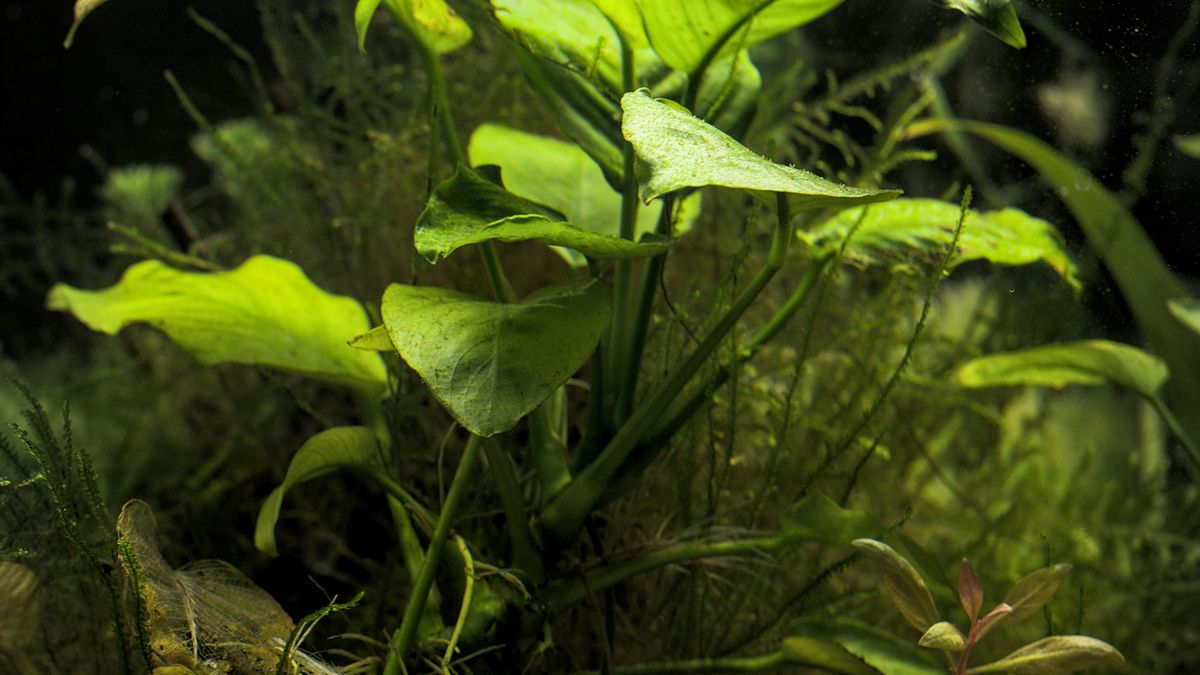
Anubias is an appealing aquarium plant because it can hold attractive green leaves in modest light without needing a high-tech aquascape. Its most important care rule is also its most frequently missed: keep the thick horizontal rhizome exposed. Attach the plant to aquarium-safe wood or rock, or position only its roots in the substrate while the rhizome remains above it. Burying the rhizome can lead to rot. After that, success depends on sensible placement, stable tank care and patience with a plant that grows slowly.
This is a decision-focused guide for Canadian freshwater aquarium keepers, from somebody choosing a first Anubias nana to a hobbyist trying to work out why older leaves are covered with algae. It separates supplier guidance from practical suggestions, gives a layout and inspection method, and explains responsible plant disposal in Canada. The photographs used are illustrative, not a documented Patify propagation trial; no growth rate or product performance measurement was carried out for this article.
What Anubias actually is and why placement matters
Many aquarium plants are rooted stem plants that grow upward from substrate. Anubias behaves differently. It develops leaves and roots along a rhizome, a firm horizontal structure that can be secured to wood, stone or another hard surface. The roots anchor the plant and can also take up nutrients, but they should not be confused with the rhizome itself. Knowing what you are looking at makes planting simpler than memorizing elaborate water-parameter charts.
Tropica describes Anubias barteri var. nana as slow-growing, suitable for relatively low light and effective when attached to stone or wood. It warns that covering the rhizome risks rot. Singapore's National Parks flora record independently describes attachment with thread and rhizome division for propagation. These are the primary biological care principles behind this guide. Individual cultivars vary in leaf shape and ultimate size, so a product listed only as “Anubias assorted” deserves closer inspection than a clearly labelled variety.
A plant's apparent toughness is not permission to neglect the aquarium. Temperature, water quality, light, nutrient availability and the needs of livestock all interact. The useful promise of Anubias is that it can fit into many established freshwater layouts; it is not that every aquarium, fertilizer or light setting will suit every living thing inside.
Identify the rhizome before cutting a tie or opening a pot
Look for a horizontal, usually greenish or brownish firm stem-like structure from which leaves rise and roots descend. The white or darker roots may be long and tangled, especially on older plants. The rhizome is neither an ordinary leaf stalk nor a mass of individual roots. If the plant arrived in a nursery pot, it may be surrounded by rock wool or other growing material. Remove packaging carefully without tearing off all healthy roots just to make the plant look tidy.
Once the rhizome is visible, decide where it will sit. It should face circulating tank water, have enough room for future leaves and remain above the substrate line. A piece of driftwood, stone shelf or crevice gives the plant a stable attachment point. If you use a loose weight or a mesh wrapping product, inspect it for sharp edges and potential hazards to fish, shrimp and snails. Do not assume a decoration is aquarium-safe solely because it is sold beside pet supplies.
A good pre-installation photograph, if you take one, shows the rhizome from the side and the exact tie or glue location. That makes later troubleshooting less guesswork: you can compare whether the rhizome is still exposed and whether roots have taken hold. We provide a written method rather than claiming to have made those progress photographs ourselves.
Anubias nana, barteri and compact selections: choose by space
The word “Anubias” is used for plants with noticeably different leaf sizes and growth habits. Anubias barteri var. nana is a common compact choice for hardscape edges and lower positions. Larger barteri forms can become substantial background or midground accents in a smaller aquarium. Cultivar names such as Petite or Coffeefolia are often used in the trade, but supply labels and the size of the actual specimen matter more than a photograph cropped to make every plant look miniature.
Tropica lists nana as a modest, slow-growing plant, with low light demand and little need for added carbon dioxide in ordinary conditions. The supplier's figures describe its product and are not a guarantee for every specimen in every tank. A buyer should consider actual tank dimensions, where the plant will be attached, the flow around that surface and how the leaves will look after other plants grow in front of them.
| Common shop label | Practical starting use | Main buyer check |
|---|---|---|
| Anubias barteri var. nana | Small to medium hardscape feature | Confirm the actual leaf spread and rhizome length |
| Anubias barteri (larger forms) | Midground or shaded background | Allow room for broad leaves |
| Nana Petite or other compact selections | Small detail on rock or wood | Verify cultivar identification and final size claims |
| Pre-attached Anubias | Ready-made wood or stone accent | Check the attachment and item dimensions |
| Tissue-cultured or potted Anubias | Flexible layout building | Understand preparation and acclimation requirements |
Three planting approaches and when to use them
Attach to wood. Choose stable aquarium-safe driftwood with a notch or branch junction. Lay the rhizome against the surface without crushing it, secure gently and return the wood to the aquarium once all materials are safe. Wood lets roots find texture and is useful in naturalistic aquascapes. Some new wood may initially float; make the entire decoration secure rather than relying on the plant to hold it down.
Attach to stone. A low stone shelf keeps the plant near the foreground while elevating the rhizome above gravel. Confirm that the stone is appropriate for the aquarium and cannot topple onto livestock. Some rock types affect water chemistry; select and prepare hardscape with the entire aquarium in mind rather than treating all stones as interchangeable decorative weights.
Keep roots in substrate but expose the rhizome. This can work if the plant remains stable and the horizontal rhizome is visibly above the surface. It is easier to bury the rhizome accidentally during later gravel maintenance, which is why attaching to a fixed object is often the simpler choice. In every method, step back and check from the side: if the rhizome cannot be seen or has been packed in soil, reconsider the placement.
How to use thread, line or a small amount of aquarium-safe glue
Fine cotton thread or fishing line can hold the rhizome against a piece of wood or stone until roots anchor it naturally. Wrap gently around the hardscape rather than pulling hard across tender leaves. Ensure the line does not form loops that can trap animals, and trim ends carefully. Recheck the attachment after maintenance because an abandoned loop may become a hazard as wood shifts or the plant grows. Tropica specifically mentions fishing line as a temporary attachment option.
Some aquascapers use small amounts of cyanoacrylate gel intended for aquarium work on hardscape outside the water. Product instructions vary, and formulations should not be assumed safe just because they are labelled “super glue.” Use only a product explicitly appropriate for aquarium conditions, follow its directions and avoid coating the growing points or broad sections of rhizome. If you cannot verify the product, use thread or another mechanically secure method instead.
Do not attempt to solve loose attachment by driving metal staples or pins through the rhizome. Damaging the tissue to secure it defeats the purpose. Likewise, avoid covering a plant in thick glue so it cannot contact circulating water. The final test is practical: the plant stays put when water moves, the rhizome is exposed and the fastening does not threaten tank inhabitants.
Choose the best spot using light, flow and the viewing angle
Anubias often looks its best where its broad leaves are visible but not blasted with light. Slow-growing foliage remains in place long enough for algae to establish when light and nutrient balance favour it. That does not mean every algae patch proves the light is too strong: aquarium algae involves a network of factors. Start by placing the plant in a low-to-moderate-light area with reasonable water movement. Use a rock face, wood root or shaded corner rather than tucking it into stagnant debris.
Examine the space from the aquarium's normal viewing position. Will fast-growing stems shade it completely? Will a filter outlet strike the plant so forcefully that it cannot stay attached? Will fish have enough room to swim around the hardscape? A placement that looks dramatic during setup can become cramped several months later as other plants develop. Leave enough room to access leaves for inspection and cleaning.
There is no universal number of hours of light that suits every aquarium. Begin with a consistent schedule appropriate for the whole system, make adjustments gradually and record the result rather than repeatedly changing the photoperiod each time a spot appears on a leaf. Anubias should not dictate conditions that compromise fish or other plants with different requirements.
Does Anubias need CO2, root tabs or liquid fertilizer?
Injected carbon dioxide is not a requirement for growing common Anubias varieties in many ordinary aquariums. Tropica categorizes Anubias nana as having low CO2 and light demands. That makes it attractive for low-tech setups, not biologically independent of nutrients. Plant growth still relies on available resources. Nutrients may come from the aquarium system, but whether supplementation helps depends on stocking, water changes, other plants and the specific products involved.
Because Anubias is commonly attached above the substrate, it can draw nutrients from the water column. A root tab buried beneath distant gravel is not automatically the right intervention for leaf discoloration on a piece of driftwood. Nor should every yellow leaf trigger a large dose of liquid fertilizer. First check rhizome health, new growth, light exposure and recent changes. If fertilizer is used, follow the product label and account for aquarium inhabitants, particularly sensitive invertebrates.
Avoid copying an online dose from a much larger tank. Canadian aquarium stores sell products in different bottle sizes and formulations, and “one capful” means nothing without a product label and measured tank volume. A short maintenance log with dates and amounts provides better troubleshooting evidence than a generic promise that fertilizer will fix all Anubias leaves.
Buying live Anubias in Canada without avoidable surprises
For a plant sold online, assess the exact variety, pot or attached hardscape size, supplier location, live-arrival policy and local weather. The advertised photograph may show a mature display specimen, while the dispatched item is a small young plant. Check whether dimensions describe the leaf height, rhizome length or total height including the pot. For a pre-attached item, find out the wood or stone size; it may not fit the hardscape plan you prepared.
Weather logistics deserve special attention across Canada. A parcel travelling in midwinter or during a summer heat wave can encounter temperatures unlike the room in which you intend to grow it. Ask the seller about packaging, shipping windows, overnight holds and live-arrival conditions; do not assume a generic promise applies to remote postal codes. Once the package arrives, inspect it promptly for obvious tissue damage and document the condition before discarding the packaging.
This guide does not provide live CAD prices because prices fluctuate by vendor, cultivar, plant size and shipping destination. A transparent comparison should record the product, shop, date, taxes and shipping separately. It should also compare similar plant quantities: one small rhizome is not equivalent to a full attached wood display just because both are called Anubias.
The first month: what to expect from a slow-growing plant
Anubias does not reliably put out a showy new leaf every few days. The plant may spend time settling into a different environment. Nurseries sometimes grow aquarium plants emersed, with leaves exposed to air in humid conditions; submerged aquarium life presents different demands. Aquarium Co-Op explains that changing water conditions or converting from emersed to submerged growth can cause some leaves to deteriorate. That context matters when a newly purchased plant appears worse before new growth becomes apparent.
Do not use a universal leaf-per-week schedule as proof of success or failure. Instead take a photo from the same angle when the plant is installed and note the condition of both leaves and rhizome. Over subsequent weeks, look for firm tissue, developing new leaves and stable anchoring. A single aging leaf that yellows is different from a rhizome becoming mushy or multiple leaves rapidly collapsing. Where there is uncertainty, inspect the placement and water parameters before using an aggressive chemical remedy.
| Review point | What to record | Useful interpretation |
|---|---|---|
| Installation | Rhizome visible, fastening secure, tank location | Baseline to compare later |
| First observations | Firmness, leaf condition, any damage from transit | Establish what arrived versus what changed |
| Following weeks | New growth, old leaf condition, algae coverage | Look for trend, not a deadline |
| After maintenance | Did gravel, fish or hardscape shift the plant? | Confirm exposure and attachment |
| When something changes | Lighting, fertilizer, livestock or equipment changes | Identify plausible causes before intervening |
Algae on Anubias leaves: diagnose the context first
Broad, persistent leaves make algae easy to see. A leaf covered in spots may still belong to a healthy plant, but that does not make the algae aesthetically welcome. Start by documenting which leaves are affected, how much light reaches them, whether debris accumulates and whether nearby faster-growing plants show similar symptoms. Gently clean accessible leaf surfaces using an aquarium-appropriate method that does not tear tissue or introduce household chemicals. The aim is to reduce the load while investigating why growth favours algae.
It can help to move the plant slightly into shade or improve maintenance around a debris-trapping wood junction. Changes should be limited and deliberate so you know which adjustment was helpful. Avoid assuming a particular algae colour provides a definitive diagnosis of nutrient shortage, and do not add animals simply as disposable “cleanup tools.” Fish, shrimp and snails have their own water-quality, compatibility and feeding needs.
Severely damaged leaves may eventually be removed with clean tools, but cutting all old leaves at once can leave a slow-growing rhizome with very little foliage. Work conservatively, monitor new growth and examine the whole tank. A general aquarium algae guide may help with a widespread problem; this article focuses on what algae means for Anubias placement and maintenance.
Yellow leaves, melting and rhizome rot are not the same problem
An older leaf turning yellow can reflect aging or stress, particularly after transport and environmental change. Several leaves declining together may justify checking light, nutrition, water chemistry and whether the plant was installed correctly. A mushy, soft or disintegrating rhizome is a different warning sign. Aquarium Co-Op describes Anubias rot as the rhizome losing firmness and identifies burying the rhizome as one possible contributor. The plant cannot be rescued by simply polishing discoloured leaves while the central tissue is decaying.
If you suspect rot, remove the plant carefully and inspect it outside the tank briefly, keeping it moist. Confirm the rhizome is not buried or tightly wrapped. A healthy firm section may sometimes be salvaged by separating it from obviously compromised tissue with clean tools, but recovery is uncertain and depends on the condition of the plant. Do not promise that cutting always saves it. Check the supplier's return policy if the problem was present upon arrival.
| Symptom | First checks | Avoid |
|---|---|---|
| Algae on old firm leaves | Light exposure, debris, general tank balance | Sudden high-dose chemical treatment |
| One older leaf yellows | New leaf health and recent relocation | Declaring the plant dead |
| Multiple leaves deteriorate after purchase | Emersed/submerged transition, water changes, physical damage | Guaranteed recovery promises |
| Rhizome soft or mushy | Was it buried, injured or tightly attached? | Leaving decaying tissue in place indefinitely |
| No visible new growth | Time, plant identity, environment and rhizome firmness | Chasing fixed leaf-per-week targets |
Trim and propagate only when the plant can spare it
Rhizome division is the established way to multiply Anubias. First look for a well-established rhizome with multiple healthy leaves and roots. Use clean, sharp tools to separate it into viable sections rather than shredding it into tiny pieces to create the maximum possible number of cuttings. The National Parks flora record lists rhizome division; individual growers differ in how many leaves they leave on each piece, and the plant's condition should guide the decision. A poorly established specimen with only a few leaves may be better left untouched.
Reattach divisions separately with exposed rhizomes and adequate room for leaves. Record the date and location so you can distinguish the mother plant from the cutting later. Do not expect a freshly divided section to match the appearance of a mature display immediately. Root anchoring and new leaf production can take time, and damage during cutting may slow progress or lead to loss.
If the plant is attached to a complex wood arrangement, you may be able to leave the main rhizome in place and move only the detached piece. Check for hidden line, glue or rough edges after the cut. The goal is healthy viable divisions, not a photograph of many tiny fragments that cannot establish.
Build a layout around Anubias rather than scattering pots
A simple 60-litre planted aquarium concept could place a piece of driftwood slightly off centre, Anubias nana on the lower shaded edge and taller, faster-growing stems behind it. The dimensions are an illustrative design concept, not a tested aquarium or an instruction for fish stocking. Keep swim space and maintenance access clear. Use one or two strong visual groupings rather than identical isolated specimens dotted randomly across gravel.
In a larger display, several sizes of Anubias can create texture: compact plants on small side stones and a larger specimen in a sheltered middle section. Notice how the leaves face the viewing glass and how the rhizomes are hidden by the shape of the hardscape without being buried in substrate. A useful design can be attractive and biologically correct at the same time. Before you commit, temporarily position the plants and check what becomes blocked when viewed from the front.
In a small aquarium, a single well-placed plant may be plenty. Buying every cultivar is not necessary. Spend more planning effort on the light, filter maintenance and care of fish or invertebrates than on fitting more leaves into an already crowded space.
What tankmates change about your plant choice
Many freshwater animals can coexist with Anubias under suitable conditions, but you cannot pick a fish species by asking whether it eats Anubias and ignoring its temperature, tank size or social requirements. Tropica notes that nana is often unpalatable to herbivorous fish in its product description; that is not a guarantee that all fish will leave every plant or hardscape undisturbed. Digging fish may dislodge a loose attachment, while active fish or snails may move unsecured decorations.
Shrimp and snails may spend time grazing on leaf surfaces, but they also require appropriate mineral balance, feeding and compatible tankmates. Do not acquire animals solely to make Anubias look cleaner. If livestock disturb the plant, inspect how the rhizome is mounted and whether it would be safer on a heavier stable rock. Any advice about stocking must be tailored to the actual species and aquarium volume.
New plants can also bring hitchhiking organisms or residues from growing and packaging processes. Ask the supplier about plant preparation, particularly if the aquarium contains sensitive invertebrates. Rinse and inspect according to safe hobby practices; do not assume a household disinfectant dip is appropriate for every plant or animal.
Canadian environmental responsibility: never release aquarium plants
A plant growing in a glass tank seems far removed from Canada's lakes and rivers. That is exactly why responsible disposal matters. Fisheries and Oceans Canada warns against releasing non-native aquarium organisms or plants into waterways, storm drains and municipal wastewater systems. Even small pieces can create problems in suitable environments. Whether a particular cultivated Anubias can survive outside is not a reason to experiment by throwing it into a pond or ditch.
Do not put excess plants, trimmings or aquarium water into natural waters. Canada's “Don't Let It Loose” guidance recommends rehoming suitable aquarium organisms where possible and safely disposing of unwanted plant material. The federal guidance describes drying and freezing non-native plants in sealed bags before disposal in household waste rather than composting them. Follow local waste rules as well; these vary between municipalities. The same caution applies when selling or exchanging plants: label species accurately and do not ship prohibited organisms.
This Canadian-specific duty is part of the care plan, not a footnote. A beautiful aquarium does not justify risking local aquatic habitats. Ask local aquatic invasive species programs for guidance if you are unsure whether a plant is regulated in your province or territory.
How to compare two Anubias listings fairly
Suppose one store offers a potted nana and another offers the same named plant already attached to a piece of wood. A lower price does not necessarily mean better value: the attached specimen includes hardscape and labour, while a small potted plant may allow more flexible positioning. Record the actual size, condition, arrival policy, shipping terms, taxes and total CAD cost. Do not compare a photograph of a mature display against a nursery pot without reading the descriptions.
If you want several identical plants to line a large rock, compare the number of viable rhizomes and available leaf mass rather than the number of pots. If you want one ready-to-place centrepiece, inspect the hardscape dimensions and how the rhizome is secured. For remote Canadian addresses, a shipping upgrade may cost more than the plant and weather holds may affect delivery times. These details have more decision value than a fabricated top-ten brand ranking.
| Question before ordering | Why it changes the decision |
|---|---|
| Is the precise cultivar labelled? | Different leaf sizes change layout suitability |
| What is actually included? | A plant, pot, tissue culture or attached stone are not equivalent |
| What size will arrive? | Product photographs may show mature displays |
| How is it packed for my postal code and season? | Weather and transit time can damage live plants |
| What is the total CAD price including shipping? | Sticker price alone obscures real cost |
| What is the seller's live-arrival process? | Documentation deadlines matter if there is damage |
A maintenance routine that does not overcomplicate care
During regular aquarium checks, look for the basics: firm exposed rhizome, sound attachment, developing leaves, accumulation of debris and changes in surrounding plant growth. Remove trapped waste through ordinary tank maintenance rather than vigorously pulling the plant apart. Inspect fasteners so thread or line does not become a hazard. If the plant is attached to removable stone or wood, handle the entire object securely when cleaning.
Keep a short log of changes: lighting adjustment, fertilizer application, new livestock, moving the hardscape or dividing the rhizome. Those notes help distinguish plant acclimation from avoidable damage. When the aquarium is stable, there is no need to make an intervention simply because a slow-growing Anubias has not changed visibly since last weekend. Stability and patient observation are often more useful than buying another additive.
A plant's health still depends on the wider aquarium. Maintain appropriate filtration, water quality and stocking for your inhabitants, and seek species-specific advice before making changes that might help Anubias but harm fish or invertebrates. Decorative plants are only one part of a living system.
Questions aquascapers often ask
Can Anubias grow in gravel? It can be held with its roots among substrate particles, but the rhizome must remain exposed. Attaching to wood or rock is often simpler, especially for beginners who may disturb gravel during cleaning. A plant with the horizontal rhizome buried deeply is at risk of rot.
Is Anubias a foreground plant? Compact forms such as nana can make effective small accents, depending on tank size and actual plant dimensions. Bigger forms may obscure a small foreground. The label and the physical specimen are more useful than treating every Anubias variety as identical.
Does Anubias need bright light or pressurized CO2? Common nana varieties can grow without high light or injected CO2 in many tanks. They still need a functioning aquarium environment and adequate nutrients. Do not increase CO2 or fertilizer blindly; consider the needs of livestock and other plants.
Why are old leaves becoming covered with algae? Slow leaf turnover and extended light exposure can contribute, but algae cannot be diagnosed from the plant name alone. Check whole-tank balance, shading, debris and maintenance practices. Make one measured adjustment at a time so you can assess the response.
How fast will my Anubias grow? The rate varies by variety and conditions. A seller's example rate is not a promise, and a leaf may persist for a long time. Follow rhizome firmness and healthy new growth over several weeks instead of demanding a fixed number of leaves every month.
Sources, photographic limits and review notes
The information here relies on plant-producer guidance, horticultural records, aquarium husbandry resources and Canadian aquatic-species policy. No Patify-owned tank was planted, photographed or tested for this article; illustration and sample layout do not count as evidence of results. Last editorial check: 13 October 2026. Verify cultivar names and local legal restrictions when purchasing or transporting aquatic plants.
- Tropica: Anubias barteri var. nana plant information — rhizome, low light, slow growth and hardscape placement.
- Singapore National Parks: Anubias barteri var. nana — attachment, rhizome division and cultivation data.
- Aquarium Co-Op: why aquarium plants melt or die — transitions, planting methods and common causes.
- Aquarium Co-Op: melting, dying plants and Anubias rot — soft rhizomes and potential planting mistakes.
- Fisheries and Oceans Canada: Don't Let It Loose — preventing aquatic species introductions and disposal.
- Invasives Canada: Don't Let It Loose campaign — practical aquarium plant disposal choices.