Aquatic Banana Plant Care: Positioning, Leaves and Growth in Freshwater Tanks
An aquatic banana plant is not a tiny banana tree growing underwater. The unusual yellow-green structures clustered at its base are storage organs that resemble small bananas, and they make this freshwater plant easy to recognise in an aquarium shop. Its botanical name is Nymphoides aquatica, and its care differs from that of ordinary root-heavy aquarium stems. Most importantly, the banana-like structures should not be buried deeply. A plant placed too far below the substrate can deteriorate before it has a chance to establish.
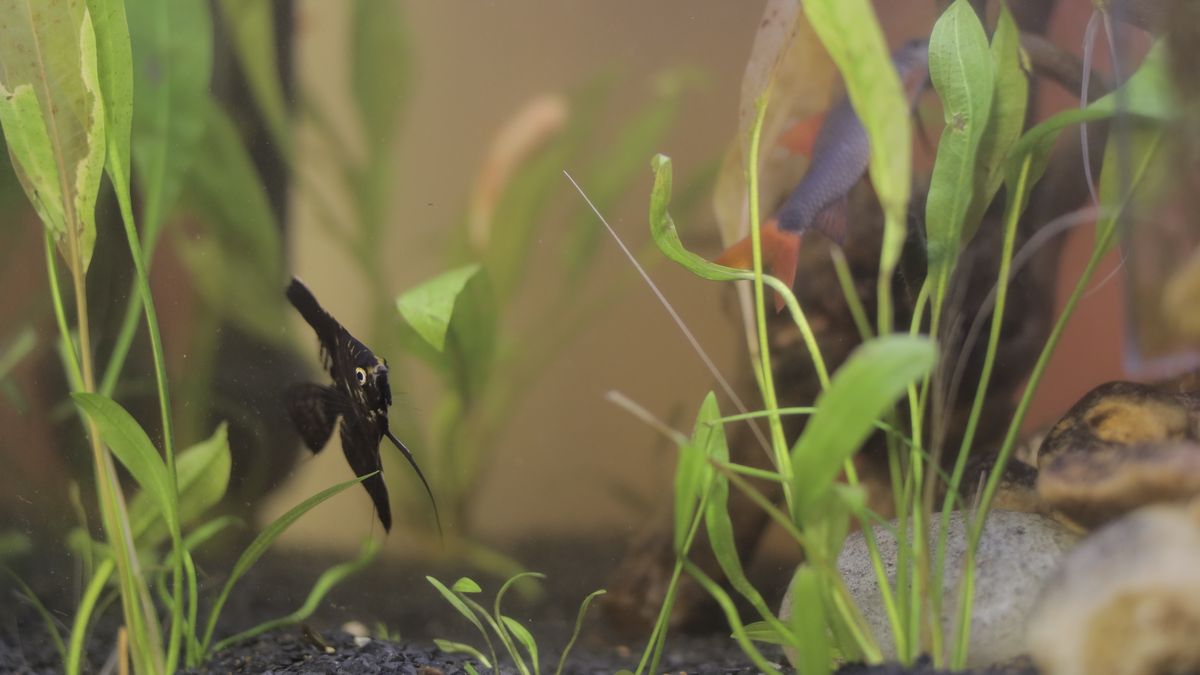
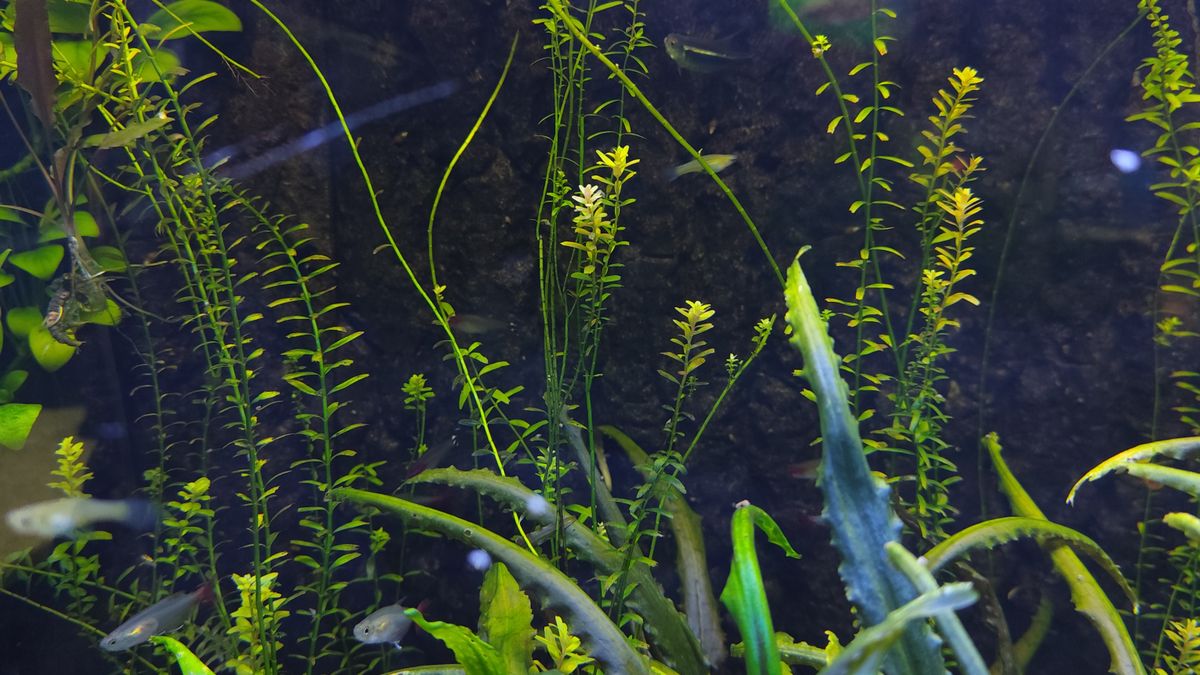
The good news is that banana plants can be approachable for someone who already maintains a stable freshwater aquarium. Aquarium Co-Op describes the species as beginner-friendly, able to grow without injected CO₂ and capable of producing underwater leaves as well as lily-pad-like surface leaves. The details still matter: planting depth, gentle water movement, suitable light, inspection after shipping and sensible maintenance. This guide explains how to identify a healthy plant, position it safely, understand new leaves and decide when floating pads have become a shading problem. The photos used in this article are illustrative aquarium scenes, not proof that Patify grew or tested this species.
Identify the plant before applying care instructions
Look for a compact cluster of elongated, fleshy storage structures below the stems and leaves. The structures can resemble a tiny bunch of pale bananas, although actual colour and shape vary with growth and handling. The leaves above them are usually green and can look broad or rounded, with longer stems developing as the plant matures. Aquatic banana plant is a common trade name; banana lily is another. The scientific name Nymphoides aquatica helps distinguish it from terrestrial banana plants and from unrelated aquarium products sold under informal "lily" labels.
A clear product label is valuable because generic photos online may show several aquatic lilies or similar-looking plants. Ask the seller to confirm the botanical name rather than relying on the nickname alone. The plant's storage organs are not fruit to feed fish or people, and their appearance should not be used as a measure of ripeness. At the shop, prefer specimens with firm structures, sound new leaves and no obvious foul-smelling decay. A plant with some transport-damaged leaves may still establish; one with mushy storage organs demands closer inspection before entering the tank.
Why the banana-like structures matter
The fleshy structures at the base help store resources for growth. Their appearance is one reason this plant attracts attention, but they are functional tissue, not a decorative root weight intended to be pushed out of sight. Aquarium Co-Op recommends setting them on top of the substrate or burying them only very shallowly. They can then send roots downward and develop a secure foothold. Deep burial can create conditions where the storage organs rot, undermining the plant's ability to settle.
Treat the cluster gently during planting and cleaning. Do not squeeze it between sharp rocks or tie it down tightly like a piece of driftwood. If it looks different from the promotional picture, that is not automatically a problem; living plants vary, and temporary changes after transport are possible. What matters most is whether the tissue remains firm and new growth continues. A slowly developing root system is preferable to forcing the whole structure into the gravel because you want the plant to sit perfectly upright on day one.
Choose the right location in a freshwater aquarium
Banana plants are commonly used as foreground or midground accents while small, although surface-reaching leaves can change how much vertical space they occupy. Select a position with sufficient light and some access to the water column, away from turbulent jets that repeatedly dislodge the base. Gentle circulation helps avoid debris accumulating around the plant; aggressive flow can send it tumbling before it roots. Leave a little open space so you can inspect the storage organs and remove damaged leaves without disturbing the entire aquascape.
Do not place the plant where fish or snails are constantly buried under shifting gravel or where heavy hardscape could fall onto it. Consider what happens as the leaves expand. A plant that looks small near a foreground carpet may eventually shade it when leaves rise toward the surface. The ideal position is one where the attractive base remains visible and where taller leaves can be managed. Plan for maintenance access before surrounding it with dense stems or rooting plants that make inspection difficult.
A simple placement comparison
| Placement method | Potential benefit | Main concern | Practical use |
|---|---|---|---|
| Rest tubers on substrate | Low risk of deep burial | Newly delivered plant may float | Good default in a calm area |
| Very shallow seating | Helps hold the base upright | Easy to push too deep | Only enough to stabilise without covering the cluster |
| Loose support from nearby hardscape | Temporary help while roots form | Sharp or heavy objects may bruise tissue | Choose rounded support without compression |
| Deep burial | No clear benefit for this species | Increased risk of storage-organ decay | Avoid |
This comparison is based on the planting principles explained by Aquarium Co-Op, not a laboratory test of four methods. Actual gravel size, fish behaviour and current affect stability. If the plant floats initially, resist the temptation to solve everything with force. A little patience and gentle support are safer than burying the cluster deeply. Reassess the position after the plant produces roots and leaves, because a temporary placement aid should not become an obstacle to healthy development.
Step-by-step planting without damaging the base
Begin by inspecting the shipment and gently removing transport packaging. If the plant came in a pot with rock wool, carefully free the roots and remove obvious loose debris, following the seller's instructions. Aquarium Co-Op advises removing residual fertiliser pellets associated with some potted specimens before placement. Rinse gently in clean, appropriate water without scrubbing the storage organs. Isolate any obviously damaged or unwanted material and follow your usual plant-introduction precautions for aquarium livestock.
Select a shallow depression or stable flat area in the substrate. Rest the banana-like cluster near the surface, with the growing point correctly oriented and the leaves unobstructed. If it will not stay in place, tuck nearby substrate around it or use a loose rounded support rather than burying the entire bunch. Adjust water movement if a filter jet pushes the plant over continuously. Leave the plant alone long enough to establish roots, watching for genuinely decaying tissue rather than repeatedly digging it up to inspect every minor change.
What to do if the plant keeps floating
A newly acquired banana plant may float because its roots have not yet gripped the substrate or because currents and buoyant tissues move it around. This is inconvenient, but it does not justify driving the tubers several centimetres into gravel. First choose a calmer position and check whether the base has been planted upside down. Use a light, loose temporary support if necessary. Ensure anything touching the plant is smooth and cannot crush tissue or trap fish. The goal is to keep it positioned, not immobilise it under weight.
Give the plant an observation period and note whether roots are becoming visible. If it still will not settle, review the substrate's grain size and the current rather than immediately adding more weight. Disturbance by fish that excavate or rearrange the substrate can also prevent rooting. A species-specific recommendation from a knowledgeable retailer may help when the tank has unusual conditions. Keep the solution reversible so the plant can be repositioned without pulling and breaking newly developed roots.
Light: how much is enough for a sensible starting point?
Aquarium Co-Op describes Nymphoides aquatica as tolerant of low to higher light levels, though growth is influenced by available light. That is a practical reason it appears in beginner plant recommendations. It does not mean you should run the aquarium light continuously or dramatically increase intensity to force growth. Most aquariums contain multiple species with different needs, and a brighter lamp may also affect algae, shading and animal behaviour. Choose a consistent schedule that suits the whole system and observe the banana plant's new growth.
If the plant stretches unusually far or produces leaves that crowd the surface, it may be responding to its environment and normal growth habit rather than proving the lamp is inadequate. Similarly, a leaf that becomes pale after shipping cannot be diagnosed as light deficiency alone. Review placement, nutrient availability, recent environmental changes and tissue condition. A photograph at the same lighting and angle each week can show whether the plant is establishing without encouraging frequent, poorly measured adjustments to the lamp.
Does an aquatic banana plant need injected CO₂?
One appeal of this species is that it does not require injected CO₂ in the way certain demanding red stem plants do. Aquarium Co-Op explicitly lists it as a no-added-CO₂ option. In a stable low-tech aquarium, it can therefore be a more practical choice than Rotala macrandra for someone who wants visible plant growth without managing a pressurised gas system. As with any living plant, adequate light and nutrients still matter; "no CO₂ injection needed" is not the same as "no maintenance needed."
Do not increase gas injection solely because one banana plant appears to be growing slowly. Look first at the actual growing point, the condition of the storage structures and whether recent leaves are developing. If a community aquarium already uses CO₂, follow established livestock-safety practices and avoid sudden changes. Animal distress outweighs any cosmetic benefit to the plant. The most useful comparison is the suitability of the plant for your current setup, not whether adding more equipment might create slightly faster leaves.
Fertilisation: water column versus roots
Banana plants may benefit from both nutrients in the water column and available nutrients near their roots. Aquarium Co-Op mentions a balanced liquid fertiliser and root tabs as options in its care guide. This does not create a universal dosing formula. The right amount depends on the product concentration, aquarium volume, existing substrate and the needs of other plants. Follow product labels and account for fertilisers already in use. Overlapping multiple supplements without documenting them makes troubleshooting difficult.
If you add a root tab, place it according to the product instructions and avoid pressing concentrated material directly against fragile storage tissue. If the tank contains sensitive animals, evaluate fertiliser compatibility and avoid excessive dosing. Watch new leaves over time rather than treating the oldest damaged leaf as an immediate signal for more iron or nitrogen. A small tank with few plants and a large planted display may need very different routines. Responsible care means measuring what goes into the whole aquarium rather than improvising a special regimen for one attractive plant.
Recognise underwater leaves and surface-reaching pads
As Nymphoides aquatica matures, it can develop underwater foliage and longer stalks bearing leaves that reach the surface. These are part of the plant's natural growth options. Seeing a surface pad does not necessarily mean the plant is in distress, nor does it prove the aquarium has too little light. Surface leaves can be attractive, but they also change light distribution for species underneath. Observe how much coverage they create and whether neighbouring plants begin receiving too little light.
If surface foliage occupies more space than you want, trim selected leaves with clean tools and remove the cut material from the aquarium. Avoid tearing stems or tugging at the entire root system. Make decisions based on the layout you are maintaining: a sparse aquascape may welcome one surface pad, whereas a densely planted foreground can suffer if several pads shade it. The maintenance question is about proportion and tank design, not whether surface-reaching leaves are inherently good or bad.
What healthy growth looks like over several weeks
A healthy trend is more informative than an exact growth deadline. Look for firm base tissue, steady production of leaves and new roots that begin anchoring the plant. Some older leaves can deteriorate after shipping while new submerged growth develops. Aquarium Co-Op notes that recently shipped foliage may be delicate, so judge a plant over time rather than by one slightly torn leaf. Record the arrival date and take a photo from above and from the side, paying attention to the base as well as the leaves.
Resist unpotting the plant every few days just to confirm rooting. That can break developing roots and interrupt establishment. If the tank's conditions remain reasonable, allow enough time for new foliage to show whether the plant is adjusting. When problems appear, examine whether they are localised to old transport-damaged leaves or progressing through the growing point and storage organs. A plant can look untidy temporarily and still be establishing; widespread softness, foul odour and continuing collapse are more concerning than a single damaged leaf.
Soft or rotting tubers: a different problem from damaged leaves
The storage cluster should not become progressively mushy or foul-smelling. Deep burial, tissue damage and unsuitable conditions can contribute to deterioration, although no single visual sign proves a precise cause. If a portion is clearly decomposing, remove obviously decayed material carefully and inspect the plant's remaining firm growth. Check planting depth and whether hardscape has crushed the base. Avoid adding chemical treatments based solely on a guess; correct physical problems first and document whether new growth resumes.
If the entire base is collapsing, it may not be recoverable. Remove dead material to avoid letting it decay in the tank. For a new purchase, photograph the condition before disposal and contact the retailer according to its actual arrival guarantee. Do not present a decayed plant as a routine fertiliser deficiency that can always be rescued with more nutrients. The unusual storage organs are the defining feature of this species, and their condition is central to judging whether the plant can continue growing.
Yellowing leaves, holes and transparent areas
Leaf changes have many potential explanations: age, handling damage, adaptation, nutrition, grazing or environmental instability. A yellow leaf is not a laboratory test for a specific missing nutrient. Begin by asking whether only older leaves are affected or whether every new leaf develops abnormally. Check for damage from fish or snails and review recent changes to light and fertiliser. Remove decaying material carefully, but do not strip healthy foliage merely because it looks slightly different from a product photograph.
Use a simple decision process. If the base is firm and new leaves are emerging, observe before making drastic changes. If old leaves decline and fresh growth stalls, revisit root conditions, light and the full aquarium's maintenance record. If several plant species show similar symptoms, the issue may be system-wide rather than species-specific. If fish behave abnormally or water quality is unsafe, address the animals and water conditions first. Plant symptoms are clues for investigation, not permission to make uncontrolled changes to the entire aquarium.
Algae on the leaves and around the storage cluster
Because banana plants can have broad leaves and relatively slow-growing sections, algae may become noticeable on older tissue. Examine overall aquarium lighting, circulation, waste accumulation and the balance of plant growth before trying to scrub the leaves. Vigorous scraping risks damage, particularly to delicate new growth. A gentle maintenance routine, appropriate lighting duration and removal of heavily deteriorated leaves are often more proportionate first steps than a chemical product chosen from a social-media photo.
If you see algae collecting around the base, verify that debris is not trapped by hardscape or excessive planting depth. Shift loose waste during routine maintenance without uprooting established roots. Adding an algae-eating animal is not an automatic fix; fish and invertebrates have independent housing and dietary requirements. Likewise, never use a treatment that may harm shrimp, snails or fish because the plant looks unsightly. The correct objective is a stable ecosystem with healthy livestock, not perfectly polished leaves at any cost.
Match banana plants with the rest of the aquascape
An aquatic banana plant works as a distinctive specimen, not as a standard carpeting species. Its fleshy cluster and leaves provide a focal point that can contrast with a lawn of low foreground plants. Place it where the form can be seen without blocking paths used by fish or obscuring all the space beneath floating leaves. A tall stem group behind it can provide visual balance, but dense growth may restrict light at the base. Consider actual growth and maintenance reach, not just a beautiful two-dimensional arrangement.
In a small aquarium, one specimen may be sufficient to make the design interesting. In a larger tank, several can be spaced apart, provided circulation and care access remain practical. The plant's requirements may be easier than those of demanding red stems, but it still benefits from a mature, stable setup. Avoid reorganising substrate around a rooted plant every time you change decorations. Small, thoughtful adjustments preserve the root system and allow you to tell whether the aquarium itself is supporting the plant.
Propagation without sacrificing the parent plant
Aquarium Co-Op describes propagating Nymphoides aquatica from selected leaves with stems: a healthy leaf section can be floated until suitable new growth appears and then replanted. Success is not guaranteed in every aquarium, and the process should not be treated as a fixed recipe for a specified number of days. Choose material from a robust plant and avoid stripping the parent of most of its active leaves. Handle the cutting gently, keep it in appropriate water and monitor for actual roots or new growth before attempting permanent placement.
Keep a note of the date and the appearance of the cutting. If it deteriorates, remove it before decayed matter accumulates. If it forms healthy roots, position it carefully with enough space for future leaves. Do not force a cutting to stay submerged or attach it tightly to equipment. Propagation can be an enjoyable experiment in home horticulture, but do not claim that every leaf will generate a new plant. The decision to multiply stock should follow the tank's available room and your capacity to maintain it.
Arrival, quarantine and Canadian winter shipping
Aquatic plants ordered within Canada can experience cold weather during transport, especially when a parcel is left on a porch or in an unheated locker. Confirm the retailer's actual shipping season, packing policy and damage process before placing an order. Tropical or warm-water plants should not be assumed safe merely because they are sold by a Canadian website. Photograph the unopened package and its contents if a shipment arrives obviously damaged, then follow the seller's instructions for claims rather than inventing your own temperature or recovery guarantee.
Introducing plants also means considering hitchhiking snails, algae or other organisms. Inspect purchases carefully and follow quarantine procedures suited to your aquarium and livestock. Do not use a chemical dip without checking species and animal compatibility; plant tissue and shrimp can be particularly sensitive to unverified treatments. Ask the seller whether the plant was grown submerged, emersed or through tissue culture. None of these labels proves the absence of every possible hitchhiker, but they provide useful information for a cautious introduction process.
A six-week observation journal
Use an observation journal to prevent unnecessary tinkering. In the first week, note how firm the banana-like structures are, how the plant is positioned and whether the original leaves were damaged. In later weeks, photograph new leaves, check root anchoring and note any new surface pads. Record the tank's light schedule and fertilisation rather than making multiple unrecorded changes. This is a suggested documentation window, not a guarantee that every plant will visibly develop in exactly six weeks.
| Checkpoint | What to observe | What not to assume |
|---|---|---|
| Arrival | Firm base, packaging damage, existing leaves | Every damaged leaf means the whole plant is dead |
| Early adjustment | Position stability and first new growth | Floating always requires deep burial |
| Establishment | Roots, new leaves, remaining firmness | Faster growth always means healthier growth |
| Later review | Surface pad coverage, shading, trim need | Every surface leaf proves insufficient light |
A useful journal contains observations, not claims of an experiment that someone else performed. Take photographs from similar angles so comparisons are meaningful. If you keep multiple plants, identify them separately rather than blending their outcomes. If progress is poor, the record helps distinguish a shipment problem from a new environmental change. This is particularly helpful for a species whose striking base can distract from the quieter indicators of health, such as new roots and firm growing tissue.
Canadian aquatic-plant disposal rules are part of responsible care
Fisheries and Oceans Canada warns against releasing aquarium and water-garden species into natural waters, storm drains or connected systems. Aquatic organisms that seem harmless in a living room can carry hitchhikers or create environmental risks if discarded irresponsibly. The agency's "Don't let it loose" guidance is broader than a list of known invasive species: hobbyists should never assume that a particular aquarium plant is safe to release simply because it is tropical or appears unable to survive the local winter.
When trimming or discarding banana plant leaves, collect material in a container rather than letting fragments wash away. Healthy surplus plants may be offered to another responsible keeper or a shop that accepts them. Unwanted material should be handled under local solid-waste guidance and kept away from waterways. Do not dump tank water containing plant fragments into a creek, ditch, pond or storm sewer. This step matters regardless of whether the plant itself is currently classified as invasive in your province; disposal behaviour should not depend on a casual internet guess.
Frequently asked questions
Should I bury the banana-shaped tubers?
No. Aquarium Co-Op recommends resting them on the substrate or positioning them only very shallowly. Deep burial may cause decay. Let roots grow down naturally and use loose, gentle support if the plant floats. The visible cluster is part of the plant's normal form rather than something that must be hidden.
Does this aquarium plant grow real bananas?
No. The banana appearance refers to fleshy storage structures at the plant's base. The aquarium species is Nymphoides aquatica, not a miniature edible banana tree. Do not feed the structures to animals or treat them as fruit.
Can I grow it without a CO₂ system?
Aquarium Co-Op describes the species as able to grow without injected CO₂. That makes it suitable for many stable low-tech freshwater tanks, provided other needs are met. Avoid taking this to mean that lighting, nutrients, maintenance and animal compatibility can be ignored.
What are the long leaves reaching the water surface?
They can be part of the plant's normal development. Surface-reaching leaves may cast shade, so decide whether to keep or trim them based on the rest of the aquascape. Use clean tools and remove cut material safely. A surface pad is not, by itself, evidence of a deficiency.
Why is my banana plant turning soft?
Progressive softness at the storage base may signal deterioration, especially after deep burial or damage. Inspect the placement and tissue condition rather than simply adding fertiliser. Remove unmistakably decayed matter and consult the retailer's guidance if the plant arrived that way. Several causes are possible, so appearance alone does not identify an exact mechanism.
Final checklist for a healthy banana lily
Before purchasing, confirm Nymphoides aquatica on the label and inspect the storage structures for firmness. At planting, position the base on or very near the substrate surface without burying it. Choose a stable spot with appropriate light and gentle circulation. Allow time for roots to form and judge progress by new leaves rather than the original foliage alone. Maintain an ordinary, documented nutrition routine and make sure surface pads do not overwhelm neighbouring plants. Never treat an aquarium plant as safe to release outdoors.
This species can be a rewarding introduction to unusual freshwater plants precisely because its basic demands are comparatively manageable. It does not need to become a complicated chemistry project. The most common avoidable error is physical: treating the little banana cluster like an ordinary root system and planting it too deeply. Keep the tissue visible and healthy, leave room for leaf growth and respond to the real trend in your tank. The care methods here come from identified sources; Patify has not conducted an independent growing trial or verified a guaranteed growth timeline.