Otocinclus Catfish Care: Is Your Aquarium Mature Enough to Feed Them?

An otocinclus can spend an afternoon grazing the aquarium glass while the owner congratulates themselves for buying a natural algae cleaner. Weeks later, the same fish may be thin even though its tank looks spotless. This is the central problem with common “oto” advice: cleaning the glass is an incidental service to the keeper, but food availability is a continuing welfare requirement for the fish. Before buying Otocinclus, the real question is not how much algae they might remove. It is whether you can verify that the aquarium and your feeding plan supply enough nutrition after the visible algae is gone.
The short answer: Otocinclus are small South American loricariid catfish that graze living films on surfaces. Most benefit from established, planted freshwater systems with stable water, varied grazing surfaces and a planned supplementary diet. Newly imported fish may have endured food shortages, and a new sterile aquarium may offer little to eat. The Aquarium Co-Op Otocinclus guide and Seriously Fish account of Otocinclus macrospilus both put mature tanks and feeding at the centre of responsible care. A visible belly, observed food intake and repeat checks are more useful than declaring success because a pane of glass is clean.
The shop name “Otocinclus” is not a precise species label
An aquarium shop may sell Otocinclus, “oto cats,” common otos, dwarf suckers or “Otocinclus affinis.” These names are not interchangeable proof of one species. Several members of Otocinclus appear in the hobby, and the true Macrotocinclus affinis is not automatically the animal in a tank labelled “affinis.” Seriously Fish notes that O. macrospilus, a common trade species, can be incorrectly identified as O. affinis or O. vittatus. That matters if a care sheet gives exact habitat, temperature and adult-size figures while the species in the photograph remains unidentified.
Check the seller's live photographs and ask for the scientific name, origin and current diet. For a normal mixed-species Otocinclus guide, use an identified species only as a reference case: O. macrospilus is listed at 21–26°C (70–79°F), a maximum standard length around 3.5 cm, and a 45 × 30 cm reference tank base by Seriously Fish. Those values should not be copied unquestioningly to every fish sold under the genus. Zebra otos, for example, have distinctive markings and their own detailed profile.
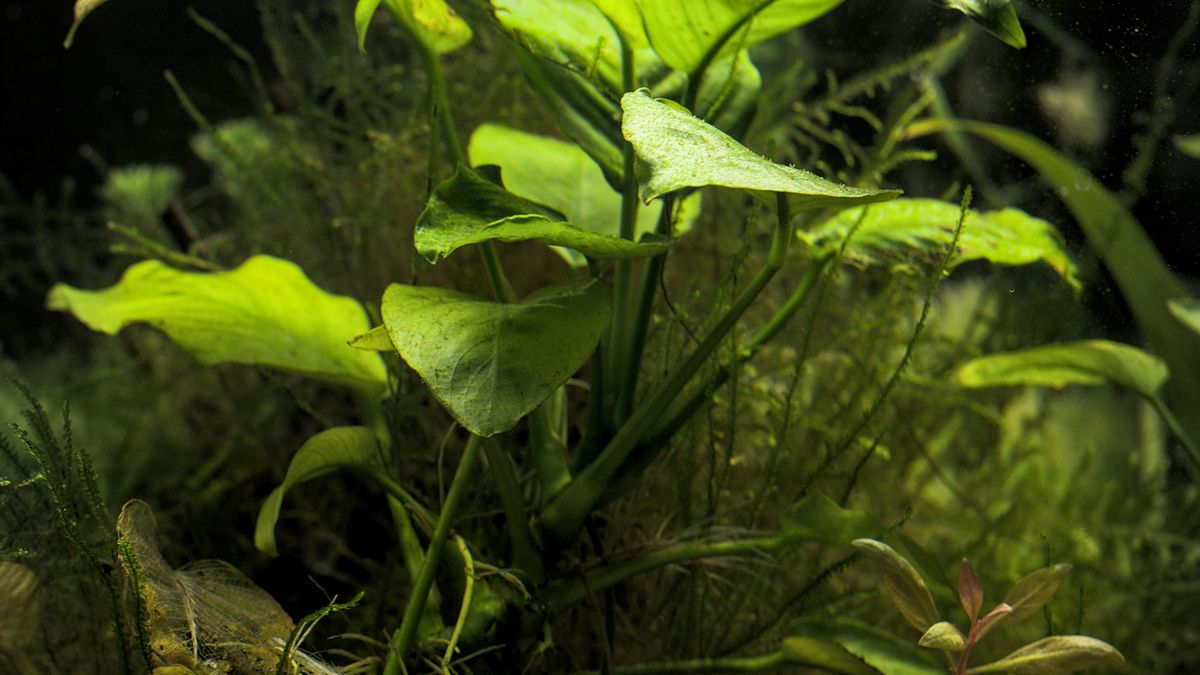
A cover photograph of an Otocinclus of undetermined species is useful to show grazing posture and overall form, not to promise that its markings identify the exact shop stock. This article uses an image explicitly labelled Otocinclus sp. rather than pretending a generic photo proves an O. macrospilus diagnosis. The gallery credit and licence appear below.
Otocinclus and Corydoras are not the same kind of “catfish cleaner”
Store displays often place Otocinclus and cory catfish in one “cleanup crew” category, but they differ in feeding and biology. Otos have a sucker-like mouth and spend considerable time grazing algae, diatoms and the biofilm found on plants, wood and glass. Corys mainly forage for small animal and prepared foods at the bottom and should not be described as specialist algae eaters. Neither animal replaces water changes, substrate cleaning or filtration; both produce waste like any other fish.
If you are deciding between species, Patify's freshwater algae-eating fish comparison is the category-level hub. Our new Pygmy Corydoras guide explains that small cory's midwater behaviour and microfood delivery. This is a food-and-habitat comparison, not advice to put multiple groups of small catfish into one crowded tank.
The practical buying rule is simple: choose Otocinclus only if you want to keep and feed Otocinclus over the long term. If your only objective is to remove a few patches of algae, correct the aquarium's light, nutrient balance and manual-cleaning routine first. An organism that needs daily nutrition should not be treated as a disposable cleaning tool.
| Store claim | What you should investigate instead | Why |
|---|---|---|
| “Cleans algae” | Which algae and what food will remain? | Soft film is not a permanent unlimited supply |
| “Tiny sucker catfish” | Exact species and adult environment | Common names can conceal differences |
| “Good for a new tank” | Actual maturity and biofilm development | A newly cycled tank may still be food-poor |
| “Eats any wafer” | Whether these individuals demonstrably ingest it | Acceptance varies among imported fish |
| “Six for a cleaner tank” | Social needs and carrying capacity for food | Too many grazers can all go hungry |
Maturity is more than a completed nitrogen cycle
A cycled aquarium has developed biological filtration able to process a tested waste load. That is a foundation for fishkeeping, not a complete Otocinclus diet. Biofilm takes time to form on leaves, driftwood, stone and other surfaces; plant growth, illumination and grazing pressure affect the supply. A crystal-clear, recently scrubbed tank may be biologically cycled yet offer very little established grazing material. This distinction is essential when someone proposes adding an oto as the first fish because it looks peaceful and stays small.
Before purchase, assess three separate conditions. Water readiness: reliable tests and stable behaviour of the existing system under feeding. Surface readiness: natural grazing film or manageable soft algae on several safe surfaces; not a single token green spot on glass. Food readiness: a credible supplemental food that you can offer and confirm the fish will eat, ideally with evidence the retailer's stock already accepts it. If the third condition is unproven, the aquarium is not ready merely because the first two look acceptable.
The Patify planted aquarium setup guide covers lighting, plant mass and biological cycling as general foundations. Otocinclus require one more layer of planning: preserving food-producing surfaces while controlling water quality. “Mature” cannot be defined only as a fixed number of days on a calendar, because different setups develop differently. A bare aquarium and a planted aquarium of the same age can have very different grazing resources.
Draw a grazing map before you buy fish
Instead of promising Otocinclus will solve algae, map the surfaces they will actually use. Take a front-view photograph or paper sketch of the tank. Mark broad leaves, driftwood or safe branches, side and back glass, stone surfaces, and the quieter areas that are unlikely to be dominated by other fish. Note which surfaces you clean completely and which you leave as safe, manageable grazing areas. A useful grazing map makes it easier to see if one fish repeatedly monopolizes the only food-rich corner.
You do not have to stop cleaning the aquarium. Keep viewing panels clear where needed and remove nuisance algae according to the wider tank's health. The goal is to preserve suitable biofilm and supplemental feeding opportunities without letting debris or unwanted growth overwhelm the system. Plants with sturdy accessible leaves, including well-secured Anubias, can provide resting and grazing spots; our Anubias placement guide explains attachment and rhizome safety.
A plant-filled layout can still be food-poor if everything is newly installed, heavily scrubbed or repeatedly treated with algae products. Do not use unverified household cleaning chemicals or copper-containing treatments near sensitive livestock. Read every aquarium product label and assess all inhabitants, not just the target algae. More exposed glass does not necessarily mean more nutritious biofilm, so feed observation remains indispensable.
The belly is a clue, not a medical diagnosis
Aquarium Co-Op advises choosing active otos with rounded, healthy-looking abdomens rather than individuals with sunken bellies. That is a practical stock-selection observation because prolonged starvation during collection, export or wholesale holding can leave fish difficult to rehabilitate. A photo showing a plump belly provides one data point, not proof of long-term health. Water quality, species identification, behaviour and successful feeding all matter.
At the shop, ask what the fish eat there and request to see them feed if practical. Note whether several individuals actually graze or take prepared food. A tank with a hundred thin otos on bare glass should give you pause, whatever the discount. Conversely, a healthy-looking fish cannot be declared disease-free from a photograph. Source fish from retailers who can discuss husbandry honestly and have transparent arrival and return policies.
After stocking, use photographs from similar angles to monitor body condition without repeatedly netting fish. A belly that remains sunken while the animal appears to graze is a welfare concern and should prompt investigation of actual food access, substrate/water conditions and clinical assessment when appropriate. Avoid translating every visible belly change into a self-diagnosis of parasites or a prescription for medication.
The first-week food-acceptance protocol
The most actionable thing you can do for new otos is verify that their feeding has resumed. This is a suggested observation protocol, not a clinical survival study or something Patify has tested. During the first several days, choose small, clean portions of suitable food, place them where fish can find them and note the response. Try an appropriate algae wafer, softened zucchini or another vegetable preparation described by reputable sources. Do not leave decaying food in the tank indefinitely merely to demonstrate “continuous availability.”
First check: Are the fish actively grazing on existing leaves, wood or glass? Second check: Do they approach the supplemental food after it has softened? Third check: Can they remain at the food long enough to consume it, or do tankmates remove it first? Fourth check: Is food being left to rot or causing a water-quality change? Record what you offered and what you actually saw. “I placed a wafer in the tank” is not equivalent to “the otos ate the wafer.”
No single food works for every individual. Some fish learn to accept prepared feeds slowly; others may be more willing to graze gel food spread thinly on a rock or vegetable surfaces. Follow commercial product labels, introduce changes carefully and maintain water quality. Persistently thin, lethargic or nonfeeding fish need rapid informed attention rather than a week of waiting for them to learn an unfamiliar product.
| Day or checkpoint | Record | Decision if negative |
|---|---|---|
| Arrival and initial observation | Breathing, posture, approximate belly fullness | Review handling and water conditions |
| Early feeding checks | Which safe surfaces fish graze | Preserve appropriate films; assess alternatives |
| Supplemental food offered | Food name, form, location and actual intake | Adjust texture or location rather than blind overfeeding |
| Ongoing checks | Body condition trend and water test changes | Seek qualified help for continuing thinness or distress |
| Before adding more otos | Food supply and observed acceptance for existing group | Do not add competition to a failing feeding system |
Which algae are useful food, and which are not?
Otocinclus commonly graze soft green films, diatoms and other microscopic growth coating surfaces. They are not a dependable solution for black beard algae, hard green spot algae or an aquarium suffering suspended green water. Aquarium Co-Op makes this distinction in its oto guide. Broadly calling all visible algae “oto food” can leave a fish underfed in a tank with a large amount of growth it rarely consumes.
Biofilm is more than a uniform sheet of green algae. It includes microorganisms associated with submerged surfaces, such as tiny invertebrates and organic films. The exact composition varies among aquariums and over time. New wood and botanicals can develop films, but that does not mean every decaying object is beneficial or should be allowed to foul the water. Look for signs that fish are grazing normally, maintain adequate circulation and remove deteriorating food or unsafe materials.
Patify's algae-eater choice guide compares common grazing roles by growth type and adult requirements. Return there if your original problem is identifying algae rather than keeping Otocinclus. Buying a hungry grazer to solve a nutrient or lighting issue is often a way to add complexity without addressing the cause.
Supplementary foods: build a menu you can verify
Reliable husbandry references mention algae-based sinking discs, spirulina-rich preparations and suitably prepared vegetables such as zucchini or green beans. The Seriously Fish O. macrospilus account emphasizes vegetable matter and warns that this species is primarily a grazer. Aquarium Co-Op offers examples of gel feeds and food-bearing surfaces that allow fish to graze rather than compete for a floating flake.
Feed preparation needs care. Wash produce, avoid sauces, salt and seasonings, and soften or blanch when appropriate. Use aquarium-safe feeding clips or a stable surface so slices cannot wedge into machinery or inaccessible gaps. Remove uneaten portions before they decay, in line with your aquarium conditions; there is no universal “leave vegetables for exactly 24 hours” rule that makes all systems safe. A piece of cucumber that looks intact may still be contributing organic waste.
Commercial wafers labelled for “algae eaters” can vary widely in ingredients and texture, so compare the product label and actual acceptance rather than brand prestige. A product with prominent plant ingredients is not automatically the correct sole diet if the fish refuses it. If neighbouring fish strip the wafer immediately, offer it at a more sheltered grazing station and observe the result. The aim is reliable intake, not a crowded shopping list of supplements.
How many Otocinclus? Balance sociability with the actual food budget
Otocinclus are social animals, and care references often encourage keeping companions of their own kind. However, advice diverges on numbers when a small aquarium does not provide enough food. Seriously Fish recommends at least six for O. macrospilus in a suitable setup; Aquarium Co-Op cautions that two well-fed fish are preferable to six gradually starving. These are not two competing claims that can be reduced to one magic number. They reflect a genuine constraint: a proper social group should be planned only when the tank has adequate feeding resources and space.
The responsible conclusion is not “always buy two” or “always buy six.” Plan the aquarium for a suitable group, assess whether you can sustain that group with both naturally available food and verified supplements, and delay purchasing until you can do so. If the present aquarium cannot feed an adequate group, choose different livestock or a larger, better-established setup. Do not deliberately keep social fish in poor conditions and use an internet minimum as the justification.
Food supply can change even without new fish. Grazing removes films, plants shed leaves, lights are replaced and other algae-eating animals compete for resources. Regular review matters after the excitement of the first week. Adding snails, a bristlenose pleco or another grazer can unintentionally reduce the resource base while increasing waste. Consider the whole community's needs before growing a “cleanup crew.”
Acclimation after transport: avoid the two opposite mistakes
Many Otocinclus in retail are wild-caught, and the route through multiple holding systems may involve food shortages and water changes. Ask your Canadian retailer how long it has held them, whether they are feeding and whether weather may delay transport. Buying from a shop with honest answers is more useful than an invented claim that all imports from one country arrive healthier. Do not open transport bags to take photographs before preparing a stable receiving environment.
Quarantine can help protect established livestock but must be an actual biologically appropriate system. A bare, uncycled quarantine box lacking food-rich surfaces may expose starving new otos to avoidable stress. Prepare quarantine water, filtration and a realistic feeding plan in advance, or seek expert advice on a method suited to your aquarium and purchase circumstances. Follow responsible acclimation practices that account for transport-water ammonia and chemistry; no single drip duration should be copied without context.
After release, minimize abrupt changes, maintain suitable temperature and surface movement, and confirm eating. If fish are visibly distressed or rapidly decline, test water and get specialist advice promptly. Avoid broadly medicating every newly arrived oto “just in case,” particularly in a planted tank with other sensitive animals. Prevention and observation should guide the first decisions.
Water parameters, footprint and gentle circulation
For O. macrospilus, Seriously Fish lists 21–26°C (70–79°F), pH 5.5–7.5, and a reference minimum base around 45 × 30 cm. Treat these as species-specific published guidance, not a blanket Otocinclus standard. Stable conditions are more useful than rapid chemical adjustments to match a decimal pH target. Use a trustworthy thermometer, maintain consistent water preparation and avoid abrupt temperature changes during major maintenance.
A tank should provide plenty of grazing surface, refuge and good oxygenation without forcing weak or newly arrived fish to fight an excessive current constantly. Check whether a broadleaf plant or wood branch sits in a flow shadow that collects decaying food. Gentle flow can be compatible with sound filtration; stagnant zones full of waste are not the objective. A surface film should not be confused with the beneficial biofilm on submerged grazing objects.
Remember Canadian seasonal changes. An unheated room in January may cool the tank differently from the same room in August, and aquarium deliveries can be delayed by weather. Never infer aquarium temperature from a retailer's “tropical” sticker. Read the actual water temperature and check equipment against the operating conditions of the fish you purchased.
Compatible tankmates and feeding competition
Peaceful small fish can coexist with otos in appropriate systems, but apparent gentleness does not guarantee compatible temperature, water chemistry, space or food access. A large active fish might consume the intended algae wafer; a territorial fish may drive otos away from their preferred grazing surfaces. Many fish will opportunistically eat smaller animals or fry. Avoid assuming a planted community is automatically a safe or adequately fed community.
The key question is whether the chosen tankmates allow the otos to use the aquarium without persistent harassment and obtain their diet. If another species is a fast surface feeder, that may matter less than a bottom-oriented grazer using the same food stations. A second algae-eating species is especially likely to increase resource competition. Compare the adults and current feeding behaviour, not marketing tags like “community safe” or “cleanup compatible.”
For a broader overview of plant-first design, see the planted aquarium setup guide. For the difference between grazing loricariids and corys, compare our Pygmy Corydoras care guide. These contextual links do not imply automatic tankmate compatibility; any specific combination still needs a whole-tank stocking assessment.
What to do if the tank has become too clean
This is the paradox of keeping Otocinclus as an algae solution: successful grazing can remove a visible resource. When the tank becomes visually cleaner, do not celebrate by cutting food or adding more otos. Increase attention to planned supplemental feeding and body-condition monitoring. If algae is reduced by new filtration, changing light or another animal, the available grazing resource may decline even further.
A practical maintenance choice is to leave some safe side or rear surfaces less polished while still keeping the tank healthy, then provide accepted foods in known spots. This is not permission to neglect waste, leave rotting vegetables or deliberately cause a nuisance algae outbreak. A healthy aquarium can be visually tidy while containing appropriate biological surfaces and a feeding strategy. The fish's welfare, not a completely green wall, is the success measure.
Do not move fish repeatedly between algae-filled aquariums without considering disease transmission, stress and chemistry differences. A long-term home needs a repeatable plan. If the present system cannot supply that diet, re-evaluate your livestock choice or seek a responsible rehoming solution; Otocinclus should not be cycled between tanks as temporary cleaning equipment.
A maintenance record that reveals change early
Keep a weekly note of tank water conditions, any new residents, cleaning intensity, plant or wood changes, food offered and observed feeding behaviour. Mark the last time you saw each individual or a representative group taking food. If one fish's abdomen becomes persistently hollow while others appear round, investigate whether that fish is excluded from resources. Do not assign a made-up numerical condition score and present it as veterinary assessment.
A sensible routine is to inspect the tank before normal feeding, monitor a supplemental food site afterwards and remove uneaten materials before they degrade water. On scheduled maintenance days, avoid scraping every grazing surface simply out of habit. Verify filter operation, oxygenation and water tests; inspect for trapped food behind décor. If a large change in light or plant coverage has occurred, treat it as relevant to both algae availability and how the otos use the space.
For an animal that is not feeding, rapidly losing condition, gasping or showing obvious lesions, do not postpone help until the next routine check. Test environmental conditions promptly and contact an experienced aquatic veterinarian or other appropriately qualified professional. This article does not diagnose disease or recommend drug treatment.
Buying Otocinclus in Canada: the questions worth asking
Canadian fish stores differ in available species, acclimation practices, fish-health policies and winter shipping capabilities. Ask for the scientific identification available, the date of receipt, observed feeding, current holding water conditions and whether the shop can demonstrate acceptance of a food you could use at home. Request written weather-hold and live-arrival terms if ordering remotely. A low price per fish means little if the group arrives emaciated or cannot be sustained by the aquarium.
Budget for water tests, suitable foods, a mature tank and reliable monitoring rather than only the number of fish. If you compare two CAD listings, record the actual delivery location, livestock size, shop holding conditions, taxes and shipping—not an invented Canadian average. It may be worth delaying purchase until the tank has the right food ecology and the retailer can show healthy stock.
Never release unwanted tropical fish, plants or aquarium water into natural Canadian waterways. Fisheries and Oceans Canada reiterates the “Don't Let It Loose” principle and explains that releasing aquatic pets or plants can harm ecosystems and violate regulations. Arrange rehoming or appropriate disposal using local guidance rather than improvising outdoors.
Frequently asked questions
Can otocinclus live on algae alone? A mature tank can provide significant grazing material, but the supply can shrink and the species may need accepted supplemental foods. Actual intake must be observed.
Do otos clean black beard algae? They generally favour soft films and diatoms and are not a dependable black beard algae solution. Correct the broader tank conditions rather than relying on them.
Should I buy otocinclus for a new aquarium? Usually no. Cycling is important but does not establish abundant mature biofilm; food availability and stability should be demonstrated before purchase.
How many should I buy? Social requirements matter, but so does the ability to feed every fish. Reputable sources discuss a group target and warn about overstocking a limited food supply. Build the aquarium to satisfy both constraints before buying.
Do Otocinclus and pygmy Corydoras do the same job? No. Otos specialize in surface grazing; pygmy corys forage for deliberately offered microfoods and also move through the middle of the tank.
What does a hollow belly mean? It can be a warning sign that requires checking feeding and health, not a definitive diagnosis of a particular disease. Persistent thinness merits prompt informed assessment.
Sources, photograph and editorial limitations
This is a documented care and decision guide assembled from published sources, not a Patify livestock trial or a veterinary examination. Main references checked 14 October 2026: Aquarium Co-Op's Otocinclus Guide, Seriously Fish — Otocinclus macrospilus, Seriously Fish — Otocinclus genus, and Fisheries and Oceans Canada on aquatic releases. The cover is Otocinclus sp. on driftwood, by Evan Baldonado / AquariumKids.org, licensed under CC BY 4.0. It intentionally does not assert an exact species ID, and it is not a Patify aquarium test photograph.