Water Wisteria Aquarium Care: Identification, Planting and Trimming
A newly purchased water wisteria can be confusing. It may arrive with broad, slightly toothed leaves, then develop fine, deeply divided foliage that looks as though it belongs to another plant. That change is not necessarily a mistake at the shop. Water wisteria, Hygrophila difformis, often changes its leaf shape as it moves from nursery conditions into submerged aquarium growth. Learning to recognize that transition is more valuable than reaching immediately for a bottle of fertilizer when older leaves begin to fail.
Water wisteria is a fast-growing stem plant used to soften a background, fill an empty corner or provide cover for small fish. It can grow planted or floating, though those placements create quite different maintenance tasks. This guide explains how to identify it, establish healthy stems and prevent vigorous growth from shading the rest of your tank. The methods are based on supplier and aquarium husbandry references, not a photographed trial conducted by Patify.
First, confirm that you bought water wisteria
The scientific name to look for is Hygrophila difformis. It is an aquatic stem plant, not the woody garden vine commonly called wisteria. Its stems have leaves at nodes along their length, and healthy cuttings can establish new roots. In submerged growth, leaves often look finely cut or lacy. In emersed nursery growth, they can look broader and less divided. A buyer comparing two pictures may think one is the wrong species, so ask the seller which growth form the plant was photographed in.
Water sprite is the other common source of confusion. Some water sprites are aquatic ferns whose growth emerges differently, often from a central point, rather than a typical long stem bearing opposite leaves. Aquarium Co-Op specifically distinguishes the two by growth form as well as leaf appearance. If a retailer's product page uses only a common name and generic image, a scientific name and photograph of the delivered form make the listing more useful. Do not rely on the word “wisteria” alone when buying a live aquatic plant.
What the plant needs before you make it the centrepiece
Tropica describes Hygrophila difformis as an undemanding, relatively rapid-growing stem plant for beginner aquariums. It can become a conspicuous group of foliage and, under appropriate conditions, use nutrients as it grows. This does not mean it independently solves algae problems or replaces aquarium maintenance. Excess light, unstable nutrients, organic debris or other imbalances may still encourage algae, even when fast-growing plants are present.
Consider its eventual spread. A compact pot in a shop can turn into a broad visual mass when the stems branch. It is often better placed behind slower species than in a narrow gap where every new shoot blocks the view. In a smaller tank, plan for trimming before the plant reaches the water surface. A healthy water wisteria is not always a tidy one; the aquascaper's job is to use its growth where a flexible, leafy background will help rather than where a rigid shape is required.
Emersed versus submerged leaves: the transition explained
Commercial nurseries may cultivate aquatic plants with leaves above the water, even though roots are supplied with water. The plant then uses leaf structures suited to air. When submerged in an aquarium, it has to grow foliage suited to a different environment. Water wisteria can shed older broad leaves while producing finer underwater leaves. Aquarium Co-Op documents this process and warns that the transition can be mistaken for a dying plant. A change in leaf shape alone is therefore not proof that a store sent the wrong item.
The useful question is what the growing tips are doing. Are they developing sound new submerged leaves while the older nursery leaves deteriorate? If so, maintain sensible stable conditions and remove clearly decomposing material. If the entire stem is turning mushy, or new growth fails while conditions remain poor, do not dismiss the problem as harmless conversion. A plant needs living stem tissue and suitable resources to recover. Record changes at the tips rather than expecting broad leaves to become feathery without being replaced.
A plant identification checklist for online orders
| Observed change | Possible explanation | First sensible check |
|---|---|---|
| Broad old leaves brown, fine tips green | Emersed-to-submerged adaptation | Look for firm stems and new underwater foliage |
| Leggy lower stems | Self-shading or crowded group | Thin stems and inspect light reaching the base |
| Floating cuttings spread rapidly | Horizontal stems developing surface roots | Remove excess growth and keep equipment clear |
| Whole stems become mushy | Decline beyond cosmetic leaf transition | Remove decayed tissue and check overall water conditions |
| Leaves grow pale | Nutrient/light context may be limiting | Review care log before changing fertilizer |
Before ordering, examine the scientific name, stated growth form, pot type and seller's actual photograph. If the picture shows frilly underwater leaves but the seller supplies emersed-grown stems, the appearance on delivery can differ dramatically. That is not necessarily deceptive if the listing explains cultivation. Read whether the product is loose stem bunches, a rooted pot or tissue-cultured material. Each requires slightly different preparation and can present different questions about hitchhikers.
In Canada, transit time and weather matter. An aquatic plant shipped across provinces in cold weather may experience more stress than one collected locally. Ask about the seller's packaging, delayed-delivery policy and temperature precautions instead of assuming that an advertised “hardy” species survives any shipping route. Record the delivery date and take your own photograph if you need to discuss damaged material with the shop. That image documents your order; a general stock photograph on a blog cannot prove the condition of any specific shipment.
Preparing a pot without damaging every stem
Unpack the plant gently. Remove shipping bands or pot material that would constrain the stems. If it was rooted in rock wool, loosen it carefully rather than pulling all stems through one tight clump. Discard clearly rotting pieces and inspect for foreign material or visible hitchhikers. Avoid treating every small surface organism with a chemical dip based on a forum suggestion. Treatment suitability depends on the plant, product and especially the livestock that will share the aquarium.
Separate the sound stems enough that you can identify their lower nodes and roots. Do not leave a rubber band buried in the substrate simply because it was convenient in the package. A seller may ship several stems together for handling, but a dense single planting hole often leaves the middle shaded and difficult to clean. Preparing fewer healthy, accessible stems carefully can lead to a better layout than pressing a large bunch into a corner and hoping the foliage straightens itself.
Planting water wisteria step by step
Choose a position where light reaches the growing tips and there is space for the plant to widen. With aquarium tweezers or clean fingers, insert the lower part of each stem into a suitable substrate far enough to remain secure. Aquarium Co-Op suggests spacing individual stems rather than placing an entire bundle into one hole. As a planning starting point, a few centimetres between stems provides room for circulation and emerging roots, though an exact distance depends on the size of the pieces and the design.
If your fish continually excavate the area, consider temporary hardscape protection that does not trap animals or leave sharp edges. Recheck the stem after the first maintenance session: strong siphoning can dislodge newly planted material before roots hold. Do not repeatedly move the plant because it looks slightly asymmetrical on day two. Let it establish and use later trimmings to shape the group. If the bottom is fragile but a top cutting remains green, preserving sound growing tips may be more useful than pushing a decomposing base deeper into the gravel.
Growing it floating: a different set of responsibilities
Water wisteria can grow at the surface, where stems may spread horizontally and develop hanging roots. This can be useful for temporary nursery cover or an aquarium in which newly arrived cuttings are not yet anchoring in the substrate. Floating material can receive abundant surface light and access to the air-water interface, but it should not be allowed to cover everything by accident. A mat that blocks surface exchange or shades plants below makes the display less balanced.
Decide in advance how much open water you want. Leave access for feeding, surface movement and routine observation. Keep plant material clear of filter overflows and intakes. Remove excess stems before they jam equipment or accumulate decomposing leaves. Do not assume that every fish or shrimp enjoys the same density of cover. For a planted aquascape where foreground light matters, a floating wisteria canopy may work against the very carpet you hoped to grow below it.
Light and CO₂: steady conditions beat dramatic adjustments
Water wisteria can grow in ordinary planted tanks without injected CO₂, though growth and transition may be slower than in well-managed high-energy layouts. Tropica labels the species as relatively forgiving, and Aquarium Co-Op notes that CO₂ can accelerate adaptation and growth. Faster growth creates more pruning work; it is not automatically better for a beginner. Choose a consistent light schedule that suits the whole aquarium and make adjustments only when you have observed a clear reason.
A tall cluster can shade its own lower leaves. If the tops look vigorous but the stems become bare below, ask whether the group has outgrown its space before concluding that the plant lacks fertilizer. Trim or thin crowded growth, check circulation and consider whether a less dense arrangement would work better. Do not add CO₂ simply because a search result praises fast growth. Incorrect gas management can harm aquarium animals, and the plant is not a justification for overriding a safe livestock-first routine.
Liquid nutrients, root feeding and pale leaves
Water wisteria uses nutrients as it grows, and a hungry, rapidly growing plant can become pale or slow down. Tropica notes that pale leaves may indicate a shortage of micronutrients. That is a possible clue, not a definitive diagnosis. Leaf colour can also change with transition, shading, lighting and the condition of older tissue. Read the actual fertilizer label and compare your tank's plant mass and maintenance routine before increasing doses. Do not present a fixed number of millilitres per litre as correct for products with different formulations.
If you are new to fertilizers, write down the exact product, dose and date alongside your water-change routine. Observe newly produced leaves after adjustments, because dead old leaves rarely reverse their history. When several symptoms appear together, examine basic water quality and livestock well-being first. A fertilizer regimen cannot compensate for inappropriate water conditions or a failing filter. Conversely, a planted aquarium with very little nutrient input may need measured supplementation rather than endless lighting changes.
Understanding melt without excusing real decline
A newly submerged wisteria may lose nursery foliage while new underwater tips continue growing. That is a recognizable adaptation pattern described by Aquarium Co-Op. Remove truly decomposing leaves as they appear, but do not strip all functioning foliage merely because its shape differs from the latest growth. A sound stem can still photosynthesize while adapting. Patience has value here, provided that the plant's new growth remains healthy and the tank's animals are comfortable.
Trouble looks different when a whole stem becomes translucent, folds apart or smells rotten, particularly if the tip stops growing. Check whether roots were damaged during planting, whether the lighting environment is appropriate and whether water conditions have changed abruptly. Cut back only to firm living tissue if a salvageable portion remains, and do not keep rotten material in the tank hoping it will transform. If multiple plant species suddenly deteriorate or animals show distress, investigate the shared aquarium environment before treating each plant as an isolated problem.
Pruning: decide whether you want a bush or a screen
To maintain a bushier group, remove overly tall tops and allow remaining nodes to develop side shoots. To create a screen, retain taller stems at the back but thin the middle so lower foliage still receives light. The cut material may be suitable for propagation if the stems are healthy. Trim above a node with clean tools and separate useful green top sections from yellow or decomposing material. Avoid letting cut fragments drift into pump grilles or into the spaces behind heavy rockwork.
Pruning should serve a design goal rather than becoming a weekly ritual for its own sake. A rapidly expanding group can make a lovely green background, but repeated cutting at the same height may produce a flat hedge. Vary the outline and keep openings that show the hardscape and let fish pass. After a substantial trim, monitor how changes in plant mass affect the aquarium's overall nutrient balance. Fast growers help take up nutrients while growing; suddenly removing a large portion changes that demand.
Propagation with healthy tops and side shoots
Water wisteria commonly propagates through stem cuttings. Select a sound section with healthy nodes, remove badly damaged lower leaves if needed and plant it where the base can anchor. A very short cutting without useful nodes or leaves may struggle, so resist the urge to create dozens of tiny pieces from one healthy stem. Plant enough to create a coherent group while leaving room for later branches. New roots may emerge along nodes under favourable conditions.
If you are selling or giving away cuttings, label them honestly and explain whether they came from submerged growth. Do not guarantee that every cutting will look identical in a different tank or that growth will reach a certain length by a set date. Provide handling advice and remind the recipient not to release unwanted aquarium material into waterways. Local rules on transporting or disposing of aquatic plants can be more important than the convenience of passing cuttings between hobbyists.
Water wisteria versus water sprite: the decision table in words
Water wisteria is a stem plant and can be cut at nodes to develop multiple replanted stems. Water sprite commonly forms a fern-like structure and is propagated differently. Both may look feathery, and both may be used to make a greener aquarium, but they have different architecture. If you want to repeatedly trim and replant a vertical hedge, wisteria offers a straightforward approach. If you want a different rosette-like or floating habit, examine the water-sprite species and product carefully before deciding.
Do not treat photographs of delicate leaves as decisive botanical evidence. Leaf form is affected by the plant's growth environment, especially whether it developed above or below water. Look at stems, growth points, roots and supplier identification. When a listing uses several common names inconsistently, ask a local aquatics retailer for a species-level identification. The cost of the wrong plant is not only the purchase price; it includes wasted layout effort and potentially a plant that does not suit your chosen position.
Common layout mistakes and how to avoid them
The first is pushing every cutting into one dense cluster. Outer stems then receive most of the light while interior growth weakens. The second is placing a rapidly expanding plant in front of a delicate focal point without considering how it will look two months later. The third is allowing floating branches to block the light above slow-growing or carpeting plants. The fourth is treating every yellow old leaf as a signal to add a different chemical. Most of these problems are easier to prevent with placement and observation than to solve by repeatedly buying accessories.
Try drawing a simple plan from the top of the tank. Mark where the filter moves water, where you want an open swimming corridor, and where tall stems will sit. Place wisteria in a region you can reach with scissors and siphon. In a shallow aquarium, even a modest stem group may fill the water column quickly; in a taller tank it can be used as a layered background. Keep the front glass clear enough for inspection and do not trade the animals' swimming space for a perfectly filled photograph.
A problem-solving matrix for actual symptoms
If old broad leaves decline but new feathery leaves appear, consider normal emersed-to-submersed conversion and remove decomposing material. If new tips remain pale, consider light and nutrient context along with stability. If the lower stems are bare while the top grows densely, inspect shading and crowding. If cuttings float loose, improve anchoring or provide a temporary safe position. If algae spreads broadly across the whole aquarium, review whole-system factors; wisteria is not a magic algae remedy.
Make one adjustment at a time where possible. For example, if the plant is shaded by a floating canopy, opening a small area may be a better first move than doubling nutrients and increasing lamp intensity on the same day. After any correction, compare newer growth over subsequent maintenance sessions. Avoid inventing a strict “recovery after 72 hours” promise. Aquarium plants respond according to initial health, light, water conditions, damage and numerous other variables that a generic online guide cannot measure remotely.
Buying in Canada and comparing apparently similar offers
Compare the scientific name, quantity of actual stems, growth form and condition claims. A cheap-looking loose bunch and a larger established rooted pot are not equivalent simply because the product title uses the same name. Check whether the seller provides a representative photograph or an actual-item photo, whether live-arrival terms apply, and how shipping is handled during Canadian temperature extremes. A package arriving late during a cold snap deserves inspection before immediate placement among sensitive aquarium animals.
Instead of printing a timeless nationwide price, make a small purchase table: retailer and province, product format, stem count if disclosed, total price in CAD, shipping or pickup costs, and date checked. Ask about pesticide handling if you keep invertebrates; Tropica explicitly cautions that some bundled plants from external sources may not be suitable for direct introduction into delicate-animal tanks without appropriate preparation. The retailer's specific provenance and instructions matter more than reassuring marketing adjectives.
A four-week maintenance and observation routine
Week one is about anchoring and transition. Remove decaying shipping foliage, keep water care consistent and observe growing tips. During week two, note whether new leaf shapes differ from nursery foliage and whether previously bare nodes show roots or shoots. In week three, check if the plant is shading neighbours and whether floating branches are spreading over the surface. In week four, decide whether modest pruning is needed for the desired layout. These checkpoints are suggested observation windows, not guaranteed biological milestones.
Record the conditions you can actually track: approximate light schedule, fertilizer product, water changes, placement, stem condition, presence of new leaves and any changes made. Do not claim a dramatic transformation if your plant grows slowly. A brief record is particularly helpful after holidays or busy periods, when it is otherwise easy to forget that the lamp schedule changed. Consistent notes turn vague impressions into practical decisions without pretending the tank is an instrumented laboratory.
Environmental responsibility in Canadian aquariums
Fisheries and Oceans Canada's “Don't Let It Loose” campaign warns against releasing aquatic organisms and plants into ponds, rivers, lakes, sewers or other waters. This matters even if a plant was purchased at a legitimate shop. Plants or fragments can spread beyond the aquarium, and some species are subject to additional federal or provincial restrictions. The safe habit is to keep trimmings contained, avoid pouring plant-bearing water into storm drains and consult local disposal rules when discarding material.
Never pass off an unwanted aquarium as a pond donation. If you can no longer care for a planted tank, consult a suitable local retailer or aquarium group about lawful rehoming rather than release. Check current regulations if plants will be imported or moved to another region. Canada's climate varies widely, but cold winters do not make careless disposal automatically harmless. Legal restrictions and ecological risks should be checked against the actual species and destination, not guessed from the plant's common name.
Questions worth answering before you buy
Is water wisteria easy? Generally it is considered a beginner-friendly stem plant, but it still needs an appropriate aquarium and regular trimming. Does it have to be planted? No; it can float, with different management needs. Why do its leaves look different? A transition from emersed to submerged foliage is a common explanation. Does it need CO₂? Not necessarily for ordinary care, although a managed system may change growth speed. Can I replant cuttings? Healthy stem sections with nodes are commonly used for propagation.
Will it remove all algae? No. Growth can use nutrients, but algae control depends on wider aquarium conditions. Should all yellow leaves be removed? Remove tissue that is clearly decomposing; do not treat every older, imperfect leaf as a separate disease. Can it shade my carpet plants? Yes, if allowed to spread near the surface or across the background. Can I release spare cuttings into a pond? No; follow Canadian invasive-species prevention guidance and local disposal rules.
Sources and editorial limitations
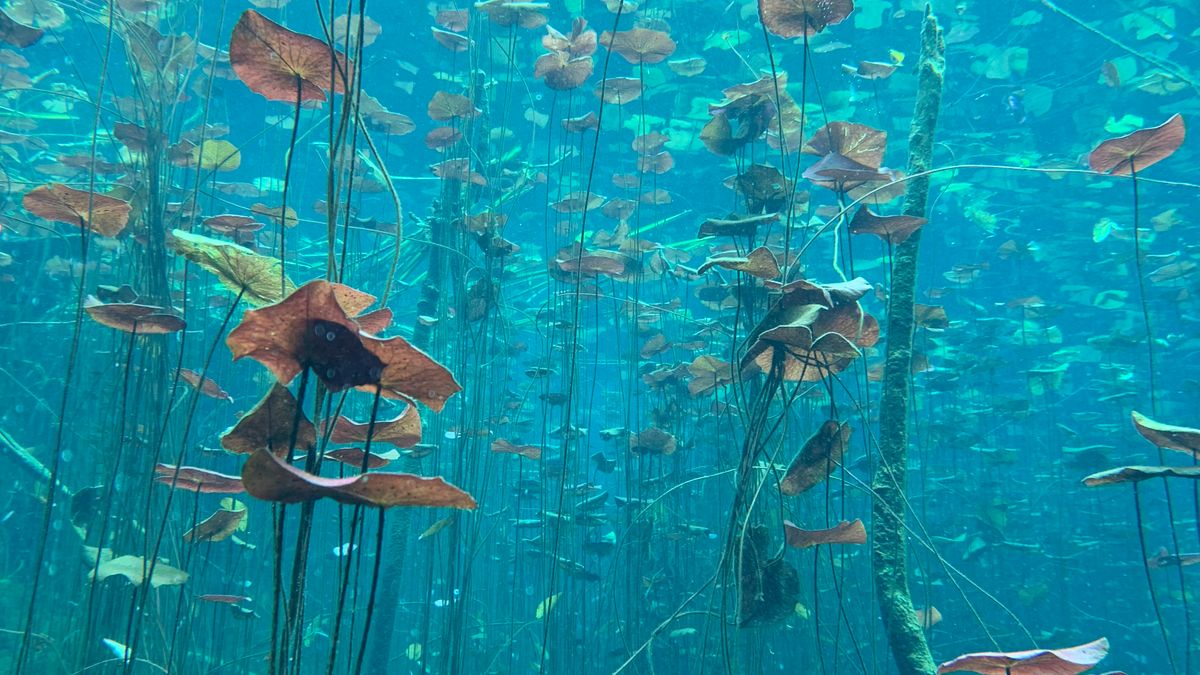
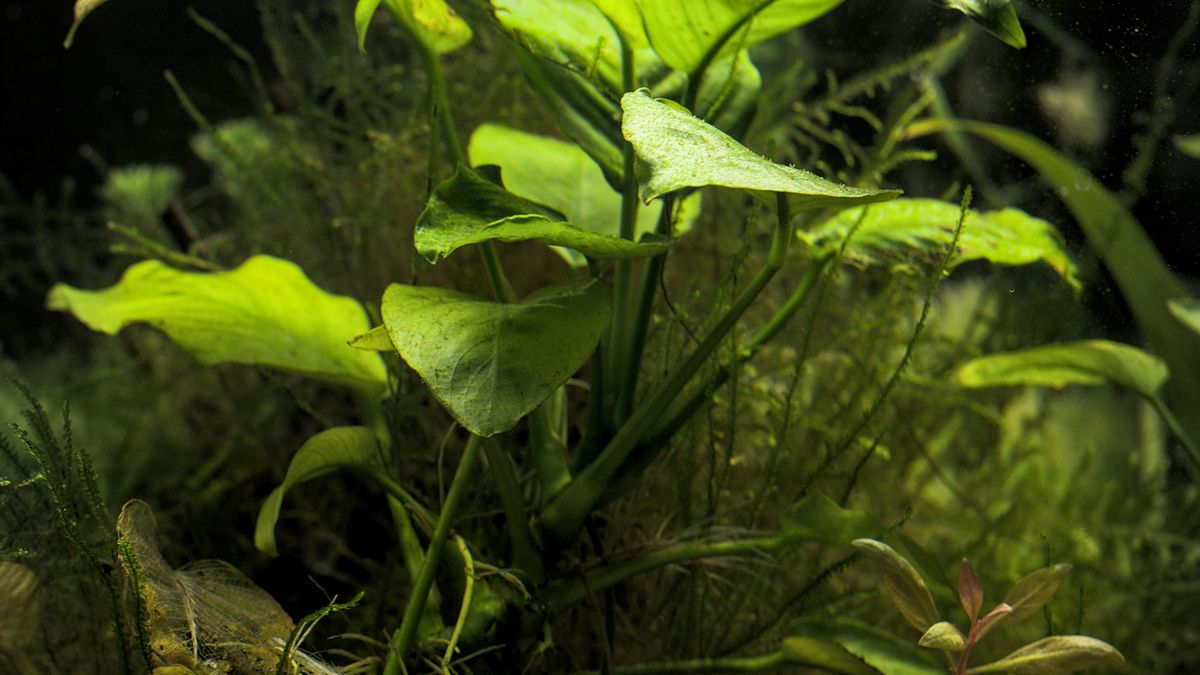
This article draws on plant-producer descriptions, aquatics husbandry guidance and federal Canadian aquatic-species prevention material. No Patify-owned aquarium, controlled growth comparison or hands-on pruning demonstration is claimed. The cover photograph is illustrative and must not be treated as confirmed Hygrophila difformis. Reference check: 13 October 2026. Product listings and local regulations can change and should be rechecked before buying or transferring plants.
Verified references
- Tropica: Hygrophila difformis plant information
- Tropica: Hygrophila difformis potted plant preparation
- Aquarium Co-Op: water wisteria planting and leaf transition
- Aquarium Co-Op: emersed/submerged aquarium-plant melt
- Fisheries and Oceans Canada — Don’t Let It Loose
- Canadian aquatic invasive species regulations — summary