
Cat Vomiting in the Carrier or Car: Nausea, Fear, or Both?
Drooling, retching, vomiting, crying, urinating, or defecating during a trip can reflect motion-related nausea, fear, an underlying illness, or more than one problem at once. The timing helps—but it does not diagnose the cause by itself.
Veterinary safety review: Evidence checked against FelineVMA/AAFP guidance, a peer-reviewed gabapentin trial, a feline pheromone transport study, and the current U.S. maropitant label. Last reviewed September 2, 2026.
Quick answer
Symptoms that begin when the carrier appears or before the vehicle moves make fear or anticipatory stress more likely. Symptoms that reliably begin only after motion starts and ease when the ride ends make motion-related nausea more likely. Neither pattern is proof: frightened cats can vomit, nauseated cats can become frightened, and medical problems can coincide with travel.
Do not try to choose a drug from the symptom pattern alone. Record what happens, improve carrier and vehicle setup, and ask your veterinarian about nausea control, pre-visit anxiety medication, or both. A cat that vomits outside travel, remains unwell afterward, or has emergency signs needs medical assessment rather than training alone.
First: when vomiting during travel is not a wait-and-see problem
Seek urgent veterinary help now
- Open-mouth breathing, obvious breathing difficulty, collapse, marked weakness, or pale, blue, or gray gums.
- Repeated retching with little or nothing produced, a swollen or painful abdomen, blood in vomit, or altered awareness.
- Possible toxin exposure, swallowed string or another foreign object, overheating, or trauma.
- Repeated vomiting with inability to keep water down, especially in a kitten, senior cat, or a cat with diabetes, kidney disease, heart disease, or another ongoing condition.
Call the clinic on the way when possible. Do not give human motion-sickness, anti-nausea, or sedating medicine unless a veterinarian has specifically prescribed it for this cat.
Arrange a veterinary appointment if the problem is new, worsening, happens outside travel, continues after the journey, is accompanied by appetite or weight changes, or recurs despite a calmer setup. “Car sickness” should not become a label that hides another cause of vomiting.
Motion sickness vs. carrier fear: use the pattern as a clue
The most useful question is not simply “Did my cat vomit?” It is “What happened before, during, and after the episode?” A timeline helps a veterinarian distinguish travel-associated nausea from fear, mixed distress, and unrelated disease.
| Observation | Leans toward motion-related nausea | Leans toward fear or distress | Why it is not definitive |
|---|---|---|---|
| Carrier appears | Cat may remain settled | Hiding, freezing, fleeing, growling, or struggling begins | A cat can learn that the carrier predicts previous nausea |
| Before the car moves | Few or no signs | Vocalizing, panting, drooling, dilated pupils, or elimination may begin | Stress itself can cause gastrointestinal signs |
| After movement starts | Lip licking, repeated swallowing, drooling, restlessness, retching, or vomiting | Fear may intensify with noise, vibration, and visual motion | Nausea and fear often occur together |
| When motion stops | Signs may gradually ease | Cat may remain tense or defensive | Recovery speed varies and medication can change the picture |
| At home or between trips | No vomiting expected from travel alone | Carrier avoidance may persist | Vomiting outside travel raises concern for a medical cause |
Motion is the consistent trigger
The cat enters the carrier without marked distress, develops nausea-associated signs during movement, and improves after the ride. Road type, trip length, temperature, odors, and a recent meal may change severity.
The warning cues start the reaction
The cat reacts to the carrier, keys, garage, engine, restraint, or veterinary routine. The reaction may begin before movement and can continue after arrival.
Both processes reinforce each other
Nausea can make the next carrier encounter frightening; fear can worsen salivation, gut motility, and vomiting. Treating only one component may leave the other intact.
Illness happens to coincide with travel
Gastrointestinal disease, pain, toxins, foreign material, metabolic disease, heat stress, and other problems can also cause vomiting or drooling. New or atypical signs deserve a veterinary check.
What to record before you call the vet
A short, factual travel log is more useful than trying to label the episode. If it is safe and does not distract the driver, a passenger can record a brief video.
- Baseline: appetite, water intake, stool, energy, and any vomiting during the previous 24–48 hours.
- First trigger: carrier appearance, entering, being carried, engine noise, or vehicle movement.
- First sign: lip licking, swallowing, drooling, vocalizing, panting, crouching, restlessness, retching, vomiting, urination, or defecation.
- Trip conditions: duration, road type, temperature, recent food, carrier location, cover, and any prescribed product used.
- Recovery: when signs eased and whether normal eating, drinking, walking, breathing, and behavior returned.
Share the exact product name, strength, amount, and administration time for anything given. Do not repeat a dose because the cat vomited unless the prescribing veterinarian tells you to.
Build a safer, lower-stress carrier and car setup
Current feline transport guidance emphasizes a suitable carrier, gradual acclimation, hiding options, level handling, comfortable temperature, and secure placement. These changes help regardless of whether nausea, fear, or both are present.
Choose a practical carrier
A sturdy carrier that opens at the front and top—and can ideally be taken apart—lets the cat remain in the bottom half during parts of an exam. It should be large enough to turn around and lie comfortably, but stable when lifted.
Keep it in daily life
Leave the carrier open in a quiet living area with familiar bedding. Treats, play, or meals near and eventually inside it can change “carrier predicts capture” into a neutral or positive association.
Reduce visual and physical motion
Support the carrier from underneath and keep it level. A light towel can provide hiding while keeping ventilation openings clear. Stop if covering increases heat or agitation.
Secure it correctly
FelineVMA recommends the vehicle floor behind a front seat. Use a seat belt only with a carrier certified for that restraint method; a belt can crush some untested carriers. Never allow a cat to roam loose in a moving vehicle.
A progressive carrier-to-car training plan
Move forward by behavior, not by a fixed calendar. A session can last seconds at first. Work below the point where the cat stops taking food, tries to escape, freezes rigidly, pants, or shows escalating distress. End while the cat is still coping.
- Carrier becomes furniture. Leave it open with the door secured so it cannot swing. Place familiar bedding nearby or inside. Reward looking at, approaching, and investigating it.Progress when the cat can approach or rest nearby without avoidance.
- Voluntary entry. Toss a high-value treat near the entrance, then just inside, then farther back. Never shut the door as a surprise.Progress when the cat enters and exits freely while relaxed.
- Door movement and brief closure. Touch and move the door, reward, then build from a momentary closure to slightly longer periods. Reopen before distress begins.Progress when the cat remains loose-bodied with the door briefly closed.
- Level lifting. Support the carrier underneath, lift a small distance, set it down, and reward. Gradually add a few steps around the home.Progress when carrying no longer produces escalating signs.
- Stationary vehicle. With the car parked in a safe, comfortable place, practice entering the car, sitting briefly, and returning home. Add door closing and engine sound as separate small steps.Progress only when the previous version is comfortable.
- Very short drives. Start with a smooth loop that ends at home; extend distance gradually. Avoid pairing every practice trip with injections, procedures, or another difficult event.If nausea appears despite low fear, stop the experiment and ask the vet about an anti-nausea plan.
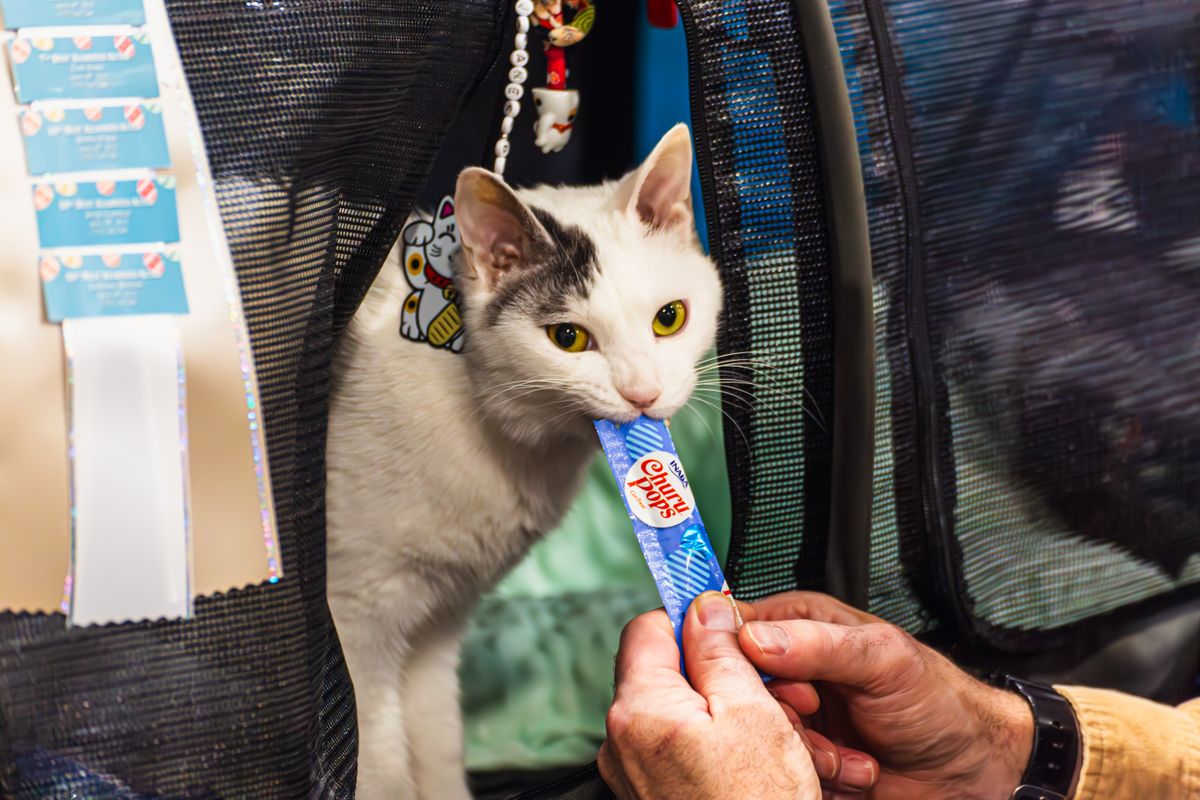
Training is not a reason to delay needed care. If an appointment is urgent, tell the clinic that transport is difficult; staff can help plan safe loading and pre-visit support.
Medication: treat the target, not the guess
A veterinarian may consider anti-nausea treatment, pre-visit anxiety medication, or both after reviewing the cat’s age, health, current drugs, trip length, and previous reactions. The right route and timing are patient-specific.
| Option to discuss | What it may target | What owners should know |
|---|---|---|
| Maropitant | Vomiting and nausea pathways | Prescription only. In the U.S., the injectable product is labeled for treatment of vomiting in cats aged 4 months and older; oral use and motion-sickness prevention in cats require a veterinarian’s case-specific judgment. Controlling vomiting does not automatically control fear. |
| Gabapentin | Situational fear and stress around transport or examination | A randomized crossover study found lower owner- and veterinarian-rated stress with a pre-appointment dose, but sedation was common and ataxia, hypersalivation, and vomiting were reported. Dose and timing must come from the prescribing vet, with extra care for individual health factors. |
| Synthetic feline facial pheromone | Background transport-related stress | A controlled study suggests benefit in cats with higher transport stress scores. Results vary; it should complement carrier training and safe handling, not replace veterinary care or medication when needed. |
| Other prescription plans | Severe or mixed distress | Do not combine sedatives, supplements, antihistamines, or anti-nausea drugs without veterinary approval. Interactions, excessive sedation, paradoxical excitement, low blood pressure, and poor coordination can create travel risks. |
Ask for a home trial
When the veterinarian prescribes a pre-travel medicine, ask whether to test it on a quiet day before the essential trip. Confirm when to give it, what effects are expected, what would be concerning, whether food is allowed, and what to do if the cat vomits after dosing.
Travel-day checklist
Before departure
- Follow the veterinarian’s feeding and medication instructions. There is no universal fasting rule for every cat; age, disease, trip length, procedure requirements, and medication all matter.
- Line the carrier with familiar, washable bedding over an absorbent pad. Pack a spare pad, towel, waste bags, water, and prescribed medication.
- Pre-cool or pre-warm the vehicle to a comfortable temperature. Never place the carrier in a closed trunk or leave the cat in a parked vehicle.
- Place the cat in the carrier indoors with exterior doors and windows closed, then support the carrier from below.
During the ride
- Keep the carrier secure, level, ventilated, and away from direct sun or heating vents. Drive smoothly and limit loud music, shouting, and strong fragrances.
- Do not open the carrier in an unsecured car, parking area, or roadside stop. A frightened cat can escape in seconds.
- For a long journey, ask the veterinarian in advance how to handle food, water, litter, medication duration, and safe breaks. The plan should fit this cat rather than a generic hourly schedule.
After arrival
- Move the carrier into a secure room before opening it. Let the cat emerge when ready unless medical staff need immediate access.
- Clean vomit promptly, replace wet bedding, offer water when appropriate, and watch breathing, balance, alertness, and further vomiting.
- Record recovery and report anything that differs from the veterinarian’s expected medication effects.
Frequently asked questions
Why does my cat drool in the carrier before the car moves?
Drooling can accompany fear, nausea, oral pain, toxin exposure, and other conditions. If it starts when the carrier appears, learned fear is one plausible explanation—but timing alone cannot prove it. New, heavy, or unexplained drooling warrants veterinary advice.
Does vomiting mean my cat has motion sickness?
No. Motion-associated nausea is possible when signs reliably start with movement, but stress and medical disease can also cause vomiting. A pattern across several trips plus a health history is more informative than one episode.
Should I withhold food before a car trip?
Ask your veterinarian. A large recent meal may worsen nausea for some cats, but long fasting is inappropriate for others and may conflict with age, illness, medication, or a scheduled procedure. Water and feeding instructions should be individualized.
Should I cover the carrier?
A towel or light blanket can reduce visual stimulation and provide hiding. Keep ventilation openings clear, monitor temperature, and uncover part or all of the carrier if the cat becomes hotter or more distressed.
Can my cat ride loose if the carrier causes panic?
No. A loose cat can interfere with the driver, escape when a door opens, or be severely injured in a crash. Ask the veterinary team for a loading plan, carrier training support, and medication guidance instead.
Will my cat simply get used to car rides?
Some cats improve with carefully graded, positive practice. Repeated overwhelming trips can instead strengthen fear, especially when nausea is untreated. Keep practice short and below the cat’s distress threshold, and involve the vet when signs persist.
Evidence and reviewed sources
- Feline Veterinary Medical Association: Transportation of Cats in Motor Vehicles Position Statement — carrier acclimation, hiding, and secure placement.
- AAFP/FelineVMA: Getting Your Cat to the Veterinary Practice — carrier choice, pheromone use, level handling, travel setup, and veterinary medication discussion.
- 2022 AAFP/ISFM Cat Friendly Veterinary Interaction Guidelines — choice, control, hiding, and lower-stress care.
- van Haaften et al., JAVMA (2017) — randomized crossover trial of pre-appointment gabapentin in cats.
- Shu and Gu, Journal of Feline Medicine and Surgery (2022) — synthetic feline facial pheromone during short-distance transport.
- DailyMed/FDA label: Cerenia injectable solution — feline indication, restrictions, precautions, and adverse reactions.
Bring a clearer timeline to the appointment
Use Patify to note the first trigger, first symptom, travel conditions, prescribed support, and recovery after each trip. A pattern is easier for your veterinary team to assess than a guess.
Get Patify on Google Play