Cherry Barb Care: Peaceful Group Planning, Male Colour and a Planted Tank
Plan a cherry barb group with correct species identification, a planted swimming layout, stable temperatures, appropriate feeding and realistic tank mates. Read the adult-size and same-species group notes before purchasing fish for a community tank.
Is the cherry barb the peaceful barb you want?
Cherry barbs are often a surprise to keepers who know barbs mainly for fin-nipping reputations. Puntius titteya is a relatively small Sri Lankan cyprinid that usually behaves peacefully in a properly planned group and planted community. Adult males can develop a rich cherry-red colour; females are typically more subdued. A retailer's brilliantly coloured male should not become the only standard for choosing the fish. You need room for a real group, shelter, suitable water and a way for quieter individuals to feed.
Seriously Fish describes an adult standard length of about five centimetres and an aquarium base of roughly 60 by 30 cm as a reference starting footprint, with a group of at least six to ten fish. That is not permission to put ten cherry barbs plus numerous other species in any container of the nominal minimum capacity. Calculate the mature inhabitants and the actual usable length. If you cannot offer a group without overcrowding, do not buy a lone male as a permanent ornament.
Identify males, females and ornamental strains
In many typical cherry barb lines, a mature male becomes noticeably red, while a female is fuller-bodied and more brownish or tan with a longitudinal dark band. Both sexes can show a dark stripe, and juveniles are not always straightforward to sex. Look at the whole body and behaviour rather than trusting a single online image. A fish with intense red pigmentation is not proof of wild origin or superior health; selective breeding has produced ornamental strains including super-red, albino and long-finned variants.
Older hobby literature may use Barbus titteya or other historical combinations. Seriously Fish currently profiles this fish as Puntius titteya and records earlier names. A common-name listing without a scientific identity can be ambiguous in a store that also sells rosy, tiger or other barbs with different group and compatibility requirements. Ask which species the batch is and what adult size and temperament the supplier expects. Buying by “red barb” alone makes the community plan unreliable.
Origin is interesting, but captivity is your responsibility
Cherry barbs are associated with the humid southwest of Sri Lanka, including the Kelani and Nilwala river systems. That tells you something about their biology, not that your indoor aquarium should imitate every seasonal weather pattern. The shallow edges, vegetation and sheltering materials of tropical streams can inspire a practical display, while water measurements and safety remain more important than an exact-looking habitat photograph.
Most ornamental cherry barbs sold in the hobby are commercially bred according to the species literature. Nevertheless, never infer that a particular shipment is captive-bred simply because most stock in a market is; request provenance if ethical sourcing matters to your purchase. Avoid wild collection or release into Canadian water bodies, which is both environmentally irresponsible and potentially unlawful. The correct end of an unwanted-fish situation is rehoming through an appropriate aquarist or store, never dumping animals, plants or aquarium water into the local ecosystem.
Adult body size, swimming space and useful footprint
A standard length around five centimetres does not describe the amount of room several fish need to navigate, display and retreat. Compare the tank's footprint with the group you plan to keep. The Seriously Fish 60 by 30 cm base reference is a minimum-type species profile figure; a longer tank gives greater flexibility for plants and multiple feeding spots. A tall column loses manoeuvring room even if its litres look impressive on a shop tag.
Measure the real open area between driftwood and vegetation. A good layout creates a continuous route through the middle or lower-midwater, with planted ends as places to break visual contact. There is no need to leave a totally barren centre, but every square centimetre packed with ornament will not help schooling fish. Place the heater, filter and intake so they do not force the entire group into a small high-current area. Design for the adult fish, not the tiny specimens in the sales tank.
| Species clue | Typical observation | Check before relying on it |
|---|---|---|
| Scientific name | Puntius titteya (older: Barbus titteya) | Do not rely on “red barb” labels |
| Adult male | Often brighter cherry-red; slimmer | Age and ornamental strains affect colour |
| Adult female | Often duller/rounder, dark lateral band | Juveniles may be difficult to sex |
| Group | A proper social group, about 6–10 or more | One ornamental male is insufficient |
Make a social group rather than collecting single colours
Cherry barbs form social groups, and a school of six to ten or more is a better basis for behaviour than isolated individuals. Males may display more vivid colours when other cherry barbs are present, but this does not mean you should deliberately force aggressive contests. Include sheltered areas and observe social dynamics. A peaceful fish can still be excluded from meals or repeatedly chased when a group is overcrowded or sex ratios and décor produce persistent tension.
Keep your main goal clear: normal swimming, confident feeding and undamaged fins. A cluster of one cherry barb, one ember tetra and one rasbora does not meet each species' social needs. If the current aquarium already houses several incomplete schools, resolve that design problem before adding another taxon. Increasing social numbers helps only when the environment can support the resulting adult bioload and activity. Otherwise the answer is a bigger, more suitable aquarium or a simpler fish list.
Water temperature in a Canadian home
Seriously Fish gives an indicative temperature range of approximately 20–27°C for Puntius titteya. Indoor temperatures can shift across Canadian winters and summers, particularly in rooms beside poorly insulated windows or in direct afternoon sun. Do not assume a small aquarium stays stable simply because its heater has a preset number. Use an independent thermometer and watch morning-to-evening variation for several days.
A heater is not necessarily required in every room for every suitable species, but you must demonstrate that the water stays within an appropriate stable range throughout the season; many homes cool too far at night. Conversely, a tank placed above a radiator or near summer sun can overheat. Plan for temperature stability, oxygen exchange and safe cable routing before buying the fish. Never release captive tropical fish outdoors during a warm week when the water happens to look inviting.
pH, hardness and the danger of constant adjustment
The Seriously Fish profile lists pH 6.0–8.0 and general hardness of about 2–20 dGH, with commercial captive strains usually fairly adaptable. This range is not a reason to create daily chemical oscillations. Test your conditioned tap water and the established aquarium. Know whether local municipal supplies or your own private well require specific preparation. Stability and non-toxic ammonia and nitrite levels have priority over hitting a fashionable pH number.
If the tank's water is substantially outside an appropriate range, investigate a sustainable preparation method before bringing livestock home. Sudden softening or acidification can harm residents and destabilise other processes. If you share the aquarium with species requiring a narrower chemistry window, meet the intersection responsibly rather than assuming the cherry barb's broad published tolerance applies to everyone. Record actual measured GH and pH; “medium-hard water” on a shop card is not a laboratory result.
Cycle and filter the tank before stocking
The biological filter is where a great deal of fish welfare begins. A new aquarium must develop the ability to process ammonia and nitrite safely before its fish load arrives. A working pump is not the same as a cycled aquarium, and clean-looking water can conceal harmful dissolved waste. Check with suitable tests, and build the stock plan around what the established filter and maintenance schedule can support.
Cherry barbs do not demand an extreme river-current setup. A moderate, well-distributed circulation pattern is generally easier for the whole school than a narrow jet crossing its favourite resting area. Arrange outlets and plant cover so the fish have calmer pockets while the surface remains oxygenated. Protect smaller or delicate fish from equipment intakes as needed. Rinse established biological media cautiously in compatible water according to manufacturer guidance rather than sterilising everything each week.
Plants, substrate and practical places to hide
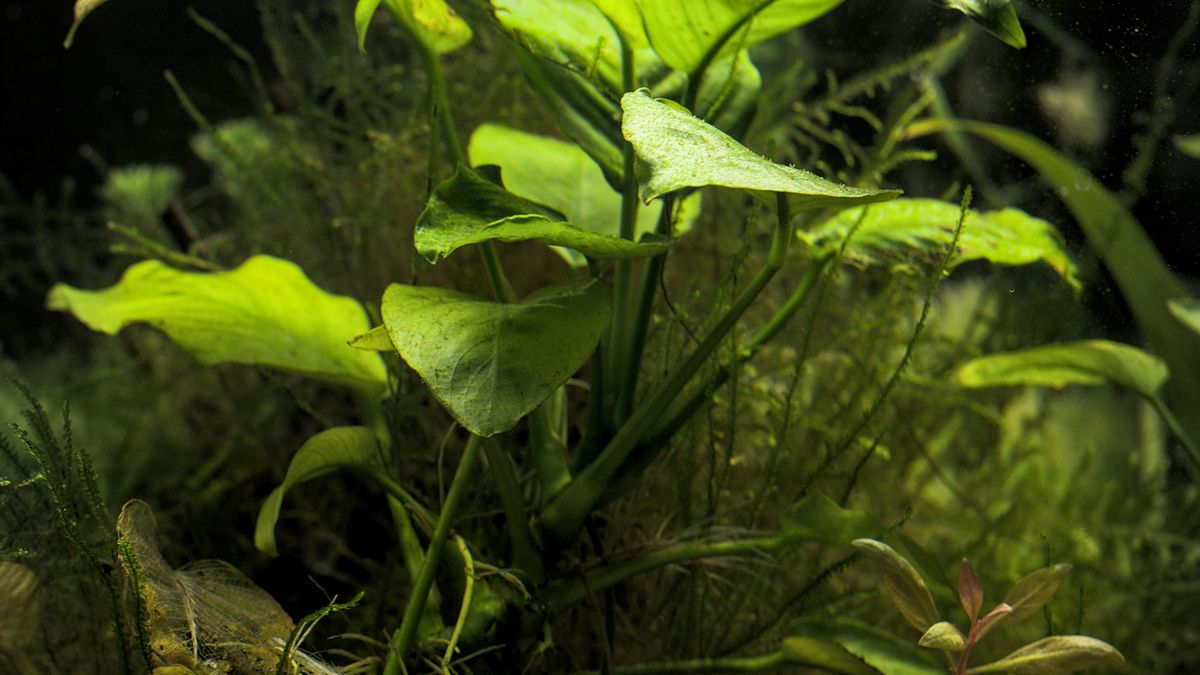
A heavily planted setting with darker substrate can accentuate cherry barb colour, according to the species profile. More important than colour contrast is the way plants divide the line of sight. A dense thicket on one end and another at the opposite end lets subordinate fish move without being watched continually by a dominant individual. Shorter plants can mark the edge of an open lane; leaves and safe pieces of wood offer refuge at different heights.
You do not need to harvest leaves or branches from a Canadian park to create that impression. Unknown woods, pesticide exposure and decaying material can create avoidable risks. Use aquarium-safe materials, inspect decorations for sharp edges and keep access for cleaning without uprooting the entire layout. If the fish always disappear into one tiny corner, ask whether the tank is too exposed, too busy or too brightly lit, rather than concluding that more hardscape is always the answer.
For substrate, lighting and plant placement as a standalone task, see the planted-tank setup guide.
Lighting and the real meaning of deep red
Male cherry barbs can display strong red pigmentation, but the precise colour depends on sex, maturity, strain, lighting and condition. Shop photographs may be edited or taken with very warm lights. A pale young male is not proof of starvation; an unusually red ornamental strain is not proof of expert husbandry. Compare individuals under normal aquarium lighting and look for consistent appetite, full but not swollen bellies and unhurried swimming.
Keep a reasonable light-dark cycle suited to the plants and avoid sudden, intense changes. If fish hide throughout the photoperiod, provide shade and evaluate tank-mate disturbance. If one fish suddenly loses colour while others behave normally, observe for social exclusion, damage or disease instead of reaching immediately for colour-enhancing food. If several fish gasp or clamp their fins together, check water and seek professional advice. Colour is a useful contextual clue, never a standalone diagnosis.
| Aquarium checkpoint | Safer starting approach | Warning sign |
|---|---|---|
| Footprint | 60 × 30 cm minimum reference, with room for group | Short crowded decorative tank |
| Water | Stable measured pH/GH and temperature | Repeated chemical swings |
| Plants | Cover at both ends, accessible swimming lane | Bare tank, no retreat |
| Feeding | Varied staple and occasional safe small foods | Some fish systematically miss meals |
| Community | Peaceful compatible adult-sized fish | Territorial chases or predatory mouths |
A mixed diet that reaches every fish
Cherry barbs are adaptable foragers. Species accounts mention small invertebrates, algae and other organic material in the wild, while aquarium diets can include good quality prepared foods alongside appropriately sized live or frozen Daphnia, brine shrimp or insect larvae. A varied menu can be practical without being elaborate: select a sound staple, offer safe occasional alternatives, and judge success by what the fish eat and by maintained body condition.
Do not buy food based on the red colour shown on a label. Watch distribution: do females get access, or do a couple of assertive males intercept everything? Use small portions and, if needed, more than one release point. Prevent food from accumulating under driftwood and rotting unseen. Live and frozen foods require reputable sourcing and appropriate storage; wild-caught organisms from unknown water can introduce contaminants or pests. Feeding should support the fish while keeping the biological load manageable.
Community compatibility, evaluated in the right order
Cherry barbs tend to be considerably less troublesome than tiger barbs, but this distinction does not make every mixed aquarium safe. Research the actual companion species' adult dimensions, group needs, water requirements and feeding habits. Peaceful small tetras, some bottom-dwelling fishes and other comparably sized non-predatory community species may be candidates in a suitable tank. Territorial cichlids, predatory mouths and chronic fin nippers deserve particular scrutiny.
If you are considering Congo tetras, size and swimming footprint become the limiting factors even where the temperature ranges overlap. Congo tetras are substantially larger and need a long aquarium; copying the cherry barb minimum tank recommendation for that combination would be a mistake. Conversely a community of highly timid nano fish could suffer from feeding competition. Use the larger and more demanding species' welfare requirements to determine the shared tank, not a simplistic compatibility label.
Do not infer a Congo tetra fits from the barb minimum; compare its adult length in our Congo tetra care guide.
Male and female grouping without breeding pressure
Many aquarists enjoy a mixture of male and female cherry barbs because their appearances differ and social displays become more visible. But a fixed sex ratio is not a substitute for sufficient space, refuge and observation, and fish sold at a young age may not be reliably sexed. Avoid treating every brief chase as a welfare emergency; watch whether the pursued fish can retreat, resumes feeding and remains in good condition.
Persistent harassment, damage, weight loss or one fish hiding without a break are not normal goals of maintaining a group. Add visual barriers and consider a change in stock or layout after confirming water quality. Do not purchase extra females automatically as a cure for an unidentified problem. Keep notes about time of day, who pursues whom and where trouble occurs. Such observations are far more actionable than a general claim that “barbs are aggressive.”
Quarantine and acclimation after a purchase
Ask the retailer how long the fish have been in store, whether there have been losses and what water conditions they are accustomed to. Transport across a Canadian winter introduces temperature concerns; carry the fish in an insulated container without exposing them to freezing air or direct heating. Appropriate acclimation depends on journey length and the chemistry of shipping water. Aquarium Co-Op warns that ammonia behaviour in long-shipped sealed bags differs from that in brief local transfers; use a method suited to those conditions.
A separate, cycled observation aquarium is valuable when adding animals to an established community. It should have cover, filtration, oxygenation and conditions appropriate to the temporary inhabitants. Quarantine does not make prophylactic medication necessary in every case. Observe for injury, abnormal respiration, refusing food and changes in stool or swimming, and seek an aquatic veterinarian if serious concerns arise. Never use household antimicrobial agents or human medicine as an aquarium shortcut.
The first week: what to record
On arrival day, document the water temperature, basic water-quality tests and where the group rests after a gentle introduction. Keep noise and lighting changes modest. On the following days, confirm that all individuals can take correctly sized food and are not being driven away from shelter. Monitor ammonia and nitrite especially carefully if the biofilter is new or the tank's load has recently increased. Any measurement should be interpreted alongside fish behaviour and the test manufacturer's instructions.
Make a simple dated note about feeding competition, fin condition and which zone of the aquarium each fish uses. One fish exploring alone for a few minutes is not automatically sick; an animal persistently missing food deserves closer attention. Resist repeatedly catching the school for photographs. A calm first week creates a baseline so later changes have context. You cannot judge welfare entirely from a single snapshot of a bright red male.
Routine maintenance in a planted cherry barb tank
Your maintenance schedule should reflect real water-test trends, plant growth, feeding volume and livestock load. Replace part of the water as appropriate using properly conditioned and temperature-matched replacement water. Remove trapped waste selectively rather than stripping established biological surfaces bare. Clean equipment in a manner compatible with preserving the beneficial organisms that process nitrogen compounds. Inspect heater, lid and filter performance as seasons change.
Trim plants when they consume the entire swimming lane, but do not remove all refuge at once. Keep hardscape secure so vigorous fish cannot dislodge rocks or become trapped in narrow spaces. Review body condition across males and females, not just the showiest fish. If algae appears, identify whether light duration and nutrient balance changed before introducing an animal as a “cleanup solution.” A cherry barb should never be treated as a disposable algae-control device.
| Normal possible behaviour | Potential concern | Verify |
|---|---|---|
| Male displays near females | One fish hides and misses meals | Cover and actual pursuit |
| Juvenile lacks vivid red | Sudden widespread pallor | Water, light and context |
| School rests among plants | Continuous surface gasping | Oxygen and water testing |
| Occasional brief chasing | Fins damaged or weight dropping | Observe and address bullying |
Reproduction, eggs and realistic fry expectations
Cherry barbs are egg scatterers without parental care. Mature adults may spawn in a planted aquarium, but eggs and tiny fry are vulnerable to being eaten. Dedicated breeding requires careful separation, egg protection and foods sized for very young fish; a typical community aquarium is not designed for reliable fry survival. A fish becoming bright red does not guarantee successful reproduction on a particular date.
If breeding is a serious aim, research the separate breeding setup and have a plan for adult rehoming or space for juveniles before encouraging spawning. Avoid deliberately overcrowding adults to create competition or stressing females with repeated netting. Fry require a different feeding and water-management programme from adults. There is no need to breed cherry barbs to give them a good life; stable social care is a complete and worthwhile objective.
Troubleshooting: faded fish, chasing and missing meals
When a cherry barb hides or fades, first ask what changed: tank mates, plant cover, water temperature, filter flow, lighting or feeding practice. Check ammonia and nitrite and inspect the fish for injuries. A species that usually tolerates a broad range of water chemistry can still be damaged by sudden instability. Record actual values before applying treatments or changing multiple conditions at once.
If chasing is constant, work out which fish initiates it and where the pursued individual can escape. If only a few fish eat, spread food over different places and test whether particle size is appropriate. If a fin is torn, examine hardscape and companion behaviour before declaring a disease. Never medicate a whole community based solely on a photograph or a generic colour symptom. Seek professional aquatic health guidance where injury, serious illness or repeated deaths occur.
The pre-purchase plan, and how this guide is sourced
Write down the aquarium's real length, the size of the same-species group, temperature readings in both warm and cool parts of the day, GH and pH from your own treated water, filtration status and all existing tank mates. Plan shelter on both sides of an open swimming lane. Price the complete group rather than a single handsome male, and ask the retailer about provenance and recent losses. If your plan works only by keeping one fish alone, choose a different species.
Species-specific details and common names have been checked against Seriously Fish, while Aquarium Co-Op provides additional behaviour, stocking and acclimation context. These sources describe general husbandry, not a personal Patify fishkeeping experiment or a veterinary opinion about your animals. For other schooling fish, compare our lemon tetra and Congo tetra guides; for broader principles, consult our cycling and planted aquarium resources. Choose by adult footprint and actual welfare needs, not by the colour palette of a store display.
A two-tank comparison that prevents expensive errors
Picture a sixty-centimetre planted aquarium with gentle filtration and an established group of cherry barbs. Its arrangement can be appropriate for a modest social group with sufficient space and disciplined stocking, but it is not magically capable of housing a school of larger Congo tetras. The latter require a much longer swimming footprint even when the total water chemistry overlaps. This contrast makes tank length a decision tool instead of a decorative specification on a sales page.
Now picture a larger aquarium with bright lights, little vegetation and assertive resident fish. A higher volume does not automatically guarantee happier cherry barbs: the group might still lack shelter and predictable feeding access. Check how animals actually use the environment before declaring the larger tank perfect. Better planting, thoughtful stocking and observation can matter alongside gallons. These are examples for thinking through trade-offs, not case reports from an experiment or promises about every individual's behaviour.
Keep an evidence log instead of trusting a single care card
For the first month, record the source and date of any care figures you rely on. A shop may quote a round temperature or tank-size figure without explaining whether it refers to newly imported juveniles or a permanent adult group. Compare it with a dedicated species profile and your measured equipment dimensions. If two reputable sources differ, understand the underlying measurement method and welfare context instead of choosing the lowest number because it makes an existing aquarium look sufficient.
That discipline also helps when asking for advice later. A brief record of tank length, group size, temperature history, ammonia, nitrite, recent additions and feeding response gives an aquatic professional or experienced keeper far more useful context than “the fish look unhappy.” Accurate observations cannot eliminate uncertainty, but they can prevent a string of costly, stressful and poorly targeted changes.
Compare species and core aquarium steps
Use these additional guides to compare a different species or to solve a setup question. The size and group requirements in this article still apply to the exact species discussed here.
Related species: Lemon Tetra Care Guide, Congo Tetra Care Guide.
Existing practical resources: Tetra Types, Planted Aquarium Setup, How To Cycle A Fish Tank, How To Acclimate Fish.
Sources and evidence limits
Species figures and behavioural notes were checked against the references below on 15 October 2026. They are care-planning sources, not measurements of your own tank. When advice differs, prioritise adult swimming space, a healthy group and stable, measurable water conditions; verify local availability and prices with your retailer.
- Seriously Fish — Cherry barb
- Aquarium Co-Op — Cherry barb care
- Aquarium Co-Op — Acclimation
- Aquarium Co-Op — Quarantine
Animal welfare: persistent abnormal breathing, wounds, loss of balance, refusal to feed or repeated deaths warrant timely review of water quality and advice from a qualified aquatic veterinarian. This editorial guide does not diagnose or prescribe treatment.