
Last verified: September 29, 2026
DIY Dog Bed: Build the Bed Around Your Dog—and Around Laundry Day
Quick answer: the easiest homemade dog bed is not necessarily the best one. Start by measuring the space your dog actually uses when sleeping, then choose a construction that matches three realities: how your dog sleeps, how often the bed will need washing, and whether your dog chews or tears bedding. For most homes, the most practical design is a washable outer cover around a removable insert. A no-sew fleece bed is faster; a zippered cover is easier to maintain long-term; a low-profile foam bed gives older or joint-sensitive dogs more stable support.
This guide gives you three complete builds, including measurement logic, cut lists, washable-design options and safety checks. It deliberately avoids universal “small/medium/large” charts because dog body length, sleep posture and bed style vary too much for one invented size table.
Patify build rule: make the cover washable, make the insert removable, and make every loose component inaccessible to a dog that likes to shred or swallow fabric.
Which DIY Dog Bed Should You Build?
| Build | Sewing? | Best feature | Main tradeoff |
|---|---|---|---|
| No-sew fleece tie bed | No | Fast, cheap, easy to open and refill | Fringe/knots are poor choices for dogs that chew fabric |
| Zippered washable cover | Basic sewing | Best long-term washability; insert stays separate | Requires zipper installation and seam finishing |
| Foam support bed | Basic sewing or fitted envelope cover | Stable, low-profile support | Foam itself usually should not go through a washer |
The Honest Kitchen’s established no-sew project uses two fabric layers, fringe cut around the perimeter and removable stuffing. It specifically notes that the tied cover can be opened to remove the filling before washing. That is the useful concept to preserve: the washable textile layer and the cushion core should not have to be treated as one object.
AKC’s general dog-bed guidance makes the other design principle clear: the bed should be large enough for the dog to lie comfortably on their side. Older dogs or dogs with arthritis may benefit from more supportive orthopedic-style cushioning. citeturn530422search0turn530422search7turn530422search6
How to Measure Your Dog for a DIY Bed
Do not measure only nose-to-tail while your dog is standing. Watch the dog sleep first.
Step 1: Identify the default sleep posture
- Sprawler: sleeps on the side with legs extended.
- Curler: sleeps in a compact circle.
- Switcher: alternates between curled and fully stretched.
- Bolster user: rests the chin or back against an edge.
Step 2: Measure the largest real sleeping footprint
When your dog is relaxed, measure the longest head-to-rump/foot dimension they actually occupy and the widest dimension across the body and legs. Call those measurements L and W.
Step 3: Add a comfort margin
There is no veterinary rule that every bed must add exactly six or eight inches. For a DIY project, add enough room that your dog can reposition without hanging off the cushion. As a practical starting example—not a universal sizing standard—you might add about 4 inches to each end and each side for a medium dog, then increase that margin for a sprawler or large dog.
Example only: dog’s sleep footprint = 32 × 20 in. Add 4 in around every edge → target cushion about 40 × 28 in.
Before cutting expensive fabric, mark the proposed finished dimensions on the floor with painter’s tape and place your dog’s existing blanket inside the outline. If your dog naturally hangs off it, enlarge the pattern.
Project 1: No-Sew Fleece Dog Bed
This is the quickest true DIY option and closely follows the proven tie-bed construction used by The Honest Kitchen. Their project uses fleece, scissors and removable stuffing, with fringe approximately 1.5 inches wide and 3.5 inches long. citeturn530422search0
What you need
- two matching-size panels of fleece;
- fabric scissors;
- measuring tape or ruler;
- washable/removable filling;
- optional washable inner fill bag.
Pattern math
If you use 3.5-inch fringe on every edge, the fabric panels must extend beyond the intended cushioned center. A simple cutting formula is:
Cut length ≈ desired center length + 7 in
Cut width ≈ desired center width + 7 in
This produces a 3.5-inch fringe zone on both sides of each dimension. The exact finished padded footprint will vary with knot tightness and how much filling you use, so treat the math as a cutting guide, not precision upholstery.
Build steps
- Wash and dry the fleece first if you expect normal laundering later.
- Lay both panels directly on top of each other.
- Square the corners and clip the layers together if needed.
- Mark a 3.5-inch border around all four sides.
- Cut through both layers to make fringe strips roughly 1.5 inches wide.
- Pair each top strip with the matching bottom strip.
- Tie around three sides and most of the fourth side.
- Insert the filling or inner fill bag.
- Close the remaining ties.
- Press and redistribute the fill until the bed is even.
Make it truly washable
The best upgrade is to keep the fill inside a separate simple inner bag. When the cover needs washing, untie one short section, remove the whole insert, and wash only the fleece shell. Without an inner bag, loose fiberfill or cut-up textiles can scatter every time you open the bed.
Not for destructive fabric chewers: The Honest Kitchen itself warns that knots can be chewed off and swallowed. If your dog actively tears fringe, blankets or soft toys, choose a simpler close-fitting cover and supervise or remove damaged bedding. citeturn530422search0
Project 2: DIY Washable Dog Bed With a Zippered Cover
This is the strongest all-around build because the dirty part—the outer shell—can be washed without soaking the cushion core.
Materials
- durable washable upholstery fabric, canvas, denim or tightly woven cotton blend;
- zipper approximately the length of one short side or longer;
- matching thread;
- sewing machine;
- removable insert: foam slab, existing dog-bed cushion, pillow inserts, or a separate stuffed liner;
- optional waterproof washable protector between cover and insert.
Simple rectangular cut formula
Measure the insert after it is filled. Call finished insert dimensions L × W × T (thickness).
For a basic boxed cover, the most accurate pattern depends on sewing method. The beginner-friendly route is to make two large panels and accept a softer, pillow-like edge rather than trying to upholster perfect boxed corners.
For a flat pillow-style shell with a ½-inch seam allowance, cut each panel approximately:
(finished length + 1 in) × (finished width + 1 in).
If the insert is thick, add extra ease before cutting or make a boxed cover with side panels equal to the insert thickness plus seam allowance.
Construction
- Prewash the fabric.
- Measure the actual insert.
- Cut top and bottom panels.
- Install the zipper into one side seam.
- Open the zipper halfway before sewing the remaining perimeter—otherwise you can trap the cover inside-out.
- Sew the remaining sides with the planned seam allowance.
- Clip bulky corners without cutting through the seam.
- Turn right-side out.
- Insert cushion and check for bunching.
The “two-cover” upgrade
If your dog is muddy, incontinent, drools heavily or swims often, make two identical outer covers. One can be in the wash while the other is on the bed. This is usually more useful than making one decorative cover from a fabric you are afraid to launder.
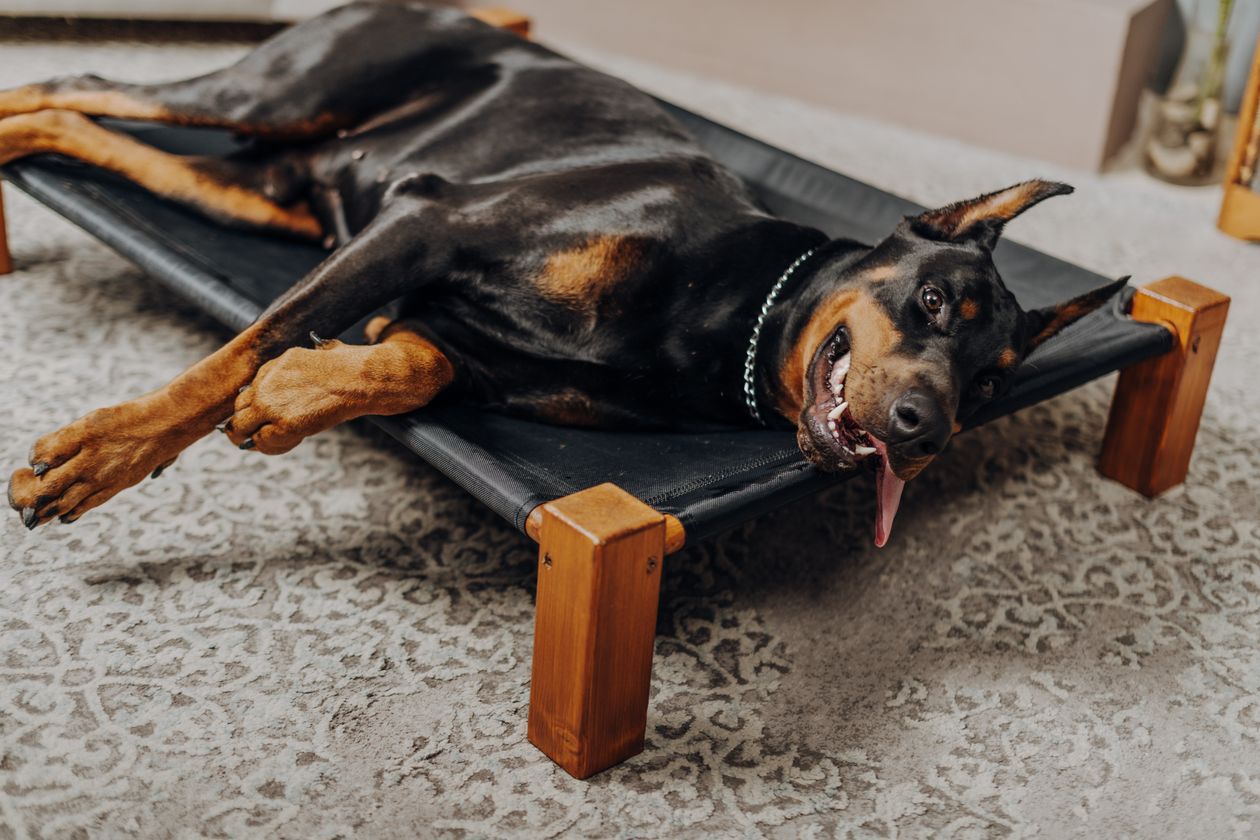
Project 3: Low-Profile Foam Bed for Seniors or Dogs Who Prefer Stable Support
AKC and PetMD both note that older dogs and dogs with arthritis or joint concerns may benefit from supportive orthopedic-style bedding. PetMD also points out that dogs who stretch flat may prefer an open mattress, while some curlers like bolsters; high sides can make access harder for dogs with mobility limitations. citeturn530422search6turn530422search7
What to use
- a single intact slab of upholstery foam or memory/orthopedic-style foam sized to the dog;
- a washable inner protector;
- a removable outer cover;
- optional thin non-slip mat under the bed.
Build
- Choose the finished footprint using your dog’s measured sleeping position.
- Choose a foam thickness that does not bottom out when your dog lies down.
- Keep the entry low enough that the dog does not need to climb over a tall bolster.
- Wrap the foam in a removable protector rather than gluing fabric permanently to it.
- Make the washable zippered outer cover from Project 2.
- Put the bed on a stable floor and check that the whole assembly does not slide as the dog steps on.
There is no single foam thickness that is medically correct for every dog. Weight, foam density, joint disease and preferred posture all matter. The useful test is whether the dog can settle without the cushion collapsing to the hard floor and can rise without fighting a moving or excessively soft surface.
VCA notes that dogs with musculoskeletal issues may prefer comfortable padding on a solid, low surface that is easy to access. citeturn250250search0
What Can You Use to Fill a Homemade Dog Bed?
| Fill | Advantages | Limitations |
|---|---|---|
| Polyester fiberfill | Light, fluffy, easy to shape | Can clump/compress; dangerous if a dog tears the bed and swallows it |
| Old clean towels | Reusable, washable, inexpensive | Heavy; can bunch unless contained in sections/inner bag |
| Old clean T-shirts/fabric | Reuses household textiles | Lumpy if packed randomly; loose strips are unsuitable for shredders |
| Existing pillow/cushion insert | Fast and replaceable | Must be large/supportive enough; inspect seams |
| Foam slab | Stable support, predictable shape | Usually not machine washable; must remain inaccessible to chewers |
| Shredded foam | Conforms easily | Messy and particularly important to contain securely |
The Honest Kitchen’s DIY project lists old dog-bed stuffing, old towels, unused T-shirts or polyester filling as options. Whatever you choose, place loose fill inside an inner liner rather than directly behind a cover your dog frequently opens or mouths. citeturn530422search0
Materials I would skip
- Loose bean-bag beads: difficult to contain once a seam fails and unsuitable for a dog likely to chew the cover.
- Loose strings/yarn scraps: long flexible material can be swallowed.
- Unknown construction foam or insulation: ASPCA warns that some home-repair foams and insulation can create serious ingestion hazards; DIY pet bedding is not the place to repurpose unidentified building materials. citeturn530422search10
- Cooling-pad gel as homemade fill: do not cut open or repurpose commercial cooling pads. ASPCA Poison Control issued a 2025 warning about serious neurologic signs reported after ingestion of hydrogel from some cooling products. citeturn530422search5
Design for Washing Before the First Muddy Paw
A dog bed can accumulate hair, saliva, dirt, skin debris and bodily fluids. PetMD’s cleaning guide emphasizes regular laundering and following the care directions appropriate to the bed’s fill and cover. The practical DIY lesson is simple: do not permanently sew the dirty cover to a core that cannot be washed. citeturn530422search4
The three-layer washable system
- Outer cover: the part you routinely remove and machine wash.
- Protector: optional water-resistant layer for drool, accidents or wet dogs.
- Insert: foam or contained fill that stays dry and structurally stable.
Before choosing fabric
- Check that it can tolerate the washing method you actually use.
- Prewash before measuring final panels.
- Avoid decorative trims, fringe, buttons or hardware that the dog can pull off.
- Use enclosed/finished seams where possible so repeated washing does not unravel the cover.
- Make the zipper opening large enough to remove the insert without bending or tearing it.
Wash frequency
There is no need to write one rigid calendar into the bed design. Clean it sooner after urine, vomit, diarrhea, muddy outdoor use, parasites or skin infection. For ordinary household use, PetMD’s published guidance discusses weekly to every-other-week laundering as a practical range, adjusted for activity, shedding, outdoor exposure and allergies. citeturn530422search4
If Your Dog Chews Beds, Change the Project
VCA warns that the major danger with damaged stuffed toys and pet beds is the stuffing itself. Swallowed soft filling can contribute to gastrointestinal obstruction. VCA’s foreign-body guidance likewise lists swallowed non-food objects as potentially life-threatening when they block the gastrointestinal tract. citeturn530422search12turn530422search14
That means a cute fleece fringe bed is the wrong build for a dog who methodically eats fleece strips.
For a shredder
- skip fringe and dangling fabric;
- use a simple close-fitting cover;
- keep zipper pulls hidden or covered where practical;
- inspect seams every day at first;
- remove the bed when stuffing or foam becomes accessible;
- do not assume “pet-safe fabric” means safe to swallow.
If your dog swallows part of the bed and later vomits, loses appetite, seems painful or becomes lethargic, contact a veterinarian. Patify’s foreign-object vomiting guide explains why a missing piece matters even when the object was originally a pet product.
Senior-Dog Bed: Comfort Is More Than “Extra Fluffy”
More softness is not automatically more support. PetMD’s current veterinarian-reviewed orthopedic-bed guidance emphasizes supportive foam and choosing bed geometry around the dog’s needs. Dogs who stretch may prefer a flat open mattress; dogs who like to curl or rest the head may like bolsters, but high walls can make entry harder for dogs with arthritis. citeturn530422search6
Useful senior-friendly features
- low entry;
- stable foam that does not collapse to the floor;
- non-slip base;
- large enough for side-lying;
- removable washable cover;
- water-resistant protector for incontinence;
- no need to jump or climb into the bed.
If your older dog is crate-trained, Patify’s older-dog crate training guide also covers washable bedding, non-slip footing and why some seniors prefer supportive but cooler sleeping surfaces.
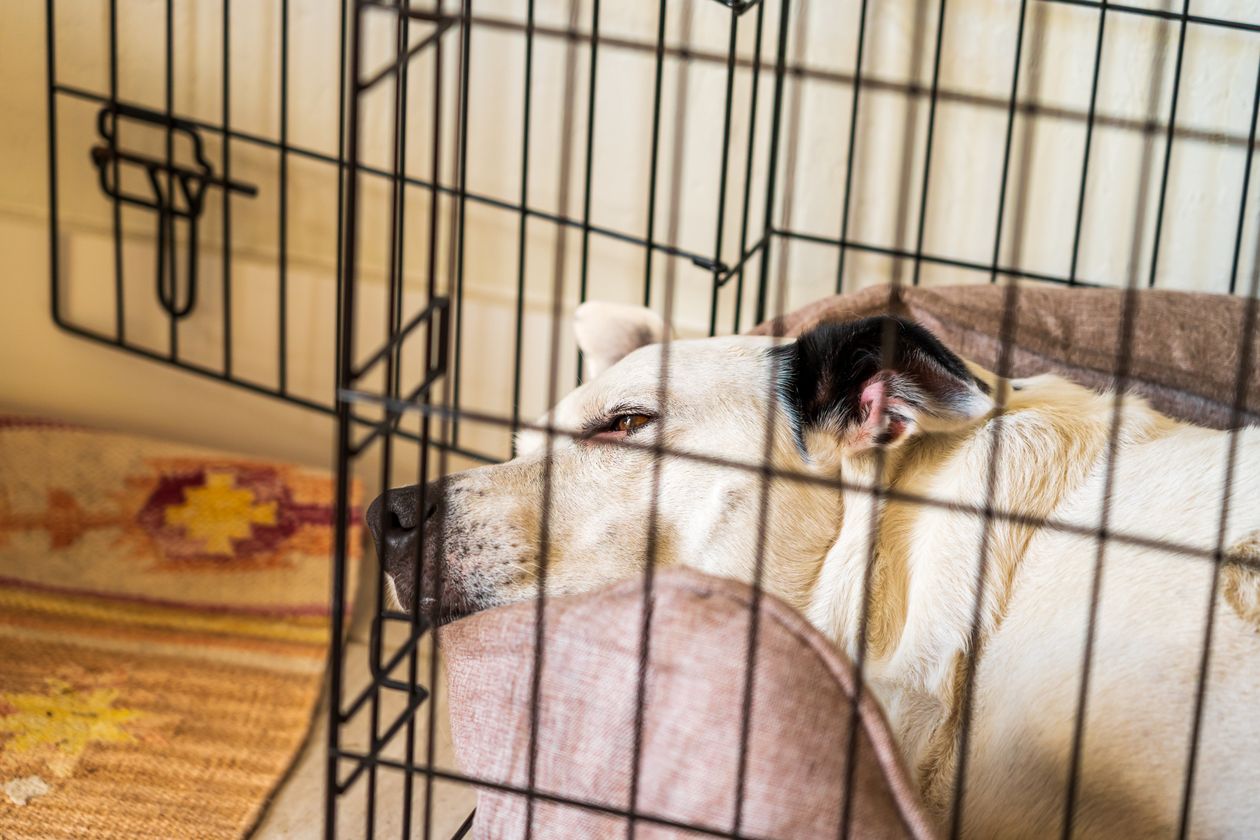
DIY Washable Crate Bed
A crate bed is simply the low-profile version of Project 2 or 3.
- Measure the interior floor of the crate, not the external crate dimensions.
- Leave enough clearance that the bed does not curl up the side walls and block doors or dividers.
- Use a flat removable foam or fiber insert.
- Make at least two washable covers if the crate is used daily.
- Confirm the dog can still stand, turn and lie down comfortably with the bed installed.
- If the dog tears bedding when confined, remove damaged soft bedding and address the behavior/safety issue rather than repeatedly replacing exposed stuffing.
Do not attach a DIY bed to crate bars with long loops or cords. Simpler is safer.
Can a DIY Dog Bed Actually Save Money?
Sometimes—but the honest comparison is not “scrap fabric = free.” Count the zipper, thread, foam/fill, protector and replacement covers you need.
| You already own... | DIY value |
|---|---|
| Washable fleece + old clean towels | Very strong for a basic no-sew bed |
| Sewing machine + durable leftover fabric + existing insert | Excellent for a removable-cover build |
| Nothing but need large high-density foam | DIY may not be cheaper than a sale-priced commercial bed |
| Dog destroys beds repeatedly | Safety/durability matters more than lowest material cost |
The real DIY advantage is customization: you can make replacement covers, match an odd crate dimension, reuse an intact cushion, create a low entrance for a senior, or build around your dog’s exact sleeping footprint.
10 Common DIY Dog-Bed Mistakes
- Choosing size by breed label instead of actual sleep posture.
- Sewing the cover permanently around foam. You lose easy washability.
- Using loose fill without an inner liner.
- Adding fringe to a dog that eats fabric.
- Making a senior bed too tall to step onto.
- Using slick fabric underneath on hardwood.
- Repurposing unknown construction foam, insulation or chemically treated scrap.
- Adding buttons, cords or decorative hardware that can be pulled off.
- Making the zipper opening too small to remove the insert.
- Trying to save a badly damaged bed after stuffing is exposed.
Frequently Asked Questions About DIY Dog Beds
What is the easiest homemade dog bed?
A two-panel fleece tie bed is one of the easiest because it needs no sewing. Cut matching fabric layers, create fringe around the perimeter, tie most edges, add a removable insert, then close the remaining side.
How do I make a dog bed washable?
Separate the outer cover from the cushion core. Use a zipper, envelope closure or reopenable no-sew edge so the cover can be laundered by itself. A second spare cover makes maintenance easier.
Can I fill a dog bed with old clothes?
Clean old T-shirts and towels can be reused as fill, as The Honest Kitchen’s DIY project suggests. Put them inside a separate liner so they do not scatter and so you can remove the whole insert before washing the cover.
Can I use a regular pillow as a dog-bed insert?
Yes for some small dogs if it is large enough, supportive enough and remains intact. Put it inside a washable dog-bed cover and inspect seams. It is not automatically suitable for a large dog or a dog needing orthopedic support.
How big should a DIY dog bed be?
AKC recommends enough space for the dog to lie comfortably on their side. Measure your dog’s largest actual sleeping footprint and add practical repositioning room rather than relying on a generic breed-size chart.
What fabric is best for a homemade dog bed?
Choose durable, washable fabric appropriate to your sewing method and dog. Fleece is easy for no-sew projects; canvas, denim and tightly woven upholstery-type fabrics can suit sewn covers. Prewash before cutting.
Is memory foam good for a DIY dog bed?
Supportive foam can work well, especially for older dogs, but keep it inside a removable protector and washable cover. Foam should remain inaccessible to dogs who chew bedding.
Can I wash a foam dog bed?
Usually the safest design is to wash the removable cover and follow the foam manufacturer’s care instructions for the insert. Do not assume a large foam slab is machine washable.
Is a no-sew fleece bed safe for a chewer?
Not necessarily. The Honest Kitchen warns that tied fleece knots can be chewed off and swallowed. Choose a simpler intact cover for dogs that shred or ingest fabric.
What should I do if my dog eats dog-bed stuffing?
Contact your veterinarian for individualized advice, especially if a meaningful amount is missing. Vomiting, poor appetite, abdominal pain, lethargy or repeated retching can occur with gastrointestinal foreign bodies and should not be managed by simply waiting for the material to pass.
Should a senior dog bed have bolsters?
Only if your dog likes them and can enter comfortably. PetMD notes that bolsters may help dogs who like head/neck support, while dogs with arthritis can have more difficulty climbing over high sides. A three-sided or open low-profile design can be easier.
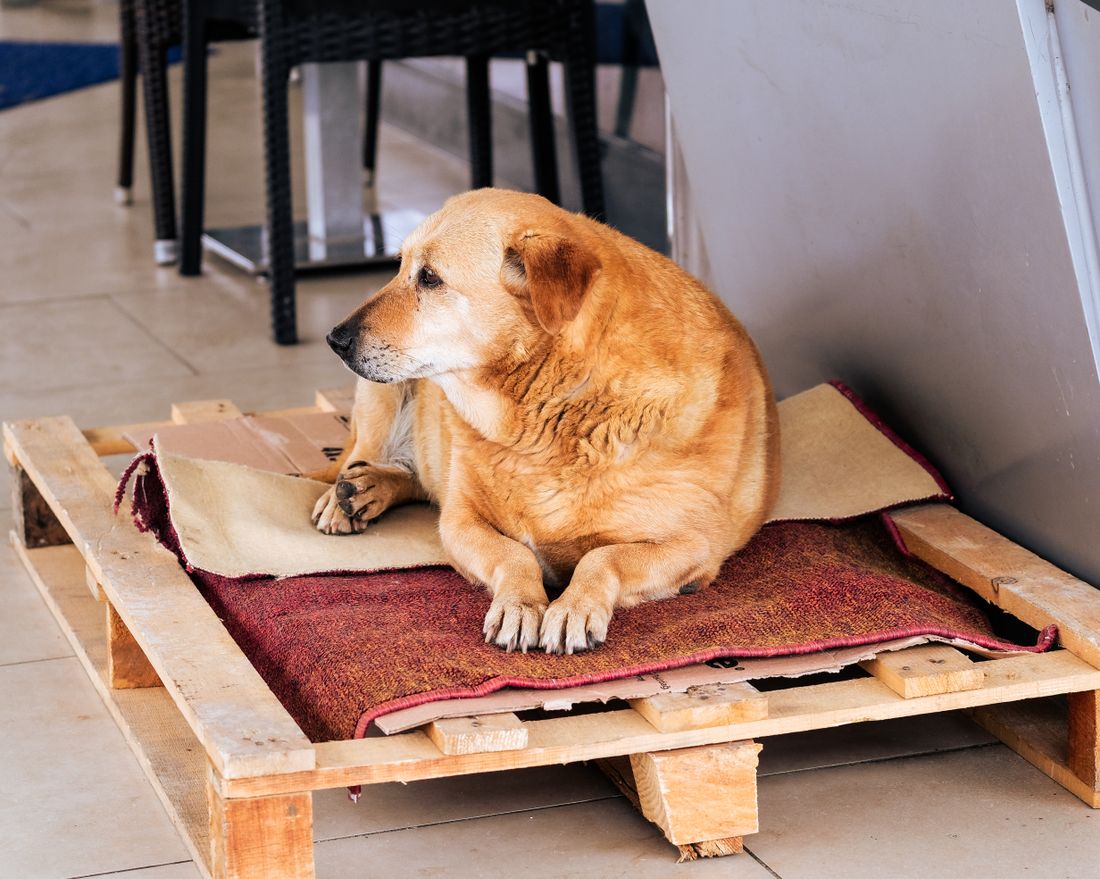
Can I make a dog bed from a wooden pallet?
You can build a frame, but it adds splinters, fasteners, coatings and cleaning complexity. If using wood, keep surfaces smooth, hardware inaccessible and avoid unknown treated/painted scrap. For many dogs, a stable washable floor-level insert is simpler.
Sources Checked for This Guide
- The Honest Kitchen — DIY No-Sew Pet Bed: fleece-tie construction, fringe dimensions, removable fill and chew warning.
- American Kennel Club — Choosing a Dog Bed: side-lying space and older/joint-sensitive dog support.
- PetMD Vet Advisory Panel — Orthopedic Dog Beds: support, foam and sleep-position/bolster considerations.
- PetMD — Washing a Dog Bed: laundering, activity and cleaning-frequency considerations.
- VCA Animal Hospitals — Toy or Toxin: damaged pet beds, stuffing ingestion and obstruction risk.
- VCA Animal Hospitals — Foreign Bodies in Dogs: gastrointestinal obstruction context.
- ASPCA — Keeping Pets Safe During Home Repairs: spray foam, insulation and construction-material ingestion hazards.
- ASPCA Poison Control — Cooling Pet Bed Hydrogel Warning: 2025 ingestion warning.
- VCA Animal Hospitals — Sleep and Musculoskeletal Comfort: low, padded surfaces for dogs with mobility issues.
- Pexels — dog-bed cover photo
- Pexels — pallet-style bed supporting photo
- Pexels — puppy-bed supporting photo
- Pexels License
Editorial note: this is a DIY project guide, not a veterinary prescription. Bed dimensions are based on the individual dog’s measured sleeping footprint rather than invented universal breed charts. Material safety guidance prioritizes intact, washable and non-ingestible construction. Sources were reviewed September 29, 2026.