

Quick answer: If by “low energy” you mean a dog that can settle well at home and does not need hours of high-intensity work every day, useful breeds to compare include the Basset Hound, Greyhound, Clumber Spaniel, Shih Tzu, Japanese Chin, Cavalier King Charles Spaniel, Saint Bernard, Mastiff, Newfoundland and—depending on your space and handling ability—Great Dane. But “low energy” never means “no exercise,” and it definitely does not mean “low maintenance.” Age, health, individual temperament and your home setup matter as much as the breed label.
This guide is built for one decision: which calmer dog actually fits your life? Instead of ranking the “laziest dog breeds,” it compares activity pattern, body size, grooming, living-space fit and the tradeoffs people often discover only after bringing a dog home.
What “Low Energy” Really Means
There is no single veterinary cutoff that turns a breed into a “low-energy dog.” A better way to think about the phrase is daily activity pattern: how readily a dog settles indoors, whether they need sustained high-intensity work, and what kind of movement keeps them comfortable and engaged.
That distinction matters because a calm house dog can still enjoy walks, sniffing, training and play. A Greyhound, for example, is an elite sprinter yet is widely known for lounging between activity periods. The American Kennel Club describes the breed as gentle and sweet-tempered, and its lifestyle guidance notes that Greyhounds can spend plenty of time napping at home. AKC’s Greyhound lifestyle profile is a useful reminder that “capable of speed” and “high energy all day” are not the same thing.
Exercise also cannot be prescribed from breed name alone. VCA’s veterinary guidance says an appropriate plan depends on age, body condition, health and physical structure, and recommends veterinary input when building or changing an exercise program. In other words, this page is a shortlisting tool, not a substitute for evaluating the individual dog in front of you. See VCA’s healthy-exercise guidance.
Important: A puppy from a generally calm breed can still be busy, mouthy and demanding. An adult rescue or foster dog with a known home history may give you a clearer picture of actual energy level than choosing a puppy only because the breed appears on a “lazy dog” list.
Quick Comparison: Low-Energy Dog Breeds by Size and Lifestyle
The labels below are intentionally practical rather than absolute. “Lower” means lower sustained activity demand relative to many working, herding and sporting breeds—not zero exercise.
| Breed | Typical activity pattern | Grooming load | Home-fit strength | Main tradeoff |
|---|---|---|---|---|
| Shih Tzu | Short walks, indoor play, lots of companion time | High if coat is kept long | Small homes and apartments | Coat care and strong need for human company |
| Japanese Chin | Quiet companion; light walks and play | Moderate | Small-space living | Small body requires careful handling |
| Cavalier King Charles Spaniel | Flexible: couch time plus enthusiastic walks | Moderate | Adaptable households | Not truly sedentary; strong social needs |
| Basset Hound | Low-key pace with scent-driven walks | Low to moderate | Owners who enjoy slower outings | Independent streak and powerful nose |
| Clumber Spaniel | Mellow at home, regular walks and retrieving | Moderate to high | Calmer homes with outdoor access | Shedding and drooling |
| Greyhound | Shorter bursts of athleticism plus long downtime | Low | Quiet indoor lifestyle with safe exercise | Large body and strong chase instinct |
| Great Dane | Easygoing indoors; still needs moderate daily movement | Low | Homes that can handle giant-dog logistics | Size, strength, transport and cost |
| Saint Bernard | Generally laid-back, steady activity | High shedding; drool common | Roomy, cooler homes | Giant size, coat and heat management |
| Mastiff | Low-key adult temperament with routine walks | Low to moderate | Experienced homes with physical space | Extreme size, strength and early training needs |
| Newfoundland | Calm companion style but still a capable working dog | High | Families with space and grooming tolerance | Heavy coat, giant size and water-loving heritage |
This is a lifestyle comparison, not a guarantee for an individual dog. Breed tendencies overlap, and health, age, training and environment can change what daily life looks like.
Small Low-Energy Companion Dogs
Shih Tzu: compact, home-oriented, but grooming is the real commitment
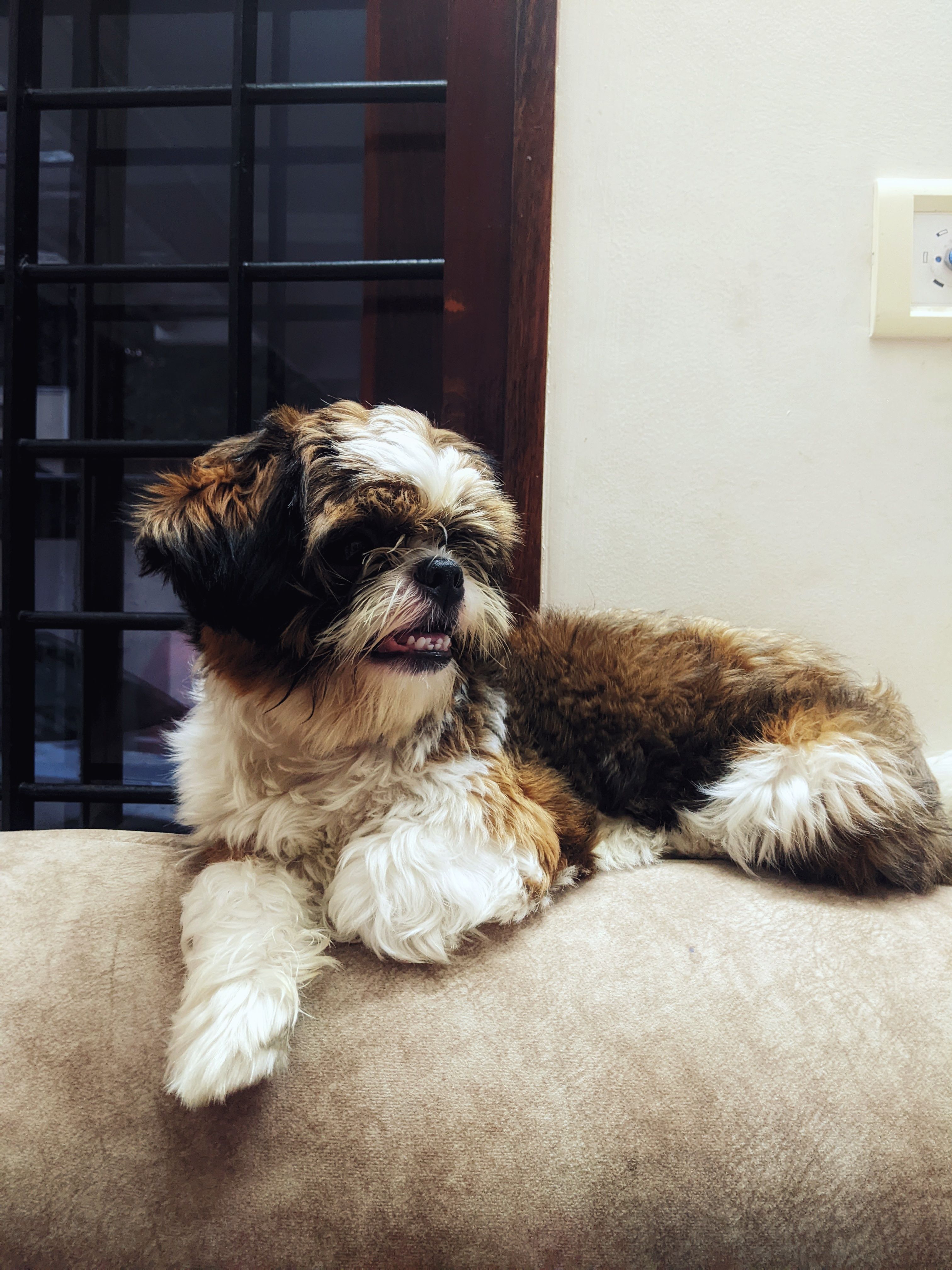
For someone who wants a smaller dog and does not plan on long-distance running or hours of outdoor work, the Shih Tzu is one of the more obvious breeds to research. AKC describes the breed as an adaptable companion and notes that it generally requires minimal exercise, while its long coat demands meaningful maintenance. That combination makes the Shih Tzu a good example of the central rule of this article: lower exercise demand does not equal low work overall.
A Shih Tzu can make sense for apartment dwellers, retirees and home-oriented households that genuinely want a dog nearby. It is a weaker fit for someone who wants a highly independent dog that is content to be left alone for long stretches. Read the AKC Shih Tzu lifestyle guide before deciding based on size alone.
Japanese Chin: quiet companion energy in a very small package
The Japanese Chin is not a “do nothing” dog, but it is a useful breed to compare when your ideal day includes gentle walks, indoor play and plenty of calm time. AKC describes the Chin as a bright, amusing lapdog that is generally quiet. That can be attractive in shared-wall housing, although no breed comes with a no-barking guarantee.
The bigger question is whether a tiny companion dog fits your household physically. Homes with rough play, very young children or large energetic dogs may require more management than the word “low energy” suggests. See the AKC Japanese Chin profile.
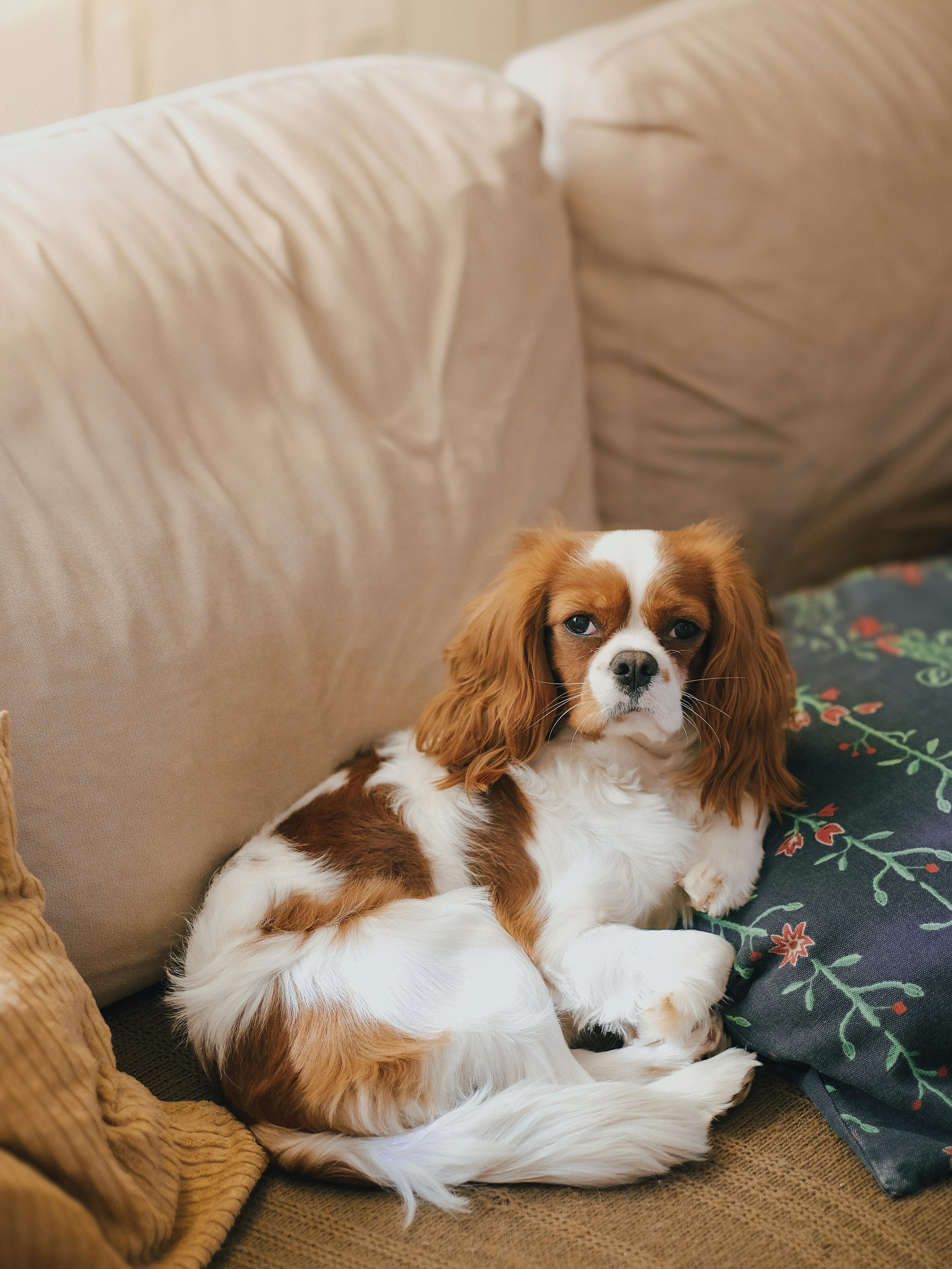
Cavalier King Charles Spaniel: adaptable, not actually a couch-only dog
Cavaliers are often pulled into “lazy dog breeds” lists because they can be excellent loungers. The more useful description is adaptable. AKC says the breed can be happy with active owners or homebodies, while also emphasizing its sporting-spaniel background and enjoyment of walks.
That makes the Cavalier a strong candidate for someone who wants calmness indoors without choosing a dog that has no interest in going out. It is a poor choice if “low energy” really means “I want to skip daily interaction.” Cavaliers are companion-oriented and thrive on social contact. AKC’s Cavalier lifestyle guide explains this lapdog-and-sporting-dog balance.
Medium Calmer Breeds: More Dog, Without All-Day Intensity
Basset Hound: low-key pace, high interest in smells
AKC calls the Basset Hound “low-slung and low-key,” which is a better description than simply “lazy.” Bassets were built around scent work, so a slow walk can be mentally rich even if it does not look athletic. PetMD’s veterinarian-reviewed low-energy breed guide also highlights nose work as a useful way to engage them.
The tradeoff is independence. If your dream is an instantly responsive off-switch dog that follows every cue simply because you asked, a scent hound can surprise you. A Basset often fits best with an owner who is patient, accepts a slower pace and enjoys letting the dog sniff rather than treating every walk like a cardio session. See AKC’s Basset Hound profile.
Clumber Spaniel: mellow housemate with real sporting roots
The Clumber Spaniel is one of the most useful “middle ground” breeds on this list. AKC describes the breed as dignified and mellow, but it is still a flushing spaniel rather than a decorative couch dog. Regular walks and games remain part of the package.
The bigger lifestyle filter may be cleanliness: AKC specifically flags shedding and drooling. If your idea of “easy dog” means little hair on furniture and a pristine home, the Clumber is not automatically easy just because the energy level is calmer. See the AKC Clumber Spaniel profile.
Large and Giant Calm Dogs: Lower Intensity, Bigger Logistics
Large calm breeds are where many “low-energy dog” lists become misleading. A dog can be wonderfully relaxed and still be difficult for a particular household because of body size, strength, food costs, medication doses, transport, stairs, grooming or the simple fact that you cannot safely lift them in an emergency.
Greyhound: the classic sprinter-with-an-off-switch
Greyhounds are the clearest example of why stamina and speed should not be confused with constant activity. AKC describes them as gentle and sweet-tempered, and notes that they commonly lounge around the house between opportunities to move. They still need regular exercise and a safe setup for it; “couch potato” is not permission to eliminate walks.
A Greyhound can suit a surprisingly quiet household if you are comfortable with a large dog and can manage the breed’s chase instinct outdoors. A leash or securely fenced area matters because sighthounds can respond quickly to moving animals. AKC’s sighthound overview makes the same point: calm at home does not erase the breed’s pursuit heritage.
Great Dane: calm temperament, moderate exercise, giant-scale ownership
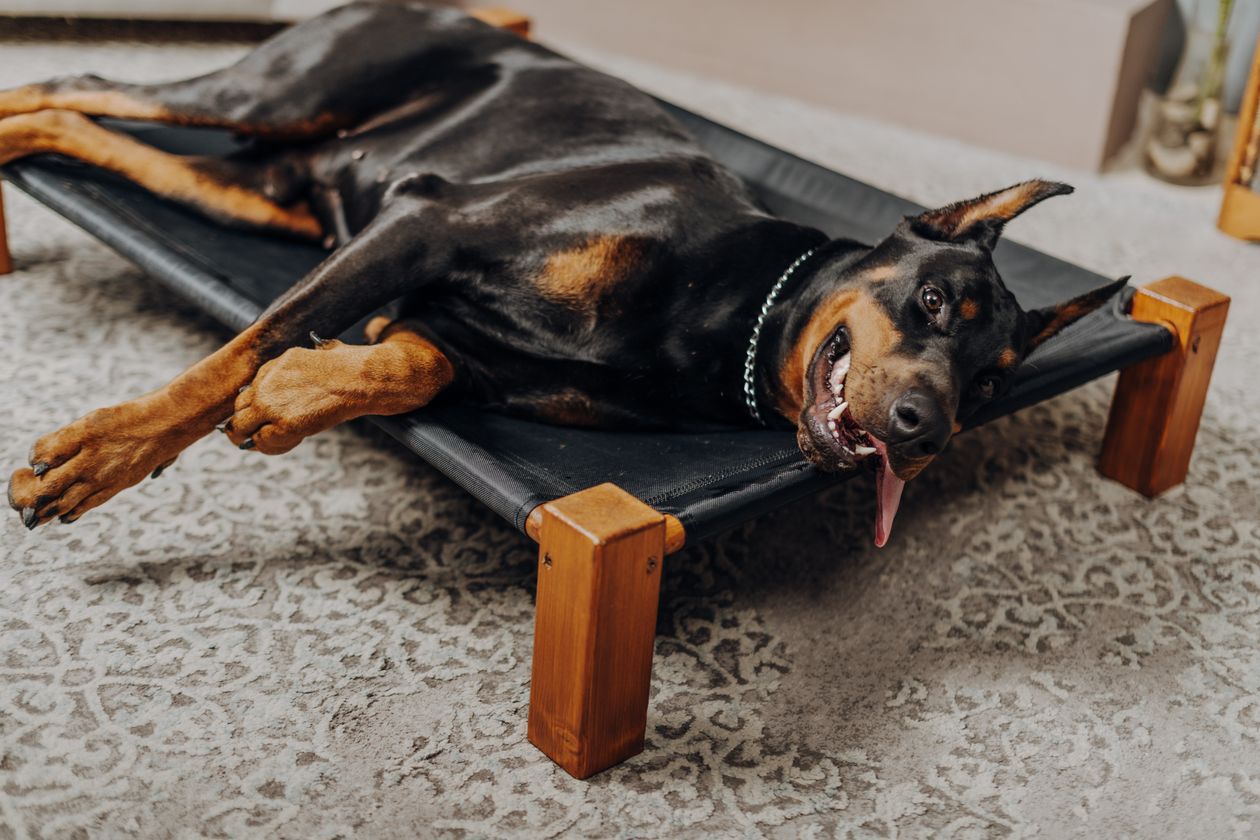
A Great Dane belongs here with an asterisk. AKC calls the breed easygoing, but its lifestyle guidance describes a moderate exercise need rather than a truly low one. So choose a Great Dane because you can support a giant, social, trainable dog—not because a list promised a nearly motionless pet.
Training matters early because adult size magnifies ordinary manners. Transport matters because a dog this large changes your vehicle and boarding options. Living space matters less as a simple square-foot number than whether the dog can move safely through doors, hallways, stairs and shared areas. See AKC’s Great Dane lifestyle profile.
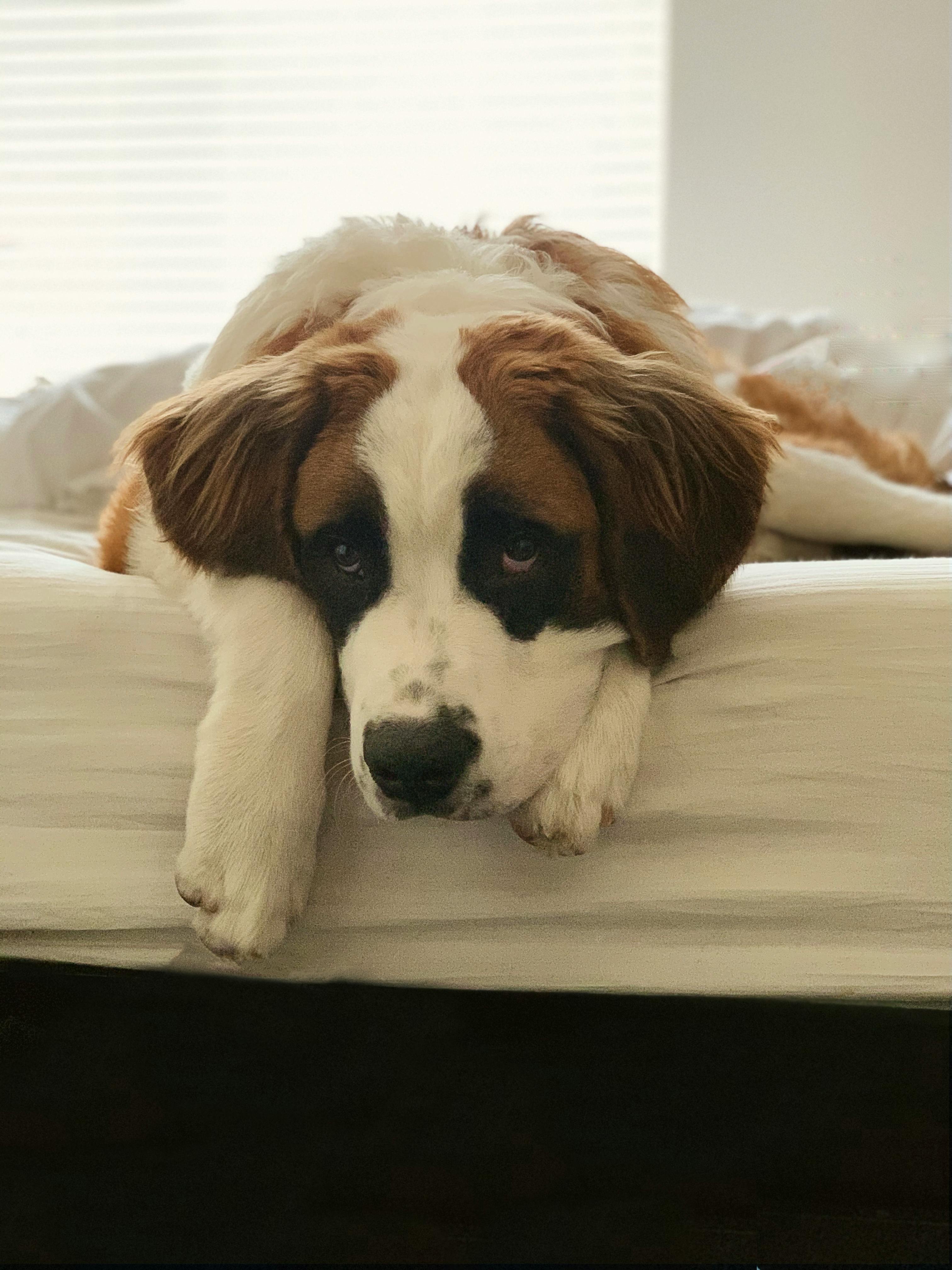
Saint Bernard: laid-back, but never “small-apartment easy”
PetMD includes the Saint Bernard among lower-energy large breeds, while AKC describes Saints as watchful, patient and careful. In the right home, an adult Saint can have a much calmer daily rhythm than the dog’s size suggests.
But giant size creates work elsewhere: coat, drool, transport, heat management and physical handling. A person who wants a low-energy dog because of limited strength should think carefully about whether they can safely manage a giant dog on leash, at the veterinarian or during an emergency.
Mastiff: docile adult style, serious strength
The Mastiff is another breed where calmness and ease are not synonyms. AKC describes the breed as docile and dignified, and PetMD includes it in its low-energy list. Yet this is an enormous, powerful guardian-type dog. Early socialization, leash skills and household rules matter precisely because you cannot rely on physical strength to manage an adult Mastiff later.
If you are choosing for a quieter lifestyle, ask yourself a practical question: Can I comfortably control, transport and pay for a dog of this size? If the answer is uncertain, a smaller calm companion may be the more realistic fit even if both dogs have similar indoor energy.
Newfoundland: sweet-tempered, calm-looking, still a working dog
PetMD includes the Newfoundland among lower-energy breeds, and AKC describes the Newfie as sweet-tempered and patient. But the breed was developed for substantial work, including water tasks and hauling. That history matters: calmness around the house does not mean the dog lacks physical ability or benefits from inactivity.
For most homes, the real filters are space, a heavy coat, grooming tolerance, moisture and giant-dog logistics. If those are manageable, a Newfoundland’s steady temperament can be attractive. If you want “low maintenance,” a giant double-coated dog is the wrong mental model.
The Flat-Faced-Dog Warning Most “Lazy Breed” Lists Miss
English Bulldogs, French Bulldogs and Pugs often appear in low-energy or “laziest dog breeds” roundups. There is an important welfare reason not to treat low exercise tolerance as a selling point.
Royal Veterinary College research on extreme brachycephalic dogs reports that owners may value perceived “laziness” even when reduced activity can reflect breathing or musculoskeletal problems. RVC also summarizes current international guidance that noisy breathing at rest or during light exercise is not normal or healthy in flat-faced dogs. See the RVC research summary on perceived laziness and its 2025 noisy-breathing guidance.
That does not mean every individual flat-faced dog has the same impairment. It means you should never shop for a dog specifically because respiratory limitation makes exercise difficult. If you are considering a brachycephalic breed, prioritize health-focused breeding, breathing function and veterinary guidance rather than chasing the lowest possible exercise requirement.
Low Energy Is Not Low Maintenance
This is the mistake most likely to turn a “perfect calm breed” into a poor match. Exercise is only one line item in dog ownership.
| Factor | Why it matters | Breed examples |
|---|---|---|
| Grooming | Brushing, professional grooming, shedding and coat cleanup can outweigh time saved on intense exercise. | Shih Tzu, Newfoundland, Saint Bernard |
| Body size | Food, transport, boarding, medication quantities, crates and emergency handling scale up fast. | Great Dane, Mastiff, Saint Bernard, Newfoundland |
| Training | A calm dog still needs recall, leash skills, handling tolerance and household manners. | Every breed |
| Mental enrichment | Sniffing, food puzzles, training and social interaction prevent “low exercise” from becoming “low quality of life.” | Basset Hound, Greyhound, companion breeds |
| Social needs | Some companion dogs settle beautifully when you are home but dislike long isolation. | Shih Tzu, Cavalier |
| Medical limitations | Reduced stamina caused by pain, airway disease or illness must not be mistaken for desirable temperament. | Any dog; especially important in flat-faced breeds |
Whatever breed you choose, basic training still pays off. Patify’s guide to seven useful everyday dog cues focuses on reward-based skills rather than unrealistic one-week mastery promises.
Are Low-Energy Dogs Automatically Good Apartment Dogs?
No. Apartment fit is not simply energy level ÷ square footage. Consider noise, elevator access, stairs, hallway width, toileting routine, neighbors, your ability to transport the dog, and whether the dog can settle when left alone.
A small Shih Tzu or Japanese Chin may be logistically easier in a walk-up than a Saint Bernard even if both are calm indoors. A Greyhound may surprise people by settling nicely in a smaller home, but a large dog still occupies real physical space and needs a safe exercise routine. A giant dog in a third-floor apartment with no elevator can also become a serious problem if injury or old age makes stairs difficult.
For first-time puppy owners, remember that adult breed reputation does not cancel puppy behavior. Patify’s first-30-days puppy guide covers settling in, routines, vet care and early training.
What About Seniors or Owners With Limited Mobility?
A lower-activity dog can be a better fit than a high-drive working breed, but the lowest-energy breed is not automatically the safest choice. Handling weight matters. Leash strength matters. Grooming appointments matter. A giant calm dog can still pull once, block a doorway, need help into a car or become impossible for one person to lift.
For many households, an adult small or medium dog with a known temperament may be easier than a giant breed or a puppy. If you adopt through a foster-based rescue, ask specific questions: What does the dog do after a 20-minute neighborhood outing? Can they settle while someone works? How do they react to elevators, stairs, visitors and other dogs? Have they shown separation distress? Those observations are more useful than the word “lazy.”
A Five-Question Filter Before You Choose a Low-Energy Dog
- What can I reliably do every day? Think in terms of realistic walks, sniff time, play and training—not your best weekend.
- What is the largest dog I can safely handle? Include leash control, car loading, vet visits and an emergency when the dog cannot walk.
- Which maintenance am I willing to trade for lower activity? Grooming, shedding, drool, training, health screening and financial cost still count.
- What does my home make difficult? Stairs, heat, tiny elevators, shared walls, no yard and long work absences can change the best match.
- Do I actually need a puppy? If energy predictability matters, a mature fostered or rehomed dog may be easier to evaluate than an eight-week-old puppy whose adult behavior is still developing.
Shortcut: Choose for the life you can provide on an ordinary Tuesday, not the life you hope to provide after adopting a dog.
When “Low Energy” Is a Health Change, Not a Personality
Breed tendencies are useful only when you are choosing a dog. They should never be used to explain away a new drop in activity in a dog you already know.
VCA notes that pain, excess body weight, heart or lung disease and other health factors can change exercise tolerance. If a previously active dog suddenly becomes reluctant to walk, seems weak, pants unusually, limps, struggles to breathe, collapses or cannot settle comfortably, treat that as a health question rather than celebrating that the dog has “finally calmed down.”
Patify’s guide to dogs that suddenly want to go home on walks explains how pain, heat, fear, paw discomfort and other factors can change walking behavior.
Frequently Asked Questions
What are the best low-energy dog breeds for apartments?
Small companion breeds such as Shih Tzus and Japanese Chins are often easier to fit physically into apartments, while some Greyhounds can also settle well indoors. But apartment suitability depends on noise, stairs, separation behavior, toileting logistics and your exercise routine—not energy level alone.
Do low-energy dogs still need daily exercise?
Yes. Lower-energy dogs still need regular movement and mental engagement. VCA emphasizes that the right amount and type of exercise depend on age, health, body condition and structure. There is no honest “zero-exercise breed.”
Is a Greyhound really a low-energy dog?
Many adult Greyhounds are calm and sleep a lot at home even though they are exceptional sprinters. They still need regular walks and safe opportunities to move. Think “short bursts plus downtime,” not “never needs exercise.”
What is the lowest-maintenance low-energy dog?
There is no universal answer because maintenance moves between categories. A Shih Tzu is small but grooming-intensive; a Greyhound has a simpler coat but is much larger; a Mastiff can be calm but creates giant-dog handling and cost demands. Choose the maintenance profile you can sustain, not just the lowest activity label.
Are Bulldogs and Pugs good choices if I want a dog that needs little exercise?
Do not choose a flat-faced breed because breathing limitations may reduce activity. RVC guidance warns that noisy breathing at rest or light exercise is not normal, and research shows perceived “laziness” can reflect exercise intolerance in some brachycephalic dogs. Health and breathing function should come before the desire for a couch-oriented pet.
Are adult dogs calmer than puppies?
Often, maturity makes energy and behavior easier to evaluate, but there is no fixed age at which every dog becomes calm. If predictability is your priority, an adult dog living in a foster home can offer more direct information about day-to-day behavior than breed stereotypes alone.
Sources and How This Guide Was Built
This comparison uses breed descriptions and lifestyle guidance from the American Kennel Club, veterinary exercise guidance from VCA Animal Hospitals, a veterinarian-reviewed low-energy breed overview from PetMD, and Royal Veterinary College research for the brachycephalic-health caution. Breed labels are used as tendencies, not guarantees for individual dogs.
- PetMD — 13 Low-Energy Dog Breeds
- VCA Animal Hospitals — Healthy Exercise for Dogs
- AKC — Basset Hound
- AKC — Greyhound lifestyle profile
- AKC — Clumber Spaniel
- AKC — Shih Tzu lifestyle profile
- AKC — Japanese Chin
- AKC — Cavalier King Charles Spaniel lifestyle profile
- AKC — Great Dane lifestyle profile
- AKC — Saint Bernard
- AKC — Mastiff
- AKC — Newfoundland
- Royal Veterinary College — owner perceptions and brachycephalic welfare
- Royal Veterinary College — noisy breathing guidance
Photo credits
- Cover: Marek Perička / Pexels — Basset Hound sitting on a bed.
- Shih Tzu: Freddy / Pexels.
- Cavalier King Charles Spaniel: Ayşegül Delice / Pexels.
- Saint Bernard: Patrick Barrett Jr. / Pexels.
All four source pages were checked as “Free to use” on Pexels. Pexels’ current license permits free use on websites and blogs; attribution is not required but is provided here for transparency.