
Last verified: September 28, 2026
Maltese Haircuts: Choose by Maintenance, Not Just by the Photo
Quick answer: the best Maltese haircut is the one whose daily maintenance you can actually keep up with. A full show coat is the breed-standard look: long, flat, silky white hair falling nearly to the ground, with no undercoat. A pet “puppy cut” shortens that workload dramatically. A teddy-bear trim keeps a rounder, fuller face; a bob keeps more ear and facial fringe; a Korean-inspired pet trim exaggerates a round face and often leaves selected areas fuller. None of those pet-salon names has one universal inch measurement, so tell your groomer how long you want the body, how round or short you want the face, how much ear fringe you want, whether you want a topknot, and which hygiene areas need to stay short.
The biggest Maltese-specific decision is not “cute versus practical.” It is how much silky white hair you want to maintain around friction, moisture and food: behind the ears, under the collar or harness, armpits, legs, muzzle, eye corners and sanitary areas. Shortening the coat reduces the amount of hair that can tangle, but it does not turn a Maltese into a no-grooming dog.
Patify rule: treat show coat as a breed-standard coat presentation and treat names such as puppy cut, teddy bear, bob, summer cut and Korean-style trim as salon shorthand. Those pet names can vary by groomer. A reference photo plus a maintenance brief is more reliable than the name alone.
First: Maltese Hair Is Not Poodle Curl or Spitz Undercoat
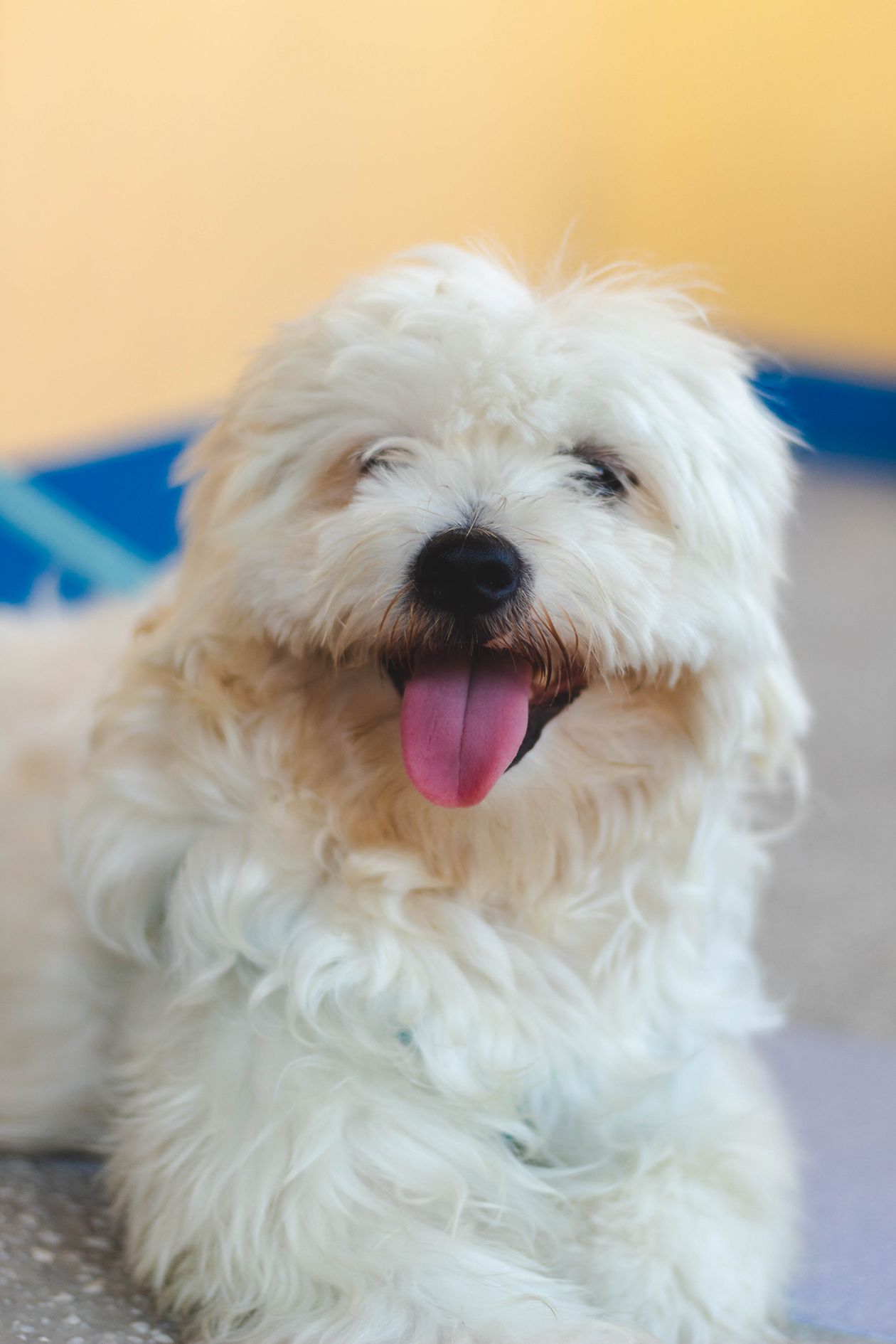
The official AKC Maltese standard describes a single coat without undercoat. In the ideal show presentation, the hair hangs long, flat and silky over the sides of the body and nearly reaches the ground. The standard specifically objects to kinkiness, curliness and woolly texture. The long head hair may be tied into a topknot or left hanging.
That matters because haircut advice should start with the coat in front of you. A Maltese is not groomed like a Poodle simply because both are commonly clipped pets, and it should not be treated like a plush double-coated breed simply because the dog looks fluffy after a short haircut.
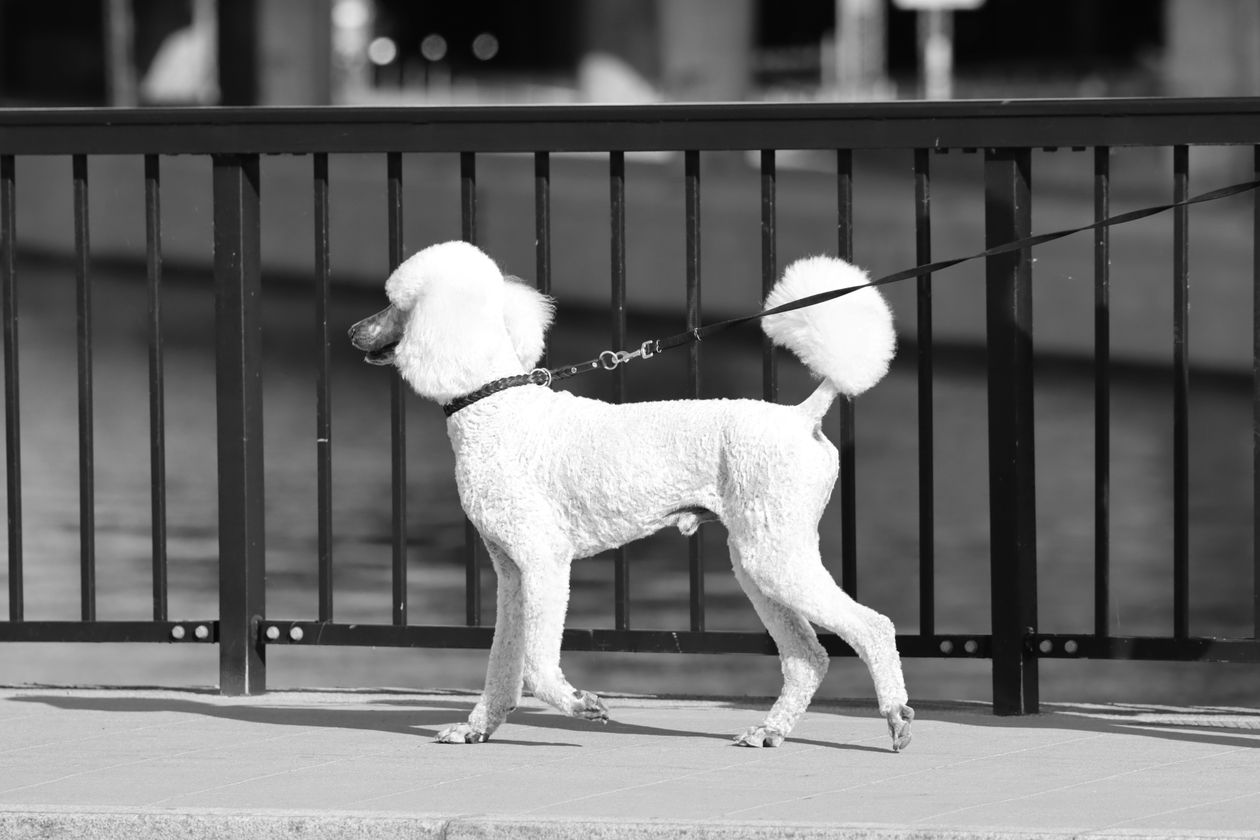
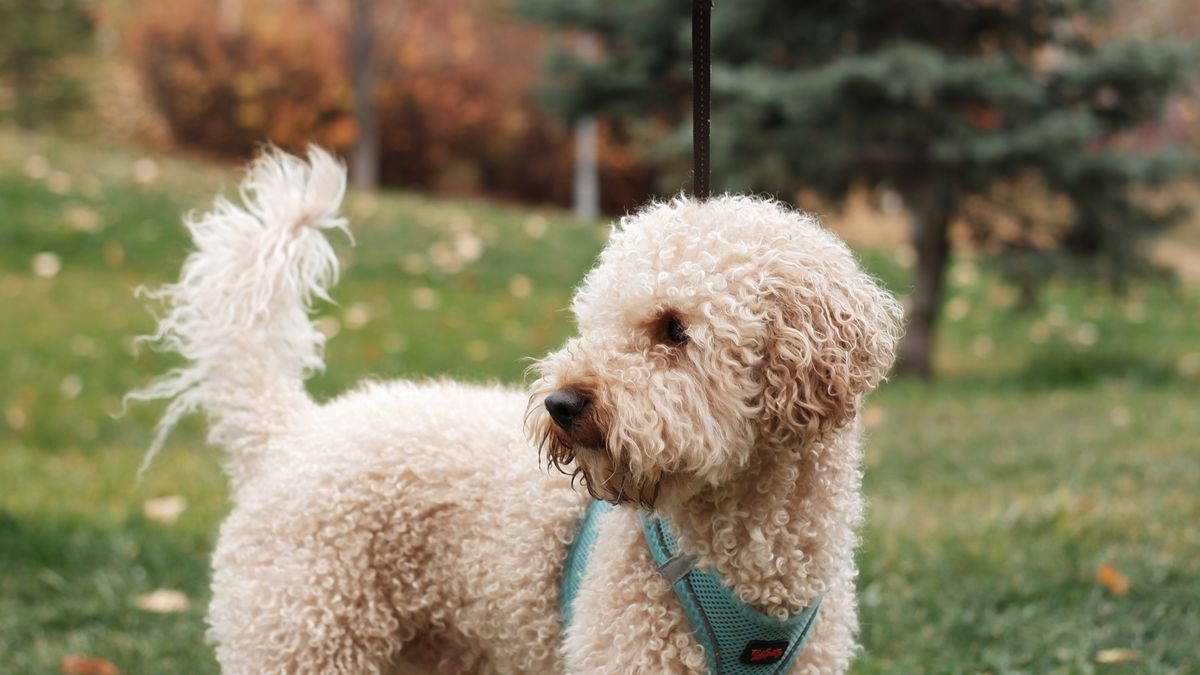
For comparison, Patify’s small white dog breed guide shows why a clipped Maltese can resemble a Bichon, Coton or white Poodle while the underlying coat textures remain different.
| Feature | What it means for a Maltese haircut |
|---|---|
| Single coat | No dense seasonal undercoat to preserve like a northern double coat. |
| Straight, silky ideal texture | Long hair drapes and parts rather than forming a naturally rounded curly sculpture. |
| White color | Moisture, saliva, tear staining and dirt are visually obvious. |
| Long head hair | You can choose a topknot, long face fringe or a short rounded pet face. |
| Very small body | An extra half-inch of coat can dramatically change the dog’s proportions. |
The American Maltese Association recommends a daily once-over with a pin brush or steel-tooth comb for long coat and warns that neglected mats may eventually force a groomer to cut the coat very short. AKC likewise describes daily gentle brushing and combing to the skin for the traditional long coat. In other words, the famous floor-length Maltese look is not a “leave it natural and forget it” coat.
8 Maltese Haircuts and Coat Styles at a Glance
| Style | Main visual cue | Maintenance | Best fit |
|---|---|---|---|
| 1. Full show coat | Floor-length silky coat, center fall, long head hair/topknot | Very high | Owners committed to daily coat care or conformation presentation |
| 2. Medium companion coat | Flowing coat kept clearly below the body but off the floor | High | You want the Maltese drape without full show length |
| 3. Puppy cut | Shorter, fairly even pet coat over body and legs | Low to medium | Most practical all-purpose pet trim |
| 4. Teddy-bear trim | Short body plus rounder, fuller muzzle and head | Medium | You want a plush puppy-like face |
| 5. Short utility / summer trim | Very practical short coat with simplified face/feet | Lower | Active dogs, mat-prone coats, owners wanting easiest home care |
| 6. Bob-style trim | Shorter body with longer ear/face fringe creating a bob-like outline | Medium to high around ears | You want distinctive ear framing without full body length |
| 7. Korean-inspired pet trim | Stylized round face with selected areas kept fuller and body kept practical | Medium to high | You like Asian-fusion styling and can maintain facial/leg detail |
| 8. Topknot pet trim | Shorter body with enough crown hair left for one or two topknots | Medium | You want Maltese identity without a full long coat |
Only the first row corresponds directly to the coat described in the official breed standard. The other names are useful salon language, not AKC haircut specifications. “Teddy bear,” “bob,” “summer cut,” and “Korean” are particularly variable. Use the names to start a conversation—not to end one.
Choose Your Maltese Haircut by Maintenance Budget
Instead of choosing from a photo gallery first, decide how much brushing, drying and face care your week can realistically support. Then choose the style.
Level 1 — “I want the easiest realistic Maltese coat”
Choose a short puppy cut or utility trim. Keep the body and legs short enough that a comb can pass through quickly. Shorten the muzzle, chin and sanitary areas if food, saliva or hygiene are recurring problems.
Level 2 — “I can brush regularly but not maintain long silk”
Choose a moderate puppy cut or teddy-bear trim. Leave enough hair for shape around the face and legs without letting friction zones become long.
Level 3 — “I care about a styled silhouette and will maintain it”
Choose a bob, Korean-inspired trim, fuller teddy or topknot pet trim. These concentrate more hair exactly where owners tend to notice it—but also where tangles, food staining and eye-area moisture can become obvious.
Level 4 — “Coat care is part of the hobby”
Choose a medium companion coat or full long coat. Daily combing, careful bathing and drying, and consistent management of the head hair become part of ownership rather than an occasional salon task.
This ladder is intentionally more useful than “best haircut for boys” versus “best haircut for girls.” Hair length has no medical need to follow sex. Choose by coat, lifestyle, handling tolerance and the look you actually want.
1. Full Show Coat: The Classic Maltese Look
The iconic Maltese is a small white dog wrapped in a curtain of straight silky hair. The official standard describes a single coat hanging long over the sides of the body almost, if not quite, to the ground. The head hair can be tied in a topknot or left hanging. Feet may have scraggly hairs neatened.
This look is beautiful because it preserves the breed’s characteristic coat—not because it is low effort. The American Maltese Association recommends daily brushing/combing to stop mats before they build. It also advises brushing mats out before bathing, using appropriate conditioner, and drying the coat rather than simply letting the long hair air-dry if you want the best coat presentation.
Who should choose it? Someone who actually enjoys coat care, is willing to comb to the skin and can keep the eye/mouth/sanitary areas clean. If you are already dreading that sentence, a shorter pet cut is not a compromise in welfare—it is often the more realistic choice.
2. Medium Companion Coat: Keep the Drape, Lose the Floor
This is the underrated middle ground. Instead of taking the Maltese into a short puppy trim, the groomer shortens the coat enough to clear the floor and reduce debris while preserving the long, straight silhouette. The head hair can remain in a topknot or be shortened for a pet face.
Ask your groomer: “I want a flowing Maltese outline, but I want the coat clearly off the floor. Keep the body long enough to drape, neaten the feet and sanitary areas, and leave enough crown hair for a topknot.”
This is still high-maintenance coat. Shortening several inches from a floor coat does not remove the need to comb through the friction zones.
Short Maltese Haircuts: Puppy, Teddy and Utility
3. Puppy Cut: The Practical Default
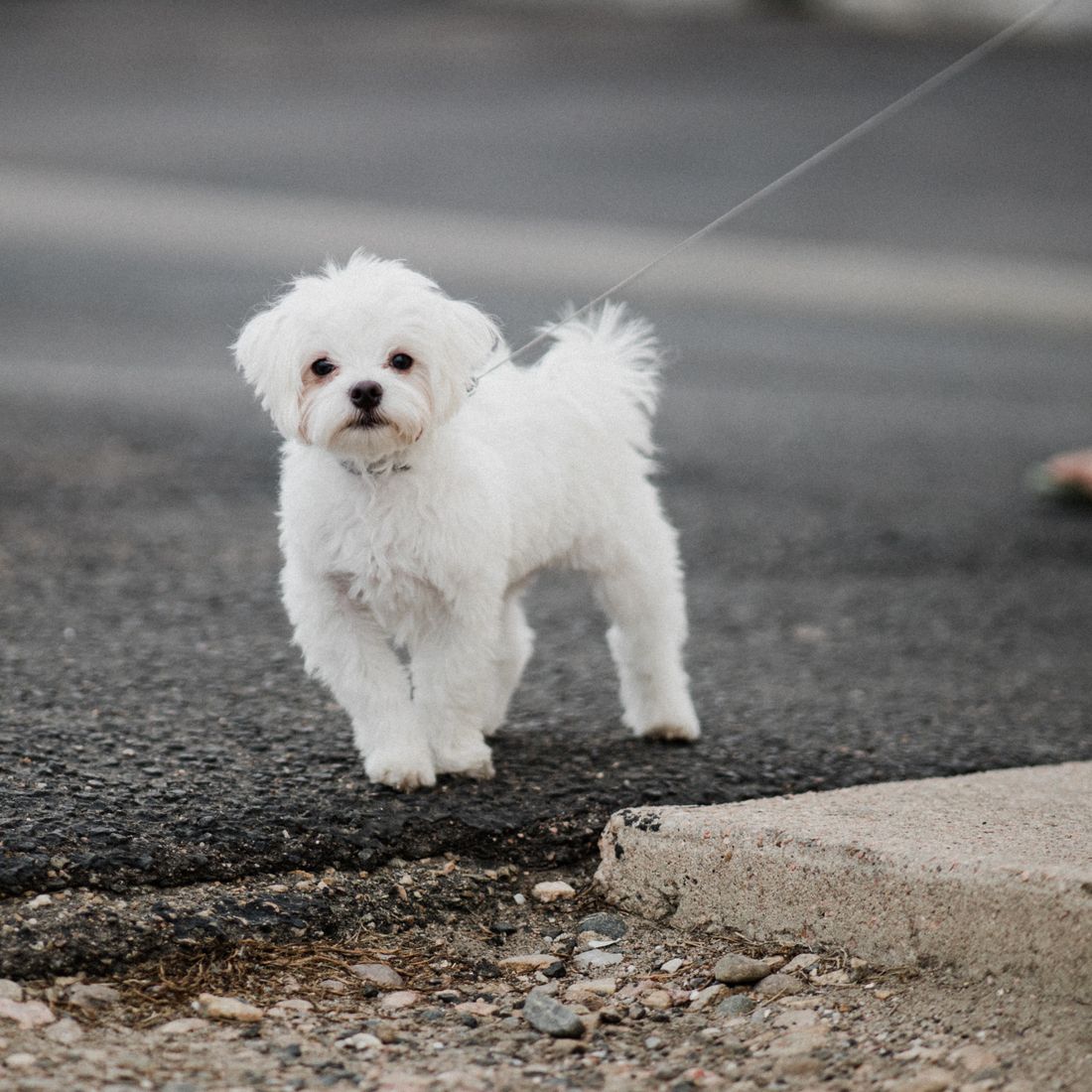
AKC’s own “two looks” feature describes the Maltese puppy cut as a shorter coat clipped to an all-over length and notes that an adult dog can wear it despite the name. That is the key point: “puppy cut” is a pet styling idea, not an age restriction.
The exact length is not standardized. One groomer may interpret it as a very short even trim; another may leave enough hair for a visibly fluffy finish. That is why your request should include a body-length target and what you want done to the head.
Example groomer brief: “Keep the body and legs around 3/4 inch, rounded feet, short jaw-length ears, and a simple rounded face. No long topknot.”
Why owners like it: less coat to trap outdoor debris, faster bathing/drying, fewer opportunities for mats, and a visibly youthful shape. AKC’s Maltese feature describes roughly monthly groomer visits as a practical way to maintain a short puppy-cut look, although individual regroom timing depends on how short you start and how much grow-out you tolerate.
4. Teddy-Bear Trim: Short Body, Round Face
The teddy-bear label is about the head and expression more than one exact body length. The muzzle and cheeks are left full enough to round into a soft circle instead of being trimmed into a narrower or more natural long-haired Maltese face.
Ask your groomer: “Short practical body, but keep enough face hair for a round muzzle and rounded head. Keep the chin shorter than the cheeks because food stains it. Ears at jaw length.”
This last sentence illustrates why Maltese-specific customization matters. A fuller face looks plush, but longer white hair around the mouth can show food and saliva quickly. You can keep the teddy silhouette while shortening the highest-maintenance spots.
5. Short Utility or “Summer” Trim: Maintenance First
“Summer cut” is another non-standard salon term. For a Maltese it usually means a noticeably shorter practical body and legs, with the head and ears adjusted to the owner’s taste. The real benefit is maintenance reduction: less silky hair to tangle, drag through dirt and stay wet after baths or outdoor play.
Do not treat the haircut as your heatstroke-prevention plan. Shade, water, appropriate activity and avoiding dangerous heat remain the important controls. Also avoid assuming “shorter is always better.” If the dog’s skin is exposed, sun protection and irritation become separate considerations.
If your goal is simply a manageable coat, ask for the shortest length your groomer thinks is appropriate for the dog’s coat condition and skin—not “shave as close as possible.”
Fashion-Forward Maltese Styles: Bob, Korean-Inspired and Topknot
6. Bob-Style Maltese Trim
The bob concept borrows from a human bob haircut: a shorter body is paired with visibly longer ear and side-of-face hair so the head is framed by a cleaner, straighter fringe. There is no official Maltese bob specification, so the most important variables are where the ear fringe ends and whether the muzzle is kept round, blunt or lightly layered.
Ask your groomer: “Short body, but leave the ear fringe to the bottom of the jaw. Keep the face neat and soft, not spherical. I want the ears to create the bob shape.”
Maintenance trap: the hair behind and under the ear is a friction zone. A style that intentionally preserves long ear fringe only works if that area stays combable.
7. Korean-Inspired Maltese Trim
“Korean cut” is best treated as an Asian-fusion styling direction, not a regulated recipe. Common visual goals include a very round face, emphasis on large dark eyes, small neat ears or carefully shaped ear fringe, a practical body length and selectively fuller legs or facial furnishings.
Because internet examples vary so much, this is one of the worst styles to order by name alone. Bring one front-view photo and one side-view photo. Ask the groomer which parts of that example can be reproduced on your dog’s current coat and facial proportions.
Important: do not ask a groomer to cut hair dangerously close to the eyes just to enlarge the “doll-eye” effect. Eye comfort and visibility come before a trend.
8. Topknot Pet Trim
You do not need a floor-length show coat to keep a topknot. A Maltese can wear a short body with longer crown hair preserved for one or two bands. This keeps one of the breed’s classic visual signatures while reducing body maintenance.
Ask your groomer: “Short puppy body, but preserve enough crown hair for a topknot. Keep the eye corners and muzzle practical.”
Check bands and hair daily enough to ensure the style is not pulling, tangling or trapping debris. The goal is to keep hair out of the eyes, not create tension on the skin.
Maltese Face Hair: Tear Stains Are Not Just a Styling Problem
White hair makes reddish-brown tear staining extremely visible. The discoloration is commonly associated with porphyrin pigments in tears, but the presence of stain does not tell you why the eye is tearing.
AKC and VCA both note that excessive tearing can have medical causes, including irritation, infection, injury, eyelash abnormalities or other eye problems. The American Maltese Association likewise recommends veterinary input when tearing/staining is excessive. If your Maltese suddenly develops more tearing, squints, rubs an eye, has redness, swelling or unusual discharge, do not solve the problem by simply cutting the face shorter.
| Goal | Useful grooming choice | What grooming cannot do |
|---|---|---|
| Keep hair from poking the eyes | Short eye-corner hair or secure long crown hair in a comfortable topknot | Diagnose why an eye is watering |
| Reduce wet hair sitting under eyes | Keep the area clean and dry; ask groomer for a practical face shape | Guarantee tear stains disappear |
| Reduce food staining | Shorter chin/muzzle hair | Treat dental or mouth disease |
| Make the face look rounder | Leave more cheek/muzzle volume | Change the dog’s underlying head structure |
VCA specifically warns against using products containing hydrogen peroxide around the eyes because accidental contact can cause severe damage. “Whitening” should never mean experimenting with harsh chemicals near the eye.
Also remember that grooming is a useful time to notice mouth changes in a tiny companion breed. Patify’s dog tartar and dental-care guide explains why bad breath, calculus and gum disease need a different plan from cosmetic muzzle cleaning.
If the Coat Is Matted, the Photo You Brought May No Longer Be the Safe Option
Both the American Maltese Association and AKC emphasize prevention because the long fine coat tangles easily. AMA is explicit: when mats are allowed to build, a professional groomer may have no choice but to take the coat very short.
That is not the groomer “ignoring the style request.” A long teddy, bob or medium coat requires enough free-moving hair to create the shape. Dense matting close to the skin changes the job from styling to safe coat removal.
Coat combs to skin
You have the broadest menu of lengths and face styles.
Small isolated tangles
A groomer may preserve much of the planned style if detangling can be done comfortably.
Large tight mats
A shorter reset can be kinder than prolonged pulling and repeated dematting.
Red, sore or wet skin under mats
Comfort and skin assessment come before cosmetic length.
Do not use household scissors underneath tight mats. Matted hair can pull skin up into the cutting path. If you cannot clearly separate the mat from skin with a comb, let a professional evaluate it.

The Maltese Groomer Brief: Five Decisions That Matter More Than the Style Name
For Maltese, a useful briefing system is simpler than memorizing fifteen haircut names. Take this to the appointment:
1. Body: very short / about 1/2 inch / about 3/4–1 inch / medium flowing / long
2. Face: practical short / round teddy / natural soft / bob-like framing
3. Ears: short rounded / jaw length / long fringe
4. Crown: no topknot / single topknot / double topknot / blend into face
5. Hygiene priority: short eye corners / short chin / short sanitary area / short paw hair / all of these
Then tell the groomer one fact about your routine:
- “I can comb every day.”
- “I realistically brush twice a week.”
- “He hates his chin being brushed.”
- “She wears a harness every day and mats underneath it.”
- “We walk on wet grass a lot.”
- “The eye area stays damp.”
That one sentence can change the recommended length more intelligently than saying “make him fluffy.”
Use photos carefully
A photo is valuable when it shows a Maltese with a similar amount of coat. A freshly grown-out dog cannot instantly receive a dramatic long bob, and a dog that was recently clipped short cannot be scissored into a long Korean-inspired leg style. Ask what can be achieved today and what requires a grow-out plan.
How Much Maintenance Does Each Maltese Length Really Need?
| Length/style | Home care reality | Salon logic |
|---|---|---|
| Full show coat | Daily thorough brushing/combing; careful bathing/drying; topknot/face management | Coat care is continuous, not a once-a-month reset |
| Medium coat | Frequent combing, especially friction zones | Regular shape/foot/sanitary maintenance before tangles accumulate |
| Puppy cut | Much faster brushing; still check ears, armpits, legs and tail | AKC describes about monthly grooming as one common maintenance pattern |
| Teddy bear | Body may be easy; face requires extra attention | Return before the round head loses shape or facial hair becomes difficult |
| Bob / long ears | Ear fringe and hair behind ears are the high-risk zones | Body can stay practical while ear fringe is maintained separately |
| Very short utility | Lowest coat burden, but not zero grooming | Nails, ears, skin, eyes and hygiene still need routine care |
For long coat, AKC and the American Maltese Association both support daily brushing/combing. PetMD likewise describes near-daily or daily upkeep to prevent mats. If you keep the coat short, the exact appointment interval can be individualized around how fast the coat grows and how much length you tolerate between trims rather than pretending there is one medically required number for every Maltese.
Brush to the skin, not only over the white fluff
A coat can look smooth on top while knots are forming close to the skin. Work in small sections and make sure the comb can pass through the retained hair without catching. The most common trouble spots are where hair rubs or stays damp: behind ears, under collars/harnesses, armpits, inner legs, feet, chin and sanitary areas.
Do not forget the rest of the dog
Haircut day is also a practical checkpoint for nails, skin, ears, eyes and mouth. A beautiful white coat should not distract from discomfort hidden underneath it.
How This Fits the Small-Dog Grooming Cluster
Maltese, Yorkies and Poodles can all appear in “cute haircut” search results, but they should not be treated as interchangeable coats. Maltese ideally have a straight silky single coat; Yorkie coat texture and pet-trim choices create a different maintenance problem; Poodles rely on dense curly coat that can be sculpted into shapes the Maltese coat does not naturally hold in the same way.
If you are comparing breeds rather than choosing a haircut, use Patify’s small white dog comparison rather than trying to identify a dog from its haircut alone.
Frequently Asked Questions About Maltese Haircuts
What is the most practical haircut for a Maltese?
A short puppy cut or utility trim is usually the easiest to maintain because it reduces the amount of long silky hair that can tangle and collect dirt. The exact length should match your brushing routine and the dog’s coat condition.
What is a Maltese puppy cut?
It is a short pet trim worn by puppies or adults. AKC describes the puppy-cut look as a shorter coat clipped to an all-over length, but there is no one universal salon measurement. Tell the groomer the body length and face style you want.
What is the difference between a Maltese puppy cut and teddy bear cut?
A puppy cut mainly describes a shorter, fairly even body/leg coat. A teddy-bear trim emphasizes a rounder, fuller muzzle and head. You can combine a puppy-length body with a teddy face.
Can an adult Maltese get a puppy cut?
Yes. “Puppy cut” describes the style, not the dog’s age. Adult Maltese commonly wear short pet trims.
What is a Maltese bob cut?
It is a salon styling convention that keeps the body shorter while leaving enough ear and side-of-face fringe to create a bob-like frame. It is not an official breed-standard haircut, so show your groomer a reference.
What is a Korean Maltese haircut?
It is best understood as an Asian-fusion pet-grooming direction, usually emphasizing a very round youthful face with selected fuller areas and a practical body. There is no single official Korean Maltese specification, so photos and measurements are essential.
Should I cut my Maltese short because of tear stains?
A shorter eye-area trim can make cleaning and drying easier, but haircutting does not diagnose or treat the cause of excessive tearing. New, heavy or symptomatic tearing should be evaluated by a veterinarian.
Will a short haircut stop my Maltese from matting?
It lowers the risk by reducing the amount of hair that can tangle, but mats can still form in retained longer areas such as ears, tail, legs, behind the ears and under a harness.
Does a Maltese have an undercoat?
The official AKC standard says the coat is single, without undercoat. The ideal coat is long, flat and silky.
How often should a Maltese be brushed?
For long coat, AKC and the American Maltese Association recommend daily gentle brushing/combing. A very short pet trim usually requires less total brushing time, but the dog still needs regular coat checks between appointments.
How often should a Maltese go to the groomer?
There is no mandatory single interval for every pet. AKC’s short-coat feature describes about monthly visits for a puppy-cut look, while real timing depends on starting length, growth, home brushing and the style you want to preserve.
Can I cut mats out with scissors?
Do not slide household scissors under tight mats close to the skin. The skin can be pulled into the mat and accidentally cut. A professional groomer can judge whether detangling or clipping is safer.
Sources Checked for This Guide
- American Kennel Club — Official Standard of the Maltese: single coat, silky texture, long coat, topknot and breed presentation.
- American Maltese Association — Maltese Grooming: daily coat maintenance, mat prevention, bathing/drying and short pet-cut option.
- American Kennel Club — Maltese Breed Information: daily brushing, coat care, nails, ears and excessive tear-staining note.
- American Kennel Club — Maltese Long Coat vs Puppy Cut: practical short-coat context and adult puppy-cut use.
- PetMD — Maltese Health and Care: matting, coat maintenance, eye and dental care.
- VCA Animal Hospitals — Tear Staining: porphyrin staining, possible medical causes and eye-area product safety.
- Pexels — short-trim Maltese cover image
- Pexels — longer-coat Maltese supporting image
- Pexels — fluffy Maltese supporting image
- Pexels License
Verification policy: breed-standard and coat-structure claims were checked against AKC and the American Maltese Association. Eye/tear-stain safety was cross-checked with veterinary sources. Pet haircut names are intentionally presented as variable salon conventions rather than standardized breed rules. Sources were reviewed September 28, 2026.