

Last updated: September 24, 2026
Quick answer: good dog enrichment gives your dog safe ways to sniff, search, solve, chew, shred, train, explore, play and make choices. It does not have to be expensive, and it does not have to take an hour. A two-minute “find it” game can be useful enrichment; so can a slow sniff walk, a frozen meal toy, a cardboard search box, a short training session or a supervised digging setup. The best activity is the one your individual dog can enjoy without becoming frustrated, frightened or unsafe.
Start with the dog, not the toy. If your dog destroys and swallows fabric, a snuffle mat may be a poor choice. If your dog guards food, group food games may be inappropriate. If your dog has orthopedic, neurologic, dental, digestive or dietary restrictions, modify the activity with your veterinarian. Enrichment should add quality to the day—not create a new hazard.
What Dog Enrichment Actually Means
Environmental enrichment means changing or arranging a dog's environment so the dog has appropriate opportunities to perform normal behaviors, think, explore and interact. Veterinary and welfare sources commonly include foraging, sniffing, play, training, chewing, sensory exploration and social interaction under that umbrella.
That is why enrichment is not synonymous with “mental exercise toy.” A dog may be enriched by following a scent trail, learning to touch a target, investigating a new safe walking route, tearing apart a supervised cardboard box, carrying a toy, searching for kibble in grass, playing tug with a person or resting in a place where they can choose whether to engage.
Research on canine environmental enrichment is still more limited than social media sometimes implies. Some studies—particularly in kennel or laboratory settings—report changes in activity, relaxation or stress-related behavior after enrichment, but results depend on the activity, setting and individual dog. One pilot study, for example, found overall improvements in relaxation and stress-related measures, while food-based activities were not automatically the strongest intervention. The practical takeaway is useful: variety and individual preference matter.
Enrichment can be
- sniffing and scent work
- foraging for part of a meal
- short reward-based training
- safe chewing or shredding
- exploring a new environment
- play with a person or compatible dog
- choice and control over an activity
Enrichment is not
- a guaranteed cure for anxiety
- a replacement for veterinary care
- a substitute for all physical exercise
- forcing a worried dog into novelty
- making every meal unnecessarily difficult
- leaving unsafe DIY items unsupervised
If your goal is simply to match a calmer dog to a quieter household, enrichment and breed energy are separate questions. Patify's low-energy dog breeds guide compares dogs by lifestyle rather than assuming “calm” means “does not need engagement.”
Dog Enrichment Chooser: Pick by Time, Space and Effort
Instead of saving 100 ideas and using none of them, pick one row that fits the day you actually have.
| Activity | Your time | Space | Cost | Supervision | Good for |
|---|---|---|---|---|---|
| Scatter feed / “find it” | 2–5 min | One room or yard | None | Yes at first | Sniffing, beginners |
| Treat-in-hand search | 2–5 min | Tiny | None | Yes | Rainy days, apartments |
| Three-cup scent game | 5 min | Small | Very low | Yes | Nose work, problem-solving |
| Towel roll meal | 5–10 min | Small | None | Always for fabric-eaters | Foraging |
| Muffin-tin search | 5–10 min | Small | Low | Yes | Beginner puzzles |
| Cardboard foraging box | 5–15 min | Small/medium | None | Yes | Search + shredding |
| Frozen meal toy | Prep 5 min | Tiny | Low–medium | Depends on dog/toy | Longer calm engagement |
| 5-cue training game | 5–10 min | Tiny | None | Interactive | Learning + bond |
| Hide-and-seek | 10 min | Home | None | Interactive | Recall + search |
| Sniff walk | 15–30+ min | Outside | None | Leashed/managed | Sensory exploration |
| Novel safe route | 20–40+ min | Outside | None | Leashed/managed | Novelty + movement |
| Dig box | Setup 10 min | Yard/balcony-size station | Low | Yes initially | Dogs that love digging |
One rule makes the whole system easier: use what your dog already values. A dog obsessed with sniffing may prefer scent games to a plastic puzzle. A retriever may enjoy carrying and finding toys. A terrier may value searching, tugging or controlled digging. A food-motivated dog may happily “work” for part of dinner. A dog that is not food motivated should not be forced through food puzzles just because they are popular online.
Scent and Sniffing Enrichment: Often the Cheapest Place to Start

Dogs live in a scent-heavy world. Welfare literature specifically discusses olfactory enrichment and opportunities to sniff as valuable, low-cost ways to support species-typical behavior. A sniffing activity also has an advantage over many purchased toys: you can scale it from almost effortless to genuinely challenging.
1. The two-minute “find it” game
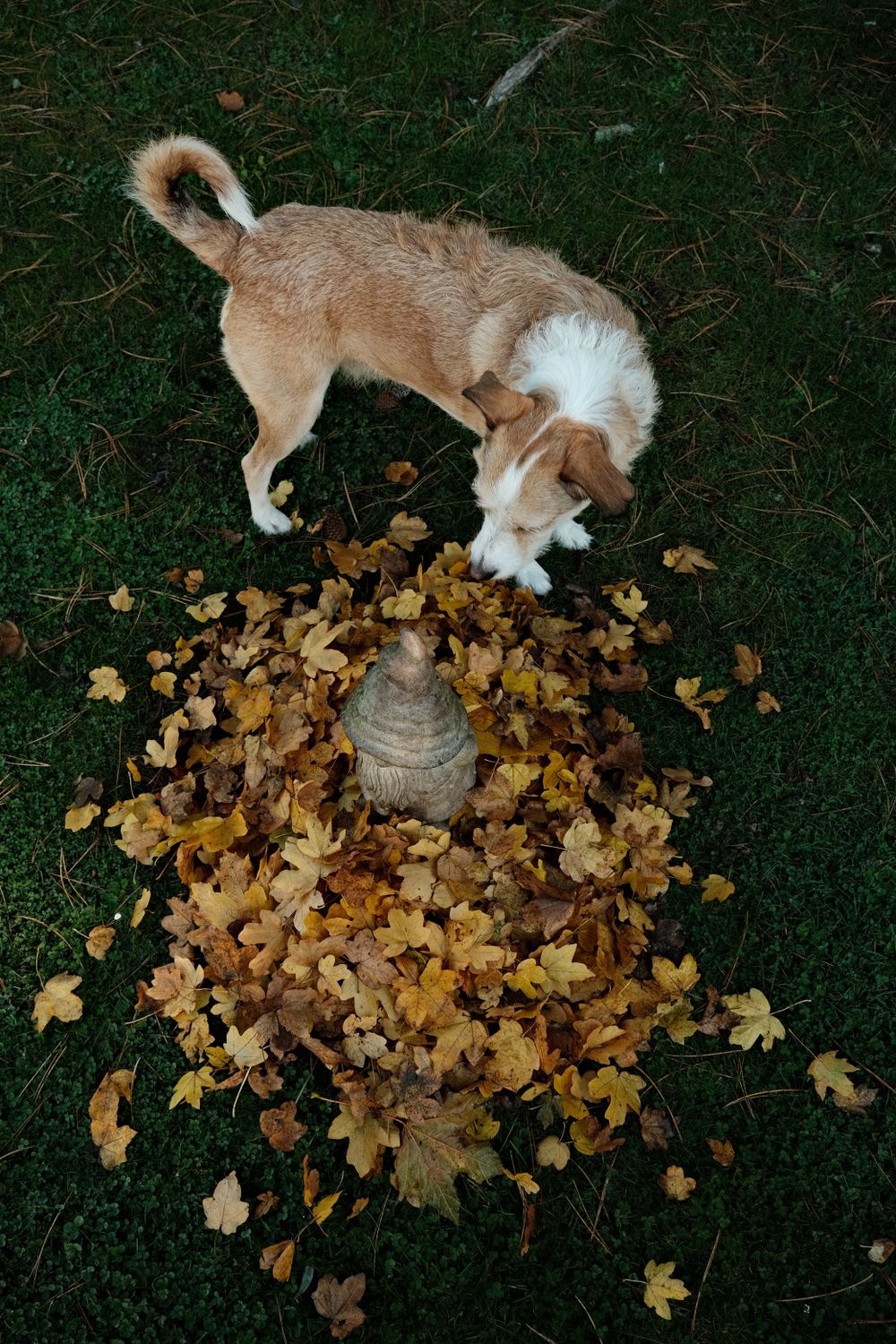
Show your dog one piece of kibble or a small treat, toss it a short distance and say your search cue—such as “find it.” Once the dog understands the game, scatter several pieces over a safe floor, rug or patch of grass.
2. Three-cup scent search
Place three sturdy cups or containers on the floor and hide food under one. Let the dog investigate rather than pointing to the answer. Start with the food only partly covered, then make the search less obvious as your dog learns.
3. Room-to-room treasure hunt
Ask your dog to wait with another person or behind a gate while you hide a few pieces of food in easy locations. Release the dog to search. Avoid unsafe hiding places near electrical cords, medication, trash, houseplants or objects the dog may swallow.
4. Toy search
Not every scent game needs calories. Teach a name for a favorite toy, place it in an obvious location, reward finding it, then gradually increase distance and difficulty.
5. Sniff walk
A sniff walk is not simply a slow walk. The enrichment element is that the dog gets meaningful opportunities to investigate safe scents and, where practical, influence the route or pace. Choice and control are recognized components of animal welfare. This does not mean letting a dog drag you toward traffic, wildlife or another dog; it means creating safe moments where exploration is allowed.
If your dog suddenly wants to turn around, freezes or refuses a route, do not assume they are “stubborn.” Patify's guide to dogs that want to go home on walks explains how fear, discomfort and environmental triggers can change walking behavior.
Food and Foraging Enrichment: Use the Meal, Not Just Extra Treats
Food enrichment is easy to overdo because it feels harmless to keep adding treats. A better approach is often to use part of the dog's normal daily food allowance in the activity. VCA specifically recommends using a portion of regular food for highly food-motivated pets when appropriate.
6. Scatter part of breakfast
Instead of serving every kibble in a bowl, scatter a measured portion over a clean, safe area and let the dog forage. Indoors, use a surface where pieces cannot disappear under appliances or furniture.
7. Snuffle mat
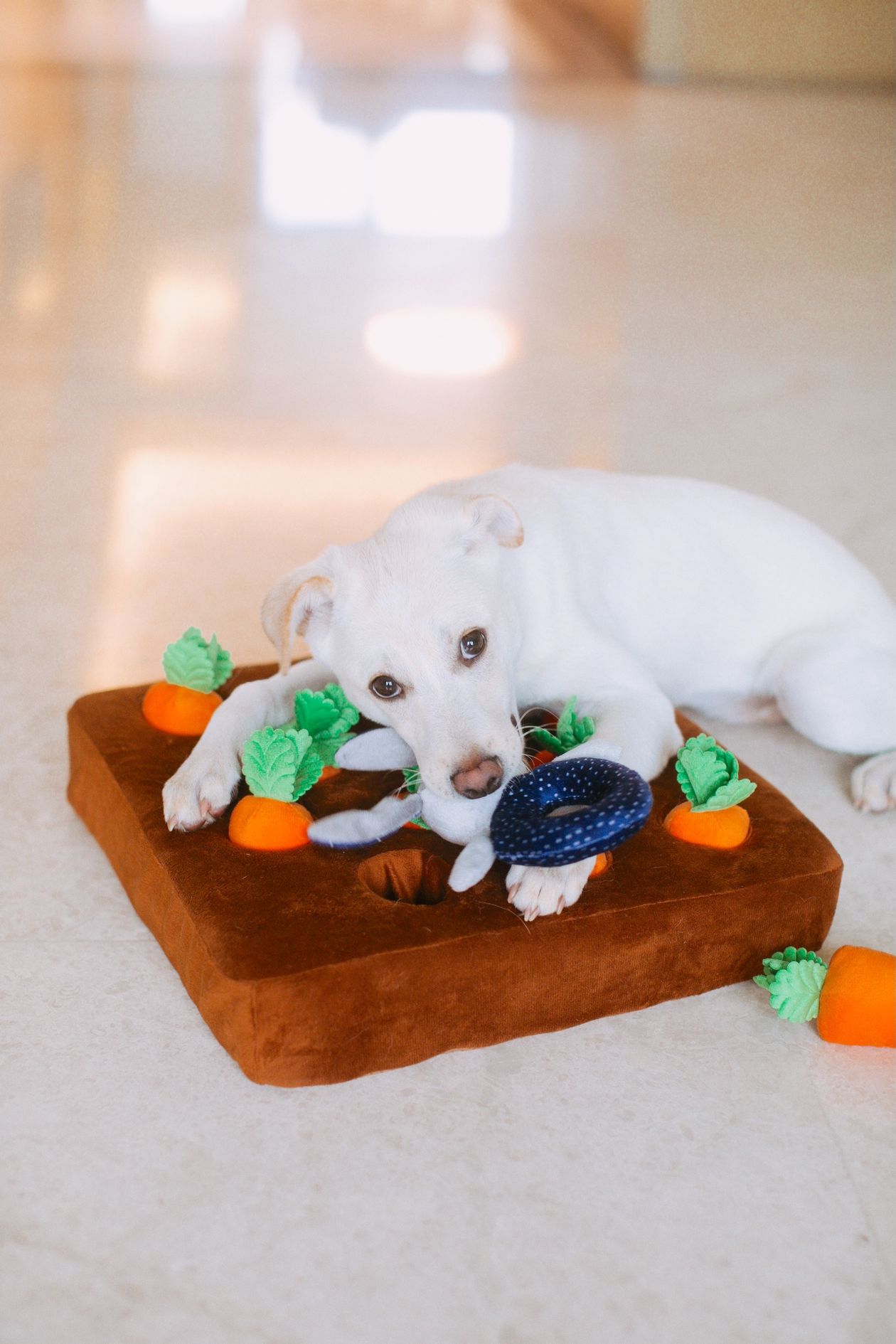
Hide dry food through the fabric strips and let the dog search. This is a supervised activity for dogs who chew or ingest fabric. A snuffle mat is not a safe unsupervised toy for every dog.
8. Rolled towel
Sprinkle kibble along a towel and loosely roll it so the dog unfolds it with nose and paws. VCA describes a similar method. Do not knot or tightly wrap fabric for a dog that becomes frantic or tears and swallows cloth.
9. Muffin-tin puzzle
Put food into several muffin cups and loosely cover some with dog-safe balls or toys. ASPCA and AAHA both describe versions of this low-cost puzzle. Let a beginner see you place the food before asking them to solve it.
10. Cardboard foraging box
Put crumpled plain paper, sturdy empty boxes or known-safe toys into a larger box and scatter some food among them. This lets appropriate dogs search, nose and shred.
Supervise DIY cardboard and paper enrichment. ASPCA advises active supervision and removing items if a dog attempts to ingest them. Tape, staples, string, plastic windows, packing foam and shipping residues should not become part of the game.
11. Stuffed or frozen food toy
Use an appropriately sized durable food toy with part of a normal meal or veterinarian-approved filling. Freezing can extend engagement. Check the toy for damage and choose a size that cannot be swallowed.
12. Lick-based enrichment
For dogs that safely use lick mats, spread a thin layer of an appropriate dog-safe food over the surface. Avoid assuming household foods are automatically safe. In particular, products containing xylitol (birch sugar) are dangerous to dogs; if you use peanut butter, read the ingredient label rather than relying on the front of the jar.
Patify has a separate xylitol / birch sugar label guide for dog owners.
Problem-Solving and Training Enrichment
Learning is enrichment when the dog is given a fair problem, useful feedback and a chance to succeed. Training should not feel like an exam the dog keeps failing.
13. Five-cue mini session
Choose five easy behaviors your dog already knows—such as touch, sit, down, hand target or go to mat—and reward a short sequence. Stop while the dog is still engaged. Familiar skills can still be enrichment when you change location, body position or order.
14. Teach a hand target
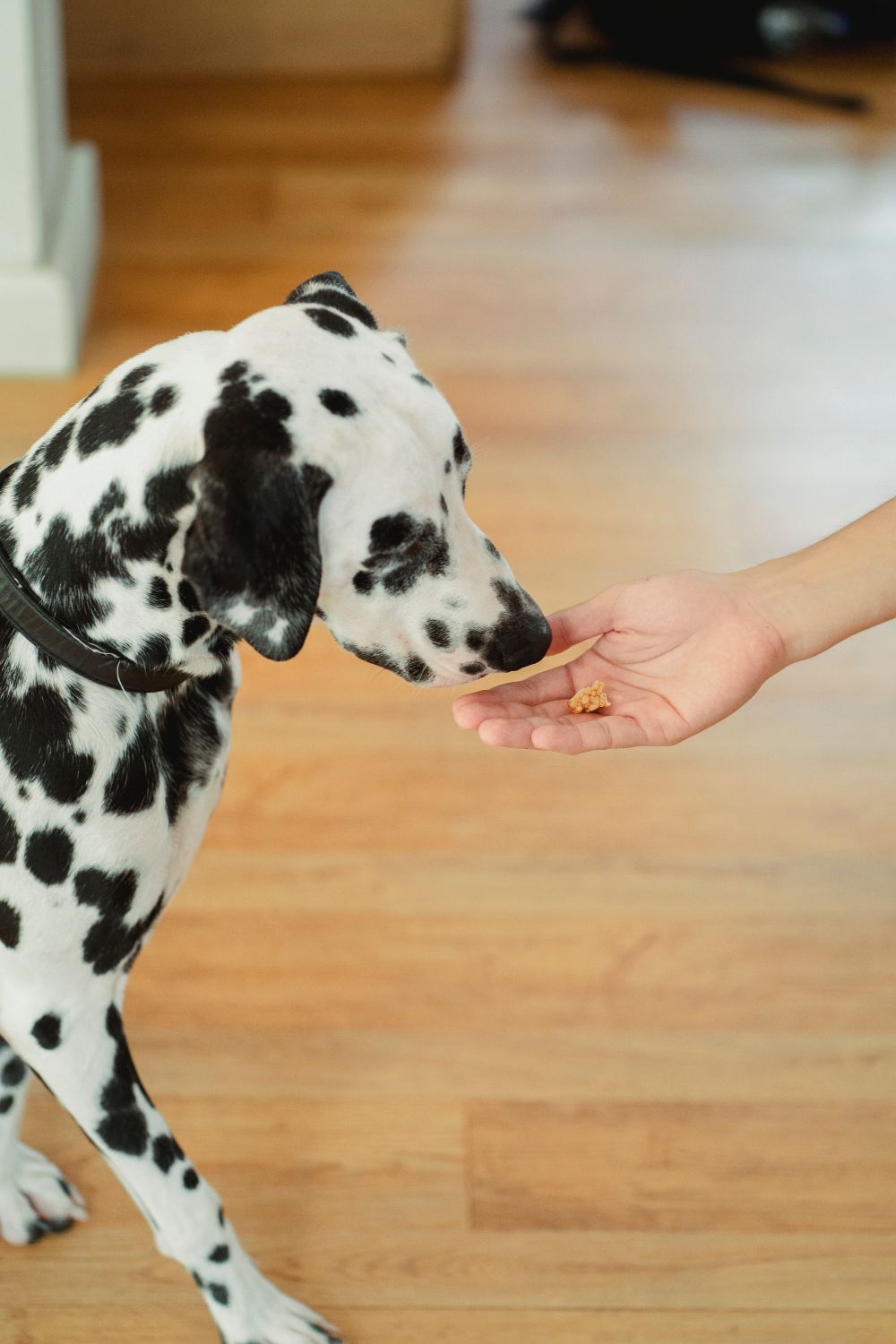
Offer an open palm a few inches from the dog's nose. Mark and reward when the dog touches it. A hand target can later become useful for movement, positioning and cooperative handling.
15. Hide-and-seek with a person
Have someone hold the dog or cue a stay while you hide somewhere easy. Call once and celebrate when the dog finds you. AKC lists hide-and-seek among simple indoor mental games.
16. “Which hand?”
Hide food in one fist, present both closed hands and let the dog investigate. Reward choosing the correct hand. Keep it light; if the dog paws hard or mouths hands, switch to cup searches.
17. Name the toys
Start with one toy. Say its name immediately before play, then reinforce interaction with that object. Over time, add a second toy and reward correct choices. The goal is not a viral-video vocabulary count; it is a cooperative discrimination game.
18. Put toys away
For dogs that retrieve, teach a drop into an open basket. First reward any toy released over the basket; then gradually refine the behavior.
If you want to build the basics first, Patify's seven essential dog commands guide gives you a foundation for short training games.
Movement and Environmental Enrichment
Physical enrichment is not “run the dog until they are tired.” It is purposeful movement, environmental exploration and opportunities to use the body safely.
19. Change the walking route
Turn left where you normally turn right, explore a safe new block or drive to a different quiet trail. Novel smells and environments can make an ordinary walk more engaging without turning it into harder exercise.
20. Home obstacle route
Use stable, non-slip household objects to create simple movement patterns: walk around a chair, step between low poles laid on the floor, go to a mat, or weave around cones. Do not improvise jumps for puppies, senior dogs or dogs with orthopedic concerns.
21. Dig box
For a dog that naturally loves digging, redirect the behavior to a designated box or patch filled with dog-safe substrate. Hide a toy shallowly at first so the dog learns what the area is for.
22. Texture walk
For a confident dog, calmly explore safe surfaces such as grass, a rubber mat, concrete, wood or shallow clean water. The point is voluntary exploration, not forcing a worried dog across something they fear.
DIY Dog Enrichment Safety: The Part Viral Lists Skip
Household materials make enrichment cheap, but “DIY” does not mean inherently safe.
- Supervise anything designed to be torn apart. Cardboard, paper tubes and paper bags are search/shredding materials—not edible materials.
- Remove tape, staples, string, rubber bands and plastic film.
- Do not use bottles or hard containers that create sharp edges when chewed.
- Choose objects too large to swallow. Size the activity to the dog, not to the photo online.
- Watch fabric eaters closely. Towels, fleece and snuffle mats can become foreign-body risks if swallowed.
- Use food from the normal daily ration when practical. Enrichment calories still count.
- Separate dogs for high-value food activities if there is any tension or resource guarding.
- Stop if frustration escalates. Barking, frantic biting, repeated pawing, avoidance or walking away can mean the task is too hard or simply not enjoyable.
- Account for medical limitations. Dental pain, arthritis, vision loss, GI disease and allergies can change what is appropriate.
Safety test: before giving a DIY item, ask: “If my dog destroys this in 30 seconds, what pieces exist afterward?” If the answer includes string, plastic shards, stuffing, fabric strips, staples or swallowable chunks, redesign the activity or supervise closely enough to interrupt immediately.
How to Choose the Right Enrichment Difficulty
A puzzle is only enriching if the dog can understand and engage with it. Difficulty should be adjustable.
Too easy
The dog empties it instantly and leaves. That is not harmful; it simply may not provide much sustained engagement. Add one small step next time.
About right
The dog investigates, tries more than one strategy, continues voluntarily and succeeds often enough to stay engaged.
Too hard
The dog repeatedly quits, becomes frantic, bites or throws the device, paws intensely without progress, or looks to you for rescue after every attempt. Make the solution obvious again.
The objective is not to prove your dog is clever. It is to create an activity worth choosing. Welfare discussions increasingly emphasize agency and control: the dog should be able to engage, pause or leave when the activity is optional.
A Simple 7-Day Dog Enrichment Rotation
You do not need seven elaborate projects. A sustainable plan alternates types so enrichment does not become another owner chore.
| Day | 5–10 minute option | Longer option | Main channel |
|---|---|---|---|
| Monday | Scatter breakfast | Sniff walk | Scent / foraging |
| Tuesday | 5-cue training | Teach toy names | Cognitive |
| Wednesday | Muffin-tin search | Frozen meal toy | Food / problem-solving |
| Thursday | Hand target game | Novel walking route | Training / sensory |
| Friday | Hide-and-seek | Cardboard foraging box | Search / social |
| Saturday | Tug with rules | Dig box or safe nature exploration | Physical / species-typical |
| Sunday | Cooperative care | Dog's favorite activity from the week | Choice / relationship |
Repeat favorites. Novelty is useful, but novelty is not the goal by itself. A dog that happily asks for the same scent game three times a week is giving you valuable information about preference.
When “My Dog Is Bored” May Be Something Else
Enrichment is often recommended for chewing, barking, restlessness, licking or destructive behavior, but those behaviors are not specific diagnoses.
A dog that suddenly becomes restless, starts licking floors constantly, cannot settle, paces at night, destroys doors when alone or loses interest in normal activities may need more than a boredom plan. Pain, gastrointestinal discomfort, urinary problems, fear, separation-related distress, cognitive changes and other medical or behavioral conditions can look like “needs more stimulation.”
For example, Patify's guide on excessive floor or carpet licking separates possible behavioral triggers from medical causes that deserve veterinary attention.
Call your veterinarian when a new behavior change is sudden, intense, paired with pain, vomiting, diarrhea, appetite/thirst changes, weakness, confusion or sleep disruption—or when enrichment attempts make the dog more distressed rather than more comfortable.
Frequently Asked Questions
What is the easiest dog enrichment idea?
Scatter a measured portion of your dog's normal dry food over a safe area and cue “find it.” It requires almost no equipment and can be made easier or harder by changing the search area.
How much enrichment does a dog need every day?
There is no evidence-based universal minute target for every dog. Needs vary with age, health, temperament, breed tendencies, environment and the rest of the dog's day. Short enrichment sessions can be useful when combined with appropriate exercise, rest, training and social contact.
Does mental stimulation replace a walk?
No. Cognitive and scent activities can add valuable stimulation, but most healthy dogs still need appropriate physical activity, elimination opportunities and outdoor exploration. The balance should be individualized.
Can I use all of my dog's meals for enrichment?
Some dogs enjoy working for much of their food, while others prefer or need easy access to meals. Do not turn every calorie into a difficult task by default. Preserve predictable, low-effort feeding when that suits the dog better.
Are cardboard enrichment boxes safe?
Only with appropriate dogs and active supervision. Remove tape, staples, plastic and string, and stop the activity if the dog swallows cardboard or other material rather than simply searching or shredding.
What enrichment is best for an apartment dog?
Scent searches, short training sessions, stuffed food toys, hide-and-seek, toy-name games and supervised snuffle activities require little floor space. Outdoor sniff walks add sensory variety without needing a yard.
What if my dog ignores puzzle toys?
That does not mean the dog “needs more difficult puzzles.” Try a different enrichment category—sniffing, tug, training, carrying, social play or outdoor exploration. Preference matters.
Can enrichment help a senior dog?
Often, yes, when matched to mobility, vision, hearing, dental health and cognitive status. Easy scent searches, gentle training and choice-based exploration may be more suitable than high-impact activities. Ask your veterinarian to modify activities around medical limitations.
Bottom Line: Build an Enrichment Menu, Not an Enrichment Closet
You do not need shelves of dog puzzles. Build a small menu your dog actually enjoys:
- one sniffing activity;
- one food/foraging activity;
- one learning game;
- one movement/exploration option;
- one social or cooperative activity.
Rotate those options, make success easy at first and watch what your dog chooses to repeat. That is more useful than collecting dozens of “boredom busters” that do not fit the dog in front of you.

Social and Cooperative Enrichment
“Social enrichment” does not mean every dog needs a dog park. For many dogs, the most valuable social activity is predictable interaction with familiar people or compatible dogs.
23. Structured tug
Use a durable toy, let the dog pull, periodically cue a release, then restart the game. Tug can combine movement, cooperation and impulse-control practice. Do not use it to provoke conflict between dogs over one toy.
24. Cooperative care game
Turn handling into a small training exercise: reward the dog for placing their chin on a towel, offering a paw briefly, standing on a mat or allowing a one-second ear look. These skills can make routine care more predictable.
For puppies, enrichment should sit inside a broader plan that includes sleep, housetraining, socialization and appropriate handling. Patify's new puppy first 30 days guide covers that larger picture.