
Quick answer: The four best-documented hairless dog breeds for U.S. owners are the Xoloitzcuintli, Chinese Crested, American Hairless Terrier, and Peruvian Inca Orchid. They are not interchangeable. Xolos and Peruvian Inca Orchids come in three sizes and can also be born coated; Chinese Cresteds have a Hairless and a fully coated Powderpuff variety; and the American Hairless Terrier is a compact, active terrier whose hairlessness comes from a different genetic mechanism. None is truly allergy-free, and “no fur” does not mean “no grooming.”
The most important myth to drop: hairless dogs are not automatically hypoallergenic. Dog allergens are found in dander, saliva and urine—not just hair. Some allergy sufferers may tolerate an individual dog better than another, but there is no breed that can be guaranteed not to trigger dog allergy.
What Actually Counts as a Hairless Dog Breed?
A naturally hairless breed is not simply a dog that has been clipped short, has sparse fur, or has lost hair because of a medical problem. In recognized hairless breeds, reduced or absent coat is an inherited trait that appears predictably within the breed.
That distinction matters because a dog with sudden bald patches, itching, inflamed skin, broken hairs, scaling or widespread coat loss may have an underlying dermatologic or systemic problem. A naturally hairless dog should not be used as the visual reference for deciding whether acquired hair loss is “normal.”
It also matters for grooming. A Xolo's bare skin is a breed trait. Shaving a double-coated dog is a completely different situation. If you are comparing those two ideas, see Patify's guide on why shaving a double-coated dog for summer is not the same as owning a naturally hairless breed.
Naturally hairless
The coat pattern is inherited and breed-associated. Skin care, sun protection and temperature management become part of routine ownership.
Acquired hair loss
A dog that used to have a normal coat and becomes bald needs a medical explanation. Do not assume the new hair loss is merely cosmetic.
Four Hairless Dog Breeds Compared at a Glance
This table focuses on traits that help a prospective owner distinguish the breeds. Size ranges come from AKC or UKC breed standards and references. Temperament descriptions are broad breed tendencies, not guarantees for an individual dog.
| Breed | Size clue | Hairless look | Coated variety? | General ownership clue |
|---|---|---|---|---|
| Xoloitzcuintli | Three sizes: Toy, Miniature, Standard | Mostly bare body; small amounts of hair may occur on head, feet and tail | Yes | Primitive, watchful companion; size choice changes the household fit substantially |
| Chinese Crested | Toy-sized; ideally about 11–13 in | Hairless body with crest, “socks” and tail plume | Yes: Powderpuff | Very distinctive small companion; the hairless variety still has decorative hair |
| American Hairless Terrier | About 12–16 in | Smooth, essentially hairless adult skin; whiskers/eyebrows may occur | Yes | More recognizably terrier-like: curious, active and trainable |
| Peruvian Inca Orchid | Three sizes: small, medium, large | Bare skin with limited hair possible on head, feet and tail | Yes | Elegant sighthound/pariah-type outline; alert, athletic and often reserved with strangers |
Do not identify ancestry from bare skin alone. Xolos and Peruvian Inca Orchids can overlap dramatically in silhouette, and rare mixed-breed dogs can also inherit unusual coat traits. Registration history, pedigree or validated DNA information is more reliable than a photo guess.
1. Xoloitzcuintli: The Hairless Breed With the Widest Size Choice
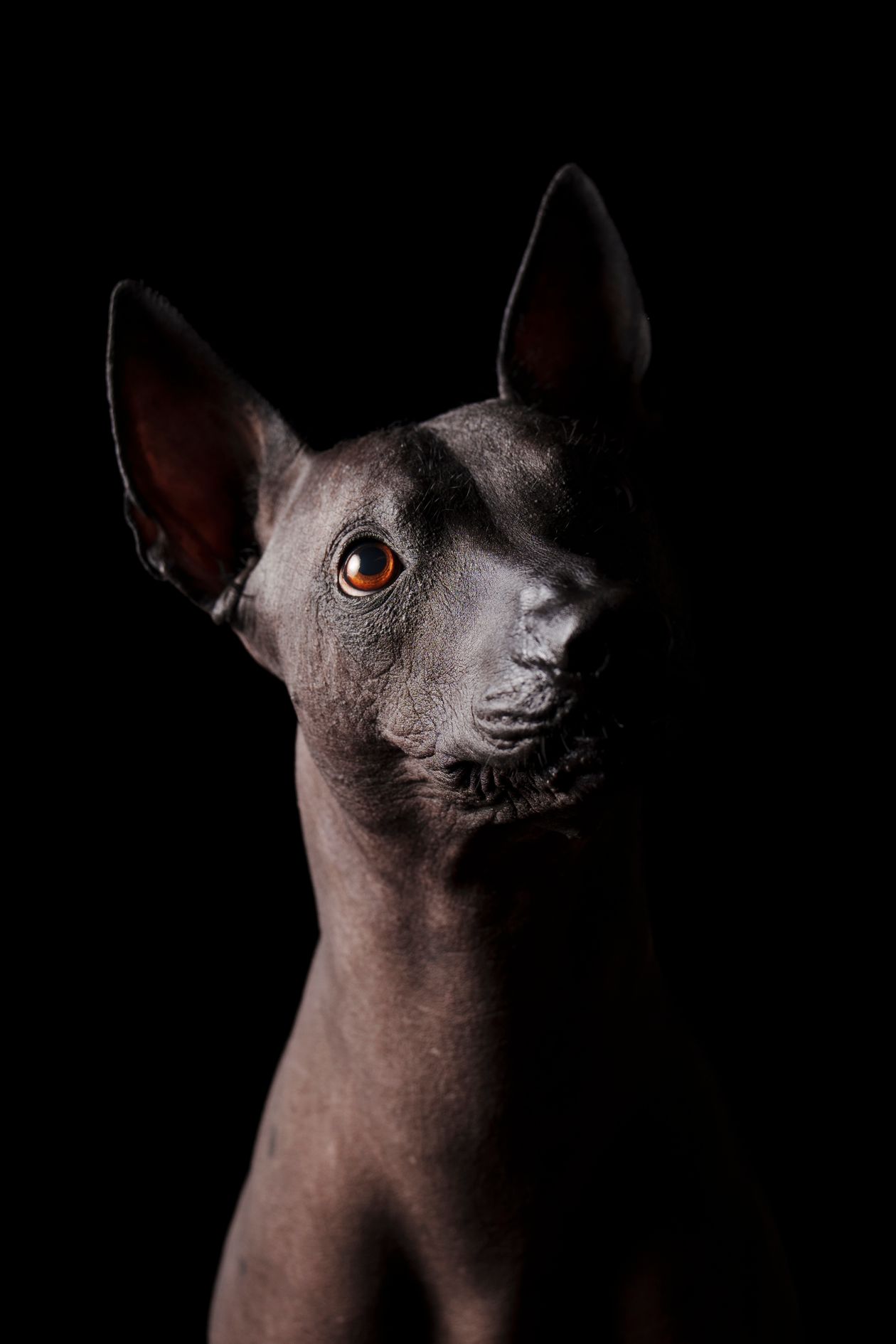
The Xoloitzcuintli—often shortened to Xolo and also called the Mexican Hairless Dog—is unusual because one breed spans three recognized size varieties. AKC describes Toy Xolos at roughly 10–14 inches, Miniatures at 14–18 inches, and Standards at 18–23 inches at the shoulder.
That range changes the buying decision more than many “hairless dog” listicles admit. A Toy Xolo and a Standard Xolo may share breed identity, but they do not occupy the same amount of physical space or feel the same on leash. Prospective owners should decide which size they actually want before comparing breeders.
How to recognize the type
- lean, athletic outline rather than a heavily muscled terrier body;
- large, mobile ears are characteristic;
- hairless dogs may retain sparse hair on the head, feet or tail;
- a coated Xolo can occur and is still a Xolo;
- skin color varies; “hairless” does not mean one specific gray or black color.
What ownership feels like
AKC describes the Xolo as alert, loyal and watchful. That makes the breed appealing to owners who want a close companion that is not simply a decorative lapdog. Early socialization still matters; “naturally watchful” should not be turned into fearfulness by poor exposure or isolation.
The bare skin is visible, tactile and exposed to the environment, so owners have to think about sun, cold, abrasion and skin condition more deliberately than they would with a normally coated dog.
2. Chinese Crested: Hairless, but Not Completely Without Hair
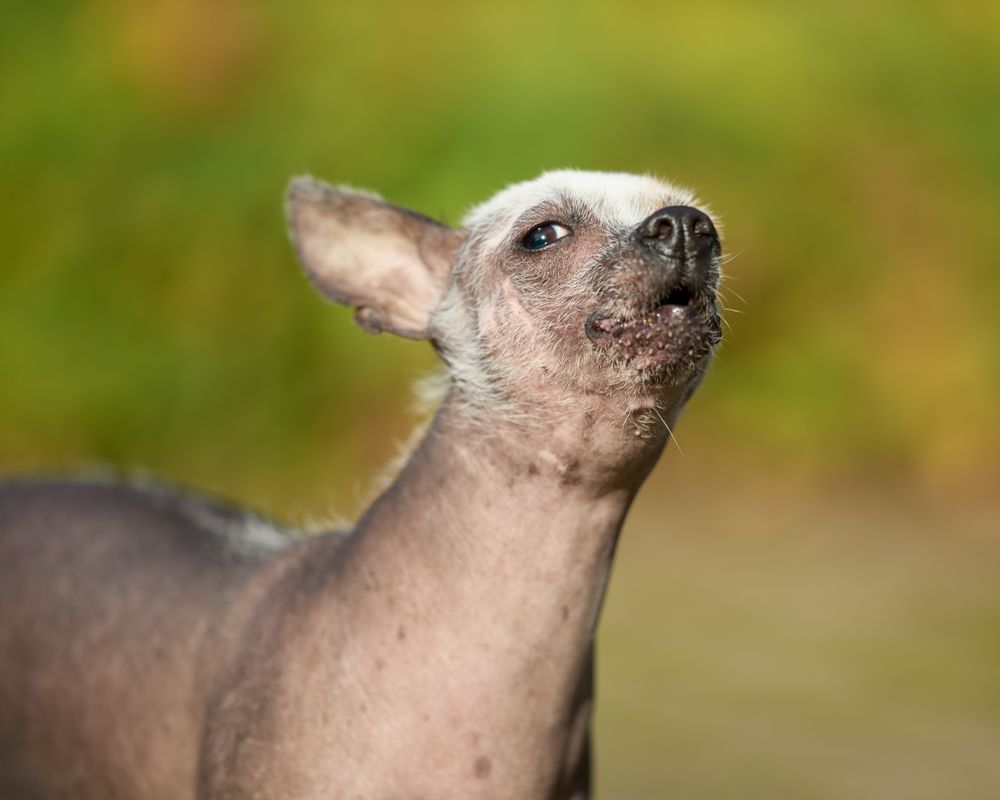
If you picture a tiny dog with bare skin but dramatic hair on the head, feet and tail, you are probably picturing the Hairless Chinese Crested. The AKC standard recognizes two varieties born within the same breed: the Hairless and the fully coated Powderpuff.
The Hairless variety is supposed to carry hair on the crest, feet and tail rather than being uniformly bald. The Powderpuff is covered in a soft, silky coat. This is one reason internet photos can confuse people: two purebred Chinese Cresteds from the same breed can look radically different.
Size and feel
The breed standard gives an ideal height of about 11–13 inches. The body is fine-boned and elegant rather than chunky. Large erect ears, a refined head and the placement of the furnishings are major visual clues.
Best fit
The Chinese Crested makes the most sense for someone specifically seeking a very small companion and who enjoys hands-on skin and grooming care. “Hairless” still does not mean maintenance-free: the remaining crest, socks and plume need care, and the exposed skin still needs protection.
3. American Hairless Terrier: The Hairless Dog That Still Feels Like a Terrier
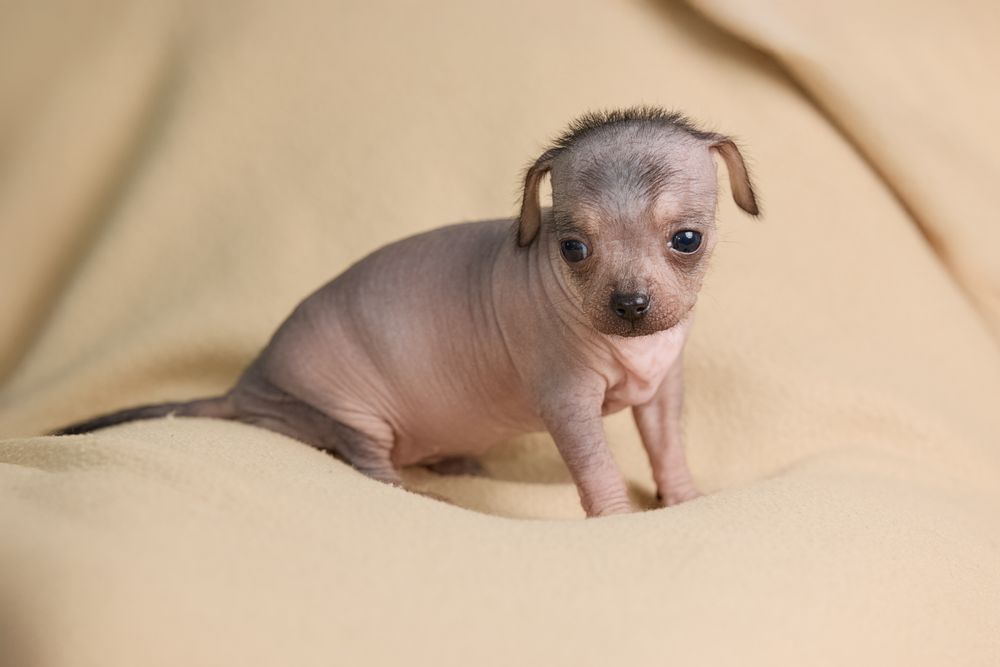
The American Hairless Terrier (AHT) developed from Rat Terrier ancestry in the United States. The official AKC standard describes it as a small-to-medium, smoothly muscled, active terrier, ideally around 12–16 inches tall.
This is an important lifestyle distinction. Someone who wants a hairless dog because they assume all hairless breeds are sleepy lapdogs may be surprised by the AHT's terrier heritage. AKC describes the breed as energetic, alert, curious and intelligent.
Hairless and coated AHTs
The breed occurs in both hairless and coated varieties. Hairless puppies are not necessarily born looking exactly like the adult: the breed's distinctive recessive trait can involve a sparse neonatal coat that is lost early in life.
Why this breed is scientifically unusual
The AHT is the outlier in this guide. UC Davis Veterinary Genetics Laboratory and genomic research identify its hairlessness as a recessive SGK3-associated trait, whereas the better-known hairlessness in Xolo, Chinese Crested and Peruvian hairless dogs is associated with a different genetic mechanism.
This difference also matters when discussing teeth. The recessive AHT form is not associated with the same hair-and-tooth ectodermal pattern seen in the FOXI3 group.
4. Peruvian Inca Orchid: Three Sizes, Sighthound Lines and a Rare U.S. Choice
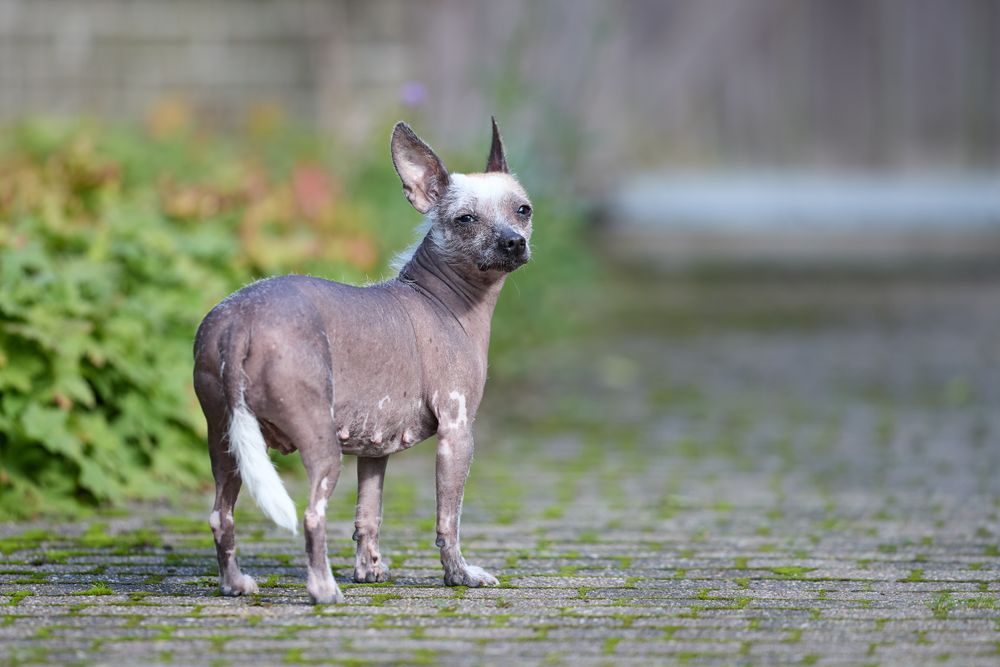
The Peruvian Inca Orchid (PIO), also known as the Peruvian Hairless Dog, is another breed that comes in both hairless and coated forms. UKC and AKC reference material describe three sizes. The UKC standard places the small variety at roughly 9.75–15.75 inches, medium over 15.75–19.75 inches, and large over 19.75–25.75 inches.
Compared with the American Hairless Terrier, the PIO has a more sighthound-like, elegant outline. UKC describes mature dogs as calm and quiet while also intelligent, independent, alert and wary of strangers.
Visual clues
- long-legged, refined outline;
- erect ears in the hairless variety;
- small amounts of hair may remain on the head, lower legs or tail;
- skin can occur in many colors and may be uniform or patched;
- coated littermates are part of the breed, not evidence of accidental mixing.
For a U.S. buyer, availability itself can be part of the decision. Rare breeds may involve longer searches, travel, smaller breeder networks and fewer opportunities to meet adult examples in person. That makes breeder transparency and health documentation especially important.
Why the American Hairless Terrier Is Genetically Different
This is one of the most useful facts for understanding hairless dog breeds.
| Group | Main hairlessness mechanism | Inheritance takeaway | Dental connection |
|---|---|---|---|
| Xoloitzcuintli, Chinese Crested, Peruvian hairless dogs | FOXI3-associated canine ectodermal dysplasia | Semidominant/dominant-type inheritance described in the research | Hairlessness can be linked with incomplete or abnormal dentition |
| American Hairless Terrier | SGK3-associated hairlessness | Recessive | UC Davis notes the recessive terrier form is not associated with the same adverse dentition effect |
A landmark genetic study linked hairlessness in Mexican, Peruvian and Chinese Crested dogs to a mutation affecting FOXI3, a gene involved in development of structures including hair and teeth. Separate work later identified an SGK3 deletion underlying the American Hairless Terrier's recessive hairless phenotype.
For owners, the practical lesson is simple: “hairless” is a visible result, not a single biological condition shared identically by every breed.
Hairless Dog Skin Care: Less Brushing, More Barrier Management
The phrase “low grooming” can be misleading. Hairless owners may spend far less time brushing and de-shedding, but the skin itself becomes the surface that meets sunlight, cold air, dirt, friction and moisture.
1. Sun protection matters
Hairless breeds are among the dogs more vulnerable to sunburn because the protective coat is absent. Long outdoor sessions, especially in strong sun, deserve planning. Use shade, time-of-day management and a dog-safe sunscreen recommended for your dog; do not automatically substitute a human cosmetic product.
2. Cold weather is not just a style issue
A bare dog has less insulation from cold, wind and wet weather. A properly fitted layer can be practical rather than decorative. Watch the dog, not the calendar: shivering, reluctance to continue and obvious discomfort are cues to get warm.
3. Skin still needs cleaning—but more is not always better
Hairless skin can accumulate oil, dirt and debris. AKC grooming guidance emphasizes routine bathing and restoring the skin barrier after cleansing. The exact products and frequency should be individualized: a dog with acne, dermatitis, recurrent pustules or very dry skin may need veterinary guidance rather than an increasingly complicated home skin-care routine.
4. Do not “treat” every bump like human acne
Young Xolos and other hairless dogs can develop comedones or acne-like skin changes, but redness, pain, discharge, crusting, odor or spreading lesions deserve a veterinary assessment. Hairlessness makes skin easier to inspect; use that visibility as an advantage.
Hairless does not mean fragile. These breeds are real dogs with exercise, training, social and enrichment needs. Skin protection should support normal life—not turn the dog into an indoor ornament.
Hairlessness and Teeth: Why Breed Genetics Matter
One of the stranger facts about hairless breeds is that hair and teeth can be genetically connected. Research on FOXI3-associated canine ectodermal dysplasia describes missing hair and teeth together, and official standards for Chinese Crested and Peruvian hairless dogs explicitly accommodate incomplete dentition in the hairless variety.
That does not mean every missing tooth in every hairless dog is harmless. Dental disease still occurs, and home oral care plus veterinary dental examinations still matter. It means that a responsible veterinarian and breeder interpret the dentition in the context of the breed and its genetics.
The American Hairless Terrier is again the exception: UC Davis notes that its recessive SGK3-associated hairlessness does not carry the same dentition effect seen in the dominant hairless form.
Are Hairless Dogs Hypoallergenic?
No dog breed can be promised to be allergy-free. The American College of Allergy, Asthma & Immunology explains that dog allergens occur in dander, saliva and urine, and studies have not shown that “hypoallergenic” breeds eliminate household dog allergen.
A hairless dog may reduce one nuisance—loose fur throughout the home—but that is not the same thing as eliminating allergen proteins.
If someone in the home has dog allergy
- do not buy a puppy solely because an advertisement says “hypoallergenic”;
- spend meaningful time around adult dogs of the breed before committing if possible;
- discuss known allergy or asthma with a qualified allergist;
- remember that individual tolerance can vary even within the same breed.
Likewise, if the dog develops persistent itch, redness or skin inflammation, do not assume bare skin is the cause. Hairless dogs can still have allergic and inflammatory skin disease. Patify's Apoquel vs. Cytopoint guide explains two veterinary allergy-treatment options, but diagnosis should come before medication decisions.
Which Hairless Breed Fits Which Home?
Want the smallest, most companion-oriented option?
Chinese Crested is the clearest starting point. It is Toy-sized and visually distinctive, but still needs skin and furnishing care.
Want an active U.S.-developed terrier?
American Hairless Terrier. Choose it because you like terrier energy and trainability—not merely because it does not have a normal coat.
Want several size choices in an ancient primitive breed?
Xoloitzcuintli. Decide Toy, Miniature or Standard first, then assess the individual dog's temperament.
Want a rare, elegant, more sighthound-like breed?
Peruvian Inca Orchid. Expect a smaller breeder network and put extra weight on meeting well-socialized adults.
If coat type is less important than household energy, compare these choices against Patify's low-energy dog breed guide. Hairlessness and energy level are separate traits; a bare dog is not automatically a low-exercise dog.
Breeder and Rescue Checklist: What to Verify Before You Commit
Rare appearance can create a market for impulse purchases. Slow the process down.
- Meet adult dogs if possible. Photos of puppies do not show adult size, confidence, skin quality or household behavior.
- Ask which variety you are buying. Hairless and coated puppies can exist within these breeds. A coated puppy is not automatically a mistake.
- Request breed-appropriate health screening. For example, AKC lists patella, hip, cardiac and ophthalmologist evaluations among parent-club recommendations for Xoloitzcuintli; American Hairless Terrier recommendations include patella, hip and cardiac evaluation; Chinese Crested recommendations include eye and thyroid evaluation, with additional parent-club genetic screening guidance available.
- Ask how puppies are socialized. Skin type does not replace temperament. Handling, household exposure and positive training still matter.
- Ask for the skin-care routine in writing. A breeder should be able to explain what the puppies are currently bathed with, how they are protected outdoors and what skin problems have occurred in the line.
- Do not pay a premium for “100% hypoallergenic.” That is not a scientifically defensible guarantee.
- Be wary of invented rarity. “Micro,” “teacup,” “exotic,” or unusual color marketing should never replace a documented breed identity and health program.
Rescue can also be an excellent route, especially if you care more about the individual dog's fit than pedigree. With any adult dog, ask for veterinary records and clarify whether hairlessness is believed to be genetic or acquired.
Frequently Asked Questions
What is the most common hairless dog breed?
There is no single official U.S. census that establishes one as the most common. Xoloitzcuintli, Chinese Crested and American Hairless Terrier are among the best-known options, while the Peruvian Inca Orchid is comparatively rare in the United States.
Are Xolos completely bald?
Not always. Hairless Xolos may have small amounts of hair on the head, feet or tail, and the breed also has a coated variety.
Is a Chinese Crested always hairless?
No. The breed has Hairless and Powderpuff varieties. Powderpuffs have a full soft coat.
Is the American Hairless Terrier born bald?
Hairless AHT puppies can be born with a sparse coat that is lost early in life. The underlying hairless trait is recessive and associated with SGK3.
Do hairless dogs need sunscreen?
They can need sun protection because exposed skin is vulnerable to UV injury. Use shade and timing first, and ask your veterinarian about an appropriate dog-safe sunscreen for exposed areas.
Do hairless dogs get cold easily?
They lack the insulation of a normal coat, so cold, wind and wet conditions can become uncomfortable more quickly. Clothing can be useful when properly fitted and matched to conditions.
Are hairless dogs good for people with allergies?
They may reduce loose hair in the home, but they are not allergen-free. Dog allergens are also present in dander, saliva and urine.
Which hairless breed is smallest?
The Chinese Crested is consistently Toy-sized. Xoloitzcuintli and Peruvian Inca Orchid both include small varieties as well, so compare official size ranges rather than breed names alone.
Bottom Line
The best hairless dog is not simply the one with the least hair. Chinese Crested is a tiny companion with a highly distinctive Hairless/Powderpuff split. American Hairless Terrier is the terrier choice and genetically different from the other three. Xoloitzcuintli offers the broadest recognized size range in an ancient primitive breed. Peruvian Inca Orchid combines rare-breed ownership with a refined, athletic outline and three sizes.
Choose first for temperament, activity level, adult size and breeder quality. Then ask whether you genuinely want the skin-care responsibilities that replace conventional coat care. The absence of fur changes maintenance; it does not eliminate it.