
Last verified: September 28, 2026
Yorkie Haircuts: Choose the Finish, Not Just the Name
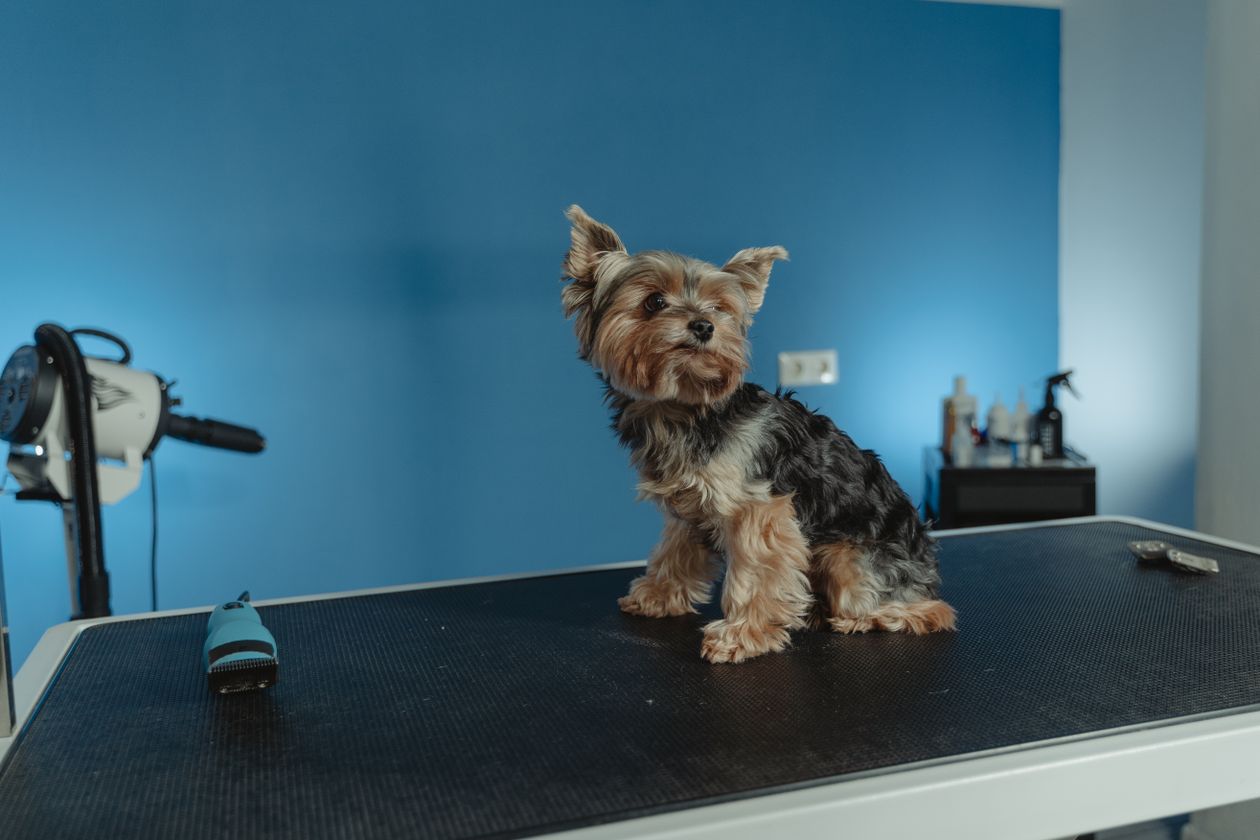
Quick answer: the most useful Yorkie haircut request is not simply “puppy cut” or “teddy bear cut.” Those names are salon shorthand, not universal measurements. A better request tells the groomer how much length to leave on the body, how you want the face shaped, what to do with the ears and legs, whether you are keeping a topknot, and how much brushing you can realistically maintain at home.
For most pet Yorkshire Terriers, an even short-to-medium trim is the easiest place to start. A teddy-bear finish keeps a fuller, rounder face; a topknot style preserves head fall; a long show-style coat is the highest-maintenance option. Coat texture matters just as much as the photo: the Yorkshire Terrier Club of America notes that some Yorkies have the ideal fine, silky coat, while others have cottony, woolly or even double-coated coats that behave very differently.
Best appointment rule: bring one reference photo of a Yorkie with a coat texture reasonably similar to your dog, then describe the finish in parts: body length + face + ears + legs/skirt + head/topknot + sanitary/feet. That gives the groomer something measurable to reproduce.
Which Yorkie Haircut Fits Your Maintenance Level?
The table below is a decision guide, not a haircut standard. The suggested lengths are useful conversation starting points because salons can use the same style name for noticeably different finishes. Your groomer may recommend more or less length depending on coat texture, matting, skin condition and the finish shown in your reference photo.
| Style | Useful body-length starting point | Face / head idea | Home-care load | Best fit |
|---|---|---|---|---|
| 1. Even pet / puppy trim | About 1/2–1 1/2 in, then adjust | Neat face; can be softly rounded | Low–medium | Owners who want a practical all-over finish |
| 2. Teddy-bear face + short body | About 1/2–1 in on body | Fuller cheeks and rounded muzzle | Medium | Soft face without a long body coat |
| 3. Medium pet trim | About 1–2 in | Natural or lightly rounded | Medium–high | More flowing Yorkie look without floor length |
| 4. Topknot pet trim | Short or medium body | Head fall kept long enough for topknot | Medium–high | Owners who like the classic Yorkie head detail |
| 5. Long / show-style coat | Long; show presentation approaches floor length | Long head fall, topknot | Very high | Owners committed to intensive coat care |
| 6. Schnauzer-inspired trim | Shorter body | More defined beard/brows; longer furnishings | Medium | A more angular, terrier-style silhouette |
| 7. Lamb-leg trim | Shorter body | Owner's choice; legs left fuller | Medium–high | Contrast between tidy body and plush legs |
| 8. Short utility / summer-style trim | Short, agreed explicitly with groomer | Short, easy-clean face or slightly fuller head | Lowest coat workload | Dogs that mat easily or owners prioritizing practicality |
Do not treat the length column as a prescription. If you say “half an inch on the body,” your groomer has a measurable target. If you say only “puppy cut,” you are asking the salon to supply the measurement for you.
The Yorkie Groomer Card: Six Decisions to Make Before Check-In
This is the part worth screenshotting. It converts a style photo into instructions a groomer can actually use.
- Body length: say the finished length you want to see, ideally in inches or millimetres. If you are unsure, ask the groomer to show you what two or three guard-comb lengths would look like on your dog's coat.
- Face: choose round and full, neat and blended, natural/long, or shorter around the muzzle for easier food and water cleanup.
- Ears: decide whether you want the upper ear tips clipped clean in the traditional Yorkie manner or more fringe retained. The breed standard calls for short hair on the ear tips.
- Legs and skirt: specify whether the legs should match the body, stay fuller, or blend into a longer skirt. This is what separates several “named” trims that otherwise start with the same short body.
- Head fall / topknot: tell the groomer whether you are growing it, keeping a short topknot, or cutting the forehead hair short enough to stay out of the eyes.
- Feet and sanitary areas: request tidy feet/paw pads and a hygienic sanitary trim as appropriate. Mention any skin sensitivity or previous clipper irritation before grooming starts.
Copy-this appointment script: “Please leave about 3/4 inch on the body, keep the legs slightly fuller and blended, shape the face round but keep the eyes open, clean the top third of the ears, keep enough head hair for a small topknot, tidy the feet and sanitary area, and please tell me before going shorter if matting makes that length unrealistic.”
That sentence is much harder to misunderstand than “teddy bear cut, not too short.” Bring a front-view and side-view photo if face shape and body silhouette both matter. Use the photos to communicate a finish, not to demand that a different Yorkie's coat texture, density or ear carriage be copied exactly.
8 Yorkie Haircut Styles: What They Look Like and What to Ask For
1. Even Pet Trim / Yorkie Puppy Cut
The puppy cut is the practical default many owners have in mind: the body, legs and much of the head are kept at a relatively even, manageable length. The problem is that “puppy cut” has no single official length. One salon may interpret it as close and compact; another may leave a plush inch or more.
Ask for: an actual body length, whether the legs should match or stay a little fuller, and how round or short you want the face. If you want an easy-care result without seeing skin, say that explicitly rather than assuming “puppy cut” communicates it.
Best for: household Yorkies whose owners want less daily detangling than a long coat. It is also a sensible reset after deciding that maintaining several inches of coat is no longer realistic.
2. Teddy Bear Yorkie Cut
A teddy-bear Yorkie usually has a short-to-medium body with a rounder, fuller head and muzzle. The visual identity comes more from the face than from one exact body length. That is why teddy-bear and puppy-cut photos often overlap.
Ask for: the body length first, then “round the cheeks and muzzle, keep the eyes clearly visible, and blend the ears into the head.” If your Yorkie gets food stuck in facial hair or tears heavily, ask for a shorter, cleaner muzzle rather than preserving fullness at any cost.
Maintenance catch: a short body does not make a full teddy face maintenance-free. The longer cheek and muzzle hair still needs combing and cleaning.
3. Medium-Length Yorkie Pet Trim
This is the compromise for owners who like movement and silkiness but do not want a floor-length coat. The body stays long enough to look unmistakably flowing, while the outline is shaped and the feet, sanitary area and ears remain tidy.
Ask for: “keep roughly one to two inches on the body,” or show the desired fall relative to the dog's legs. Then specify whether you want the legs to blend seamlessly or look slightly fuller.
Best for: a naturally silky coat with an owner who will comb thoroughly between appointments. On a cottony coat that mats quickly, the same length can require substantially more work.
4. Topknot Pet Trim
The topknot is a head treatment that can be paired with several body cuts. You keep the head fall long enough to gather above the eyes while the body can remain short or medium. This preserves one of the most recognizable Yorkie details without committing to a full show coat.
Ask for: “keep the head fall for a topknot; do not shorten it into the face,” plus your separate body-length request. If you do not want to maintain a topknot, AKC guidance supports trimming the upper head hair short enough to prevent it from irritating the eyes.
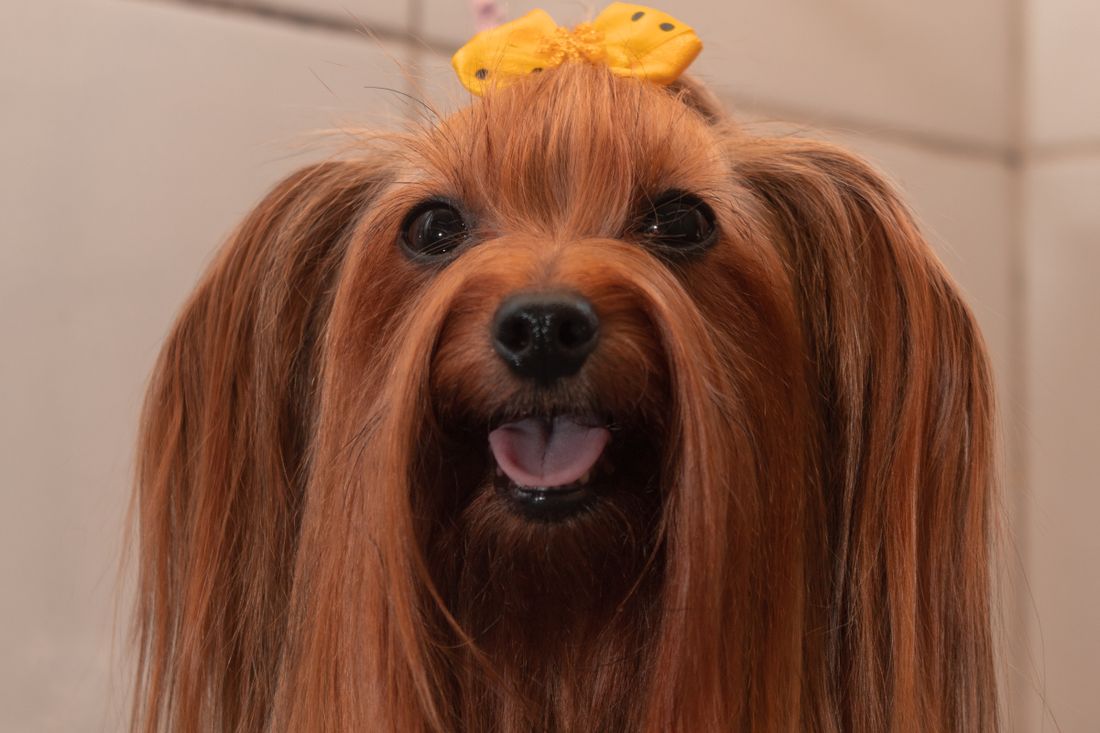
5. Long / Show-Style Yorkie Coat
The breed standard describes a fine, glossy, silky coat that hangs straight along the sides; it may be trimmed to floor length for a neat appearance and easier movement. This is the iconic Yorkie look, but it is not simply “skip haircuts and let it grow.” A long coat is an active grooming project.
AKC's Yorkie grooming guidance distinguishes a show coat from a pet trim and notes that the show coat needs very frequent care, including weekly bathing in the quoted expert routine. YTCA describes daily brushing as a core part of keeping tangles away and notes that non-silky coats may be much harder to maintain long.
Ask for: preservation of length, a level neatening of the outline, clean ear tips, tidy feet/pads and sanitary work, with clear instructions not to remove body length unless necessary. If you are actively growing coat, tell the groomer before the dog is bathed or clipped.
Best for: owners who genuinely enjoy coat maintenance. It is the wrong target if brushing is already being postponed until mats form.
6. Schnauzer-Inspired Yorkie Trim
This is a pet style, not the Yorkshire Terrier breed standard. The body is clipped shorter while facial hair and leg furnishings are shaped to create a more angular terrier look—often with a more defined beard and eyebrow effect.
Ask for: your preferred short body length, then describe how much beard, brow and leg furnishing you want left. A photo is especially important because “Schnauzer cut on a Yorkie” is an interpretation, not a regulated template.
Best for: owners who want visual contrast and are willing to comb the longer beard and legs. It is less practical if facial hair gets constantly wet or the leg furnishings mat behind the elbows and around friction points.
7. Lamb-Leg Yorkie Trim
A lamb-style finish keeps the body shorter while leaving the legs noticeably fuller. On a Yorkie, this can create a plush outline without carrying several inches of body coat.
Ask for: a measurable body length and “leave the legs fuller, then blend them into the shoulders and hips.” Show how much contrast you want. The more exaggerated the leg fullness, the more brushing you keep in the very areas that tend to rub and tangle.
Best for: owners who like a styled silhouette and can comb legs carefully. If the dog mats under the front legs or around the inner thighs, a more even trim may be kinder and easier.
8. Short Utility / Summer-Style Yorkie Trim
This is the shortest practical pet option in this guide: compact body, easy-clean legs and a short or moderately full face. Some salons call versions of this a kennel cut or summer cut. Again, the name does not tell you the final length.
Ask for: exactly how short you are comfortable going and whether you want the face proportional or fuller. If you do not want an extremely close clip, say “short, but please leave visible coat rather than taking it skin-close” and let the groomer recommend the nearest safe finish.
Important: choose a short Yorkie haircut for manageability, hygiene or mat prevention, not because clipping is a substitute for heat-safety measures. Coat type can vary in individual Yorkies, and sun/skin exposure increases as hair gets very short. For the broader coat-type distinction, see Patify's guide to clipping single- and double-coated dogs.
Your Yorkie's Coat Type Can Matter More Than the Style Name
The most useful point on the Yorkshire Terrier Club of America grooming page is also one of the most overlooked: not every Yorkie has the same coat texture. The ideal breed-standard coat is fine and silky, with one layer and no undercoat. YTCA also describes cotton, woolly and occasional double-coated Yorkies.
| Coat description | What YTCA notes | Practical haircut implication |
|---|---|---|
| Fine / silky | Closest to the desired breed-standard texture; straight, glossy, hair-like | Most compatible with long, flowing styles if consistently maintained |
| Cottony | Fine but mats easily; YTCA recommends daily brushing | A clipped pet trim can dramatically reduce the detangling burden |
| Woolly | Thick, full and very mat-prone; YTCA recommends very frequent brushing and clipped styles for easier handling | Short-to-medium practical trims usually make more sense than chasing a show-like finish |
| Double-coated individual | YTCA notes this can occur even though it is not the ideal Yorkie coat | Have the actual coat assessed instead of applying generic “all Yorkies are single-coated” advice |
This also explains why two Yorkies photographed in the “same haircut” can look completely different. Density, texture, cowlicks, ear carriage, face proportions and the amount of natural furnishing all affect the finish.
Puppies add another variable. AKC's Yorkie grooming guide describes a coat transition during roughly the first 6 to 18 months, when the fluffy puppy coat develops toward the adult silky coat; that stage can be particularly prone to tangling. Do not judge your adult maintenance routine only from how an eight-month-old puppy's coat behaves today.
If Your Yorkie Is Matted, the Haircut Decision Changes
A style consultation assumes the coat is safely workable. Tight matting turns the appointment into a welfare decision.
PetMD's veterinarian-reviewed matting guidance explains that a true mat cannot simply be combed out like a loose tangle and that close mats can sit against the skin. It recommends clippers rather than scissors for mat removal because moving pets and hidden skin make scissor cuts a real risk.
Do not cut tight mats with scissors at home. Yorkies are small, the skin can be pulled up into the mat, and the boundary between hair and skin may be impossible to see. If the mat is tight, widespread, painful, damp, foul-smelling or associated with irritated skin, let a groomer or veterinarian assess it.
Also avoid asking for hours of painful dematting just to preserve a photo-ready length. If a groomer says a shorter reset is the humane option, ask what length can be saved comfortably and build the next style from healthy regrowth.
After a shave-down or short reset, the useful question is not “How fast can I grow it back?” but “What brushing length can I maintain before the next appointment?” A sustainable one-inch coat is better than a three-inch coat that repeatedly mats to the skin.
How Often Does a Yorkie Need a Haircut and Brushing?
AKC's Yorkie grooming article gives a practical professional-grooming baseline: trim every 4 to 6 weeks. That is a starting interval, not a law. Your schedule can shift with how fast the coat grows, the cut you choose, coat texture, bathing, outdoor activity and how well you maintain friction areas at home.
For a short pet trim
AKC's quoted expert says a Yorkie in a pet trim can be maintained with a biweekly bath plus regular brushing. Even a short Yorkie should still be combed through rather than brushed only over the surface. Pay attention behind the ears, under the collar or harness, in the armpits, along the inner legs and anywhere hair rubs against itself.
For medium or fuller teddy styles
Expect the face, legs and friction areas to need more frequent combing than the short body. A rounded head can mat while the torso still looks perfect. Check with a metal comb all the way to the skin rather than assuming a slick outer surface means the coat is tangle-free.
For long coats
YTCA describes daily brushing as the routine that keeps tangles away, while AKC notes that a show coat requires substantially more upkeep than a pet trim. Long coat maintenance is measured in consistency, not in how impressive the dog looks immediately after grooming.
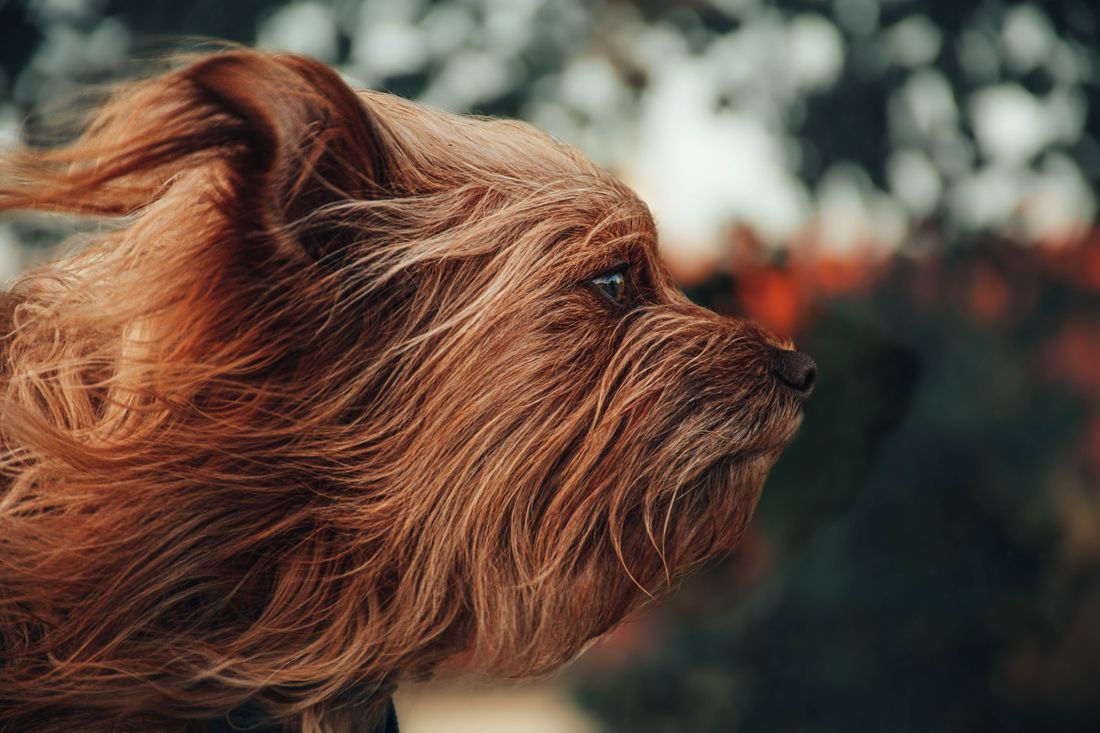
Brush first, then verify with a comb
AKC's Yorkie guide recommends a pin brush, metal-toothed comb and slicker brush as useful tools and advises working tangles from the ends toward the skin. For long or cottony coats, the comb is the reality check: if it cannot pass through the coat in sections without snagging, the dog is not fully detangled.
Never make brushing a wrestling match. Repeated discomfort teaches a dog to resist grooming and can turn routine coat care into a handling problem. Use short sessions, reward calm cooperation and ask your groomer to show you how to line-brush the length you are choosing.
A Yorkie Haircut Is Only One Part of Grooming
AKC and YTCA both frame Yorkie grooming as whole-dog care. A beautiful haircut does not compensate for hair rubbing the eyes, packed paw-pad hair, overlong nails or dental disease.
Eyes and head hair
If head hair is kept long, maintain the topknot so hair stays clear of the eyes. If you do not want that maintenance, AKC specifically notes that the upper head hair can be trimmed short to avoid eye irritation. Persistent redness, squinting, discharge or eye pain is a veterinary issue, not a styling issue.
Ears
The breed standard calls for the hair on the ear tips to be trimmed short. Do not push cotton swabs into the ear canal. Odor, pain, discharge or repeated scratching should be assessed rather than hidden with grooming products.
Feet and nails
YTCA recommends keeping pad hair clipped and notes regular nail trimming, at least every two weeks in its grooming guidance. Nail frequency varies by dog, surface and growth rate; the practical goal is a comfortable foot and normal stance, not adherence to a cosmetic calendar.
Teeth
Yorkie grooming should include oral care. AKC's Yorkie guidance recommends aiming for daily brushing, and visible tartar, inflamed gums, bad breath, loose teeth or oral pain deserve veterinary attention. Patify's dog tartar and safe home dental-care guide explains what brushing can prevent—and why hardened calculus should not be scraped off at home.
How to Choose a Yorkie Haircut Photo That Your Groomer Can Use
Image search is useful, but a bad reference photo can create a different kind of miscommunication. Use this filter before saving a haircut photo:
- Same breed, ideally: a Yorkie reference is more useful than a Maltese or Shih Tzu with a different coat and head structure.
- Similar coat texture: do not use an ultra-silky show coat as the only reference for a dense cottony Yorkie.
- Clear face and side profile: you need to see the muzzle, cheeks, ears, leg outline and body length.
- Realistic ear carriage: a haircut cannot make your dog's ears anatomically match another dog's.
- One primary reference: five conflicting photos create five different instructions. Use one main photo and a second only to clarify a specific detail.
- Point to features: say “this body length, but this other face,” rather than assuming the groomer knows which detail you like.
A photo plus a six-part verbal description is the strongest combination. The image communicates silhouette; the measurements and feature choices make the result reproducible.
Pick the Cut by the Week You Can Maintain, Not the Grooming Day You Want
Every Yorkie looks maintainable at pickup. The real test arrives two, three and four weeks later.
If you brush only a few times a week
Start with an even short pet trim. Keep the face only as full as you can comb cleanly.
If you can comb most days
A medium pet trim, teddy-bear face or fuller legs becomes more realistic.
If you enjoy daily coat work
Long coat and topknot styles become possible, especially on a naturally silky coat.
If your Yorkie repeatedly mats
Choose a shorter baseline and investigate coat texture, technique, friction areas and appointment interval before growing length again.
The best Yorkie haircut is therefore not a universal winner. It is the longest, most detailed style you can maintain comfortably and consistently without letting tangles become painful mats.
Yorkie Haircut FAQ
What is the difference between a Yorkie puppy cut and teddy bear cut?
Neither term has one universal salon definition. In common use, a puppy cut usually means a relatively even short pet trim, while a teddy-bear request emphasizes a rounder, fuller face. The safest approach is to specify body length and face shape rather than rely on either name alone.
How often should a Yorkie get a haircut?
AKC's Yorkie grooming guide recommends trimming every 4 to 6 weeks as a general baseline. The best interval for your dog depends on coat texture, haircut length, growth rate and how well the coat stays clean and tangle-free between appointments.
What is the lowest-maintenance Yorkie haircut?
A short, even pet trim usually creates the least coat work because there is less length available to knot and mat. Keeping the face and legs moderately short reduces maintenance further. “Low maintenance” still includes brushing, baths, nails, ears, eye-area care and dental hygiene.
Can I ask for a teddy bear cut on a Yorkie?
Yes, but show a reference photo and define the face. Tell the groomer how full you want the cheeks and muzzle, whether the ears should look crisp or blended, and what body length should accompany the round face.
Should a Yorkie's topknot be cut off?
It is a styling and maintenance choice. If you keep the head fall long, a topknot helps hold hair away from the eyes. If you do not want to maintain it, AKC notes that upper head hair can be trimmed short to help prevent eye irritation.
Can a Yorkie be clipped short?
Many pet Yorkies are maintained in clipped styles, and YTCA specifically notes that cottony and woolly coats are often easier to manage in trims. Individual coat type still matters, so discuss how short to go with a groomer who can see and feel the coat rather than assuming every Yorkie has identical hair.
Should I cut a tight mat out with scissors?
No. Tight mats can pull skin into the hair, making scissors dangerous. PetMD's veterinarian-reviewed matting guidance recommends clipper removal for true mats and warns that pets can move unexpectedly. Use a professional groomer or veterinarian when mats are close to the skin, extensive or painful.
Does a summer cut keep a Yorkie from overheating?
A shorter haircut can make coat care easier, but it should not be treated as a heat-safety system. Shade, water, avoiding dangerous pavement and limiting activity in high heat still matter. Very close clipping also exposes more skin to the environment.
Why does my Yorkie's haircut look different from the reference photo?
Haircut photos do not control coat density, texture, growth direction, face shape, ear carriage or existing coat condition. A cottony Yorkie and a fine silky Yorkie can receive similar instructions and still finish differently. The most reproducible request combines a realistic photo with measurements and feature-by-feature instructions.
Sources — Checked September 28, 2026
- Yorkshire Terrier Club of America — official standard and Yorkie grooming guidance: coat texture, show presentation, cotton/woolly coat differences, bathing, brushing, ears, feet, nails and dental care.
- American Kennel Club — How to Groom a Yorkshire Terrier: show coat vs pet trim, 4–6 week trim baseline, brushing tools, puppy-to-adult coat transition, nails and teeth.
- American Kennel Club — Yorkshire Terrier breed profile: long-coat brushing and keeping head hair clear of the eyes.
- PetMD — veterinarian-reviewed matting guidance: why true mats may require clipping and why scissors are unsafe around close mats.
- American Puppy grooming salon — haircut communication guide: practical salon terminology and why style names such as puppy/teddy bear are not fixed measurements.
- Pexels License: selected photographs are listed as free to use; attribution is optional but included here.