
Last verified: September 28, 2026
Poodle Haircuts: Start With the Shape You Want, Then Make It Measurable
Quick answer: the most useful Poodle haircut request is not just “puppy cut,” “teddy bear,” or “lamb cut.” Those names can mean different things in different salons. Tell the groomer the finished body length, whether you want a clean or fluffy face, clean or fluffy feet, how full the legs should be, how you want the ears and topknot shaped, and whether you want a tail pompon. A photo helps, but measurements and feature-by-feature instructions make the result much more repeatable.
For everyday pets, a short kennel/utility trim, an even pet “puppy cut,” a teddy-bear finish, or a lamb-style trim is usually easier to live with than a full show pattern. More sculpted styles such as the Miami, German and Scandinavian trims can preserve strong Poodle identity while changing the amount of coat you maintain. The Continental and English Saddle are formal show clips with specific definitions in the AKC breed standard.
Important naming trap: a salon “puppy cut” and the AKC Puppy clip are not the same thing. In everyday grooming, “puppy cut” often means a practical, fairly even pet trim. In the AKC Poodle standard, the Puppy clip is a defined conformation clip for a Poodle under 12 months, with long coat plus shaved face, throat, feet and tail base. If you simply say “puppy cut,” show a reference photo and specify length.
10 Poodle Haircuts at a Glance
| Style | What it usually looks like | Maintenance | Best reason to choose it |
|---|---|---|---|
| 1. Teddy bear | Rounded muzzle and head, fuller ears, soft pet outline; body length varies | Medium to high if left fluffy | You want a plush face instead of a clean-shaved Poodle face |
| 2. Pet puppy cut | Fairly even body/leg length with simple rounded finishing | Low to medium, depending on length | You want an uncomplicated everyday trim |
| 3. Lamb trim | Shorter body with legs intentionally left fuller | Medium | You like an athletic body with more visual leg column |
| 4. Kennel / utility trim | Short practical body and legs, simplified furnishings | Lower | You prioritize easy brushing, fast drying and outdoor practicality |
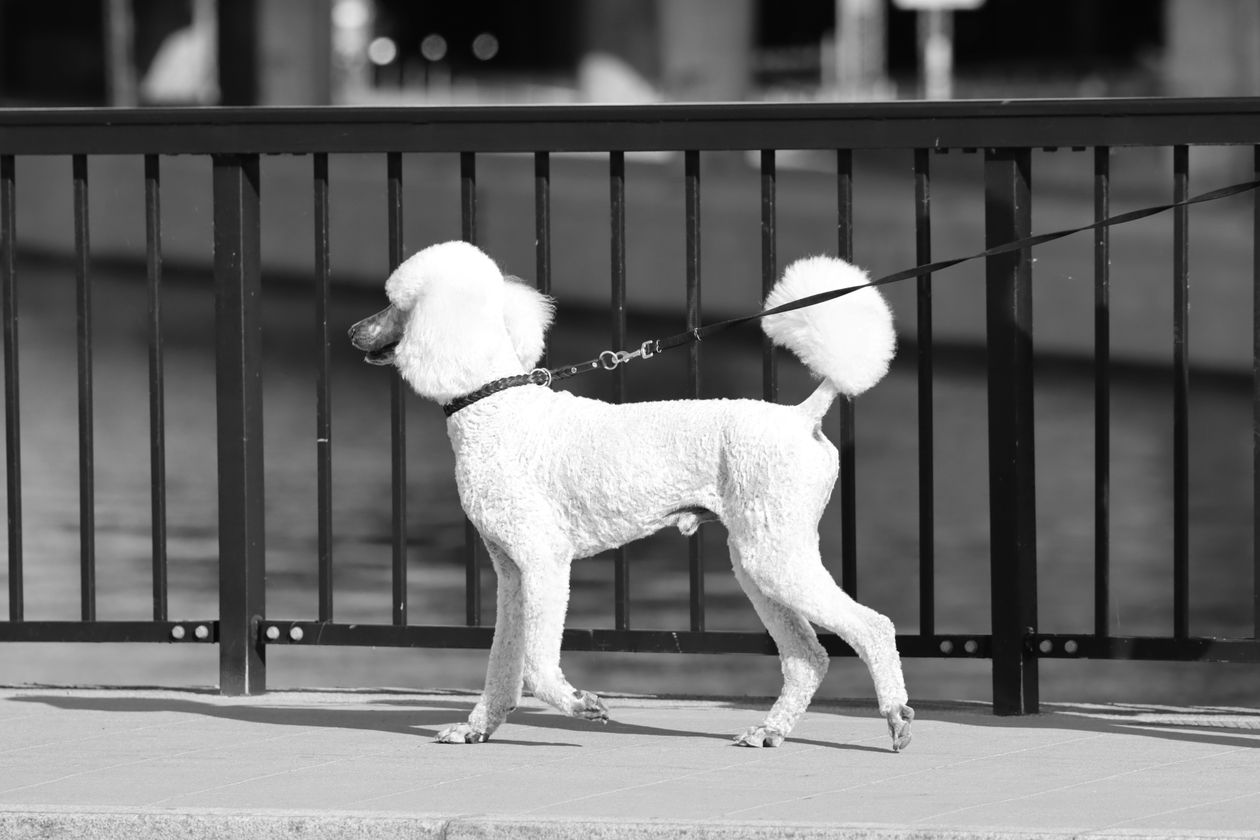
| 5. Miami / bikini trim | Close body with fuller bracelets/cuffs and tail pompon | Medium | You want dramatic Poodle styling with much less body coat |
| 6. German trim | Clean, angular silhouette with closely shaped rear/tail area; often no classic tail pompon | Medium | You prefer a sharp, modern profile over a rounded pet finish |
| 7. Scandinavian / T-clip | Fuller sculpted body and legs with strong topknot and balanced outline | High | You want a substantial scissored silhouette without the shaved rear of a Continental |
| 8. Sporting clip | Clean face, feet, throat and tail base; short body following the outline, cap and tail pompon | Medium | You like a breed-defined, practical short outline |
| 9. Continental | Shaved hindquarters and legs with bracelets/puffs, full front coat and tail pompon | Very high | Conformation/show tradition or advanced grooming interest |
| 10. English Saddle | Full front, short blanket on rear, shaped shaved bands on hind legs, multiple puffs | Very high | Formal traditional show styling |
Do not treat the first seven rows as universal blueprints. Pet-grooming names are descriptive conventions, not a national measurement system. Two salons can both advertise a “teddy bear” or “lamb cut” and produce different body lengths, ear shapes and leg proportions. The last three rows—Sporting, Continental and English Saddle—have much more specific meaning in the official Poodle standard, although the Sporting clip has limited conformation-ring use.
The Seven-Part Groomer Request: How to Get the Haircut You Actually Mean
The strongest way to order a Poodle haircut is to break the dog into seven decisions. This works whether you bring a reference photo or not.
| Decision | What to specify | Example request |
|---|---|---|
| 1. Body length | Finished coat length, preferably in inches rather than only a style name | “Leave about 1/2 inch on the body.” |
| 2. Legs | Same as body, slightly fuller, or clearly column-shaped | “Body short, but leave the legs about twice as full and blend the shoulders.” |
| 3. Face | Clean-shaved face vs rounded/teddy muzzle | “No clean face—keep the muzzle round and plush.” |
| 4. Feet | Clean Poodle feet vs fluffy feet | “Clean feet, but do not expose more leg than needed.” |
| 5. Topknot | Short round cap, taller topknot, blended teddy head, or longer bandable hair | “Round topknot, clearly separate from the ears.” |
| 6. Ears | Short, jaw-length, natural/full, rounded edge, or closely clipped | “Take the ears to jaw length with a soft rounded edge.” |
| 7. Tail | Pompon, natural fuller tail, or streamlined style | “Keep the classic tail pom, but make it compact.” |
Then add one sentence about lifestyle: “I can brush three or four times a week,” “he swims every weekend,” “she mats behind the ears,” or “I need the easiest possible coat for hiking.” That information is often more useful than asking for a fashionable cut that your routine cannot maintain.
Better than a blade number: unless you already speak the same grooming shorthand as your salon, describe the finished length you want left on the dog. Blade numbers, guards, coat preparation and technique can create different-looking results. A clear target such as “about half an inch on the body” is easier for an owner and groomer to discuss.
“Puppy Cut” Has Two Different Meanings on a Poodle
This is the most important terminology problem in Poodle grooming.
The everyday salon meaning
In many pet salons, a puppy cut is shorthand for an easy, youthful-looking trim: the body and legs are left at a relatively even manageable length, with a soft head and ears. There is no single mandatory inch measurement, and the face may be fluffy or clean depending on the owner’s preference.
The AKC breed-standard meaning
The official Poodle standard uses “Puppy” clip for dogs under 12 months in conformation. The coat is kept long; the face, throat, feet and base of the tail are shaved; the whole shaved foot is visible; and a tail pompon is retained. That is not the simple short pet trim most owners picture when they ask a neighborhood salon for a puppy cut.
The practical fix is simple: never depend on “puppy cut” alone. Add body length, face style and foot style, or show the groomer a photo of the result you mean.
Practical Pet Poodle Haircuts
1. Teddy Bear Cut: Rounded Face, Soft Outline
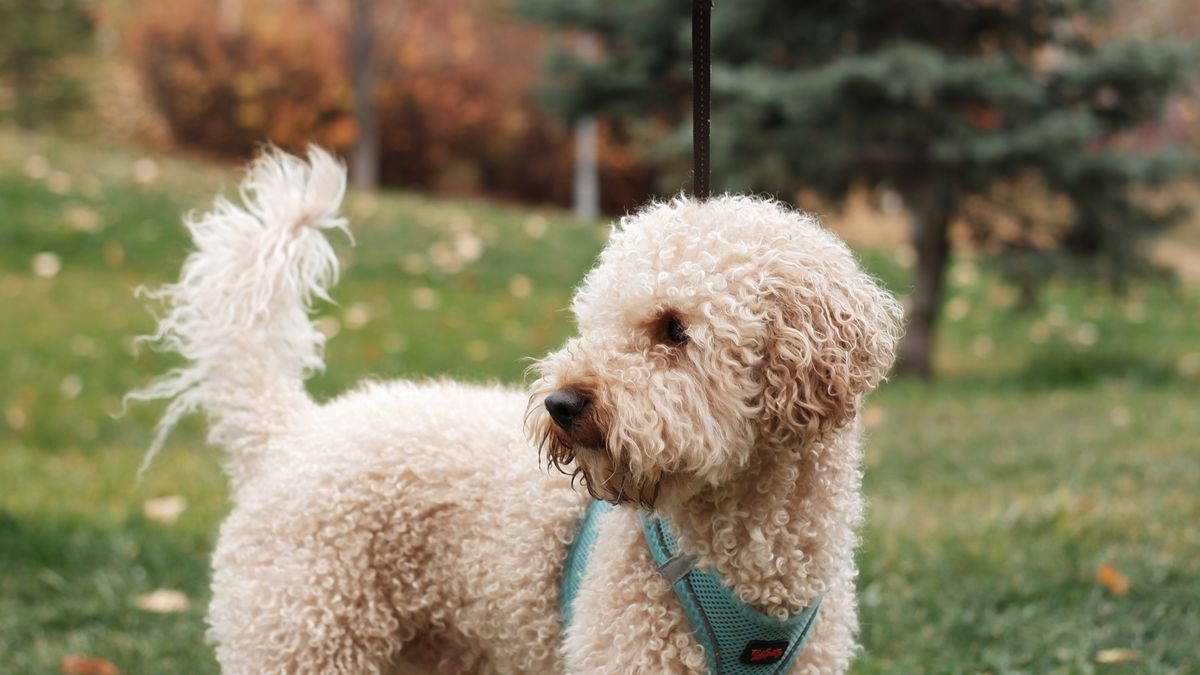
The teddy-bear look is defined more by head shape than by one official body length. The muzzle is left furry and rounded instead of being shaved clean, the top of the head is blended into a soft dome, and the ears are usually kept full enough to support the plush outline.
Ask your groomer: “Keep about 1/2 to 3/4 inch on the body, legs slightly fuller, round the muzzle and head into one soft teddy shape, keep fluffy feet, and take the ears to jaw length.” Adjust the measurements to your actual preference.
Tradeoff: the face and lower legs can mat faster than a clean-face/clean-feet trim because food, water, saliva, dirt and friction act on longer hair. If your dog’s mouth or feet are hard to brush, keep those areas shorter while retaining the rounded head.
2. Pet Puppy Cut: Even, Simple and Flexible
For a pet Poodle, the salon version of a puppy cut is useful precisely because it is uncomplicated. The body and legs are kept at a similar length, then the head, ears and tail are styled to taste. It can be extremely short or moderately fluffy, so the phrase itself does not tell the groomer enough.
Ask your groomer: “Even pet trim at roughly 1/2 inch all over, rounded topknot, short rounded ears, clean feet, and a small tail pom.” Or swap the clean feet for fluffy feet if that is your preference.
Best for: owners who want the Poodle to look tidy without maintaining a dramatic difference between body and leg coat.
3. Lamb Trim: Short Body, Fuller Legs
A lamb-style trim creates visual contrast: the body is clipped shorter while the legs remain longer and are scissored into smooth columns. The head may be a traditional clean-face Poodle head or a teddy-style head. That means “lamb cut” still needs a face instruction.
Ask your groomer: “Body around 3/8 to 1/2 inch, legs fuller at about 3/4 to 1 inch and blended smoothly at the shoulders and hips; clean face and feet; rounded topknot.”
Tradeoff: fuller legs collect more debris and require more combing than an all-over utility trim. If your Poodle hikes through brush or plays in wet grass, ask for slightly less leg length while preserving the lamb silhouette.
4. Kennel or Utility Trim: Low-Fuss Everyday Poodle
This is the practical end of the spectrum: a short body, short legs, simplified furnishings and a head that can be kept neat without requiring heavy scissor work. Salons may use “kennel,” “utility,” or simply “short pet trim,” and those names are not identical everywhere.
Ask your groomer: “Short practical body and legs, no long furnishings, clean face and feet, short rounded topknot, tidy ears, and a small tail pom.” If you prefer a fluffy face, say so explicitly.
Best for: active dogs, owners who struggle to brush a long coat, dogs that swim frequently, and households that want to reduce—but not eliminate—between-groom maintenance.
A short Poodle trim is fundamentally different from close-shaving a plush double-coated breed for summer. Patify’s guide to clipping and shaving different dog coat types explains why coat structure matters before you apply one breed’s grooming rule to another.
Statement Poodle Styles: Miami, German and Scandinavian
5. Miami / Bikini Trim: Short Body, Poodle Bracelets
The Miami—often also called a bikini-style trim in pet grooming—keeps the body very short while leaving distinct bracelets or cuffs on the lower legs and a fuller tail pompon. The face and feet are commonly clipped clean, creating a crisp contrast between bare-looking areas and sculpted puffs.
Ask your groomer: “Short body, clean face and feet, bracelets starting evenly above each ankle, compact round bracelets, balanced topknot and classic tail pom.” If you want a fuzzy face, that changes the traditional visual logic, so show a reference.
Tradeoff: there is much less body coat to brush, but the bracelets still need regular combing. They also trap water and debris if allowed to grow too large.
6. German Trim: Sharp, Athletic and Tail-Forward
The German trim has become a recognizable advanced pet/competition style. It emphasizes a strong, tailored outline and typically uses a very different tail treatment from the classic round Poodle pompon. Exact execution varies, which is why the Poodle Club of America’s grooming competition can recognize “German Clip” as a named competition category without turning it into an AKC conformation-ring definition.
Ask your groomer: use a photo from the specific groomer or style you like. Then specify how close you want the body, how much leg column you want, whether you want a clipped tail, and how sharp or soft the topknot should be.
Best for: owners who want a distinctly Poodle silhouette but do not want the traditional pompon-and-bracelet composition.
7. Scandinavian / T-Clip: Full Sculpted Silhouette
The Scandinavian style—often discussed as a T-clip in grooming circles—uses substantial scissored coat to produce a powerful, balanced shape through the body and legs. It does not rely on the dramatically shaved hindquarters of the Continental. The result can look athletic and modern, but it is not low maintenance.
The Poodle Club of America includes Scandinavian among accepted clips in its national grooming competition. That makes it a real, established grooming style, but not one of the adult regular-class conformation clips named in the AKC breed standard.
Ask your groomer: bring a side-profile reference from the groomer whose work you like and discuss how much coat your dog currently has. This trim depends heavily on scissorable volume and balance; it cannot be created instantly on a recently shaved coat.
Official AKC Poodle Show Clips: What the Names Actually Mean
The Poodle Club of America’s published AKC standard is unusually precise about allowed clips. A Poodle under 12 months may be shown in the Puppy clip. In regular classes, Poodles 12 months and older must be shown in the English Saddle or Continental clip. The Sporting clip is allowed in the Stud Dog and Brood Bitch classes and in a non-competitive Parade of Champions. A Poodle shown in another clip is disqualified from those conformation requirements.
8. Sporting Clip
The standard defines the Sporting clip with the face, feet, throat and base of the tail shaved, a scissored cap on the head, a tail pompon, and the rest of the body and legs clipped or scissored to follow the dog’s outline. The body blanket is no longer than one inch, while the leg hair may be slightly longer.
This is useful for pet owners because it is one of the few Poodle styles with a real written length ceiling in the official standard. But do not tell a groomer “AKC Sporting” unless you actually want the clean face, clean feet, cap and tail-pom details that come with the definition.
9. Continental Clip
The Continental creates the iconic contrast most people associate with a show Poodle. The face, throat, feet and tail base are shaved. The hindquarters and legs are shaved while bracelets/puffs remain on the legs; rosettes over the hips are optional; the front portion of the body remains in full coat and is shaped for balance; and the tail carries a pompon.
Maintenance reality: the visible pattern is only part of the work. The large areas of retained coat must be kept free of mats and conditioned for the desired finish. This is a specialist styling choice, not a shortcut to less grooming.
10. English Saddle Clip
The English Saddle retains more coat on the hindquarters than the Continental. The rear has a short blanket, with a curved shaved area on each flank and two shaved bands on each hind leg. Puffs and bracelets create multiple transitions that have to be set and maintained precisely.
For a pet owner who simply likes the look, ask whether the groomer regularly sets this pattern before booking. It is reasonable for a salon to be excellent at everyday Poodle grooming without specializing in formal show patterns.
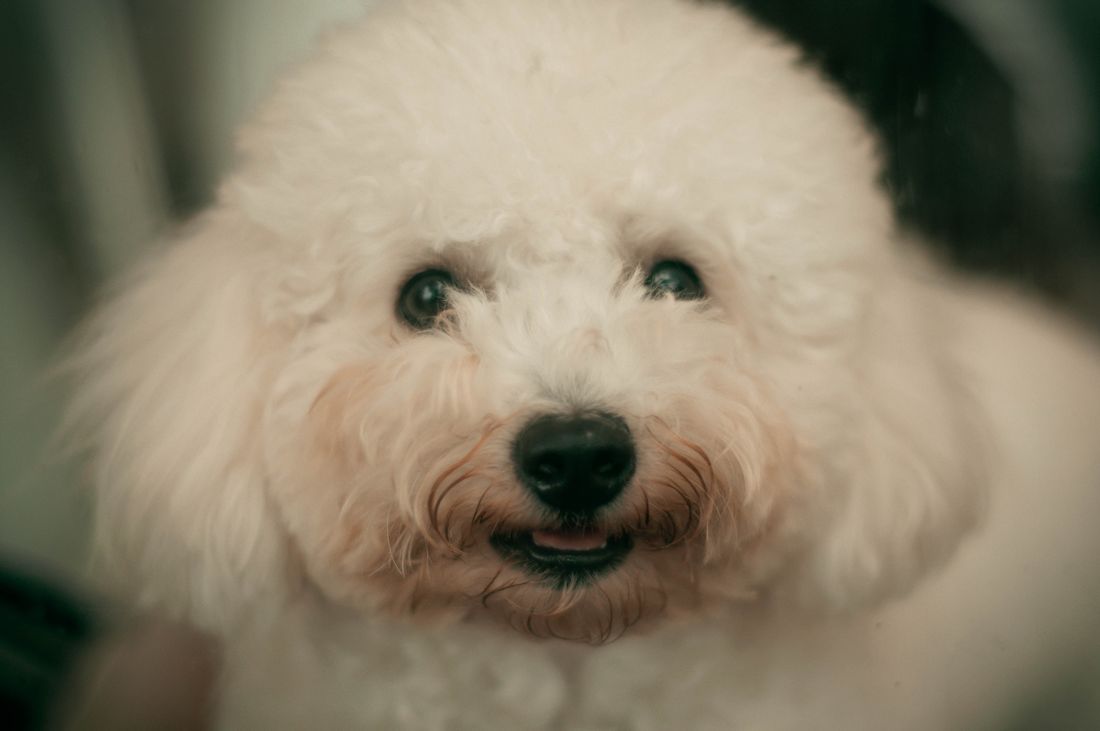
Your Poodle’s Coat Condition Sets the Real Haircut Menu
A reference photo shows what you want. The coat on the dog determines what is safely possible today.
AKC grooming guidance stresses brushing and combing a fuller Poodle coat all the way to the skin. Surface brushing can leave compact tangles at the roots. AKC also notes that if a full coat becomes badly matted, it may need to be clipped off and grown again. PetMD likewise identifies Poodles as a coat type that is especially prone to matting and may require substantial grooming.
| What the groomer finds | What it means for the haircut |
|---|---|
| Coat combs smoothly to the skin | You have the widest choice of lengths and scissored styles. |
| Small isolated tangles | Some planned length may still be possible after careful detangling, depending on comfort and time. |
| Dense matting close to the skin | A shorter reset may be safer and more humane than forcing a long style. |
| Recently shaved coat | Fuller styles such as Scandinavian, lamb legs or elaborate topknots may require a grow-out phase. |
| Skin redness, sores or unexpected hair loss | Style becomes secondary; discuss whether veterinary assessment is needed. |
Do not cut tight mats with household scissors. Mats can pull skin upward into the cutting path, making accidental laceration possible. If matting is tight to the skin or the dog is uncomfortable, let a professional decide whether clipping is safer.
Do Toy, Miniature and Standard Poodles Need Different Haircuts?
Not in the way many search results imply. The Poodle Club of America’s breed standard states that the standard for Toy Poodles is the same as for Standard and Miniature Poodles except for height. The named show clips therefore are not “Standard-only haircut rules.”
What changes in real life is scale and lifestyle:
- Toy Poodle: a small amount of extra facial or leg coat can dramatically change the silhouette. Owners may prioritize a rounded companion-dog look.
- Miniature Poodle: virtually every pet trim works well; proportion matters more than the style label.
- Standard Poodle: the larger surface area makes drying, brushing and scissor finishing a bigger job, especially in longer styles.
The decision should therefore be based on the individual coat, the dog’s tolerance for grooming, activity, matting history and the amount of maintenance you can actually do—not a rule that a Toy “must” wear one cut while a Standard “must” wear another.
How Often Does a Poodle Need Grooming?
There is no single schedule that fits every haircut. AKC’s Poodle breed guidance says owners who use a professional groomer commonly go about every four to six weeks for bathing, grooming and nail trimming. Its Standard Poodle grooming article gives a broader four-to-eight-week range depending on coat length and home care. PetMD’s Standard Poodle guide describes professional grooming about every six to eight weeks and daily brushing for longer coat.
| Coat plan | Between-groom work | Practical appointment logic |
|---|---|---|
| Very short kennel/utility | Lowest brushing burden, but still check friction zones and ears/feet | Book before the coat becomes difficult to comb or the shape disappears |
| Short teddy / pet puppy | Regular brushing, especially ears, muzzle, armpits and legs | Many owners fit within roughly 4–8 weeks depending on target length |
| Lamb / Miami | Focus heavily on the longer leg bracelets or columns | Return before those retained areas start matting |
| Scandinavian / long scissor style | High-frequency thorough brushing and combing | Needs an active maintenance plan, not “wait until it looks overgrown” |
| Continental / English Saddle | Advanced coat care | Typically requires specialist-level upkeep and pattern maintenance |
The comb test is more useful than the calendar alone: after brushing, a metal comb should move through the retained coat to the skin without catching. If you can only brush the outer fluff while the roots stay tangled, the coat is already moving toward a shorter haircut at the next appointment.
Whole-dog grooming still matters
A haircut does not replace nail care, dental care, ear observation or skin checks. Use grooming time to notice new lumps, sore spots, broken nails, unusual odor, persistent licking or mouth discomfort. Patify’s dog dental-care guide explains why visible tartar and home brushing are separate issues from professional dental treatment.
A Screenshot-Friendly Poodle Grooming Brief
Body: __________________ inches
Legs: same / slightly fuller / clearly fuller
Face: clean / short fuzzy / teddy-round
Feet: clean / fluffy
Topknot: short round / tall / blended teddy / grow-out
Ears: short / jaw-length / long / closely clipped
Tail: pom / fuller natural / streamlined
Priority: appearance / easy brushing / swimming / outdoor activity / grow-out
Known problem areas: behind ears / collar / armpits / legs / tail / none
Take a front photo and a side photo before you leave the salon. At the next appointment, you can point to one concrete change: “same body, shorter ears,” “keep the legs fuller,” or “round the muzzle less.” That creates continuity much faster than switching haircut names every visit.
Frequently Asked Questions About Poodle Haircuts
What is the easiest Poodle haircut to maintain?
A short kennel/utility trim is usually the simplest because less coat is retained on both the body and legs. A short pet puppy cut can also be easy. Maintenance still includes brushing, nails, ears, skin checks and regular grooming appointments.
What is the difference between a puppy cut and a teddy bear cut on a Poodle?
In pet grooming, a puppy cut usually describes a relatively even body-and-leg length, while teddy bear primarily describes a rounded, fluffy face and soft head outline. Neither name has one universal pet-salon measurement. The AKC “Puppy” clip is a separate formal show definition for Poodles under 12 months.
Can a Poodle have a teddy bear cut with a short body?
Yes. The teddy-bear effect comes mainly from the muzzle, cheeks and topknot. You can pair a round teddy head with a short practical body, provided the groomer has enough facial coat to shape.
What is the difference between a lamb cut and a puppy cut?
A lamb trim intentionally leaves the legs fuller than the body. A pet puppy cut is usually more even from body to legs. Because salons use these labels differently, specify actual lengths.
What is a Miami cut on a Poodle?
It is a short-body style that leaves distinct fuller cuffs or bracelets on the lower legs, usually with clean face/feet and a tail pompon. Placement and proportions vary in pet grooming, so a photo is useful.
Is the Continental clip only for Standard Poodles?
No. The Poodle breed standard applies across Standard, Miniature and Toy varieties except for height distinctions. The Continental is an adult regular-class conformation clip under the AKC standard, not a Standard-Poodle-only haircut.
Why did my groomer shave my Poodle shorter than I asked?
Matting is a common reason. If dense mats sit close to the skin, safely clipping underneath them can be more humane than prolonged pulling and dematting. Ask the groomer to show you the problem areas and discuss a realistic grow-out plan.
How short should I cut my Poodle in summer?
There is no universal summer number. Choose a manageable pet length based on coat condition, sun exposure, activity and brushing routine. A haircut is not a substitute for heat safety: shade, water, reduced exertion and cooler walking times still matter.
Do Poodles need to be brushed if they are professionally groomed?
Yes unless the coat is kept extremely short. Longer Poodle hair can mat near the roots, so brushing and combing between appointments is part of maintaining most fluffy styles.
Should I bring a photo to my Poodle groomer?
Yes, preferably a Poodle with a similar coat texture and enough hair to support the style. Then translate the photo into body length, leg fullness, face, feet, topknot, ears and tail so the groomer knows which details matter most to you.
Sources Checked for This Guide
- Poodle Club of America — AKC Poodle Breed Standard: official clip definitions, coat quality and variety standard.
- Poodle Club of America — National Specialty Grooming Competition: contemporary competition clip names including German and Scandinavian.
- American Kennel Club — Poodle Breed Information: routine brushing and common 4–6 week professional grooming schedule.
- American Kennel Club — How to Groom a Standard Poodle: coat-care and show-vs-pet grooming context.
- PetMD — Standard Poodle Care: professional grooming and mat-prevention guidance.
- PetMD — Matting in Dogs and Cats: coat-type and matting safety context.
- Pexels — Standard Poodle cover photo
- Pexels — Brown Standard Poodle supporting photo
- Pexels — White Poodle supporting photo
- Pexels License
Editorial note: official show-clip claims are based on the Poodle Club of America/AKC standard. Common pet-style names are deliberately described as salon conventions rather than universal standards. Coat-care recommendations were cross-checked against current AKC and veterinary grooming guidance available on September 28, 2026.