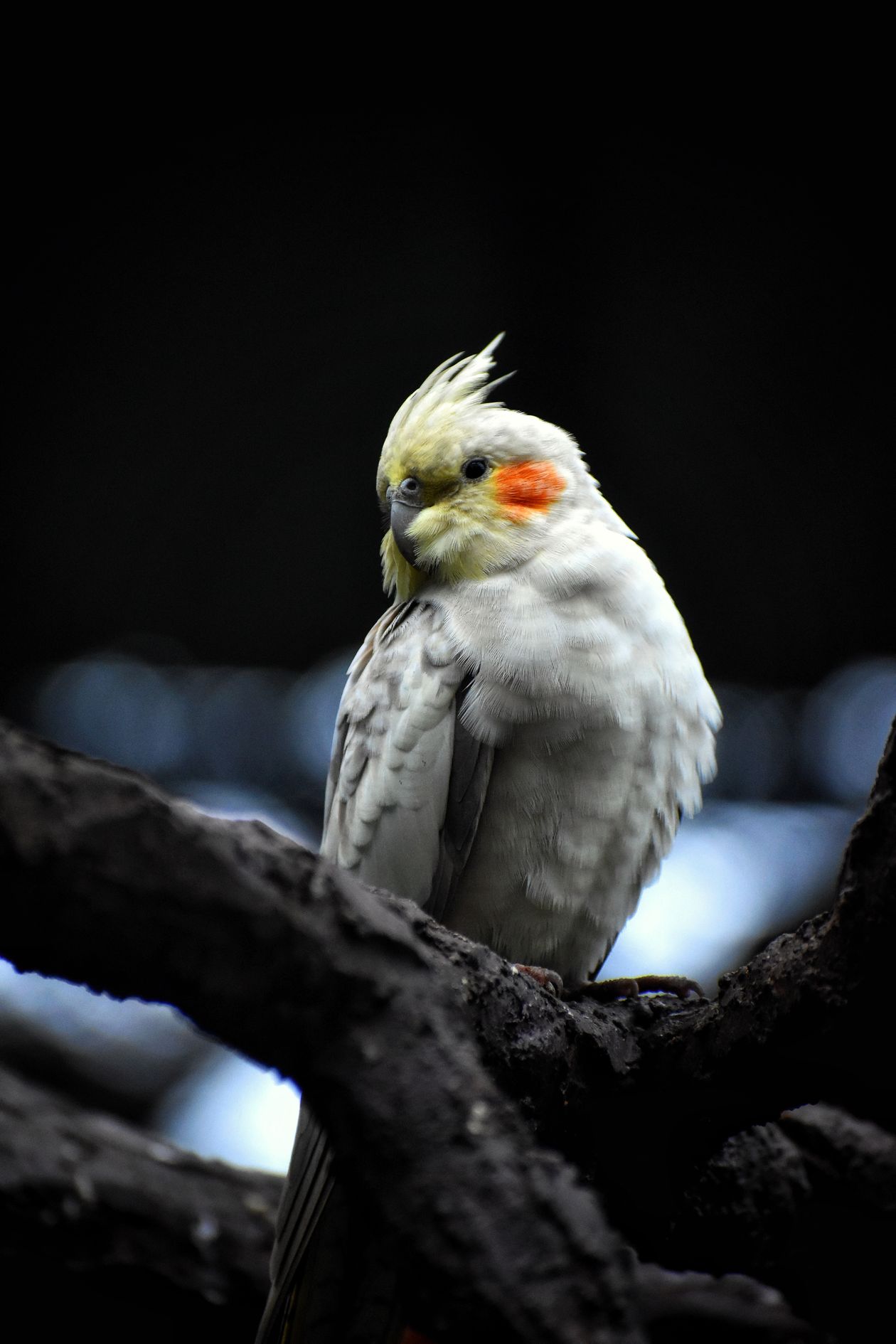
Parrotlet Species: Identify Pacific, Green-rumped and Spectacled Parrotlets

A parrotlet can look like a miniature green parrot, a bright-blue pocket-sized bird or a small olive bird with barely visible blue feathers. Those appearances do not automatically describe different species. “Parrotlet” is an avicultural common name covering several small New World parrots; the widely kept Pacific parrotlet is Forpus coelestis, while a blue Pacific parrotlet can still be exactly the same species as a green one. Treating a colour mutation as a new bird species is a surprisingly consequential buying mistake.
This is an identification atlas and ownership decision guide, not a catalogue of every colour produced by captive breeding or a promise that plumage alone can establish parentage. We focus on species most likely to appear in Canadian companion-bird discussions, how to question unclear pet-store names and what documentation is worth collecting. For actual meals, product labels and transitions, follow our separate parrotlet food guide, published as a companion to this atlas.
Quick answer: species first, mutation second
The Pacific parrotlet is a distinct species, Forpus coelestis. The Green-rumped parrotlet is Forpus passerinus. The Spectacled parrotlet is Forpus conspicillatus. All are parrotlets, but they do not become interchangeable simply because their adult lengths overlap or because a seller calls each one a “pocket parrot.” The World Parrot Trust maintains species-specific accounts, making it a better starting point than a sales colour chart. HARI's Canadian parrotlet profile also distinguishes the common pet Pacific species from less familiar relatives.
A mutation concerns inherited variation in feather coloration within a species. Blue, turquoise, lutino or yellow marketing names may describe a mutation, a combination or a local breeder convention. Their existence does not make a new species. When the label “blue parrotlet” appears without a scientific name, request the scientific identity and ask whether the colour description is a mutation, a normal sexual trait, or just a store nickname. This question is more useful than guessing from a compressed listing photograph.
Start with scientific names, not search-result colours
The genus Forpus includes several small parrotlets from the Americas. The common word “parrotlet” can also appear in names of members of other genera, so a search query is not a taxonomic boundary. The World Parrot Trust's parrotlet index includes Forpus species and some Touit parrotlets; not all are normal companion birds. An online seller who says “one of the parrotlet species” has not yet answered which species they actually have.
Write down the exact scientific name, its source, and the date you checked it. Compare at least two authoritative references if the label is unfamiliar. Scientific names can be revised; this guide uses the names in current World Parrot Trust profiles rather than inventing a permanent global classification. DNA sexing, if relevant, answers a question about sex rather than automatically proving species identity. A colour morph photograph, likewise, is evidence of an appearance—not a genetic registration document.
| Common name | Scientific name | Identification priority | Care question |
|---|---|---|---|
| Pacific parrotlet | Forpus coelestis | Green wild-type; blue male markings; many captive mutations | Is this a documented Pacific, regardless of colour? |
| Green-rumped parrotlet | Forpus passerinus | Typical green rump and sex-associated wing colour | Which subspecies or source is documented? |
| Spectacled parrotlet | Forpus conspicillatus | Blue marking around male eye, variable by sex | Is the bird's name based on actual species records? |
| Other parrotlets, including Touit | Multiple species | Consult specialist references | Is it appropriate or legal as a companion at all? |
Pacific parrotlet: the familiar companion bird
The World Parrot Trust Pacific parrotlet account describes a bird about 12.5 cm in length, with sex-linked patterns of blue in males and greener corresponding feather areas in females. HARI's profile reports an adult weight commonly around the low-30-gram range. These are descriptive reference values, not a strict healthy-weight threshold for a particular individual. Veterinary body-condition assessment and repeatable weighing are more useful than declaring any parrotlet outside a single number unhealthy.
The wild-type Pacific bird is usually green. Males often show conspicuous blue on the lower back, wing areas or behind the eye, although age, lighting and mutation can alter what a photo reveals. Females may be less strikingly blue. Some mutation combinations obscure ordinary sex-linked markers; therefore a seller's claim that “all blue birds are males” is not acceptable as a universal rule. Ask how the seller established sex and whether the claim can be documented.
A documented photo, not an invented field atlas
The accompanying Pacific photograph is identified as Forpus coelestis on its Wikimedia Commons source page and credited to Penkinvaltaaja under CC BY-SA 4.0. It is a real bird photo; it was not taken or independently reidentified by Patify. Use it to understand the general body form, short tail and bill proportion rather than as a laboratory confirmation tool. For a second species, see the documented Green-rumped parrotlet photograph by Jam.mohd, also CC BY-SA 4.0. These files are linked with attribution instead of passing off generic stock parrots as named species.
A good identification photo set of a pet bird has more than one angle: side profile, upper wing, rump, head, tail and an unobstructed full-body view, taken without frightening or restraining the animal. Lighting should be neutral enough that a green feather is not transformed into teal by white balance. We do not have an original Patify side-by-side captive-breeding atlas, so the illustrations here are reference images and a checklist, not a fabricated investigation.
Green-rumped parrotlet: why the rump matters
Forpus passerinus is a separate species, not the green version of a Pacific parrotlet. The World Parrot Trust Green-rumped account lists several subspecies and explains male blue elements in wing coverts and other flight-feather areas. The very name “green-rumped” is a useful prompt, but one feather patch cannot overcome poor viewing angles, juvenility or uncertain provenance. Colour and pattern must be read alongside reliable records.
Search photographs taken in the wild can be especially misleading if local light or camera processing shifts the greens. A captive bird from uncertain ancestry should not be relabelled simply because its colours resemble a green-rumped image online. If purchasing from a breeder, ask which line the bird comes from, what the parents are documented as, whether any veterinary records exist and whether the seller is prepared to put the species name in writing. That approach protects both the buyer and the animal from an improvised care plan.
Spectacled parrotlet: the eye-ring can mislead
The Forpus conspicillatus account at the World Parrot Trust reports that adult males in some forms show purple-blue or blue around the eye and elsewhere, while females replace prominent blue feathering with green. As with other sexually dimorphic parrots, youth, feather condition and camera perspective complicate a quick visual sex estimate. “Spectacled” should lead you to confirm the whole species rather than to identify any bird with blue beside the eye as a spectacled parrotlet.
This species is also a useful illustration of why natural range and captive availability are distinct questions. A bird can be documented in a biodiversity reference without being common in Canadian homes. Do not infer that every species listed online is appropriate for import, sale or routine apartment housing. For a less familiar parrotlet, the first research step is identification, the second is legal and veterinary suitability, and the third is a realistic plan for ongoing care—not a shopping-cart order.
Pacific colour mutations: names are not a species list
Captive Pacific parrotlets occur in several visually striking colour mutations. Blue, yellow, turquoise and related names are common marketing shorthand; their genetic descriptions can vary in precision. A breeder may provide a detailed pedigree, while a marketplace listing might use “blue parrotlet” merely to describe appearance. Do not publish a colour-to-gene diagram from a pet-store photo without credible genetic documentation. Visible colour cannot reliably establish what hidden alleles a bird carries.
Likewise, colour is not a shortcut to temperament, health or diet. There is no credible basis for assuming a yellow Pacific needs a distinct routine from a green Pacific solely because its feathers differ. What matters day to day is the same underlying species and the individual's body condition, behaviour, medical history and environment. More unusual colours can attract a premium asking price, but a higher price does not prove genetic purity, humane rearing or better health. Avoid “rare” as a medical or welfare category.
How to read a seller listing without being fooled
Begin with the bird's Latin name and whether the seller can explain it clearly. Ask for current photographs, not a manufacturer's image of an adult that may not be the bird offered. Confirm age or hatch period, whether the bird is independently eating, any health screening that can genuinely be documented, and how veterinary or return concerns are handled. A young bird presented as “easy to hand-feed at home” is a warning sign for an inexperienced owner, not a bonus feature.
Request the diet actually offered now and an observation of the bird eating it. If the animal is described as hand-tame, ask what that means in practice: voluntarily approaching a perch, accepting target training, or merely tolerating restraint? The answer changes how much transition work is likely. This is the point at which our parrotlet feeding and diet-transition guide becomes useful; species identification should guide the correct starting diet, not replace monitoring it.
| Listing claim | Better question | What would count as useful evidence |
|---|---|---|
| “Blue parrotlet, rare species” | Which Forpus species and which mutation? | Written species ID and parent history if available |
| “Male because it has blue” | Which sexing method and at what age? | Credible record, not only a photo |
| “Fully weaned” | Does it reliably eat on its own? | Observed independent food intake and history |
| “Quiet apartment bird” | What calls occur in its actual daily routine? | Honest current behaviour, not a guarantee |
| “Perfect for children” | Who provides daily adult supervision and veterinary care? | A realistic household responsibility plan |
A small parrot is not a small responsibility
HARI describes parrotlets as lively, curious companion birds that still need exercise, enrichment and sustained interaction. A smaller body may fit through more household gaps and can be vulnerable to doorways, open water, fans and other pets. Their beaks remain effective, and nipping can be a response to fear, territorial situations or overstimulation rather than “bad character.” Do not buy on the assumption that a tiny bird cannot cause an injury or needs little daily attention.
A thoughtful household compares species, daily routine, noise tolerance, available room, avian veterinarian access and expected lifespan. HARI describes a lifespan of roughly 15–20 years as a species-care overview, but no individual bird comes with a guaranteed expiration date or lifespan. Ownership is a long commitment. A bird that stays silent during a brief sales visit may be more vocal once settled. A bird that approaches strangers may still fear children or unfamiliar hands later. Build the care plan around variation, not the best moment in a listing video.
Housing: wing movement and safe supervision matter more than cage marketing
A listing that labels a cage “small-parrot approved” does not prove enough usable flight or climbing space. Evaluate length as well as height, appropriate bar spacing, secure doors, varied perch diameters and access to food without landing directly above waste. Enrichment must not reduce the cage to an obstacle course so crowded the bird cannot extend its wings. The real enclosure plan includes daily supervised movement in a bird-safe room, not just the closed cage's dimensions.
Check for hazardous gaps, fraying rope, loose clips, unsafe metals, accessible electrical cords and other pets. Household aerosols and overheated non-stick cookware can present severe avian risks. Every household member needs consistent rules about ceiling fans, exterior doors and feeding in unsafe spaces. A quiet night location matters as well as daytime social opportunity. The strongest design is one that a sitter can maintain and that allows the bird to choose retreat without being repeatedly grabbed.
Social lives: do not infer compatibility from shared genus
Two parrotlets of the same species are not automatically an appropriate pair, and birds from different Forpus species are not automatic compatible companions. Individual temperament, sex, maturity, social experience and territorial resources matter. If considering multiple birds, consult a qualified avian professional and plan for separate housing. Do not introduce birds directly into a single small cage because they look alike or were photographed perched together at a store.
Loneliness should not be addressed solely by purchasing another bird without a plan for quarantine, veterinary screening, gradual introduction and the possibility of permanent separate cages. Nor should a single bird's needs be dismissed because a keeper spends much of the day nearby: it still requires active opportunities to move, forage, learn and rest. A good welfare decision considers the actual routine and response of the individual rather than prescribing “always alone” or “always paired” as a universal rule.
Enrichment: foraging, chew material and choice
Parrotlets benefit from food-search opportunities and safe materials that can be manipulated and destroyed. A small toy is not necessarily safe simply because it is marketed for small parrots; inspect every part and remove damaged pieces. Rotate interesting objects gradually rather than replacing the whole environment overnight. A bird that investigates, chooses an activity and returns to resting normally offers better information than one endlessly forced to interact.
Training can be brief and cooperative. Use target practice, perch movement and small appropriate food rewards without withholding meals. Our existing parrot cage-return training guide explains why entering a cage and voluntarily stepping up are different behaviours. Parrotlets are not conures; that behaviour article is useful as a training process, not proof that both species require exactly the same handling style or diet.
What parrotlet species and conure species have in common—and don't
A buyer may move between the terms “small parrot,” “parrotlet,” “parakeet” and “conure” while looking for a companion bird. Those words overlap in casual marketing but are not identical species groups. Patify's conure species comparison presents a separate set of parrots across several genera, typically with very different body sizes and call profiles from a Forpus parrotlet. Linking the two guides is useful for a household selecting between birds; it should never suggest that an enclosure sized for a parrotlet is automatically sufficient for a conure.
Compare the actual bird and the lifestyle, not merely the label or a volume of social-media videos. A Pacific parrotlet can be intense and vocal in a small room; a different parrot may have higher activity and noise demands. There is no responsible “best small parrot” answer without explaining living arrangements, exercise time, neighbours, medical access and the bird's individual needs. Species-specific comparison is a decision tool, not a compatibility chart.
Canada: buying, ownership records and responsible sourcing
Canadian availability changes by province, seller and season. Online advertisements should not be treated as official welfare or import guidance. Ask about origin, captive breeding, transfer records and whether international movement could trigger additional animal health or wildlife trade requirements. The species' inclusion in a World Parrot Trust profile does not guarantee that an individual bird may be imported or sold without documents. Obtain jurisdiction-specific advice from the relevant authorities before committing to a cross-border purchase.
Plan an avian veterinary appointment and know how to transport a small bird safely in winter without exposing it to drafts, overheating or long unsupervised stops. The transaction should include familiar current food and enough detail to preserve routine while gradually changing the environment. Resist the urge to change cage, toys, diet, lighting and handling on the same day. Traceable sourcing and measured transition are more meaningful than a seller's claim that a particular colour is especially rare in Canada.
A first-week observation card for the bird you actually bring home
Record species as documented, colour description, date of arrival, current food, eating behaviour, the same-time weight when recommended by the avian vet, droppings, daily activity and changes in feather or breathing condition. Write down what normal behaviour looked like at the seller or rescue, recognizing that the new environment may change it. A bird may initially be quiet or reluctant to approach. That should not be interpreted as a training failure or a chance to repeatedly pick it up.
Watch the food dish for emptied seed hulls that can be mistaken for uneaten seeds or consumed pellets. Verify actual intake rather than reading bowl volume as proof. Changes in droppings, sustained fluffing, weight decline or breathing difficulty call for avian veterinary assessment. The goal of the observation card is not self-diagnosis. It is to make the clinical conversation precise if concerns arise and to help the keeper avoid abrupt, unnecessary adjustments.
| Day / date | Species name on record | Food visibly eaten | Behaviour observed | Weight if vet advised | Changes/questions |
|---|---|---|---|---|---|
| Arrival | |||||
| Following days |
Questions that species photographs cannot answer
Can a blue parrotlet be a Pacific parrotlet? Yes; a blue appearance may result from captive colour mutations of Forpus coelestis. Are all green parrotlets Green-rumped parrotlets? No. The wild-type Pacific is usually green too. Can feathers always tell you a bird's sex? Sometimes sex-associated markings are informative, but mutations, age and incomplete views can compromise confidence. Are all parrotlets suitable house pets? No. A taxonomic group includes species rarely kept, with differing conservation, sourcing and care considerations.
Should parrotlets eat the same food as bigger parrots? The broad categories can overlap, but formula size, product composition and the individual's needs matter. Our parrotlet food guide explains how to choose and monitor actual food without transferring percentages from unrelated species. Do different colours need different cages? Not on colour alone. Species, individual size, mobility and safe activity determine housing decisions.
A verification checklist before placing a deposit
Before money changes hands, request one written record that joins the seller’s description to the individual bird: scientific name, colour or mutation description, approximate hatch date if known, leg-band or other identifier if present, current diet and the person responsible for its care. A leg band may be useful for tracing records, but a number stamped on a band does not independently verify a species. If the bird is not banded, that alone does not prove anything improper; ask what other traceable records the seller can provide.
Use three separate questions instead of the vague “Is it pure?” Ask: “Which species is the bird recorded as?”, “Is the colour name a mutation within that species?”, and “What information confirms this individual bird is the one described?” If the answers become contradictory, do not try to settle the dispute using a single blue wing patch or a seller-provided thumbnail. Request clearer documentation or seek advice from an avian veterinarian familiar with the species. This pause is especially worthwhile when an unusual label is used to justify a higher price.
Finally, confirm the bird is already eating independently and ask exactly which foods it recognizes. A photo of a full food bowl is not proof of intake, and a change of owner is not the ideal moment for an abrupt diet conversion. The companion parrotlet feeding and transition guide covers that next step without confusing species verification with nutritional care.
Sources and the correct next question
This atlas uses the World Parrot Trust parrotlet index, its Pacific, Green-rumped and Spectacled species accounts, and Canada's HARI parrotlet overview. These are separate from photo licensing: Wikimedia pages establish attribution and declared identity, not a veterinary or genetic certificate. The care and feeding chapter belongs in the companion food article rather than being copied here.
If you are considering a bird, ask first: “What species is this, and what evidence supports that name?” Then ask: “Does my household realistically support this particular animal for years?” Only after those questions should a colour mutation, price or photograph become a deciding factor. That order prevents the apparent simplicity of a tiny, appealing green parrot from hiding a long-term welfare decision.
A practical photo-checking workflow for uncertain identification
When photographs are the only available starting point, compare three evidence levels instead of making one confident leap. First, note directly visible structures: short or long tail, bill shape, wing colour, rump and eye-area markings, and whether the image actually shows the whole bird. Second, consult species photo pages at a recognized biodiversity organization and distinguish wild-type adult examples from juvenile or captive mutation examples. Third, seek traceable records from the breeder or rescue. An online photograph may raise or lower your confidence; it does not establish an undocumented family tree.
Store pictures with the date and identity of the bird being offered, not just a screenshot labelled “sold.” If two different birds appear in successive advertisements, ask which one is available. If the seller cannot explain a scientific name but insists on a premium for rarity, slow down. A reliable seller should be willing to discuss what is and is not known. Never subject the bird to stressful wing spreading or manual restraint just to obtain a more dramatic image for an identification chart. Observation and documentation can coexist with respectful handling.