Last verified: October 2, 2026
Budgie Colors: Start With Series, Then Add Mutations
Quick answer: most budgie color names make more sense when you separate base series → shade/intensity → wing/body pattern → pigment-reduction or white/yellow modifiers. The natural wild-type budgerigar is green and yellow. The best-studied captive change is the recessive blue mutation, which removes yellow psittacofulvin pigment so areas that would look green become blue and areas that would look yellow become white.
Patify budgie rule: a name such as “cobalt opaline” or “yellowface sky blue spangle” is a stack of traits. Do not treat every combined look as a separate mutation, and do not infer hidden carrier genes from appearance alone.
The Four-Layer Budgie Color Decoder
| Layer | Question | Examples |
|---|---|---|
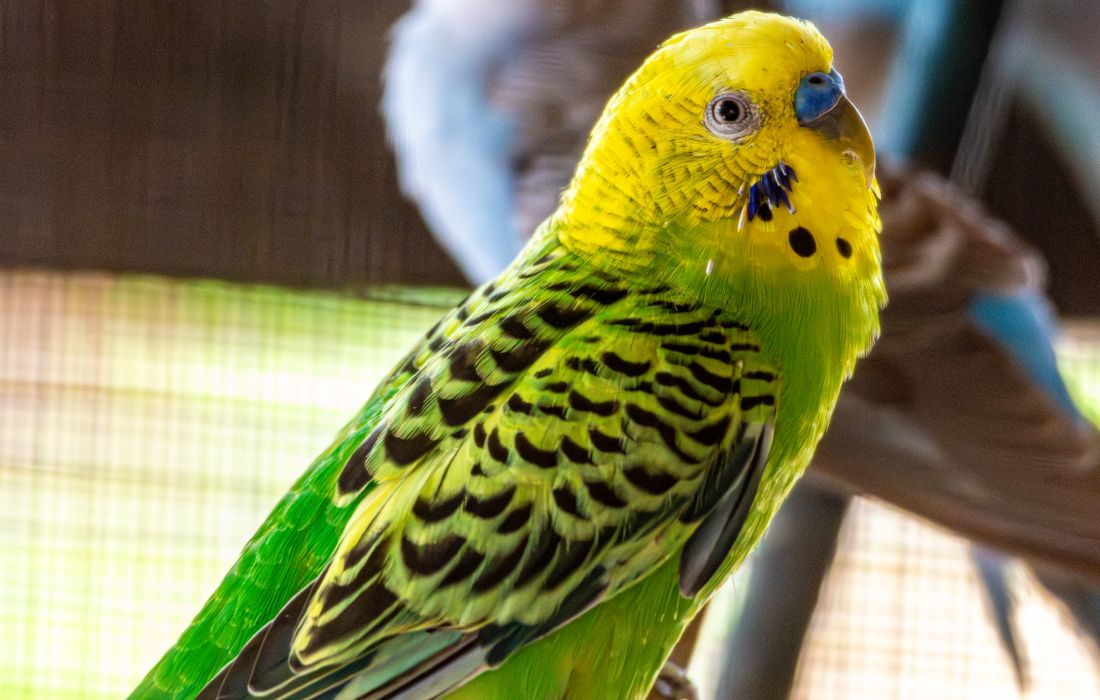
| 1. Base series | Is yellow psittacofulvin present across the normal green areas? | Green series vs blue series |
| 2. Shade / color factor | How light or dark is that base? | Light green, dark green, olive; sky blue, cobalt, mauve; grey/grey-green; violet influence |
| 3. Pattern / melanin distribution | How are wing and body markings changed? | Opaline, cinnamon, spangle, pied, clearwing, greywing |
| 4. Modifier / pigment loss | Are yellow/white areas, melanin, or eye color altered? | Yellowface, Goldenface, lutino, albino and combinations |
The Budgerigar Society’s current classifications use many of these names in real show classes: normal green series, normal blue series, opaline, cinnamon, lutino/albino, spangle, pied, yellowface and clearbody all appear in current classifications. That makes them more useful than social-media labels with no stable definition.
Green Series vs Blue Series: The Most Important Split
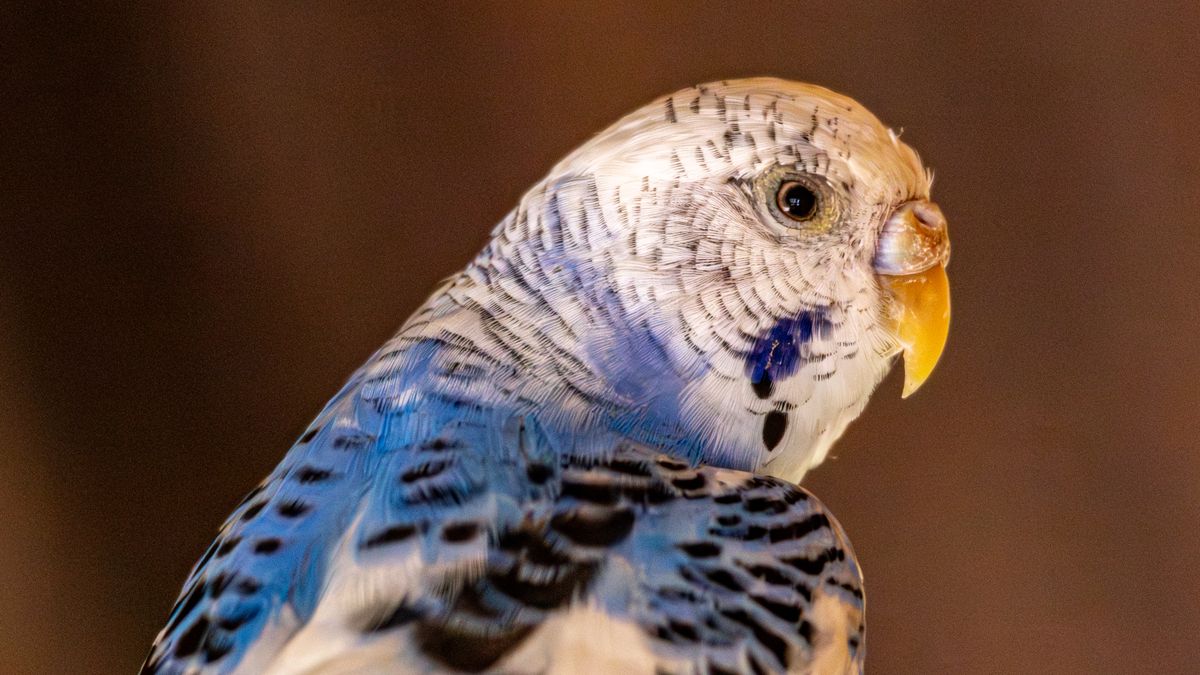
Wild-type budgerigars produce yellow psittacofulvin pigment and structural blue. Where those effects overlap, the plumage looks green. A landmark budgerigar genetics study mapped the recessive blue phenotype to a change in the MuPKS gene. Blue birds lack the normal yellow pigment production: yellow areas become white and green areas appear blue.
| Wild-type region | Green-series appearance | Blue-series counterpart |
|---|---|---|
| Body | Green | Blue |
| Face/mask | Yellow | White, unless another modifier adds yellow |
| Dark markings | Black/dark pattern remains | Black/dark pattern remains unless another mutation changes melanin |
This is why “blue budgie” is not merely a lighter green bird. It is a different pigment state with a documented genetic basis.
Light Green, Dark Green, Olive — Sky Blue, Cobalt, Mauve
Budgerigar show language treats these as shade families rather than unrelated species or breeds. Current Budgerigar Society competition classes include Light Green, Dark or Olive Green, Skyblue and Cobalt/Mauve/Violet categories.
- Light green: the classic bright green reference.
- Dark green: a deeper green shade.
- Olive: darker still, often reading more muted/olive.
- Sky blue: the light blue-series reference.
- Cobalt: deeper blue.
- Mauve: dark, often smoky/slate-looking blue-series shade.
- Violet: a modifier that can intensify a violet cast; photos can exaggerate it, so use neutral daylight.
Do not claim a precise genotype just because a phone image looks “cobalt.” White balance, flash and the bird’s other mutations can shift the apparent shade.
Opaline, Cinnamon, Spangle and Pied Change More Than “Color”
Opaline
Opaline changes the distribution and appearance of markings, especially across the head, shoulders and wings. It can make body color appear to spread into areas that would normally carry stronger dark wing markings.
Cinnamon
Cinnamon turns normally dark/black markings into a warmer brown tone. It is a melanin-related visual change, not the same thing as the blue mutation.
Spangle
Spangle reverses or alters the usual wing-marking architecture, producing light-centered feathers with dark edging in the classic single-factor look. Double-factor spangles can be dramatically reduced in markings, which is why a photo without pedigree can be misleading.
Dominant and recessive pied
Pied varieties create irregular areas where normal body color and/or markings are absent. “Pied” therefore describes distribution, not a single body color. A bird can be green pied, blue pied, yellowface pied and so on.
Key genetics limit: test mating has established inheritance patterns for many long-kept parrot color variants, but the exact causal DNA variant has not been identified for every popular budgie mutation. Phenotype vocabulary is further ahead than routine molecular testing.
Lutino and Albino: Ino Appearance Depends on the Base Series
In everyday budgie terminology, lutino describes the yellow ino appearance in the green series, while albino describes the white ino appearance in the blue series. The Budgerigar Society groups Lutino and Albino together in current color-budgerigar classifications.
The useful visual clues are severe reduction of normal dark melanin markings plus characteristic reddish eyes. This is different from a double-factor spangle or certain clear varieties that may look very pale but retain different eye/marking characteristics.
Yellowface and Goldenface: Why a “Blue” Budgie Can Show Yellow or Greenish Areas
Yellowface/Goldenface modifiers place yellow pigment into a blue-series phenotype. Depending on the variety and extent of suffusion, the face can be yellow while the body stays blue, or yellow can mix optically with blue body color and create turquoise/greenish areas.
This is one reason the simple rule “yellow face means green-series bird” fails. Current Budgerigar Society show classifications include Yellowface/Goldenface categories precisely because these phenotypes are established parts of fancy-budgerigar nomenclature.
What Budgie Color Genetics Has Actually Proved
There is a useful evidence hierarchy here:
- Molecularly mapped: the recessive blue trait has a specific MuPKS amino-acid substitution demonstrated through genome-wide association, gene expression and biochemical work.
- Inheritance supported by long-term test mating: many other color traits have stable breeder inheritance patterns even when the causal DNA variant is not routinely known.
- Combination/trade names: labels such as “rainbow” can describe a combination of several traits and may vary by breeder/show convention.
A 2021 review of pet-parrot genomics emphasized that routine genetic testing for many parrot color variants still lags behind breeder phenotyping. That means a bird can carry a recessive variant without looking different. You cannot reliably identify every “split” carrier from a photo.
Do not select breeding pairs from a color photo alone. Pedigree, known parentage, health, unrelatedness and established inheritance records matter. Visual novelty is not a substitute for responsible breeding.
How to Identify a Budgie Color From a Photo
- Use neutral daylight. Avoid warm room lighting and saturated filters.
- Decide green vs blue series first. Look at body plus mask, not one feather.
- Estimate shade second. Light/dark/olive or sky/cobalt/mauve comes after the series.
- Read the wing markings. Normal, cinnamon, opaline, spangle and pied change pattern architecture.
- Check eye color and iris ring. These can help separate some pale varieties, but age matters.
- Check mask color. Yellowface modifiers can make a blue-series bird partly yellow/greenish.
- Stop before genotype. A photo can describe phenotype; hidden carrier status requires pedigree/test mating and, where available, validated genetic testing.
Related Patify Bird Guides
- For another mutation-focused atlas, see Patify’s cockatiel color-mutation guide.
- For how species-level identity differs from captive color morphs, see 10 conure species compared.
Frequently Asked Questions About Budgie Colors
What color are wild budgies?
The wild-type reference is green-bodied with a yellow head/face and dark wing markings.
Why are some budgies blue?
The recessive blue mutation disrupts yellow psittacofulvin production. Structural blue remains, turning normally green regions blue and normally yellow regions white.
Are sky blue, cobalt and mauve different mutations?
They are commonly treated as shade outcomes within the blue series rather than three completely unrelated color systems.
What is an opaline budgie?
Opaline changes the distribution of dark markings and body color, especially across the head, shoulders and wings.
What is a spangle budgie?
A budgie with a characteristic reversal/reduction of normal wing-feather markings. Single- and double-factor appearances can differ substantially.
What is the difference between lutino and albino budgies?
Both are ino-type appearances with strongly reduced melanin; lutino is yellow in the green series, while albino is white in the blue series.
Is “rainbow budgie” one mutation?
No. It is a hobby/show combination label built from multiple color and pattern traits; exact usage can vary.
Can a photo tell whether a budgie is split for blue?
No. A visually green bird can carry a recessive blue allele without showing it.
Sources Checked
- Cooke et al. — Genetic Mapping and Biochemical Basis of Yellow Feather Pigmentation in Budgerigars
- Journal of Heredity — Avian Coloration Genetics review
- Genes — genetic testing gaps in pet parrots
- The Budgerigar Society — current show classifications
- Budgerigar Society Colour Budgerigar Pictorial Standard
Sources reviewed October 2, 2026.