
Last updated: September 24, 2026
Quick answer: in bearded dragons, morph, color, pattern, scale type, and breeder line are not interchangeable labels. A dragon can be a Hypo Trans Leatherback Dunner and also be selectively bred for red/orange color. Some features can be suggested visually, but you cannot reliably prove every genetic trait from a photo. “Het” traits are especially important: a heterozygous carrier can look completely normal for that recessive trait.
Best identification rule: use appearance to form a hypothesis, then use breeder records, parentage and known genetics to confirm it. Do not call a pale dragon “Zero,” a smooth dragon “Leatherback,” or a black-eyed baby “Trans” from one image alone.
Morph vs. Color vs. Pattern vs. Trait
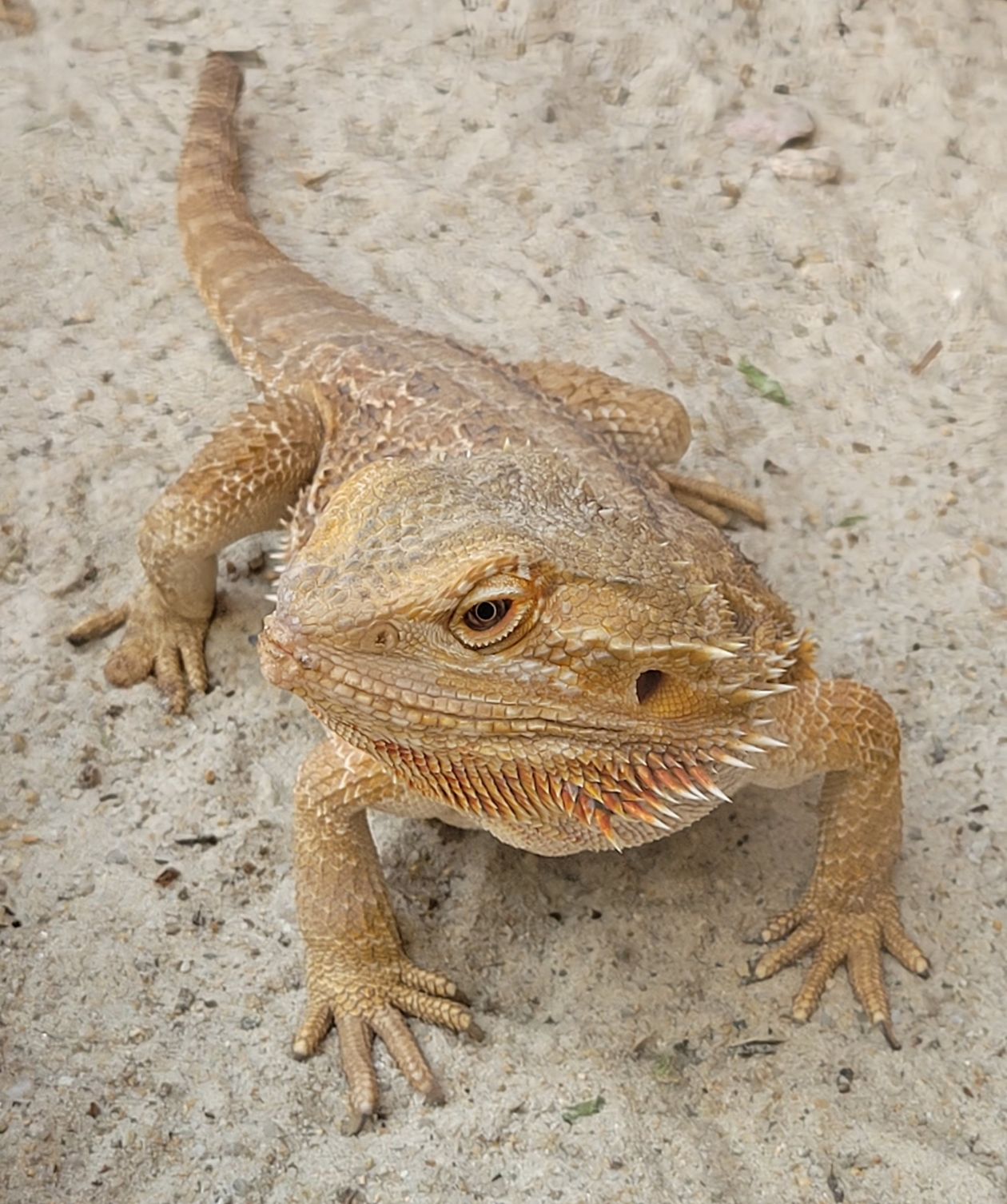
The reptile trade often compresses several kinds of information into one long animal name. Separate the pieces before trying to identify anything.
| Label type | What it describes | Examples |
|---|---|---|
| Genetic / inherited morph or trait | Heritable change affecting pigment, pattern or scalation | Hypo, Translucent, Leatherback, Dunner, Zero, Witblits |
| Scale phenotype | Texture, size or direction of scales/spines | Leatherback, Dunner, Silkback |
| Pattern phenotype | How markings are organized or absent | Zero, Witblits, Genetic Stripe, Dunner patterning |
| Color line | Color intensified through selective breeding over generations | Red, orange, citrus/yellow, tangerine-style names |
| Bloodline / commercial project name | Breeder lineage or marketplace descriptor | Red Monster and many named color projects |
| Carrier notation | Genetics that may not be visible | Het Zero, 66% possible het Trans |
ReptiFiles distinguishes modern captive-bred color morphs from scale-texture traits such as Dunners, Leatherbacks and Silkbacks. Current breeder listings make the same distinction in practice: one animal may carry several genetic traits plus a separately selected red/orange/yellow color line.
That is why “red bearded dragon” is not the same kind of label as “Hypo” or “Leatherback.”
Quick Bearded Dragon Morph Identification Atlas
Use this as a field guide, not a genetic test.
| Morph / trait | Strong visual clue | Common confusion | Can photo prove it? |
|---|---|---|---|
| Normal / wild-type-style | Typical rough scalation, patterned tan/brown/gold appearance | Line-bred color animals with normal scales | No—“normal” genetics still require history if breeding matters |
| Hypo | Reduced dark pigment; clear/light nails are commonly used as a clue | Pale non-Hypo animals, shed-related lightening | Often suggestive, not enough for carrier genetics |
| Translucent | Young dragons may show translucent-looking skin, bluish areas, very dark eyes | Normal dark eyes, juvenile skin translucency, photo lighting | No; eye appearance alone is not definitive |
| Leatherback | Reduced/smoother dorsal scalation; back looks flatter and colors may appear visually cleaner | Low-spined normal animals, photo angle | Often recognizable, but lineage confirms genetics |
| Dunner | Scales/spines point in less uniform directions; spotting/pattern can look irregular | Normal pattern variation, combined Leatherback traits | Experienced visual ID can be strong; records still preferred |
| Zero | Patternless gray/silver to very pale appearance | Witblits, Wero, Hypo combinations | No—patternless pale dragons can be genetically different |
| Witblits | Patternless but can retain earthy, tan, yellow or muted coloration | Zero and Wero | No—visual overlap is substantial |
| Wero | Zero + Witblits visual combination; can look extremely pale/patternless | Zero/Witblits | Breeding/genetic history is essential |
| Genetic Stripe | Longitudinal stripe pattern running along the back | Ordinary juvenile striping / line-bred stripe patterns | Not from one photo alone if genetics matter |
| Paradox | Irregular contrasting color patches/splatters | Injury, shed differences, ordinary pattern variation | Phenotype can be obvious, inheritance is not simple |
| Silkback | Near-total absence of normal scales | Extreme Leatherback | Phenotype is visually obvious |
Hypomelanistic (Hypo)
“Hypo” is shorthand for hypomelanistic: reduced dark pigmentation. Hobby/breeder guides commonly identify clear or light-colored nails as one practical clue, along with reduced black/dark pigmentation.
Important limits:
- Hypo does not mean white.
- A Hypo can also be red, orange, yellow, Trans, Leatherback, Dunner, Zero or another combination.
- A dragon carrying one hidden Hypo allele can be labeled het Hypo without looking Hypo.
Current MorphMarket listings regularly combine labels such as “Hypo Translucent,” “Hypo Zero,” and “Hypo Leatherback,” which shows why morph names should be parsed as separate traits rather than treated as one color name.
Translucent (Trans)
Translucent dragons are bred for altered skin/pigment appearance. Young animals are often described as having a “gummy” or partially translucent look, sometimes with bluish areas and very dark eyes.
Do not use black eyes as a standalone test. Eye appearance can vary with age, individual expression, lighting and photography. A breeder's lineage/parentage information is much more useful than “the eyes looked black on Instagram.”
Dachiu's current breeder archive shows Translucent and HypoTranslucent animals in multiple red, orange, citrus and white-faced color lines, demonstrating that “Trans” is not a single body color.
Leatherback
Leatherback primarily changes scalation. Compared with a normally scaled dragon, the back has reduced/smoother scales and fewer prominent dorsal spikes, which often makes underlying color and pattern look visually sharper.
This is why a seller might list an animal as:
“Red Hypo Trans Leatherback”
“Red” describes selected color; “Hypo” and “Trans” describe pigment-related traits; “Leatherback” describes scale phenotype.
Dunner
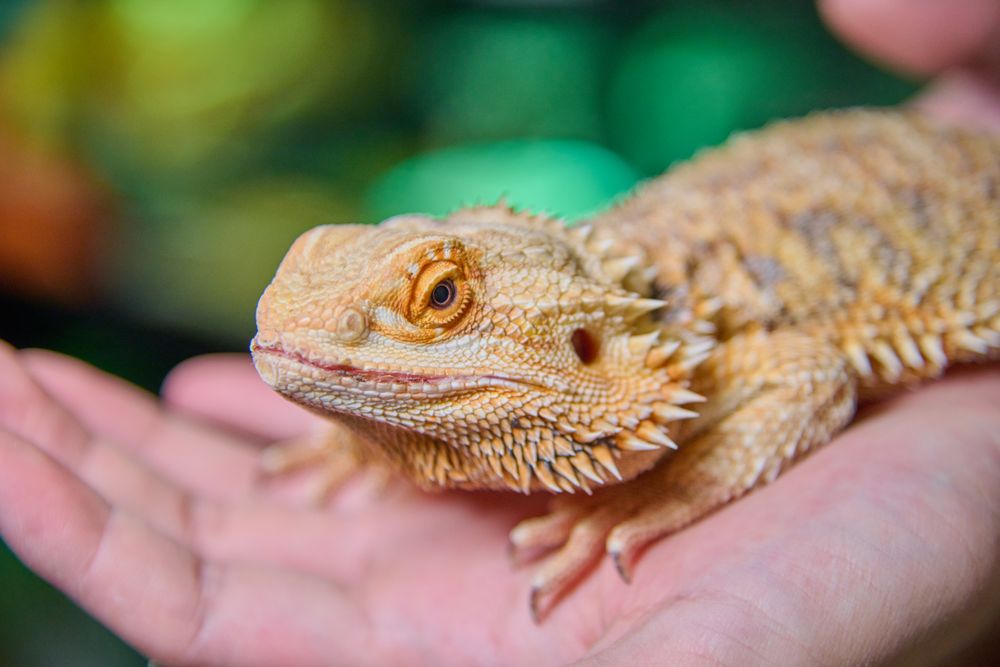
Dunner affects both the appearance of the scales and the organization of pattern. Hobby/breeder descriptions consistently emphasize:
- scales that point in less uniform/more multidirectional orientations;
- more irregular spotting/blotching rather than conventional organized bands;
- unusual beard-spike direction;
- a visually “disordered” texture/pattern compared with standard scalation.
Dunner can be combined with Hypo, Translucent, Leatherback and color lines. Current MorphMarket listings include combinations such as Dunner Zero and Hypo Translucent Dunner, so “Dunner” should never be assumed to describe the dragon's color.
Zero
Zero is a patternless morph. Breeder descriptions commonly show non-Hypo Zero animals as silver/gray and Hypo Zero combinations as much paler or white.
The most important identification warning is that white or gray does not equal Zero. Witblits and Wero animals can also be pale and patternless-looking, and photography can dramatically alter apparent shade.
Dachiu's breeder archive specifically describes its Zero line as a patternless morph displaying no colors, while current MorphMarket Zero listings show how much shade can vary among animals and combinations.
Witblits
Witblits is also patternless, but breeder references commonly describe it as retaining muted/earthy coloration—gray, tan, yellowish or pastel—rather than the classic silver/white Zero look.
That distinction is useful for visual screening but not strong enough to prove genetics. Hypo, Trans, Leatherback and color-line combinations can change the final appearance substantially.
Wero
Wero is the breeder term used for animals combining Zero and Witblits. Current MorphMarket listings explicitly use labels such as “Wero (Witblits + Zero)” and “WERO … Zero and Witblits visually.”
Because Wero overlaps visually with the two parent patternless traits, this is a perfect example of why seller/breeder records matter more than image recognition.
Genetic Stripe
Genetic Stripe refers to a heritable longitudinal stripe phenotype. Dachiu's current breeding archive compares Genetic Stripe animals with normal-pattern animals and notes that its line appears dominant.
Do not confuse:
- Genetic Stripe — a named inherited line/trait;
- tiger bars / side barring — descriptive pattern;
- color stripe — marketplace/breeder description;
- ordinary juvenile striping — not automatically the Genetic Stripe trait.
Paradox
Paradox describes striking irregular patches or splashes of color that can appear unlike the dragon's base coloration. It is commonly seen in complex breeding projects, including Hypo/Trans backgrounds.
Unlike straightforward recessive-carrier language such as “het Zero,” Paradox should not be treated as a simple hidden-gene checkbox. Breeder records and phenotype history matter, and the appearance can develop/change as the dragon grows.
Dachiu maintains current breeder-reference photographs of Purple Paradox animals in several combinations, illustrating how varied the phenotype can be.
Silkback / Scaleless: A Morph With Real Welfare Consequences
Silkbacks have dramatically reduced or absent normal scalation. This is more than a cosmetic difference.
A peer-reviewed study comparing wild-type, Leatherback and Silkback Pogona vitticeps found that Silkbacks lost water evaporatively at roughly twice the rate of wild-type dragons. Leatherbacks in that experiment were also closer to Silkbacks than wild-types in water-loss rate, although thermal preferences differed very little.
That study does not prove every Leatherback or Silkback will be clinically dehydrated, but it provides objective evidence that reduced scalation changes skin function. A Silkback therefore should not be marketed as merely a “super smooth” version of a normal dragon without acknowledging husbandry and welfare implications.
Buyer caution: if considering a scaleless animal, discuss skin care, hydration, enclosure surfaces and long-term welfare with an experienced reptile veterinarian before purchase.
Red, Orange, Citrus, Yellow and Other Color Lines
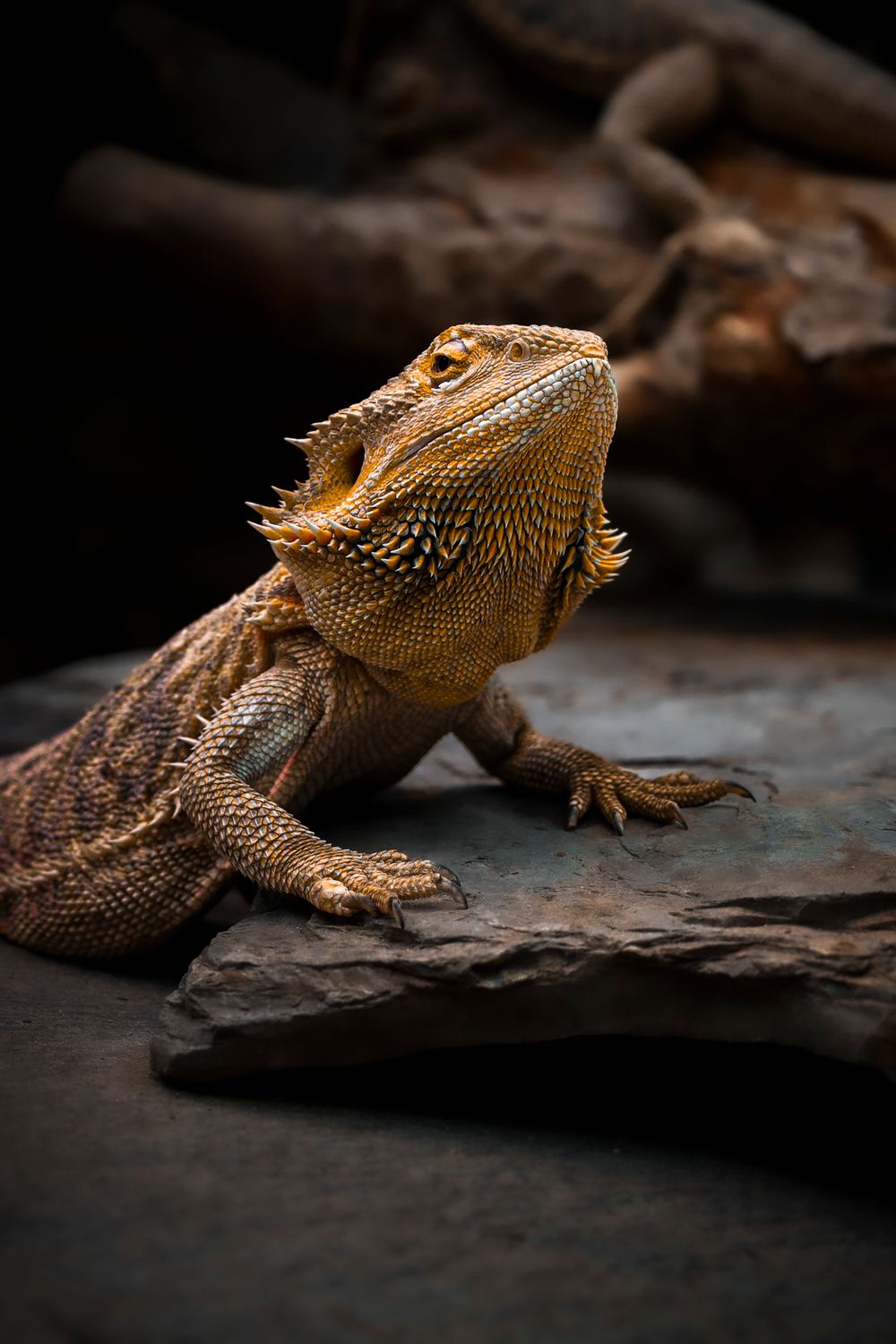
Many color names are selectively bred color lines, not equivalent to a standardized single-gene morph.
| Color / market term | How to interpret it |
|---|---|
| Red / dark red | Intensity selected across generations; can be combined with Hypo, Trans, Leatherback, Dunner, etc. |
| Orange / tangerine-style names | Color-line description; exact shade and terminology vary by breeder |
| Citrus / yellow | Line-bred yellow coloration; Dachiu documents Citrus across multiple genetic morph combinations |
| Red Monster | Bloodline/project descriptor widely used in current market listings; not simply interchangeable with “the red gene” |
| Fancy | Retail/marketing umbrella term, not a precise genotype |
Color also changes within the same animal. A peer-reviewed study of Pogona vitticeps showed that bearded dragons can change coloration in response to visual background and illumination intensity. Shed cycle, temperature, stress and camera white balance can further change what a photo looks like.
So a marketplace image should never be treated like a calibrated paint swatch.
What “Het,” “66% Possible Het” and “Visual” Mean
This is the most important marketplace vocabulary for avoiding bad purchases.
| Term | Meaning in breeder notation | Visible? |
|---|---|---|
| Visual Hypo / Visual Zero / Visual Witblits | The animal expresses the named phenotype | Yes, phenotype is expressed |
| Het Zero | Carrier of a recessive Zero allele according to breeding records | No—you cannot see “het Zero” |
| 100% het | Pedigree/cross predicts the animal carries the recessive trait | No |
| 66% possible het | Probability notation derived from the parental cross; some siblings carry it and some do not | No |
| 50% possible het | Another pedigree probability, not “half the body expresses the gene” | No |
You cannot photograph a het. If a seller identifies a normal-looking animal as “100% het Zero” or “66% poss het Witblits,” that claim comes from parentage/breeding information, not visible appearance.
Current MorphMarket listings routinely combine visual and carrier notation—for example, animals listed as Hypo/Leatherback with “66% het Zero” or “100% het Witblits.” This is normal breeder shorthand, but buyers should ask for the pairing/parent records behind the claim.
What a Photo Can—and Cannot—Prove
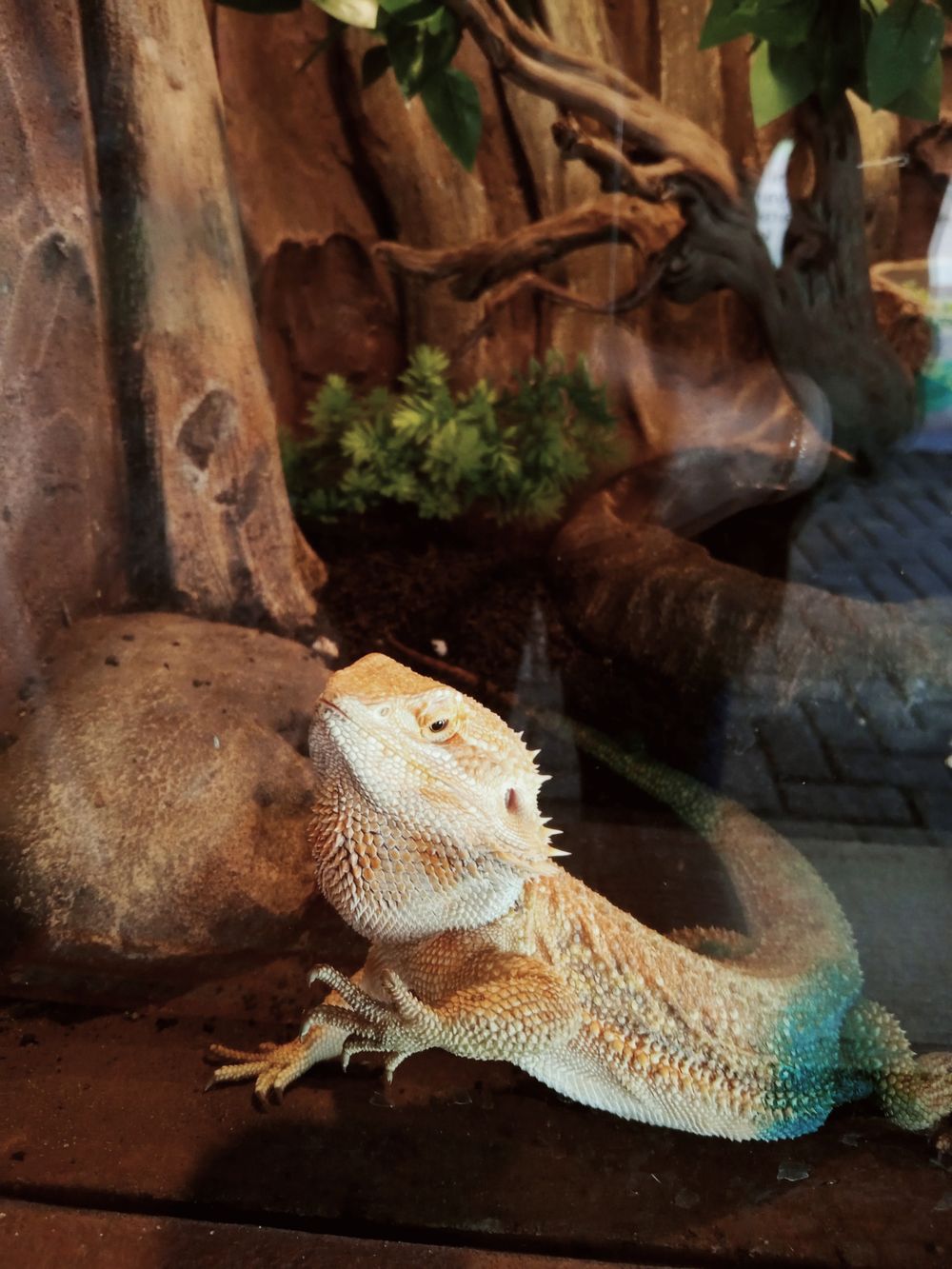
A good photo can help with:
- dorsal scale texture;
- presence/absence of obvious pattern;
- nail pigmentation;
- eye appearance;
- stripe/blotch organization;
- whether a phenotype looks broadly consistent with a named morph.
A photo cannot reliably establish:
- hidden recessive carrier status;
- “66% het” or “50% het” probability;
- exact bloodline;
- parentage;
- whether two visually similar patternless morphs are genetically Zero, Witblits or their combination;
- a permanent adult color from a juvenile image.
Best photo set for identification
- top-down dorsal photo in neutral daylight;
- side profile;
- close-up of front and rear nails;
- close-up of eyes;
- belly/underside if relevant;
- tail pattern;
- same animal after a completed shed if coloration is uncertain.
Real Labeled Visual References: Use Them Carefully
Patify does not rehost breeder photographs here because the image licenses are not uniformly stated. Instead, these links let you view currently labeled examples at the source.
| Trait | Visual reference | Important limitation |
|---|---|---|
| Zero | Dachiu Zero breeder archive / MorphMarket Zero example | Breeder/seller labels, not independent genetic testing |
| Witblits | MorphMarket Witblits example | Individual shade varies |
| Dunner | Dachiu Dunner archive / MorphMarket Dunner example | Other traits can alter pattern/scale appearance |
| Leatherback | MorphMarket Leatherback example | Scale phenotype is clearer in high-resolution dorsal views |
| Hypo + Trans | Dachiu Trans/HypoTrans archive / MorphMarket Hypo Trans example | Combination animals do not isolate one trait visually |
| Genetic Stripe | Dachiu Genetic Stripe comparisons | Breeder-line inheritance information matters |
| Paradox | Dachiu Purple Paradox archive | Phenotype can develop/change with age |
Use these pages to learn visual vocabulary, not to reverse-engineer hidden genetics from appearance.
Do Different Bearded Dragon Morphs Need Different Care?
For most normally scaled visual morphs, the core husbandry remains the same: appropriate adult enclosure, thermal gradient, UVB, diet, hydration, substrate and veterinary care.
Patify's enclosure setup guide and heating/UVB guide cover those fundamentals.
Reduced-scalation animals deserve extra caution
The peer-reviewed water-loss study is the strongest objective warning here. Silkbacks lost water at about twice the rate of wild-type animals, and Leatherbacks also showed increased evaporative water loss relative to wild-type in that dataset.
This should not be converted into random internet rules like “all Leatherbacks need daily baths.” Instead, owners of reduced-scalation animals should discuss hydration, skin condition, enclosure surfaces and UV/heat exposure with a reptile veterinarian and monitor the individual carefully.
Pale does not automatically mean “lower UVB”
Do not reduce essential UVB solely because a dragon is white, yellow, Hypo or Zero. UV exposure should be managed through a measured gradient and appropriate shade. If the animal has unusual light sensitivity or a scaleless phenotype, get morph-specific veterinary/husbandry guidance rather than guessing from body color.
How to Read a Bearded Dragon Breeder Listing
A current listing might look like:
“Red Hypo Dunner Leatherback — 66% Het Zero / Trans / Witblits”
Decode it left to right:
- Red → selected color/bloodline descriptor;
- Hypo → visually expressed hypomelanistic trait;
- Dunner → scale/pattern trait;
- Leatherback → reduced dorsal-scale trait;
- 66% Het Zero / Trans / Witblits → carrier probabilities from the pairing, not visible features.
Questions worth asking the breeder
- Which labels are visual and which are het/possible het?
- What was the exact sire × dam pairing?
- Are parent photos and genetic/lineage records available?
- Is this a line-bred color name or a defined inherited morph?
- What is the hatch date and current weight?
- What is the current feeder/greens routine?
- Any known congenital, skin or shedding issues in the line?
- For Silkback/reduced-scalation projects, what welfare and skin-care history is available?
If pricing is part of the decision, Patify's 2026 bearded dragon cost guide separates animal price from the much larger first-year habitat and care budget.
Frequently Asked Questions
What is a bearded dragon morph?
A morph is a heritable appearance trait affecting pigmentation, pattern, scalation or a combination of those features. In everyday breeder language, “morph” is sometimes used loosely, so color lines and genetic traits should be separated.
Is red a bearded dragon morph?
Usually “red” is better understood as a selectively bred color line rather than one standardized single-gene morph. A red dragon can simultaneously be Hypo, Trans, Leatherback, Dunner or another genetic combination.
How do I know if my bearded dragon is Hypo?
Reduced dark pigment and clear/light nails are common visual clues, but breeding records are more reliable when genetics matter. “Het Hypo” cannot be identified visually.
How can I tell Zero from Witblits?
Zero is typically described as patternless silver/gray to white, while Witblits is patternless but often retains muted earthy/yellow/tan coloration. Combinations and lighting create overlap, so lineage is the safer confirmation.
What does “het Zero” mean?
It means the dragon is recorded as carrying a recessive Zero allele without visually expressing Zero. You cannot identify het Zero from appearance.
What does 66% possible het mean?
It is a probability derived from the parental cross. It does not mean 66% of the dragon is Zero/Trans/Witblits, and it cannot be verified from a photograph.
Are Zero and Witblits albino?
No. White or patternless appearance alone is not the definition of albinism. Zero and Witblits are breeder-recognized pattern/pigment morphs and should not automatically be labeled “albino.”
Do bearded dragon colors change?
Yes. Research shows Pogona vitticeps can alter coloration in response to background and illumination. Temperature, stress and shedding can also change apparent darkness or brightness.
Are Silkback bearded dragons different to care for?
They have objectively different skin/scalation physiology. A study found roughly double the evaporative water loss of wild-type dragons, so they warrant additional welfare and veterinary consideration.
Bottom Line: Identify the Trait, Then Verify the Genetics
Use this sequence:
- Describe what you can actually see: color, pattern, nails, eyes, scalation.
- Separate genetic morph from color-line marketing.
- Never infer hidden “het” genetics from appearance.
- Use several clear photos rather than one filtered image.
- Ask for pairing and lineage records when buying.
- Treat reduced-scalation morphs as a welfare issue, not only an aesthetic feature.
The most accurate morph description is often not a single word. A dragon may legitimately be “Red Hypo Trans Leatherback Dunner het Zero”—a stack of color, visual genetics, scale traits and carrier notation describing different biological or breeder-record components.