
Last updated: September 24, 2026
Quick answer: a bearded dragon needs three things working together: daytime heat, useful UVB, and a real light-to-shade / hot-to-cool gradient. For a typical central bearded dragon, RSPCA currently recommends a basking/hot-end target around 38–42°C (100–108°F), a cool end around 22–26°C (72–79°F), and a basking-zone UV Index (UVI) around 3.0–5.0 that falls toward zero in shade. Measure the actual enclosure—do not assume a bulb percentage or wattage guarantees those values.
Most important setup principle: heat and UVB should overlap at the basking zone, but the dragon must also be able to move into cooler, dimmer, lower-UV areas. One bright hot corner plus a real shaded cool end is safer and more natural than bathing the whole enclosure in the same heat and UV level.
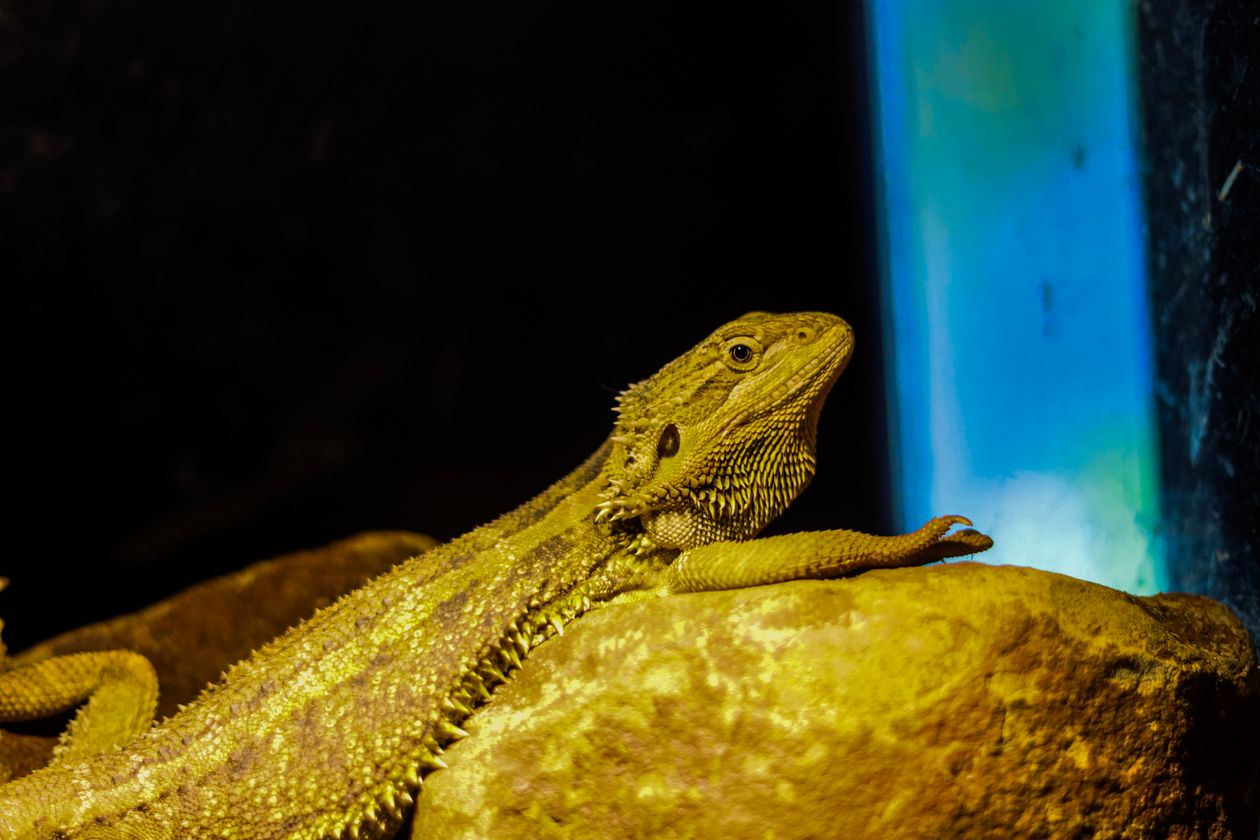
Heat, UVB and Visible Light Are Three Different Jobs
Many setup mistakes begin when one lamp is expected to do everything.
| System | Main job | Common equipment |
|---|---|---|
| Daytime heat | Creates a basking surface and thermal gradient so the dragon can thermoregulate | Incandescent/halogen-style basking heat source or other appropriate radiant heater |
| UVB | Supports vitamin D3 synthesis and calcium regulation | High-output reptile UVB lamp/tube appropriate to distance and enclosure |
| Visible/UVA-rich daylight | Supports normal vision, activity and day-night signaling | Bright daytime lighting; UVB systems also contribute some visible/UVA depending on product |
Merck notes that UVB is especially important for diurnal lizards such as bearded dragons because of vitamin D3 synthesis and calcium regulation. RSPCA also notes that UVA contributes to color vision and that daylight helps establish the day-night rhythm.
A ceramic heat emitter can provide heat, but it does not replace UVB or visible daytime light. Likewise, a UVB tube is not automatically a sufficient basking heat source.
Bearded Dragon Temperature and UV Targets
Reputable sources use slightly different terminology, so do not combine numbers from “air temperature,” “warm end,” and “basking surface” as if they were identical.
| Parameter | Useful current guidance | What it means |
|---|---|---|
| Basking / hot end | RSPCA: 38–42°C (100–108°F) | Measure the actual basking zone consistently |
| Warm-side ambient | VCA: 90–100°F (32–38°C) | Air near the warm end, not the hot rock surface itself |
| Cool side | RSPCA: 22–26°C (72–79°F); VCA: ~75–80°F | Provides a genuine thermal escape |
| Basking UVI | RSPCA: 3.0–5.0 | Measured at the dragon's basking/back height toward the UV lamp |
| Shade UVI | RSPCA: near 0 | Allows photoregulation |
| Cool-end humidity | RSPCA: ~30–40% | Part of overall habitat monitoring |
RSPCA also gives a lower maximum UVI for some light-sensitive morphs such as albinos, which is another reason not to treat “UVI 5 everywhere” as the goal.
Do not chase the hottest number. A correct setup is a gradient. If the basking site is perfect but the cool end stays too warm, the system is still wrong.
Basking Surface Temperature Is Not the Same as Air Temperature
This is one of the most common measurement errors.
Surface temperature
The basking rock/platform can be measured with an infrared temperature gun. Point it at the exact area where the dragon's belly/body rests.
Ambient temperature
Air temperature is better followed with digital probe thermometers placed in the warm and cool zones. VCA recommends one thermometer at each end of the enclosure.
| Tool | Best use | Common misuse |
|---|---|---|
| IR temperature gun | Basking surface / rock / floor spot checks | Using it as though it measured air temperature accurately |
| Digital probe thermometer | Warm-side and cool-side ambient air | Letting the probe touch the hot rock and calling that ambient |
| Thermostat probe | Controls the heater according to its configured location | Assuming the thermostat display replaces independent measurement |
RSPCA explicitly advises daily temperature checks even when a thermostat is used because thermostats are not always perfectly accurate.
How to Place Heat and UVB Together
The strongest setup pattern is a bright basking end where useful heat and useful UVB overlap.
HOT / BRIGHT END → basking heat + UVB + broad stable rock
MIDDLE → declining heat + declining UVI + movement space
COOL / SHADED END → cool hide + low/near-zero UVI + lower temperature
RSPCA recommends placing a high-output 10–12% UVB fluorescent tube toward the hot end, roughly up to half the enclosure length, with a reflector that directs light toward the basking area. Its target is a UVI gradient of about 3–5 at basking height to zero in shade.
The exact lamp distance is not universal. It depends on:
- lamp model and UVB percentage;
- fixture/reflector;
- whether the lamp is inside the enclosure or above mesh;
- mesh density;
- basking-platform height;
- lamp age;
- manufacturer-specific output.
That is why a UV Index meter is more informative than copying “12 inches” or “18 inches” from someone else's tank.
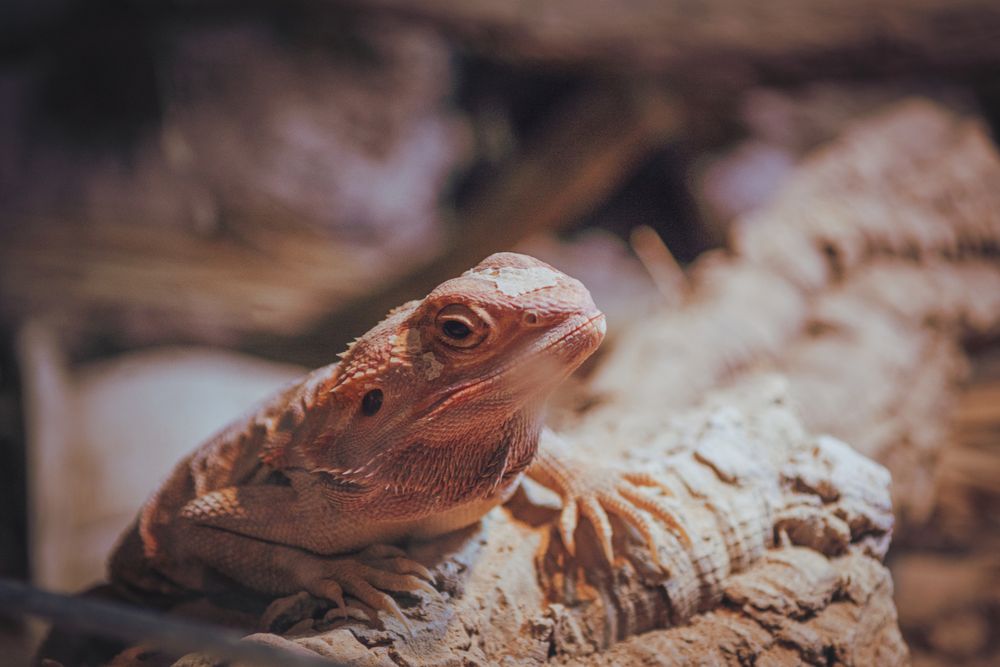
For the surrounding enclosure geometry, Patify's bearded dragon enclosure setup guide covers adult dimensions, hides, furnishing and three habitat layouts.
Mesh, Glass, Reflectors and Distance Can Change UVB Dramatically
Glass and most plastics
Merck and Zoo Med note that ordinary glass and most plastics filter out UVB. A bright sunny window does not provide the same usable UVB as unfiltered sun.
Screen mesh
Zoo Med states that screen mesh usually causes a significant UVB reduction and that the amount varies with mesh type/size. Arcadia likewise documents reductions with mesh in its own lighting guidance, including around 30% or more in some examples.
Reflectors
Reflectors can increase the amount of useful UV reaching the basking zone. Zoo Med reports that an effective reflector can increase measured UV output substantially, which is why lamp-only distance charts are incomplete if they ignore the fixture.
Correct workflow: install the actual lamp + reflector + mesh + basking platform → let the system stabilize → measure UVI at the animal's basking height → adjust height/lamp choice if needed.
Do not remove a mesh safety barrier solely to chase a number unless the fixture can be installed safely another way. Safety and UV output have to be solved together.
Thermostat vs. Thermometer: They Do Different Jobs
A thermostat controls heat output. A thermometer measures what the enclosure actually achieved.
RSPCA recommends thermostatic control for heat sources and says the thermostat probe should be positioned at the animal's level, then verified with independent temperature measurement. Merck likewise recommends appropriate heaters be thermostat controlled and screened from direct contact.
Use the thermostat as a safety/control layer
- Match the thermostat/control type to the heat source and manufacturer instructions.
- Secure the probe so the dragon cannot move it into a misleading location.
- Do not place the probe where it reads direct bulb heat but the basking surface remains wrong.
- Do not assume a thermostat set to 105°F means the basking rock is 105°F.
- Continue checking the real basking surface and cool-end temperature independently.
Hot rocks/contact heaters are poor substitutes for a controlled overhead basking system; VCA and Merck both warn about burn risk.
Night Heat: Keep It Dark
Bearded dragons need a nighttime drop and darkness. RSPCA says to turn off all lights at night and recommends preventing the temperature from dropping below about 20–22°C (68–72°F), using a non-light-emitting ceramic heater if needed.
VCA is somewhat more permissive and says extra heat/light may not be necessary if the cooler end remains about 65–80°F (18–26°C) overnight.
The practical interpretation:
- if your room remains safely warm overnight, additional heat may not be necessary;
- if the enclosure drops too cold, use a non-light-emitting heat source with appropriate control;
- avoid red, blue or “moonlight” bulbs that keep the enclosure visibly lit all night;
- verify the overnight low with a min/max thermometer rather than guessing from room temperature.
Nighttime warmth should not erase the natural temperature drop. The goal is safe darkness and a controlled overnight low, not daytime basking temperatures 24/7.
Photoperiod and Timers
RSPCA's straightforward recommendation is 12 hours on / 12 hours off using a timer. PetMD gives 10–12 hours of UVB/day. Merck notes that photoperiod can vary seasonally in reptile husbandry.
For most pet homes, consistency is more important than manually switching lamps at random times.
Simple schedule
- Heat/light/UVB turn on together or within the same morning window.
- All visible lights turn off at night.
- Any necessary overnight heater should emit no visible light.
- Do not leave UVB running 24 hours.
When Should You Replace a UVB Lamp?
There is no honest universal “every six months” rule for every UVB technology.
Current sources differ:
- PetMD gives a general approximately six-month replacement recommendation for UVB bulbs in its care sheet.
- Merck says suitable fluorescent lights may need replacement around 9–12 months.
- RSPCA gives the safest cross-product rule: check UV output regularly with a UVI meter and replace the lamp according to the manufacturer.
This difference reflects real product variation. A T5 HO tube, compact fluorescent, mercury-vapor lamp and other UV-producing systems do not necessarily age at the same rate.
Keep a lamp record
UVB lamp brand/model: ______
Fixture/reflector: ______
Installed date: ______
Manufacturer replacement interval: ______
Mesh between lamp and dragon? Yes / No
Basking distance: ______
Initial UVI: ______
Latest UVI: ______
Next check date: ______
A lamp can still look bright after useful UV output has fallen. Visible brightness is not a UVB meter.
Exact Measurement Map: Where Every Probe Goes
| Measurement | Exact location | Frequency |
|---|---|---|
| Basking surface temp | Center of the rock/platform where the dragon rests | Daily during setup; routine checks thereafter |
| Warm ambient | Dragon-height air near warm side, not touching the basking rock | Continuous digital probe |
| Cool ambient | Dragon-height air near cool hide | Continuous digital probe |
| Overnight minimum | Cool side | Min/max memory |
| Humidity | Cool end | Continuous / daily review |
| Basking UVI | At the height of the dragon's back/head on the basking platform, aimed toward lamp | At setup, after lamp/mesh/platform changes, periodically as lamp ages |
| Shade UVI | Inside or immediately outside the chosen shaded retreat | At setup and after layout changes |
The key is to measure the microclimate the animal experiences, not the center of an empty enclosure.
Bearded Dragon Heating and Lighting Record
Daily check
Date: ______
Basking surface °F/°C: ______
Warm ambient: ______
Cool ambient: ______
Cool-end humidity: ______
Overnight minimum: ______
Lights turned on/off correctly? Yes / No
Behavior: normal bask / excessive hiding / glass surfing / avoiding hot end / other ______
Monthly or equipment-change audit
UVI at basking height: ______
UVI in shade: ______
Bulb/fixture cleaned? ______
Mesh dusty or blocked? ______
Platform height changed? ______
Lamp age: ______
Thermostat probe still secure? ______
This record is especially useful after a seasonal room-temperature change, new bulb, new fixture, substrate change, basking-platform adjustment or enclosure move.
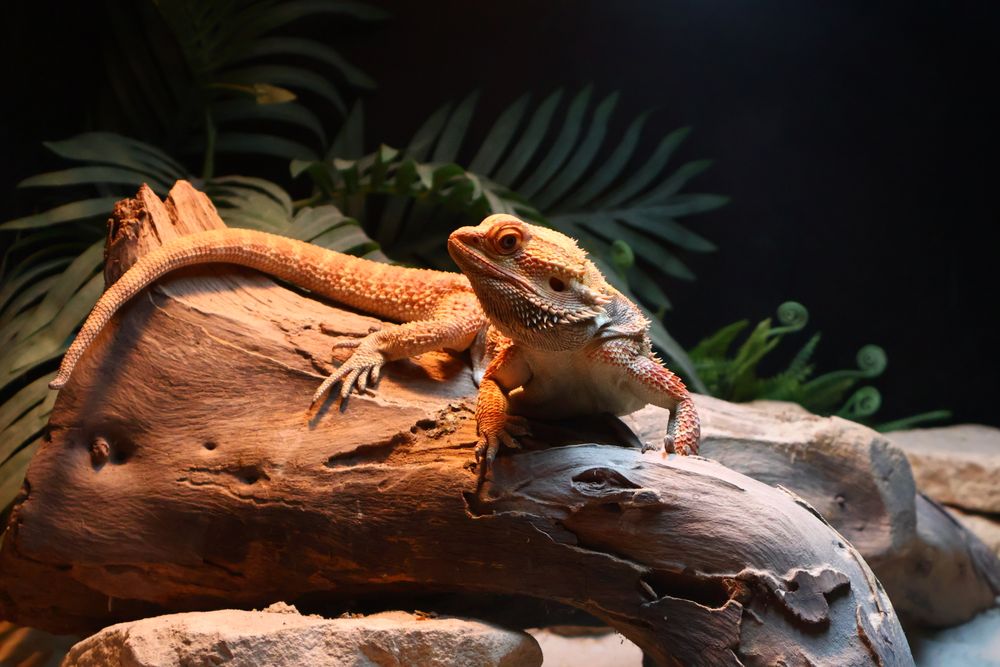
Use Behavior as Supporting Evidence—Not as Your Thermometer
Behavior can warn you that something is wrong, but it cannot replace instruments.
Potential clues include:
- spending all day at the farthest point from UV/heat;
- never using the basking area;
- constant darkening/flattening under the lamp;
- persistent gaping outside normal basking thermoregulation;
- unusual lethargy or poor appetite;
- remaining under heat all day because the rest of the enclosure is too cold;
- constant hiding when the bright end is overwhelming.
Zoo Med notes that a reptile persistently avoiding the UV source may indicate excessive UV exposure, while normal husbandry should allow time basking and time elsewhere in the habitat.
But similar behaviors can occur with illness, stress, seasonal changes, reproduction or poor enclosure design. Measure first; seek reptile-veterinary advice if behavior changes persist.
If appetite and weight are part of the problem, Patify's bearded dragon food guide covers age-specific diet, feeder rotation and calcium/UVB context.
12 Common Bearded Dragon Heating and Lighting Mistakes
- Using only one center thermometer. You need warm and cool measurements.
- Confusing basking surface with air temperature.
- Putting the heat lamp in the middle. This weakens the gradient.
- Running UVB through glass/plastic. Those materials block useful UVB.
- Ignoring mesh reduction. Measure through the real screen.
- Using a UVB percentage as if it were a UVI reading. “12%” is a lamp specification, not what reaches the dragon.
- Mounting UVB at a copied internet distance. Fixture and enclosure details change output.
- Letting the thermostat replace thermometers.
- Using visible night bulbs. Night should be dark.
- Replacing UVB on a random universal schedule. Follow product guidance and measure output where possible.
- Using hot rocks/contact heaters as the primary basking system. Burn risk is well documented.
- Creating no shade. Proper husbandry includes the ability to escape heat and UV.
Frequently Asked Questions
What temperature should a bearded dragon bask at?
RSPCA currently gives 38–42°C (100–108°F) for the hot/basking end. VCA gives 90–100°F for its warm-side framework. These sources describe measurement points differently, so measure basking surface and ambient air separately.
What UV Index should a bearded dragon have?
RSPCA recommends a basking-zone UVI around 3.0–5.0, falling toward zero in shade. Measure at the dragon's actual basking height with the final lamp, reflector and mesh in place.
Does mesh block UVB?
Yes, often significantly. Zoo Med says reduction varies by mesh type and Arcadia documents roughly 30% or more in some mesh examples. Measure through the actual mesh rather than assuming a fixed percentage.
Can UVB pass through glass?
Ordinary glass and most plastics filter UVB, so light through a closed window is not equivalent to direct unfiltered sunlight or a properly installed reptile UVB lamp.
Should UVB cover the whole enclosure?
No. RSPCA recommends a photogradient: stronger UV around the basking end and near-zero UVI in shade so the dragon can regulate exposure.
Do bearded dragons need heat at night?
Only if the enclosure would otherwise become too cold. RSPCA recommends keeping night temperature from dropping below about 20–22°C, while VCA says supplemental heat may be unnecessary if the enclosure remains roughly 65–80°F. If heat is needed, keep the enclosure dark.
How often should I replace a UVB bulb?
Follow the manufacturer and ideally track UVI output. Current general sources range from about six months to 9–12 months depending on lamp type, which is why one universal replacement interval is unreliable.
How many hours should lights be on?
RSPCA uses a simple 12 hours on / 12 hours off schedule. PetMD gives about 10–12 hours of daily UVB. A timer keeps the cycle consistent.
Can a ceramic heat emitter replace the basking bulb?
It can provide heat but does not provide visible daylight or UVB. It is more commonly useful as non-light-emitting supplemental heat when nighttime temperatures would otherwise fall too low.
Bottom Line: Measure What the Dragon Actually Receives
A reliable heating and lighting setup has four characteristics:
- heat and UVB overlap at the basking site;
- temperature and UVI decline across the enclosure;
- the dragon has genuine cool, shaded choices;
- you verify the result with thermometers, an IR gun and—ideally—a UVI meter.
Do not judge the system by bulb wattage, “10% UVB” printed on a box, or how bright the terrarium looks. The useful question is: what temperature and UV Index reach the bearded dragon at the exact place its body rests?