
Last updated: September 24, 2026
Quick answer: a cat's color, pattern, white markings, and breed are different things. “Brown tabby,” for example, combines a color with a tabby pattern; “tuxedo” describes a black-and-white bicolor distribution; “calico” describes orange/non-orange patches plus white; and “Siamese” is a breed, while colorpoint is a temperature-sensitive pattern that can occur in several breeds. If you want to identify your cat's coat accurately, start with the pattern first, then add color and white spotting.
The fastest way to name a coat: ask four questions in order: 1) Are there stripes, swirls or spots? 2) Are orange and black/blue patches both present? 3) Is there white? 4) Are the face, ears, feet and tail darker than the body? Those answers usually narrow the coat family before breed ever enters the conversation.
Color vs. Pattern vs. Breed: The Distinction That Prevents Most Mistakes
| Layer | What it describes | Examples |
|---|---|---|
| Color | The pigment/shade you see | Black, blue (gray), red/orange, cream, chocolate, cinnamon |
| Pattern | How pigment is distributed or organized | Tabby, tortoiseshell, colorpoint, smoke |
| White spotting | Areas where pigment is absent | Bicolor, tuxedo-like markings, van-style distribution |
| Coat length/texture | Physical fur type | Short, long, curly, hairless |
| Breed | A defined pedigree population with a breed standard | Siamese, Maine Coon, Ragdoll, Chartreux |
UC Davis Veterinary Genetics Laboratory notes that feline coat classification becomes confusing because different registries may use different names for similar phenotypes. Its feline coat-color reference separates genes controlling agouti/solid appearance, brown variants, dilution, colorpoint restriction, white spotting and other traits.
TICA also distinguishes official color terminology from common owner language: for example, red is often called orange/ginger, and blue is commonly called gray. That is why two people can describe the same cat differently without either necessarily describing a different genetic color.
30-Second Cat Coat Pattern Finder
| If you see... | Start with... | Then check... |
|---|---|---|
| Vertical stripes, broad swirls, spots or banded hairs | Tabby | Mackerel, classic, spotted or ticked subtype |
| Black/brown + orange/cream mottling with little or no white | Tortoiseshell | Whether tabby markings are also present → torbie |
| Black/brown + orange/cream + obvious white areas | Calico / tortie-and-white | Patch size and registry terminology |
| White plus one main non-white color | Bicolor | Tuxedo, van-like or other white distribution |
| Pale torso + darker face, ears, paws and tail | Colorpoint | Seal, blue, chocolate, lilac, lynx/tabby point, tortie point, etc. |
| Looks solid until you part the fur and find pale/white roots | Smoke | How much of each hair shaft is tipped with color |
| Very pale sparkling coat with colored hair tips | Shaded / chinchilla | Degree of tipping |
| One even-looking color with no obvious body pattern | Solid / self | Ghost markings in kittens or bright light do not necessarily make it a visible tabby phenotype |
Solid / Self: One Overall Color, but Genetics Can Still Hide Pattern
A solid or “self” cat appears essentially one color across the body rather than showing an obvious tabby pattern. UC Davis explains that cats homozygous for the non-agouti allele can appear solid because the agouti banding that reveals tabby markings is suppressed or difficult to identify.
Common solid-looking colors include black, blue, red/orange, cream and breed-associated chocolate/cinnamon variants. “Blue” in cat-fancy language means a diluted gray appearance rather than literal blue pigment.
Important: a solid-looking coat and a “purebred” cat are unrelated concepts. Domestic shorthairs can be solid black; pedigreed cats can be tabby, bicolor, pointed or many other patterns depending on the breed standard.
Tabby Cat Patterns: Mackerel, Classic, Spotted and Ticked
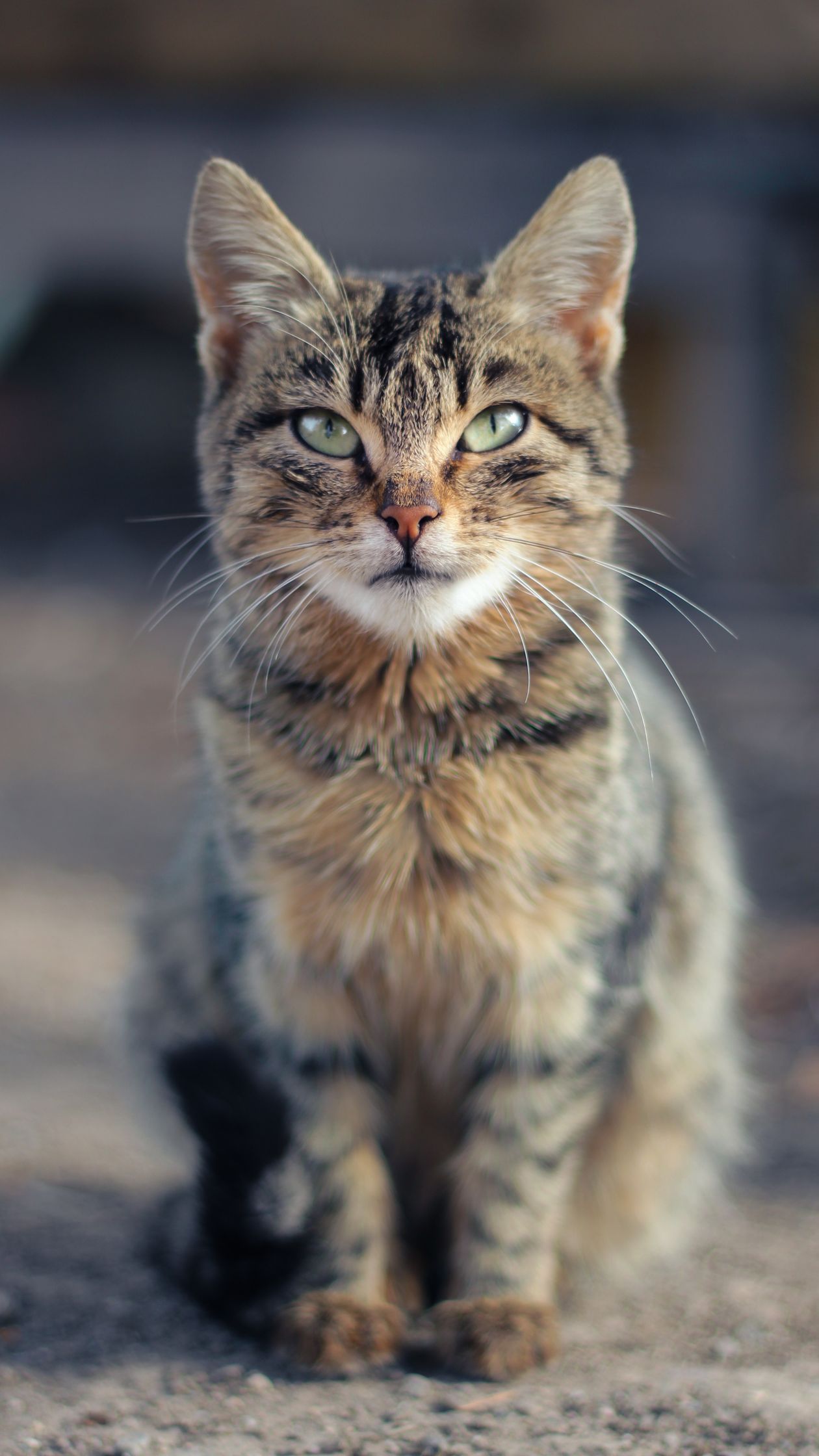
Tabby is not one single stripe pattern. Genetic studies of domestic cats show that multiple loci shape the visible pattern, and research identified TAQPEP as an important gene involved in mackerel-versus-blotched/classic pattern formation. Modern work also separates the tabby pattern locus from the ticked locus rather than treating every tabby phenotype as one simple allele series.
| Tabby subtype | What to look for | Typical visual shortcut |
|---|---|---|
| Mackerel | Narrow vertical stripes running down the sides from a darker spine line | “Tiger stripes” |
| Classic / blotched | Broad swirls, whorls and a bull's-eye-like flank pattern | “Marbled” sides |
| Spotted | Continuous striping is broken into spots/rosettes to varying degrees | Rows or fields of spots |
| Ticked | Body hairs are banded; torso lacks obvious continuous stripes | Abyssinian-like, finely “salted” coat |
A 2010 mapping study showed that spotted coats are not adequately explained as merely one simple “spotted allele”; modifier loci can transform stripe patterning. A later Science study identified TAQPEP variation behind important aspects of tabby pattern geometry. citeturn622319search0turn622319search2
You may also see the familiar forehead “M,” leg barring and tail rings on many tabbies, but pattern identification should use the whole body rather than one forehead mark alone.
Tortoiseshell: Orange and Non-Orange Mosaic Without Large White Areas

Tortoiseshell cats show a mosaic of orange/red and non-orange color—commonly black/brown with orange, or the diluted blue-and-cream equivalent. White is absent or limited enough that the cat is not usually described as a classic calico.
The genetics became much clearer in 2025. A peer-reviewed Current Biology study identified a regulatory deletion affecting ARHGAP36 expression as the molecular basis of sex-linked orange. In heterozygous females, random X-chromosome inactivation creates clones of orange and non-orange pigment cells, producing the tortoiseshell mosaic. citeturn722176search0
That is why tortoiseshell and calico cats are overwhelmingly female. Rare male tortoiseshell/calico cats do exist, but unusual sex-chromosome configurations, mosaicism or chimerism can be involved; a recent 2026 case report documented an XX/XY chimeric tortoiseshell male. citeturn722176search6
Calico: Tortoiseshell Genetics Plus White Spotting
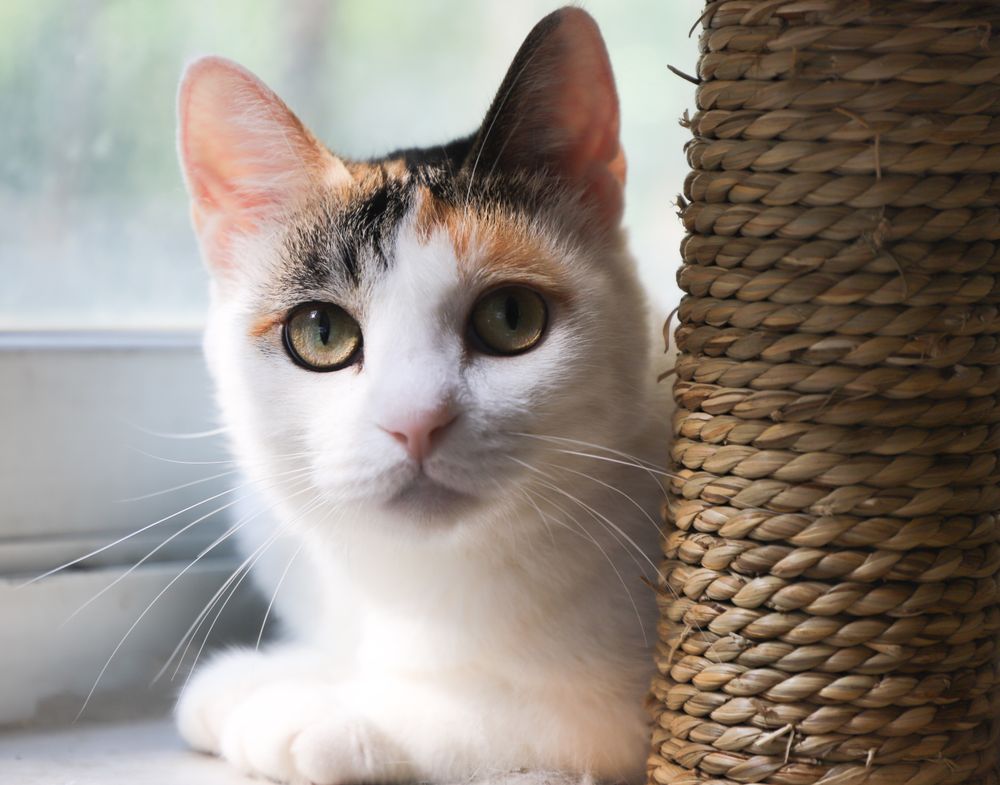
Calico is not a breed. It is a patchwork coat involving orange and non-orange pigment together with white spotting. CFA's color terminology treats calico as a tortoiseshell-family color combined with white; UC Davis identifies white spotting through variation at the KIT locus. citeturn100204search3turn722176search3
The 2025 orange-gene study also explains an elegant visual difference: the addition of white spotting can produce larger, more clearly separated orange/non-orange patches than the finer mottling often seen in tortoiseshell cats. citeturn722176search0
Calico vs tortoiseshell
- Tortoiseshell: orange + non-orange, usually little/no obvious white.
- Calico: orange + non-orange + substantial white.
- Dilute tortie: blue/gray + cream mosaic.
- Dilute calico: blue/gray + cream + white.
Bicolor, Tuxedo, Van and Harlequin: White Is Part of the Pattern
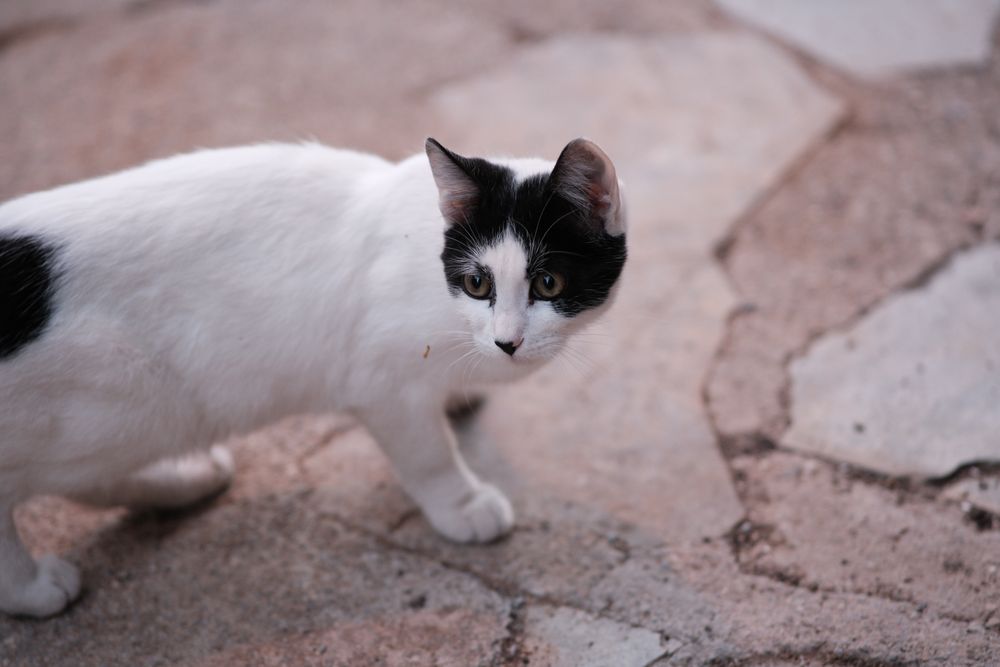
A bicolor cat combines white with another color or pattern. CFA describes bicolor classes according to the non-white component: black-and-white, blue-and-white, red-and-white, tabby-and-white and so on. citeturn100204search3
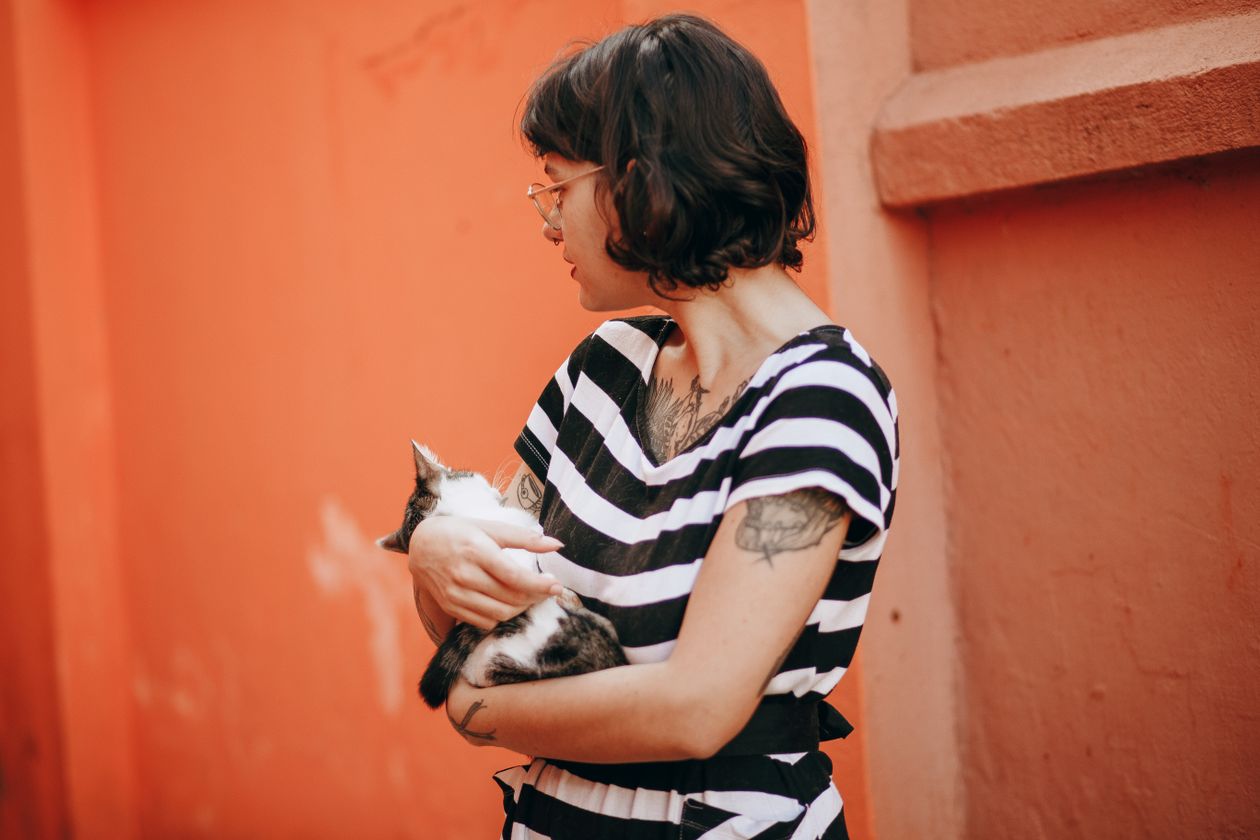
Tuxedo is a common informal term for black-and-white cats whose markings resemble formal clothing, often with a dark back/head and white chest, belly or paws. It does not define ancestry.
Terms such as van or harlequin may be used in cat-fancy standards for particular distributions or amounts of white. Exact definitions can vary by registry and breed, so use them cautiously when describing a random-bred pet unless you are following a specific registry standard.
Colorpoint: Darker “Points” on the Cooler Parts of the Body
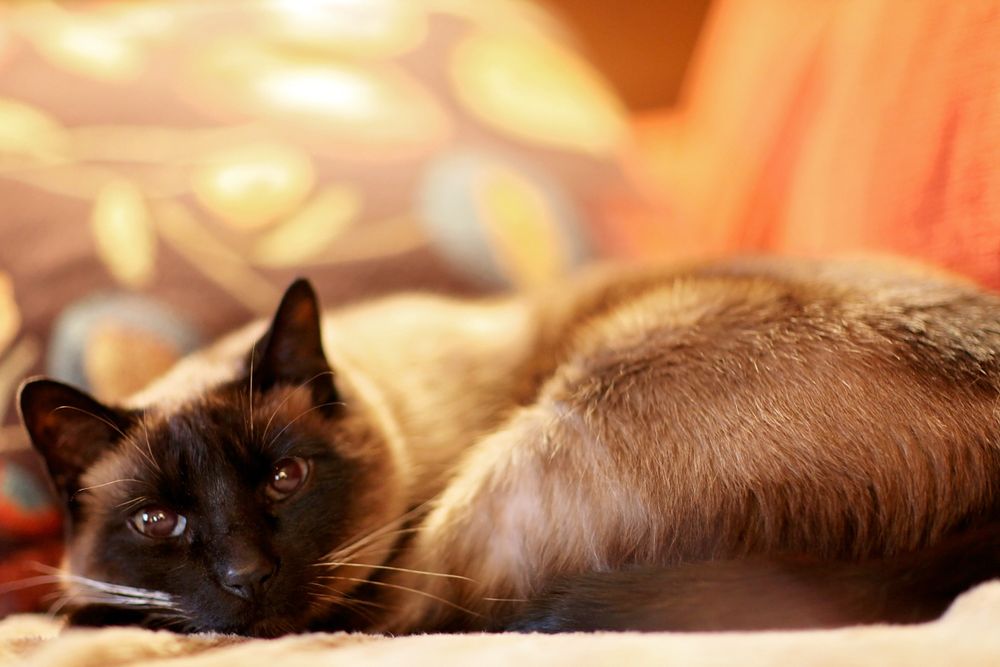
Colorpoint cats have reduced pigment on the warmer central body and darker pigmentation on cooler extremities such as the face, ears, paws and tail. UC Davis identifies temperature-sensitive variants at the color locus that produce Siamese-type and Burmese-type pigment restriction. citeturn722176search2
This is why “pointed” is not synonymous with “Siamese.” Ragdolls, Birmans, Himalayans and other cats can display point-restricted coloration depending on their genetics and breed standards.
The points themselves can carry additional pattern information. A cat can be a lynx/tabby point, tortie point or another combination because colorpoint restriction changes where pigment is expressed; it does not erase every other coat-pattern gene.
Smoke, Shaded and Chinchilla: Look at the Hair Shaft, Not Just the Cat
These patterns are easy to misidentify from a single photograph because the clue lives in how much of each hair shaft carries pigment.
CFA's current pattern guidance distinguishes them by the degree of colored tipping over a pale/white undercoat. In simplified visual terms: citeturn100204search15
| Pattern | What you may see | Best identification trick |
|---|---|---|
| Smoke | Cat can look almost solid at rest; movement reveals pale/white roots | Part the fur and inspect the root-to-tip contrast |
| Shaded | Much lighter overall with a mantle of colored tipping | Color concentrated toward the outer portion of hair |
| Chinchilla / shell | Very pale sparkling appearance with minimal dark tipping | Only a small portion of the hair tip carries color |
Long coats, lighting and photo processing can make these distinctions unreliable online. If the exact registry color matters for a pedigree cat, use the relevant breed/registry standard rather than identifying from a compressed phone photo.
Torbie, Patched Tabby and Other Combination Coats
Real cats often combine categories. A tortoiseshell cat with tabby patterning in the colored patches is often called a torbie or patched tabby. The University of Florida shelter-medicine identification chart describes torbies as tortoiseshell cats with tabby patterns and shows both full-color and dilute versions. citeturn100204search21
Other combinations include:
- tabby and white;
- torbie and white;
- lynx/tabby point;
- tortie point;
- smoke tortoiseshell;
- silver tabby;
- patched tabby.
This is why one-word coat labels often feel insufficient: color, pattern, white spotting and modifiers can stack.
Dilute Colors: Why Black Becomes Blue and Orange Becomes Cream
UC Davis explains that the dilution locus changes the distribution of pigment within the hair shaft, producing a lighter visual version of the underlying color. In everyday terms:
| Full color | Dilute counterpart |
|---|---|
| Black | Blue / gray |
| Red / orange | Cream |
| Tortoiseshell (black + red) | Blue-cream / dilute tortie |
| Calico (black + red + white) | Dilute calico (blue + cream + white) |
Dilution changes the shade, not the basic pattern category. A blue tabby is still a tabby. A dilute calico is still a calico-type mosaic plus white.
Cat Coat Genetics Without the Oversimplified “One Gene = One Look” Story
Coat appearance is layered. Different genes and developmental processes affect:
- whether the coat is agouti/banded or appears solid;
- the geometry of tabby markings;
- orange versus non-orange pigment;
- pigment dilution;
- temperature-sensitive colorpoint restriction;
- white spotting or dominant white;
- tipping/inhibitor effects behind smoke and shaded looks;
- breed-specific traits and modifiers.
For tabby specifically, genetic studies moved beyond the old idea that one locus neatly explains every stripe, spot and ticked coat. Mapping work identified separate pattern and ticked components, and later molecular work tied TAQPEP to important pattern differences. citeturn622319search0turn622319search2
For orange, the 2025 Current Biology paper resolved a long-standing mystery by identifying a 5 kb regulatory deletion associated with ectopic ARHGAP36 expression. Random X-inactivation explains the orange/non-orange mosaic of tortoiseshell and calico females. citeturn722176search0
For colorpoint, temperature-sensitive pigment production creates darker extremities. For white spotting, UC Davis identifies KIT-associated variants. The visible cat is the combined result, not a single “coat gene.” citeturn722176search2turn722176search3
Why Coat Pattern Cannot Identify Your Cat's Breed
A pattern can appear across unrelated pedigree breeds and the enormous random-bred domestic cat population. A tabby domestic shorthair is not automatically a Bengal; a pointed cat is not automatically Siamese; a blue/gray cat is not automatically Russian Blue or Chartreux; and a tuxedo cat is not a breed at all.
Use coat pattern to describe the cat, not to invent ancestry.
This distinction is especially useful with blue/gray cats. Patify's Chartreux breed guide explains the additional pedigree, body-shape, coat-texture and breed-standard context that goes beyond simply having a blue coat.
The same principle will matter for breed-specific color atlases later in this U.S. cluster: a future Maine Coon or Ragdoll color guide can discuss that breed's accepted terminology without making this general page pretend every matching coat belongs to that breed.
When a Coat Change Is Not “Just a Different Pattern”
Normal coat genetics do not suddenly redraw an adult cat's stable pattern. Lighting, seasonal coat, sun exposure and age can change how shades look, but new bald spots, broken hairs, redness, crusting, intense itching, excessive licking or rapidly changing coat quality are health questions rather than coat-pattern categories.
Patify's cat shedding guide separates normal loose fur from visible hair loss and overgrooming.
See a veterinarian if a “color change” is actually hair loss, inflamed skin, crusts, wounds, marked itch, or a sudden coat change alongside weight loss, appetite changes, lethargy or other illness signs.
Frequently Asked Questions
Is tabby a cat breed?
No. Tabby is a coat-pattern family seen in random-bred cats and many pedigree breeds.
What are the four main tabby patterns?
Mackerel, classic/blotched, spotted and ticked are the four common visual categories. Modern genetics shows that their inheritance is more complex than one simple four-allele model.
What is the difference between calico and tortoiseshell?
Both involve orange and non-orange pigment. Calico additionally has substantial white spotting, which often makes the colored patches look larger and more separated.
Are all calico cats female?
Almost all are female because the orange/non-orange mosaic is tied to X-chromosome biology, but rare male calico/tortoiseshell cats can occur through unusual chromosome or cellular configurations.
Is tuxedo a breed?
No. Tuxedo is an informal description for a black-and-white bicolor marking pattern.
Is every colorpoint cat Siamese?
No. Colorpoint is a temperature-sensitive pigmentation pattern. Several breeds, including Ragdoll, Birman and Himalayan, can be pointed.
What is a torbie cat?
A torbie combines tortoiseshell-type orange/non-orange mosaic coloring with visible tabby patterning. “Patched tabby” is another term used in cat-fancy descriptions.
How can I tell a smoke cat from a solid cat?
Part the fur. Smoke cats have pale or white hair roots with color concentrated toward the outer part of the shaft, so movement often reveals a light undercoat that is hidden when the cat is still.
Bottom Line: Name the Pattern Before You Guess the Breed
For most pet cats, use this sequence:
- Choose the base color(s).
- Identify tabby, tortie, calico, bicolor, point, smoke/shaded or solid appearance.
- Add white spotting and modifiers.
- Add coat length/texture.
- Only discuss breed if there is pedigree or broader breed evidence.
That gives you a description that is useful even when ancestry is unknown: brown mackerel tabby and white, dilute tortoiseshell, black-and-white bicolor, seal colorpoint, or black smoke tells another person much more than guessing a breed from color alone.