
Last verified: October 1, 2026
How to Teach a Dog to Fetch: Build the Retrieve in Five Separate Skills
Quick answer: do not start by repeatedly throwing a ball farther. Teach fetch as five small behaviors: chase/approach → pick up → hold → return → deliver/drop. Reward the piece your dog does not yet understand, then connect the chain.
AKC’s current fetch guides use reward-based shaping: first reward interest in the toy, then touching/mouthing it, holding it, picking it up from nearby, and finally increasing distance. Dogs that love chasing but run away with the toy need a different fix from dogs that never pick it up.
Patify fetch rule: diagnose where the chain breaks. If the dog chases but will not return, throwing more does not teach return. If the dog returns but will not release, chasing the dog does not teach drop.
Fetch Diagnostic: Which Link Is Missing?
| Your dog does... | Missing skill | Train next |
|---|---|---|
| Watches the toy and does nothing | Toy interest / approach | Reward looking, moving toward, touching |
| Chases but never picks it up | Mouth/pick-up | Teach toy interaction at arm’s length |
| Picks up then instantly drops | Hold duration | Reward half-second, then gradual duration |
| Grabs toy and runs away | Return to handler | Short distance, hallway, two-toy/trade game |
| Returns but will not release | Drop/trade | Teach voluntary release for reward or second toy |
| Fetches indoors but not outside | Generalization | Lower distraction/distance outdoors |
Choose the Right Fetch Toy and Training Space
AKC recommends trying different toy types because dogs have preferences. Some love balls, others plush toys or ropes; food-stuffable toys can help dogs with little toy motivation.
For the first sessions
- use a quiet room or fenced secure space;
- choose a toy large enough not to be swallowed;
- use a toy your dog willingly mouths;
- prepare small high-value food rewards or a second identical toy;
- keep throws tiny—sometimes only a few inches;
- use a marker word/clicker if your dog already understands it.
A hallway can help dogs that grab and run because the environment naturally channels the return path toward you.
Step 1 — Build Interest Before You Ask for Retrieval
- Put or hold the toy near the dog.
- Mark/reward a glance toward it.
- Next require one step toward it.
- Then nose touch.
- Then mouth contact.
AKC’s shaping method intentionally rewards tiny approximations. This is especially useful for a dog that does not naturally value toys.
Do not push the toy into the dog’s mouth. The goal is voluntary interaction.
Step 2 — Teach Pick Up and Hold
Once the dog willingly mouths the toy, begin rewarding a tiny increase in duration while the toy is still in the mouth.
Progression: mouth touch → half-second hold → one second → two seconds → take toy from your hand → pick it up from the floor.
AKC recommends building hold in very small increments rather than asking for a long hold immediately.
If the dog repeatedly spits the toy the instant food appears, delay showing the food until after your marker so the dog does not learn “see treat = spit immediately before criterion.”
Step 3 — Teach the Return Before a Big Throw
Start with the toy only inches away. When the dog picks it up, move backward one or two steps and encourage them toward you. Mark/reward arrival near your hands.
Increase distance only when the dog repeatedly chooses to return.
If the dog runs away with the toy
- do not chase them;
- practice in a hallway or smaller secure area;
- run backward away from the dog to trigger following;
- use a second toy/trade to make coming back valuable;
- make the next repetition shorter.
Chasing the dog can turn “keep-away” into the best part of the game.
Step 4 — Teach Delivery and Drop as Their Own Skill
A dog can understand “bring it here” yet still dislike surrendering the prize. Teach release without conflict.
- Let the dog hold the toy.
- Present a high-value treat or second toy at your body.
- When the dog voluntarily opens the mouth, mark.
- Deliver the reward.
- Often give the original toy back so “drop” does not always end fun.
- Add the verbal cue only after the release is predictable.
AKC’s training guidance for “drop” similarly uses an exchange instead of prying the mouth open.
Resource guarding: if your dog freezes, growls, hard-stares or guards toys, do not force the object away or punish warnings. Stop DIY conflict and get qualified reward-based behavior help.
Step 5 — Add the Throw Last
When pick-up, return and delivery work at short distance, make a tiny toss. Reward the entire sequence.
Then increase one variable at a time:
- distance;
- different toy;
- different room;
- outdoor environment;
- mild distraction.
Do not jump directly from a five-foot indoor retrieve to a 100-foot park throw.
The Two-Toy Game: Useful, but Use It to Build Return
AKC suggests showing a second desirable toy so the dog wants to return and exchange. Use two similar-value toys.
- Toss toy A a very short distance.
- As the dog picks it up, become interesting and show toy B near you.
- Reward the return by activating/tossing B only after the dog comes back.
- Collect A while the dog pursues B.
- Gradually ask for a closer hand delivery before releasing the second toy.
If you flash toy B too early, some dogs abandon toy A before returning. Adjust timing.
Backchain Fetch When the Chase Is Too Strong
For chase-obsessed dogs, the first thrown ball is so exciting that everything after the chase falls apart. Backchaining solves that by making the end of the behavior strongest first.
- Teach a reliable hand delivery from one inch away.
- Place the toy on the floor next to your feet; reward pick-up → hand.
- Place it one foot away.
- Increase to a few feet.
- Only then begin rolling/tossing it.
The dog learns that the game completes at your hand, not at the far end of the yard.
Fetch Troubleshooting Matrix
| Problem | Likely reason | Fix |
|---|---|---|
| Won’t chase | Toy has low value / dog does not understand game | Try toy variety, animate toy, reward approach |
| Chases, won’t grab | Pick-up not trained | Teach mouth contact/hold without throwing |
| Grabs, lies down | Possession is more reinforcing than return | Shorter space + trade/two-toy return |
| Runs circles | Keep-away has become the game | Stop chasing; hallway/back-away strategy |
| Returns halfway | Distance rose too quickly | Shorten distance; reward arriving closer |
| Won’t drop | Release predicts loss/end of play | Trade and frequently return toy |
| Drops early | Hold/delivery criterion weak | Strengthen hold and hand target separately |
| Works indoors only | Outdoor distractions too hard | Rebuild at tiny distance in quiet outdoor space |
| Stops after 2–3 retrieves | Low motivation, fatigue or discomfort | End earlier; consider health if change is sudden |
When Should You Say “Fetch”?
Add the cue after the dog is already reliably doing the action in the current setup. Say “fetch” just before the predictable pick-up/retrieve sequence, then reinforce.
Repeating “fetch, fetch, fetch” while the dog stares at the toy teaches that the word is background noise.
Proof Fetch Without Breaking It
Build three variables separately:
- Distance: farther retrieve in the same easy environment.
- Distraction: same short retrieve with mild environment changes.
- Object: new toy at easy distance.
When one becomes harder, make the other two easier.
Fetch Safety: More Repetitions Are Not Always Better
Fetch is repeated acceleration, braking, turning and jumping. Keep sessions appropriate to the dog’s age, fitness, surface and orthopedic status.
- avoid high repetitive sprinting for growing puppies without veterinary guidance;
- use non-slip/forgiving surfaces;
- avoid throwing so high that the dog repeatedly twists/jumps awkwardly;
- stop for limping, slowing, paw injury or unusual stiffness;
- avoid strenuous fetch in hot/humid weather;
- check that toys are intact and appropriately sized.
The game should end because the training session was successful—not because the dog is physically exhausted.
Patify Dog-Training Cluster
- For the same reward-based “make the step smaller” logic applied to a body trick, see How to Teach a Dog to Roll Over.
- For practical prerequisite cues such as drop it/trade, recall and stay/wait, use 7 Dog Commands Every Owner Should Teach.
Frequently Asked Questions About Teaching Fetch
How do you teach a dog to fetch?
Teach toy interest, pick-up, hold, return and delivery separately, then add a short throw and gradually increase distance.
Why won’t my dog fetch naturally?
Not every dog finds retrieving inherently rewarding. Some need toy interest and each part of the retrieve shaped with rewards.
Why does my dog chase the ball but not bring it back?
The chase is reinforced but the return is not. Shorten the distance and heavily reward returning to you.
Why does my dog run away with the toy?
Keep-away may be more fun than returning. Stop chasing and use a hallway, backing-away game or second-toy trade.
How do I teach my dog to drop the ball?
Trade for food or another toy, mark the voluntary release and often return the original toy so dropping does not always end play.
Should I pull the toy from my dog’s mouth?
No. Teach voluntary release. For resource guarding, avoid confrontation and seek qualified behavior help.
Can I use two balls to teach fetch?
Yes. Two similar-value toys can motivate return, but time the second toy so the dog returns instead of dropping the first far away.
When should I add the word “fetch”?
Once the dog reliably performs the retrieve in that setup; say the cue immediately before the behavior begins.
What toy is best for fetch training?
The toy your dog safely values and can comfortably carry. Balls, plush and rope toys can all work.
How long should fetch training sessions be?
Keep them short enough that motivation and movement remain good. There is no universal minute count; several successful repetitions can be enough for a beginner.
Can puppies play fetch?
Gentle short retrieves can be part of play, but avoid repetitive high-impact sprint/jump sessions in growing dogs and ask your veterinarian about appropriate exercise.
Why did my dog suddenly stop fetching?
Abrupt loss of a previously loved activity can reflect pain, fatigue, heat, illness or a bad experience. Reduce activity and investigate persistent change.
Sources Checked for This Guide
- American Kennel Club — How to Teach Your Dog to Fetch: hold-first shaping and gradual distance.
- AKC — How to Teach a Dog to Fetch or Retrieve: shaping from toy interest to hand delivery.
- AKC — Why Doesn’t My Dog Play Fetch?: two-toy return and retrieve troubleshooting.
- American Veterinary Society of Animal Behavior — Humane Dog Training position: reward-based training framework.
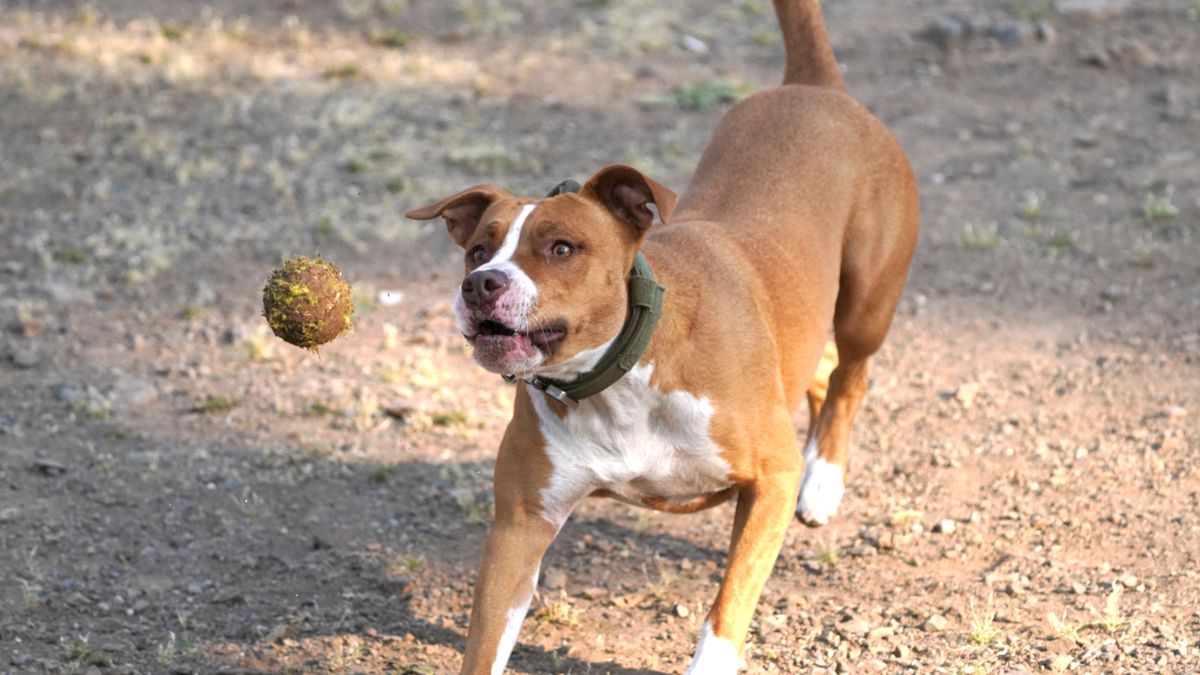
- Pexels — dog playing fetch image
- Pexels License
Editorial note: fetch is presented as a five-part behavior chain rather than a throwing drill, problems are diagnosed by the missing link, and release/return are taught with reinforcement rather than chasing or forcibly taking the toy. Sources were reviewed October 1, 2026.