
Last verified: September 29, 2026
How to Teach a Dog to Roll Over Without Pushing or Flipping Them
Quick answer: start with your dog comfortably lying down on a non-slip surface. Use a small food lure at the nose to guide four separate movements: down → hip/side → shoulder/back → full roll. Mark and reward each small success until that piece is easy. Then join the pieces together, fade the food out of your lure, keep the hand signal, and finally say “roll over” immediately before the hand signal so the words can begin predicting the behavior.
The trick should be voluntary. Do not grab a paw, push the dog onto their side, or physically flip them across the spine. The American Veterinary Society of Animal Behavior (AVSAB) currently recommends reward-based methods for dog training, and the American Kennel Club’s roll-over method likewise teaches the movement with a lure and rewards rather than physical force.
Patify training rule: if the dog cannot do the next step willingly, make the step smaller. Do not make the dog move more—make the training criterion easier.
Before You Start: Is Your Dog Ready to Roll Over?
AKC describes a reliable down as helpful before teaching roll over. It is not because “down” is magically required; it simply gives you a repeatable starting position. If your dog does not yet know down, teach that first or reward voluntary lying down before asking for a more complex body movement.
Patify’s 7 dog commands guide covers reward-based down training and marker timing if those foundations are still new.
| Ready to try | Pause and reassess |
|---|---|
| Dog lies down comfortably on cue or voluntarily | Dog repeatedly avoids lying on one side |
| Dog happily follows a food lure with the nose | Dog flinches, yelps or becomes stiff during the movement |
| Dog can focus for a few easy repetitions | Dog is too worried about the surface or environment to eat/play |
| Dog is comfortable on a rug, mat or grass | Floor is slippery or the dog struggles for traction |
| Rolling appears physically easy and voluntary | Recent surgery, known spine/hip/shoulder pain, abdominal discomfort or unexplained mobility change |
If your dog suddenly refuses a movement they previously performed comfortably, training is not the place to “push through.” Stop and consider discomfort. A trick is optional; pain assessment is not.
Set Up the Training Session for Easy Success
RSPCA and Dogs Trust both recommend beginning new skills in a quiet, low-distraction environment and keeping training manageable. For roll over, the surface matters more than it does for many standing cues.
Use a non-slip, comfortable surface
A rug, yoga-style mat, carpet or dry grass gives the dog traction and makes the back/shoulder movement more comfortable than tile, laminate or rough concrete. Large, deep-chested or bony dogs may particularly appreciate a softer surface.
Prepare tiny rewards
Use small, easy-to-swallow treats so one lesson does not turn into a meal. Dogs Trust recommends adjusting normal food intake when training treats contribute meaningful calories. The best reward is whatever your individual dog values enough to follow without becoming frantic.
Choose a marker
A clicker or a short word such as “Yes” can mark the exact instant the dog performs the behavior you want. AKC notes that precise markers help tell the dog exactly which moment earned the reward.
Do not add the verbal cue yet
Saying “roll over, roll over, roll over” while your dog is still trying to understand the physical movement only makes those words background noise. First build the behavior. Add the cue when the movement is becoming predictable.
Teach Roll Over in 4 Micro-Steps
The main improvement over a one-motion lure is to pay the intermediate positions. A dog who gets stuck halfway is not failing; the trainer has probably skipped a step.
Step 1 — Down to hip shift
Ask for down. Notice whether your dog naturally rests more comfortably on the left or right hip. Start in the easier direction.
- Hold the treat close to the dog’s nose.
- Move it slowly toward the shoulder on the side you want the dog to roll toward.
- The moment the dog shifts weight onto one hip or begins folding onto that side, mark.
- Deliver the reward where the dog is, so they do not need to jump up to get it.
Repeat only until the hip shift becomes easy. You do not need a full roll yet.
Step 2 — Hip shift to lying fully on the side
Now ask for the same initial movement but continue the lure slightly farther around the shoulder. AKC’s current roll-over guide recommends rewarding the dog for lying flat on the side before asking for the entire rotation.
Criterion: shoulder and side reach the floor voluntarily while the dog remains relaxed enough to take the reward.
Step 3 — Side to back/shoulder rotation
From the side position, move the lure from the shoulder toward the dog’s backbone. Keep the treat close to the nose. If your hand rises too high or moves too far away, many dogs will stand up instead of rotating.
At first, mark a small shoulder roll or chest opening. Then ask for a little more. The goal is not to hold the dog on the back; it is to create enough head/shoulder rotation that the body naturally follows.
Step 4 — Complete the roll onto the other side
Continue the lure in a smooth arc so the nose travels over and toward the opposite side. When the dog’s body completes the rotation, mark immediately and reward.
Do not physically finish the last 20% for the dog. If the dog stalls on the back, return to rewarding smaller shoulder rotations or change the lure path. Learning happens from the dog producing the movement.
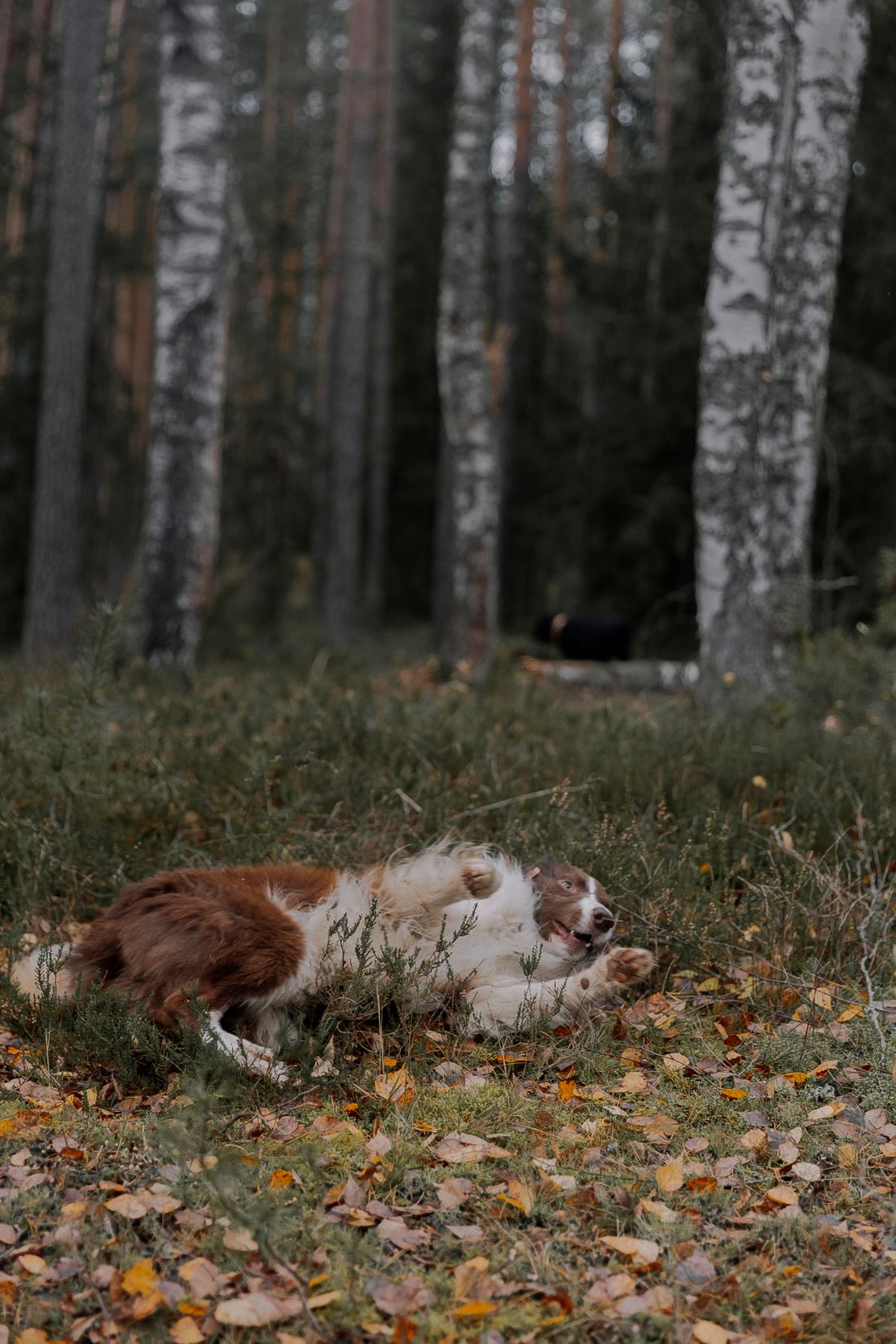
Marker Timing: Reward the Movement You Want to Grow
A marker is most useful when it tells the dog, with precision, “that exact movement earned the reward.” If you mark three seconds after the dog rolls and stands up, the dog has less information about which part mattered.
| Training stage | Mark this | Do not wait for |
|---|---|---|
| Beginning | Head turns toward shoulder + weight shifts | A perfect full roll |
| Side work | Shoulder/side reaches the floor | Dog becoming frustrated |
| Rotation | Chest opens and body begins to rotate over back | Physical assistance |
| Full behavior | Body reaches the opposite side | Dog standing up afterward |
| Fluent roll | Full roll after hand signal or verbal cue | Extra repeated cues |
AKC’s reward-training guidance also emphasizes reward placement. If you want the dog to remain low and ready for another repetition, deliver the reward low rather than making them stand up for every treat.
How to Fade the Food Lure Before Your Dog Becomes Dependent on It
Luring is useful for teaching a new motion, but the food should stop being the steering wheel. AKC’s lure-and-reward guidance recommends moving fairly quickly from food in the lure hand to the same gesture with an empty hand.
Phase A — Food lure
Treat at the nose guides the motion. Mark and reward successful pieces.
Phase B — Empty-hand lure
Use the exact same hand motion with no food visible. After the dog rolls, mark and feed the reward from your other hand, pocket or nearby container.
Phase C — Smaller hand signal
Gradually shrink the giant nose-following circle into a smaller circular hand gesture.
Phase D — Reward after the behavior
The dog should no longer need to see food before deciding to roll. Food remains a consequence of success, not proof that food is in your fingers.
If performance collapses as soon as the treat disappears, you have not “discovered stubbornness.” You have simply faded the lure too quickly. Return to one easier phase for several successful repetitions and try again.
When to Add “Roll Over”
AKC recommends adding the verbal cue once the dog is consistently following the lure through the whole movement. This order matters.
- Get a predictable roll from your hand signal.
- Say “Roll over” once.
- Pause briefly.
- Give the familiar hand signal.
- Mark the completed roll and reward.
- Repeat this sequence across multiple short sessions.
- Begin waiting a little longer after the verbal cue before helping with the hand signal.
- If the dog rolls from the words alone, mark and reward generously.
The verbal cue comes before the known hand signal because you want the new signal to predict the old one. If you say the words while your hand is already moving, the much more obvious visual gesture can overshadow the words.
Do not keep repeating the cue when nothing happens. “Roll over, roll over, ROLL OVER” teaches the dog that the first two cues are optional. If the dog does not respond, make the next repetition easier.
Dog Won’t Roll Over? Diagnose the Exact Sticking Point
| What happens | Likely reason | Better next move |
|---|---|---|
| Dog stands up immediately | Lure is too high/far forward | Keep treat very close to nose and move toward shoulder |
| Dog lies flat but will not rotate | Side position has not been reinforced enough | Reward side + tiny shoulder rolls before full rotation |
| Dog follows with head but body stays planted | Motion is too large or surface lacks traction | Slow the lure and move to a non-slip surface |
| Dog freezes when belly faces up | Position may feel vulnerable or physically uncomfortable | Do not force; return to side work or choose another trick |
| Dog grabs the lure hand | Treat is too exposed/exciting | Use a closed hand and slower movement; reward calm following |
| Dog only rolls with visible food | Lure was never faded | Empty-hand lure + reward from opposite hand |
| Dog only follows the hand, ignores words | Verbal cue was added incorrectly or not enough repetitions | Say cue first, then hand signal; gradually delay signal |
| Dog rolls one direction only | Strong physical/learning preference | Keep that direction fluent; teach opposite direction separately if desired |
| Dog suddenly refuses after doing it before | Distraction, fatigue, worry or possible discomfort | Lower difficulty; stop if movement looks painful |
A Roll-Over Progress Tracker That Does Not Use Fake Deadlines
There is no honest promise that every dog learns roll over in one day, three days or seven sessions. RSPCA recommends short, regular sessions for new skills. Progress depends on the dog’s reinforcement history, body comfort, surface, motivation and how small you make the steps.
| Level | Skill | Advance when... |
|---|---|---|
| 1 | Comfortable down | Dog lies down willingly and remains engaged |
| 2 | Hip shift | Weight shift happens easily from a small lure |
| 3 | Full side | Dog lies on side without hesitation |
| 4 | Shoulder/back rotation | Dog begins rotation voluntarily |
| 5 | Full roll with food lure | Whole motion is smooth and repeatable |
| 6 | Full roll with empty-hand signal | Food no longer needs to be visible |
| 7 | Smaller hand signal | Large lure circle is unnecessary |
| 8 | Verbal cue + hand signal | Dog anticipates correctly after hearing the words |
| 9 | Verbal cue alone | Dog rolls before the backup hand signal |
| 10 | Generalized trick | Dog can perform on other safe surfaces/rooms without confusion |
Advance on fluency, not a percentage. If the next level makes the dog slower, confused or hesitant, drop back one level. That is good training, not regression.
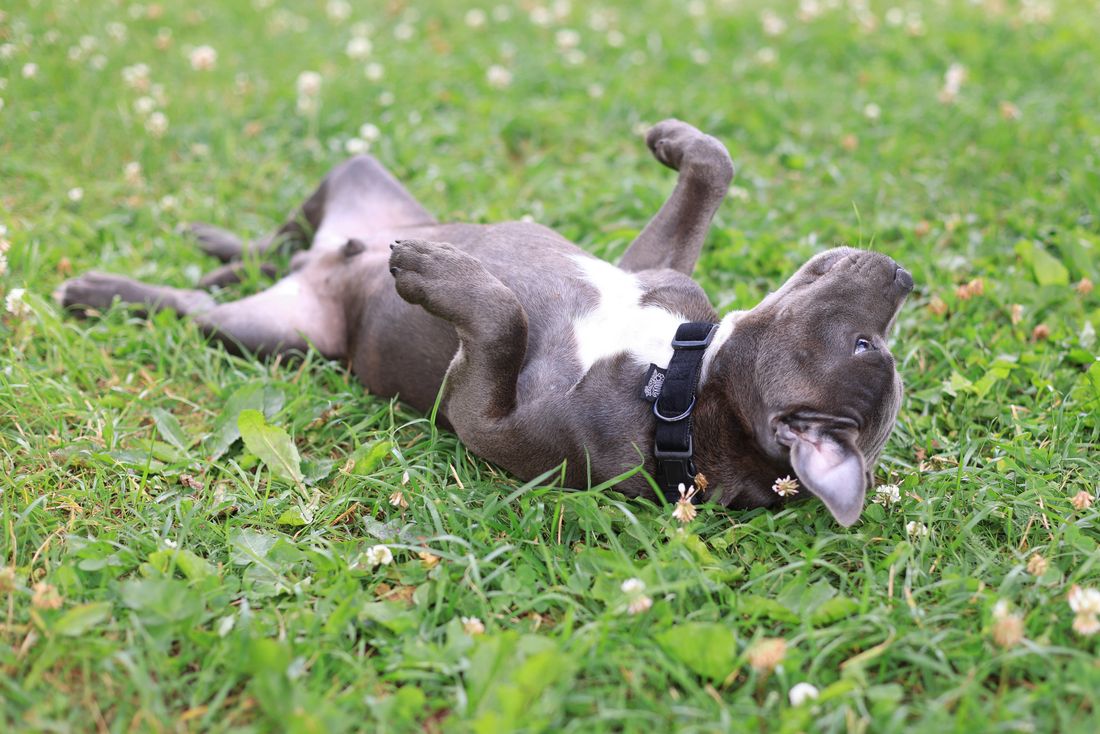
Should You Teach Roll Over in Both Directions?
You do not need both directions for a fun household trick. Start with the side your dog naturally offers most comfortably. This reduces physical difficulty while the dog is learning the concept.
Once the first direction is fluent, you can teach the opposite side as a separate behavior. Use a different hand signal or even a separate cue if you want precise directional control.
If one direction remains dramatically harder despite careful training, do not assume the dog is being difficult. Body asymmetry, previous injury, stiffness or simple motor preference can all affect movement. An unexplained or new one-sided reluctance is worth discussing with a veterinarian rather than drilling repeatedly.
Puppies, Senior Dogs and Dogs With Mobility Concerns
Puppies
Puppies can learn reward markers and body movements, but keep the surface stable and the lesson easy. The objective is not rapid repetition. One or two calm successful rolls can be enough before moving to another activity.
Senior dogs
There is no age at which a dog automatically becomes “too old to learn,” but roll over asks for more spinal, shoulder and hip movement than a simple nose target or chin rest. If getting up/down is already difficult, choose a lower-impact trick instead.
Dogs recovering from surgery or injury
Do not use roll over as rehabilitation unless the veterinarian or rehabilitation professional specifically wants that movement. A trick-training article cannot determine whether spinal rotation or pressure on a surgical/painful region is appropriate for an individual dog.
Dogs who dislike being on their back
That preference deserves respect. Roll over is entertainment, not a life skill. You can teach spin, touch, chin rest, paw target or toy cleanup instead. A dog should not have to tolerate a vulnerable position to prove trainability.
10 Common Roll-Over Training Mistakes
- Trying to teach the whole roll in one jump. Reinforce hip shift, side and rotation first.
- Moving the treat too far from the nose. The lure should guide the head smoothly, not make the dog chase it.
- Holding the treat too high. That often makes the dog stand.
- Physically pushing or flipping the dog. Let the dog produce the movement.
- Training on a slippery floor. Poor traction makes an already unusual motion harder.
- Saying “roll over” before the behavior exists. Build the movement before attaching the cue.
- Keeping food in the lure hand forever. Fade to an empty hand early.
- Rewarding only perfect full rolls. Beginners need reinforcement for approximations.
- Doing too many repetitions. Short, successful practice is better than grinding until the dog disengages.
- Interpreting reluctance as disobedience. Confusion, worry, surface choice and physical comfort all matter.
AVSAB’s current humane-training position recommends reward-based training and advises against aversive techniques such as physical intimidation, leash corrections, shock, prong or choke-based punishment. None is needed to teach a voluntary trick.
After Your Dog Learns It: Generalize One Variable at a Time
A dog that rolls perfectly on the living-room rug may look “confused” on grass. Dogs do not automatically generalize cues across surfaces, positions and environments.
Change one thing at a time:
- different room;
- different but comfortable non-slip surface;
- you standing instead of kneeling;
- slightly greater distance;
- mild background distraction;
- hand signal only;
- verbal cue only.
When you change the context, temporarily make the behavior easier again. Do not move from quiet carpet straight to a crowded park and conclude the dog “forgot.”
Frequently Asked Questions About Teaching Roll Over
What is the easiest way to teach a dog to roll over?
Start from down, lure the nose toward the shoulder, reward lying on the side, then lure toward the back and continue the arc until the dog reaches the other side. Reward small approximations before expecting the whole roll.
Does my dog need to know “down” first?
It is helpful because it gives you a consistent starting position. AKC recommends down before roll over. If your dog does not know the cue, you can teach down first or reinforce voluntary lying down.
Should I push my dog onto their back?
No. Teach the movement with a lure, shaping and rewards. Physical flipping can create discomfort or worry and removes the dog’s choice to produce the behavior.
Why will my dog only roll halfway?
The side-to-back transition is often the hardest part. Reward smaller shoulder rotations, keep the lure close to the nose and make sure the surface is comfortable and non-slip.
Why does my dog stand up instead of rolling?
The lure is often too high or too far forward. Return to down and move the treat slowly toward the shoulder while keeping it very close to the nose.
When should I say “roll over”?
Add the verbal cue after your dog can reliably perform the movement from the hand signal/lure. Say the words first, then give the known signal. Over time, delay and fade the hand signal.
How do I stop my dog from needing a treat in my hand?
Use the same lure gesture with an empty hand, then mark and reward from the other hand or a nearby treat container. Gradually shrink the hand motion.
How long does it take to teach roll over?
There is no reliable universal timeline. Some dogs understand the movement quickly; others need many short sessions, especially if lying on the side/back is unfamiliar. Progress by fluency rather than a deadline.
Can puppies learn roll over?
Yes, if the puppy is physically comfortable and the training is short, gentle and reward-based. Use a non-slip surface and do not chase high repetition counts.
Can senior dogs learn roll over?
Senior dogs can learn new behaviors, but roll over may not suit dogs with stiffness, arthritis, back pain or difficulty changing positions. Choose a lower-impact trick if the movement is not comfortable.
What if my dog refuses to lie on their back?
Do not force it. Stay with side-lying, try a different low-impact trick, or reassess physical comfort if the reluctance is new or one-sided.
Can I teach both left and right roll over?
Yes. Make one direction fluent first, then teach the opposite direction separately. You can use distinct hand signals or cues if directional precision matters to you.
Sources Checked for This Guide
- American Kennel Club — How to Teach a Dog to Roll Over: down prerequisite, side-lying approximation, lure path, verbal cue and lure reduction.
- American Kennel Club — Lure-and-Reward Training: lure mechanics, early lure fading and transition to hand signals/verbal cues.
- American Kennel Club — Training With Rewards: marker precision and reward placement.
- American Veterinary Society of Animal Behavior — Position Statements: current reward-based training position.
- AVSAB — Humane Dog Training Position Statement: evidence and welfare basis for reward-based methods.
- Dogs Trust — Positive Reinforcement Training: rewards, marker timing and training progression.
- Dogs Trust — Lie Down Training: lure fading, marker and verbal cue sequence without physical pushing.
- RSPCA — Dog Training: reward-based methods, low-distraction setup and short regular sessions.
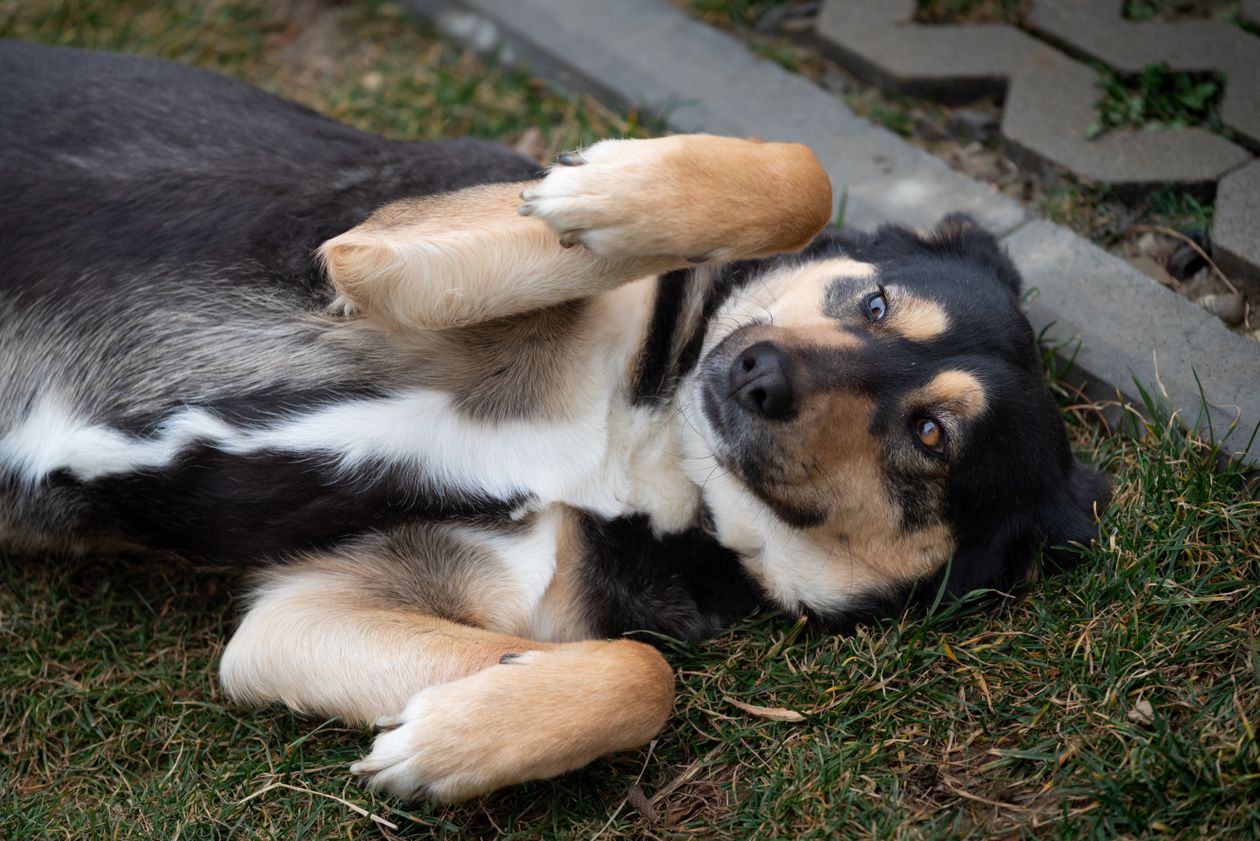
- Pexels — rolling dog cover image
- Pexels — dog rolling on grass support image
- Pexels — dog rolling support image
- Pexels License
Editorial note: this guide intentionally rejects physical flipping and fixed mastery deadlines. It uses reward-based shaping/luring, separates acquisition from cue transfer, and includes a comfort screen because rolling is an optional trick involving shoulder, spine and hip movement. Sources were reviewed September 29, 2026.